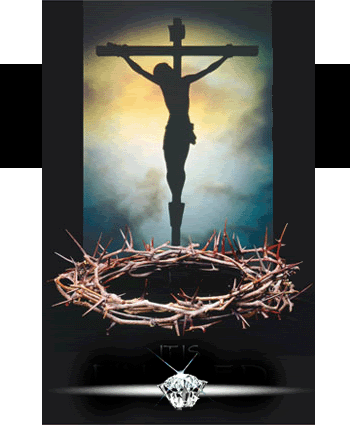
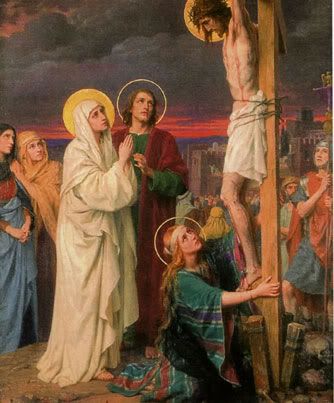
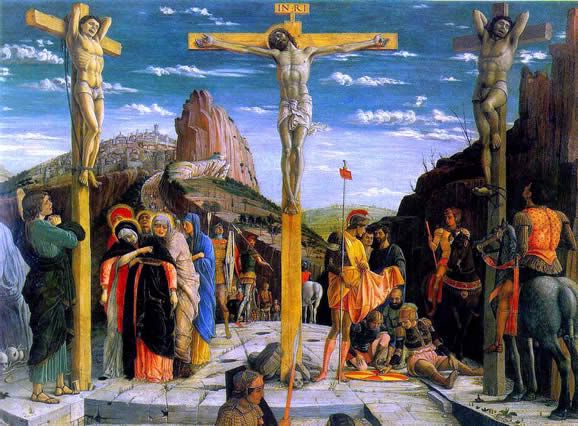
Holy Saturday.
The bleakest of days.
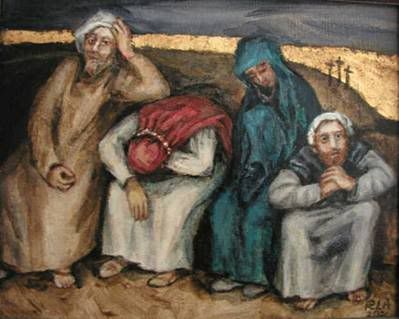
Holy Saturday marks the day after. It is the day that the disciples of Jesus stood in shock, in horror, in guilt, in sadness, in utter desolation. It was a day of mourning, of fear, and of silence-- complete silence, as if the entire world had gone quiet. As if the Lord, Himself, had grown silent.
For the disciples, it was a day of hopelessness. All that they had hoped in, all that they had believed, all that they had expected to come to pass had died on a cross. They were deserted. They didn’t know what would happen next. They were afraid.
And they waited.
The first disciples of Jesus didn’t have the hope-giving knowledge that we do. They didn’t know what was about to transpire, how the world was to be changed forever. It is this knowledge that we have that allows us to continue on, to hope, to look forward to the glorious new day about to dawn.
But the disciples sat in disbelief and grief. They no longer had anything to hope in. They sat in silence, hearts broken, lives shattered.
Today, we know the truth. We know that the Lord answered their silence with the most profound of words- Resurrection. We know that by tomorrow, the tomb will be empty and Jesus will have risen in glorious triumph over death. And yet, like the first disciples, we remain silent all too often in our lives. We lose hope all too often. We despair all too often. We turn away from the promise of Christ all too often.
And on Holy Saturday we are reminded of this. Good Friday reminds us that our loving God died for our sins and saved us. Holy Saturday reminds us that despite this, we lose faith and turn from God every day in small ways. And Easter Sunday reminds us that God continues to love us, regardless of our sins. He is our light in the time of darkness, our comfort in the time of pain, our hope in the time of loneliness, fear, and despair.
Tomorrow, like the disciples of Christ, we will run joyfully to the empty tomb. But today, Holy Saturday, we are called to sit in our pain. We are called to sit in our loneliness, taking final stock of our lives prior to the dawning of Easter. We are called to pause, while the entire world groans in the pain and suffering of uncertainty and loss. We are called to wait, in silence, for the coming of Our Lord.
22We know that the whole creation has been groaning as in the pains of childbirth right up to the present time. 23Not only so, but we ourselves, who have the first fruits of the Spirit, groan inwardly as we wait eagerly for our adoption as sons, the redemption of our bodies. 24For in this hope we were saved. But hope that is seen is no hope at all. Who hopes for what he already has? 25But if we hope for what we do not yet have, we wait for it patiently.
26In the same way, the Spirit helps us in our weakness. We do not know what we ought to pray for, but the Spirit himself intercedes for us with groans that words cannot express. 27And he who searches our hearts knows the mind of the Spirit, because the Spirit intercedes for the saints in accordance with God's will. (Romans 8: 22-27)
Why pray the Rosary every day for a year?
Each time the Blessed Virgin has appeared-- whether it be to Saint Bernadette Soubirous at Lourdes; to Lucia, Jacinta, and Francisco at Fatima; or to Mariette Beco at Banneux-- she has asserted the importance, saving grace, and power of praying the Holy Rosary on a daily basis. Based upon her words, the Rosary is penance and conversion for sinners, a pathway to peace, an end to war, and a powerful act of faith in Jesus Christ. Pope Paul VI presented the Rosary as a powerful means to reach Christ "not merely with Mary but indeed, insofar as this is possible to us, in the same way as Mary, who is certainly the one who thought about Him more than anyone else has ever done."
To show us how this is done, perhaps no one has been more eloquent than the great Cardinal Newman, who wrote: "The great power of the Rosary consists in the fact that it translates the Creed into Prayer. Of course, the Creed is already in a certain sense a prayer and a great act of homage towards God, but the Rosary brings us to meditate again on the great truth of His life and death, and brings this truth close to our hearts. Even Christians, although they know God, usually fear rather than love Him. The strength of the Rosary lies in the particular manner in which it considers these mysteries, since all our thinking about Christ is intertwined with the thought of His Mother, in the relations between Mother and Son; the Holy Family is presented to us, the home in which God lived His infinite love."
As Mary said at Fatima, "Jesus wants to use you to make Me known and loved. He wishes to establish the devotion to My Immaculate Heart throughout the world. I promise salvation to whoever embraces it; these souls will be dear to God, like flowers put by Me to adorn his throne."
Lent is a time of solemn contemplation of the Passion of Christ. We may choose to meditate, contemplate, or pray on His suffering for us. One way in which me might do this is through devotion to His Seven Last Words—the seven final phrases uttered by Christ as recounted in the Gospels. These Seven Last Words of the Passion of Christ are understood only in light of the true one Word of Life and Resurrection—the phrases uttered by Jesus before His death take on new life and new meaning following the glory of His resurrection. We sit with the pain and loss of crucifixion during Lent, but look forward to the brightness of new life on Easter.
1. “Forgive them, for they know not what they do.” (Luke 23:34) (link)
2. “Today you will be with me in Paradise.” (Luke 23:43) (link)
3. “Woman, Behold your Son. Behold your mother.” (John 19:26-27) (link)
4. “My God, my God, why have you forsaken me” (Mark 15:34) (link)
5. “I thirst.” (John 19:29) (link)
6. “It is finished.” (John 19:30) (link)
7. “Father, into your hands I commend my spirit.” (Luke 23:46)
“Father, into your hands I commend my spirit.” (Luke 23:46)
The first four statements of Jesus on the cross fill us with a sense of the beginning of something, the becoming of the kingdom. We start with the fact that we are forgiven, continue to the experience of happiness, of paradise, even today, and recount the rebirth of the family of God, here on earth—all at the foot of the cross! We are left with a profound sense of hope, in spite of the pain and desolation of the crucifixion, and then reminded of the Lord’s unending longing for us. We are, in His love, perfectly unfinished, awaiting His grace to complete us on the last day.
Jesus has been scourged, crowned with thorns, mocked and humiliated. He has carried an unbearably heavy cross up a steep mountain in the blistering heat. He has had his hands and feet nailed to a cross, and has hung upon it for three hours. He has done all of these things willingly, and without complaint. He has done all of these things for us.
And then he says, “Father, into your hands I commend my spirit."
44It was now about the sixth hour, and darkness came over the whole land until the ninth hour, 45for the sun stopped shining. And the curtain of the temple was torn in two. 46Jesus called out with a loud voice, "Father, into your hands I commit my spirit." When he had said this, he breathed his last. (Luke 23: 44-46)
Jesus died as He lived, in complete obedience to His Father. He died in perfect love and perfect trust in His Father. He died with a prayer on His lips, a prayer for His Father:
5 Into your hands I commit my spirit;
redeem me, O LORD, the God of truth. (Psalm 31:5)
We live in a world where we are taught not to trust people, where our anxiety consumes us despite general assurances of safety and comfort. We are doubtful and disobedient. We like to be in control.
Jesus joyful cry on the cross stands in sharp contrast to our daily lives. He was joyful because His work was done, and He was going home to be with His Father. To rest in Him, as He rests in each one of us. It is in His joy, and at such a cost, that the full measure of Jesus’ trust in His Father’s plan, the full measure of Jesus’ obedience to God’s will becomes perfectly clear. He was going home to rest, as His Father willed it.
We are called to that same rest, eventually in eternity, but in our present lives on earth as well. We are slow to give up our control, to lay down our burdens of anxiety, but that is what the Lord wishes us to do. That is what Father Romanus Cessario declares to be “the only option” for living—the perfect commitment to the will of God. We are reminded of this every time we participate in the Holy Eucharist, when the celebrant raises the transformed body and blood of Jesus Christ high above the alter in an act of surrender. And in the moment, we are called to enact that own surrender in our lives.
Jesus gave his life. The world came to a sudden end. And then, after what must have seemed like an eternity, the world was reborn in the Resurrection. He has already suffered through the worst of what could ever possibly happen to the earth. In return, we must trust that our daily trials and tribulations will be met with the same rebirth, the same Easter, the same Resurrection—granted to us by our heavenly Father.
Trust.
Obedience.
Surrender.
For many of us, more difficult words have never been spoken. We wish to remain in control. We forget the gift that obedience to the Lord is—peace, love, rest in Him (and He in us!). As Saint Teresa of Avila said, “ I know the power obedience has of making things easy which seem impossible.”
The Lord has called us to Himself. He has loved us so gladly that He gave His only Son that we might live. He calls us to live for Him, to love Him, to center ourselves in Him, to rest in Him. On this, the holiest day of our year, we surrender. And in surrendering, we are victorious. We gain the unending love, grace, and peace of God Our Father, Our Lord Jesus Christ, and the Holy Spirit. Suddenly, surrender doesn’t seem so bad.
Prayer of Surrender to the Lord (Saint Ignatius of Loyola)
"Take, O Lord, and receive my entire liberty, my memory, my understanding and my whole will. All that I am and all that I possess You have given me. I surrender it all to You to be disposed of according to Your will. Give me only Your love and Your grace; with these I will be rich enough, and will desire nothing more. Amen.
Lent is a time of solemn contemplation of the Passion of Christ. We may choose to meditate, contemplate, or pray on His suffering for us. One way in which me might do this is through devotion to His Seven Last Words—the seven final phrases uttered by Christ as recounted in the Gospels. These Seven Last Words of the Passion of Christ are understood only in light of the true one Word of Life and Resurrection—the phrases uttered by Jesus before His death take on new life and new meaning following the glory of His resurrection. We sit with the pain and loss of crucifixion during Lent, but look forward to the brightness of new life on Easter.
1. “Forgive them, for they know not what they do.” (Luke 23:34) (link)
2. “Today you will be with me in Paradise.” (Luke 23:43) (link)
3. “Woman, Behold your Son. Behold your mother.” (John 19:26-27) (link)
4. “My God, my God, why have you forsaken me” (Mark 15:34) (link)
5. “I thirst.” (John 19:29) (link)
6. “It is finished.” (John 19:30)
7. “Father, into your hands I commend my spirit.” (Luke 23:46)
“It is finished.” (John 19:30)
The first four statements of Jesus on the cross fill us with a sense of the beginning of something, the becoming of the kingdom. We start with the fact that we are forgiven, continue to the experience of happiness, of paradise, even today, and recount the rebirth of the family of God, here on earth—all at the foot of the cross! We are left with a profound sense of hope, in spite of the pain and desolation of the crucifixion, and then reminded of the Lord’s unending longing for us.
And then Jesus speaks and says, “It is finished.”
Is this the moment of despair for us? Is this the moment of hopelessness?
The answer must be a resounding no! Jesus does not say, “I am finished.” He says, “It is finished,” and in doing so, completes His work on earth. It is not the whimper of failure or the agony of defeat. It is a cry of victory! In Jesus’ last words, He tells us that His work on earth is done, and ours is just beginning. He has, through his sacrifice on the cross, shown us a perfect, enduring love—a love unlike any other—and in the process granted us the eternity to experience that love.
21God made him who had no sin to be sin for us, so that in him we might become the righteousness of God. (2 Corinthians 5:21)
Jesus is finished. He has come into the world, preached, been tortured and humiliated, and now He is ready to die, knowing that He has saved us. As they nailed Our Savior to the cross, our sins were pounded into the wood as well. He carried those sins up the steep climb to Golgatha, and held them in His heart, suffering for all mankind. And in doing so, he redeemed us. He showed us perfect love—a love that we can never be separated from.
38For I am convinced that neither death nor life, neither angels nor demons, neither the present nor the future, nor any powers, 39neither height nor depth, nor anything else in all creation, will be able to separate us from the love of God that is in Christ Jesus our Lord. (Romans 8:38-39)
Upon the cross, having fulfilled the prophesies, having died for our sins, Jesus is victorious. His work is finished. But we are unfinished. We are not perfect. We cannot even begin to approximate the perfection of God’s love for us. But we are called to keep trying. That is not to say that we can improve upon Jesus’ earthly work of salvation—there is no way we could. He exchanged our sinfulness for His life, and we are all the better for it. Because of what He finished, we will remain “unfinished”—perfectly unfinished—until we join the Lord in heaven and we are completed by His grace. At that time, we, too, can shout victoriously, “it is finished!” confident in the Lord’s love for us, acceptance of us, and His pleasure in our faith. Our time on earth may be finished, but we will have accomplished the Lord’s plan for us, and will have eternity to share in His perfect love in heaven.
7Dear friends, let us love one another, for love comes from God. Everyone who loves has been born of God and knows God. 8Whoever does not love does not know God, because God is love. 9This is how God showed his love among us: He sent his one and only Son into the world that we might live through him. 10This is love: not that we loved God, but that he loved us and sent his Son as an atoning sacrifice for our sins. 11Dear friends, since God so loved us, we also ought to love one another. 12No one has ever seen God; but if we love one another, God lives in us and his love is made complete in us. (1 John 4:7-12)
Lent is a time of solemn contemplation of the Passion of Christ. We may choose to meditate, contemplate, or pray on His suffering for us. One way in which me might do this is through devotion to His Seven Last Words—the seven final phrases uttered by Christ as recounted in the Gospels. These Seven Last Words of the Passion of Christ are understood only in light of the true one Word of Life and Resurrection—the phrases uttered by Jesus before His death take on new life and new meaning following the glory of His resurrection. We sit with the pain and loss of crucifixion during Lent, but look forward to the brightness of new life on Easter.
2. “Today you will be with me in Paradise.” (Luke 23:43) (link)
3. “Woman, Behold your Son. Behold your mother.” (John 19:26-27) (link)
4. “My God, my God, why have you forsaken me” (Mark 15:34) (link)
5. “I thirst.” (John 19:29)
6. “It is finished.” (John 19:30)
7. “Father, into your hands I commend my spirit.” (Luke 23:46)
“I thirst.” (John 19:29)
The first four statements of Jesus on the cross fill us with a sense of the beginning of something, the becoming of the kingdom. We start with the fact that we are forgiven, continue to the experience of happiness, of paradise, even today, and recount the rebirth of the family of God, here on earth—all at the foot of the cross! We are left with a profound sense of hope, in spite of the pain and desolation of the crucifixion.
And then Jesus said, “I thirst.” It is the shortest of the seven last words. It is the most human. In this moment of physical pain, Jesus embraces the totality of His humanity, including his torture and death. And in that moment, we know that God understands our physical pain, our emotional pain, our spiritual pain—because He endured it, in human form, for us.
As David Tracy (Professor of Catholic Studies and Theology) wrote, “The symbolism of John, even in the words of his Jesus’ “I thirst” is unmistakable to any attentive reader of John’s rhythmic, meditative, iconic account of the death of Jesus. And yet the words of Jesus’ “I thirst” are not merely symbolic. “I thirst” is the cry of a dying man whose mouth is parched in the moments left from his approaching death-- a death of shame and tortured pain. The cry of Jesus disrupts even John’s profoundly symbolic and all too continuous account with a moment of unmistakably human-- all too human-- pain.”
But we would never, in a million years, be able to endure that kind of pain. We would never be able to suffer what Jesus did for us. Throughout the Gospel depictions of the Passion of Christ, we read about the terrible pain he suffered—the scourging at the Pillar which left 39 ragged, bleeding gashes; the crowning with thorns, sharp spikes cracking through His skull into brain; the brutal carrying of a heavy cross for miles up a steep hill in the blazing sun; and nearly three hours, hanging on a cross with nails through His hands and feet, before he says, “I thirst.” These are human words, but He is also divine.
Throughout the torture, throughout the Passion, Jesus does not complain, he does not cry out. It isn’t until he is close to death that He shouts—not a death whisper, not a gasp—“I thirst.” This physical and emotional strength should not exist at that moment, but in His pain, we see the glory of the Lord, the power and strength of our God. We see that His ways are not our ways. We see that anything is possible.
And we see beyond the human suffering, the need for water. In the two simple words of Jesus, we hear the true call of God. He loves us so much that He yearns for us, He longs for us, He thirsts for us.
He longs for our love, the love that Jesus taught us to share with one another, and direct toward the Lord: “Love the Lord your God with all your heart and with all your soul and with all your strength and with all your mind.” (Luke 10:27). As we continue our Lenten journey, we contemplate our own humanity, our own love, and our own thirst for the Lord.
1 As the deer pants for streams of water,
so my soul pants for you, O God.
2 My soul thirsts for God, for the living God.
When can I go and meet with God?
3 My tears have been my food
day and night,
while men say to me all day long,
"Where is your God?"
4 These things I remember
as I pour out my soul:
how I used to go with the multitude,
leading the procession to the house of God,
with shouts of joy and thanksgiving
among the festive throng.
5 Why are you downcast, O my soul?
Why so disturbed within me?
Put your hope in God,
for I will yet praise him,
my Savior and 6 my God.
My soul is downcast within me;
therefore I will remember you
from the land of the Jordan,
the heights of Hermon—from Mount Mizar.
7 Deep calls to deep
in the roar of your waterfalls;
all your waves and breakers
have swept over me.
8 By day the LORD directs his love,
at night his song is with me—
a prayer to the God of my life.
9 I say to God my Rock,
"Why have you forgotten me?
Why must I go about mourning,
oppressed by the enemy?"
10 My bones suffer mortal agony
as my foes taunt me,
saying to me all day long,
"Where is your God?"
11 Why are you downcast, O my soul?
Why so disturbed within me?
Put your hope in God,
For I will yet praise him,
my Savior and my God. (Psalm 42)
Lent is a time of solemn contemplation of the Passion of Christ. We may choose to meditate, contemplate, or pray on His suffering for us. One way in which me might do this is through devotion to His Seven Last Words—the seven final phrases uttered by Christ as recounted in the Gospels. These Seven Last Words of the Passion of Christ are understood only in light of the true one Word of Life and Resurrection—the phrases uttered by Jesus before His death take on new life and new meaning following the glory of His resurrection. We sit with the pain and loss of crucifixion during Lent, but look forward to the brightness of new life on Easter.
1. “Forgive them, for they know not what they do.” (Luke 23:34) (link)
2. “Today you will be with me in Paradise.” (Luke 23:43) (link)
3. “Woman, Behold your Son. Behold your mother.” (John 19:26-27) (link)
4. “My God, my God, why have you forsaken me” (Mark 15:34)
5. “ I thirst.” (John 19:29)
6. “It is finished.” (John 19:30)
7. “Father, into your hands I commend my spirit.” (Luke 23:46)
“My God, my God, why have you forsaken me” (Mark 15:34)
The first three statements of Jesus on the Cross fill us with hope, we sense that beginning of something, the becoming of the kingdom. We start with the fact that we are forgiven, continue to the experience of happiness, of paradise, even today, and recount the rebirth of the family of God, here on earth—all at the foot of the cross!
And then, we hear the words of Jesus, having emptied himself of all His earthly ties, hanging on the cross, suffering for the sins of all mankind—we hear His words of desolation and agony: “Eloi, Eloi, lama sabachthani?”
“My God, My God, why have you forsaken Me?”
At first glance, it is easy to interpret this statement as Jesus feeling abandoned by Our Heavenly Father, left alone to die. We can imagine the human suffering, the emotional emptiness, the pain—but we cannot comprehend it. Jesus was feeling not only His pain, but our pain; not only the weight of His body, but the weight of our sins. And in the midst of this horror, He clings to what He knows—His Father in heaven.
Jesus’ words are important. He starts where He is centered—in God. Even in the depths of sorrow, Jesus holds onto what He knows is true: His Father, God, is His God. The relationship has not ended. Despite the pain and suffering, the relationship persists. Even though we might be tempted to question or even renounce the Lord when our suffering becomes to much to bear, wondering if He is there, wondering how He could let such pain exist, Jesus never does this. He acknowledges the power and might of the Lord, the presence of God, even in His last moments. By calling out to Him, against models for all of us that the Lord is our center, our rock, our hope.
And we must not forget this. We must have confidence in the Lord, even in the most difficult of circumstances. We must remember in our darkest moments, in the bleakest of circumstances, the Lord remains beside us, within us. We must look to Him. We must have hope.
So, why did Jesus make such a statement on the cross? Why would He allude to abandonment, while remaining centered in His Heavenly Father? For this, there is no easy answer. It is impossible of us, in our modern times, to conceive of the pain and humiliation of crucifixion. And considering such a death for one person pales in comparison to what Jesus endured—death on the cross for all people. The physical pain must have been too much to suffer, but the emotional pain, the spiritual pain that Christ undertook on the cross is debilitating to even think about. If we reflect on our own lives, sincerely and thoughtfully, we come face-to-face with our humanity, our sinfulness, our past transgressions. That alone is emotionally overwhelming. Now consider experiencing that awareness and pain on a larger level, on the level of all people who ever lived. The degree of pain and suffering that Christ endured in those moments on the cross, in atoning for all our sins, in holding the wrong-doings of the entire world is impossible to conceptualize, let alone being to experience. And despite this, despite the overwhelming pain, He calls out to His Father.
And in calling out, He chooses His words so carefully. He understands that the Lord is His God. He understands the why of why He must die. But His is not a rhetorical question. He, in His moment of agony, is fulfilling the Scripture. He is quoting the Scripture, Psalm 22, the most accurate prediction of His death, written over 1000 years prior to His life.
1 My God, my God, why have you forsaken me?
Why are you so far from saving me,
so far from the words of my groaning?
2 O my God, I cry out by day, but you do not answer,
by night, and am not silent.
3 Yet you are enthroned as the Holy One;
you are the praise of Israel.
4 In you our fathers put their trust;
they trusted and you delivered them.
5 They cried to you and were saved;
in you they trusted and were not disappointed.
6 But I am a worm and not a man,
scorned by men and despised by the people.
7 All who see me mock me;
they hurl insults, shaking their heads:
8 "He trusts in the LORD;
let the LORD rescue him.
Let him deliver him,
since he delights in him."
9 Yet you brought me out of the womb;
you made me trust in you
even at my mother's breast.
10 From birth I was cast upon you;
from my mother's womb you have been my God.
11 Do not be far from me,
for trouble is near
and there is no one to help.
12 Many bulls surround me;
strong bulls of Bashan encircle me.
13 Roaring lions tearing their prey
open their mouths wide against me.
14 I am poured out like water,
and all my bones are out of joint.
My heart has turned to wax;
it has melted away within me.
15 My strength is dried up like a potsherd,
and my tongue sticks to the roof of my mouth;
you lay me in the dust of death.
16 Dogs have surrounded me;
a band of evil men has encircled me,
they have pierced my hands and my feet.
17 I can count all my bones;
people stare and gloat over me.
18 They divide my garments among them
and cast lots for my clothing.
19 But you, O LORD, be not far off;
O my Strength, come quickly to help me.
20 Deliver my life from the sword,
my precious life from the power of the dogs.
21 Rescue me from the mouth of the lions;
save me from the horns of the wild oxen.
22 I will declare your name to my brothers;
in the congregation I will praise you.
23 You who fear the LORD, praise him!
All you descendants of Jacob, honor him!
Revere him, all you descendants of Israel!
24 For he has not despised or disdained
the suffering of the afflicted one;
he has not hidden his face from him
but has listened to his cry for help.
25 From you comes the theme of my praise in the great assembly;
before those who fear you will I fulfill my vows.
26 The poor will eat and be satisfied;
they who seek the LORD will praise him—
may your hearts live forever!
27 All the ends of the earth
will remember and turn to the LORD,
and all the families of the nations
will bow down before him,
28 for dominion belongs to the LORD
and he rules over the nations.
29 All the rich of the earth will feast and worship;
all who go down to the dust will kneel before him—
those who cannot keep themselves alive.
30 Posterity will serve him;
future generations will be told about the Lord.
31 They will proclaim his righteousness
to a people yet unborn—
for he has done it.
Lent is a time of solemn contemplation of the Passion of Christ. We may choose to meditate, contemplate, or pray on His suffering for us. One way in which me might do this is through devotion to His Seven Last Words—the seven final phrases uttered by Christ as recounted in the Gospels. These Seven Last Words of the Passion of Christ are understood only in light of the true one Word of Life and Resurrection—the phrases uttered by Jesus before His death take on new life and new meaning following the glory of His resurrection. We sit with the pain and loss of crucifixion during Lent, but look forward to the brightness of new life on Easter.
The Seven Last Words
1. “Forgive them, for they know not what they do.” (Luke 23:34) (link)
2. “Today you will be with me in Paradise.” (Luke 23:43) (link)
3. “Woman, Behold your Son. Behold your mother.” (John 19:26-27)
4. “My God, my God, why have you forsaken me” (Mark 15:34)
5. “ I thirst.” (John 19:29)
6. “It is finished.” (John 19:30)
7. “Father, into your hands I commend my spirit.” (Luke 23:46)
“Woman, Behold your Son. Behold your mother.” (John 19:26-27)
As all the moments in the Passion of Our Lord, this moment seems heart-wrenching. It is deeply personal. It is reflective of a deep loss, for both Jesus and Our Blessed Mother. In saying these words, Jesus severs the last of His earthly ties, He empties Himself of all the love left inside of Him for his mother, He awaits His death in complete poverty.
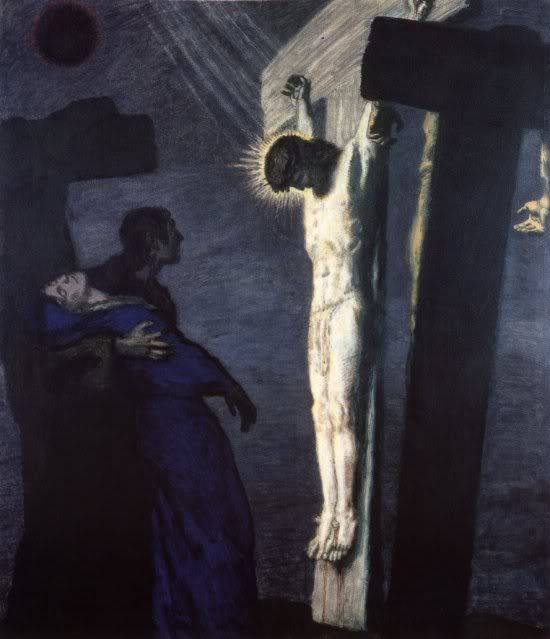
And Mary, His mother, and now our mother, must do the same. The center of her life, her purpose for living, her reason for being, the meaning and core of her existence, has been taken from her in this brutal and ultimate act of sacrifice. She stands broken beneath the cross, a mirror of the brokenness of her Son.
And we must do the same, placing ourselves with John and Mary, standing with them beneath the cross on which hangs our Lord and Savior. We must empty ourselves, as He emptied Himself. We must sever the ties that bind us, as He did. We must feel the loss, the sorrow, the emptiness that His death leaves in our hearts.
25Near the cross of Jesus stood his mother, his mother's sister, Mary the wife of Clopas, and Mary Magdalene. 26When Jesus saw his mother there, and the disciple whom he loved standing nearby, he said to his mother, "Dear woman, here is your son," 27and to the disciple, "Here is your mother." From that time on, this disciple took her into his home. (John 19: 25-27)
And in that moment of utter desolation, we also must realize that we are not alone. In speaking, in creating distance between Himself and His mother, Jesus has created a new family on earth- a family born of pain and death, a family born of suffering, a family borne in His love for us. And we are all called to His family, to become sons and daughters of Mary, brothers and sisters to John and to each other. This family, watered by the blood of His cross, is the core of the Church, His Church, our Church.
Jesus hasn’t limited His family to those at the foot of the cross at the moment of death. He has extended an invitation to all the people of the world, just as he extended the “good thief” an invitation to paradise. At a time when society-- even the Church-- is split by politics, by judgment of individuals and whole groups of people, by prejudice and ostracism, Jesus’ declaration of a new family is more important than ever. It is a new receptacle of His love, love between brothers and sisters in the faith. It is healing. It is redemptive. It is the rebirth of a people, there beneath the cross.
Jesus came to His Passion and death on a long road of love for each us. In His death he gave us each other, united in His love, called to love one another. And He gave us something more, as well. As Pope John Paul II said, in regards to Jesus’ words on the cross, “The reality brought about by Jesus' words, that is, Mary's new motherhood in relation to the disciple, is a further sign of the great love that led Jesus to offer his life for all people. On Calvary this love is shown in the gift of a mother, his mother, who thus becomes our mother too.”
We gain a family. We gain a mother who advocates and intercedes for us with the Lord. And all of this we gain through the blood of the cross, the blood that flows through each of us, the blood that we are reminded of during the Eucharist. United by the blood of Christ, one with Him and with each other, we dare hope, we dare pray, we dare look to the Resurrection.
Lent is a time of solemn contemplation of the Passion of Christ. We may choose to meditate, contemplate, or pray on His suffering for us. One way in which me might do this is through devotion to His Seven Last Words—the seven final phrases uttered by Christ as recounted in the Gospels. These Seven Last Words of the Passion of Christ are understood only in light of the true one Word of Life and Resurrection—the phrases uttered by Jesus before His death take on new life and new meaning following the glory of His resurrection. We sit with the pain and loss of crucifixion during Lent, but look forward to the brightness of new life on Easter.
1. “Forgive them, for they know not what they do.” (Luke 23:34) (link)
2. “Today you will be with me in Paradise.” (Luke 23:43)
3. “Woman, Behold your Son. Behold your mother.” (John 19:26-27)
4. “My God, my God, why have you forsaken me” (Mark 15:34)
5. “ I thirst.” (John 19:29)
6. “It is finished.” (John 19:30)
7. “Father, into your hands I commend my spirit.” (Luke 23:46)
“Today you will be with me in Paradise.” (Luke 23:43)
39One of the criminals who hung there hurled insults at him: "Aren't you the Christ? Save yourself and us!"
40But the other criminal rebuked him. "Don't you fear God," he said, "since you are under the same sentence? 41We are punished justly, for we are getting what our deeds deserve. But this man has done nothing wrong."
42Then he said, "Jesus, remember me when you come into your kingdom." (Luke 23: 39-42)
And this is when Jesus makes the promise of eternity, a promise which doesn’t wait until His own death and resurrection—a promise made available that day. The promise of paradise. Of happiness.
How often do we, today, search for happiness. We look for our own paradise here on earth, in our material possessions, relationships, successes, achievements. We look to create our happiness, as if it is a destination at the end of a journey, something to be gained, something to be earned.
We forget that Jesus offers it to us today.
Today.
Even in the midst of Lent, even in the midst of the suffering of our Lord, His offer of happiness, of paradise, of the beginning of an eternity in His presence hangs in front of us. And He waits for us to accept that offer. He offers time and time again. All we need to do is answer with a joyful “Yes!” All we need is what German theologian Paul Tillich would name, “the courage to be”—the acknowledgment that what we are can only be understood as the a creation, an extension of God. And that the joy that comes from that knowledge, the joy that comes from the Lord is the “emotional expression of the courageous Yes to one’s own true being.”
So we can be joyful. But this joy is oftentimes accompanied by sorrow, by pain, by the acute awareness of the suffering of others. For to live courageously in the presence of Christ, to accept His offer of happiness, means to accept His cross as well. The pain and the suffering of His cross, like the crosses that so many continue to struggle beneath today, broaden our hearts, expand them to hearts of service, hearts of empathy, hearts of charity, hearts of love. And in those moments of charity, empathy, love, and service, we find the true presence of Christ, and the true joy of His salvation. We get a foretaste of paradise.
Today.
All we have to do is recognize our Savior, call out to Him, ask Him to remember us. We courageously embrace His cross, emptying ourselves for others, and in that way, create within ourselves room to grow in His love. And in that moment, we encounter our Lord, within us, paradise on earth.
In the days leading up to Good Friday, I will be meditating on the Seven Last Words of Christ.
Lent is a time of solemn contemplation of the Passion of Christ. We may choose to meditate, contemplate, or pray on His suffering for us. One way in which me might do this is through devotion to His Seven Last Words—the seven final phrases uttered by Christ as recounted in the Gospels. These Seven Last Words of the Passion of Christ are understood only in light of the true one Word of Life and Resurrection—the phrases uttered by Jesus before His death take on new life and new meaning following the glory of His resurrection. We sit with the pain and loss of crucifixion during Lent, but look forward to the brightness of new life on Easter.
The Seven Last Words
2. “Today you will be with me in Paradise.” (Luke 23:43)
3. “Woman, Behold your Son. Behold your mother.” (John 19:26-27)
4. “My God, my God, why have you forsaken me” (Mark 15:34)
5. “ I thirst.” (John 19:29)
6. “It is finished.” (John 19:30)
7. “Father, into your hands I commend my spirit.” (Luke 23:46)
“Forgive them, for they know not what they do.” (Luke 23:34)
We are forgiven.
We don’t need to ask for it.
We don’t need to earn it.
We don’t need to do anything.
We are forgiven.
But does this give us license to do anything we want, without regard for others, because we are already forgiven? Does this render our actions and our motivations meaningless? The answer, of course, is no. It is quite the opposite. Only because we have been forgiven do we dare look back at our lives, at the history of mankind. Only because we have been forgiven by a loving creator, do we dare sit in church and contemplate the Passion of Jesus Christ. Only because we are forgiven do we have the ability to turn our gaze inward, considering our sins, how we have wronged others, how we continue to wrong others. Without the grace of forgiveness we would break. We would avoid. Our lives would be without meaning. But through forgiveness, through opening the doors to our innermost selves, we are transformed. Like the brutal cross covered with the shoots of new life, our ugliness is made beautiful in the eyes of the Lord.
God has forgiven us our many sins. But this only serves to remind us that we, too, need to forgive—others who wrong us, and more importantly, ourselves for our won wrongdoings. In forgiveness, we find the sorrow of the cross, and the joy of the resurrection.
Ash Wednesday 2013: “Repentance: An Opportunity for God’s Mercy" by Saint Clement of Rome
Posted by Jacob
Ash Wednesday marks the beginning of Lent, a time of repentance, penance, and conversion. We are reminded of the powerful sacrifice Jesus made for each of us, through the mercy of our Heavenly Father. Lent calls us to seek out that gracious mercy from the Lord, sincerely repenting and praying for forgiveness. Below, an excerpt from a homily by early Church father, Saint Clement of Rome, entitled “Repentance: An Opportunity for God’s Mercy.”
Let us fix our attention on the blood of Christ and recognize how precious it is to God his Father, since it was shed for our salvation and brought the grace of repentance to all the world.
If we review the various ages of history, we will see that in every generation the Lord has offered the opportunity of repentance to any who were willing to turn to him. When Noah preached God’s message of repentance, all who listened to him were saved. Jonah told the Ninevites they were going to be destroyed, but when they repented, their prayers gained God’s forgiveness for their sins, and they were saved, even though they were not of God’s people.
Under the inspiration of the Holy Spirit, the ministers of God’s grace have spoken of repentance; indeed, the Master of the whole universe himself spoke of repentance with an oath: As I live, says the Lord, I do not wish the death of the sinner but his repentance. He added this evidence of his goodness: House of Israel, repent of your wickedness. Tell the sons of my people: If their sins should reach from earth to heaven, if they are brighter than scarlet and blacker than sackcloth, you need only turn to me with your whole heart and say, “Father”, and I will listen to you as a holy people.
In other words, God wanted all his beloved ones to have the opportunity to repent and he confirmed this desire by his own almighty will. That is why we should obey his sovereign and glorious will and prayerfully entreat his mercy and kindness. We should be suppliant before him and turn to his compassion, rejecting empty works and quarrelling and jealousy which only lead to death.
Brothers, we should be humble in mind, putting aside all arrogance, pride and foolish anger. Rather, we should act in accordance with the Scriptures, as the Holy Spirit says: The wise man must not glory in his wisdom nor the strong man in his strength nor the rich man in his riches. Rather, let him who glories glory in the Lord by seeking him and doing what is right and just. Recall especially what the Lord Jesus said when he taught gentleness and forbearance. Be merciful, he said, so that you may have mercy shown to you. Forgive, so that you may be forgiven. As you treat others, so you will be treated. As you give, so you will receive. As you judge, so you will be judged. As you are kind to others, so you will be treated kindly. The measure of your giving will be the measure of your receiving.
Let these commandments and precepts strengthen us to live in humble obedience to his sacred words. As Scripture asks: Whom shall I look upon with favour except the humble, peaceful man who trembles at my words?
Sharing then in the heritage of so many vast and glorious achievements, let us hasten toward the goal of peace, set before us from the beginning. Let us keep our eyes firmly fixed on the Father and Creator of the whole universe, and hold fast to his splendid and transcendent gifts of peace and all his blessings.
Let us fix our attention on the blood of Christ and recognize how precious it is to God his Father, since it was shed for our salvation and brought the grace of repentance to all the world.
If we review the various ages of history, we will see that in every generation the Lord has offered the opportunity of repentance to any who were willing to turn to him. When Noah preached God’s message of repentance, all who listened to him were saved. Jonah told the Ninevites they were going to be destroyed, but when they repented, their prayers gained God’s forgiveness for their sins, and they were saved, even though they were not of God’s people.
Under the inspiration of the Holy Spirit, the ministers of God’s grace have spoken of repentance; indeed, the Master of the whole universe himself spoke of repentance with an oath: As I live, says the Lord, I do not wish the death of the sinner but his repentance. He added this evidence of his goodness: House of Israel, repent of your wickedness. Tell the sons of my people: If their sins should reach from earth to heaven, if they are brighter than scarlet and blacker than sackcloth, you need only turn to me with your whole heart and say, “Father”, and I will listen to you as a holy people.
In other words, God wanted all his beloved ones to have the opportunity to repent and he confirmed this desire by his own almighty will. That is why we should obey his sovereign and glorious will and prayerfully entreat his mercy and kindness. We should be suppliant before him and turn to his compassion, rejecting empty works and quarrelling and jealousy which only lead to death.
Brothers, we should be humble in mind, putting aside all arrogance, pride and foolish anger. Rather, we should act in accordance with the Scriptures, as the Holy Spirit says: The wise man must not glory in his wisdom nor the strong man in his strength nor the rich man in his riches. Rather, let him who glories glory in the Lord by seeking him and doing what is right and just. Recall especially what the Lord Jesus said when he taught gentleness and forbearance. Be merciful, he said, so that you may have mercy shown to you. Forgive, so that you may be forgiven. As you treat others, so you will be treated. As you give, so you will receive. As you judge, so you will be judged. As you are kind to others, so you will be treated kindly. The measure of your giving will be the measure of your receiving.
Let these commandments and precepts strengthen us to live in humble obedience to his sacred words. As Scripture asks: Whom shall I look upon with favour except the humble, peaceful man who trembles at my words?
Sharing then in the heritage of so many vast and glorious achievements, let us hasten toward the goal of peace, set before us from the beginning. Let us keep our eyes firmly fixed on the Father and Creator of the whole universe, and hold fast to his splendid and transcendent gifts of peace and all his blessings.
“Remember that you are dust, and unto dust you shall return.”
Today, February 13, we enter the solemn Lenten season of preparation and repentance. Ash Wednesday reminds us in a dramatic manner of our inevitable death—that our mortal bodies will fail and return to the dust from which they originated. But in this way, despite our medical advances, we are more importantly reminded that we can not triumph over death without the help of He who literally triumphed over death. When Jesus emerged from His tomb two thousand years ago, He freed us from the chains of death, inviting us to live in His glory with Him. Without that sacrifice—without that invitation—we would literally turn to dust, our mortal bodies ravaged by time and earthly emptiness.
Lent is a period of preparation—we prepare ourselves to meet Jesus, to follow Him with all that we have. We take stock and inventory of our lives, and bring from the darkness those areas of sin and failing which we can improve upon. Lent is not simply about choosing something to “give up.” Lent is about opening up ourselves to our Lord—repenting, and engaging in acts of prayer and penance, not only for ourselves but for all those in need. Lent is a time of deeply personal conversion-- the physicality of fasting and penance should not distract us from this season's true goal: internal growth and movement toward Our God.
Biblically, ashes were a symbol of one’s repentance and wrongdoing. To put ashes upon oneself was a clear signal to those who witnessed it that one was a person of faith who had sinned against the Lord. The recognition and repentance can be viewed in much the same manner today, as we place the ashes on our foreheads in witness of the Gospel to the world, and recognition of our shortcomings. As we go about our days, with the mark of Christ on our foreheads, not only do we bear witness to the saving power of Christ to those around us, but we literally identify ourselves as the “walking dead” without His intercession.
Throughout this Lenten season, I will be meditating and reflecting on the book of Job, an "instructional manual" for patient suffering, for love, and for finding joy in all that the Lord gives-- including difficulty and harship. At the end of his trials and suffering, although he stayed true in his faith in the Lord, Job repented in dust and ashes for his sinfulness.
1 Then Job replied to the LORD :
2 "I know that you can do all things;
no plan of yours can be thwarted.
3 You asked, 'Who is this that obscures my counsel without knowledge?'
Surely I spoke of things I did not understand,
things too wonderful for me to know.
4 "You said, 'Listen now, and I will speak;
I will question you,
and you shall answer me.'
5 My ears had heard of you
but now my eyes have seen you.
6 Therefore I despise myself
and repent in dust and ashes." (Job 42:1-6)
And as we know, the Lord forgave Job and bestowed on him countless blessings, just as the Lord does for us with the great gift of the Resurrection.
Lent is a time of solemn contemplation of the Passion of Christ. We may choose to meditate, contemplate, or pray on His suffering for us. We may further contemplate the sufferings of His Blessed Mother throughout her live, recognizing the suffering she endured borne out of her great love for Jesus. In this tradition, we are encouraged to find our joy during Lent—a joy borne out of penance and prayer based in our own love for the Lord. As written in the Rule of Saint Benedict: “The season of Lent is: "to offer in the joy of the Holy Spirit, of our own accord a measure of service...Less food, drink, sleep, speech, merriment, and with the joy of spiritual desire await holy Easter." We are called to deep, personal conversion during Lent—and this conversion begins in love and joy, through the practice of repentance and penance.
I pray you each experience a profoundly enriching Lenten season, moving closer to the Lord with every step we take toward the glory of Easter!
Blessed are you, O Lord our God, the all-holy one, who gives us life and all things. As we go about our lives, the press of our duties and activities often leads us to forget your presence and your love. We fall into sin and fail to live out the responsibilities that you have entrusted to those who were baptized into your Son.
In this holy season, help us to turn our minds and hearts back to you. Lead us into sincere repentance and renew our lives with your grace. Help us to remember that we are sinners, but even more, help us to remember your loving mercy.
As we live through this Ash Wednesday, may the crosses of ashes that mark our foreheads be a reminder to us and to those we meet that we belong to your Son. May our worship and prayer and penitence this day be sustained throughout these 40 days of Lent. Bring us refreshed and renewed to the celebration of Christ’s resurrection at Easter.
We ask this through your Son, Jesus Christ, who lives and reigns with you and the Holy Spirit for ever and ever. Amen.
Today, February 13, we enter the solemn Lenten season of preparation and repentance. Ash Wednesday reminds us in a dramatic manner of our inevitable death—that our mortal bodies will fail and return to the dust from which they originated. But in this way, despite our medical advances, we are more importantly reminded that we can not triumph over death without the help of He who literally triumphed over death. When Jesus emerged from His tomb two thousand years ago, He freed us from the chains of death, inviting us to live in His glory with Him. Without that sacrifice—without that invitation—we would literally turn to dust, our mortal bodies ravaged by time and earthly emptiness.
Lent is a period of preparation—we prepare ourselves to meet Jesus, to follow Him with all that we have. We take stock and inventory of our lives, and bring from the darkness those areas of sin and failing which we can improve upon. Lent is not simply about choosing something to “give up.” Lent is about opening up ourselves to our Lord—repenting, and engaging in acts of prayer and penance, not only for ourselves but for all those in need. Lent is a time of deeply personal conversion-- the physicality of fasting and penance should not distract us from this season's true goal: internal growth and movement toward Our God.
Biblically, ashes were a symbol of one’s repentance and wrongdoing. To put ashes upon oneself was a clear signal to those who witnessed it that one was a person of faith who had sinned against the Lord. The recognition and repentance can be viewed in much the same manner today, as we place the ashes on our foreheads in witness of the Gospel to the world, and recognition of our shortcomings. As we go about our days, with the mark of Christ on our foreheads, not only do we bear witness to the saving power of Christ to those around us, but we literally identify ourselves as the “walking dead” without His intercession.
Throughout this Lenten season, I will be meditating and reflecting on the book of Job, an "instructional manual" for patient suffering, for love, and for finding joy in all that the Lord gives-- including difficulty and harship. At the end of his trials and suffering, although he stayed true in his faith in the Lord, Job repented in dust and ashes for his sinfulness.
1 Then Job replied to the LORD :
2 "I know that you can do all things;
no plan of yours can be thwarted.
3 You asked, 'Who is this that obscures my counsel without knowledge?'
Surely I spoke of things I did not understand,
things too wonderful for me to know.
4 "You said, 'Listen now, and I will speak;
I will question you,
and you shall answer me.'
5 My ears had heard of you
but now my eyes have seen you.
6 Therefore I despise myself
and repent in dust and ashes." (Job 42:1-6)
And as we know, the Lord forgave Job and bestowed on him countless blessings, just as the Lord does for us with the great gift of the Resurrection.
Lent is a time of solemn contemplation of the Passion of Christ. We may choose to meditate, contemplate, or pray on His suffering for us. We may further contemplate the sufferings of His Blessed Mother throughout her live, recognizing the suffering she endured borne out of her great love for Jesus. In this tradition, we are encouraged to find our joy during Lent—a joy borne out of penance and prayer based in our own love for the Lord. As written in the Rule of Saint Benedict: “The season of Lent is: "to offer in the joy of the Holy Spirit, of our own accord a measure of service...Less food, drink, sleep, speech, merriment, and with the joy of spiritual desire await holy Easter." We are called to deep, personal conversion during Lent—and this conversion begins in love and joy, through the practice of repentance and penance.
I pray you each experience a profoundly enriching Lenten season, moving closer to the Lord with every step we take toward the glory of Easter!
Blessed are you, O Lord our God, the all-holy one, who gives us life and all things. As we go about our lives, the press of our duties and activities often leads us to forget your presence and your love. We fall into sin and fail to live out the responsibilities that you have entrusted to those who were baptized into your Son.
In this holy season, help us to turn our minds and hearts back to you. Lead us into sincere repentance and renew our lives with your grace. Help us to remember that we are sinners, but even more, help us to remember your loving mercy.
As we live through this Ash Wednesday, may the crosses of ashes that mark our foreheads be a reminder to us and to those we meet that we belong to your Son. May our worship and prayer and penitence this day be sustained throughout these 40 days of Lent. Bring us refreshed and renewed to the celebration of Christ’s resurrection at Easter.
We ask this through your Son, Jesus Christ, who lives and reigns with you and the Holy Spirit for ever and ever. Amen.
Subscribe to:
Comments (Atom)