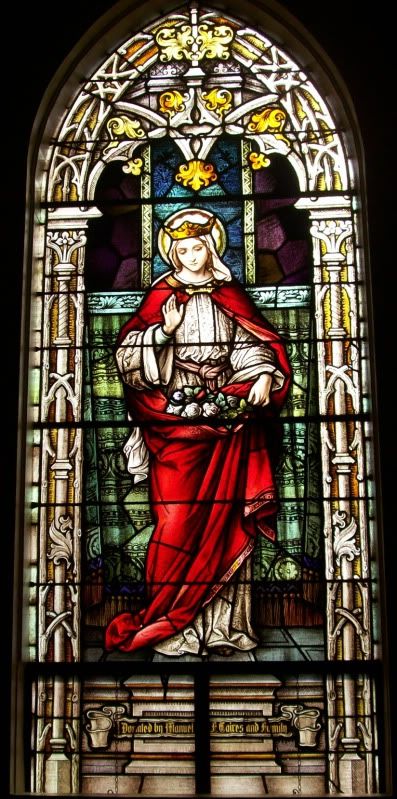
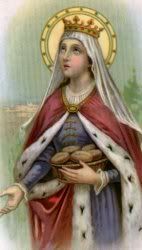
Today, July 4, we celebrate the feast day of Saint Elizabeth of Portugal (1271-1336), the “Peacemaker” and Queen of Portugal. Saint Elizabeth’s life is one marked by service to others, quiet obedience, and charitable works. She dedicated her life to her family, brokering peace, and preventing war. Her faith in the Lord filled her every moment and action, and through this faith, she accomplished great things.
Born into royalty in Saragossa, Spain in 1271, the early life of Elizabeth was marked by privilege, but also by grace and piety. The daughter of King Pedro III of Aragon and Queen Constanza, Elizabeth was named for her great aunt, Saint Elizabeth of Hungary. From an early age she was a delightful, obedient, and pious child, well-instructed in the ways of the Christian faith by her mother. At age 12, Elizabeth was betrothed and married to King Denis of Portugal, eight years her senior.
Elizabeth moved to the royal court of Portugal, and found her husband to be a kind, yet immoral man. His court was home to debauchery and immorality, but as a husband, he encouraged her kind works and charity and did nothing to impede her acts of faith. Despite her rigorous political duties, Elizabeth attended Mass on a daily basis, and enacted severe penances such as daily fasting. The couple produced two children, a daughter named Constanza and the eventual crown prince, Alonzo.
During this time, King Denis fathered an additional seven children by a number of other women of the court. Elizabeth endured the infidelity of her husband with patience and humility, never seeking pity, and never demonstrating anger or condemnation. Ever charitable, Elizabeth provided for the education of the king’s illegitimate children, instructing them in the ways of the faith.
Elizabeth's days were filled and guided by her faith. She surrounded herself with religious, every day reciting and singing the Liturgy of the Hours with them. She oversaw the building and institution of a number of charitable organizations throughout Portugal, including a convent to house the Poor Clare nuns, a hospice for the aged poor, hospitals, orphanages, and churches. Actively involved in each project she began, Elizabeth generally designed the buildings being constructed and managed the day-to-day progress of the projects. At times, when money was spare, Elizabeth is said to have paid the construction workers with flowers, which miraculously converted to gold coins at the conclusion of each work day.
A time of great suffering followed for Elizabeth, during which her son, Alonso, led a rebellion against the king. Bitter and jealous of the attention that the king gave to his illegitimate heirs, Alonso garnered support from noblemen and military leaders, starting a war of rebellion. Elizabeth, deeply wounded by the rift between her son and husband, attempted to negotiate peace between them, but only succeeded in finding herself exiled from the royal court by her husband, unjustly accused of crimes she did not commit.
As Elizabeth suffered in exile, she learned of the two men’s opposing armies headed to battle. Astride a horse, she rode onto the battlefield, between the forces, imploring and negotiating temporary peace. For this, she earned the title, “Angel of Peace.” The factious relationship continued until the king’s death, at which time, he converted to the Lord, recognized his sinfulness, and begged forgiveness. He made peace with Elizabeth, clearing her of all charges, and placing her in control of his worldly assets, "having in mind God's Judgment," much of which was bequeathed to churches and religious organizations.
With Elizabeth’s assistance, King Denis called Alfonso to his deathbed, and entrusted Elizabeth to his care: "Look after your mother and my lady, the queen, for she remains alone. Stand by her, as is your duty.... Think that having given you life, and for the many tears you have cost her, she is twice your mother." Alonso, assuming the crown, agreed. Elizabeth tearfully stated, "I have always beseeched our Lord to kindly spare me the bitterness of surviving the king, my lord. I have wished him a long life, for the good and well-being of the people."
Following the death of her husband, Elizabeth gave up the riches and luxury of royalty, clothing herself in the habit of the Poor Clares, and becoming a tertiary attached to the convent she had helped found in Coimbra. She founded a hospital near the convent, and named it after St. Elizabeth of Hungary. Every day, Elizabeth—the Queen of Portugal-- went to work in the hospital, caring for the sick, and choosing for herself the most distasteful tasks in service to the Lord. The Blessed Virgin and Saint Clare are said to have appeared to her in her final days.
Saint Elizabeth died, exhausted from her constant prayer, service, and peace-making, at age 65. Her body remains incorrupt, reposing in the Church of Saint Clare at Coimbra. Her coffin has been opened several times throughout the centuries since she died (as recently as 1912), each time finding her body in sweet repose, exuding the scent of holiness.
The life of Saint Elizabeth demonstrates to us the importance of faith and attendance at Mass. Only through her devotion to the Lord, was she able to withstand the onslaughts of the world—including separation from her family, false accusations levied against her, betrayal, abuse, and hardship. Despite these struggles, Elizabeth led a life of patient sanctity, working tirelessly to create a social welfare network throughout Portugal, never forgetting the sick, elderly, orphaned, and in need. We pray for the intercession of Saint Elizabeth of Portugal, that we, too, may find the faith in our lives to become peacemakers for Christ.
Father of peace and love,
you gave St. Elizabeth the gift of reconciling enemies.
By the help of her prayers
give us the courage to work for peace among men,
that we may be called the sons of God.
We ask this through our Lord Jesus Christ, Your Son,
who lives and reigns with you and the Holy Spirit,
one God, for ever and ever. Amen.
Inspired by the origins and spiritual history of the Holy Rosary, we continue our meditation on the psalms, one each day, in order, for 150 days.
Today’s Psalm: Psalm 70: The Lord, Our Deliverer
1 Hasten, O God, to save me;
O LORD, come quickly to help me.
2 May those who seek my life
be put to shame and confusion;
may all who desire my ruin
be turned back in disgrace.
3 May those who say to me, "Aha! Aha!"
turn back because of their shame.
4 But may all who seek you
rejoice and be glad in you;
may those who love your salvation always say,
"Let God be exalted!"
5 Yet I am poor and needy;
come quickly to me, O God.
You are my help and my deliverer;
O LORD, do not delay.
Day 185 of 365
Prayer Intentions: Hearts of charity, patience, and endurance; Peace throughout the world.
Requested Intentions: Employment; Discernment of God’s will (A); Healing of illness (P); Small business assistance, blessings on jobs, financial aid for college student (M); Financial assistance (F); For a recovery and sanctification (X); For a daughter struggling with disease and illness (T); For all lost children (I); Prosperity, health, healing, and conversion for a family (M); Health and healing of a mother (A); Healing of heart and mind (T); Healing of a new relationship before marriage (K); Healing of a relationship (T); Eternal rest for the dearly departed, end to financial struggles, successful sale of home, ability to travel on pilgrimage (L); For healing of a stomach illness (L); For the repose of the soul of a sister (C); Vocational security for family, Financial security for daughter beginning college (M); Vocational guidance, courage and strength (I); Health for an ailing nephew (A); Those suffering from depression (J); Successful adoption (S); Healing of a father battling cancer (S).
Psalm: Psalm 70: The Lord, Our Deliverer
Why pray the Rosary every day for a year?
Each time the Blessed Virgin has appeared-- whether it be to Saint Bernadette Soubirous at Lourdes; to Lucia, Jacinta, and Francisco at Fatima; or to Mariette Beco at Banneux-- she has asserted the importance, saving grace, and power of praying the Holy Rosary on a daily basis. Based upon her words, the Rosary is penance and conversion for sinners, a pathway to peace, an end to war, and a powerful act of faith in Jesus Christ. Pope Paul VI presented the Rosary as a powerful means to reach Christ "not merely with Mary but indeed, insofar as this is possible to us, in the same way as Mary, who is certainly the one who thought about Him more than anyone else has ever done."
To show us how this is done, perhaps no one has been more eloquent than the great Cardinal Newman, who wrote: "The great power of the Rosary consists in the fact that it translates the Creed into Prayer. Of course, the Creed is already in a certain sense a prayer and a great act of homage towards God, but the Rosary brings us to meditate again on the great truth of His life and death, and brings this truth close to our hearts. Even Christians, although they know God, usually fear rather than love Him. The strength of the Rosary lies in the particular manner in which it considers these mysteries, since all our thinking about Christ is intertwined with the thought of His Mother, in the relations between Mother and Son; the Holy Family is presented to us, the home in which God lived His infinite love."
As Mary said at Fatima, "Jesus wants to use you to make Me known and loved. He wishes to establish the devotion to My Immaculate Heart throughout the world. I promise salvation to whoever embraces it; these souls will be dear to God, like flowers put by Me to adorn his throne."
comments (0)
|
Labels:
Charity,
Encouragement,
Endurance,
Faith,
Feast Day,
Patience,
Peace,
Saints,
Suffering
Today, July 3, we celebrate the feast day of Saint Thomas the Apostle (died 72), original disciple of Jesus, and holy man of change and courage. Remembered most often for doubting the Resurrection of Jesus following the crucifixion, Saint Thomas should also be remembered for his role in the teachings of Christ. Following the questioning of Thomas, great truths were revealed to the twelve.
Jesus uses the disbelief of Thomas to teach the disciples a lesson of faith. Thomas says: “Except I shall see in his hands the print of the nails, and put my finger into the place of the nails, and put my hand into his side, I will not believe.” ( John 20:25); but eight days later he made his act of faith, drawing down the rebuke of Jesus: “Because thou hast seen me, Thomas, thou hast believed; blessed are they that have not seen, and have believed.” (John 20:29).
Similarly, at the Last Supper (the Institution of the Holy Eucharist), Thomas raises an important question, stating “Lord, we know not whither thou goest; and how can we know the way?” (John 14:5). Thomas’ question reveals the greatest truth of salvation, when Jesus replies: “I am the way, the truth, and the life.”
Saint Thomas may also be remembered for his courage: When Jesus announced His intention of returning to Judea to visit Lazarus, “Thomas” who is called Didymus [the twin], said to his fellow disciples: “Let us also go, that we may die with him” (John 11:16). Thomas knew the danger of returning to Judea, given the mounting hostilities of the authorities of that region, but he was willing and ready to walk into danger (and possible death) for Jesus.
Saint Thomas turned from his doubt, and embraced the truth of the Resurrection and the truth of Jesus Christ. Following Pentecost, when the disciples spread throughout the region, Thomas set off on a difficult course of missionary work, his travels taking him to the Parthians, Medes, and Persians. He is believed to be the only original disciple to preach outside the boundaries of the Roman Empire, and also the missionary who traveled the farthest during that time. Holy legend tells us that Thomas ultimately reached India, carrying the Gospel of Jesus to the Malabar coast, which today boasts a large native population who call themselves "Christians of Saint Thomas."
Thomas worked on the Malabar coast and throughout India for many years, building the Church of God in that region, sometimes with his bare hands. He was eventually martyred by spears while praying on a hill in Mylapur in approximately 72 A.D. His body was buried near the site of his death, and a grand church (still standing today) was built to house his tomb. The relics of Saint Thomas were subsequently translated to Mesopotamia, and then again to Ortona, Italy in the thirteenth century (where they remain today).
Saint Thomas has earned himself a rather bad reputation with one statement. However, he also uttered what is certainly the most explicit statement of faith in the New Testament: “My Lord and My God!” (John 20: 28). In so simply and beautifully expressing his faith, Thomas gave all Christians a prayer, said most frequently during the Holy Eucharist.
Saint John Chrysostom said about Thomas: “Thomas, being once weaker in faith than the other apostles, toiled through the grace of God more bravely, more zealously and tirelessly than them all, so that he went preaching over nearly all the earth, not fearing to proclaim the Word of God to savage nations.” If Thomas can change, so, too, can we. When our faith is shaken, we think of Thomas’ doubt… but we also must think of his courage. What will we accomplish when our faith overflows within us, pouring forth in the courageous acclamation, “My Lord and My God!”?
O Glorious Saint Thomas, your grief for Jesus was such that it would not let you believe He had risen unless you actually saw Him and touched His wounds. But your love for Jesus was equally great and it led you to give up your life for Him. Pray for us that we may grieve for our sins which were the cause of Christ's sufferings. Help us to give ourselves in His service and so earn the title of "blessed" which Jesus applied to those who would believe in Him without seeing Him.
Amen.
Inspired by the origins and spiritual history of the Holy Rosary, we continue our meditation on the psalms, one each day, in order, for 150 days.
Today’s Psalm: Psalm 69: A Cry of Anguish in Great Distress
1 Save me, O God,
for the waters have come up to my neck.
2 I sink in the miry depths,
where there is no foothold.
I have come into the deep waters;
the floods engulf me.
3 I am worn out calling for help;
my throat is parched.
My eyes fail,
looking for my God.
4 Those who hate me without reason
outnumber the hairs of my head;
many are my enemies without cause,
those who seek to destroy me.
I am forced to restore
what I did not steal.
5 You know my folly, O God;
my guilt is not hidden from you.
6 May those who hope in you
not be disgraced because of me,
O Lord, the LORD Almighty;
may those who seek you
not be put to shame because of me,
O God of Israel.
7 For I endure scorn for your sake,
and shame covers my face.
8 I am a stranger to my brothers,
an alien to my own mother's sons;
9 for zeal for your house consumes me,
and the insults of those who insult you fall on me.
10 When I weep and fast,
I must endure scorn;
11 when I put on sackcloth,
people make sport of me.
12 Those who sit at the gate mock me,
and I am the song of the drunkards.
13 But I pray to you, O LORD,
in the time of your favor;
in your great love, O God,
answer me with your sure salvation.
14 Rescue me from the mire,
do not let me sink;
deliver me from those who hate me,
from the deep waters.
15 Do not let the floodwaters engulf me
or the depths swallow me up
or the pit close its mouth over me.
16 Answer me, O LORD, out of the goodness of your love;
in your great mercy turn to me.
17 Do not hide your face from your servant;
answer me quickly, for I am in trouble.
18 Come near and rescue me;
redeem me because of my foes.
19 You know how I am scorned, disgraced and shamed;
all my enemies are before you.
20 Scorn has broken my heart
and has left me helpless;
I looked for sympathy, but there was none,
for comforters, but I found none.
21 They put gall in my food
and gave me vinegar for my thirst.
22 May the table set before them become a snare;
may it become retribution and a trap.
23 May their eyes be darkened so they cannot see,
and their backs be bent forever.
24 Pour out your wrath on them;
let your fierce anger overtake them.
25 May their place be deserted;
let there be no one to dwell in their tents.
26 For they persecute those you wound
and talk about the pain of those you hurt.
27 Charge them with crime upon crime;
do not let them share in your salvation.
28 May they be blotted out of the book of life
and not be listed with the righteous.
29 I am in pain and distress;
may your salvation, O God, protect me.
30 I will praise God's name in song
and glorify him with thanksgiving.
31 This will please the LORD more than an ox,
more than a bull with its horns and hoofs.
32 The poor will see and be glad—
you who seek God, may your hearts live!
33 The LORD hears the needy
and does not despise his captive people.
34 Let heaven and earth praise him,
the seas and all that move in them,
35 for God will save Zion
and rebuild the cities of Judah.
Then people will settle there and possess it;
36 the children of his servants will inherit it,
and those who love his name will dwell there
Day 184 of 365
Prayer Intentions: Courage and faith; The capacity to change.
Requested Intentions: Healing of illness (P); Small business assistance, blessings on jobs, financial aid for college student (M); Financial assistance (F); For a recovery and sanctification (X); For a daughter struggling with disease and illness (T); For all lost children (I); Prosperity, health, healing, and conversion for a family (M); Health and healing of a mother (A); Healing of heart and mind (T); Healing of a new relationship before marriage (K); Healing of a relationship (T); Eternal rest for the dearly departed, end to financial struggles, successful sale of home, ability to travel on pilgrimage (L); For healing of a stomach illness (L); For the repose of the soul of a sister (C); Vocational security for family, Financial security for daughter beginning college (M); Vocational guidance, courage and strength (I); Health for an ailing nephew (A); Those suffering from depression (J); Successful adoption (S); Healing of a father battling cancer (S).
Psalm: Psalm 69: A Cry of Anguish in Great Distress
Jesus uses the disbelief of Thomas to teach the disciples a lesson of faith. Thomas says: “Except I shall see in his hands the print of the nails, and put my finger into the place of the nails, and put my hand into his side, I will not believe.” ( John 20:25); but eight days later he made his act of faith, drawing down the rebuke of Jesus: “Because thou hast seen me, Thomas, thou hast believed; blessed are they that have not seen, and have believed.” (John 20:29).
Similarly, at the Last Supper (the Institution of the Holy Eucharist), Thomas raises an important question, stating “Lord, we know not whither thou goest; and how can we know the way?” (John 14:5). Thomas’ question reveals the greatest truth of salvation, when Jesus replies: “I am the way, the truth, and the life.”
Saint Thomas may also be remembered for his courage: When Jesus announced His intention of returning to Judea to visit Lazarus, “Thomas” who is called Didymus [the twin], said to his fellow disciples: “Let us also go, that we may die with him” (John 11:16). Thomas knew the danger of returning to Judea, given the mounting hostilities of the authorities of that region, but he was willing and ready to walk into danger (and possible death) for Jesus.
Saint Thomas turned from his doubt, and embraced the truth of the Resurrection and the truth of Jesus Christ. Following Pentecost, when the disciples spread throughout the region, Thomas set off on a difficult course of missionary work, his travels taking him to the Parthians, Medes, and Persians. He is believed to be the only original disciple to preach outside the boundaries of the Roman Empire, and also the missionary who traveled the farthest during that time. Holy legend tells us that Thomas ultimately reached India, carrying the Gospel of Jesus to the Malabar coast, which today boasts a large native population who call themselves "Christians of Saint Thomas."
Thomas worked on the Malabar coast and throughout India for many years, building the Church of God in that region, sometimes with his bare hands. He was eventually martyred by spears while praying on a hill in Mylapur in approximately 72 A.D. His body was buried near the site of his death, and a grand church (still standing today) was built to house his tomb. The relics of Saint Thomas were subsequently translated to Mesopotamia, and then again to Ortona, Italy in the thirteenth century (where they remain today).
Saint Thomas has earned himself a rather bad reputation with one statement. However, he also uttered what is certainly the most explicit statement of faith in the New Testament: “My Lord and My God!” (John 20: 28). In so simply and beautifully expressing his faith, Thomas gave all Christians a prayer, said most frequently during the Holy Eucharist.
Saint John Chrysostom said about Thomas: “Thomas, being once weaker in faith than the other apostles, toiled through the grace of God more bravely, more zealously and tirelessly than them all, so that he went preaching over nearly all the earth, not fearing to proclaim the Word of God to savage nations.” If Thomas can change, so, too, can we. When our faith is shaken, we think of Thomas’ doubt… but we also must think of his courage. What will we accomplish when our faith overflows within us, pouring forth in the courageous acclamation, “My Lord and My God!”?
O Glorious Saint Thomas, your grief for Jesus was such that it would not let you believe He had risen unless you actually saw Him and touched His wounds. But your love for Jesus was equally great and it led you to give up your life for Him. Pray for us that we may grieve for our sins which were the cause of Christ's sufferings. Help us to give ourselves in His service and so earn the title of "blessed" which Jesus applied to those who would believe in Him without seeing Him.
Amen.
Inspired by the origins and spiritual history of the Holy Rosary, we continue our meditation on the psalms, one each day, in order, for 150 days.
Today’s Psalm: Psalm 69: A Cry of Anguish in Great Distress
1 Save me, O God,
for the waters have come up to my neck.
2 I sink in the miry depths,
where there is no foothold.
I have come into the deep waters;
the floods engulf me.
3 I am worn out calling for help;
my throat is parched.
My eyes fail,
looking for my God.
4 Those who hate me without reason
outnumber the hairs of my head;
many are my enemies without cause,
those who seek to destroy me.
I am forced to restore
what I did not steal.
5 You know my folly, O God;
my guilt is not hidden from you.
6 May those who hope in you
not be disgraced because of me,
O Lord, the LORD Almighty;
may those who seek you
not be put to shame because of me,
O God of Israel.
7 For I endure scorn for your sake,
and shame covers my face.
8 I am a stranger to my brothers,
an alien to my own mother's sons;
9 for zeal for your house consumes me,
and the insults of those who insult you fall on me.
10 When I weep and fast,
I must endure scorn;
11 when I put on sackcloth,
people make sport of me.
12 Those who sit at the gate mock me,
and I am the song of the drunkards.
13 But I pray to you, O LORD,
in the time of your favor;
in your great love, O God,
answer me with your sure salvation.
14 Rescue me from the mire,
do not let me sink;
deliver me from those who hate me,
from the deep waters.
15 Do not let the floodwaters engulf me
or the depths swallow me up
or the pit close its mouth over me.
16 Answer me, O LORD, out of the goodness of your love;
in your great mercy turn to me.
17 Do not hide your face from your servant;
answer me quickly, for I am in trouble.
18 Come near and rescue me;
redeem me because of my foes.
19 You know how I am scorned, disgraced and shamed;
all my enemies are before you.
20 Scorn has broken my heart
and has left me helpless;
I looked for sympathy, but there was none,
for comforters, but I found none.
21 They put gall in my food
and gave me vinegar for my thirst.
22 May the table set before them become a snare;
may it become retribution and a trap.
23 May their eyes be darkened so they cannot see,
and their backs be bent forever.
24 Pour out your wrath on them;
let your fierce anger overtake them.
25 May their place be deserted;
let there be no one to dwell in their tents.
26 For they persecute those you wound
and talk about the pain of those you hurt.
27 Charge them with crime upon crime;
do not let them share in your salvation.
28 May they be blotted out of the book of life
and not be listed with the righteous.
29 I am in pain and distress;
may your salvation, O God, protect me.
30 I will praise God's name in song
and glorify him with thanksgiving.
31 This will please the LORD more than an ox,
more than a bull with its horns and hoofs.
32 The poor will see and be glad—
you who seek God, may your hearts live!
33 The LORD hears the needy
and does not despise his captive people.
34 Let heaven and earth praise him,
the seas and all that move in them,
35 for God will save Zion
and rebuild the cities of Judah.
Then people will settle there and possess it;
36 the children of his servants will inherit it,
and those who love his name will dwell there
Day 184 of 365
Prayer Intentions: Courage and faith; The capacity to change.
Requested Intentions: Healing of illness (P); Small business assistance, blessings on jobs, financial aid for college student (M); Financial assistance (F); For a recovery and sanctification (X); For a daughter struggling with disease and illness (T); For all lost children (I); Prosperity, health, healing, and conversion for a family (M); Health and healing of a mother (A); Healing of heart and mind (T); Healing of a new relationship before marriage (K); Healing of a relationship (T); Eternal rest for the dearly departed, end to financial struggles, successful sale of home, ability to travel on pilgrimage (L); For healing of a stomach illness (L); For the repose of the soul of a sister (C); Vocational security for family, Financial security for daughter beginning college (M); Vocational guidance, courage and strength (I); Health for an ailing nephew (A); Those suffering from depression (J); Successful adoption (S); Healing of a father battling cancer (S).
Psalm: Psalm 69: A Cry of Anguish in Great Distress
Today, July 2, we celebrate the feast day of Saint Bernardino Realino (1530-1616), Jesuit priest, and apostle of God. In a society where we equate success with earthly riches and status, Saint Bernardino is an example of a rich young man who made a better choice-- he gave up everything to follow Jesus, finding his success in heaven rather than in the world.
Bernardino was born in Modena, Italy, to a noble Italian family. He grew up with riches, status, and privilege, given his family’s position within Italian society. Initially studying medicine and philosophy at university, Bernardino turned his focus to law. He worked as an accomplished lawyer, as well as tax collector, mayor, and judge for many years, earning respect and considered successful by all standards. However, despite his worldly accomplishments, he found himself unfulfilled.
During his 32nd year, Saint Bernardino was visited by a vision of Our Blessed Mother during an 8 day Jesuit retreat he participated in. Following the retreat, he wrote to his brother, “I have no desire for the honors of this world, but solely for the glory of God and the salvation of my soul.” Always having been considered an honest judge who protected the rights of the poor, Bernardino gave his entire salary and earnings to those in need. He entered the Jesuit order, requesting to be a brother, but his spiritual director encouraged him to become a priest. Ordained shortly thereafter, Bernardino became a model confessor, a sincere preacher, and a diligent teacher of the faith to the young.
Saint Bernardino continued his charity and shepherding of those that society had forgotten. He ministered to the poor, the slaves, the sick, and to prisoners. He was appointed Master of Novices, and eventually was sent to Lecce in Apulia to set up a Jesuit house and college. There he remained for 42 years, providing spiritual direction to all who interacted with him. Despite numerous attempts to re-assign the saintly director, miraculous occurrences (like storms and sickness) prevented his departure on every occasion. This led his superiors to believe it was the Will of God for him to remain in Lecce.
Saint Bernardino continued to give himself generously to all who sought his counsel—among them princes and royalty-- and the lines leading to his confessional grew ever longer. The “holy old man” served until the day of his death, at which time crowds gathered outside the Jesuit College. On his death-bed, the city mayor and magistrates formally requested Father Realino to be Lecce’s defender and protector in heaven. Unable to speak, he nodded assent, and uttered his final words: “O Madonna, mia santissima" ("O Lady, my most holy lady").
By the time of his death, Saint Bernardino was recognized as a man of great zeal and holiness. Those who had known him at once hailed him as a saint. Following his death, blood that had been collected from him while alive was observed to defy biological properties. For over a century, the blood remained liquefied, foaming and frothing on the anniversary of his death. Similarly, when his tomb was opened, the flesh of his body was found to be incorrupt, his blood frothing and emitting a sweet perfumed scent.
The life of Saint Bernardino Realino reminds us that it is never too late for a change in perspective! As a young man, Bernardino achieved great worldly success, but realized that worldly recognition and riches left him spiritually unfulfilled. He turned to the Lord, listened for His Will, and embraced a rich lifetime of service and obedience, providing necessary spiritual direction to others. On this, his feast day, we might pause to take stock of our own perspective and priorities. How do we judge success in our lives? How might that differ from the manner in which the Lord, Our God, judges success?
God, You taught Your Church to observe all the heavenly commandments in the love of God and neighbor. Help us to practice works of charity in imitation of Your Priest, Saint Bernardino, and merit to be numbered among the blessed in Your Kingdom.
Lord, we pray that we may be able to follow St. Bernardino Realino and respond to Your call, for Your glory and the salvation of our souls. St. Bernardino Realino, pray for us. Amen.
Inspired by the origins and spiritual history of the Holy Rosary, we continue our meditation on the psalms, one each day, in order, for 150 days.
Today’s Psalm: Psalm 68: God’s Triumphal Procession
17 The chariots of God are tens of thousands
and thousands of thousands;
the Lord has come from Sinai into his sanctuary.
18 When you ascended on high,
you led captives in your train;
you received gifts from men,
even from the rebellious—
that you, O LORD God, might dwell there.
19 Praise be to the Lord, to God our Savior,
who daily bears our burdens.
20 Our God is a God who saves;
from the Sovereign LORD comes escape from death.
21 Surely God will crush the heads of his enemies,
the hairy crowns of those who go on in their sins.
22 The Lord says, "I will bring them from Bashan;
I will bring them from the depths of the sea,
23 that you may plunge your feet in the blood of your foes,
while the tongues of your dogs have their share."
24 Your procession has come into view, O God,
the procession of my God and King into the sanctuary.
25 In front are the singers, after them the musicians;
with them are the maidens playing tambourines.
26 Praise God in the great congregation;
praise the LORD in the assembly of Israel.
27 There is the little tribe of Benjamin, leading them,
there the great throng of Judah's princes,
and there the princes of Zebulun and of Naphtali.
28 Summon your power, O God;
show us your strength, O God, as you have done before.
29 Because of your temple at Jerusalem
kings will bring you gifts.
30 Rebuke the beast among the reeds,
the herd of bulls among the calves of the nations.
Humbled, may it bring bars of silver.
Scatter the nations who delight in war.
31 Envoys will come from Egypt;
Cush will submit herself to God.
32 Sing to God, O kingdoms of the earth,
sing praise to the Lord,
33 to him who rides the ancient skies above,
who thunders with mighty voice.
34 Proclaim the power of God,
whose majesty is over Israel,
whose power is in the skies.
35 You are awesome, O God, in your sanctuary;
the God of Israel gives power and strength to his people.
Praise be to God! (17-35)
Day 183 of 365
Prayer Intentions: Change of perspective; Prioritization of the Lord and His Will in our lives.
Requested Intentions: Healing of illness (P); Small business assistance, blessings on jobs, financial aid for college student (M); Financial assistance (F); For a recovery and sanctification (X); For a daughter struggling with disease and illness (T); For all lost children (I); Prosperity, health, healing, and conversion for a family (M); Health and healing of a mother (A); Healing of heart and mind (T); Healing of a new relationship before marriage (K); Healing of a relationship (T); Eternal rest for the dearly departed, end to financial struggles, successful sale of home, ability to travel on pilgrimage (L); For healing of a stomach illness (L); For the repose of the soul of a sister (C); Vocational security for family, Financial security for daughter beginning college (M); Vocational guidance, courage and strength (I); Health for an ailing nephew (A); Those suffering from depression (J); Successful adoption (S); Healing of a father battling cancer (S).
Psalm: Psalm 68: God’s Triumphal Procession
Bernardino was born in Modena, Italy, to a noble Italian family. He grew up with riches, status, and privilege, given his family’s position within Italian society. Initially studying medicine and philosophy at university, Bernardino turned his focus to law. He worked as an accomplished lawyer, as well as tax collector, mayor, and judge for many years, earning respect and considered successful by all standards. However, despite his worldly accomplishments, he found himself unfulfilled.
During his 32nd year, Saint Bernardino was visited by a vision of Our Blessed Mother during an 8 day Jesuit retreat he participated in. Following the retreat, he wrote to his brother, “I have no desire for the honors of this world, but solely for the glory of God and the salvation of my soul.” Always having been considered an honest judge who protected the rights of the poor, Bernardino gave his entire salary and earnings to those in need. He entered the Jesuit order, requesting to be a brother, but his spiritual director encouraged him to become a priest. Ordained shortly thereafter, Bernardino became a model confessor, a sincere preacher, and a diligent teacher of the faith to the young.
Saint Bernardino continued his charity and shepherding of those that society had forgotten. He ministered to the poor, the slaves, the sick, and to prisoners. He was appointed Master of Novices, and eventually was sent to Lecce in Apulia to set up a Jesuit house and college. There he remained for 42 years, providing spiritual direction to all who interacted with him. Despite numerous attempts to re-assign the saintly director, miraculous occurrences (like storms and sickness) prevented his departure on every occasion. This led his superiors to believe it was the Will of God for him to remain in Lecce.
Saint Bernardino continued to give himself generously to all who sought his counsel—among them princes and royalty-- and the lines leading to his confessional grew ever longer. The “holy old man” served until the day of his death, at which time crowds gathered outside the Jesuit College. On his death-bed, the city mayor and magistrates formally requested Father Realino to be Lecce’s defender and protector in heaven. Unable to speak, he nodded assent, and uttered his final words: “O Madonna, mia santissima" ("O Lady, my most holy lady").
By the time of his death, Saint Bernardino was recognized as a man of great zeal and holiness. Those who had known him at once hailed him as a saint. Following his death, blood that had been collected from him while alive was observed to defy biological properties. For over a century, the blood remained liquefied, foaming and frothing on the anniversary of his death. Similarly, when his tomb was opened, the flesh of his body was found to be incorrupt, his blood frothing and emitting a sweet perfumed scent.
The life of Saint Bernardino Realino reminds us that it is never too late for a change in perspective! As a young man, Bernardino achieved great worldly success, but realized that worldly recognition and riches left him spiritually unfulfilled. He turned to the Lord, listened for His Will, and embraced a rich lifetime of service and obedience, providing necessary spiritual direction to others. On this, his feast day, we might pause to take stock of our own perspective and priorities. How do we judge success in our lives? How might that differ from the manner in which the Lord, Our God, judges success?
God, You taught Your Church to observe all the heavenly commandments in the love of God and neighbor. Help us to practice works of charity in imitation of Your Priest, Saint Bernardino, and merit to be numbered among the blessed in Your Kingdom.
Lord, we pray that we may be able to follow St. Bernardino Realino and respond to Your call, for Your glory and the salvation of our souls. St. Bernardino Realino, pray for us. Amen.
Inspired by the origins and spiritual history of the Holy Rosary, we continue our meditation on the psalms, one each day, in order, for 150 days.
Today’s Psalm: Psalm 68: God’s Triumphal Procession
17 The chariots of God are tens of thousands
and thousands of thousands;
the Lord has come from Sinai into his sanctuary.
18 When you ascended on high,
you led captives in your train;
you received gifts from men,
even from the rebellious—
that you, O LORD God, might dwell there.
19 Praise be to the Lord, to God our Savior,
who daily bears our burdens.
20 Our God is a God who saves;
from the Sovereign LORD comes escape from death.
21 Surely God will crush the heads of his enemies,
the hairy crowns of those who go on in their sins.
22 The Lord says, "I will bring them from Bashan;
I will bring them from the depths of the sea,
23 that you may plunge your feet in the blood of your foes,
while the tongues of your dogs have their share."
24 Your procession has come into view, O God,
the procession of my God and King into the sanctuary.
25 In front are the singers, after them the musicians;
with them are the maidens playing tambourines.
26 Praise God in the great congregation;
praise the LORD in the assembly of Israel.
27 There is the little tribe of Benjamin, leading them,
there the great throng of Judah's princes,
and there the princes of Zebulun and of Naphtali.
28 Summon your power, O God;
show us your strength, O God, as you have done before.
29 Because of your temple at Jerusalem
kings will bring you gifts.
30 Rebuke the beast among the reeds,
the herd of bulls among the calves of the nations.
Humbled, may it bring bars of silver.
Scatter the nations who delight in war.
31 Envoys will come from Egypt;
Cush will submit herself to God.
32 Sing to God, O kingdoms of the earth,
sing praise to the Lord,
33 to him who rides the ancient skies above,
who thunders with mighty voice.
34 Proclaim the power of God,
whose majesty is over Israel,
whose power is in the skies.
35 You are awesome, O God, in your sanctuary;
the God of Israel gives power and strength to his people.
Praise be to God! (17-35)
Day 183 of 365
Prayer Intentions: Change of perspective; Prioritization of the Lord and His Will in our lives.
Requested Intentions: Healing of illness (P); Small business assistance, blessings on jobs, financial aid for college student (M); Financial assistance (F); For a recovery and sanctification (X); For a daughter struggling with disease and illness (T); For all lost children (I); Prosperity, health, healing, and conversion for a family (M); Health and healing of a mother (A); Healing of heart and mind (T); Healing of a new relationship before marriage (K); Healing of a relationship (T); Eternal rest for the dearly departed, end to financial struggles, successful sale of home, ability to travel on pilgrimage (L); For healing of a stomach illness (L); For the repose of the soul of a sister (C); Vocational security for family, Financial security for daughter beginning college (M); Vocational guidance, courage and strength (I); Health for an ailing nephew (A); Those suffering from depression (J); Successful adoption (S); Healing of a father battling cancer (S).
Psalm: Psalm 68: God’s Triumphal Procession
Greetings, faithful readers! It has been 6 months since I began my ‘year of prayer,’ and as such, I am officially half-way through the year. It feels like a pretty great accomplishment—6 months of prayer and blogging—and I am looking forward to the remainder of my spiritual journey!
I keep getting questions about what will happen on January 1, 2011.
Will the blog end? What are my plans?
The short answer is: I don’t know! The longer answer is: I very much appreciate the questions, support, and interest. I imagine this ‘project’ will continue in some form, although it may look a bit different! Only time will tell, as I continue my period of discernment…
A few stats on the first 6 months of ‘a year in prayer: 365 Rosaries’:
Over 4,000 people have visited and read the blog (nearly 1,000 in June alone!)
Hundreds of prayer requests have been submitted (I lost count!)
Readers have hailed from over 75 countries on all inhabited continents!
As for the Rosary Construction Project:
560 mission-style Rosaries (Blessed Junipero Serra would be so happy!) have been constructed for distribution to overseas missionaries and armed forces personnel deployed internationally!
At this time, I have received approximately 30% of the donations required for the successful completion of the Rosary Project. If you would like to support this effort, please feel free to visit the DONATE button on the left-hand sidebar (via PayPal). It costs a bit more than one dollar for each Rosary built, and as I am aiming for 1,000 this year, I need to raise at least $1,000! Thanks in advance for your help!
All in all, this has been an amazing experience so far. I have met (at least via email) faithful Christians from all over the world. The trust and faith that you all have shown in submitting prayer requests and donations is truly humbling. This journey has been both faith-affirming and faith-deepening for me, and I sincerely thank you all!
As I turn my attention to the next six months, please offer a prayer for steadfastness for my continued journey.
Shall I despair of Your mercy, O God? Far be that from me. I am Your workmanship, created in Christ Jesus. Give me grace, therefore, to await Your leisure, and patiently to bear what You require. Most assuredly I know that You will deliver me when it pleases You, for I do not doubt or mistrust You. You know what is good for me better than I do. Hear me, O merciful Father! For the sake of Your Son, whom You willed to be a sacrifice for my sins; to whom, with You and the Holy Spirit be all honor and glory. Amen.
I keep getting questions about what will happen on January 1, 2011.
Will the blog end? What are my plans?
The short answer is: I don’t know! The longer answer is: I very much appreciate the questions, support, and interest. I imagine this ‘project’ will continue in some form, although it may look a bit different! Only time will tell, as I continue my period of discernment…
A few stats on the first 6 months of ‘a year in prayer: 365 Rosaries’:
Over 4,000 people have visited and read the blog (nearly 1,000 in June alone!)
Hundreds of prayer requests have been submitted (I lost count!)
Readers have hailed from over 75 countries on all inhabited continents!
As for the Rosary Construction Project:
560 mission-style Rosaries (Blessed Junipero Serra would be so happy!) have been constructed for distribution to overseas missionaries and armed forces personnel deployed internationally!
At this time, I have received approximately 30% of the donations required for the successful completion of the Rosary Project. If you would like to support this effort, please feel free to visit the DONATE button on the left-hand sidebar (via PayPal). It costs a bit more than one dollar for each Rosary built, and as I am aiming for 1,000 this year, I need to raise at least $1,000! Thanks in advance for your help!
All in all, this has been an amazing experience so far. I have met (at least via email) faithful Christians from all over the world. The trust and faith that you all have shown in submitting prayer requests and donations is truly humbling. This journey has been both faith-affirming and faith-deepening for me, and I sincerely thank you all!
As I turn my attention to the next six months, please offer a prayer for steadfastness for my continued journey.
Shall I despair of Your mercy, O God? Far be that from me. I am Your workmanship, created in Christ Jesus. Give me grace, therefore, to await Your leisure, and patiently to bear what You require. Most assuredly I know that You will deliver me when it pleases You, for I do not doubt or mistrust You. You know what is good for me better than I do. Hear me, O merciful Father! For the sake of Your Son, whom You willed to be a sacrifice for my sins; to whom, with You and the Holy Spirit be all honor and glory. Amen.
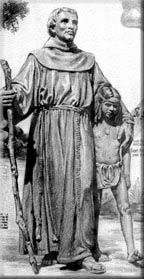
Today, July 1, we celebrate the feast day of Blessed Junipero Serra (1713-1784), Franciscan Friar and missionary throughout California and Mexico. Pope John Paul II, in his beatification homily praised Father Serra as ''a shining example of Christian virtue and the missionary spirit. His great goal,'' John Paul said, ''was to bring the Gospel to the Native People of America, so that they too might be consecrated in the truth.''
Miguel Jose Serra was born in Majorca, Spain. At the young age of 16, he entered into service to God, joining the Order of Saint Francis, and taking the name Junipero—in honor of Saint Juniper, the saintly friar companion of Saint Francis. Ordained at age 24, Junipero studied in Parma, the capital of Majorca, and taught philosophy and theology at the monastery of San Francisco at Lullian University for over a decade. Serra was known as a bright, articulate scholar -- a moving speaker and a clear, precise writer -- but he did not remain long in academic life. In 1749, at the age of 37, Junipero answered the call for missionaries, and left Europe, heading to the New World Western mission territories.
Junipero left Cadiz, Spain and sailed for Vera Cruz, Mexico. During the voyage, he suffered an insect bite which led to significant physical difficulties with his leg-- an ailment which remained for the rest of his life. Upon arrival in the New Work, he traveled by foot (as would become his custom, despite his physical limitations) to Mexico City to dedicate his mission vocation at the shrine of Mexico's Our Lady of Guadalupe. He then received his first assignment—the rugged, mountainous region of Mexico known as Sierra Gorda. Friar Junipero embraced his mission work, learning the language of the native Pame Indians and translating the Catechism for them. He remained at Sierra Gorda for nine years, strengthening and building missions.
Soon, word of Blessed Junipero’s commitment and skill spread, and he was re-assigned. His next mission was to journey from Mexico City into the coastal villages and mining camps. Again, despite his continuously infected and now ulcerated leg, he walked over 6,000 miles over eight years, preaching, converting, baptizing, and establishing missions. Before he was finished, Junipero would establish and oversee construction of 21 missions in California and Mexico. He was appointed Superior of Baja California, and later “padre president” of the region. He linked his 21 missions—each a one-day 30 mile walk from each other—by a dirt road, named “El Camino Real.”
Throughout his mission work, Father Serra sought to protect the native peoples, who were often ill-treated by the Spanish settlers and rulers. He struggled valiantly with military leaders, eventually becoming instrumental in the establishment of the “Regulations”—effectively, the first “bill of rights” for native peoples in the New World. He also spent time with the indigenous of the region, learning their language, teaching European farming techniques, animal husbandry, and arts and crafts. During his homily at Serra’s beatification, Pope John Paul II said: “Relying on the divine power of the message he proclaimed, Father Serra led the native peoples to Christ. He was well aware of their heroic virtues—as exemplified in the life of Blessed Kateri Tekakwitha [July 14]—and he sought to further their authentic human development on the basis of their new-found faith as persons created and redeemed by God. He also had to admonish the powerful, in the spirit of our second reading from James, not to abuse and exploit the poor and the weak.”
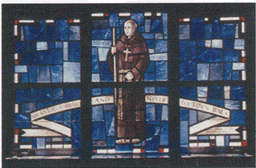
Despite constant setbacks, ill health, cold, hunger, and threat of bodily harm from military leaders and native Indians, Blessed Junipero never turned from his mission task. He kept with determination to his watchword, "Always to go forward and never to turn back." He is known for saying: "All my life I have wanted to be a missionary. I have wanted to carry the gospel message to those who have never heard of God and the kingdom he has prepared for them."
Friar Serra was imbued with a penitential spirit and practiced austerity in sleep, eating, and other activities. During his preaching, he would frequently enact harsh bodily penance, for the conversion and inspiration of his listeners. As described by his biographer, Palau, on one occasion:
“Imitating his devout San Francisco Solano, he drew out a chain, and letting his habit fall below his shoulders, after having exhorted his auditory to penance, he began to beat himself so cruelly that all the spectators were moved to tears, and one man rising up from among them, went with all haste to the pulpit and took the chain from the penitent father, came down with it to the platform of the presbiterio, and following the example of the venerable preacher, he bared himself to the waist and began to do public penance, saying with tears and sobs, ‘I am the sinner, ungrateful to God, who ought to do penance for my many sins, and not the father who is a saint.’ So cruel and pitiless were the blows, that, in the sight of all the people, he fell down, they supposing him to be dead. The last unction and sacrament were administered to him there, and soon afterward that he died. We may believe with pious faith, that this soul is enjoying the presence of God.”
Numerous miracles were attributed to the intercession of Friar Serra, recorded by his biographer, Palau:
Their apostolic labors having been finished, they were upon their way back, and at the end of a few days’ journey, when the sun was about to set, they knew not where to spend the night, and considered it certain that they must sleep upon the plain. They were thinking about this when they saw near the road a house, whither they went and solicited lodging. They found a venerable man, with his wife and child, who received them with much kindness and attention, and gave them supper. In the morning, the Fathers thanked their hosts, and taking leave, pursued their way. After having gone a little distance they met some muleteers, who asked them where they had passed the night. When the place was described, the muleteers declared that there was no such house or ranch near the road, or within many leagues. The missionaries attributed to Divine Providence the favor of that hospitality, and believed without doubt that these hosts were Jesus, Mary, and Joseph, reflecting not only about the order and cleanness of the house (though poor), and the affectionate kindness with which they had been received, but also about the extraordinary internal consolation which their hearts had felt there.”
At the age of 70, and after traveling 24,000 miles, Father JunÃpero Serra died at Mission San Carlos Borromeo and is buried there under the sanctuary floor. He was beatified by Pope John Paul II on September 25, 1988, and is currently being considered for Canonization. The zeal with which Blessed Junipero lived his life inspires us each to serve the Lord with the entirety of our hearts, souls, and lives. What a difference we might make in the world if we were to embrace our apostolic calling with the same vigor and commitment that Blessed Junipero did!
God most High,
your servant Junipero Serra
brought the gospel of Christ
to the peoples of Mexico and California
and firmly established the Church among them.
By his intercession,
and through the example of his apostolic zeal,
inspire us to be faithful witnesses of Jesus Christ,
who lives and reigns with you and the Holy Spirit,
one God, forever and ever.
Amen.
Inspired by the origins and spiritual history of the Holy Rosary, we continue our meditation on the psalms, one each day, in order, for 150 days.
Today’s Psalm: Psalm 67: Harvest Prayer That All Men May Worship God
1 May God be gracious to us and bless us
and make his face shine upon us,
2 that your ways may be known on earth,
your salvation among all nations.
3 May the peoples praise you, O God;
may all the peoples praise you.
4 May the nations be glad and sing for joy,
for you rule the peoples justly
and guide the nations of the earth.
5 May the peoples praise you, O God;
may all the peoples praise you.
6 Then the land will yield its harvest,
and God, our God, will bless us.
7 God will bless us,
and all the ends of the earth will fear him.
Day 182 of 365
Prayer Intentions: Zeal for the work of God; Safety and success of missionaries.
Requested Intentions: Healing of illness (P); Small business assistance, blessings on jobs, financial aid for college student (M); Financial assistance (F); For a recovery and sanctification (X); For a daughter struggling with disease and illness (T); For all lost children (I); Prosperity, health, healing, and conversion for a family (M); Health and healing of a mother (A); Healing of heart and mind (T); Healing of a new relationship before marriage (K); Healing of a relationship (T); Eternal rest for the dearly departed, end to financial struggles, successful sale of home, ability to travel on pilgrimage (L); For healing of a stomach illness (L); For the repose of the soul of a sister (C); Vocational security for family, Financial security for daughter beginning college (M); Vocational guidance, courage and strength (I); Health for an ailing nephew (A); Those suffering from depression (J); Successful adoption (S); Healing of a father battling cancer (S).
Psalm: Psalm 67: Harvest Prayer That All Men May Worship God
Miguel Jose Serra was born in Majorca, Spain. At the young age of 16, he entered into service to God, joining the Order of Saint Francis, and taking the name Junipero—in honor of Saint Juniper, the saintly friar companion of Saint Francis. Ordained at age 24, Junipero studied in Parma, the capital of Majorca, and taught philosophy and theology at the monastery of San Francisco at Lullian University for over a decade. Serra was known as a bright, articulate scholar -- a moving speaker and a clear, precise writer -- but he did not remain long in academic life. In 1749, at the age of 37, Junipero answered the call for missionaries, and left Europe, heading to the New World Western mission territories.
Junipero left Cadiz, Spain and sailed for Vera Cruz, Mexico. During the voyage, he suffered an insect bite which led to significant physical difficulties with his leg-- an ailment which remained for the rest of his life. Upon arrival in the New Work, he traveled by foot (as would become his custom, despite his physical limitations) to Mexico City to dedicate his mission vocation at the shrine of Mexico's Our Lady of Guadalupe. He then received his first assignment—the rugged, mountainous region of Mexico known as Sierra Gorda. Friar Junipero embraced his mission work, learning the language of the native Pame Indians and translating the Catechism for them. He remained at Sierra Gorda for nine years, strengthening and building missions.
Soon, word of Blessed Junipero’s commitment and skill spread, and he was re-assigned. His next mission was to journey from Mexico City into the coastal villages and mining camps. Again, despite his continuously infected and now ulcerated leg, he walked over 6,000 miles over eight years, preaching, converting, baptizing, and establishing missions. Before he was finished, Junipero would establish and oversee construction of 21 missions in California and Mexico. He was appointed Superior of Baja California, and later “padre president” of the region. He linked his 21 missions—each a one-day 30 mile walk from each other—by a dirt road, named “El Camino Real.”
Throughout his mission work, Father Serra sought to protect the native peoples, who were often ill-treated by the Spanish settlers and rulers. He struggled valiantly with military leaders, eventually becoming instrumental in the establishment of the “Regulations”—effectively, the first “bill of rights” for native peoples in the New World. He also spent time with the indigenous of the region, learning their language, teaching European farming techniques, animal husbandry, and arts and crafts. During his homily at Serra’s beatification, Pope John Paul II said: “Relying on the divine power of the message he proclaimed, Father Serra led the native peoples to Christ. He was well aware of their heroic virtues—as exemplified in the life of Blessed Kateri Tekakwitha [July 14]—and he sought to further their authentic human development on the basis of their new-found faith as persons created and redeemed by God. He also had to admonish the powerful, in the spirit of our second reading from James, not to abuse and exploit the poor and the weak.”
Despite constant setbacks, ill health, cold, hunger, and threat of bodily harm from military leaders and native Indians, Blessed Junipero never turned from his mission task. He kept with determination to his watchword, "Always to go forward and never to turn back." He is known for saying: "All my life I have wanted to be a missionary. I have wanted to carry the gospel message to those who have never heard of God and the kingdom he has prepared for them."
Friar Serra was imbued with a penitential spirit and practiced austerity in sleep, eating, and other activities. During his preaching, he would frequently enact harsh bodily penance, for the conversion and inspiration of his listeners. As described by his biographer, Palau, on one occasion:
“Imitating his devout San Francisco Solano, he drew out a chain, and letting his habit fall below his shoulders, after having exhorted his auditory to penance, he began to beat himself so cruelly that all the spectators were moved to tears, and one man rising up from among them, went with all haste to the pulpit and took the chain from the penitent father, came down with it to the platform of the presbiterio, and following the example of the venerable preacher, he bared himself to the waist and began to do public penance, saying with tears and sobs, ‘I am the sinner, ungrateful to God, who ought to do penance for my many sins, and not the father who is a saint.’ So cruel and pitiless were the blows, that, in the sight of all the people, he fell down, they supposing him to be dead. The last unction and sacrament were administered to him there, and soon afterward that he died. We may believe with pious faith, that this soul is enjoying the presence of God.”
Numerous miracles were attributed to the intercession of Friar Serra, recorded by his biographer, Palau:
“When he [Serra] was traveling with a party of missionaries through the province of Huasteca [in Mexico], many of the villagers did not go to hear the word of God at the first village where they stopped; but scarcely had the fathers left the place when it was visited by an epidemic, which carried away sixty villagers, all of whom, as the curate of the place wrote to the reverend father JunÃpero, were persons who had not gone to hear the missionaries. The rumor of the epidemic having gone abroad, the people in other villages were dissatisfied with their curates for admitting the missionaries; but when they heard that only those died who did not listen to the sermons, they became very punctual, not only the villagers, but the country people dwelling upon ranchos many leagues distant.
Their apostolic labors having been finished, they were upon their way back, and at the end of a few days’ journey, when the sun was about to set, they knew not where to spend the night, and considered it certain that they must sleep upon the plain. They were thinking about this when they saw near the road a house, whither they went and solicited lodging. They found a venerable man, with his wife and child, who received them with much kindness and attention, and gave them supper. In the morning, the Fathers thanked their hosts, and taking leave, pursued their way. After having gone a little distance they met some muleteers, who asked them where they had passed the night. When the place was described, the muleteers declared that there was no such house or ranch near the road, or within many leagues. The missionaries attributed to Divine Providence the favor of that hospitality, and believed without doubt that these hosts were Jesus, Mary, and Joseph, reflecting not only about the order and cleanness of the house (though poor), and the affectionate kindness with which they had been received, but also about the extraordinary internal consolation which their hearts had felt there.”
At the age of 70, and after traveling 24,000 miles, Father JunÃpero Serra died at Mission San Carlos Borromeo and is buried there under the sanctuary floor. He was beatified by Pope John Paul II on September 25, 1988, and is currently being considered for Canonization. The zeal with which Blessed Junipero lived his life inspires us each to serve the Lord with the entirety of our hearts, souls, and lives. What a difference we might make in the world if we were to embrace our apostolic calling with the same vigor and commitment that Blessed Junipero did!
God most High,
your servant Junipero Serra
brought the gospel of Christ
to the peoples of Mexico and California
and firmly established the Church among them.
By his intercession,
and through the example of his apostolic zeal,
inspire us to be faithful witnesses of Jesus Christ,
who lives and reigns with you and the Holy Spirit,
one God, forever and ever.
Amen.
Inspired by the origins and spiritual history of the Holy Rosary, we continue our meditation on the psalms, one each day, in order, for 150 days.
Today’s Psalm: Psalm 67: Harvest Prayer That All Men May Worship God
1 May God be gracious to us and bless us
and make his face shine upon us,
2 that your ways may be known on earth,
your salvation among all nations.
3 May the peoples praise you, O God;
may all the peoples praise you.
4 May the nations be glad and sing for joy,
for you rule the peoples justly
and guide the nations of the earth.
5 May the peoples praise you, O God;
may all the peoples praise you.
6 Then the land will yield its harvest,
and God, our God, will bless us.
7 God will bless us,
and all the ends of the earth will fear him.
Day 182 of 365
Prayer Intentions: Zeal for the work of God; Safety and success of missionaries.
Requested Intentions: Healing of illness (P); Small business assistance, blessings on jobs, financial aid for college student (M); Financial assistance (F); For a recovery and sanctification (X); For a daughter struggling with disease and illness (T); For all lost children (I); Prosperity, health, healing, and conversion for a family (M); Health and healing of a mother (A); Healing of heart and mind (T); Healing of a new relationship before marriage (K); Healing of a relationship (T); Eternal rest for the dearly departed, end to financial struggles, successful sale of home, ability to travel on pilgrimage (L); For healing of a stomach illness (L); For the repose of the soul of a sister (C); Vocational security for family, Financial security for daughter beginning college (M); Vocational guidance, courage and strength (I); Health for an ailing nephew (A); Those suffering from depression (J); Successful adoption (S); Healing of a father battling cancer (S).
Psalm: Psalm 67: Harvest Prayer That All Men May Worship God
Subscribe to:
Posts (Atom)