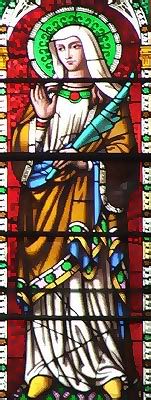
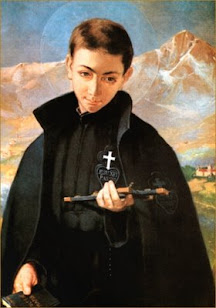
Today, July 9, we celebrate the feast of Saint Veronica Giuliani (1660-1727), Capuchin mystic and stigmatist. Regarded as one of the most extraordinary mystics of her time, Veronica was the recipient of the stigmata and visions of Christ in 1697. She impressed her fellow nuns by remaining remarkably practical despite her numerous ecstatic experiences, leading her order toward union with Christ in His suffering.
Saint Veronica was born named Ursula, in Binasco, Italy (near Milan), the daughter of pious parents. From an early age, Veronica demonstrated signs of sanctity. It is told that when she was only eighteen months old, she uttered her first words a shop clerk who was trying to sell her mother a false measure of oil, saying distinctly, "Do justice, God sees you."
At the age of three, Ursula was first graced with Divine communications, and as a result, began to show great compassion for the poor. Each day, she would set aside a portion of her food for them, and was even known to literally give the clothes off her back to poor children whom she would encounter. As she grew older, her devotion to God, especially her great love for the Cross and for the suffering of Christ, grew exponentially. By all reports, Ursula very much wished others to join her in her religious pursuits, prayer, fasting, and penance. However, her family and peers were less devout, and in these moments, she tended to demand their piety and participation in her routines—a character weakness she corrected following a vision of her heart as a heart of steel when she was sixteen.
Sometime in Ursula’s adolescence, her mother passed away, after first consecrating her daughter to the wounds of Christ. Her father, raising five girls on his own, also received a significant promotion at the time, becoming the superintendent of finance at Piacenza. In her writings, Ursula confessed that she enjoyed the privileges and wealth that her father’s position afforded the family, but through a series of visions came to realize that a religious life was her calling. Despite her father’s urging to marry—and his arrangement of several suitors for her—Ursula refused. She fell ill, and only recovered upon receiving her father’s permission to join the convent of Capuchin Poor Clares in Citt' di Castello.
Ursula joined the order in 1677, taking the name of Veronica in memory of the Passion. At the conclusion of her reception, the presiding bishop said to the abbess: "I commend this new daughter to your special care, for she will one day be a great saint." In her writings, Saint Veronica details the trials and struggles she underwent during her novitiate, tempted to leave the order and return to the world. However, she embraced her calling, and demonstrated obedience, Christian meekness, and submissiveness to her superiors, earning her the respect and admiration of her sisters. The following year, in 1678, she professed her entrance into the Capuchin Order, and began receiving heavenly visions, desiring to suffer in union with Christ for the conversion of sinners.
Saint Veronica’s first vision occurred one day, while praying alone in her cell. Jesus appeared to her, carrying His cross on His shoulder. He asked her, “What do you wish?”
Veronica replied, “That Cross, and I wish for You, for Your love.”
Jesus took the cross from His shoulder, placing it on hers. As Veronica wrote in her diary, the cross was too heavy, and she fell to the ground beneath its weight, but the Lord lifted her back up. Following this vision, she reported a physical pain in her heart for the remainder of her life, and upon examination following her death, an imprint of the cross was discovered on her heart.
In 1693, Jesus again appeared to Saint Veronica, showing her a chalice full of liquid, which seemed to be on fire. He told her, “If you want to be Mine, you must taste this liquid for my love.” Veronica later wrote that when He placed just a few drops of the liquid on her tongue, she was filled with such indescribable bitterness and sadness, she thought she would die. Her tongue became dry and from that day on, she could not taste anything. From that time on, the suffering of the Passion of Christ was continuously experienced by Saint Veronica, causing her extreme suffering and sadness. Despite this great weight, she never complained, joining her suffering to that of Christ for the conversion of sinners.
On another occasion, in 1694, Jesus appeared again to Veronica, covered with sores, the crown of thorns on His head, and actively bleeding. He said to her, “See what sinners have done to me?”
Veronica wrote in her diary, following that vision: “Seeing the great agony that my Lord was in, I begged Him to give Me His Crown. He placed it on my head; I suffered so much, I thought I was dying.” Veronica received the stigmata of the crown of thorns, which remained permanently etched on her forehead. She could be observed to be bleeding beneath her veil, such was the wound she suffered. Her superior, and eventually her bishop, ordered her to receive medical care, which she obediently undertook. However, she received little comfort.
The last of her visions occurred on Christmas Day, when the Infant Jesus appeared to Veronica. She awoke with a deep pain in her heart, and found herself to be bleeding. Her heart ached so painfully, she was unable to sleep. Jesus told her that she would have to bears the marks of His wounds, feeling the lance and nails he felt on the cross. She wrote in her diary:
“In an instant, I saw five shining rays shooting out from His Wounds, coming towards me. I watched as they turned into little flames. Four of them (the flames) contained the nails, and the fifth one contained the lance, golden and all aflame, and it pierced my heart. The nails pierced my hands and feet.” Embracing the crucifix from her wall, Veronica said: “My Lord, pains with pains, thorns with thorns, sores with sores, here I am all Yours, crucified with You, crowned with thorns with You, wounded with You.”
Veronica was appointed Mistress of Novices, a role she filled for 34 years, guiding the novices with great prudence, and refusing to let them read any related to visions or mysticism, insisting that they instead become practical brides of Christ. During that time, she began to physically relive the Passion each night, carrying a heavy cross through the garden of the monastery. While she did so, she wore a robe lines with sharp thorns which pierced her body. She would often carry this heavy cross until the point of collapse, at which time her sisters observed her levitating. She further engaged in fasting, eating little more than bread and water in penance for sinners.
In 1716, Saint Veronica was elected Abbess, a position she held until her death eleven years later. Her body remains beautifully incorrupt and can be seen at the Monastery of St. Veronica Giuliani in Citt` di Castello, Italy.
Saint Veronica’s willingness to suffer—her desire to suffer—is remarkable. She endured the physical, emotional, and spiritual pain of the Passion without complaint. She never tried to prove her stigmata to be real, despite the scorn of some of her community, and would not have sought medical help without being ordered to do so. Instead, she bore her cross—the Cross of Christ—and turned to Him for comfort and assistance. The beautiful symbolism of her first vision, in which she fell beneath the weight of the cross, only to be lifted by Jesus, is a message that we can each carry into our own lives. While we may not be graced with the spiritual gifts of vision, ecstasy, or stigmata, we each have struggles and personal crosses to carry. In looking to the Lord, in joining with Christ’s suffering on Calvary, we find our own sorrows to be eased, our burdens to be lighter, our crosses to be lifted by He who suffered and died for us!
Inspired by the origins and spiritual history of the Holy Rosary, we continue our meditation on the psalms, one each day, in order, for 150 days.
Today’s Psalm: Psalm 75: God the Just Judge of the Wicked
1 We give thanks to you, O God,
we give thanks, for your Name is near;
men tell of your wonderful deeds.
2 You say, "I choose the appointed time;
it is I who judge uprightly.
3 When the earth and all its people quake,
it is I who hold its pillars firm.
4 To the arrogant I say, 'Boast no more,'
and to the wicked, 'Do not lift up your horns.
5 Do not lift your horns against heaven;
do not speak with outstretched neck.' "
6 No one from the east or the west
or from the desert can exalt a man.
7 But it is God who judges:
He brings one down, he exalts another.
8 In the hand of the LORD is a cup
full of foaming wine mixed with spices;
he pours it out, and all the wicked of the earth
drink it down to its very dregs.
9 As for me, I will declare this forever;
I will sing praise to the God of Jacob.
10 I will cut off the horns of all the wicked,
but the horns of the righteous will be lifted up.
Day 190 of 365
Prayer Intentions: Comfort in our suffering; Union with Christ.
Requested Intentions: For a recovery and sanctification (X); For a daughter struggling with disease and illness (T); For all lost children (I); Prosperity, health, healing, and conversion for a family (M); Health and healing of a mother (A); Healing of heart and mind (T); Healing of a new relationship before marriage (K); Healing of a relationship (T); Eternal rest for the dearly departed, end to financial struggles, successful sale of home, ability to travel on pilgrimage (L); For healing of a stomach illness (L); For the repose of the soul of a sister (C); Vocational security for family, Financial security for daughter beginning college (M); Vocational guidance, courage and strength (I); Health for an ailing nephew (A); Those suffering from depression (J); Successful adoption (S); Healing of a father battling cancer (S).
Psalm: Psalm 75: God the Just Judge of the Wicked
Why pray the Rosary every day for a year?
Each time the Blessed Virgin has appeared-- whether it be to Saint Bernadette Soubirous at Lourdes; to Lucia, Jacinta, and Francisco at Fatima; or to Mariette Beco at Banneux-- she has asserted the importance, saving grace, and power of praying the Holy Rosary on a daily basis. Based upon her words, the Rosary is penance and conversion for sinners, a pathway to peace, an end to war, and a powerful act of faith in Jesus Christ. Pope Paul VI presented the Rosary as a powerful means to reach Christ "not merely with Mary but indeed, insofar as this is possible to us, in the same way as Mary, who is certainly the one who thought about Him more than anyone else has ever done."
To show us how this is done, perhaps no one has been more eloquent than the great Cardinal Newman, who wrote: "The great power of the Rosary consists in the fact that it translates the Creed into Prayer. Of course, the Creed is already in a certain sense a prayer and a great act of homage towards God, but the Rosary brings us to meditate again on the great truth of His life and death, and brings this truth close to our hearts. Even Christians, although they know God, usually fear rather than love Him. The strength of the Rosary lies in the particular manner in which it considers these mysteries, since all our thinking about Christ is intertwined with the thought of His Mother, in the relations between Mother and Son; the Holy Family is presented to us, the home in which God lived His infinite love."
As Mary said at Fatima, "Jesus wants to use you to make Me known and loved. He wishes to establish the devotion to My Immaculate Heart throughout the world. I promise salvation to whoever embraces it; these souls will be dear to God, like flowers put by Me to adorn his throne."
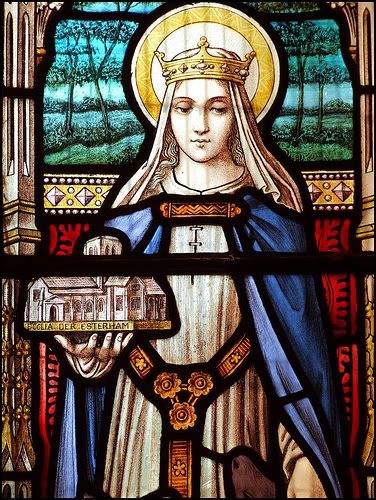
Today, July 8, we celebrate the feast of Saint Withburga (died 643), sister of Saint Etheldreda, miracle worker, foundress of the Convent at East Dereham, and Abbess. The simple and obedient life of Saint Withburga inspires us to discern the will of God in our own lives, following His plan to our best ability.
Born the youngest daughter of Anna, King of East Anglia, Withburga grew up in a privileged class, considered a princess. Upon her father’s death, while she was still quite young, Withburga was sent with her nurse to live in a small town near Norfolk called Dereham. There, she grew in piety and love for the Lord, and established a small nunnery with the help of her sister, Etheldreda. She served as Abbess of the fledgling community, which grew considerably under her direction. As the community grew, Withburga eventually began construction of a church.
It is at that point that miracles began to occur, spreading her notoriety and drawing pilgrims to her construction site. As construction of the church continued, money was short. At times, Withburga had little more than bread to feed her workers. One night Our Blessed Mother appeared to Withburga, saying “Send two of your women down to the stream every morning, where two does will stand to be milked.” This she did without question, and the two nuns found the deer waiting, as promised. As a result, there was butter and cheese for all to add to their diet, and the construction progressed with great speed.
Saint Withburga came to be recognized for her great piety, patience, and advice. She was sought out be locals, as well as by leaders from far away. The local official, jealous of the positive attention she was receiving, set off with his hounds to kill the miraculous deer, but was instead thrown from his horse and died of a broken neck. All present reported this as miraculous, which only increased the stream of pilgrims to the area—visiting the stream, the church, and hoping for an audience with Withburga herself.
Saint Withburga died prior to the completion of the church. Pilgrims continued to flock to her graveside, where numerous miracles were reported. Upon exhumation (55 years after her death), her body was discovered to be incorrupt, and moved into a shrine contained within the completed church. Having consecrated herself a virgin while alive, Saint Withburga’s corpse is said to have blushed when one of the men who exhumed the body brushed her check with his finger. Years later, the saint’s relics were stolen from her tomb (by a well-intentioned bishop), and translated to Ely, to be placed next to her sisters. Where her body had been, fresh water sprang forth, and continues to flow freely today. Saint Withburga’s Well has never run dry (despite drought), and some have claimed miraculous healing due to prayer and imbibing of the clear water.
Saint Withburga’s simple faith and obedience allowed her to create an active religious community, offer healing and advice to believers, and feed those who were hungry. Her life is remembered as one of purity and hard work, turning from a privileged life and dedicating herself to the Lord. We look to her for inspiration—just as the pilgrims of her day did-- in making our daily life choices. What advice might Saint Withburga give each of us, were we to ask her today?
Inspired by the origins and spiritual history of the Holy Rosary, we continue our meditation on the psalms, one each day, in order, for 150 days.
Today’s Psalm: Psalm 74: Prayer in Time of National Calamity
1 Why have you rejected us forever, O God?
Why does your anger smolder against the sheep of your pasture?
2 Remember the people you purchased of old,
the tribe of your inheritance, whom you redeemed—
Mount Zion, where you dwelt.
3 Turn your steps toward these everlasting ruins,
all this destruction the enemy has brought on the sanctuary.
4 Your foes roared in the place where you met with us;
they set up their standards as signs.
5 They behaved like men wielding axes
to cut through a thicket of trees.
6 They smashed all the carved paneling
with their axes and hatchets.
7 They burned your sanctuary to the ground;
they defiled the dwelling place of your Name.
8 They said in their hearts, "We will crush them completely!"
They burned every place where God was worshiped in the land.
9 We are given no miraculous signs;
no prophets are left,
and none of us knows how long this will be.
10 How long will the enemy mock you, O God?
Will the foe revile your name forever?
11 Why do you hold back your hand, your right hand?
Take it from the folds of your garment and destroy them!
12 But you, O God, are my king from of old;
you bring salvation upon the earth.
13 It was you who split open the sea by your power;
you broke the heads of the monster in the waters.
14 It was you who crushed the heads of Leviathan
and gave him as food to the creatures of the desert.
15 It was you who opened up springs and streams;
you dried up the ever flowing rivers.
16 The day is yours, and yours also the night;
you established the sun and moon.
17 It was you who set all the boundaries of the earth;
you made both summer and winter.
18 Remember how the enemy has mocked you, O LORD,
how foolish people have reviled your name.
19 Do not hand over the life of your dove to wild beasts;
do not forget the lives of your afflicted people forever.
20 Have regard for your covenant,
because haunts of violence fill the dark places of the land.
21 Do not let the oppressed retreat in disgrace;
may the poor and needy praise your name.
22 Rise up, O God, and defend your cause;
remember how fools mock you all day long.
23 Do not ignore the clamor of your adversaries,
the uproar of your enemies, which rises continually.
Day 189 of 365
Prayer Intentions: Simple, practical faith; Self-sacrifice; Guidance in our daily lives and choices.
Requested Intentions: For a recovery and sanctification (X); For a daughter struggling with disease and illness (T); For all lost children (I); Prosperity, health, healing, and conversion for a family (M); Health and healing of a mother (A); Healing of heart and mind (T); Healing of a new relationship before marriage (K); Healing of a relationship (T); Eternal rest for the dearly departed, end to financial struggles, successful sale of home, ability to travel on pilgrimage (L); For healing of a stomach illness (L); For the repose of the soul of a sister (C); Vocational security for family, Financial security for daughter beginning college (M); Vocational guidance, courage and strength (I); Health for an ailing nephew (A); Those suffering from depression (J); Successful adoption (S); Healing of a father battling cancer (S).
Psalm: Psalm 74: Prayer in Time of National Calamity
Born the youngest daughter of Anna, King of East Anglia, Withburga grew up in a privileged class, considered a princess. Upon her father’s death, while she was still quite young, Withburga was sent with her nurse to live in a small town near Norfolk called Dereham. There, she grew in piety and love for the Lord, and established a small nunnery with the help of her sister, Etheldreda. She served as Abbess of the fledgling community, which grew considerably under her direction. As the community grew, Withburga eventually began construction of a church.
It is at that point that miracles began to occur, spreading her notoriety and drawing pilgrims to her construction site. As construction of the church continued, money was short. At times, Withburga had little more than bread to feed her workers. One night Our Blessed Mother appeared to Withburga, saying “Send two of your women down to the stream every morning, where two does will stand to be milked.” This she did without question, and the two nuns found the deer waiting, as promised. As a result, there was butter and cheese for all to add to their diet, and the construction progressed with great speed.
Saint Withburga came to be recognized for her great piety, patience, and advice. She was sought out be locals, as well as by leaders from far away. The local official, jealous of the positive attention she was receiving, set off with his hounds to kill the miraculous deer, but was instead thrown from his horse and died of a broken neck. All present reported this as miraculous, which only increased the stream of pilgrims to the area—visiting the stream, the church, and hoping for an audience with Withburga herself.
Saint Withburga died prior to the completion of the church. Pilgrims continued to flock to her graveside, where numerous miracles were reported. Upon exhumation (55 years after her death), her body was discovered to be incorrupt, and moved into a shrine contained within the completed church. Having consecrated herself a virgin while alive, Saint Withburga’s corpse is said to have blushed when one of the men who exhumed the body brushed her check with his finger. Years later, the saint’s relics were stolen from her tomb (by a well-intentioned bishop), and translated to Ely, to be placed next to her sisters. Where her body had been, fresh water sprang forth, and continues to flow freely today. Saint Withburga’s Well has never run dry (despite drought), and some have claimed miraculous healing due to prayer and imbibing of the clear water.
Saint Withburga’s simple faith and obedience allowed her to create an active religious community, offer healing and advice to believers, and feed those who were hungry. Her life is remembered as one of purity and hard work, turning from a privileged life and dedicating herself to the Lord. We look to her for inspiration—just as the pilgrims of her day did-- in making our daily life choices. What advice might Saint Withburga give each of us, were we to ask her today?
Inspired by the origins and spiritual history of the Holy Rosary, we continue our meditation on the psalms, one each day, in order, for 150 days.
Today’s Psalm: Psalm 74: Prayer in Time of National Calamity
1 Why have you rejected us forever, O God?
Why does your anger smolder against the sheep of your pasture?
2 Remember the people you purchased of old,
the tribe of your inheritance, whom you redeemed—
Mount Zion, where you dwelt.
3 Turn your steps toward these everlasting ruins,
all this destruction the enemy has brought on the sanctuary.
4 Your foes roared in the place where you met with us;
they set up their standards as signs.
5 They behaved like men wielding axes
to cut through a thicket of trees.
6 They smashed all the carved paneling
with their axes and hatchets.
7 They burned your sanctuary to the ground;
they defiled the dwelling place of your Name.
8 They said in their hearts, "We will crush them completely!"
They burned every place where God was worshiped in the land.
9 We are given no miraculous signs;
no prophets are left,
and none of us knows how long this will be.
10 How long will the enemy mock you, O God?
Will the foe revile your name forever?
11 Why do you hold back your hand, your right hand?
Take it from the folds of your garment and destroy them!
12 But you, O God, are my king from of old;
you bring salvation upon the earth.
13 It was you who split open the sea by your power;
you broke the heads of the monster in the waters.
14 It was you who crushed the heads of Leviathan
and gave him as food to the creatures of the desert.
15 It was you who opened up springs and streams;
you dried up the ever flowing rivers.
16 The day is yours, and yours also the night;
you established the sun and moon.
17 It was you who set all the boundaries of the earth;
you made both summer and winter.
18 Remember how the enemy has mocked you, O LORD,
how foolish people have reviled your name.
19 Do not hand over the life of your dove to wild beasts;
do not forget the lives of your afflicted people forever.
20 Have regard for your covenant,
because haunts of violence fill the dark places of the land.
21 Do not let the oppressed retreat in disgrace;
may the poor and needy praise your name.
22 Rise up, O God, and defend your cause;
remember how fools mock you all day long.
23 Do not ignore the clamor of your adversaries,
the uproar of your enemies, which rises continually.
Day 189 of 365
Prayer Intentions: Simple, practical faith; Self-sacrifice; Guidance in our daily lives and choices.
Requested Intentions: For a recovery and sanctification (X); For a daughter struggling with disease and illness (T); For all lost children (I); Prosperity, health, healing, and conversion for a family (M); Health and healing of a mother (A); Healing of heart and mind (T); Healing of a new relationship before marriage (K); Healing of a relationship (T); Eternal rest for the dearly departed, end to financial struggles, successful sale of home, ability to travel on pilgrimage (L); For healing of a stomach illness (L); For the repose of the soul of a sister (C); Vocational security for family, Financial security for daughter beginning college (M); Vocational guidance, courage and strength (I); Health for an ailing nephew (A); Those suffering from depression (J); Successful adoption (S); Healing of a father battling cancer (S).
Psalm: Psalm 74: Prayer in Time of National Calamity
Today, July 7, we celebrate the feast day of three English Martyrs: Blessed Roger Dicconson, Blessed Ralph Milner, and Blessed Lawrence Humphrey (died 1591). Each of these holy men faced persecution and death without fear, confident in the Lord, ready to die for our faith. Their lives and deaths remind us of the importance of our beliefs, and their sacrifice inspires us to live more confidently in the Lord.
The Catholic Church was persecuted in England for quite some time, particularly under the reign of Queen Elizabeth I. I have previously written about Blessed Edward Jones and Anthony Middleton, Saint Margaret Clitherow, Saint Nicholas Owen, and Saints Thomas More and John Fisher. The three holy men we remember today join the ranks of over 40 martyrs who gave their lives for the faith in England.
Roger Dicconson was an “undercover priest,” preaching throughout England, celebrating the Eucharist, and delivering the sacraments—all in secret. Having been born and raised in Lincoln, Farther Dicconson had studied and been ordained in Rheims, France, and then returned to minister to the faithful in his homeland. Despite the threat of persecution, imprisonment, and even death, Father Dicconson continued his work, strengthening the faithful and avoiding capture for some time.
Ralph Milner met Father Dicconson after he was imprisoned for being Catholic. Ralph had grown up in Flacstead, Hampshire, and tended a family farm there. He was married, and he and his wife had raised eight children in the Protestant faith. Ralph’s neighbors, who were Catholic, inspired him to convert through their goodness and charity, and along with his entire family, he received instruction and welcome into the Church. The very day that he received his first Holy Eucharist, he was arrested and imprisoned. By all accounts a cheerful and well behaved man, the guards of the prison took to Ralph instantly. Rather than leave him locked up, they offered him frequent passes out of prison to buy supplies, food, and perform simple tasks. One of his tasks—unbeknownst to the guards—was to tend to the spiritual needs of the other Catholic prisoners by bringing them undercover priests, such as Father Dicconson.
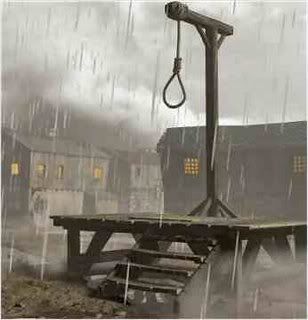
On one such “parole,” Ralph and Father Dicconson were arrested (again!) during their rounds through local villages preaching and delivering the Eucharist. They were immediately tried and thrown into the Winchester jail, where they met Blessed Lawrence Humphrey—a young man of 21 years, who was a converted Catholic. The judge, hoping to save Ralph so that he may attend to his wife and eight children, offered him a simple way out: "All you have to do," the judge declared, "is pay a to a Protestant church, just for a few minutes, to say you have been there. I'll let you go free to be with your family." Without hesitation, Ralph quietly and firmly refused, proclaiming he would rather die for his faith, and refusing "to embrace a counsel so disagreeable to the maxims of the Gospel." Despite every effort by the judge and the guards who had come to like him, Ralph was unshaken in his resolution. After giving his children his last blessing, he declared that "he could wish them no greater happiness than to die for the like cause.” Unfortunately, that is exactly what happened: Ralph Milner, Lawrence Humphrey, and Father Dicconson were hung, drawn, and quartered on July 7, 1591.
The lives of martyrs are examples of deep faith and confidence in our Lord. Their brave lives and courageous deaths remind us of where our faith is flawed and lacking the conviction that Our Lord so justly deserves. In remembering the three pious men we celebrate today, we might be inspired to examine our own beliefs and priorities- how strong is our personal faith? How easily would we recant? What worldly enticement or threat would be required for us to deny Our Lord? We pray today for the strength and courage of conviction to remain true to our faith and our Creed.
Inspired by the origins and spiritual history of the Holy Rosary, we continue our meditation on the psalms, one each day, in order, for 150 days. The three holy martyrs we celebrate today clung to their beliefs and goodness, preferring to be persecuted and killed in this world, rather than falsely happy.
Today’s Psalm: Psalm 73: The False Happiness of the Wicked
1 Surely God is good to Israel,
to those who are pure in heart.
2 But as for me, my feet had almost slipped;
I had nearly lost my foothold.
3 For I envied the arrogant
when I saw the prosperity of the wicked.
4 They have no struggles;
their bodies are healthy and strong.
5 They are free from the burdens common to man;
they are not plagued by human ills.
6 Therefore pride is their necklace;
they clothe themselves with violence.
7 From their callous hearts comes iniquity;
the evil conceits of their minds know no limits.
8 They scoff, and speak with malice;
in their arrogance they threaten oppression.
9 Their mouths lay claim to heaven,
and their tongues take possession of the earth.
10 Therefore their people turn to them
and drink up waters in abundance.
11 They say, "How can God know?
Does the Most High have knowledge?"
12 This is what the wicked are like—
always carefree, they increase in wealth.
13 Surely in vain have I kept my heart pure;
in vain have I washed my hands in innocence.
14 All day long I have been plagued;
I have been punished every morning.
15 If I had said, "I will speak thus,"
I would have betrayed your children.
16 When I tried to understand all this,
it was oppressive to me
17 till I entered the sanctuary of God;
then I understood their final destiny.
18 Surely you place them on slippery ground;
you cast them down to ruin.
19 How suddenly are they destroyed,
completely swept away by terrors!
20 As a dream when one awakes,
so when you arise, O Lord,
you will despise them as fantasies.
21 When my heart was grieved
and my spirit embittered,
22 I was senseless and ignorant;
I was a brute beast before you.
23 Yet I am always with you;
you hold me by my right hand.
24 You guide me with your counsel,
and afterward you will take me into glory.
25 Whom have I in heaven but you?
And earth has nothing I desire besides you.
26 My flesh and my heart may fail,
but God is the strength of my heart
and my portion forever.
27 Those who are far from you will perish;
you destroy all who are unfaithful to you.
28 But as for me, it is good to be near God.
I have made the Sovereign LORD my refuge;
I will tell of all your deeds.
Day 188 of 365
Prayer Intentions: Confidence and deep faith in the Lord.
Requested Intentions: Infant in Intensive Care (N); Employment (K); Employment; Discernment of God’s will (A); Healing of illness (P); Small business assistance, blessings on jobs, financial aid for college student (M); Financial assistance (F); For a recovery and sanctification (X); For a daughter struggling with disease and illness (T); For all lost children (I); Prosperity, health, healing, and conversion for a family (M); Health and healing of a mother (A); Healing of heart and mind (T); Healing of a new relationship before marriage (K); Healing of a relationship (T); Eternal rest for the dearly departed, end to financial struggles, successful sale of home, ability to travel on pilgrimage (L); For healing of a stomach illness (L); For the repose of the soul of a sister (C); Vocational security for family, Financial security for daughter beginning college (M); Vocational guidance, courage and strength (I); Health for an ailing nephew (A); Those suffering from depression (J); Successful adoption (S); Healing of a father battling cancer (S).
Psalm: Psalm 73: The False Happiness of the Wicked
The Catholic Church was persecuted in England for quite some time, particularly under the reign of Queen Elizabeth I. I have previously written about Blessed Edward Jones and Anthony Middleton, Saint Margaret Clitherow, Saint Nicholas Owen, and Saints Thomas More and John Fisher. The three holy men we remember today join the ranks of over 40 martyrs who gave their lives for the faith in England.
Roger Dicconson was an “undercover priest,” preaching throughout England, celebrating the Eucharist, and delivering the sacraments—all in secret. Having been born and raised in Lincoln, Farther Dicconson had studied and been ordained in Rheims, France, and then returned to minister to the faithful in his homeland. Despite the threat of persecution, imprisonment, and even death, Father Dicconson continued his work, strengthening the faithful and avoiding capture for some time.
Ralph Milner met Father Dicconson after he was imprisoned for being Catholic. Ralph had grown up in Flacstead, Hampshire, and tended a family farm there. He was married, and he and his wife had raised eight children in the Protestant faith. Ralph’s neighbors, who were Catholic, inspired him to convert through their goodness and charity, and along with his entire family, he received instruction and welcome into the Church. The very day that he received his first Holy Eucharist, he was arrested and imprisoned. By all accounts a cheerful and well behaved man, the guards of the prison took to Ralph instantly. Rather than leave him locked up, they offered him frequent passes out of prison to buy supplies, food, and perform simple tasks. One of his tasks—unbeknownst to the guards—was to tend to the spiritual needs of the other Catholic prisoners by bringing them undercover priests, such as Father Dicconson.
On one such “parole,” Ralph and Father Dicconson were arrested (again!) during their rounds through local villages preaching and delivering the Eucharist. They were immediately tried and thrown into the Winchester jail, where they met Blessed Lawrence Humphrey—a young man of 21 years, who was a converted Catholic. The judge, hoping to save Ralph so that he may attend to his wife and eight children, offered him a simple way out: "All you have to do," the judge declared, "is pay a to a Protestant church, just for a few minutes, to say you have been there. I'll let you go free to be with your family." Without hesitation, Ralph quietly and firmly refused, proclaiming he would rather die for his faith, and refusing "to embrace a counsel so disagreeable to the maxims of the Gospel." Despite every effort by the judge and the guards who had come to like him, Ralph was unshaken in his resolution. After giving his children his last blessing, he declared that "he could wish them no greater happiness than to die for the like cause.” Unfortunately, that is exactly what happened: Ralph Milner, Lawrence Humphrey, and Father Dicconson were hung, drawn, and quartered on July 7, 1591.
The lives of martyrs are examples of deep faith and confidence in our Lord. Their brave lives and courageous deaths remind us of where our faith is flawed and lacking the conviction that Our Lord so justly deserves. In remembering the three pious men we celebrate today, we might be inspired to examine our own beliefs and priorities- how strong is our personal faith? How easily would we recant? What worldly enticement or threat would be required for us to deny Our Lord? We pray today for the strength and courage of conviction to remain true to our faith and our Creed.
Inspired by the origins and spiritual history of the Holy Rosary, we continue our meditation on the psalms, one each day, in order, for 150 days. The three holy martyrs we celebrate today clung to their beliefs and goodness, preferring to be persecuted and killed in this world, rather than falsely happy.
Today’s Psalm: Psalm 73: The False Happiness of the Wicked
1 Surely God is good to Israel,
to those who are pure in heart.
2 But as for me, my feet had almost slipped;
I had nearly lost my foothold.
3 For I envied the arrogant
when I saw the prosperity of the wicked.
4 They have no struggles;
their bodies are healthy and strong.
5 They are free from the burdens common to man;
they are not plagued by human ills.
6 Therefore pride is their necklace;
they clothe themselves with violence.
7 From their callous hearts comes iniquity;
the evil conceits of their minds know no limits.
8 They scoff, and speak with malice;
in their arrogance they threaten oppression.
9 Their mouths lay claim to heaven,
and their tongues take possession of the earth.
10 Therefore their people turn to them
and drink up waters in abundance.
11 They say, "How can God know?
Does the Most High have knowledge?"
12 This is what the wicked are like—
always carefree, they increase in wealth.
13 Surely in vain have I kept my heart pure;
in vain have I washed my hands in innocence.
14 All day long I have been plagued;
I have been punished every morning.
15 If I had said, "I will speak thus,"
I would have betrayed your children.
16 When I tried to understand all this,
it was oppressive to me
17 till I entered the sanctuary of God;
then I understood their final destiny.
18 Surely you place them on slippery ground;
you cast them down to ruin.
19 How suddenly are they destroyed,
completely swept away by terrors!
20 As a dream when one awakes,
so when you arise, O Lord,
you will despise them as fantasies.
21 When my heart was grieved
and my spirit embittered,
22 I was senseless and ignorant;
I was a brute beast before you.
23 Yet I am always with you;
you hold me by my right hand.
24 You guide me with your counsel,
and afterward you will take me into glory.
25 Whom have I in heaven but you?
And earth has nothing I desire besides you.
26 My flesh and my heart may fail,
but God is the strength of my heart
and my portion forever.
27 Those who are far from you will perish;
you destroy all who are unfaithful to you.
28 But as for me, it is good to be near God.
I have made the Sovereign LORD my refuge;
I will tell of all your deeds.
Day 188 of 365
Prayer Intentions: Confidence and deep faith in the Lord.
Requested Intentions: Infant in Intensive Care (N); Employment (K); Employment; Discernment of God’s will (A); Healing of illness (P); Small business assistance, blessings on jobs, financial aid for college student (M); Financial assistance (F); For a recovery and sanctification (X); For a daughter struggling with disease and illness (T); For all lost children (I); Prosperity, health, healing, and conversion for a family (M); Health and healing of a mother (A); Healing of heart and mind (T); Healing of a new relationship before marriage (K); Healing of a relationship (T); Eternal rest for the dearly departed, end to financial struggles, successful sale of home, ability to travel on pilgrimage (L); For healing of a stomach illness (L); For the repose of the soul of a sister (C); Vocational security for family, Financial security for daughter beginning college (M); Vocational guidance, courage and strength (I); Health for an ailing nephew (A); Those suffering from depression (J); Successful adoption (S); Healing of a father battling cancer (S).
Psalm: Psalm 73: The False Happiness of the Wicked
Today, July 6, marks the anniversary of the first message delivered to Sister Agnes Katsuko Sasagawa by Our Lady of Akita, Japan. (For more on Sister Agnes and the prelude to the messages of Akita, click here). Previously, in June of 1973, Sister Agnes had witnessed a heavenly glow emanating from the tabernacle in the convent chapel, and had witnesses a “multitude of angels surrounding the alter in adoration before the Blessed Sacrament.”
Following her vision, Sister Agnes continued praying, but was interrupted by a sudden scratching sensation, followed by pain, upon the palm of her left hand. She gazed upon her skin, where two red scratches in the form of a cross had appeared. The pain increased over the next several days, until she received both a visitation from her guardian angel and a message from Our Blessed Mother on July 6. Following the visit, the appearance of the cross-shaped stigmata continued to appear every week, with Sister Agnes feeling pain on Thursdays, and experiencing the scratches on Fridays and Saturdays.
Sister Agnes, deaf in both ears, reported three messages from the Blessed Virgin during 1973, beginning today. The statue of the Blessed Virgin Mary- carved from a single block of Katsura wood from a tree, and approximately three feet tall-- continued to weep thereafter for some years. On July 6, 1973, Sister Agnes reported that she first heard the statue calling her, and then the first message began.
The message from Our Blessed Mother, delivered to Sister Agnes was as follows:
"My daughter, my novice, you have obeyed me well in abandoning all to follow me. Is the infirmity of your ears painful? Your deafness will be healed, be sure. Does the wound of your hand cause you to suffer? Pray in reparation for the sins of men. Each person in this community is my irreplaceable daughter. Do you say well the prayer of the Handmaids of the Eucharist? Then, let us pray it together.
‘Most Sacred Heart of Jesus, truly present in Holy Eucharist, I consecrate my body and soul to be entirely one with Your Heart, being sacrificed at every instant on all the altars of the world and giving praise to the Father pleading for the coming of His Kingdom.
Please receive this humble offering of myself. Use me as You will for the glory of the Father and the salvation of souls.
Most holy Mother of God, never let me be separated from Your Divine Son. Please defend and protect me as Your Special Child. Amen.’
When the prayer was finished, the “most beautiful voice” of Our Blessed Mother instructed: "Pray very much for the Pope, Bishops, and Priests. Since your Baptism you have always prayed faithfully for them. Continue to pray very much...very much. Tell your superior all that passed today and obey him in everything that he will tell you. He has asked that you pray with fervor."
Later in the day, several other sisters of the convent noticed that the hand of the wooden statue had drops of blood flowing from it.
In total, Sister Agnes would receive three messages from Our Lady of Akita, similar to those delivered by Our Lady of Fatima. Additional miracles would occur, including several miraculous cures. As with her other appearances on earth, Our Blessed Mother urges us to pray the Rosary daily, to lift our lives to the Lord in reparation for not only our own sins, but the sins of mankind. She promises to intercede for us, if we only ask her to: Our Blessed Mother, our constant advocate, our mediatrix of all graces! Most holy Mother of God, never let me be separated from Your Divine Son. Please defend and protect me as Your Special Child.
Inspired by the origins and spiritual history of the Holy Rosary, we continue our meditation on the psalms, one each day, in order, for 150 days.
Today’s Psalm: Psalm 72: The King of Glory
1 Endow the king with your justice, O God,
the royal son with your righteousness.
2 He will judge your people in righteousness,
your afflicted ones with justice.
3 The mountains will bring prosperity to the people,
the hills the fruit of righteousness.
4 He will defend the afflicted among the people
and save the children of the needy;
he will crush the oppressor.
5 He will endure as long as the sun,
as long as the moon, through all generations.
6 He will be like rain falling on a mown field,
like showers watering the earth.
7 In his days the righteous will flourish;
prosperity will abound till the moon is no more.
8 He will rule from sea to sea
and from the River to the ends of the earth.
9 The desert tribes will bow before him
and his enemies will lick the dust.
10 The kings of Tarshish and of distant shores
will bring tribute to him;
the kings of Sheba and Seba
will present him gifts.
11 All kings will bow down to him
and all nations will serve him.
12 For he will deliver the needy who cry out,
the afflicted who have no one to help.
13 He will take pity on the weak and the needy
and save the needy from death.
14 He will rescue them from oppression and violence,
for precious is their blood in his sight.
15 Long may he live!
May gold from Sheba be given him.
May people ever pray for him
and bless him all day long.
16 Let grain abound throughout the land;
on the tops of the hills may it sway.
Let its fruit flourish like Lebanon;
let it thrive like the grass of the field.
17 May his name endure forever;
may it continue as long as the sun.
All nations will be blessed through him,
and they will call him blessed.
18 Praise be to the LORD God, the God of Israel,
who alone does marvelous deeds.
19 Praise be to his glorious name forever;
may the whole earth be filled with his glory.
Amen and Amen.
20 This concludes the prayers of David son of Jesse.
Day 187 of 365
Prayer Intentions: Reparation of the sins of the world.
Requested Intentions: Employment; Discernment of God’s will (A); Healing of illness (P); Small business assistance, blessings on jobs, financial aid for college student (M); Financial assistance (F); For a recovery and sanctification (X); For a daughter struggling with disease and illness (T); For all lost children (I); Prosperity, health, healing, and conversion for a family (M); Health and healing of a mother (A); Healing of heart and mind (T); Healing of a new relationship before marriage (K); Healing of a relationship (T); Eternal rest for the dearly departed, end to financial struggles, successful sale of home, ability to travel on pilgrimage (L); For healing of a stomach illness (L); For the repose of the soul of a sister (C); Vocational security for family, Financial security for daughter beginning college (M); Vocational guidance, courage and strength (I); Health for an ailing nephew (A); Those suffering from depression (J); Successful adoption (S); Healing of a father battling cancer (S).
Psalm: Psalm 72: The King of Glory
Following her vision, Sister Agnes continued praying, but was interrupted by a sudden scratching sensation, followed by pain, upon the palm of her left hand. She gazed upon her skin, where two red scratches in the form of a cross had appeared. The pain increased over the next several days, until she received both a visitation from her guardian angel and a message from Our Blessed Mother on July 6. Following the visit, the appearance of the cross-shaped stigmata continued to appear every week, with Sister Agnes feeling pain on Thursdays, and experiencing the scratches on Fridays and Saturdays.
Sister Agnes, deaf in both ears, reported three messages from the Blessed Virgin during 1973, beginning today. The statue of the Blessed Virgin Mary- carved from a single block of Katsura wood from a tree, and approximately three feet tall-- continued to weep thereafter for some years. On July 6, 1973, Sister Agnes reported that she first heard the statue calling her, and then the first message began.
The message from Our Blessed Mother, delivered to Sister Agnes was as follows:
"My daughter, my novice, you have obeyed me well in abandoning all to follow me. Is the infirmity of your ears painful? Your deafness will be healed, be sure. Does the wound of your hand cause you to suffer? Pray in reparation for the sins of men. Each person in this community is my irreplaceable daughter. Do you say well the prayer of the Handmaids of the Eucharist? Then, let us pray it together.
‘Most Sacred Heart of Jesus, truly present in Holy Eucharist, I consecrate my body and soul to be entirely one with Your Heart, being sacrificed at every instant on all the altars of the world and giving praise to the Father pleading for the coming of His Kingdom.
Please receive this humble offering of myself. Use me as You will for the glory of the Father and the salvation of souls.
Most holy Mother of God, never let me be separated from Your Divine Son. Please defend and protect me as Your Special Child. Amen.’
When the prayer was finished, the “most beautiful voice” of Our Blessed Mother instructed: "Pray very much for the Pope, Bishops, and Priests. Since your Baptism you have always prayed faithfully for them. Continue to pray very much...very much. Tell your superior all that passed today and obey him in everything that he will tell you. He has asked that you pray with fervor."
Later in the day, several other sisters of the convent noticed that the hand of the wooden statue had drops of blood flowing from it.
In total, Sister Agnes would receive three messages from Our Lady of Akita, similar to those delivered by Our Lady of Fatima. Additional miracles would occur, including several miraculous cures. As with her other appearances on earth, Our Blessed Mother urges us to pray the Rosary daily, to lift our lives to the Lord in reparation for not only our own sins, but the sins of mankind. She promises to intercede for us, if we only ask her to: Our Blessed Mother, our constant advocate, our mediatrix of all graces! Most holy Mother of God, never let me be separated from Your Divine Son. Please defend and protect me as Your Special Child.
Inspired by the origins and spiritual history of the Holy Rosary, we continue our meditation on the psalms, one each day, in order, for 150 days.
Today’s Psalm: Psalm 72: The King of Glory
1 Endow the king with your justice, O God,
the royal son with your righteousness.
2 He will judge your people in righteousness,
your afflicted ones with justice.
3 The mountains will bring prosperity to the people,
the hills the fruit of righteousness.
4 He will defend the afflicted among the people
and save the children of the needy;
he will crush the oppressor.
5 He will endure as long as the sun,
as long as the moon, through all generations.
6 He will be like rain falling on a mown field,
like showers watering the earth.
7 In his days the righteous will flourish;
prosperity will abound till the moon is no more.
8 He will rule from sea to sea
and from the River to the ends of the earth.
9 The desert tribes will bow before him
and his enemies will lick the dust.
10 The kings of Tarshish and of distant shores
will bring tribute to him;
the kings of Sheba and Seba
will present him gifts.
11 All kings will bow down to him
and all nations will serve him.
12 For he will deliver the needy who cry out,
the afflicted who have no one to help.
13 He will take pity on the weak and the needy
and save the needy from death.
14 He will rescue them from oppression and violence,
for precious is their blood in his sight.
15 Long may he live!
May gold from Sheba be given him.
May people ever pray for him
and bless him all day long.
16 Let grain abound throughout the land;
on the tops of the hills may it sway.
Let its fruit flourish like Lebanon;
let it thrive like the grass of the field.
17 May his name endure forever;
may it continue as long as the sun.
All nations will be blessed through him,
and they will call him blessed.
18 Praise be to the LORD God, the God of Israel,
who alone does marvelous deeds.
19 Praise be to his glorious name forever;
may the whole earth be filled with his glory.
Amen and Amen.
20 This concludes the prayers of David son of Jesse.
Day 187 of 365
Prayer Intentions: Reparation of the sins of the world.
Requested Intentions: Employment; Discernment of God’s will (A); Healing of illness (P); Small business assistance, blessings on jobs, financial aid for college student (M); Financial assistance (F); For a recovery and sanctification (X); For a daughter struggling with disease and illness (T); For all lost children (I); Prosperity, health, healing, and conversion for a family (M); Health and healing of a mother (A); Healing of heart and mind (T); Healing of a new relationship before marriage (K); Healing of a relationship (T); Eternal rest for the dearly departed, end to financial struggles, successful sale of home, ability to travel on pilgrimage (L); For healing of a stomach illness (L); For the repose of the soul of a sister (C); Vocational security for family, Financial security for daughter beginning college (M); Vocational guidance, courage and strength (I); Health for an ailing nephew (A); Those suffering from depression (J); Successful adoption (S); Healing of a father battling cancer (S).
Psalm: Psalm 72: The King of Glory
Today, July 5, we celebrate the feast day of Saint Anthony Mary Zaccaria (1502-1539), founder of three religious societies dedicate to Saint Paul. Saint Anthony worked tirelessly for the conversion and repentance of sinners, spread devotion to the Blessed Sacrament, and encouraged frequent Eucharistic participation. His devotion to Our Blessed Mother and the teachings of Saint Paul guided his work and the religious communities he founded—communities still in existence today. In his short life, Saint Anthony Mary Zaccaria modeled true devotion and love of Jesus, especially the crucifixion.
"Unfurl your flags for Jesus Crucified is about to send you to proclaim everywhere the vital energy of the Spirit."
Born in Cremona (near Milan), Italy, Saint Anthony lost his father at the age of two and was raised by his pious mother. She was devoted to his upbringing, instructing him in the ways of faith from an early age. With her guidance, and the grace of the Holy Spirit, Anthony demonstrated great piety as a child. He took a private vow of chastity before his twelfth birthday, and frequently was observed giving away his possessions, food, and clothing to the poor and needy.
His gifted mind allowed him to excel at scholastic endeavors, and he studied both philosophy and medicine, eventually practicing as a doctor for three years. During that time Anthony felt more and more called not to the healing of men’s bodies, but of their souls, and eventually pursued theological studies. Drawn to the priesthood, Anthony was ordained in 1528, at the age of 26, and served the community—particularly those in hospitals and in need—for two years.
Saint Anthony moved to Milan, following the Countess Ludovica Torelli of Guastalla, one of his spiritual advisees. Once in Milan, Saint Anthony founded three religious orders: one for men, known as the Clerics Regular of Saint Paul (the Barnabites); a branch of uncloistered nuns, the Angelic Sisters of Saint Paul; and a lay congregation for married people, the Laity of Saint Paul, sometimes referred to in North America as the Oblates of Saint Paul. The three foundations met regularly and engaged together in various forms of apostolic action. Their aim was the reform of the decadent society of their day, beginning with the clergy and religious.
He wrote to the members of his orders: "Do not think that my love for you or the good qualities you are endowed with, may have me desire that you be just little saints. No, I greatly desire that you become great saints, since you are well equipped to reach this goal... All that is required is that you really mean to develop and give back to Jesus Crucified, in a more refined form, the good qualities and graces He has given you."
The main devotion and teachings of the orders founded by Saint Anthony were those of Saint Paul, with an emphasis on love for the Eucharist and the suffering of Christ crucified. Dedicated to reformation of the clergy, Saint Anthony earned himself enemies within the church, and was twice accused of heresy (both times acquitted). So humble, he refused to serve as superior of his orders, instead traveling, reforming convents and monasteries, and extending the membership of the laity.
From another of Saint Anthony’s letters: "You are my crown and my glory, so much so that some day I will make our holy Apostle Paul feel envious of me on account of you. In fact you are not inferior to his [spiritual] daughters in your great desire to suffer for Christ, in your total contempt of worldliness and self-denial, and in your striving to lead people to a spiritual renewal and to Jesus Crucified who is despised so much."
Saint Anthony is also known for popularizing the exposition of the Blessed Sacrament, known as the Forty-hour devotion. He also is said to have originated the ringing of church bells at 3:00 p.m. on Fridays, in recognition of the hour of the crucifixion of Christ.
Saint Anthony caught the plague in 1539, while on a mission to Guastalla, Italy. Despite his sickness, he continued to minister to the ill, as well as engage in the strict penances and mortification he had begun early in life. He died peacefully at age 37, and was buried in the convent of the Angelics of Saint Paul in Milan. His incorrupt body was translated to the Church of Saint Barnabas in Milan. He is survived by the legacy of the orders he founded, as well as several letters written in service of the Lord.
An excerpt from a letter of Saint Anthony to his congregation:
“We are fools for Christ’s sake: our holy guide and most revered patron was speaking about himself and the rest of the apostles, and about the other people who profess the Christian and apostolic way of life. But there is no reason, dear brothers, that we should be surprised or afraid; for the disciple is not superior to his teacher, nor the slave to his master. We should love and feel compassion for those who oppose us, rather than abhor and despise them, since they harm themselves and do us good, and adorn us with crowns of everlasting glory while they incite God’s anger against themselves. And even more than this, we should pray for them and not be overcome by evil, but overcome evil by goodness. We should heap good works like red-hot coals of burning love upon their heads, as our Apostle urges us to do, so that when they become aware of our tolerance and gentleness they may undergo a change of heart and be prompted to turn in love to God.
In his mercy God has chosen us, unworthy as we are, out of the world, to serve him and thus to advance in goodness and to bear the greatest possible fruit of love in patience. We should take encouragement not only from the hope of sharing in the glory of God’s children, but also from the hardships we undergo.
Consider your calling, dearest brothers; if we wish to think carefully about it we shall see readily enough that its basis demands that we who have set out to follow, admittedly from afar, the footsteps of the holy apostles and the other soldiers of Christ, should not be unwilling to share in their sufferings as well. We should keep running steadily in the race we have started, not losing sight of Jesus, who leads us in our faith and brings it to perfection. And so since we have chosen such a great Apostle as our guide and father and claim to follow him, we should try to put his teaching and example into practice in our lives. Such a leader should not be served by faint-hearted troops, nor should such a parent find his sons unworthy of him.”
Lord,
enable us to grasp in the spirit of Saint Paul,
the sublime wisdom of Jesus Christ,
the wisdom which inspired Saint Anthony Zaccaria
to preach the message of salvation in your church.
Grant this through our Lord Jesus Christ, your Son,
who lives and reigns with you and the Holy Spirit,
one God, forever and ever. Amen.
Inspired by the origins and spiritual history of the Holy Rosary, we continue our meditation on the psalms, one each day, in order, for 150 days
Today’s Psalm: Psalm 71: The Lord, Our Refuge
1 In you, O LORD, I have taken refuge;
let me never be put to shame.
2 Rescue me and deliver me in your righteousness;
turn your ear to me and save me.
3 Be my rock of refuge,
to which I can always go;
give the command to save me,
for you are my rock and my fortress.
4 Deliver me, O my God, from the hand of the wicked,
from the grasp of evil and cruel men.
5 For you have been my hope, O Sovereign LORD,
my confidence since my youth.
6 From birth I have relied on you;
you brought me forth from my mother's womb.
I will ever praise you.
7 I have become like a portent to many,
but you are my strong refuge.
8 My mouth is filled with your praise,
declaring your splendor all day long.
9 Do not cast me away when I am old;
do not forsake me when my strength is gone.
10 For my enemies speak against me;
those who wait to kill me conspire together.
11 They say, "God has forsaken him;
pursue him and seize him,
for no one will rescue him."
12 Be not far from me, O God;
come quickly, O my God, to help me.
13 May my accusers perish in shame;
may those who want to harm me
be covered with scorn and disgrace.
14 But as for me, I will always have hope;
I will praise you more and more.
15 My mouth will tell of your righteousness,
of your salvation all day long,
though I know not its measure.
16 I will come and proclaim your mighty acts, O Sovereign LORD;
I will proclaim your righteousness, yours alone.
17 Since my youth, O God, you have taught me,
and to this day I declare your marvelous deeds.
18 Even when I am old and gray,
do not forsake me, O God,
till I declare your power to the next generation,
your might to all who are to come.
19 Your righteousness reaches to the skies, O God,
you who have done great things.
Who, O God, is like you?
20 Though you have made me see troubles, many and bitter,
you will restore my life again;
from the depths of the earth
you will again bring me up.
21 You will increase my honor
and comfort me once again.
22 I will praise you with the harp
for your faithfulness, O my God;
I will sing praise to you with the lyre,
O Holy One of Israel.
23 My lips will shout for joy
when I sing praise to you—
I, whom you have redeemed.
24 My tongue will tell of your righteous acts
all day long,
for those who wanted to harm me
have been put to shame and confusion.
Day 186 of 365
Prayer Intentions: Service to others; For reform in the Church.
Requested Intentions: Employment; Discernment of God’s will (A); Healing of illness (P); Small business assistance, blessings on jobs, financial aid for college student (M); Financial assistance (F); For a recovery and sanctification (X); For a daughter struggling with disease and illness (T); For all lost children (I); Prosperity, health, healing, and conversion for a family (M); Health and healing of a mother (A); Healing of heart and mind (T); Healing of a new relationship before marriage (K); Healing of a relationship (T); Eternal rest for the dearly departed, end to financial struggles, successful sale of home, ability to travel on pilgrimage (L); For healing of a stomach illness (L); For the repose of the soul of a sister (C); Vocational security for family, Financial security for daughter beginning college (M); Vocational guidance, courage and strength (I); Health for an ailing nephew (A); Those suffering from depression (J); Successful adoption (S); Healing of a father battling cancer (S).
Psalm: Psalm 71: The Lord, Our Refuge
"Unfurl your flags for Jesus Crucified is about to send you to proclaim everywhere the vital energy of the Spirit."
Born in Cremona (near Milan), Italy, Saint Anthony lost his father at the age of two and was raised by his pious mother. She was devoted to his upbringing, instructing him in the ways of faith from an early age. With her guidance, and the grace of the Holy Spirit, Anthony demonstrated great piety as a child. He took a private vow of chastity before his twelfth birthday, and frequently was observed giving away his possessions, food, and clothing to the poor and needy.
His gifted mind allowed him to excel at scholastic endeavors, and he studied both philosophy and medicine, eventually practicing as a doctor for three years. During that time Anthony felt more and more called not to the healing of men’s bodies, but of their souls, and eventually pursued theological studies. Drawn to the priesthood, Anthony was ordained in 1528, at the age of 26, and served the community—particularly those in hospitals and in need—for two years.
Saint Anthony moved to Milan, following the Countess Ludovica Torelli of Guastalla, one of his spiritual advisees. Once in Milan, Saint Anthony founded three religious orders: one for men, known as the Clerics Regular of Saint Paul (the Barnabites); a branch of uncloistered nuns, the Angelic Sisters of Saint Paul; and a lay congregation for married people, the Laity of Saint Paul, sometimes referred to in North America as the Oblates of Saint Paul. The three foundations met regularly and engaged together in various forms of apostolic action. Their aim was the reform of the decadent society of their day, beginning with the clergy and religious.
He wrote to the members of his orders: "Do not think that my love for you or the good qualities you are endowed with, may have me desire that you be just little saints. No, I greatly desire that you become great saints, since you are well equipped to reach this goal... All that is required is that you really mean to develop and give back to Jesus Crucified, in a more refined form, the good qualities and graces He has given you."
The main devotion and teachings of the orders founded by Saint Anthony were those of Saint Paul, with an emphasis on love for the Eucharist and the suffering of Christ crucified. Dedicated to reformation of the clergy, Saint Anthony earned himself enemies within the church, and was twice accused of heresy (both times acquitted). So humble, he refused to serve as superior of his orders, instead traveling, reforming convents and monasteries, and extending the membership of the laity.
From another of Saint Anthony’s letters: "You are my crown and my glory, so much so that some day I will make our holy Apostle Paul feel envious of me on account of you. In fact you are not inferior to his [spiritual] daughters in your great desire to suffer for Christ, in your total contempt of worldliness and self-denial, and in your striving to lead people to a spiritual renewal and to Jesus Crucified who is despised so much."
Saint Anthony is also known for popularizing the exposition of the Blessed Sacrament, known as the Forty-hour devotion. He also is said to have originated the ringing of church bells at 3:00 p.m. on Fridays, in recognition of the hour of the crucifixion of Christ.
Saint Anthony caught the plague in 1539, while on a mission to Guastalla, Italy. Despite his sickness, he continued to minister to the ill, as well as engage in the strict penances and mortification he had begun early in life. He died peacefully at age 37, and was buried in the convent of the Angelics of Saint Paul in Milan. His incorrupt body was translated to the Church of Saint Barnabas in Milan. He is survived by the legacy of the orders he founded, as well as several letters written in service of the Lord.
An excerpt from a letter of Saint Anthony to his congregation:
“We are fools for Christ’s sake: our holy guide and most revered patron was speaking about himself and the rest of the apostles, and about the other people who profess the Christian and apostolic way of life. But there is no reason, dear brothers, that we should be surprised or afraid; for the disciple is not superior to his teacher, nor the slave to his master. We should love and feel compassion for those who oppose us, rather than abhor and despise them, since they harm themselves and do us good, and adorn us with crowns of everlasting glory while they incite God’s anger against themselves. And even more than this, we should pray for them and not be overcome by evil, but overcome evil by goodness. We should heap good works like red-hot coals of burning love upon their heads, as our Apostle urges us to do, so that when they become aware of our tolerance and gentleness they may undergo a change of heart and be prompted to turn in love to God.
In his mercy God has chosen us, unworthy as we are, out of the world, to serve him and thus to advance in goodness and to bear the greatest possible fruit of love in patience. We should take encouragement not only from the hope of sharing in the glory of God’s children, but also from the hardships we undergo.
Consider your calling, dearest brothers; if we wish to think carefully about it we shall see readily enough that its basis demands that we who have set out to follow, admittedly from afar, the footsteps of the holy apostles and the other soldiers of Christ, should not be unwilling to share in their sufferings as well. We should keep running steadily in the race we have started, not losing sight of Jesus, who leads us in our faith and brings it to perfection. And so since we have chosen such a great Apostle as our guide and father and claim to follow him, we should try to put his teaching and example into practice in our lives. Such a leader should not be served by faint-hearted troops, nor should such a parent find his sons unworthy of him.”
Lord,
enable us to grasp in the spirit of Saint Paul,
the sublime wisdom of Jesus Christ,
the wisdom which inspired Saint Anthony Zaccaria
to preach the message of salvation in your church.
Grant this through our Lord Jesus Christ, your Son,
who lives and reigns with you and the Holy Spirit,
one God, forever and ever. Amen.
Inspired by the origins and spiritual history of the Holy Rosary, we continue our meditation on the psalms, one each day, in order, for 150 days
Today’s Psalm: Psalm 71: The Lord, Our Refuge
1 In you, O LORD, I have taken refuge;
let me never be put to shame.
2 Rescue me and deliver me in your righteousness;
turn your ear to me and save me.
3 Be my rock of refuge,
to which I can always go;
give the command to save me,
for you are my rock and my fortress.
4 Deliver me, O my God, from the hand of the wicked,
from the grasp of evil and cruel men.
5 For you have been my hope, O Sovereign LORD,
my confidence since my youth.
6 From birth I have relied on you;
you brought me forth from my mother's womb.
I will ever praise you.
7 I have become like a portent to many,
but you are my strong refuge.
8 My mouth is filled with your praise,
declaring your splendor all day long.
9 Do not cast me away when I am old;
do not forsake me when my strength is gone.
10 For my enemies speak against me;
those who wait to kill me conspire together.
11 They say, "God has forsaken him;
pursue him and seize him,
for no one will rescue him."
12 Be not far from me, O God;
come quickly, O my God, to help me.
13 May my accusers perish in shame;
may those who want to harm me
be covered with scorn and disgrace.
14 But as for me, I will always have hope;
I will praise you more and more.
15 My mouth will tell of your righteousness,
of your salvation all day long,
though I know not its measure.
16 I will come and proclaim your mighty acts, O Sovereign LORD;
I will proclaim your righteousness, yours alone.
17 Since my youth, O God, you have taught me,
and to this day I declare your marvelous deeds.
18 Even when I am old and gray,
do not forsake me, O God,
till I declare your power to the next generation,
your might to all who are to come.
19 Your righteousness reaches to the skies, O God,
you who have done great things.
Who, O God, is like you?
20 Though you have made me see troubles, many and bitter,
you will restore my life again;
from the depths of the earth
you will again bring me up.
21 You will increase my honor
and comfort me once again.
22 I will praise you with the harp
for your faithfulness, O my God;
I will sing praise to you with the lyre,
O Holy One of Israel.
23 My lips will shout for joy
when I sing praise to you—
I, whom you have redeemed.
24 My tongue will tell of your righteous acts
all day long,
for those who wanted to harm me
have been put to shame and confusion.
Day 186 of 365
Prayer Intentions: Service to others; For reform in the Church.
Requested Intentions: Employment; Discernment of God’s will (A); Healing of illness (P); Small business assistance, blessings on jobs, financial aid for college student (M); Financial assistance (F); For a recovery and sanctification (X); For a daughter struggling with disease and illness (T); For all lost children (I); Prosperity, health, healing, and conversion for a family (M); Health and healing of a mother (A); Healing of heart and mind (T); Healing of a new relationship before marriage (K); Healing of a relationship (T); Eternal rest for the dearly departed, end to financial struggles, successful sale of home, ability to travel on pilgrimage (L); For healing of a stomach illness (L); For the repose of the soul of a sister (C); Vocational security for family, Financial security for daughter beginning college (M); Vocational guidance, courage and strength (I); Health for an ailing nephew (A); Those suffering from depression (J); Successful adoption (S); Healing of a father battling cancer (S).
Psalm: Psalm 71: The Lord, Our Refuge
Subscribe to:
Posts (Atom)