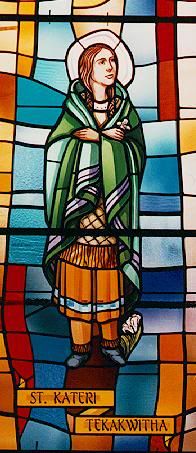
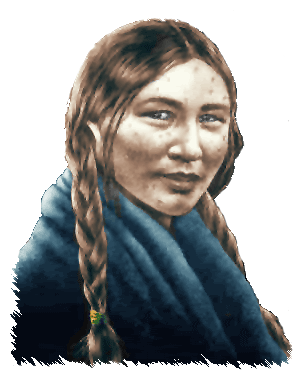
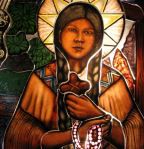
Today, July 14, we celebrate the feast day of Blessed Kateri Tekakwitha (pronounced Gah-deh-lee Deh-gah-quee-tah, 1656-1680). Known as the “Lily of the Mohawks,” Kateri demonstrated an instinctive and deep faith, committing herself to the Lord despite her tribe’s and family’s objections. For her newfound love of Christ, Kateri suffered, never losing faith. Her purity of life, and love for all God’s creatures, inspired growing devotion among her people, and led to countless missions across the United States and Canada ministering to the people of the First Nations.
Tekakwitha was born in modern-day New York state, near Ossernenon, in the territory of the Mohawk Indians. Her father was a Mohawk chief, but her mother was a Christian Algonquin captive. When Tekakwitha was four, her parents and infant brother died from smallpox. She suffered alongside them, with the same illness, but through the grace of God recovered. The disease, however, left her face covered with little scars and her vision was damaged such that bright lights caused her intense pain. She was adopted by her father's brother and his wife.
Tekakwitha lived a typical life from that time on, working and tending to her uncle’s family. During her teens, French priests (known as the “Blackrobes”) established a mission at Caughnawaga, her uncle's village. Tekakwitha, curious about her mother’s faith, wished to speak with them—but she was very shy and her uncle forbade it. She obeyed her uncle, until one day, home alone with a foot injury, Father Jacques de Lamberville, one of the Blackrobes, passed by her door. Thinking no one was home, he ducked his head in the door, finding Tekakwitha. She told him that she wished to be a Christian.
After preparation, Tekakwitha was baptized on Easter Sunday. She took the name of Kateri, which is the Mohawk translation of Catherine. She took her new faith to heart and had a great love for Jesus and His holy mother, Mary. Kateri’s family was angered by her conversion, and began treating her as a slave. As she refused to work on Sundays, she was given no food that day. They attempted to trick her into marrying, but she had consecrated herself to the Lord, instinctively remaining a virgin despite not knowing the call to celibacy common in religious life. Generally an outcast in her village, she sought the advice of the Blackrobes, eventually leaving the village and traveling on foot and by canoe over three hundred miles to Montreal.
In Montreal, ad the Saint Francis-Xavier Mission, Kateri made her First Eucharist, during which her eyes were miraculously healed. She continued to serve the mission, spending long hours in prayer and demonstrating great love and kindness for all—especially the sick, the abandoned, and the elderly. She is remembered for saying, “Who will teach me what is most pleasing to God, so I may do it?” She made crosses for the local children out of the bark of trees, and prayed the Rosary without ceasing.
Vocalizing her desire to become a nun, she asked permission to build a convent near the mission. Dissuaded by her confessor, who believed her to be too young and inexperienced, Kateri was content to continue her “ordinary” life of service without taking the veil. She maintained her vows of chastity and poverty.
Unfortunately, sick for most of her life, Kateri died at the young age of 24, her last words being, “Jesus, Mary, I love You!” Within minutes of her death, the ugly smallpox scars faded from her face, and a sweet smile appeared on her lips. Before her death, Kateri promised her friends that she would continue to love and pray for them in heaven. Both Native Americans and settlers immediately began praying for her heavenly intercession. Several people, including a priest who attended Kateri during her last illness, reported that Kateri had appeared to them and many healing miracles were attributed to her. Kateri was beatified in 1980, and the cause for her Canonization is underway.
Blessed Kateri Tekakwitha is remembered for saying: “I am not my own; I have given myself to Jesus. He must be my only love. The state of helpless poverty that may befall me if I do not marry does not frighten me. All I need is a little food and a few pieces of clothing. With the work of my hands I shall always earn what is necessary and what is left over I’ll give to my relatives and to the poor. If I should become sick and unable to work, then I shall be like the Lord on the cross. He will have mercy on me and help me, I am sure.” Her life and words inspire us to an “ordinary” life of service, sacrifice, and confidence in the Lord. Instinctually, without instruction, this Lily of the Mohawks followed her heart, giving herself in her entirety to God. We are called to do the same, listening to our hearts, where the message of the Lord resides within us. What are we called to do today?
Blessed Kateri, favored child and Lily of the Mohawks, I come to seek your intercession in my present need.
I admire the virtues which adorned your soul: love of God and neighbor, humility, obedience, patience, purity and the spirit of sacrifice. Help me to imitate your example in my state of life. Through the goodness and mercy of God, Who has blessed you with so many graces which led you to the true faith and to a high degree of holiness, pray to God for me and help me.
Obtain for me a very fervent devotion to the Holy Eucharist so that I may love Holy Mass as you did and receive Holy Communion as often as I can. Teach me also to be devoted to my crucified Savior as you were, that I may cheerfully bear my daily crosses for love of Him Who suffered so much for love of me. Most of all I beg you to pray for me that I may avoid sin, lead a holy life and save my soul. Amen.
Inspired by the origins and spiritual history of the Holy Rosary, we continue our meditation on the psalms, one each day, in order, for 150 days.
Today’s Psalm: Psalm 80: Prayer for the Restoration of the Lord’s Vineyard
1 Hear us, O Shepherd of Israel,
you who lead Joseph like a flock;
you who sit enthroned between the cherubim, shine forth
2 before Ephraim, Benjamin and Manasseh.
Awaken your might;
come and save us.
3 Restore us, O God;
make your face shine upon us,
that we may be saved.
4 O LORD God Almighty,
how long will your anger smolder
against the prayers of your people?
5 You have fed them with the bread of tears;
you have made them drink tears by the bowlful.
6 You have made us a source of contention to our neighbors,
and our enemies mock us.
7 Restore us, O God Almighty;
make your face shine upon us,
that we may be saved.
8 You brought a vine out of Egypt;
you drove out the nations and planted it.
9 You cleared the ground for it,
and it took root and filled the land.
10 The mountains were covered with its shade,
the mighty cedars with its branches.
11 It sent out its boughs to the Sea,
its shoots as far as the River.
12 Why have you broken down its walls
so that all who pass by pick its grapes?
13 Boars from the forest ravage it
and the creatures of the field feed on it.
14 Return to us, O God Almighty!
Look down from heaven and see!
Watch over this vine,
15 the root your right hand has planted,
the son you have raised up for yourself.
16 Your vine is cut down, it is burned with fire;
at your rebuke your people perish.
17 Let your hand rest on the man at your right hand,
the son of man you have raised up for yourself.
18 Then we will not turn away from you;
revive us, and we will call on your name.
19 Restore us, O LORD God Almighty;
make your face shine upon us,
that we may be saved.
Day 195 of 365
Prayer Intentions: Moments of true encounter with the Lord; Conversion.
Requested Intentions: For successful conception (I); Thanksgiving for blessings received (K); Healing and financial assistance (F); Employment; Discernment of God’s will (A); Healing of illness (P); Small business assistance, blessings on jobs, financial aid for college student (M); Financial assistance (F); For a recovery and sanctification (X); For a daughter struggling with disease and illness (T); For all lost children (I); Prosperity, health, healing, and conversion for a family (M); Health and healing of a mother (A); Healing of heart and mind (T); Health for an ailing nephew (A); Those suffering from depression (J); Successful adoption (S); Healing of a father battling cancer (S).Psalm: Psalm 80: Prayer for the Restoration of the Lord’s Vineyard
Why pray the Rosary every day for a year?
Each time the Blessed Virgin has appeared-- whether it be to Saint Bernadette Soubirous at Lourdes; to Lucia, Jacinta, and Francisco at Fatima; or to Mariette Beco at Banneux-- she has asserted the importance, saving grace, and power of praying the Holy Rosary on a daily basis. Based upon her words, the Rosary is penance and conversion for sinners, a pathway to peace, an end to war, and a powerful act of faith in Jesus Christ. Pope Paul VI presented the Rosary as a powerful means to reach Christ "not merely with Mary but indeed, insofar as this is possible to us, in the same way as Mary, who is certainly the one who thought about Him more than anyone else has ever done."
To show us how this is done, perhaps no one has been more eloquent than the great Cardinal Newman, who wrote: "The great power of the Rosary consists in the fact that it translates the Creed into Prayer. Of course, the Creed is already in a certain sense a prayer and a great act of homage towards God, but the Rosary brings us to meditate again on the great truth of His life and death, and brings this truth close to our hearts. Even Christians, although they know God, usually fear rather than love Him. The strength of the Rosary lies in the particular manner in which it considers these mysteries, since all our thinking about Christ is intertwined with the thought of His Mother, in the relations between Mother and Son; the Holy Family is presented to us, the home in which God lived His infinite love."
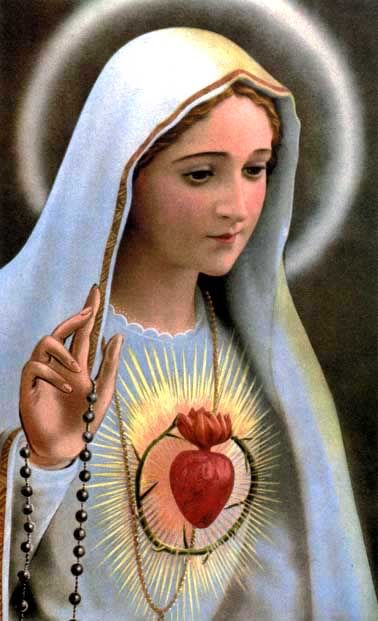
As Mary said at Fatima, "Jesus wants to use you to make Me known and loved. He wishes to establish the devotion to My Immaculate Heart throughout the world. I promise salvation to whoever embraces it; these souls will be dear to God, like flowers put by Me to adorn his throne."
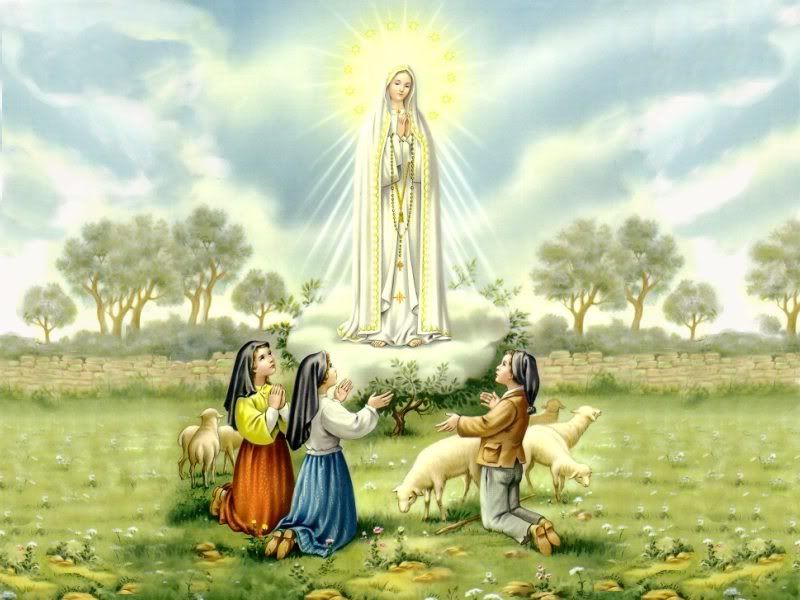
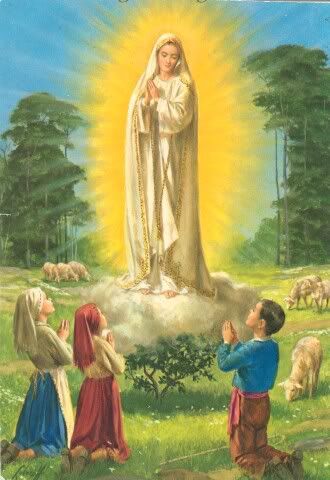
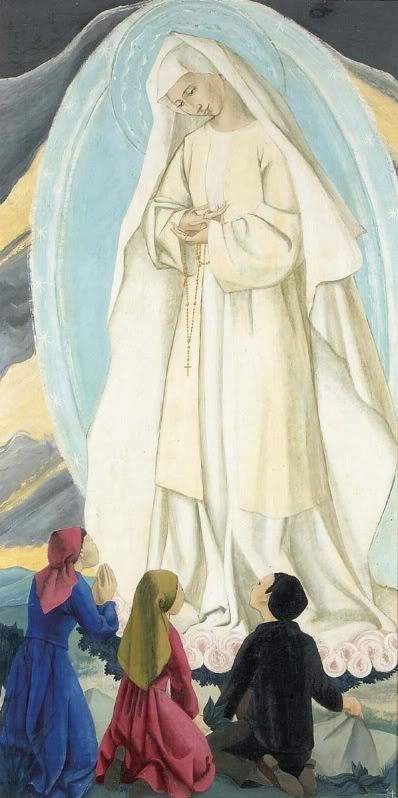
In May 1917, Our Blessed Mother began a series of visits with three Portuguese shepherd children: Lucia, Francisco, and Jacinta. During the months that followed the initial visitation, the three visionaries were graced with six messages from the Blessed Virgin, as well as three apparitions of the “Angel of Portugal,” all of which culminated in the spectacular “Miracle of the Sun,” witnessed by tens of thousands of the faithful. Each month, on the 13th day, Our Lady of Fatima delivered a message to the children-- a message of the importance of devotion to the Immaculate Heart and praying the Rosary—through which the ruinous course of humanity could be converted and redeemed.
Following the initial visits of the Angel of Portugal, who had taught the children how to pray, and prepared them for the first apparition of Our Blessed Mother, Mary had appeared in a wondrous light, conversed with the children, and instructed them: “Say the Rosary every day, to bring peace to the world and an end to the war.” She promised to return the following month. During her second visitation, in June 1917, Our Blessed Mother taught the children what has come to be known as “the Fatima Prayer:”
Oh my Jesus,
Forgive us our sins.
Save us from the fires of Hell.
Lead all souls to Heaven, especially those most in need of Your Mercy.
Amen.
Following the June apparition, the pastor of the local church cautioned the children that the apparitions might be the work of the Devil. Troubled by his words, Lucia decided that she would not return to the pasture on July 13. However, on the date in question, her anxieties and fears disappeared, and she was filled with both peace and longing—a longing which led her to the Cova with Francisco and Jacinta.
It was during this third apparition of Our Blessed Mother that the three secrets of Fatima were revealed to the visionaries. These secrets—the first a vision of Hell, and the second regarding the role of Russia in the world—were guarded by the visionaries until only Lucia remained (and wrote them down in her memoirs at the behest of her bishop). The third secret was delivered directly to Pope Pius XII.
On July 13, 1917, a large number of people had gathered to pray the Rosary, awaiting the children. Upon their arrival, as Lucia recorded in her memoirs, the children saw the flash of light and Our Lady appeared on the oak tree.
"Lucia," Jacinta said, after a moment "speak. Our Lady is talking to you.
"Yes?" said Lucia. She spoke humbly, asking pardon for her doubts with every gesture. To the beautiful Lady she said (as she had the previous month as well): "What do you want of me?"
“I want you to come back here on the thirteenth of next month. Continue to say the Rosary every day in honor of Our Lady of the Rosary, to obtain the peace of the world and the end of the war, because only she can obtain it.”
Lucia agreed, but worried about what her pastor had said, dared to ask Our Lady her name: "I would like to ask who you are, and if you will do a miracle so that everyone will know for certain that you have appeared to us."
“You must come here every month, and in October I will tell you who I am and what I want. I will then perform a miracle so that all may believe.”
Satisfied with the answer, Lucia lifted in prayer the petitions for healing that many had entrusted to her—Our Lady gently said that she would cure some, but not all. In particular, Lucia asked about a boy crippled since birth.
Our Blessed Mother answered: “No, neither of his infirmity nor of his poverty would he be cured, and he must be certain to say the Rosary with his family every day.”
Mary, Our Lady of the Rosary, further said to the children: “Make sacrifices for sinners, and say often, especially while making a sacrifice: O Jesus, this is for love of Thee, for the conversion of sinners, and in reparation for offences committed against the Immaculate Heart of Mary.”
As Lucia recorded in her memoirs: As Our lady spoke these words she opened her hands once more, as had during the two previous months. The rays of light seemed to penetrate the earth, and we saw as it were a sea of fire. Plunged in this fire were demons and souls in human form, like transparent burning embers, all blackened or burnished bronze, floating about in the conflagration, now raised into the air by the flames that issued from within themselves together with great clouds of smoke, now following back on every side like sparks in huge fires, without weight or equilibrium, amid shrieks and groans of pain and despair, which horrified us and made us tremble with fear. (it must have been this sight which caused me to cry out, as people say they heard me do). The demons could be distinguished by their terrifying and repellant likeness to frightful and unknown animals, black and transparent like burning coals. terrified and as if to plead for succor, we looked up at Our Lady, who said to us, so kindly and so sadly:
"You have seen hell, where the souls of poor sinners go. It is to save them that God wants to establish in the world devotion to my Immaculate Heart. If you do what I tell you, many souls will be saved, and there will be peace. This war will end, but if men do not refrain from offending God, another and more terrible war will begin during the pontificate of Pius XI. When you see a night that is lit by a strange and unknown light [this occurred on January 28, 1938], you will know it is the sign God gives you that He is about to punish the world with war and with hunger, and by the persecution of the Church and the Holy Father.
To prevent this, I shall come to the world to ask that Russia be consecrated to my Immaculate Heart, and I shall ask that on the First Saturday of every month Communions of reparation be made in atonement for the sins-of the world. If my wishes are fulfilled, Russia will be converted and there will be peace; if not, then Russia will spread her errors throughout the world, bringing new wars and persecution of the Church; the good will be martyred and the Holy Father will have much to suffer; certain nations will be annihilated. But in the end my Immaculate Heart will triumph. The Holy Father will consecrate Russia to me, and she will be converted, and the world will enjoy a period of peace. In Portugal the faith will always be preserved... "(It was here that Our Lady revealed the third secret). "Remember, you must not tell this to anyone except Francisco.” (Francisco could see Our Lady, but could not hear her words.)
“When you pray the Rosary, say after each mystery: O my Jesus, forgive us, save us from the fire of hell. Lead all souls to heaven, especially those who are most in need.”
As in past visitations, Our Lady then ascended from the tree, into the eastern sky, eventually disappearing. The secrets, bestowed upon the young shepherds by Our Blessed Mother, proved to cause great difficulty for them. First their families, friends, and neighbors tried to elicit the secrets. Then, the clergy became involved, attempted unsuccessfully the revelation of Mary’s words. Lastly, the police attempted to force the children to reveal their secrets, but they resisted. Our Blessed Mother would return again in August, continuing her dialogue with Francisco, Jacinta, and Lucia, and providing us with guidance in saving the world from the destructive influence of evil.
Through prayers of adoration and reparation, we turn to Our Lady of Fatima—to whom God has entrusted our redemption through her grace and cooperation with her divine spouse—to rectify the state of the world, reduce the influence of evil, save the sinful, and draw ourselves closer to Our God through devotion to the Immaculate Heart.
Inspired by the origins and spiritual history of the Holy Rosary, we continue our meditation on the psalms, one each day, in order, for 150 days.
Today’s Psalm: Psalm 79: The Destruction of Jerusalem and its Temple
1 O God, the nations have invaded your inheritance;
they have defiled your holy temple,
they have reduced Jerusalem to rubble.
2 They have given the dead bodies of your servants
as food to the birds of the air,
the flesh of your saints to the beasts of the earth.
3 They have poured out blood like water
all around Jerusalem,
and there is no one to bury the dead.
4 We are objects of reproach to our neighbors,
of scorn and derision to those around us.
5 How long, O LORD ? Will you be angry forever?
How long will your jealousy burn like fire?
6 Pour out your wrath on the nations
that do not acknowledge you,
on the kingdoms
that do not call on your name;
7 for they have devoured Jacob
and destroyed his homeland.
8 Do not hold against us the sins of the fathers;
may your mercy come quickly to meet us,
for we are in desperate need.
9 Help us, O God our Savior,
for the glory of your name;
deliver us and forgive our sins
for your name's sake.
10 Why should the nations say,
"Where is their God?"
Before our eyes, make known among the nations
that you avenge the outpoured blood of your servants.
11 May the groans of the prisoners come before you;
by the strength of your arm
preserve those condemned to die.
12 Pay back into the laps of our neighbors seven times
the reproach they have hurled at you, O Lord.
13 Then we your people, the sheep of your pasture,
will praise you forever;
from generation to generation
we will recount your praise.
Day 194 of 365
Prayer Intentions: Conversion; Reparation for Sinners; Peace in the World;
Requested Intentions: For successful conception (I); Thanksgiving for blessings received (K); Healing and financial assistance (F); Employment; Discernment of God’s will (A); Healing of illness (P); Small business assistance, blessings on jobs, financial aid for college student (M); Financial assistance (F); For a recovery and sanctification (X); For a daughter struggling with disease and illness (T); For all lost children (I); Prosperity, health, healing, and conversion for a family (M); Health and healing of a mother (A); Healing of heart and mind (T); Health for an ailing nephew (A); Those suffering from depression (J); Successful adoption (S); Healing of a father battling cancer (S).
Psalm: Psalm 79: The Destruction of Jerusalem and its Temple
Following the initial visits of the Angel of Portugal, who had taught the children how to pray, and prepared them for the first apparition of Our Blessed Mother, Mary had appeared in a wondrous light, conversed with the children, and instructed them: “Say the Rosary every day, to bring peace to the world and an end to the war.” She promised to return the following month. During her second visitation, in June 1917, Our Blessed Mother taught the children what has come to be known as “the Fatima Prayer:”
Oh my Jesus,
Forgive us our sins.
Save us from the fires of Hell.
Lead all souls to Heaven, especially those most in need of Your Mercy.
Amen.
Following the June apparition, the pastor of the local church cautioned the children that the apparitions might be the work of the Devil. Troubled by his words, Lucia decided that she would not return to the pasture on July 13. However, on the date in question, her anxieties and fears disappeared, and she was filled with both peace and longing—a longing which led her to the Cova with Francisco and Jacinta.
It was during this third apparition of Our Blessed Mother that the three secrets of Fatima were revealed to the visionaries. These secrets—the first a vision of Hell, and the second regarding the role of Russia in the world—were guarded by the visionaries until only Lucia remained (and wrote them down in her memoirs at the behest of her bishop). The third secret was delivered directly to Pope Pius XII.
On July 13, 1917, a large number of people had gathered to pray the Rosary, awaiting the children. Upon their arrival, as Lucia recorded in her memoirs, the children saw the flash of light and Our Lady appeared on the oak tree.
"Lucia," Jacinta said, after a moment "speak. Our Lady is talking to you.
"Yes?" said Lucia. She spoke humbly, asking pardon for her doubts with every gesture. To the beautiful Lady she said (as she had the previous month as well): "What do you want of me?"
“I want you to come back here on the thirteenth of next month. Continue to say the Rosary every day in honor of Our Lady of the Rosary, to obtain the peace of the world and the end of the war, because only she can obtain it.”
Lucia agreed, but worried about what her pastor had said, dared to ask Our Lady her name: "I would like to ask who you are, and if you will do a miracle so that everyone will know for certain that you have appeared to us."
“You must come here every month, and in October I will tell you who I am and what I want. I will then perform a miracle so that all may believe.”
Satisfied with the answer, Lucia lifted in prayer the petitions for healing that many had entrusted to her—Our Lady gently said that she would cure some, but not all. In particular, Lucia asked about a boy crippled since birth.
Our Blessed Mother answered: “No, neither of his infirmity nor of his poverty would he be cured, and he must be certain to say the Rosary with his family every day.”
Mary, Our Lady of the Rosary, further said to the children: “Make sacrifices for sinners, and say often, especially while making a sacrifice: O Jesus, this is for love of Thee, for the conversion of sinners, and in reparation for offences committed against the Immaculate Heart of Mary.”
As Lucia recorded in her memoirs: As Our lady spoke these words she opened her hands once more, as had during the two previous months. The rays of light seemed to penetrate the earth, and we saw as it were a sea of fire. Plunged in this fire were demons and souls in human form, like transparent burning embers, all blackened or burnished bronze, floating about in the conflagration, now raised into the air by the flames that issued from within themselves together with great clouds of smoke, now following back on every side like sparks in huge fires, without weight or equilibrium, amid shrieks and groans of pain and despair, which horrified us and made us tremble with fear. (it must have been this sight which caused me to cry out, as people say they heard me do). The demons could be distinguished by their terrifying and repellant likeness to frightful and unknown animals, black and transparent like burning coals. terrified and as if to plead for succor, we looked up at Our Lady, who said to us, so kindly and so sadly:
"You have seen hell, where the souls of poor sinners go. It is to save them that God wants to establish in the world devotion to my Immaculate Heart. If you do what I tell you, many souls will be saved, and there will be peace. This war will end, but if men do not refrain from offending God, another and more terrible war will begin during the pontificate of Pius XI. When you see a night that is lit by a strange and unknown light [this occurred on January 28, 1938], you will know it is the sign God gives you that He is about to punish the world with war and with hunger, and by the persecution of the Church and the Holy Father.
To prevent this, I shall come to the world to ask that Russia be consecrated to my Immaculate Heart, and I shall ask that on the First Saturday of every month Communions of reparation be made in atonement for the sins-of the world. If my wishes are fulfilled, Russia will be converted and there will be peace; if not, then Russia will spread her errors throughout the world, bringing new wars and persecution of the Church; the good will be martyred and the Holy Father will have much to suffer; certain nations will be annihilated. But in the end my Immaculate Heart will triumph. The Holy Father will consecrate Russia to me, and she will be converted, and the world will enjoy a period of peace. In Portugal the faith will always be preserved... "(It was here that Our Lady revealed the third secret). "Remember, you must not tell this to anyone except Francisco.” (Francisco could see Our Lady, but could not hear her words.)
“When you pray the Rosary, say after each mystery: O my Jesus, forgive us, save us from the fire of hell. Lead all souls to heaven, especially those who are most in need.”
As in past visitations, Our Lady then ascended from the tree, into the eastern sky, eventually disappearing. The secrets, bestowed upon the young shepherds by Our Blessed Mother, proved to cause great difficulty for them. First their families, friends, and neighbors tried to elicit the secrets. Then, the clergy became involved, attempted unsuccessfully the revelation of Mary’s words. Lastly, the police attempted to force the children to reveal their secrets, but they resisted. Our Blessed Mother would return again in August, continuing her dialogue with Francisco, Jacinta, and Lucia, and providing us with guidance in saving the world from the destructive influence of evil.
Through prayers of adoration and reparation, we turn to Our Lady of Fatima—to whom God has entrusted our redemption through her grace and cooperation with her divine spouse—to rectify the state of the world, reduce the influence of evil, save the sinful, and draw ourselves closer to Our God through devotion to the Immaculate Heart.
Inspired by the origins and spiritual history of the Holy Rosary, we continue our meditation on the psalms, one each day, in order, for 150 days.
Today’s Psalm: Psalm 79: The Destruction of Jerusalem and its Temple
1 O God, the nations have invaded your inheritance;
they have defiled your holy temple,
they have reduced Jerusalem to rubble.
2 They have given the dead bodies of your servants
as food to the birds of the air,
the flesh of your saints to the beasts of the earth.
3 They have poured out blood like water
all around Jerusalem,
and there is no one to bury the dead.
4 We are objects of reproach to our neighbors,
of scorn and derision to those around us.
5 How long, O LORD ? Will you be angry forever?
How long will your jealousy burn like fire?
6 Pour out your wrath on the nations
that do not acknowledge you,
on the kingdoms
that do not call on your name;
7 for they have devoured Jacob
and destroyed his homeland.
8 Do not hold against us the sins of the fathers;
may your mercy come quickly to meet us,
for we are in desperate need.
9 Help us, O God our Savior,
for the glory of your name;
deliver us and forgive our sins
for your name's sake.
10 Why should the nations say,
"Where is their God?"
Before our eyes, make known among the nations
that you avenge the outpoured blood of your servants.
11 May the groans of the prisoners come before you;
by the strength of your arm
preserve those condemned to die.
12 Pay back into the laps of our neighbors seven times
the reproach they have hurled at you, O Lord.
13 Then we your people, the sheep of your pasture,
will praise you forever;
from generation to generation
we will recount your praise.
Day 194 of 365
Prayer Intentions: Conversion; Reparation for Sinners; Peace in the World;
Requested Intentions: For successful conception (I); Thanksgiving for blessings received (K); Healing and financial assistance (F); Employment; Discernment of God’s will (A); Healing of illness (P); Small business assistance, blessings on jobs, financial aid for college student (M); Financial assistance (F); For a recovery and sanctification (X); For a daughter struggling with disease and illness (T); For all lost children (I); Prosperity, health, healing, and conversion for a family (M); Health and healing of a mother (A); Healing of heart and mind (T); Health for an ailing nephew (A); Those suffering from depression (J); Successful adoption (S); Healing of a father battling cancer (S).
Psalm: Psalm 79: The Destruction of Jerusalem and its Temple
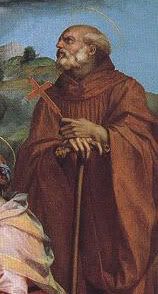
Today, July 12, we celebrate the feast day of Saint John Gualbert (985-1073), Abbot, founder of the Vallumbrosan (Benedictine) Order, and soul converted by the Lord to create change in the world. Saint John experienced a dramatic moment of conversion early in his life—a momentary encounter with the Crucified Christ which inspired him to great acts of mercy and charity. Today, on his feast day, we pray for the same experience of Our Lord, looking for our own opportunities of mercy and charity toward others.
Born in Florence, Italy, John was a member of Florentine nobility. Although he was thoroughly educated in Christian doctrine and faith, his privileged status as a young noble allowed him ample opportunity to participate in the vanities and debaucheries of the world. While he was still relatively young, his only brother, Hugo, was murdered, and true to the time period, John had resolved to avenge his death.
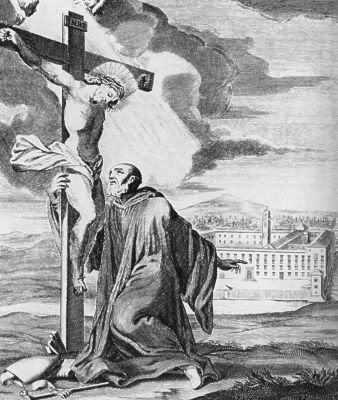
It was on Good Friday when the Lord opened his eyes to wickedness of his ways, and through grace, created a refined and converted soul within him. On Good Friday, as John was riding into Florence through a narrow mountain pass, he encountered his brother’s murderer. The pass was such than neither could avoid each other, and no one was present to intervene. John drew his sword, preparing to avenge his brother’s death, as was customary at the time. His adversary, who was totally unprepared to fight, fell upon his knees with his arms outstretched in the form of a cross, and implored him, for the sake of Our Lord’s holy Passion, to spare his life. Saint John said to his enemy, “I cannot refuse what you ask in Christ’s name. I grant you not only your life, but my friendship. Pray that God may forgive me my sin!” They embraced and parted, and John made his way straight to a church in Florence. There, kneeling before the crucifix, John saw Jesus Crucified bow His head, acknowledging his act of forgiveness and, by the same token, forgiving him all his sins.
John’s heart was changed. He abandoned his former ways—the ways of the world-- and devoted himself to prayer and penance in the Benedictine Order. His virtue and austerity were so great that when his abbot died, he was unanimously chosen to replace him. Out of humility, however, John refused the honor. Instead, he left the monastery to live as a hermit, alone, in monastic solitude, contemplating the Passion of Our Lord.
He retired to Vallombrosa, and along with two other hermits, founded the Order of Vallumbrosan, which followed the austere Rule of Saint Benedict. From this shady valley, a few miles from Florence, the Order spread over Italy.
Miracles were attributed to the great faith of Saint John Gualbert. During famine, his prayers were said to fill the empty storeroom of the monastery with so many provisions that not only was the Order fed, but all the poor who presented themselves went away with rations to spare. On another occasion, when he found one of the monasteries too rich (and therefore in violation of the austerity of the Benedictine Rule), he prayed that a small stream which trickled past the building would overflow and reduce their wealth. Without delay, the stream destroyed the building, and the monks realized their greed. Yet another time, a convent was plundered set fire to by thieves, who beat and injured the monks who were present. Upon arrival at the convent, Saint John rejoiced. “Now,” he said, “you are true monks. Oh, how I envy your lot!” Saint John went on to build several monasteries throughout the region, dying peacefully at age 80 while Angels were singing near his bed.
From an extract of life compiled by Blaise Melanisius, general of the Order:
“The eminent degree of penance and sanctity to which the divine grace raised this saint, was the fruit of his mildness in forgiving an injury. Christ not only commands us to pardon all offences, but has recommended this precept to us with his expiring breath, with his head crowned with thorns and his hands stretched out for us. We renounce the glorious title of being his disciples if, whilst we behold him hanging on the cross, and hear his last prayers, we trample on his sacred law, and harbor malice in our hearts against a brother whom our dying Redeemer commands us to forgive for his sake. Can we be angry with him who is by so many sacred ties our brother, the living son and member of our common Redeemer and Father, and whom we expect to be the associate of our happiness for all eternity? We owe infinitely more to Christ than any brother can owe to us: the least venial sin is an immense debt. Our Divine Master not only conjures us to forgive our brother for His sake, but also makes it our own infinite interest so to do, promising to pardon us our immense debts in the same manner as we pardon others. Shall we base worms who have nothing to boast of before men only our having concealed from them our baseness and ignominy; and to whom the most cruel outrages from creatures would be too mild a treatment, considering our sins; shall we, I say, complain of injuries which we ought to receive with patience and joy as the easy means of canceling our own sins, and procuring for ourselves the greatest graces and mercy?”
Almighty and ever-living God,
source of peace and lover of concord,
to know Thee is to live, to serve Thee is to reign;
establish us in Thy love,
that by the example of the blessed abbot John Gualbert,
we may render good for evil and blessings for curses,
and so obtain from Thee both pardon and peace.
Amen.
Inspired by the origins and spiritual history of the Holy Rosary, we continue our meditation on the psalms, one each day, in order, for 150 days.
Today’s Psalm: Psalm 78: God’s Goodness Despite Israel’s Ingratitude
65 Then the Lord awoke as from sleep,
as a man wakes from the stupor of wine.
66 He beat back his enemies;
he put them to everlasting shame.
67 Then he rejected the tents of Joseph,
he did not choose the tribe of Ephraim;
68 but he chose the tribe of Judah,
Mount Zion, which he loved.
69 He built his sanctuary like the heights,
like the earth that he established forever.
70 He chose David his servant
and took him from the sheep pens;
71 from tending the sheep he brought him
to be the shepherd of his people Jacob,
of Israel his inheritance.
72 And David shepherded them with integrity of heart;
with skillful hands he led them. (verses 65-72)
Day 193 of 365
Prayer Intentions: Moments of true encounter with the Lord; Conversion.
Requested Intentions: Infant in Intensive Care (N); Employment (K); Employment; Discernment of God’s will (A); Healing of illness (P); Small business assistance, blessings on jobs, financial aid for college student (M); Financial assistance (F); For a recovery and sanctification (X); For a daughter struggling with disease and illness (T); For all lost children (I); Prosperity, health, healing, and conversion for a family (M); Health and healing of a mother (A); Healing of heart and mind (T); Healing of a new relationship before marriage (K); Healing of a relationship (T); Eternal rest for the dearly departed, end to financial struggles, successful sale of home, ability to travel on pilgrimage (L); For healing of a stomach illness (L); For the repose of the soul of a sister (C); Vocational security for family, Financial security for daughter beginning college (M); Vocational guidance, courage and strength (I); Health for an ailing nephew (A); Those suffering from depression (J); Successful adoption (S); Healing of a father battling cancer (S).
Psalm: Psalm 78: God’s Goodness Despite Israel’s Ingratitude
Born in Florence, Italy, John was a member of Florentine nobility. Although he was thoroughly educated in Christian doctrine and faith, his privileged status as a young noble allowed him ample opportunity to participate in the vanities and debaucheries of the world. While he was still relatively young, his only brother, Hugo, was murdered, and true to the time period, John had resolved to avenge his death.
It was on Good Friday when the Lord opened his eyes to wickedness of his ways, and through grace, created a refined and converted soul within him. On Good Friday, as John was riding into Florence through a narrow mountain pass, he encountered his brother’s murderer. The pass was such than neither could avoid each other, and no one was present to intervene. John drew his sword, preparing to avenge his brother’s death, as was customary at the time. His adversary, who was totally unprepared to fight, fell upon his knees with his arms outstretched in the form of a cross, and implored him, for the sake of Our Lord’s holy Passion, to spare his life. Saint John said to his enemy, “I cannot refuse what you ask in Christ’s name. I grant you not only your life, but my friendship. Pray that God may forgive me my sin!” They embraced and parted, and John made his way straight to a church in Florence. There, kneeling before the crucifix, John saw Jesus Crucified bow His head, acknowledging his act of forgiveness and, by the same token, forgiving him all his sins.
John’s heart was changed. He abandoned his former ways—the ways of the world-- and devoted himself to prayer and penance in the Benedictine Order. His virtue and austerity were so great that when his abbot died, he was unanimously chosen to replace him. Out of humility, however, John refused the honor. Instead, he left the monastery to live as a hermit, alone, in monastic solitude, contemplating the Passion of Our Lord.
He retired to Vallombrosa, and along with two other hermits, founded the Order of Vallumbrosan, which followed the austere Rule of Saint Benedict. From this shady valley, a few miles from Florence, the Order spread over Italy.
Miracles were attributed to the great faith of Saint John Gualbert. During famine, his prayers were said to fill the empty storeroom of the monastery with so many provisions that not only was the Order fed, but all the poor who presented themselves went away with rations to spare. On another occasion, when he found one of the monasteries too rich (and therefore in violation of the austerity of the Benedictine Rule), he prayed that a small stream which trickled past the building would overflow and reduce their wealth. Without delay, the stream destroyed the building, and the monks realized their greed. Yet another time, a convent was plundered set fire to by thieves, who beat and injured the monks who were present. Upon arrival at the convent, Saint John rejoiced. “Now,” he said, “you are true monks. Oh, how I envy your lot!” Saint John went on to build several monasteries throughout the region, dying peacefully at age 80 while Angels were singing near his bed.
From an extract of life compiled by Blaise Melanisius, general of the Order:
“The eminent degree of penance and sanctity to which the divine grace raised this saint, was the fruit of his mildness in forgiving an injury. Christ not only commands us to pardon all offences, but has recommended this precept to us with his expiring breath, with his head crowned with thorns and his hands stretched out for us. We renounce the glorious title of being his disciples if, whilst we behold him hanging on the cross, and hear his last prayers, we trample on his sacred law, and harbor malice in our hearts against a brother whom our dying Redeemer commands us to forgive for his sake. Can we be angry with him who is by so many sacred ties our brother, the living son and member of our common Redeemer and Father, and whom we expect to be the associate of our happiness for all eternity? We owe infinitely more to Christ than any brother can owe to us: the least venial sin is an immense debt. Our Divine Master not only conjures us to forgive our brother for His sake, but also makes it our own infinite interest so to do, promising to pardon us our immense debts in the same manner as we pardon others. Shall we base worms who have nothing to boast of before men only our having concealed from them our baseness and ignominy; and to whom the most cruel outrages from creatures would be too mild a treatment, considering our sins; shall we, I say, complain of injuries which we ought to receive with patience and joy as the easy means of canceling our own sins, and procuring for ourselves the greatest graces and mercy?”
Almighty and ever-living God,
source of peace and lover of concord,
to know Thee is to live, to serve Thee is to reign;
establish us in Thy love,
that by the example of the blessed abbot John Gualbert,
we may render good for evil and blessings for curses,
and so obtain from Thee both pardon and peace.
Amen.
Inspired by the origins and spiritual history of the Holy Rosary, we continue our meditation on the psalms, one each day, in order, for 150 days.
Today’s Psalm: Psalm 78: God’s Goodness Despite Israel’s Ingratitude
65 Then the Lord awoke as from sleep,
as a man wakes from the stupor of wine.
66 He beat back his enemies;
he put them to everlasting shame.
67 Then he rejected the tents of Joseph,
he did not choose the tribe of Ephraim;
68 but he chose the tribe of Judah,
Mount Zion, which he loved.
69 He built his sanctuary like the heights,
like the earth that he established forever.
70 He chose David his servant
and took him from the sheep pens;
71 from tending the sheep he brought him
to be the shepherd of his people Jacob,
of Israel his inheritance.
72 And David shepherded them with integrity of heart;
with skillful hands he led them. (verses 65-72)
Day 193 of 365
Prayer Intentions: Moments of true encounter with the Lord; Conversion.
Requested Intentions: Infant in Intensive Care (N); Employment (K); Employment; Discernment of God’s will (A); Healing of illness (P); Small business assistance, blessings on jobs, financial aid for college student (M); Financial assistance (F); For a recovery and sanctification (X); For a daughter struggling with disease and illness (T); For all lost children (I); Prosperity, health, healing, and conversion for a family (M); Health and healing of a mother (A); Healing of heart and mind (T); Healing of a new relationship before marriage (K); Healing of a relationship (T); Eternal rest for the dearly departed, end to financial struggles, successful sale of home, ability to travel on pilgrimage (L); For healing of a stomach illness (L); For the repose of the soul of a sister (C); Vocational security for family, Financial security for daughter beginning college (M); Vocational guidance, courage and strength (I); Health for an ailing nephew (A); Those suffering from depression (J); Successful adoption (S); Healing of a father battling cancer (S).
Psalm: Psalm 78: God’s Goodness Despite Israel’s Ingratitude
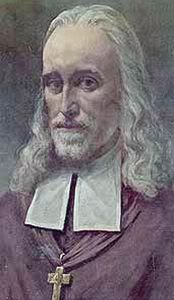
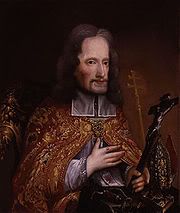
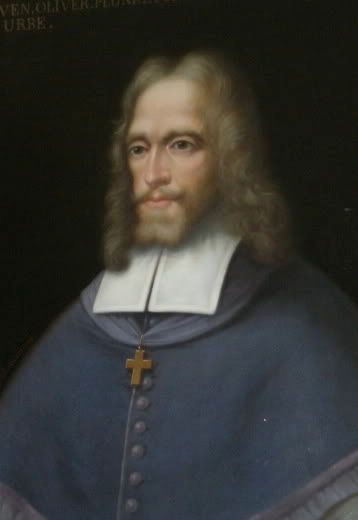
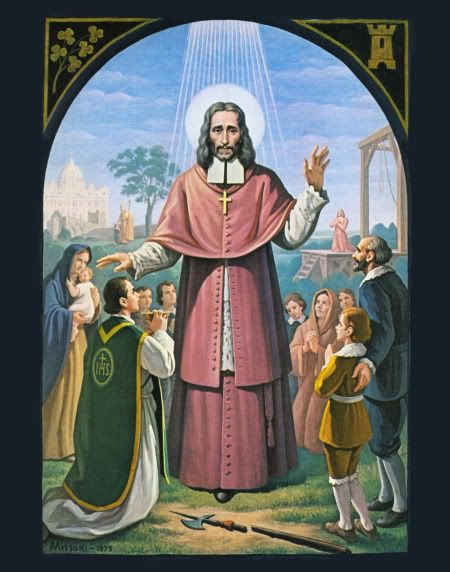
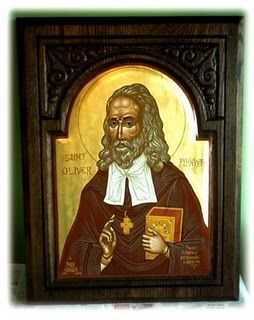
Today, July 11, we celebrate the feast day of Saint Oliver Plunkett (1625-1681), bishop, and martyr for the faith. During his life, Saint Oliver braved hardship, exile, persecution and death—all the while holding firmly to his faith in the Lord and thanking God "Who gave us the grace to suffer for the chair of Peter." Saint Oliver’s shepherding of his people, and his faith during times of suffering, earned him a martyr’s death and a rightful place in heaven.
Oliver Plunkett was born in Loughcrew, Meath, Ireland in 1629 to privileged parents of good lineage and land ownership. Until the age of 16, he was educated by his cousin, the Abbot of Saint Mary’s in Dublin. In 1645 he set out for Rome under the care of Father Scarampo of the Roman Oratory, and stayed at the Irish College where he had a brilliant academic career. The Rector later said that Plunkett “devoted himself with such ardor to philosophy, theology, and mathematics, that in the Roman College of the Society of Jesus he was justly ranked amongst the foremost in talent, diligence, and progress in his studies… and was a model of gentleness, integrity, and piety.” He was ordained a priest in 1654, and elected by the Irish bishops to act as their representative in Rome.
As anti-Catholic sentiment grew throughout England, Oliver was unable to return to Ireland. He asked to stay on in Rome and, in 1657, became a professor of theology at the College of Propaganda Fide. In 1669, he was appointed Archbishop of Armagh, the leader of the Church in Ireland. After pleading his case, he was allowed back into Ireland as laws were becoming slightly more tolerant. He was also granted the right to wear the Pallium, a strip of white cloth made from lamb’s wool collected by Trappist monks, and a sign of Papal authority.
His time in Ireland was described by a contemporary: "During the twelve years of his residence here he proved himself vigilant, zealous, and indefatigable, nor do we find, within the memory of those of the present century, that any primate or metropolitan visited his diocese and province with such solicitude and pastoral zeal as he did, - benefiting, as far as was in his power, the needy; wherefore he was applauded and honored by both clergy and people."
Following Bishop Plunkett’s return to Ireland, he began the rebuilding and reorganization of the Catholic Church. Saint Oliver oversaw the construction of new schools and seminaries. He also denounced the drunkenness that was common among the Irish clergy, saying, “Let us remove this defect from an Irish priest and he will be a saint.” Following the easing of Penal Laws, Saint Oliver was able to establish a Jesuit College in Drogheda, in 1670.
Eventually, Saint Oliver was arrested, and accused of treason—a false charge contrived to remove him from power. During his trial, he was accused of assisting with both a French plot to invade Ireland, as well as inciting an Irish uprising against English rule. The grand jury in Dublin found no evidence to support the indictment, and therefore he was transferred to Newgate Prison in England to stand trial there. While evidence was gathered, Saint Oliver was kept in solitary confinement for six months, not allowed to gather witnesses in his own defense.
The second trial, held in London, was a “kangaroo court.” Lord Campbell, writing of the judge, called it a “disgrace” to himself and his country. Plunkett was found guilty of high treason “for promoting the Catholic faith,” and was condemned to a gruesome death: ” . . . through the City of London to Tyburn; there you shall be hanged by the neck but cut down before you are dead, your bowels taken out and burnt before your face, your head shall be cut off, and your body divided into four quarters to be disposed of as her majesty pleases. And I pray God to have mercy on your soul."
Shortly before his death, Saint Oliver penned the following letter:
“The kindness and charity of your lordship are such that you have been pleased to express appreciation of my poor service in cultivating the vineyard of the Lord in this afflicted country and in corresponding with the Holy see, venerated and loved by me with a spiritual affection and reverence, as also with an earthly affection because as a good mother it nourished me for many years in Rome while I lectured there, as well as with other honors too great for my weakness to bear. God knows that I think of nothing else, day and night, than the service of souls, which is the service desired of me by the Sacred Congregation and the Holy See. Political or temporal matters have no part in my life: neither in my mind nor on my lips nor with my pen are they given any place. God knows how I labored last year, 1670, in visiting six large dioceses, in holding a provincial council and various diocesan synods, and how I labored this present year in the dioceses of Clogher, Down, and Dromore, as well as my own.
We are in greater fear and trembling here now. In Scotland parliament has decreed that for the future it will be a lese-majesty to hear Mass. It seems as if the times of Nero, Domitian, and Diocletian have come round again. We shall have martyrs’ blood to irrigate and fertilize the Church. These edicts do not as present include Ireland, because it is not named by the King in them, but I am sure that, as usual, we shall not be forgotten.
Sentence of death was passed against me on the fifteenth. It has not caused me the least terror or deprived me of even a quarter of an hour’s sleep. I am as innocent of all treason as the child born yesterday. As for my character, profession and function, I did own it publicly, and that being also a motive of my death, I die most willingly. And being the first among the Irish, I shall, with God’s grace, give good example to the others not to fear death. I expect daily to be brought t o the place of execution where my bowels are to be cut out and burned before my face, and then my head to be cut off. What speech I will have at my death will be sent to you. If I had obtained sufficient time to have brought my witnesses from Ireland, I think I should have defended myself as regards these romances of treason; but it was not granted to me, and I was brought to my trial destitute of all legal ways of defense.”
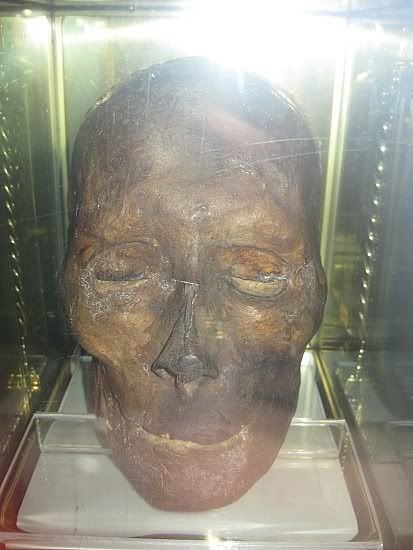
A well respected young woman, from a highly regarded Catholic family, Elizabeth Shelton, petitioned the King to recover Saint Oliver’s remains immediately after the execution. She, accompanied by the faithful, received the head and other 'quarters' after the bowels had been cast into the fire. Some parts were buried in the north wall of Saint Giles cemetery. She saved the head and two forearms, which were eventually entrusted to the Sienna Nuns of the Dominican Convent at Drogheda. They are presently on view, enshrined in Saint Peter's Catholic Church in Drogheda, as is the door of the cell the saint occupied at Newgate. Pilgrims visit this holy site, and miracles have been reported at his intercession.
St. Oliver Plunkett: Pray for us.
St. Oliver Plunkett, Archbishop of Armagh: Pray for us.
St. Oliver Plunkett, Primate of all Ireland: Pray for us.
St. Oliver Plunkett, martyr for the faith: Pray for us.
St. Oliver Plunkett, first of the canonized Irish saints: Pray for us.
St. Oliver Plunkett, model for the Irish Priesthood: Pray for us
St. Oliver Plunkett, who risked the chance of death and returned to Ireland in penal times: Pray for us.
St. Oliver Plunkett, model of the Christian life: Pray for us.
St. Oliver Plunkett, sentenced to death by hanging, drawing and quartering: Pray for us.
St. Oliver Plunkett, last to die at Tyburn for the faith: Pray for us.
St. Oliver Plunkett, who like Jesus prayed for his persecutors: Pray for us.
St. Oliver Plunkett, who faced martyrdom with serenity: Pray for us.
St. Oliver Plunkett, protector of the holy faith planted by Saint Patrick: Pray for us.
St. Oliver Plunkett, whose message was one of serenity and peace: Pray for us.
St. Oliver Plunkett, who was a model of reconciliation: Pray for us.
O God, who rejoices with the memory of Saint Oliver Plunkett, Bishop and Martyr, mercifully grant that we may be assisted by his merits, by whose life we are illumined. Through Jesus Christ, your Son Our Lord. Amen.
Inspired by the origins and spiritual history of the Holy Rosary, we continue our meditation on the psalms, one each day, in order, for 150 days.
Today’s Psalm: Psalm 77: Lament and Comfort in Time of Distress
1 I cried out to God for help;
I cried out to God to hear me.
2 When I was in distress, I sought the Lord;
at night I stretched out untiring hands
and my soul refused to be comforted.
3 I remembered you, O God, and I groaned;
I mused, and my spirit grew faint.
4 You kept my eyes from closing;
I was too troubled to speak.
5 I thought about the former days,
the years of long ago;
6 I remembered my songs in the night.
My heart mused and my spirit inquired:
7 "Will the Lord reject forever?
Will he never show his favor again?
8 Has his unfailing love vanished forever?
Has his promise failed for all time?
9 Has God forgotten to be merciful?
Has he in anger withheld his compassion?"
10 Then I thought, "To this I will appeal:
the years of the right hand of the Most High."
11 I will remember the deeds of the LORD;
yes, I will remember your miracles of long ago.
12 I will meditate on all your works
and consider all your mighty deeds.
13 Your ways, O God, are holy.
What god is so great as our God?
14 You are the God who performs miracles;
you display your power among the peoples.
15 With your mighty arm you redeemed your people,
the descendants of Jacob and Joseph.
16 The waters saw you, O God,
the waters saw you and writhed;
the very depths were convulsed.
17 The clouds poured down water,
the skies resounded with thunder;
your arrows flashed back and forth.
18 Your thunder was heard in the whirlwind,
your lightning lit up the world;
the earth trembled and quaked.
19 Your path led through the sea,
your way through the mighty waters,
though your footprints were not seen.
20 You led your people like a flock
by the hand of Moses and Aaron.
Day 192 of 365
Prayer Intentions: Unwavering faith in the Lord; Courage to live our Creed.
Requested Intentions: Infant in Intensive Care (N); Employment (K); Employment; Discernment of God’s will (A); Healing of illness (P); Small business assistance, blessings on jobs, financial aid for college student (M); Financial assistance (F); For a recovery and sanctification (X); For a daughter struggling with disease and illness (T); For all lost children (I); Prosperity, health, healing, and conversion for a family (M); Health and healing of a mother (A); Healing of heart and mind (T); Healing of a new relationship before marriage (K); Healing of a relationship (T); Eternal rest for the dearly departed, end to financial struggles, successful sale of home, ability to travel on pilgrimage (L); For healing of a stomach illness (L); For the repose of the soul of a sister (C); Vocational security for family, Financial security for daughter beginning college (M); Vocational guidance, courage and strength (I); Health for an ailing nephew (A); Those suffering from depression (J); Successful adoption (S); Healing of a father battling cancer (S).
Psalm: Psalm 77: Lament and Comfort in Time of Distress
Oliver Plunkett was born in Loughcrew, Meath, Ireland in 1629 to privileged parents of good lineage and land ownership. Until the age of 16, he was educated by his cousin, the Abbot of Saint Mary’s in Dublin. In 1645 he set out for Rome under the care of Father Scarampo of the Roman Oratory, and stayed at the Irish College where he had a brilliant academic career. The Rector later said that Plunkett “devoted himself with such ardor to philosophy, theology, and mathematics, that in the Roman College of the Society of Jesus he was justly ranked amongst the foremost in talent, diligence, and progress in his studies… and was a model of gentleness, integrity, and piety.” He was ordained a priest in 1654, and elected by the Irish bishops to act as their representative in Rome.
As anti-Catholic sentiment grew throughout England, Oliver was unable to return to Ireland. He asked to stay on in Rome and, in 1657, became a professor of theology at the College of Propaganda Fide. In 1669, he was appointed Archbishop of Armagh, the leader of the Church in Ireland. After pleading his case, he was allowed back into Ireland as laws were becoming slightly more tolerant. He was also granted the right to wear the Pallium, a strip of white cloth made from lamb’s wool collected by Trappist monks, and a sign of Papal authority.
Following Bishop Plunkett’s return to Ireland, he began the rebuilding and reorganization of the Catholic Church. Saint Oliver oversaw the construction of new schools and seminaries. He also denounced the drunkenness that was common among the Irish clergy, saying, “Let us remove this defect from an Irish priest and he will be a saint.” Following the easing of Penal Laws, Saint Oliver was able to establish a Jesuit College in Drogheda, in 1670.
As the persecution of Catholics increased, a series of laws were passed to restrict the role of priests and bishops. Known as the Test Acts, Oliver publicly denounced the laws, and as a result, the Jesuit college he had founded was burned. Saint Oliver was forced into hiding, traveling in disguise, and lived in exile. He lived as a secret bishop for years, enduring hunger, cold, and fear, refusing to abandon his flock, and content in his suffering for the Lord. In one of his letters, Saint Oliver described the hardships he endured:
"The snow fell heavily, mixed with hailstones, which were very large and hard. A cutting north wind blew in our faces, and snow and hail beat so dreadfully in our eyes that up to the present we have scarcely been able to see with them. Often we were in danger in the valleys of being lost and suffocated in the snow, till at length we arrived at the house of a reduced gentleman who had nothing to lose. But, for our misfortune, he had a stranger in his house by whom we did not wish to be recognized, hence we were placed in a garret without chimney, and without fire, where we have been for the past eight days. May it redound to the glory of God, the salvation of our souls, and of the flock entrusted to our charge."
The second trial, held in London, was a “kangaroo court.” Lord Campbell, writing of the judge, called it a “disgrace” to himself and his country. Plunkett was found guilty of high treason “for promoting the Catholic faith,” and was condemned to a gruesome death: ” . . . through the City of London to Tyburn; there you shall be hanged by the neck but cut down before you are dead, your bowels taken out and burnt before your face, your head shall be cut off, and your body divided into four quarters to be disposed of as her majesty pleases. And I pray God to have mercy on your soul."
Shortly before his death, Saint Oliver penned the following letter:
“The kindness and charity of your lordship are such that you have been pleased to express appreciation of my poor service in cultivating the vineyard of the Lord in this afflicted country and in corresponding with the Holy see, venerated and loved by me with a spiritual affection and reverence, as also with an earthly affection because as a good mother it nourished me for many years in Rome while I lectured there, as well as with other honors too great for my weakness to bear. God knows that I think of nothing else, day and night, than the service of souls, which is the service desired of me by the Sacred Congregation and the Holy See. Political or temporal matters have no part in my life: neither in my mind nor on my lips nor with my pen are they given any place. God knows how I labored last year, 1670, in visiting six large dioceses, in holding a provincial council and various diocesan synods, and how I labored this present year in the dioceses of Clogher, Down, and Dromore, as well as my own.
We are in greater fear and trembling here now. In Scotland parliament has decreed that for the future it will be a lese-majesty to hear Mass. It seems as if the times of Nero, Domitian, and Diocletian have come round again. We shall have martyrs’ blood to irrigate and fertilize the Church. These edicts do not as present include Ireland, because it is not named by the King in them, but I am sure that, as usual, we shall not be forgotten.
Sentence of death was passed against me on the fifteenth. It has not caused me the least terror or deprived me of even a quarter of an hour’s sleep. I am as innocent of all treason as the child born yesterday. As for my character, profession and function, I did own it publicly, and that being also a motive of my death, I die most willingly. And being the first among the Irish, I shall, with God’s grace, give good example to the others not to fear death. I expect daily to be brought t o the place of execution where my bowels are to be cut out and burned before my face, and then my head to be cut off. What speech I will have at my death will be sent to you. If I had obtained sufficient time to have brought my witnesses from Ireland, I think I should have defended myself as regards these romances of treason; but it was not granted to me, and I was brought to my trial destitute of all legal ways of defense.”
After publicly forgiving all who contributed to his sentencing, Saint Oliver Plunkett was martyred on July 11, 1681. He was the last Catholic to die for his faith at the notorious execution spot Tyburn in London, England. He was the first of the Irish martyrs to be beatified. The entire incident of his arrest and trial was immediately recognized as a travesty of justice, and as a result, many English Protestants converted to the faith. The Earl of Essex, the former Viceroy of Ireland, petitioned King Charles to pardon Plunkett before the execution, assuring him of Plunkett's innocence. The King is said to have lost his temper and replied "Why did you not attest this at the trial? It would have done him some good then. I dare not pardon anyone. His blood be upon your head not mine." The man responsible for Plunkett’s arrest was subsequently arrested and imprisoned.
A well respected young woman, from a highly regarded Catholic family, Elizabeth Shelton, petitioned the King to recover Saint Oliver’s remains immediately after the execution. She, accompanied by the faithful, received the head and other 'quarters' after the bowels had been cast into the fire. Some parts were buried in the north wall of Saint Giles cemetery. She saved the head and two forearms, which were eventually entrusted to the Sienna Nuns of the Dominican Convent at Drogheda. They are presently on view, enshrined in Saint Peter's Catholic Church in Drogheda, as is the door of the cell the saint occupied at Newgate. Pilgrims visit this holy site, and miracles have been reported at his intercession.
St. Oliver Plunkett: Pray for us.
St. Oliver Plunkett, Archbishop of Armagh: Pray for us.
St. Oliver Plunkett, Primate of all Ireland: Pray for us.
St. Oliver Plunkett, martyr for the faith: Pray for us.
St. Oliver Plunkett, first of the canonized Irish saints: Pray for us.
St. Oliver Plunkett, model for the Irish Priesthood: Pray for us
St. Oliver Plunkett, who risked the chance of death and returned to Ireland in penal times: Pray for us.
St. Oliver Plunkett, model of the Christian life: Pray for us.
St. Oliver Plunkett, sentenced to death by hanging, drawing and quartering: Pray for us.
St. Oliver Plunkett, last to die at Tyburn for the faith: Pray for us.
St. Oliver Plunkett, who like Jesus prayed for his persecutors: Pray for us.
St. Oliver Plunkett, who faced martyrdom with serenity: Pray for us.
St. Oliver Plunkett, protector of the holy faith planted by Saint Patrick: Pray for us.
St. Oliver Plunkett, whose message was one of serenity and peace: Pray for us.
St. Oliver Plunkett, who was a model of reconciliation: Pray for us.
O God, who rejoices with the memory of Saint Oliver Plunkett, Bishop and Martyr, mercifully grant that we may be assisted by his merits, by whose life we are illumined. Through Jesus Christ, your Son Our Lord. Amen.
Inspired by the origins and spiritual history of the Holy Rosary, we continue our meditation on the psalms, one each day, in order, for 150 days.
Today’s Psalm: Psalm 77: Lament and Comfort in Time of Distress
1 I cried out to God for help;
I cried out to God to hear me.
2 When I was in distress, I sought the Lord;
at night I stretched out untiring hands
and my soul refused to be comforted.
3 I remembered you, O God, and I groaned;
I mused, and my spirit grew faint.
4 You kept my eyes from closing;
I was too troubled to speak.
5 I thought about the former days,
the years of long ago;
6 I remembered my songs in the night.
My heart mused and my spirit inquired:
7 "Will the Lord reject forever?
Will he never show his favor again?
8 Has his unfailing love vanished forever?
Has his promise failed for all time?
9 Has God forgotten to be merciful?
Has he in anger withheld his compassion?"
10 Then I thought, "To this I will appeal:
the years of the right hand of the Most High."
11 I will remember the deeds of the LORD;
yes, I will remember your miracles of long ago.
12 I will meditate on all your works
and consider all your mighty deeds.
13 Your ways, O God, are holy.
What god is so great as our God?
14 You are the God who performs miracles;
you display your power among the peoples.
15 With your mighty arm you redeemed your people,
the descendants of Jacob and Joseph.
16 The waters saw you, O God,
the waters saw you and writhed;
the very depths were convulsed.
17 The clouds poured down water,
the skies resounded with thunder;
your arrows flashed back and forth.
18 Your thunder was heard in the whirlwind,
your lightning lit up the world;
the earth trembled and quaked.
19 Your path led through the sea,
your way through the mighty waters,
though your footprints were not seen.
20 You led your people like a flock
by the hand of Moses and Aaron.
Day 192 of 365
Prayer Intentions: Unwavering faith in the Lord; Courage to live our Creed.
Requested Intentions: Infant in Intensive Care (N); Employment (K); Employment; Discernment of God’s will (A); Healing of illness (P); Small business assistance, blessings on jobs, financial aid for college student (M); Financial assistance (F); For a recovery and sanctification (X); For a daughter struggling with disease and illness (T); For all lost children (I); Prosperity, health, healing, and conversion for a family (M); Health and healing of a mother (A); Healing of heart and mind (T); Healing of a new relationship before marriage (K); Healing of a relationship (T); Eternal rest for the dearly departed, end to financial struggles, successful sale of home, ability to travel on pilgrimage (L); For healing of a stomach illness (L); For the repose of the soul of a sister (C); Vocational security for family, Financial security for daughter beginning college (M); Vocational guidance, courage and strength (I); Health for an ailing nephew (A); Those suffering from depression (J); Successful adoption (S); Healing of a father battling cancer (S).
Psalm: Psalm 77: Lament and Comfort in Time of Distress
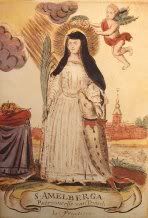
Today, July 10, we celebrate the feasts of two saints with the same name—holy women who lived a century apart, but who are frequently confused. The details of the lives of Saint Amalburga of Temse and Saint Amalburga of Maubeuge have been mostly lost to history, but the sanctity, miracles, and good works of these saints live on in holy legend.
Saint Amalburga of Temse (also known as Saint Amelia) is a Belgian saint who lived in the eighth century. She was likely a romantic acquaintance of Charlemagne, who fell in love with her grace and beauty and pursued her for seven years. During that time, she continuously refused to marry him, due to her desire and calling to enter a religious life. On one occasion during which he attempted to persuade her physically to marry him, Saint Amalburga threw herself at the foot of the church alter, where she was unable to be moved from by divine and miraculous intervention. Charlemagne tried so strenuously to pull her from her position that he broke her arm, later miraculously cured. Soon thereafter, he fell ill, and only after repenting and giving up his pursuit of Amalburga was he cured of his illness.
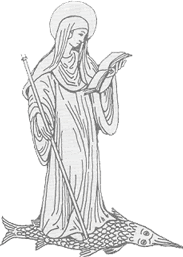
Additional miracles attributed to Saint Amalburga include communion with fish, especially a giant sturgeon on which she is reputed to have once crossed the Escant River. In memory of this event, local fishermen continue to offer sturgeon in the chapel of Saint Amalburga on her feast day each year. It is said that no sturgeon are even seen in the waters of the Escant, except on July 10, when one always presents itself. Similarly, sturgeon were reported to have been observed escorting her funeral barge up the river, following her death. And while she lived, Amalburga is said to have fed the masses during famine with the flesh of large fish which appeared opportunely in the river.
Saint Amalburga is also said to have created miraculous springs in the fields, during time of drought, and healed many sick. A small chapel remains in her name, where miraculous cures have been reported. Her relics have resided in Saint Peter's abbey church in Ghent, Belgium since 1073. Saint Amalburga of Temse is the patron of farmers, fishermen, young people struggling to stay faithful to Christ, and those with fevers, bruises and arm pain.
Saint Amalburga of Maubeuge was a Lotharingian (short-lived Western European kingdom, where the modern-day Netherlands now stand) saint who lived in the seventh century. She was born of royalty, and unlike the virginal Amalburga of Temse, married the Duke of Lotharingia. Together, the two holy parents produced four children, each of whom, under her instruction, were later canonized saints for their piety, holy works, and faith.
As she aged, Amalburga felt called more and more to religious life of a nun, and her husband to that of a monk. They eventually parted ways, both joining separate religious orders. Amalburga entered the monastic community at Maubeuge Abbey—a Benedictine cloister. There, she lived out her life in prayer, contemplation, and silence, committing herself to the Lord. Her relics are housed in the Belgian city of Binche.
At first glance, the lives of these two holy women are quite different. Yet we celebrate their feast days on the same day of the year, and in doing so find the similarities between them. Saint Amalburga of Temse wrought miracles for the poor, and committed herself wholeheartedly to the Lord. Saint Amalburga of Maubeuge raised a devout and pious family, and also listened intently to the will of the Lord, committing herself to Him. One life appears flashy and filled with miracles, whereas the other seems quiet and contemplative, filled with the daily activities of a wife and mother. And yet, both women are remembered for their holiness and contributions to the Church. We are reminded that each of our lives are special and beautiful to the Lord—that we are called to play roles in the lives of others and the life of the Church based upon the special talents and gifts that have been bestowed upon us. Just as Saint Amalburga of Temse could not have filled the role of Saint Amalburga of Maubeuge, nor should we live a life other than that desired for us by the Lord. When we listen for His Will, we can accomplish miraculous things!
Inspired by the origins and spiritual history of the Holy Rosary, we continue our meditation on the psalms, one each day, in order, for 150 days.
Today’s Psalm: Psalm 76: Thanksgiving for the Overthrow of Israel’s Foes
1 In Judah God is known;
his name is great in Israel.
2 His tent is in Salem,
his dwelling place in Zion.
3 There he broke the flashing arrows,
the shields and the swords, the weapons of war.
4 You are resplendent with light,
more majestic than mountains rich with game.
5 Valiant men lie plundered,
they sleep their last sleep;
not one of the warriors
can lift his hands.
6 At your rebuke, O God of Jacob,
both horse and chariot lie still.
7 You alone are to be feared.
Who can stand before you when you are angry?
8 From heaven you pronounced judgment,
and the land feared and was quiet-
9 when you, O God, rose up to judge,
to save all the afflicted of the land.
10 Surely your wrath against men brings you praise,
and the survivors of your wrath are restrained.
11 Make vows to the LORD your God and fulfill them;
let all the neighboring lands
bring gifts to the One to be feared.
12 He breaks the spirit of rulers;
he is feared by the kings of the earth.
Day 191 of 365
Prayer Intentions: Comfort in our suffering; Union with Christ.
Requested Intentions: Small business assistance, blessings on jobs, financial aid for college student (M); Financial assistance (F); For a recovery and sanctification (X); For a daughter struggling with disease and illness (T); For all lost children (I); Prosperity, health, healing, and conversion for a family (M); Health and healing of a mother (A); Healing of heart and mind (T); Healing of a new relationship before marriage (K); Healing of a relationship (T); Eternal rest for the dearly departed, end to financial struggles, successful sale of home, ability to travel on pilgrimage (L); For healing of a stomach illness (L); For the repose of the soul of a sister (C); Vocational security for family, Financial security for daughter beginning college (M); Vocational guidance, courage and strength (I); Health for an ailing nephew (A); Those suffering from depression (J); Successful adoption (S); Healing of a father battling cancer (S).
Psalm: Psalm 76: Thanksgiving for the Overthrow of Israel’s Foes
Saint Amalburga of Temse (also known as Saint Amelia) is a Belgian saint who lived in the eighth century. She was likely a romantic acquaintance of Charlemagne, who fell in love with her grace and beauty and pursued her for seven years. During that time, she continuously refused to marry him, due to her desire and calling to enter a religious life. On one occasion during which he attempted to persuade her physically to marry him, Saint Amalburga threw herself at the foot of the church alter, where she was unable to be moved from by divine and miraculous intervention. Charlemagne tried so strenuously to pull her from her position that he broke her arm, later miraculously cured. Soon thereafter, he fell ill, and only after repenting and giving up his pursuit of Amalburga was he cured of his illness.
Additional miracles attributed to Saint Amalburga include communion with fish, especially a giant sturgeon on which she is reputed to have once crossed the Escant River. In memory of this event, local fishermen continue to offer sturgeon in the chapel of Saint Amalburga on her feast day each year. It is said that no sturgeon are even seen in the waters of the Escant, except on July 10, when one always presents itself. Similarly, sturgeon were reported to have been observed escorting her funeral barge up the river, following her death. And while she lived, Amalburga is said to have fed the masses during famine with the flesh of large fish which appeared opportunely in the river.
Saint Amalburga is also said to have created miraculous springs in the fields, during time of drought, and healed many sick. A small chapel remains in her name, where miraculous cures have been reported. Her relics have resided in Saint Peter's abbey church in Ghent, Belgium since 1073. Saint Amalburga of Temse is the patron of farmers, fishermen, young people struggling to stay faithful to Christ, and those with fevers, bruises and arm pain.
Saint Amalburga of Maubeuge was a Lotharingian (short-lived Western European kingdom, where the modern-day Netherlands now stand) saint who lived in the seventh century. She was born of royalty, and unlike the virginal Amalburga of Temse, married the Duke of Lotharingia. Together, the two holy parents produced four children, each of whom, under her instruction, were later canonized saints for their piety, holy works, and faith.
As she aged, Amalburga felt called more and more to religious life of a nun, and her husband to that of a monk. They eventually parted ways, both joining separate religious orders. Amalburga entered the monastic community at Maubeuge Abbey—a Benedictine cloister. There, she lived out her life in prayer, contemplation, and silence, committing herself to the Lord. Her relics are housed in the Belgian city of Binche.
At first glance, the lives of these two holy women are quite different. Yet we celebrate their feast days on the same day of the year, and in doing so find the similarities between them. Saint Amalburga of Temse wrought miracles for the poor, and committed herself wholeheartedly to the Lord. Saint Amalburga of Maubeuge raised a devout and pious family, and also listened intently to the will of the Lord, committing herself to Him. One life appears flashy and filled with miracles, whereas the other seems quiet and contemplative, filled with the daily activities of a wife and mother. And yet, both women are remembered for their holiness and contributions to the Church. We are reminded that each of our lives are special and beautiful to the Lord—that we are called to play roles in the lives of others and the life of the Church based upon the special talents and gifts that have been bestowed upon us. Just as Saint Amalburga of Temse could not have filled the role of Saint Amalburga of Maubeuge, nor should we live a life other than that desired for us by the Lord. When we listen for His Will, we can accomplish miraculous things!
Inspired by the origins and spiritual history of the Holy Rosary, we continue our meditation on the psalms, one each day, in order, for 150 days.
Today’s Psalm: Psalm 76: Thanksgiving for the Overthrow of Israel’s Foes
1 In Judah God is known;
his name is great in Israel.
2 His tent is in Salem,
his dwelling place in Zion.
3 There he broke the flashing arrows,
the shields and the swords, the weapons of war.
4 You are resplendent with light,
more majestic than mountains rich with game.
5 Valiant men lie plundered,
they sleep their last sleep;
not one of the warriors
can lift his hands.
6 At your rebuke, O God of Jacob,
both horse and chariot lie still.
7 You alone are to be feared.
Who can stand before you when you are angry?
8 From heaven you pronounced judgment,
and the land feared and was quiet-
9 when you, O God, rose up to judge,
to save all the afflicted of the land.
10 Surely your wrath against men brings you praise,
and the survivors of your wrath are restrained.
11 Make vows to the LORD your God and fulfill them;
let all the neighboring lands
bring gifts to the One to be feared.
12 He breaks the spirit of rulers;
he is feared by the kings of the earth.
Day 191 of 365
Prayer Intentions: Comfort in our suffering; Union with Christ.
Requested Intentions: Small business assistance, blessings on jobs, financial aid for college student (M); Financial assistance (F); For a recovery and sanctification (X); For a daughter struggling with disease and illness (T); For all lost children (I); Prosperity, health, healing, and conversion for a family (M); Health and healing of a mother (A); Healing of heart and mind (T); Healing of a new relationship before marriage (K); Healing of a relationship (T); Eternal rest for the dearly departed, end to financial struggles, successful sale of home, ability to travel on pilgrimage (L); For healing of a stomach illness (L); For the repose of the soul of a sister (C); Vocational security for family, Financial security for daughter beginning college (M); Vocational guidance, courage and strength (I); Health for an ailing nephew (A); Those suffering from depression (J); Successful adoption (S); Healing of a father battling cancer (S).
Psalm: Psalm 76: Thanksgiving for the Overthrow of Israel’s Foes
Subscribe to:
Posts (Atom)