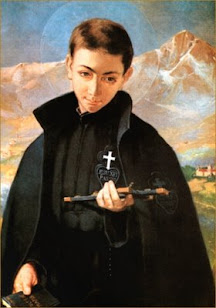
Why pray the Rosary every day for a year?


Each time the Blessed Virgin has appeared-- whether it be to Saint Bernadette Soubirous at Lourdes; to Lucia, Jacinta, and Francisco at Fatima; or to Mariette Beco at Banneux-- she has asserted the importance, saving grace, and power of praying the Holy Rosary on a daily basis. Based upon her words, the Rosary is penance and conversion for sinners, a pathway to peace, an end to war, and a powerful act of faith in Jesus Christ. Pope Paul VI presented the Rosary as a powerful means to reach Christ "not merely with Mary but indeed, insofar as this is possible to us, in the same way as Mary, who is certainly the one who thought about Him more than anyone else has ever done."

To show us how this is done, perhaps no one has been more eloquent than the great Cardinal Newman, who wrote: "The great power of the Rosary consists in the fact that it translates the Creed into Prayer. Of course, the Creed is already in a certain sense a prayer and a great act of homage towards God, but the Rosary brings us to meditate again on the great truth of His life and death, and brings this truth close to our hearts. Even Christians, although they know God, usually fear rather than love Him. The strength of the Rosary lies in the particular manner in which it considers these mysteries, since all our thinking about Christ is intertwined with the thought of His Mother, in the relations between Mother and Son; the Holy Family is presented to us, the home in which God lived His infinite love."


As Mary said at Fatima, "Jesus wants to use you to make Me known and loved. He wishes to establish the devotion to My Immaculate Heart throughout the world. I promise salvation to whoever embraces it; these souls will be dear to God, like flowers put by Me to adorn his throne."


April 27: Saint Zita

Posted by Jacob

Today, April 27, is the feast of Saint Zita (1212-1272), virgin of the Church, patron saint of housework, servants, and lost keys. The life of Saint Zita is a simple one, filled with a profound love of the Lord, compassion and service to others, and daily toil. Throughout her lift, Zita suffered hardship, hard work, jealousy and mockery, yet never strayed from her path of holy patience, joyful suffering, obedience, and industry. For Saint Zita, and indeed for us, holiness was found not only in helping others, but also in hard work (reminding us of Proverbs 6:6, “Look to the ant, you sluggard! Consider it’s ways and be wise!")


Saint Zita was born to a poor working family in a village in Tuscany, Monsagrati. She was raised by her pious and hard-working parents, and taught to realize that there were more important things than gold or money—Christian virtues of love, kindness, and compassion towards others. Despite hard work, the family often went hungry, too poor to buy enough food, and suffering terribly during the cold of winter.
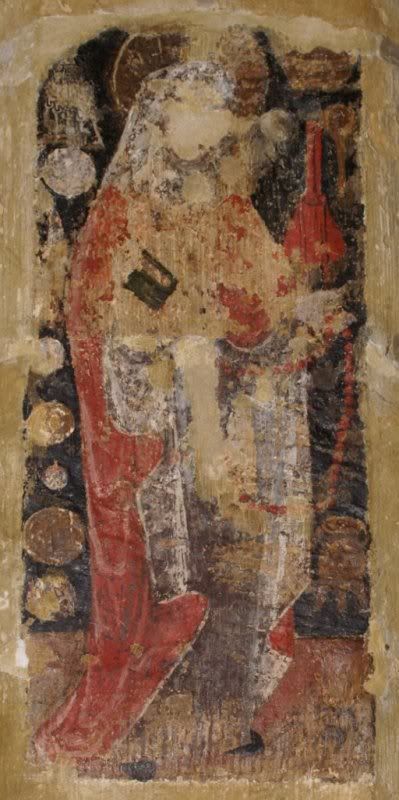
From a young age, Zita was recognized for her obedience, goodness, and charity. She ran with the love of a child to church each day, kneeling and praying of her own accord until her parents bade her come home. She frequently spoke of how she envisioned the Baby Jesus being born into similarly poor circumstances, but giving all He had, wandering the world, helping the poor.

At age 12, Zita was sent to live with a wealthy family in nearby Lucca, hired as a domestic servant. Her mother instructed her to serve the family well, for in serving her master, she was serving the Lord. Zita cheerfully undertook her work, striving to do her best at every task. Her zeal for her work, cheerful attitude, and industriousness immediately made her the envy of the other household servants. They treated her poorly, beating her, mocking her, and shirking their own responsibilities in the knowledge that she would do the work for them. Zita worked tirelessly, never complaining to her masters or the others.

Zita worked for the same family for the next 48 years, until her death. During that time, she rose long before the rest of the household each morning, walking a distance to the local church and attending morning Mass. She would then return to the household, bake bread for the family, and set about her daily chores until she went to bed late in the evening. Despite her busy schedule, Zita found time to serve the poor, never wasting leftover household food. While her master was initially irritated by her generosity to those in need, over time, her patience and holy disposition won him over. Under her generosity and careful oversight, the household supplies multiplied!

Throughout her life, Zita worked many miracles, and the heavenly host themselves intervened on her behalf. One morning at church, Zita was so engrossed in her prayers, she forgot to return home to bake the household bread. When she realized the time, she ran back to the house, out of breath, only to find freshly baked, perfect loaves, scented with the perfume of heaven. Her fellow servants reported that angels of heaven had baked the bread, and from that day, treated Zita with respect and dignity. The household had never tasted such incredibly delicious—truly heavenly—bread!

On another occasion, during the heat of summer, a poor traveler came to the door of the kitchen asking only for a drink of water. Zita knew that due to the heat, the water from the family well was unsafe to drink without treating it first. Yet, the traveler insisted that he only take water from the well, so as not to inconvenience her. Aloud, she spoke, “I wish this water were wine,” which the traveler echoed. Upon drawing the water from the well and drinking it, he found, indeed, that the Lord had transformed the well water into wine, per Zita’s prayer.

Lastly, on the feast of Christ the King, one bitter winter morning, Zita set off for church only to hear her master’s voice from the doorway calling her. As it was so cold, he suggested she stay home, but Zita was not to be deterred from visiting the Lord on His feast day at church. The master, fearing for her health, provided her with his warm, soft cloak—to be returned to him when she came back. The cloak was the most luxurious garment Zita had ever worn, and while comfortable, it filled her with guilt and regret as she prayed at the church. Christ had never had such comfortable clothing, and here, His humble servant, Zita, was wearing better garments than her king. At that moment, she noticed a poor beggar man, kneeling in church, shivering. She wrapped him in the cloak, instructing him that it needed to be returned to her at the end of the prayers, so she could return it to her master.

At the end of Mass, when she turned to invite the beggar home to warm himself by the kitchen hearth, she found him gone. Afraid, and certain of the beating she was to receive, Zita trudged through the cold winter morning, finding her master at the door. As expected, he was livid, and began violently reprimanding her, when the beggar man appeared at her side, his face shining with golden light. He returned the coat, both Zita and her master realizing him to be an angel of the Lord. From that moment on, Zita’s master treated her with respect and dignity, eventually entrusting her with the keys to the manor house, and placing her in charge of its operations. The home became a center of charity and Christian love—with each charitable act to those in need, whether they be poor, criminals, the ill, only increasing the fortune of the household!
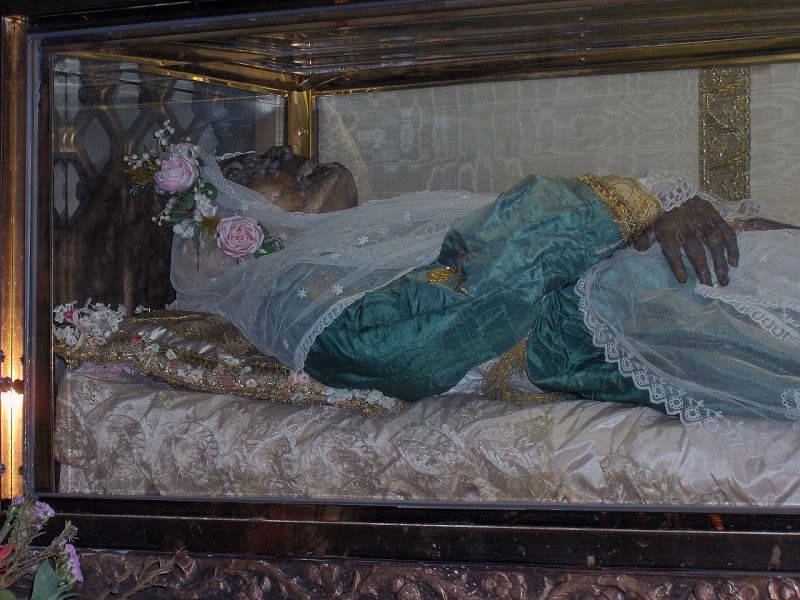
Saint Zita died comfortably in the home she oversaw in 1272. At the moment of her death, a bright star appeared in the sky above the home, where it remained. Her funeral drew all the townspeople, who proclaimed that a saint had lived among them, and strained to kiss her hand or touch her garment sleeves. Many miracles were performed at her tomb. In the sixteenth century, nearly 300 years after her death, Saint Zita’s body was exhumed to be moved, and found to be incorrupt. It lies now, encased in a crystal coffin, in the Church of San Frediano.

Saint Zita’s life demonstrates that faith and hard work lead to holiness and sanctity. She was often heard remarking that ‘devotion that is slothful is false.’ Through her obedience and charity, patience and hard work, Zita brought honor and grace to the household in which she worked, surrounding all those she came into contact with a heavenly grace and light. We look to Saint Zita as a reminder—as an inspiration—to toil tirelessly in the vineyard of the Lord. For Zita, and indeed for our God, no work is too menial, too unimportant, or too trivial if undertaken with a heart of service, a love of neighbor, and a mind centered on God.


Today’s Psalm: Psalm 3: Trust in God in Time of Danger

3 But you are a shield around me, O LORD;
you bestow glory on me and lift up my head.
4 To the LORD I cry aloud,
and he answers me from his holy hill.
5 I lie down and sleep;
I wake again, because the LORD sustains me.
6 I will not fear the tens of thousands
drawn up against me on every side. (Psalm 3: 3-6)


Day 117 of 365
Prayer Intentions: Joyful Toil in the Vineyard of the Lord; For those who are unable to work; For the working poor.
Requested Intentions: A father’s birthday (J); Restoration and healing of marriage, family, and financial situation (M); For the repose of the soul of M (J); Financial security and employment (A); For financial security (M); Health and recovery of Cardinal Sean Brady (R); Healing from a chronic illness (J); Deepening of faith and true conversion for a family (J); Successful employment (H); Restoration of a marriage (J); For a friend’s daughter, seeking medical treatment for a blood disorder (D); For the grace and conversion of a loved one (Z); For a beloved son’s return to the faith (A); For the improved health and recovery of a mother (G).

Psalm: Psalm 3: Trust in God in Time of Danger
Feast of Our Lady of Good Counsel

Posted by Jacob

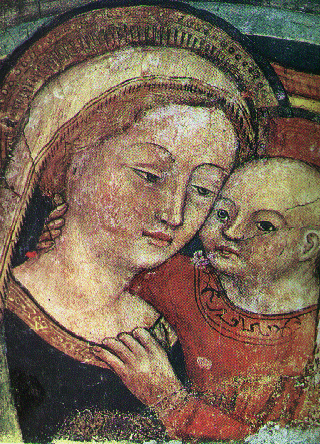
Today, April 26, we celebrate the Feast of Our Lady of Good Counsel ("Madonna del Buon Consiglio")-- the miraculous love and grace that the Blessed Virgin revealed to the faithful through an iconic fresco of Holy Mother and Child.
In Genazzano, Italy—a small town about 25 miles outside of Rome-- the Church of the Virgin Mother of Good Counsel had fallen into disrepair. In the fifteenth century, a pious widow and tertiary of the Augustinian Order, Petruccia Noteria, undertook the monumental task of restoring the church following a vision from the Blessed Virgin. She implored her neighbors to help her with the task, but instead, they scoffed and jeered, accusing her of madness at her advanced age, and mocking her alleged holiness. Petruccia was not to be deterred, however, and committed all of her resources to the repairs of the church. She was not deterred by the derision of her friends and neighbors, instead saying to them, “My dear children, do not put too much importance on this apparent misfortune. I assure you that before my death the Blessed Virgin and our holy father Augustine will finish the church begun by me.”

On April 25, 1467, the entire town would have their eyes opened. It was traditional to celebrate the feast of Saint Mark, the patron saint of the city, with a fair in the city’s town center—where the partially restored Church of Our Lady of Good Counsel stood. During the festival, a luminous white cloud drifted over the village, with heavenly music seeming to emanate from within it. The cloud, which drew quite a bit of attention, drifted over the church, enveloping it. The church bells began to ring of their own accord, echoed by the bells of every other church in town. When the cloud lifted, a fresco of the Virgin Mary and Infant Jesus appeared, miraculously hanging in the air. The townspeople were moved by the miracle, crying out to their Mother of Good Counsel.

Following the miraculous apparition, the people rallied around Petruccia, and the church was finished quite quickly. A chapel was built to house the fresco, which continues—to this day—to hang suspended in the air, approximately 1 inch from the wall of the church. So many miracles were recorded—including healings—that Rome dispatched a registrar to record them. Nearly 175 miracles were recorded in the first 5 months. Pope Paul II immediately ordered an investigation, and the results have been preserved. The same fresco was discovered to have miraculously appeared in a church dedicated to the Annunciation in Scutari, Albania centuries before, but due to Petruccia’s faith, was miraculously transported to Italy.

The fresco—painted on a thin sheet of porcelain approximately the thickness of an eggshell—became known as Our Lady of Good Counsel of Genazzano. To this day, pilgrims flock to see the image, which despite the church being bombed during the second world war (and the chapel within which it was housed destroyed) miraculously escaped unscathed.

Our Lady of Good Counsel has been approved by the Vatican, and many popes throughout history have been especially devoted to her. She is the patron saint of those seeking enlightenment. Her feast day is celebrated April 26.  Her miraculous intercession reminds us that the love of Our Blessed Mother is perfect, her virtue knows no bounds, and her constant heavenly intercession for each of us is a gift not to be taking for granted.  Pray for us, Our Lady of Good Counsel!  Intercede for us with Jesus, Our Lord!


Prayer of Our Lady of Good Counsel:


O Holy Virgin, to whose feet we are lead by our anxious uncertainty in our search for and attainment of what is true and good, invoking thee by the sweet title of Mother of Good Counsel. We beseech Thee to come to our assistance, when, along the road of this life, the darkness of error and of evil conspires towards our ruin by leading our minds and our hearts astray.


Do Thou, O Seat of Wisdom and Star of the Sea, enlighten the doubtful and the erring, that they be not seduced by the false appearances of good; render them steadfast in the race of the hostile and corrupting influences of passion and of sin. O Mother of Good Counsel, obtain for us from Thy Divine Son a great love of virtue, and, in the hour of uncertainty and trial, the strength to embrace the way that leads to our salvation.


If Thy hand sustains us, we shall walk unmolested along the path indicated to us by the life and words of Jesus our Redeemer, and having followed freely and securely, even in the midst of this world's strife, the Sun of Truth and Justice under Thy maternal star, we shall come to the enjoyment of full and eternal peace with Thee in the haven of salvation. Amen.


We continue our meditation on the Psalms, reading Psalm 2: The Universal Reign of the Messiah and contemplating the awesome power and love of our Lord.


10 Therefore, you kings, be wise;
be warned, you rulers of the earth.
11 Serve the LORD with fear
and rejoice with trembling. (Psalm 2: 10-11)


Day 116 of 365
Prayer Intentions: Enlightenment; Faith in the Lord
Requested Intentions: Restoration and healing of marriage, family, and financial situation (M); For the repose of the soul of M (J); Financial security and employment (A); For financial security (M); Health and recovery of Cardinal Sean Brady (R); Healing from a chronic illness (J); Deepening of faith and true conversion for a family (J); Successful employment (H); Restoration of a marriage (J); For a friend’s daughter, seeking medical treatment for a blood disorder (D); For the grace and conversion of a loved one (Z); For a beloved son’s return to the faith (A); For the improved health and recovery of a mother (G); For health, blessings, and protection (K); For an improvement in a difficult employment situation (T).

Psalm: Psalm 2: The Universal Reign of the Messiah

Marian Mondays: A Fiat by any other name...

Posted by Jacob

Marian Mondays is a weekly post focusing on Our Blessed Mother, Mary, Queen of Heaven and Earth. In this post, we explore her life, her special mission, her sanctity, and the Biblical bases for the beliefs of the Church.


Mary exemplifies the Christian virtues of faith, hope, and charity. She was chosen, and is, without a doubt, blessed. When we speak of Mary, we oftentimes use the word “fiat.” You hear people saying, “the fiat of Mary,” or “the ultimate fiat.” But what are we actually talking about? “Fiat” is Latin, translating as “let it be done.” In this way, we can understand the word fiat as more than a simple “yes.” Rather, it is the acknowledgement of one’s lack of control, of one's faith, of one's confidence in the face of the unknown.

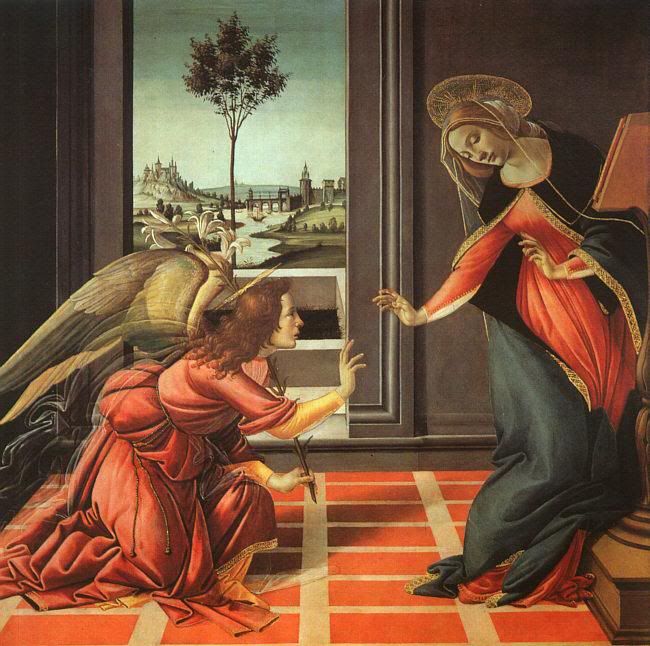
When we speak of the fiat of Mary, we are, of course, generally referring to the Annunciation, when she bravely proclaims, “I am the handmaiden of the Lord; Let it be done to me according to your word.” Mary, as previously written here, has no idea what lies in store for her. She stands poised on the brink of the great unknown, and yet, she manages to give up her control, to put her faith in the Lord, and accept the unknown. In doing so, the unknown becomes known through her faith in the Lord.

As Adreinne von Speyr wrote: "The `fiat' of the Mother of the Lord is the most humble thing that the maiden can say or accomplish . . . Since she binds herself entirely to God, she becomes entirely free in God . . . She is infinitely at the disposal of the Infinite. She is absolutely ready for everything, for a great deal more, therefore, than she can know, imagine or begin to suspect. Coming from God, this yes is the highest grace; but, coming from us, it is also the highest achievement made possible by grace: unconditional, definitive self-surrender. It is at once faith, hope and love. It is also the original vow, out of which arises every form of definitive Christian commitment to God and in God. It is the synthesis of love and obedience.”

In consideration of what was being asked of her, Mary’s fiat is not only brave, it is eloquent and virtuous. All too often, we answer the Lord with hesitation, half-heartedness, begrudging acceptance—an “I guess so,” or “If I have to” type response. Our own plans, our fears and anxieties, our competing priorities, our sinfulness betray us in these moments. Our selfishness keeps us from embracing our weakness, gazing into the unknown, and accepting the Lord’s will for us.

Our Blessed Mother had ample opportunity for selfishness, both at the first fiat, and later. At the Wedding in Cana, for example, Mary offers another fiat—this one as selfless as the first. We can imagine the happiness of Mary—of any mother—having her child, her son, return home for this joyous event. We can imagine that many of us would want to keep that child with us, for as long as we could. Mary likely felt the same way about her child, the Christ child. But she chose to let Him go, to start His mission on earth, with the fiat, "Do whatever he tells you." (John 2:5). Mary begins the ministry of Jesus, not knowing what lay in store, but trusting in the Lord. When we meditate upon the Mysteries of the Rosary, we are not only contemplating the life of Jesus, we are relishing the repeated fiat of Mary, and we are learning from both. To what will we say “Let it be done” today? How will we respond to our Lord’s call?


An excerpt from a Homily of Praise to the Virgin’s Fiat
Written by St. Bernard of Clairvaux (1090-1153)

You have heard, O Virgin, that you will conceive and bear a son; you have heard that it will not be by man but by the Holy Spirit. The angel awaits an answer; it is time for him to return to God who sent him. We too are waiting, O Lady, for your word of compassion; the sentence of condemnation weighs heavily upon us.


The price of our salvation is offered to you. We shall be set free at once if you consent. In the eternal Word of God we all came to be, and behold, we die. In your brief response we are to be remade in order to be recalled to life.


Tearful Adam with his sorrowing family begs this of you, O loving Virgin, in their exile from Paradise. Abraham begs it, David begs it. All the other holy patriarchs, your ancestors, ask it of you, as they dwell in the country of the shadow of death. This is what the whole earth waits for, prostrate at your feet. It is right in doing so, for on your word depends comfort for the wretched, ransom for the captive, freedom for the condemned, indeed, salvation for all the sons of Adam, the whole of your race.


Answer quickly, O Virgin. Reply in haste to the angel, or rather through the angel to the Lord. Answer with a word, receive the Word of God. Speak your own word, conceive the divine Word. Breathe a passing word, embrace the eternal Word.


Why do you delay, why are you afraid? Believe, give praise, and receive. Let humility be bold, let modesty be confident. This is no time for virginal simplicity to forget prudence. In this matter alone, O prudent Virgin, do not fear to be presumptuous. Though modest silence is pleasing, dutiful speech is now more necessary. Open your heart to faith, O blessed Virgin, your lips to praise, your womb to the Creator. See, the desired of all nations is at your door, knocking to enter. If he should pass by because of your delay, in sorrow you would begin to seek him afresh, the One whom your soul loves. Arise, hasten, open. Arise in faith, hasten in devotion, open in praise and thanksgiving. Behold the handmaid of the Lord, she says, be it done to me according to your word.

A brief history of the Holy Rosary

Posted by Jacob

So, it is the 115th day of the year, and I haven’t really written about the history of the Holy Rosary itself. Church tradition holds that Our Blessed Mother appeared to Saint Dominic de Guzman in the thirteenth century, presenting him with the Rosary that we pray today. However, the Rosary—in some form—long predates the thirteenth century, and the meditations on the Holy Mysteries of the Rosary, came long after the visitation of the Blessed Mother. Therefore, while the core of this holy prayer was provided by The Blessed Virgin to Saint Dominic, the Church has, over time, provided guidance in the meditation and contemplation of the lives of Mary and Jesus over time (for example, the addition of the Mysteries of Light by Pope John Paul II).


In medieval times, the first roots of the Holy Rosary can be found—the practice of monks and friars singing the Divine Office on a daily basis, a practice which took upwards of eight hours! The Divine Office was complicated, changing daily depending on liturgical year, seasons, etc., and therefore was far too difficult for most laypersons to undertake given the lack of educational achievement at that time. The Divine Office was also far too time consuming for priests and brothers who didn’t reside in monasteries to complete on a daily basis. To simplify, and yet provide a manner in which these laity and religious could pray on a daily basis, a briefer version was put together called the breviary. Still too complicated for the laity, a number of solutions were suggested, including reciting the 150 Psalms each day.

Now, the 150 Psalms took some time to recite, and subsequently the meditation was divided by three, with fifty Psalms remaining each day. To make matters more difficult, many Christians at the time could not read, and therefore would have to commit the Psalms to memory, which was no easy task. Therefore, prayers (such as the Our Father and Hail Mary) were substituted for the psalter, in effect, yielding a chain of fifty prayers each day. As it was easy to lose track of one’s place, a prayer device was required—a string of prayer beads, the precursor to the modern Rosary.

So, in the beginning, we can see that the practice of praying the Rosary was not so much a devotion, as it was a prayer aid. This changed in the thirteenth century with the visitation of the Blessed Virgin to Saint Dominic. Saint Dominic, the founder of the Dominican Order (feast day, August 8), traveled throughout the country, converting those he encountered. However, he found great resistance to his preaching, and turned to Our Blessed Mother for help in a forest in Toulouse. He prayed, fasted, and engaged in severe physical mortification for three days and three nights, eventually falling into a trance-like coma. As Holy Legend tells us, it is at this point that Our Blessed Mother appeared to Dominic, saying, “Dear Dominic, do you know which weapon the Blessed Trinity wants to use to reform the world?" Dominic answered, "Oh, my Lady, you know far better than I do, because next to your Son Jesus Christ you have always been the chief instrument of our salvation."


Our Blessed Mother continued to speak with Saint Dominic, encouraging him to pray the Marian Psalter (the practice of praying 150 Hail Marys), as with that prayer aid, he would reach sinners and convert them. "My son," Mary said, "prayer and penance are the only way to win souls. Pray my Psalter and teach it to your people. That prayer, will never fail." She concluded by saying, “One day, through the Rosary and the Scapular, I will save the world.” Per Legend, Saint Dominic ran to the Cathedral and preached to an assembled crowd, a great storm raging, and devotion to the Holy Rosary of Our Blessed Mother began.

Pope Pius XI (1922-1939) stated: "The Rosary of Mary is the principle and foundation on which the very Order of Saint Dominic rests for making perfect the life of its members and obtaining the salvation of others." Pope Benedict XIV ( 1740-58 ), a renowned scholar and a promoter of historical studies and research, spoke about the tradition of Saint Dominic and the Rosary by saying: "You ask whether St. Dominic was the first institutor of the Rosary, and show that you yourselves are bewildered and entangled in doubts on the matter. Now, what value do you attach to the testimony of so many Popes, such as Leo X (1521), Pius V (1572), Gregory XIII (1585), Sixtus V (1590), Clement VIII (1605), Alexander VII (1667), Bl. Innocent XI (1689), Clement XI (1721), Innocent XIII (1724) and others who unanimously attribute the institution of the Rosary to St. Dominic, the founder of the Dominican Order, an apostolic man who might be compared to the apostles themselves and who, undoubtedly due to the inspiration of the Holy Spirit, became the designer, the author, promoter, and most illustrious preacher of this admirable and truly heavenly instrument, the Rosary?”

Devotion grew, spread by Saint Dominic and the Dominican Order, and the Rosary of Our Lady became a common practice. In the fifteenth century, another Dominic-- Dominic of Prussia-- a Carthusian monk in Poland, introduced the idea of meditating on fifty events in the life of Jesus while reciting the 50 Hail Marys. Eventually, these meditations became the Glorious, Joyful, and Sorrowful Mysteries. The addition of the Luminous Mysteries by Pope John Paul II brought the total to 20 events in the birth, life, ministry, death, and resurrection of Jesus—which we still contemplate today while praying the Rosary. The Creed, Doxology, Fatima Prayer, and others have been added over time, creating a rhythmic, but highly personal and contemplative, prayer exercise which with to meditate on the life of our Savior, Jesus Christ, and the role His mother, Our Blessed Virgin, played for Him, and continues to play for us, interceding on our behalf.

In future posts, I will address the physical aspects of the Rosary itself, including the criticisms that using beads “externalizes” prayer, or that the Rosary is, by it’s very nature, the type of “vain repetition” of prayer that the Bible warns against. In a careful analysis of the devotion, we see more clearly that the beads form a chaplet which directs us inward, towards our Lord who resides inside of us, with each bead leading us to our next prayer, contemplatively drawing us deeper toward the Mysteries of our faith.

Given the origins of the Holy Rosary in the psalter, for the next 150 days, I will contemplate the Psalms, one per day, as I pray the Holy Rosary for the intentions of those readers who have submitted requests on this blog. I encourage you all to join me in this exercise!


1 Blessed is the man
who does not walk in the counsel of the wicked
or stand in the way of sinners
or sit in the seat of mockers.
2 But his delight is in the law of the LORD,
and on his law he meditates day and night. (Psalm 1: 1-2)


Day 115 of 365
Prayer Intentions: For those who weep, for those who pray, for those who fear.
Requested Intentions: For the repose of the soul of M (J); Financial security and employment (A); For financial security (M); Health and recovery of Cardinal Sean Brady (R); Healing from a chronic illness (J); Deepening of faith and true conversion for a family (J); Successful employment (H); Restoration of a marriage (J); For a friend’s daughter, seeking medical treatment for a blood disorder (D); For the grace and conversion of a loved one (Z); For a beloved son’s return to the faith (A); For the improved health and recovery of a mother (G); For health, blessings, and protection (K); For an improvement in a difficult employment situation (T).

Psalm: Psalm 1: True Happiness

April 24: Saint Fidelis of Sigmaringen

Posted by Jacob

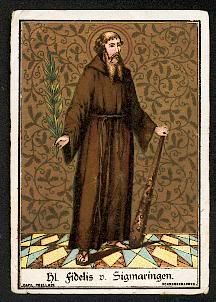
April 24 marks the feast day of Saint Fidelis of Sigmaringen (1577-1622), priest and martyr of the Church. Fidelis was born in 1577 in Sigmaringen, Prussia, the son of a high official in the city. Provided every opportunity for education, he matured with great intelligence, studying law, and teaching philosophy. As a student he was different from his peers, seeking only education, abstaining from wine, wearing a hair shirt, and known for his modesty and charity. Upon becoming a lawyer, he was selected to tutor three young princes, and did so, traveling the world as their personal instructor. During this time, his heart was drawn to charity, and he visited the poor and ill in each city visited, offering prayer and assistance to those in need. Fidelis eventually returned to Sigmaringen to practice civil law, upholding the highest moral standards, refusing to speak ill of his adversaries, and serving the poor tirelessly. He earned himself the name “counselor and advocate of the poor,” but was quickly disenfranchised with the corruption of the system and gave up his practice to enter the priesthood. He wrote:


“From now on I want to live in complete poverty, chastity, and obedience amidst sufferings and persecutions and in austere penance and profound humility. I came from the womb of my mother with nothing, and with nothing I desire to return to the arms of my Savior.”

Saint Fidelis became a priest of the Capuchin Order—an austere Franciscan order (for whom, among other things, the Cappuccino is named in reference to their brown and white habits). Fidelis, upon completing his religious studies, was determined to be a great orator, and was dispatched to preach and hear confessions. During a time when the Calvinists had grown in numbers, Fidelis and his companions bravely traveled into towns and countries to convert them back to Catholicism. In return, the Calvinists loudly called for his death, and Fidelis, willing to die for his faith, prepared himself for martyrdom. He prophesied his own death in a sermon, saying, “Shortly you will see me no longer for I was called to shed my blood for the Faith.” Moreover, he began signing his letters, “Fidelis, soon to be food for worms.”

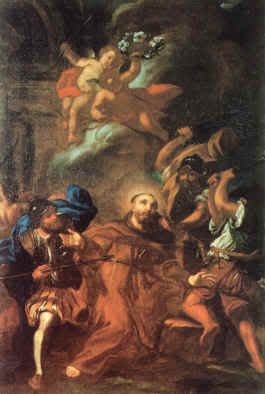
Along with his companion, Saint Joseph of Leonissa, Saint Fidelis was sent to Switzerland to continue his work with the Calvinists. There he was set upon by soldiers, and after refusing to convert, was bludgeoned to death. An observer recorded the event in words, which became portion of the martyrology:

From Grüsch he went to preach at Seewis, where, with great energy, he exhorted the Catholics to constancy in the faith. After a Calvinist had discharged his musket at him in the Church, the Catholics entreated him to leave the place. He answered that death was his gain and his joy, and that he was ready to lay down his life in God's cause. On his road back to Grüsch, he met twenty Calvinist soldiers with a minister at their head. They called him a false prophet, and urged him to embrace their sect. He answered: "I am sent to you to confute, not to embrace your heresy. The Catholic religion is the faith of all ages, I fear not death." One of them beat him down to the ground by a stroke on the head with his backsword. Fidelis rose again on his knees, and stretching forth his arms in the form of a cross, said with a feeble voice "Pardon my enemies, O Lord: blinded by passion they know not what they do. Lord Jesus, have mercy on me. Mary, Mother of God, succor me!." Another sword stroke clove his skull, and he fell to the ground and lay in a pool of his own blood. The soldiers, not content with this, added many stab wounds to his body with their long knives, and hacked-off his left leg, as they said, to punish him for his many journeys into those parts to preach to them.

Local Catholics buried the saint’s body following his martyrdom, and six months later, upon exhuming it to move in on behest of the bishop, they found it to be incorrupt.

Fidelis, a name which means faithful, was just that. He was faithful to the Lord, to his mission of preaching the faith and helping those less fortunate, despite what he knew to be the eventual outcome of his life’s work. His faith and obedience inspire us today, on his feast day, to evaluate our own mission, our own orientation to the world and the will of God. How might we be more obedient in a world which places our own wants, needs, and achievements above all else? How might we recenter our lives on those virtues which we known to be the core of existence: faith, hope, and love? How might we live the life that God calls us to more fully each day?


God, who didst enkindle thy blessed Saint Fidelis with heavenly fervor of the spirit, and in the preaching of the true Faith, didst suffer him to shew forth wondrous miracles, and to be glorified with the palm of martyrdom: grant, we beseech thee; that, by his merits and intercession, we may through thy grace be so established in faith and charity, that we may be made worthy to show forth our fidelity in thy service, even unto death. Through Christ our Lord, we pray.  Amen.


Day 114 of 365
Prayer Intentions: Faith and Obedience; Safety of missionaries.
Requested Intentions: For the repose of the soul of M (J); Financial security and employment (A); For financial security (M); Health and recovery of Cardinal Sean Brady (R); Healing from a chronic illness (J); Deepening of faith and true conversion for a family (J); Successful employment (H); Restoration of a marriage (J); For a friend’s daughter, seeking medical treatment for a blood disorder (D); For the grace and conversion of a loved one (Z); For a beloved son’s return to the faith (A); For the improved health and recovery of a mother (G); For health, blessings, and protection (K); For an improvement in a difficult employment situation (T).