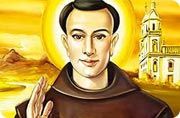
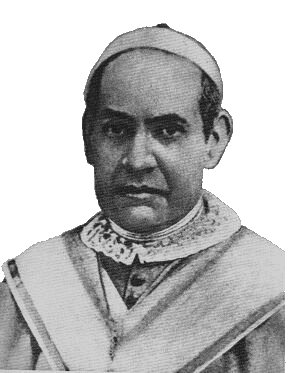
Today, October 27, we celebrate the feast day of Saint Frumentius of Ethiopia (died 383), also known as “Abuna,” or the Father of Ethiopia. Together with his twin brother, saint Aedesius, he is credited with bringing the faith to that region of Africa, as well as translating the New Testament into local language to make it more accessible to the people there. A disciple of Saint Athanasius of Alexandria, Saint Frumentius turned the tragedy of his youth into a powerful opportunity to preach the truth of the Gospel to those in need.
Born in Tyre, Lebanon, Frumentius and his brother were taken on a voyage to Ethiopia what still young children by their uncle, Meropius, a Christian philosopher and explorer. During the voyage, tragedy struck and the ship was attacked by barbarian pirates while harbored in a community on the Red Sea. The entire crew, with the exception of the two children, were slain, and the ship destroyed. Frumentius and Aedesius were taken as slaves.
The two youth were unlike the people of the region in appearance, and as such were given to the king of Axum as a curiosity. He was immediately taken with their youth, beauty, and wit, and installed them as members of his court, seeing to their education, and providing them protection and care. Aedesius would eventually become the king’s cup-bearer, and Frumentius his secretary.
The brothers grew in faith, serving their king well. On his deathbed, grateful for years of service, the king granted the twins their freedom. However, the queen begged them to stay at court and assist her in governing the country until the heir to the throne came of age. This, they gladly did, convincing her to allow the introduction of Christianity to the country, and opening trade ties with the West. Over time, the brothers used their influence to spread Christianity first throughout the court, and then throughout the country. First they encouraged Christian merchants, who had been recently allowed into the country, to practice their faith openly by meeting at places of public worship. Eventually, this led to the conversion of the native residents. When the prince reached the age of governing, the brothers resigned their posts.
Saint Frumentius traveled to Alexandria, where he arranged a meeting with Saint Athanasius, and begged him to send a bishop back to Ethiopia to shepherd the fledgling Christian community. Athanasius, a wise man of faith, consecrated Frumentius a bishop, sending him back to the Ethiopians, recognizing him to be the best man for the position.
Upon his return, Frumentius was welcomed back with reverence, and through working of miracles and holy example, converted the king, and subsequently, the majority of the nation. He worked tirelessly throughout the country until his death in approximately the year 383. The people of Ethiopia called him Abuna (Our Father), Kesate Birhan (Revealer of Light), and Abba Salama (Father of Peace).
Pray for us, dear Frumentius, that we may also “bloom where we are planted.” You were just a young boy in a strange and pagan land, but you made the best of the situation and brought truth and life to that desolate land and lost people. We pray for your intercession that we may bring the light of Christ with us wherever we go in the hope of inspiring others to follow Him. In His name we pray. Amen.
Day 300 of 365
Prayer Intentions: Perseverance, Endurance, Faith in difficult situations.
Requested Intentions: Complete recovery of son (P); Recovery of parish priest, health of mother, conversion of son (J); Successful employment, end to depression (J); Successful immigration and employment (S); Conversion of an unloving daughter (M); Recovery of husband, health of mother, economic freedom (R); Freedom from depression, restoration of family relationships (N); Restoration of a relationship (J); Healing of friends from cancer (J); Complete healing of a friend with pancreatic cancer (J); Recognition of God’s Will; Obedience in vocation (J); Successful employment (M&I); For a son who struggles (S); Conversion (P); For family, peace, and social justice (J); Son’s employment (K); Discernment of the Lord’s will (A); Mother’s full recovery from a stroke (K); Employment (P); For family’s prosperity and employment (M); For a husband’s addiction (F); Health in a relationship, literary representation (D); For a mother struggling with cancer (P); Employment and financial assistance (L); End to work troubles, return to health (R); For a husband’s recovery from alcoholism (M); Healing of a father battling cancer (S).
Why pray the Rosary every day for a year?
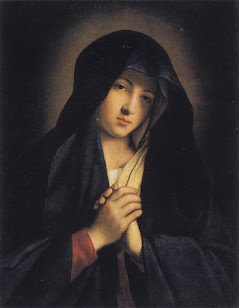
Each time the Blessed Virgin has appeared-- whether it be to Saint Bernadette Soubirous at Lourdes; to Lucia, Jacinta, and Francisco at Fatima; or to Mariette Beco at Banneux-- she has asserted the importance, saving grace, and power of praying the Holy Rosary on a daily basis. Based upon her words, the Rosary is penance and conversion for sinners, a pathway to peace, an end to war, and a powerful act of faith in Jesus Christ. Pope Paul VI presented the Rosary as a powerful means to reach Christ "not merely with Mary but indeed, insofar as this is possible to us, in the same way as Mary, who is certainly the one who thought about Him more than anyone else has ever done."
To show us how this is done, perhaps no one has been more eloquent than the great Cardinal Newman, who wrote: "The great power of the Rosary consists in the fact that it translates the Creed into Prayer. Of course, the Creed is already in a certain sense a prayer and a great act of homage towards God, but the Rosary brings us to meditate again on the great truth of His life and death, and brings this truth close to our hearts. Even Christians, although they know God, usually fear rather than love Him. The strength of the Rosary lies in the particular manner in which it considers these mysteries, since all our thinking about Christ is intertwined with the thought of His Mother, in the relations between Mother and Son; the Holy Family is presented to us, the home in which God lived His infinite love."
As Mary said at Fatima, "Jesus wants to use you to make Me known and loved. He wishes to establish the devotion to My Immaculate Heart throughout the world. I promise salvation to whoever embraces it; these souls will be dear to God, like flowers put by Me to adorn his throne."
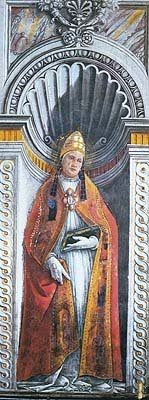
Today, October 26, we celebrate the feast day of Pope Saint Evaristus (died 107), fourth successor of Saint Peter. While little is known about this fifth pope, we do know that Saint Evaristus governed the Church for nine years, during which time he laid the groundwork for future Church policy. Saint Evaristus was profoundly committed to the expansion of vocations in the Church. The institution of cardinal priests is ascribed to him, as he is the pope who first divided Rome into several titles or parishes, assigning a priest to each. He also appointed seven deacons to attend the bishop and conferred holy orders three times in the month of December which was quite unusual, given that these ceremonies were generally reserved for seasons of fasting and prayer.
Saint Evaristus lived in the second century, born into a Jewish family in Bethlehem. He is often depicted in art accompanied by a crib, reflecting his close ties to Christ, due to the place of his birth. Saint Evaristus’ parents immigrated to Greece while he was very young, and the future pope was brought up in the Jewish faith. Pious, knowledgeable, and virtuous, Evaristus received the best education of the time.
As he grew, he was more and more drawn to Christianity, and eventually he became a priest, traveling to Rome, and engaging in ministry there despite the growing threat and persecution of Christians. He was much admired for his devotion to the Lord, service to others, and commitment to the teachings of Christ. So loved was he that when Pope Anancletus (who had elevated him to bishop) was martyred, Saint Evaristus was selected to replace him. For his part, Evaristus proclaimed his belief that he was unworthy to take the throne of Peter, but the Lord saw to his ascension.
Pope Saint Evaristus led the Church for approximately eight years, during which time he organized the Roman See, instructed and encouraged the clergy, and prepared the faithful for the persecution that was imminent. He wrote several letters, each reinforcing the teachings of the Church. In his first epistle, addressed to the bishops of Africa, Evaristus decreed that seven deacons were to monitor a bishop’s preaching, to ensure that he did not lapse from the true teachings. Evaristus did not wish to see undue accusations aimed at his bishops, yet reserved solely to the See of Rome the power to terminate any bishop as a result of this indiscretion. His second epistle drew a comparison between the lasting bond of husband and wife and that of a bishop and his diocese.
During the leadership of Pope Saint Evaristus, the clergy were solidified and the congregations of believers grew at an astounding rate—largely due to his love and zeal for the truth of Christ. However, as were most popes at that time of Church formation, Evaristus was eventually arrested during the reign of Emperor Domitian, and sentenced to death for being a Christian. As he was taken to prison, his jailers were amazed to see the joy on his face, as he thought himself privileged to have been found worthy to suffer and die for Jesus. He was martyred by decapitation, and his remains were buried in the Vatican near the tomb of Saint Peter.
While little is known about the life of our fifth pope, we can feel certain of his commitment to, and love of, the Lord. Pope Saint Evaristus inherited a difficult task—to assume the leadership of a Church beset by persecution and suffering. Rather than turning outward, this great leader looked within the Church, strengthening the roles of bishops and clergy, preparing the faithful to survive and thrive during their suffering, as Jesus did. His simple faith, love, and courage helped prepare the Church to weather the great storm!
Dear Lord, you gave your servant, Pope Evaristus, the gifts of wisdom and humility to guide your Church on earth. By his loyalty in shepherding the flock, may he continue to guide those on earth who seek his intercession. Amen.
Day 299 of 365
Prayer Intentions: Wisdom, humility, loyalty to the truth of Christ.
Requested Intentions: Complete recovery of son (P); Recovery of parish priest, health of mother, conversion of son (J); Successful employment, end to depression (J); Successful immigration and employment (S); Conversion of an unloving daughter (M); Recovery of husband, health of mother, economic freedom (R); Freedom from depression, restoration of family relationships (N); Restoration of a relationship (J); Healing of friends from cancer (J); Complete healing of a friend with pancreatic cancer (J); Recognition of God’s Will; Obedience in vocation (J); Successful employment (M&I); For a son who struggles (S); Conversion (P); For family, peace, and social justice (J); Son’s employment (K); Discernment of the Lord’s will (A); Mother’s full recovery from a stroke (K); Employment (P); For family’s prosperity and employment (M); For a husband’s addiction (F); Health in a relationship, literary representation (D); For a mother struggling with cancer (P); Employment and financial assistance (L); End to work troubles, return to health (R); For a husband’s recovery from alcoholism (M); Healing of a father battling cancer (S).
Saint Evaristus lived in the second century, born into a Jewish family in Bethlehem. He is often depicted in art accompanied by a crib, reflecting his close ties to Christ, due to the place of his birth. Saint Evaristus’ parents immigrated to Greece while he was very young, and the future pope was brought up in the Jewish faith. Pious, knowledgeable, and virtuous, Evaristus received the best education of the time.
As he grew, he was more and more drawn to Christianity, and eventually he became a priest, traveling to Rome, and engaging in ministry there despite the growing threat and persecution of Christians. He was much admired for his devotion to the Lord, service to others, and commitment to the teachings of Christ. So loved was he that when Pope Anancletus (who had elevated him to bishop) was martyred, Saint Evaristus was selected to replace him. For his part, Evaristus proclaimed his belief that he was unworthy to take the throne of Peter, but the Lord saw to his ascension.
Pope Saint Evaristus led the Church for approximately eight years, during which time he organized the Roman See, instructed and encouraged the clergy, and prepared the faithful for the persecution that was imminent. He wrote several letters, each reinforcing the teachings of the Church. In his first epistle, addressed to the bishops of Africa, Evaristus decreed that seven deacons were to monitor a bishop’s preaching, to ensure that he did not lapse from the true teachings. Evaristus did not wish to see undue accusations aimed at his bishops, yet reserved solely to the See of Rome the power to terminate any bishop as a result of this indiscretion. His second epistle drew a comparison between the lasting bond of husband and wife and that of a bishop and his diocese.
During the leadership of Pope Saint Evaristus, the clergy were solidified and the congregations of believers grew at an astounding rate—largely due to his love and zeal for the truth of Christ. However, as were most popes at that time of Church formation, Evaristus was eventually arrested during the reign of Emperor Domitian, and sentenced to death for being a Christian. As he was taken to prison, his jailers were amazed to see the joy on his face, as he thought himself privileged to have been found worthy to suffer and die for Jesus. He was martyred by decapitation, and his remains were buried in the Vatican near the tomb of Saint Peter.
While little is known about the life of our fifth pope, we can feel certain of his commitment to, and love of, the Lord. Pope Saint Evaristus inherited a difficult task—to assume the leadership of a Church beset by persecution and suffering. Rather than turning outward, this great leader looked within the Church, strengthening the roles of bishops and clergy, preparing the faithful to survive and thrive during their suffering, as Jesus did. His simple faith, love, and courage helped prepare the Church to weather the great storm!
Dear Lord, you gave your servant, Pope Evaristus, the gifts of wisdom and humility to guide your Church on earth. By his loyalty in shepherding the flock, may he continue to guide those on earth who seek his intercession. Amen.
Day 299 of 365
Prayer Intentions: Wisdom, humility, loyalty to the truth of Christ.
Requested Intentions: Complete recovery of son (P); Recovery of parish priest, health of mother, conversion of son (J); Successful employment, end to depression (J); Successful immigration and employment (S); Conversion of an unloving daughter (M); Recovery of husband, health of mother, economic freedom (R); Freedom from depression, restoration of family relationships (N); Restoration of a relationship (J); Healing of friends from cancer (J); Complete healing of a friend with pancreatic cancer (J); Recognition of God’s Will; Obedience in vocation (J); Successful employment (M&I); For a son who struggles (S); Conversion (P); For family, peace, and social justice (J); Son’s employment (K); Discernment of the Lord’s will (A); Mother’s full recovery from a stroke (K); Employment (P); For family’s prosperity and employment (M); For a husband’s addiction (F); Health in a relationship, literary representation (D); For a mother struggling with cancer (P); Employment and financial assistance (L); End to work troubles, return to health (R); For a husband’s recovery from alcoholism (M); Healing of a father battling cancer (S).
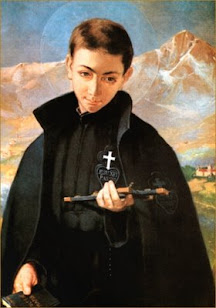
Today, October 25, we celebrate the feast day of Saint Antônio de Sant’Anna Galvão (1739-1822), Brazil’s first saint, Franciscan friar, founder of the order of Our Lady of the Conception of Divine Providence, and miracle worker. Many miracles and gifts of divine origin are attributed to Frei Galvao, among them bilocation, telepathy, premonition and levitation. He is widely known in Brazil for the aptly named “Friar Galvao Pills:” tiny papers with a prayer that can be swallowed. Nuns in the Monastery of the Light make thousands of these prayer aids and distribute them to the faithful for free. Many believe they have healing powers, and numerous miracles have been reported following their use.
Antonio de Sant'Anna Galvao was born in 1739 in Sao Paolo to a deeply religious family. His father had immigrated from Portugal and married his mother, who was of Brazilian descent. The family was socially well-respected, wealthy, and influential. Along with his ten siblings, Antonio enjoyed the privileges of growing up rich and well taken care of.
At age thirteen, Antonio’s father sent him to study under the Jesuits, hoping to aid his cultural and educational formation. Antonio developed quickly in his Christian faith, and upon returning home, declared his intent to become a Jesuit. His father, however, citing the recent persecution of the Jesuits, persuaded his son to join the Franciscan convent at Taubaté, not far from Guaratinguetá. At age 21, Antonio entered the novitiate, giving up his political influence and wealth, and committing himself to a life of service to the Lord. He immediately distinguished himself as both pious and virtuous, and at the age of 22, made his solemn vows. The next year, due to his education and virtue, he was ordained and assigned to Sao Paulo.
In Sao Paulo, Antonio served and studied, working as preacher, confessor and porter. He further consecrated himself to Our Blessed Mother, becoming, in his own words, her “eternal slave and son.” He consecrated himself fully to Mary, Mother of God, signing a letter of consecration in his own blood in 1766. Within a few years he was appointed confessor to the Recollects of Saint Teresa, a group of nuns in that city. As confessor, he met Sister Helena Maria of the Holy Spirit, a sister of great faith and devotion, who recounted to him her visions of Jesus. Together, they founded a new community of sisters under the patronage of Our Lady of the Conception of Divine Providence. Sister Helena Maria’s premature death the next year left Father Antônio responsible for the new congregation, especially for building a convent and church adequate for their growing numbers. He cared for the community with humility and prudence, serving not only the sisters, but all members of the city who flocked to his confessional.
Under his leadership, the community flourished, with a new church and convent becoming required due to the spread of vocations. The buildings, referred to as the Monastery of Light, was declared a "Cultural Heritage site" by UNESCO. Saint Antonio wrote a constitution for the order, which proved to be an excellent guide to inner life and religious discipline. Many times, it was requested that he leave the city to be assigned somewhere else, but the bishop, the citizens of Sao Paulo, and even the city itself seemed to prevent his departure. A letter from the Senator of the city expressed the wish of the people: "This man is so necessary to the Sisters of Light, is precious to all of this City and Towns of the Province of São Paulo, is a man and religiously wise counsel, all flock to ask him, a man of peace and charity."
Frei Galvão traveled constantly throughout the region, preaching and serving the people. he always traveled on foot, not accepting the common practice of being borne by slaves. He walked as much as 60 kilometers a day, reaching gowns and immediately praying, preaching, and hearing the confessions of those who awaited him. Countless miracles were attributed to him, and he was frequently sought for healing in times when there were no resources and medical science available. On one such occasion, inspired by God, Saint Antonio wrote upon a piece of paper a Latin phrase from the Office of Our Lady, which said: "In Thy conception, Thou wast immaculate: the Mother of God, pray for us." He rolled the paper into pill form and gave it to a young man who was dying from renal failure. Immediately the pain ceased and he was cured. By the same method, a woman in labor was cured of her complications. Saint Antonio thereafter taught the sisters of his order to create this miraculous “pills.” Cures on record from his intercessions include curing of breast cancer, infertility, kidney problems, and childbirth complications.
In 1811, at the request of the bishop of Sao Paulo, Frei Galvão founded the Collection of Santa Clara in Sorocaba, Brazil, where he remained for 11 months overseeing the new community. After his death, additional monasteries were founded by the members of his orders. Saint Antonio died in 1822, and at the request of the people of Sao Paulo and the Sisters of his order, was buried before the high altar of the church of the Monastery of Light, which he had built. His tomb remains a place of pilgrimage today.
Sister Celia Cadorin, who spearheaded the cause for his canonization, defined the gentle friar as possessing “the tenderness of God." She said: "He was a priest, a Friar of delicacy, gentleness, and kindness, especially to the poor. He was the brother of prayer. He had a heart of compassion for the sick and all sinners, and conveyed a great peace at all times."
By all accounts, Saint Antônio de Sant’Anna Galvão was 'quite normal' with the exception of his miracles. He lived a life of Franciscan simplicity, extending the testimony of Christ to everyone. He lived a life of holiness in the day-to-day as a man of prayer, preacher, confessor, a missionary popular, and also mason porter of the Franciscan convent in downtown Sao Paulo. As porter, he was cheerful and friendly and welcomed everyone.
During the beatification homily, Pope John Paul II quoted from the Second Letter to Timothy (4:17), "The Lord stood by me and gave me strength to proclaim the word fully," and then said that Antônio "fulfilled his religious consecration by dedicating himself with love and devotion to the afflicted, the suffering and the slaves of his era in Brazil." The pope continued, "His authentically Franciscan faith, evangelically lived and apostolically spent in serving his neighbor, will be an encouragement to imitate this ‘man of peace and charity.’"
Day 298 of 365
Prayer Intentions: Simple lives of faith, witnessed by all.
Requested Intentions: Successful immigration and employment (S); Conversion of an unloving daughter (M); Recovery of husband, health of mother, economic freedom (R); Freedom from depression, restoration of family relationships (N); Restoration of a relationship (J); Healing of friends from cancer (J); Complete healing of a friend with pancreatic cancer (J); Recognition of God’s Will; Obedience in vocation (J); Successful employment (M&I); For a son who struggles (S); Conversion (P); For family, peace, and social justice (J); Son’s employment (K); Discernment of the Lord’s will (A); Mother’s full recovery from a stroke (K); Employment (P); For family’s prosperity and employment (M); For a husband’s addiction (F); Health in a relationship, literary representation (D); For a mother struggling with cancer (P); Employment and financial assistance (L); End to work troubles, return to health (R); For a husband’s recovery from alcoholism (M); Healing of a father battling cancer (S).
Antonio de Sant'Anna Galvao was born in 1739 in Sao Paolo to a deeply religious family. His father had immigrated from Portugal and married his mother, who was of Brazilian descent. The family was socially well-respected, wealthy, and influential. Along with his ten siblings, Antonio enjoyed the privileges of growing up rich and well taken care of.
At age thirteen, Antonio’s father sent him to study under the Jesuits, hoping to aid his cultural and educational formation. Antonio developed quickly in his Christian faith, and upon returning home, declared his intent to become a Jesuit. His father, however, citing the recent persecution of the Jesuits, persuaded his son to join the Franciscan convent at Taubaté, not far from Guaratinguetá. At age 21, Antonio entered the novitiate, giving up his political influence and wealth, and committing himself to a life of service to the Lord. He immediately distinguished himself as both pious and virtuous, and at the age of 22, made his solemn vows. The next year, due to his education and virtue, he was ordained and assigned to Sao Paulo.
In Sao Paulo, Antonio served and studied, working as preacher, confessor and porter. He further consecrated himself to Our Blessed Mother, becoming, in his own words, her “eternal slave and son.” He consecrated himself fully to Mary, Mother of God, signing a letter of consecration in his own blood in 1766. Within a few years he was appointed confessor to the Recollects of Saint Teresa, a group of nuns in that city. As confessor, he met Sister Helena Maria of the Holy Spirit, a sister of great faith and devotion, who recounted to him her visions of Jesus. Together, they founded a new community of sisters under the patronage of Our Lady of the Conception of Divine Providence. Sister Helena Maria’s premature death the next year left Father Antônio responsible for the new congregation, especially for building a convent and church adequate for their growing numbers. He cared for the community with humility and prudence, serving not only the sisters, but all members of the city who flocked to his confessional.
Under his leadership, the community flourished, with a new church and convent becoming required due to the spread of vocations. The buildings, referred to as the Monastery of Light, was declared a "Cultural Heritage site" by UNESCO. Saint Antonio wrote a constitution for the order, which proved to be an excellent guide to inner life and religious discipline. Many times, it was requested that he leave the city to be assigned somewhere else, but the bishop, the citizens of Sao Paulo, and even the city itself seemed to prevent his departure. A letter from the Senator of the city expressed the wish of the people: "This man is so necessary to the Sisters of Light, is precious to all of this City and Towns of the Province of São Paulo, is a man and religiously wise counsel, all flock to ask him, a man of peace and charity."
Frei Galvão traveled constantly throughout the region, preaching and serving the people. he always traveled on foot, not accepting the common practice of being borne by slaves. He walked as much as 60 kilometers a day, reaching gowns and immediately praying, preaching, and hearing the confessions of those who awaited him. Countless miracles were attributed to him, and he was frequently sought for healing in times when there were no resources and medical science available. On one such occasion, inspired by God, Saint Antonio wrote upon a piece of paper a Latin phrase from the Office of Our Lady, which said: "In Thy conception, Thou wast immaculate: the Mother of God, pray for us." He rolled the paper into pill form and gave it to a young man who was dying from renal failure. Immediately the pain ceased and he was cured. By the same method, a woman in labor was cured of her complications. Saint Antonio thereafter taught the sisters of his order to create this miraculous “pills.” Cures on record from his intercessions include curing of breast cancer, infertility, kidney problems, and childbirth complications.
In 1811, at the request of the bishop of Sao Paulo, Frei Galvão founded the Collection of Santa Clara in Sorocaba, Brazil, where he remained for 11 months overseeing the new community. After his death, additional monasteries were founded by the members of his orders. Saint Antonio died in 1822, and at the request of the people of Sao Paulo and the Sisters of his order, was buried before the high altar of the church of the Monastery of Light, which he had built. His tomb remains a place of pilgrimage today.
Sister Celia Cadorin, who spearheaded the cause for his canonization, defined the gentle friar as possessing “the tenderness of God." She said: "He was a priest, a Friar of delicacy, gentleness, and kindness, especially to the poor. He was the brother of prayer. He had a heart of compassion for the sick and all sinners, and conveyed a great peace at all times."
By all accounts, Saint Antônio de Sant’Anna Galvão was 'quite normal' with the exception of his miracles. He lived a life of Franciscan simplicity, extending the testimony of Christ to everyone. He lived a life of holiness in the day-to-day as a man of prayer, preacher, confessor, a missionary popular, and also mason porter of the Franciscan convent in downtown Sao Paulo. As porter, he was cheerful and friendly and welcomed everyone.
During the beatification homily, Pope John Paul II quoted from the Second Letter to Timothy (4:17), "The Lord stood by me and gave me strength to proclaim the word fully," and then said that Antônio "fulfilled his religious consecration by dedicating himself with love and devotion to the afflicted, the suffering and the slaves of his era in Brazil." The pope continued, "His authentically Franciscan faith, evangelically lived and apostolically spent in serving his neighbor, will be an encouragement to imitate this ‘man of peace and charity.’"
Day 298 of 365
Prayer Intentions: Simple lives of faith, witnessed by all.
Requested Intentions: Successful immigration and employment (S); Conversion of an unloving daughter (M); Recovery of husband, health of mother, economic freedom (R); Freedom from depression, restoration of family relationships (N); Restoration of a relationship (J); Healing of friends from cancer (J); Complete healing of a friend with pancreatic cancer (J); Recognition of God’s Will; Obedience in vocation (J); Successful employment (M&I); For a son who struggles (S); Conversion (P); For family, peace, and social justice (J); Son’s employment (K); Discernment of the Lord’s will (A); Mother’s full recovery from a stroke (K); Employment (P); For family’s prosperity and employment (M); For a husband’s addiction (F); Health in a relationship, literary representation (D); For a mother struggling with cancer (P); Employment and financial assistance (L); End to work troubles, return to health (R); For a husband’s recovery from alcoholism (M); Healing of a father battling cancer (S).
Today, October 24, we celebrate the feast day of Saint Anthony Mary Claret (1807-1870), monk, mystic, missionary, religious founder, social reformer, and “spiritual father of Cuba.” A priest for 35 years, he packed a lifetime of work into his vocation, inspiring all he met to the truth of the faith. Over the course of his lifetime, Saint Anthony wrote over 200 books and pamphlets, and over 25,000 sermons. Below, an excerpt from his writings entitled, "The Love of Christ Drives Us On."
Driven by the fire of the Holy Spirit, the holy apostles travelled throughout the earth. Inflamed with the same fire, apostolic missionaries have reached, are now reaching and will continue to reach the ends of the earth, from one pole to the other, in order to proclaim the word of God. They are deservedly able to apply to themselves those words of the apostle Paul: The love of Christ drives us on.
The love of Christ arouses us, urges us to run, and to fly, lifted on the wings of holy zeal. The man who truly loves God also loves his neighbour. The truly zealous man is also one who loves, but he stands on a higher plane of love so that the more he is inflamed by love, the more urgently zeal drives him on. But if anyone lacks this zeal, then it is evident that love and charity have been extinguished in his heart. The zealous man desires and achieves all great things and he labours strenuously so that God may always be better known, loved and served in this world and in the life to come, for this holy love is without end.
Because he is concerned also for his neighbour, the man of zeal works to fulfil his desire that all men be content on this earth and happy and blessed in their heavenly homeland, that all may be saved, and that no one may perish for ever, or offend God, or remain even for a moment in sin. Such are the concerns we observe in the holy apostles and in all who are driven by the apostolic spirit.
For myself, I say this to you: The man who burns with the fire of divine love is a son of the Immaculate Heart of Mary, and wherever he goes, he enkindles that flame; he desires and works with all his strength to inflame all men with the fire of God’s love. Nothing deters him: he rejoices in poverty; he labours strenuously; he welcomes hardships; he laughs off false accusations; he rejoices in anguish. He thinks only of how he might follow Jesus Christ and imitate him by his prayers, his labours, his sufferings, and by caring always and only for the glory of God and the salvation of souls.
Driven by the fire of the Holy Spirit, the holy apostles travelled throughout the earth. Inflamed with the same fire, apostolic missionaries have reached, are now reaching and will continue to reach the ends of the earth, from one pole to the other, in order to proclaim the word of God. They are deservedly able to apply to themselves those words of the apostle Paul: The love of Christ drives us on.
The love of Christ arouses us, urges us to run, and to fly, lifted on the wings of holy zeal. The man who truly loves God also loves his neighbour. The truly zealous man is also one who loves, but he stands on a higher plane of love so that the more he is inflamed by love, the more urgently zeal drives him on. But if anyone lacks this zeal, then it is evident that love and charity have been extinguished in his heart. The zealous man desires and achieves all great things and he labours strenuously so that God may always be better known, loved and served in this world and in the life to come, for this holy love is without end.
Because he is concerned also for his neighbour, the man of zeal works to fulfil his desire that all men be content on this earth and happy and blessed in their heavenly homeland, that all may be saved, and that no one may perish for ever, or offend God, or remain even for a moment in sin. Such are the concerns we observe in the holy apostles and in all who are driven by the apostolic spirit.
For myself, I say this to you: The man who burns with the fire of divine love is a son of the Immaculate Heart of Mary, and wherever he goes, he enkindles that flame; he desires and works with all his strength to inflame all men with the fire of God’s love. Nothing deters him: he rejoices in poverty; he labours strenuously; he welcomes hardships; he laughs off false accusations; he rejoices in anguish. He thinks only of how he might follow Jesus Christ and imitate him by his prayers, his labours, his sufferings, and by caring always and only for the glory of God and the salvation of souls.
“A son of the Immaculate Heart of Mary is a man who is consumed with love and who sets on fire everything in his path. He is a man who unceasingly expends himself to light the fire of divine love in the world. Nothing stops him; he places his joy in privations, he undertakes all works for the glory of God; he embraces willingly every sacrifice, he is happy in the midst of calumnies; he exults in torments. He can think of but one thing — working, suffering, and seeking at all times the greater glory of God and the salvation of souls, to imitate Our Lord Jesus Christ.”
Today, October 24, we celebrate the feast day of Saint Anthony Mary Claret (1807-1870), monk, mystic, missionary, religious founder, social reformer, and “spiritual father of Cuba.” A priest for 35 years, he packed a lifetime of work into his vocation, inspiring all he met to the truth of the faith.
Anthony was born in Salient in Catalonia, Spain. The son of a weaver, he learned the family profession, but hearing the call of the Lord, began studying for the priesthood. He greatly desired to become a Jesuit, but due to poor health, was prevented from entering the order. Instead, he was ordained a secular priest, and went on to become one of Spain’s most successful and popular preachers!
Saint Anthony was eager to undertake missionary work, and traveled throughout the world. During his mission work, he accepted no money and walked everywhere -- from town to town through rugged terrain. He had only one pair of shoes, one set of clothes and a few books. He neither ate meat nor drank wine, and slept only 3 - 5 hours per night. Always searching for manners to increase his penance, he was observed to allow swarms of mosquitoes to bite him, offering the misery as sacrifice to the Lord. He wore a hot cloak in the suffer to increase his suffering, and viewed the snowdrifts that he was forced to climb over and through in the winter as a test to increase his patience.
Known for his commitment to social reform, as well as his considerable apostolic zeal, he was appointed Archbishop of the much-neglected archdiocese of Santiago, Cuba. Saint Anthony undertook reform as soon as he arrived, preaching to all who would listen, and spending long hours in the confessional. Working for social justice, he undertook education of slaves, worked to end the practice of concubinage (which was an affront to human dignity), and commuted the inhumane sentences of prisoners in Cuban jails. In these practices, he gained powerful enemies, some of which hired an assassin to kill him. The assassin, whose release from prison Anthony had obtained, attacked the saintly man, slashing open his face and wrist, but not killing him. For his part, Saint Anthony worked to commute his attacker’s death sentence, offering him the forgiveness of Christ instead. Saint Anthony further empowered Cuban families to own their own land, produce food for their families, and sell the remainder to others, rather than simply producing sugar for export.
After six years in Cuba, he was summoned by Queen Isabella II to return to Spain, and serve as her advisor and confessor. Saint Anthony was opposed to the appointment, but accepted on three conditions: 1) He would not reside in the palace; 2) he would come to the palace only to hear the queen’s confession and instruct the children; and 3) he would be exempt from court functions. The queen agreed, and he did as she asked, spending his time away from the palace preaching to the populace and working for social justice and reform. Queen Isabella II once said to Anthony, "No one tells me things as clearly and frankly as you do." During his service to the queen, he accompanied her to Paris in exile, and preached to the citizens there as well. There, she asked him, "Everybody is always asking me for favors, but you never do. Isn't there something you would like for yourself?" He replied, "Yes, that you let me resign." With that, the queen released him from his service to her.
Saint Anthony wrote and published over 200 books and pamphlets during his lifetime, as well as founded the Religious Publishing House, a Catholic publishing agency in Spain. It is estimated that he wrote over 25,000 sermons. He participated in the Vatican I council, where he was a staunch defender of the faith and of the doctrine of papal infallibility.
Though he avoided politics, both Spanish political parties considered him to be the country’s most influential man. He was so hated by the revolutionaries that they tried to kill him no less than 14 times and were still searching for him as he lay dying, an old man in exile.
He died in exile, at the Cistercian monastery of Fontfroide in southern France at the age of 63, saying “Jesus, Mary, and Joseph, into your hands I commend my spirit.” At the moment of his death, church bells throughout the city rang of their own accord. His remains were laid to rest at the monastery in Fontfroide. Fittingly, his tombstone was inscribed with the words: “I have loved justice and hated iniquity; therefore I die in exile.” The body, exhumed twenty-seven years later to be translated back to Spain, was found to be perfectly incorrupt.
Saint Anthony Mary Claret achieved great success, converting thousands, reforming governments and societies, and advocating for the dignity of all people. In his writings, he proclaimed that the source of his achievement was love. He wrote: : "Love is the most necessary of all virtues. Love in the person who preaches the word of God is like fire in a musket. If a person were to throw a bullet with his hands, he would hardly make a dent in anything; but if the person takes the same bullet and ignites some gunpowder behind it, it can kill. It is much the same with the word of God. If it is spoken by someone who is filled with the fire of charity- the fire of love of God and neighbor- it will work wonders."
Pope Pius XII on the day of St. Anthony Claret's canonization: “A great soul born to unite contrasting elements, he was humble in origin, yet illustrious in the eyes of the world. Small in stature, but a giant in spirit. Modest in appearance, but very capable of instilling respect, also in the great ones of the earth. Strong in character, but with the gentleness of someone who knows the restraint of austerity and penance. Always in the presence of God, even in the midst of prodigious activity. Slandered and admired, Celebrated and persecuted, and among such great marvels, a gentle light that illumines all, his devotion to the Mother of God.”
Saint Anthony Mary Claret, during your life on earth you often comforted the afflicted and showed such tender love and compassion for the sick and sinful. Intercede for me now that you rejoice in the reward of your virtues in heavenly glory. Look with pity on me [or on the person afflicted with illness or whose conversion is desired] and grant my prayer, if such be the will of God. Make my troubles your own. Speak a word for me to the Immaculate Heart of Mary to obtain by her powerful intercession the grace I yearn for so ardently, and a blessing to strengthen me during life, assist me at the hour of death, and lead me to a happy eternity.
Father, you endowed Anthony Claret with the strength of love and patience to preach the gospel to many nations. By the help of his prayers may we work generously for your kingdom and gain our brothers and sisters for Christ. Amen.
Day 297 of 365
Prayer Intentions: Social Justice; Hearts of Service
Requested Intentions: Successful immigration and employment (S); Conversion of an unloving daughter (M); Recovery of husband, health of mother, economic freedom (R); Freedom from depression, restoration of family relationships (N); Restoration of a relationship (J); Healing of friends from cancer (J); Complete healing of a friend with pancreatic cancer (J); Recognition of God’s Will; Obedience in vocation (J); Successful employment (M&I); For a son who struggles (S); Conversion (P); For family, peace, and social justice (J); Son’s employment (K); Discernment of the Lord’s will (A); Mother’s full recovery from a stroke (K); Employment (P); For family’s prosperity and employment (M); For a husband’s addiction (F); Health in a relationship, literary representation (D); For a mother struggling with cancer (P); Employment and financial assistance (L); End to work troubles, return to health (R); For a husband’s recovery from alcoholism (M); Healing of a father battling cancer (S).
Today, October 24, we celebrate the feast day of Saint Anthony Mary Claret (1807-1870), monk, mystic, missionary, religious founder, social reformer, and “spiritual father of Cuba.” A priest for 35 years, he packed a lifetime of work into his vocation, inspiring all he met to the truth of the faith.
Anthony was born in Salient in Catalonia, Spain. The son of a weaver, he learned the family profession, but hearing the call of the Lord, began studying for the priesthood. He greatly desired to become a Jesuit, but due to poor health, was prevented from entering the order. Instead, he was ordained a secular priest, and went on to become one of Spain’s most successful and popular preachers!
Saint Anthony spent 10 years preaching popular missions and retreats, placing great emphasis on the Eucharist and devotion to the Immaculate Heart of Mary. He carried with him, at all times, a Holy Rosary, from which he drew strength and faith. At the age of 42, beginning with five young priests, he founded the Missionary Sons of the Immaculate Heart of Mary (known today as the Claretians), and the Apostolic Training Institute of the Immaculate Conception (known as the Claretian nuns). Miracles surrounded his work, and he possessed the gift of prophecy and the reading of hearts. He often saw Our Lord and Our Blessed Mother (to whom he was especially devoted), receiving from them instruction, encouragement, and prophecies. At the request of our Blessed Mother, he spread devotion to the Holy Rosary and was considered to be a latter day Saint Dominic.
Known for his commitment to social reform, as well as his considerable apostolic zeal, he was appointed Archbishop of the much-neglected archdiocese of Santiago, Cuba. Saint Anthony undertook reform as soon as he arrived, preaching to all who would listen, and spending long hours in the confessional. Working for social justice, he undertook education of slaves, worked to end the practice of concubinage (which was an affront to human dignity), and commuted the inhumane sentences of prisoners in Cuban jails. In these practices, he gained powerful enemies, some of which hired an assassin to kill him. The assassin, whose release from prison Anthony had obtained, attacked the saintly man, slashing open his face and wrist, but not killing him. For his part, Saint Anthony worked to commute his attacker’s death sentence, offering him the forgiveness of Christ instead. Saint Anthony further empowered Cuban families to own their own land, produce food for their families, and sell the remainder to others, rather than simply producing sugar for export.
After six years in Cuba, he was summoned by Queen Isabella II to return to Spain, and serve as her advisor and confessor. Saint Anthony was opposed to the appointment, but accepted on three conditions: 1) He would not reside in the palace; 2) he would come to the palace only to hear the queen’s confession and instruct the children; and 3) he would be exempt from court functions. The queen agreed, and he did as she asked, spending his time away from the palace preaching to the populace and working for social justice and reform. Queen Isabella II once said to Anthony, "No one tells me things as clearly and frankly as you do." During his service to the queen, he accompanied her to Paris in exile, and preached to the citizens there as well. There, she asked him, "Everybody is always asking me for favors, but you never do. Isn't there something you would like for yourself?" He replied, "Yes, that you let me resign." With that, the queen released him from his service to her.
Saint Anthony wrote and published over 200 books and pamphlets during his lifetime, as well as founded the Religious Publishing House, a Catholic publishing agency in Spain. It is estimated that he wrote over 25,000 sermons. He participated in the Vatican I council, where he was a staunch defender of the faith and of the doctrine of papal infallibility.
Though he avoided politics, both Spanish political parties considered him to be the country’s most influential man. He was so hated by the revolutionaries that they tried to kill him no less than 14 times and were still searching for him as he lay dying, an old man in exile.
He died in exile, at the Cistercian monastery of Fontfroide in southern France at the age of 63, saying “Jesus, Mary, and Joseph, into your hands I commend my spirit.” At the moment of his death, church bells throughout the city rang of their own accord. His remains were laid to rest at the monastery in Fontfroide. Fittingly, his tombstone was inscribed with the words: “I have loved justice and hated iniquity; therefore I die in exile.” The body, exhumed twenty-seven years later to be translated back to Spain, was found to be perfectly incorrupt.
Saint Anthony Mary Claret achieved great success, converting thousands, reforming governments and societies, and advocating for the dignity of all people. In his writings, he proclaimed that the source of his achievement was love. He wrote: : "Love is the most necessary of all virtues. Love in the person who preaches the word of God is like fire in a musket. If a person were to throw a bullet with his hands, he would hardly make a dent in anything; but if the person takes the same bullet and ignites some gunpowder behind it, it can kill. It is much the same with the word of God. If it is spoken by someone who is filled with the fire of charity- the fire of love of God and neighbor- it will work wonders."
Pope Pius XII on the day of St. Anthony Claret's canonization: “A great soul born to unite contrasting elements, he was humble in origin, yet illustrious in the eyes of the world. Small in stature, but a giant in spirit. Modest in appearance, but very capable of instilling respect, also in the great ones of the earth. Strong in character, but with the gentleness of someone who knows the restraint of austerity and penance. Always in the presence of God, even in the midst of prodigious activity. Slandered and admired, Celebrated and persecuted, and among such great marvels, a gentle light that illumines all, his devotion to the Mother of God.”
Saint Anthony Mary Claret, during your life on earth you often comforted the afflicted and showed such tender love and compassion for the sick and sinful. Intercede for me now that you rejoice in the reward of your virtues in heavenly glory. Look with pity on me [or on the person afflicted with illness or whose conversion is desired] and grant my prayer, if such be the will of God. Make my troubles your own. Speak a word for me to the Immaculate Heart of Mary to obtain by her powerful intercession the grace I yearn for so ardently, and a blessing to strengthen me during life, assist me at the hour of death, and lead me to a happy eternity.
Father, you endowed Anthony Claret with the strength of love and patience to preach the gospel to many nations. By the help of his prayers may we work generously for your kingdom and gain our brothers and sisters for Christ. Amen.
Day 297 of 365
Prayer Intentions: Social Justice; Hearts of Service
Requested Intentions: Successful immigration and employment (S); Conversion of an unloving daughter (M); Recovery of husband, health of mother, economic freedom (R); Freedom from depression, restoration of family relationships (N); Restoration of a relationship (J); Healing of friends from cancer (J); Complete healing of a friend with pancreatic cancer (J); Recognition of God’s Will; Obedience in vocation (J); Successful employment (M&I); For a son who struggles (S); Conversion (P); For family, peace, and social justice (J); Son’s employment (K); Discernment of the Lord’s will (A); Mother’s full recovery from a stroke (K); Employment (P); For family’s prosperity and employment (M); For a husband’s addiction (F); Health in a relationship, literary representation (D); For a mother struggling with cancer (P); Employment and financial assistance (L); End to work troubles, return to health (R); For a husband’s recovery from alcoholism (M); Healing of a father battling cancer (S).
Subscribe to:
Posts (Atom)