Why pray the Rosary every day for a year?


Each time the Blessed Virgin has appeared-- whether it be to Saint Bernadette Soubirous at Lourdes; to Lucia, Jacinta, and Francisco at Fatima; or to Mariette Beco at Banneux-- she has asserted the importance, saving grace, and power of praying the Holy Rosary on a daily basis. Based upon her words, the Rosary is penance and conversion for sinners, a pathway to peace, an end to war, and a powerful act of faith in Jesus Christ. Pope Paul VI presented the Rosary as a powerful means to reach Christ "not merely with Mary but indeed, insofar as this is possible to us, in the same way as Mary, who is certainly the one who thought about Him more than anyone else has ever done."

To show us how this is done, perhaps no one has been more eloquent than the great Cardinal Newman, who wrote: "The great power of the Rosary consists in the fact that it translates the Creed into Prayer. Of course, the Creed is already in a certain sense a prayer and a great act of homage towards God, but the Rosary brings us to meditate again on the great truth of His life and death, and brings this truth close to our hearts. Even Christians, although they know God, usually fear rather than love Him. The strength of the Rosary lies in the particular manner in which it considers these mysteries, since all our thinking about Christ is intertwined with the thought of His Mother, in the relations between Mother and Son; the Holy Family is presented to us, the home in which God lived His infinite love."


As Mary said at Fatima, "Jesus wants to use you to make Me known and loved. He wishes to establish the devotion to My Immaculate Heart throughout the world. I promise salvation to whoever embraces it; these souls will be dear to God, like flowers put by Me to adorn his throne."


February 12, 2013: Saint Febronia, Virgin Martyr

Posted by Jacob


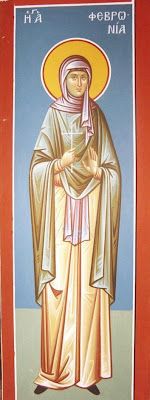
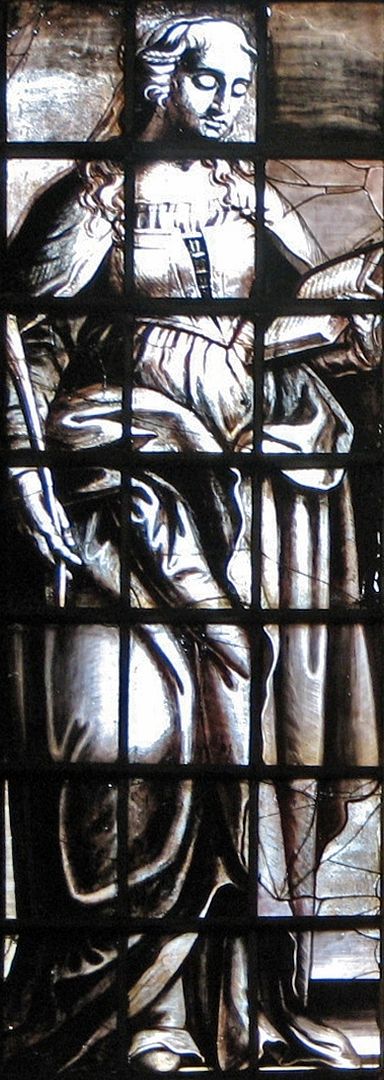
Today, February 12, we celebrate the feast day of Saint Febronia of Nisibis (also know as Febronia of Sebapte, 284-305).  There is much confusion regarding the life of Saint Febronia, with her feast celebrated by some on February 12, by others on June 25.  Her life and acts were recorded by a fellow nun, Thomais, but many believe these acts to be works of holy legend, rather than accurate recounting of a saintly life. Whatever the case, we look to the story of Saint Febronia today, to inspire us with courage and fortitude at a time of change within our Church.

Febronia was raised at a monastery in the city of Sivapolis in Assyria.  Her aunt, Brvaena, was the abbess of the abbey, and committed to raising her niece in holiness, imposed a stricter rule upon her than the others.  Febronia took to the rules with grace, and soon, news of her piety spread throughout the land.
Around that time, Emperor Diocletian launched a persecution against Christians, fearing the faith would topple the Roman Empire.  Diocletian sent a detachment of soldiers to Assyria to destroy the Christian community developing there. Upon their approach to the convent, the inhabitants hid, with the exception of abbess Brvaena, Tomais, and Saint Febronia who was ill.

The three were seized by the soldiers, but they did not fear.  Rather, they entrusted themselves to the Lord.  Febronia was chained by the neck and led to the commander of the soldiers.  There, he urged her to renounce her faith, promising her honors, rewards, riches, and marriage.  But she refused, fearlessly proclaiming the Word of God, and declaring Christ as her groom.  She was subjected to horrible torture, but only prayed in response: “My Savior, do not abandon me in this terrible hour!”

Saint Febronia was beaten and bloody, but would not yield.  She was then tied to a tree, which was lit on fire.  She failed to confess any treason or renounce her faith, and the crowd gathered began to beg for the inhumane tortures to end.  Eventually, she became silent, too ill to speak.  Angered, the captain of the soldiers ordered her tongue cut out, her teeth smashed, and her hands and feet removed.  This was done.  Finally, she was beheaded.  The treatment of Febronia brought many to Christ that day, the crowds dispersing, cursing the pagan gods for their cruelty.
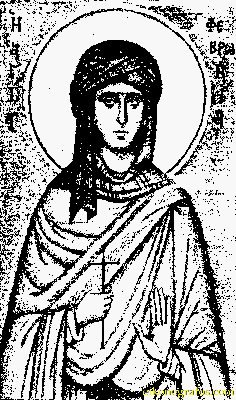
One of the soldiers, who had been raised by a Christian mother, built a coffin and placed the holy virgin martyr’s body in it.  He brought it to the convent, where it was buried.  The convent gates were opened, and the populace came to venerate and pray for intercession from the holy martyr.  Even the soldiers were converted.  Numerous miracles were reported at her tomb.

In 363, the relics of Saint Febronia were translated to Constantinople.  Saint Febronia is one of the 140 saints who are placed on the columns at Saint Peter’s Basilica.

The virgin Febronia, confesses Christ
Before judgment standing, bloody and pale.
As a palm branch, the young Febronia.
From beautiful fruit, a branch became heavy,
And to Silenus she speaks: “A Bridegroom, have I,
And no type of honor, from you do I accept,
Christ is my glory, Christ is my pride,
O yes, the beautiful countenance of my Bridegroom!
Cut off, cut off my feet – paths they have traveled!
Cut off, cut off my hands – work they have completed!
Cut out, cut out my tongue – with my heart I will pray!
Smash, smash my mouth – with my heart, I will speak!
Whip, crush the body – why do I need the body?
A more beautiful garment, the Bridegroom has prepared,
Among many holy ones, in the heavens above,
Among the angels, in sweet Paradise.
Do not think Silenus, that when I depart,
That the fury of your life will die.
But hear me and remember: behold the same day
Before the Living God, together we will go:
You as a torturer and I, tortured by you,
Each, his deeds, will bring with him.


Please join me in lifting these intentions to Our Lord, through the intercession of Our Blessed Mother.

Prayer requests, 2013: Week 6:

Completion of studies and successful employment for niece (D, India);  Blessings upon ministries and their missions (A, Philippines); Successful employment, renewed personal relationships, financial security (M, Philippines); For strength and courage (P, United Arab Emirates); Health for a friend (N, Ireland); Reconciliation of a relationship, health, financial security (W, USA-IL); Blessings upon a family, for a daughter’s career (J, Singapore); Personal intentions (C, United Kingdom); Health and blessings upon a family, for a sad and lonely daughter (A, USA-VA); Repose of departed souls (P, India); Successful business and financial security (M, Sri Lanka); Vocations, financial assistance (H, India); Successful employment for husband, health benefits (M, USA-CA); Renewal of faith in family (P, Australia); Blessings and health upon a family (B, Canada); Successful employment, financial security (K, Netherlands); Successful examinations, renewal of a relationship (M, Germany); Recovery from depression (B, United Kingdom); Personal relationships with Christ for family, successful employment for son (D, USA-MN); Successful employment (M, USA-WA); End to legal difficulties, successful employment (B, Philippines); For a sick husband, for blessings upon a family (S, India); Renewal of relationship with Christ via the Rosary (B, USA-MA); True conversion, successful employment, healing of mental illness (R, USA-CA); Healing of a relationship (V, Australia); Good health for a couple (P, Kuwait); Healing of a sick mother, financial security, patience (M, Philippines); Prosperity, love, health, forgiveness (D, Bulgaria); Successful examinations (J, Ghana).
February 5, 2013: Saint Agatha

Posted by Jacob


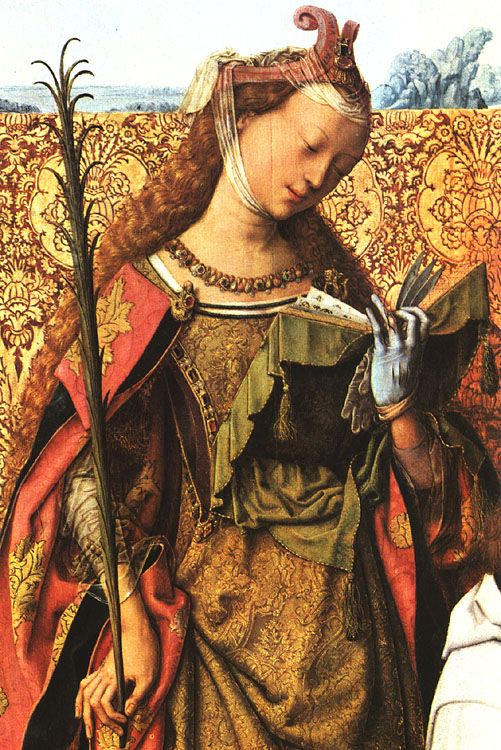
February 5 marks the feast day of Saint Agatha (born unknown, deceased 251), Virgin Martyr of the Church. Like Saint Agnes, Saint Agatha endured torture, imprisonment, persecution, and death at a very young age, all the while withstanding the pressure of society and those in power to conform. Rather, she dedicated her life, her heart, and her entire body to Christ, willingly suffering for Him and witnessing to many in the process. She is one of seven women, excluding Mary, Our Blessed Mother and Virgin, commemorated by name in the Canon of the Mass.


Little is known about the details of Agatha’s life, although her persecution and death are well established. Born in Sicily, to a wealthy noble family, Agatha consecrated herself at an early age to Jesus, proclaiming her faith, and declaring to her family her intentions to remain an unmarried virgin. Despite societal expectations at that time, and the prohibition against and persecution of Christianity by Emperor Decius, Agatha’s family were supportive of her choice and did not attempt to make her marry as was customary.

Agatha grew into a beautiful and pure young woman, who attracted the attention of many suitors, some quite powerful. She refused each, firm in her devotion to her Lord. One such suitor, the magistrate Quinctianus, looked to use the active persecution of Christians to his advantage, attempting to blackmail the young Agatha into marrying him. If she refused him, she would be imprisoned and tried as a Christian, an enemy of the Emperor Decius. Agatha refused, and was imprisoned, first in a brothel where she survived for a month without losing her purity. Brought back before Quinctianus, Agatha was observed to pray, rather than be afraid. She prayed, "Jesus Christ, Lord of all, you see my heart, you know my desires. Possess all that I am. I am your sheep: make me worthy to overcome the devil."

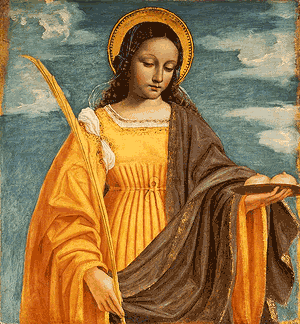
Agatha was thrown into prison following severe torture during which her breasts were both crushed and then severed from her body. To her persecutor, she is reported to have said, "Cruel man, have you forgotten your mother and the breast that nourished you, that you dare to mutilate me this way?" In early artistic renderings, Saint Agatha is oftentimes seen carrying her severed breasts on a silver tray. She is currently the patron saint of those with breast cancer.

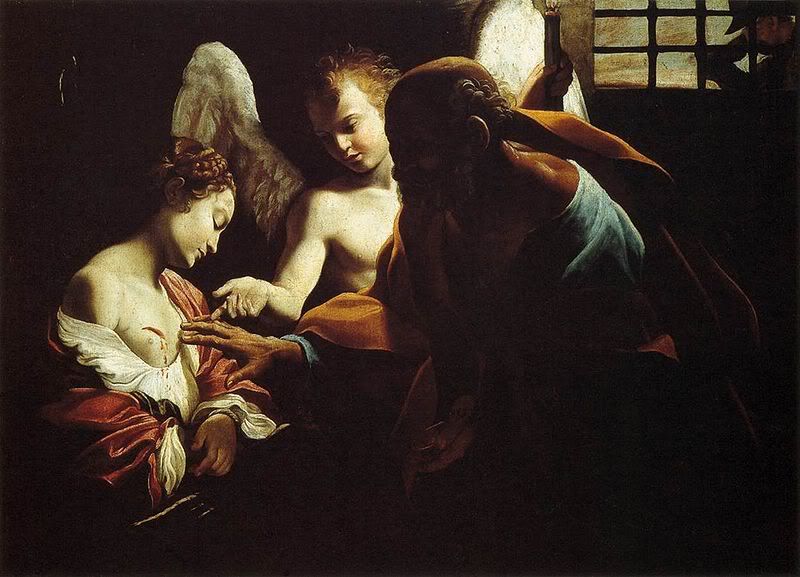
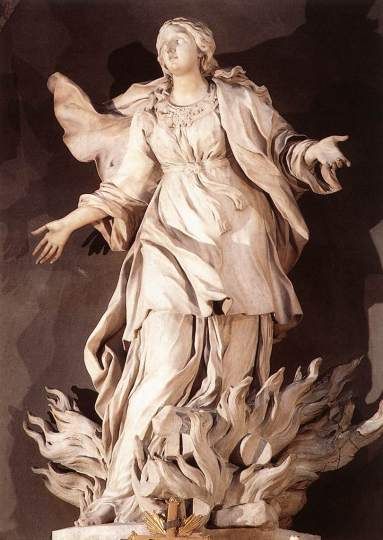
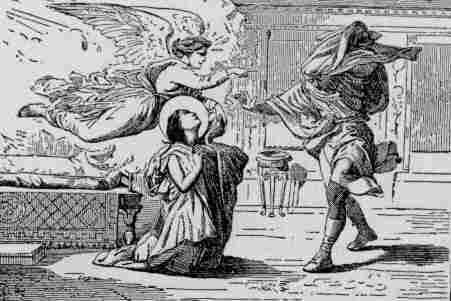
Thrown into a dark prison cell and denied medical attention, Agatha prayed for relief, and was granted a miraculous vision of Saint Peter, who filled her cell with a heavenly light and healed her wounds. Quinctianus sentenced her to death by being rolled alive in hot coals. During the torture, an earthquake miraculously shook the area, dislodging nearby buildings and wounding those who wished to harm her. However, Agatha was quite wounded, and prayed, "Lord, my Creator, you have always protected me from the cradle; you have taken me from the love of the world and given me patience to suffer. Receive my soul." She died shortly thereafter, having been again imprisoned.

Numerous miracles have been attributed to the intercession of Saint Agatha, including averted eruptions of Mount Etna. The faith, carrying her veil, taken from her tomb in Catania, in procession have averted eruptions of Mount Etna. Her intercession is reported to have also saved Malta from Turkish invasion in 1551.

Saint Agatha inspires us to look beyond our physical selves to a much deeper communion with the Lord, the Blessed Mother, and the Saints. Even in her most desperate of times, maimed and tortured, she remained pure and virtuous, beautiful of faith and spirit, and courageous of will. Agatha’s interior world, a world consecrated to the Lord, was never touched by the cruelty of those who persecuted her. Her reliance on Jesus is remarkable given her age and that which she endured. Her sufferings make our daily complaints seem somewhat insignificant upon reflection, and yet, even with our difficulties, we have a hard time turning to God, putting our faith in Him, and trusting in His plan and protection. Perhaps that is the message of Saint Agatha—complete love and trust for the Lord, acceptance of His will, and embracing of human suffering for Him.

On a personal note, having just marked the anniversary of the death of a dear friend to cancer, Saint Agatha’s patronage of those fighting breast cancer is both poignant and timely. I pray to Saint Agatha for her intercession for all those affected by breast cancer—survivors, those currently struggling, and those who have been overcome, as well as their caregivers, families, and friends. Intercede for us, Saint Agatha. Bring comfort and healing!


Oh St. Agatha, who withstood the unwelcome advances from unwanted suitors, and suffered pain and torture for her devotion to Our Lord, we celebrate your faith, dignity and martyrdom.

Protect all against rape and other violations, guard all against breast cancer and other afflictions, and inspire all to overcome adversity.

Oh St. Agatha, virgin and martyr, mercifully grant that we who venerate your sacrifice, may receive your intercession. Amen.


January 30, 2013: Saint Martina of Rome

Posted by Jacob


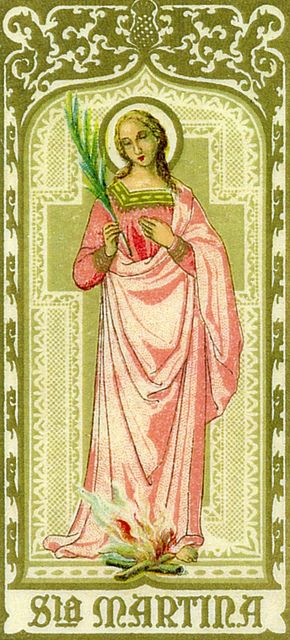
Today, January 30, we celebrate the feast day of Saint Martina of Rome (died 226), virgin martyr, and model of charity for the poor.  Saint Martina was martyred for her refusal to renounce Christ and sacrifice to the pagan gods.  Martina’s witness, made all the more powerful by her youth, is said to have inspired miraculous conversions similar to that experienced by Saint Paul.  Her faith and conviction inspires us today.

Born into the family of a wealthy and noble consul in Rome, Saint Martina grew up with the luxuries and privileges reserved for the wealthy at that time.  Nonetheless, she shied away from vain pursuits, and instead offered her time (and her family’s wealth) in service to the poor.  While still young, both of Saint Martina’s parents died, and she was left with a sizable inheritance.  For the love of Christ, she distributed all that she had to the poor and needy of Rome.  This she did to sever her ties with the world, that she might be more ready for martyrdom, should she fall victim to the Christian persecution sweeping the city.

This persecution, under the direction of Emperor Alexander Severus, had begun in attempts to rid the city of the Christian faith, a faith that was deemed threatening to the Roman Empire.  Similar persecution swept throughout the land, but was most pronounced in Rome.  One afternoon, Martina was discovered praying in a church.  She readily accompanied the three officers who arrested her, begging them politely to let her finish her prayers and speak with her bishop.  This they did, triumphantly returning her to the emperor, certain that she would renounce the faith and serve as an example to other Christians.  However, when ordered to speak, Saint Martina asserted that she would never sacrifice to the pagan gods, and certainly never to idols—the handiwork of men.  She proclaimed the truth of the one true God, and was sentenced to torture.

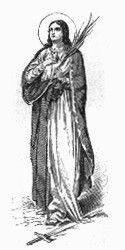
Martina was raked with iron hooks across her body, but in the process, her torturers were thrown to the ground by a powerful shaking of the earth accompanied by a bright light.  Within this light, Saint Martina prayed for their souls, and when they arose, they had been converted, similar to Saint Paul’s experience on the road.

Not to be embarrassed, the emperor ordered her tortured again.  This time, she was tied by her hands and feet to posts in the ground and cruelly scourged.  She was allowed to rest one day, assuming this torture (and the threat of more) would change her mind.  When brought to the temple of Diana the next day to offer sacrifice, fire fell from the heavens and burnt the temple, crushing and killing many pagan priests and worshipers.

Additional torture attempts were tried, including being thrown to a lion (who lost interest in her and failed to attack) and being placed in a fiery furnace (which failed to even singe her clothing).   Eventually, Saint Martina was beheaded, her head displayed as a warning to Christians.
Saint Martina’s relics were discovered during the papacy of Pope Urban VIII, in 1634.  Along with the relics of several other martyrs, she was placed in a beautiful church located in the Roman Forum.  This church was dedicated in her honor, and hymns were written in her honor.   

Saint Martina’s life reminds us that each of us—however small—can effect great change in our communities with the help of the Lord. All we need do is ask, through prayer, and the Lord’s light will shine upon us and throughout our world. 


Hymn of Praise to Saint Martina of Rome
Written by Pope Urban VIII

Citizens of Rome! sing to the celebrated name of the glorious Martina. Sing the praises of this admirable Virgin and Martyr of Christ.

She was born of noble parents, and was brought up in every delicacy, surrounded by all that could pamper nature, and with riches of a princely house at her command.

But she spurns these luxuries, dedicates herself to the Creator of all things, and with a liberal hand distributes her riches to the poor of Christ, that she may gain the riches of heaven.

She shrinks not at the torturing hook, the wild beasts, or the cruel wound-inflicting rods. Angels descend from heaven, comforting her with divine food.

The very lions lose their fierceness, and tamely come crouching at her feet. The sword, Martina 1 gave thee the wished-for death, and death united thee to the choirs of heaven.

Our ceaseless prayers mount up to thee from thine altar, where clouds of incense shroud devotion's love; and thy blessed name banishes that of the false deity Mars.

Do thou protect thy fatherland, and give to Christian countries the rest of holy peace, driving unto Thracian coasts the din of arms and war.

Marshal the armies of princes under the banner of the Cross, deliver Jerusalem from her chains. Avenge innocent blood, and once for all crush down the Turkish foe.

O thou our Patron, and our City's Saint I see this homage of our loving hearts. Hear the prayers of thy Rome, which on this festive day offers thee its hymns and reveres thy name.

O God, whose arm protects the Martyrs, take from us the pleasures which would make us fall. O Triune God I give to thy servants the blessed light, wherewith thy mercy crowns the soul with bliss.

Amen.

January 21, 2013: Saint Agnes of Rome

Posted by Jacob

“Christ made my soul beautiful with the jewels of grace and virtue. I belong to Him whom the angels serve.”

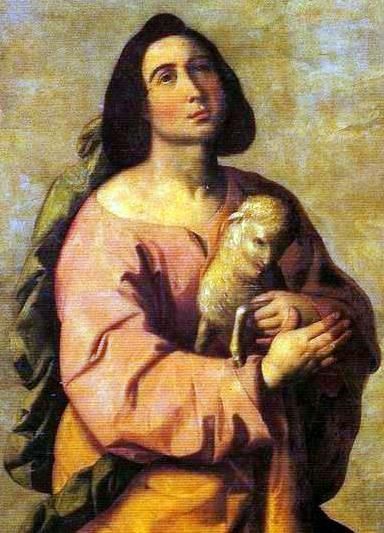
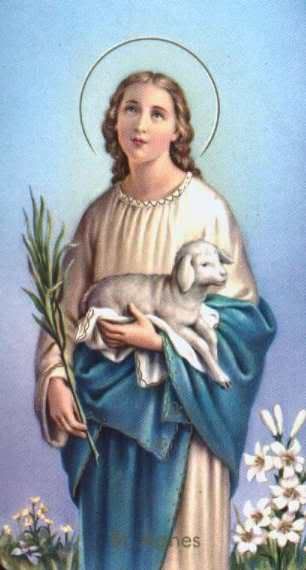
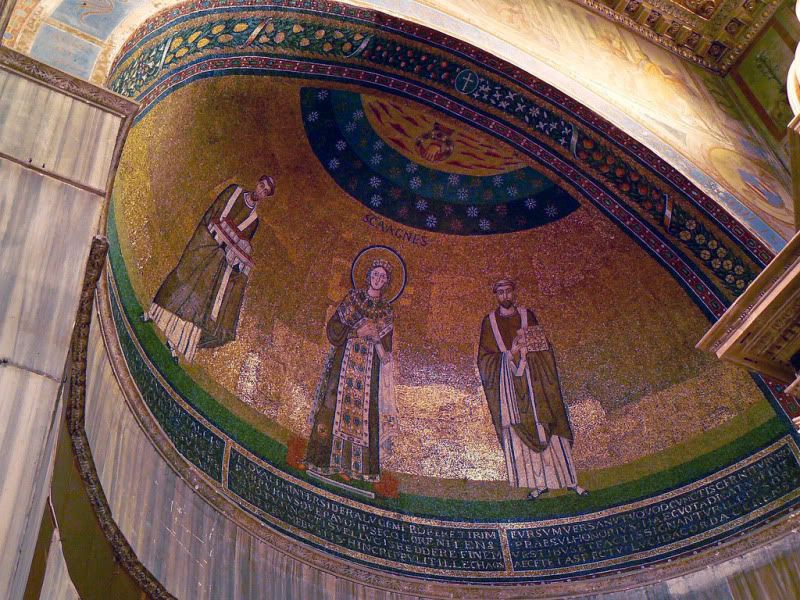
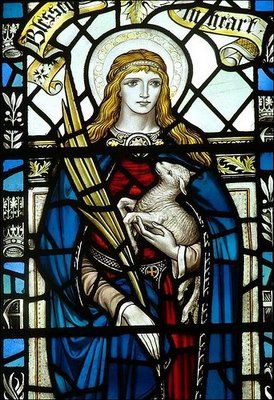
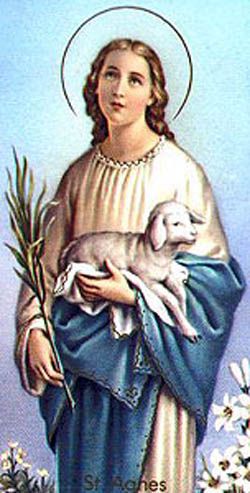
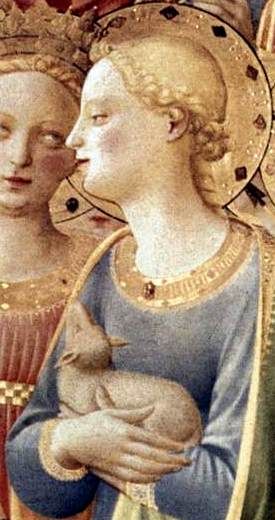
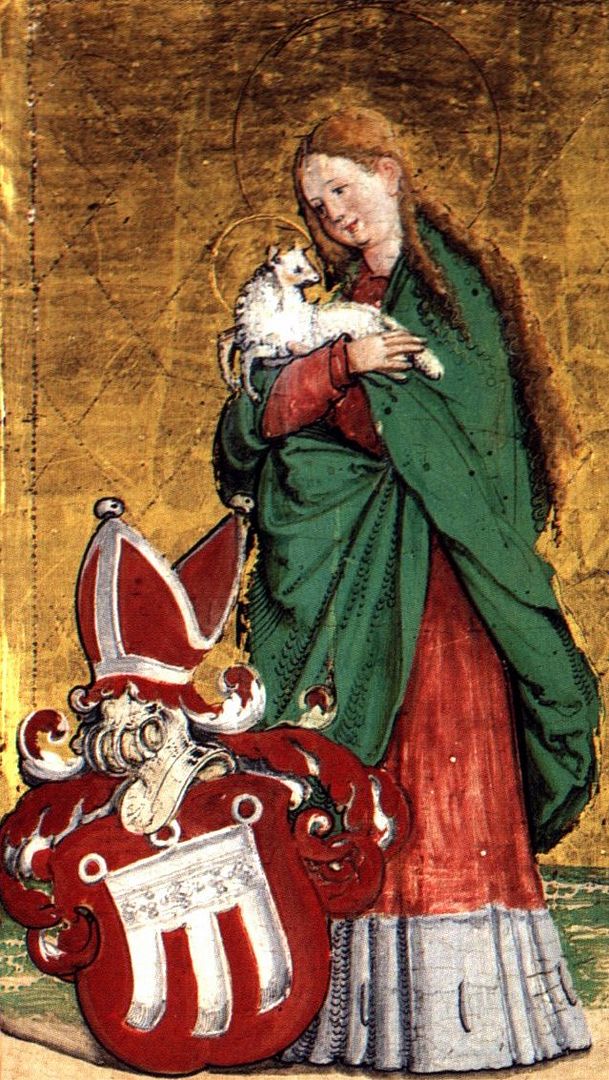
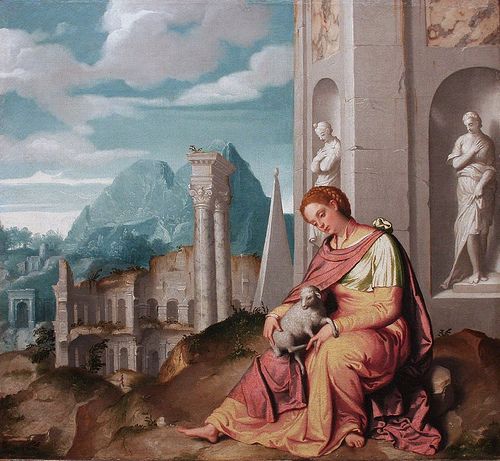
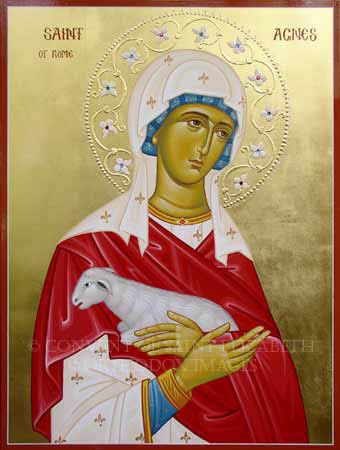
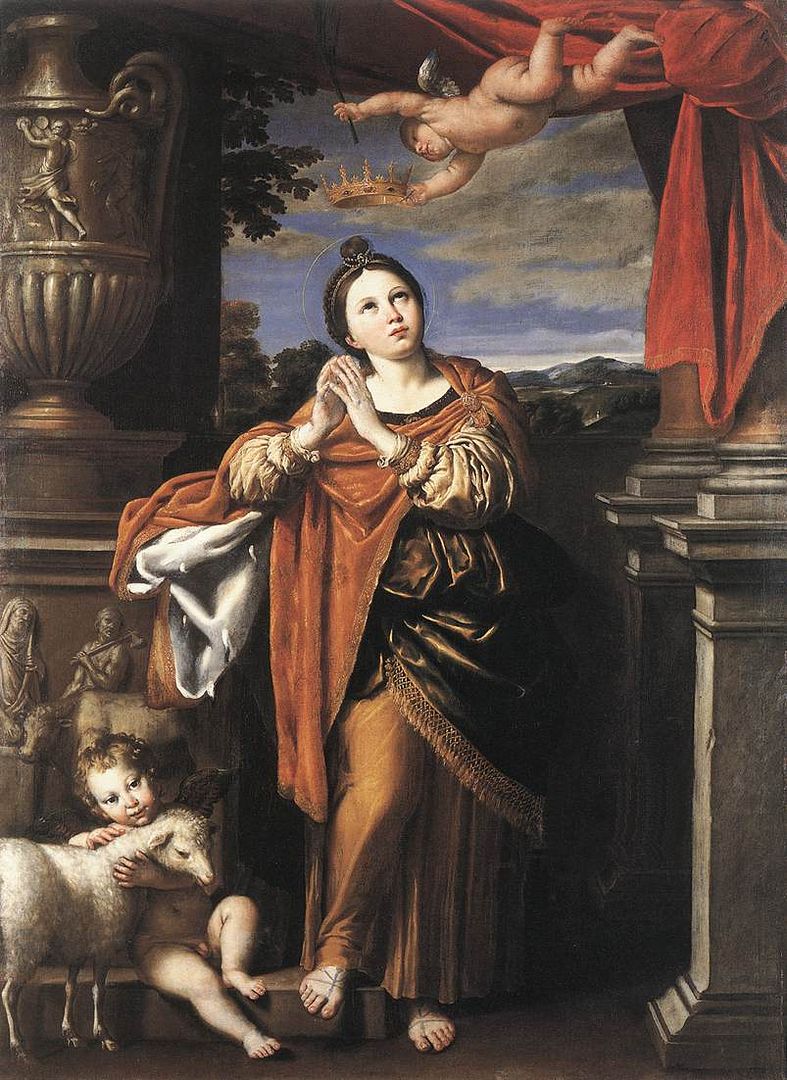
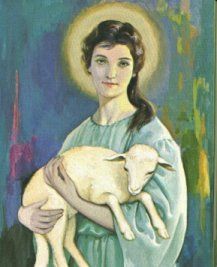
Today, January 21, we celebrate the feast of Saint Agnes of Rome, Virgin and Martyr of the Church. Saint Agnes maintained her faith, despite her young age (she was only around 12 years old!), consecrating herself to the Lord, defying the emperor, and earning the crown of Martyrdom! Honored as one of the four great virgin martyrs of the Church, Agnes is the patron saint of young women, chastity, and victims of sexual assault. Martyred at age twelve or thirteen, Agnes was one of the first women to be deemed a saint by the Church, and one of only seven women to be, excluding our Blessed Mother, to be commemorated by name in the Canon of the Mass. Her name, Agnes, translated from the Greek, means “chaste, pure, sacred.” She is generally depicted in art holding a palm leaf, heralding the arrival of Christ, and a lamb, as Christ is the “Lamb of God” who takes away the sins of the world.

Born into a wealthy Roman family during the reign of Emperor Diocletian, Agnes dedicated her young life to Christ, refusing suitors, and spurning worldly marriage. Given her grace and beauty, many wealthy and powerful families were interested in betrothing their sons to Agnes, but she remained chaste and focused only on her relationship with Christ, her “husband,” and the husband of the Church.

White some details are unclear regarding Agnes’ short life, tradition holds that a young Roman, likely the son of high-ranking prefect of Rom (either Maximum Herculeus or Sempronius), wanted to marry Agnes. Upon this request being made, Agnes is reported to have replied, ”The one to whom I am betrothed is Christ, whom the angels serve." With that, as Christians were forbidden to practice the faith at that time, under order of Emperor Diocletian, Agnes was forcibly removed from her home and brought before a judge to stand trial.

Saint Agnes was then subjected to various tortures and threats of torture, during which she never renounced her faith. The judges, losing patience, asked her to offer incense to the pagan god Minerva, which she refused. During the trial, a large crowd gathered, and one judge, taking pity on her and attempting to prevent her execution, offered her hand in marriage to the men in the crowd. Agnes adamantly refused, stating, "It is wrong for the bride to keep the bridegroom waiting. He who chose me first shall be the only one to have me. What are you waiting for, executioner? Destroy this body, for unwanted eyes may desire it." As such, a young man in the crowd who looked at Agnes lustfully was struck blind.

The judges ordered Agnes stripped naked and dragged through the streets of Rome to a brother, where she would be forced to lose her virginity. During the trip, Agnes’ hair miraculously grew, covering her body, and maintaining her chastity and purity. Pleading to Christ for aid, Agnes was left miraculously unharmed during this torment.

Having failed to convince Agnes to renounce Christ, she was sentenced to death. Agnes went to her death cheerfully, at peace, ready to be reunited with Christ. As her wrists were too small for shackles, she willingly accompanied her persecutors without restraints. At first, Agnes was tied to a pyre to be burnt alive, but the wood reportedly would not catch fire. She was then stabbed in the throat, a death considered “gentle,” and reserved for women at that time. Tradition suggests that her blood did not soak into the ground, but remained, and was later removed by Christians using clean white woolen cloths.

Two days later, Agnes’ foster sister (the daughter of her wet nurse), Emerentiana, visited Agnes’ grave to pray for her soul. Discovered by a group of Roman citizens, Emerentiana was stoned to death, a martyr for her faith, and later canonized by the Church. Her feast day is January 23.

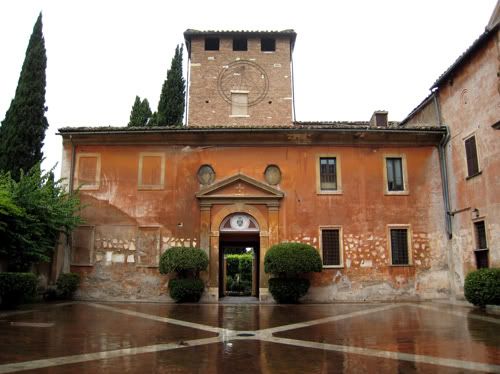
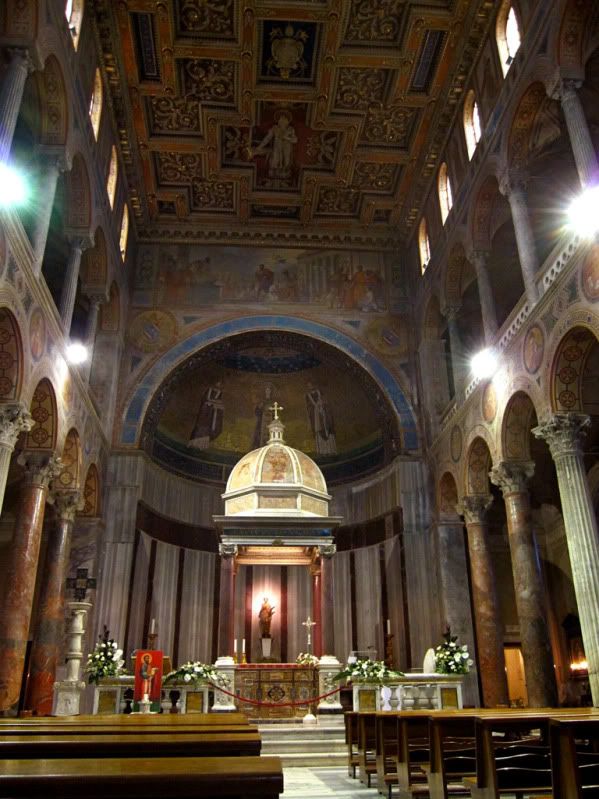
Agnes body was buried outside the city of Rome, rather than being thrown into the River Tiber as was common at the time. Her parents, who visited the grave via an underground tunnel, reported seeing a vision of Agnes, surrounded by other virgins, with a lamb at her side. Years later, during the reign of Constantine (when Christianity was again acceptable), his daughter Constantina was miraculously cured of leprosy after visiting the grave of Saint Agnes. Following that miracle, a great basilica was built in her honor, known as Sant'Agnese Fuori la Mura (The Basilica of St. Agnes Outside the Wall).


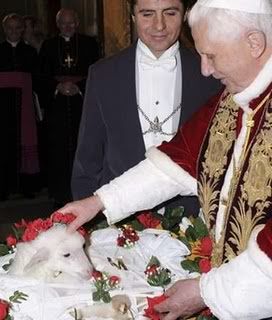
Each year, in honor of Agnes’ purity, a solemn feast day Mass is held. During that Mass, two young lambs from the fold raised by Trappist monks of the Tre Fontane Monastery are crowned and placed in straw baskets, decorated with red and white flowers and streamers. The red represents the martyrdom of Saint Agnes, while the white represents her purity. Shortly after the feast day Mass, held at the Basilica of Saint Agnes, a procession composed of young girls in white dresses and veils, carrying the lambs upon their shoulders, occurs. The lambs are ceremoniously incensed and blessed before being brought to the Pope at the Vatican who also blessed them. The lambs are raised under the care of the Benedictine Nuns of Santa Cecilia until Maundy Thursday, at which time they are sheared. From the wool, pallia, embroidered white stoles adorned with six small crosses, are woven. These stoles are bestowed on archbishops by the Pope, their unique shape and custom representing the union of the Church with Christ, the Good Shepherd.

The brief life of Saint Agnes teaches us important lessons about faith, conviction, and courage. Even at such a young age, Agnes withstood torture, pressure from adults, peers, and family, and eventual death for her beliefs. She valued her chastity and purity above all else, so as to be ready for perfect union with Christ in heaven. We look to Saint Agnes as inspiration during our daily lives, as we make decisions that may compromise our chastity and purity. We remember Agnes as we strive toward a more pure relationship with our Lord.

On a personal note, as a child psychologist, my general worldview includes the belief that we can learn alot about from the youth of our world.  Children and adolescents never fail to surprise us with their insights and courage-- and if we look around the world today, we see examples of that.  So it is with the young Catholic saints who continue to inspire us-- saints like Saint Agnes and Saint Agatha, Saint Pancras and Saint Germaine, Saints Jacinta and Francisco Marto.

Saint Ambrose of Milan wrote of Saint Agnes: “Today is the birthday of a virgin; let us imitate her purity. It is the birthday of a martyr; let us offer ourselves in sacrifice. It is the birthday of Saint Agnes, who is said to have suffered martyrdom at the age of twelve. There was little or no room in that small body for a wound. Yet she shows no fear of the blood-stained hands of her executioners. She offers her whole body to be put to the sword by fierce soldiers. She is too young to know of death, yet is ready to face it. Dragged against her will to the altars, she stretches out her hands to the Lord in the midst of the flames, making the triumphant sign of Christ the victor on the altars of sacrilege. She puts her neck and hands in iron chains, but no chain can hold fast her tiny limbs. In the midst of tears, she sheds no tears herself. She stood still, she prayed, she offered her neck. You could see fear in the eyes of the executioner, as if he were the one condemned. His right hand trembled, his face grew pale as he saw the girl’s peril, while she had no fear for herself. One victim, but a twin martyrdom, to modesty and religion; Agnes preserved her virginity and gained a martyr’s crown.”


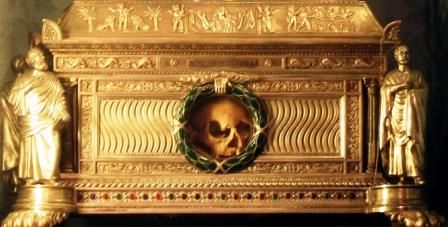
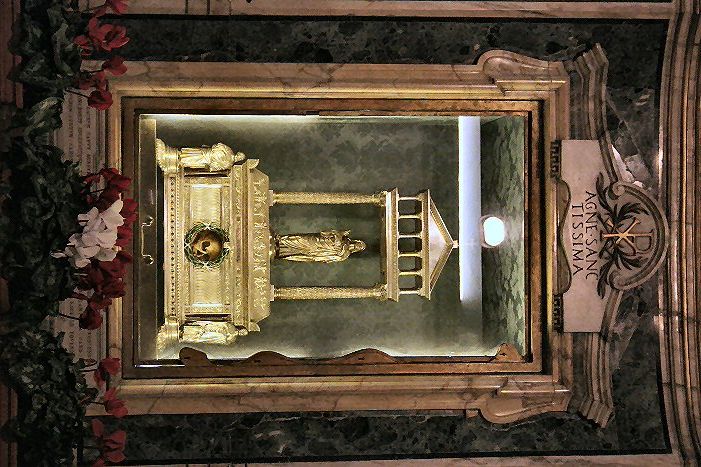
Saint Agnes' relics are conserved in the church of Sant'Agnese fuori le mura (Saint Agnes Outside the Walls) in Rome, which was constructed atop the catacomb that housed Agnes' tomb. Her skull is preserved in a side chapel in the church of Sant'Agnese in Agone in Rome's Piazza Navona.


Prudentius, the fourth century Christian poet and hymnographer wrote the following hymn of praise in honor of Saint Agnes of Rome:

THE PASSION OF AGNES


The native home of Romulus now enshrines
The tomb of Agnes, virgin and martyr blest.
Reposing there in sight of its lofty towers,
The maiden watches over the sons of Rome,
And pilgrims, too, enjoy here protecting care,
Who pray to her with pure and believing hearts.
With splendid twofold diadem she is crowned:
Virginity unmarred by the stain of sin
And glory won by freely embracing death.


That maiden, they relate, who was not yet ripe
For marriage vows and still but a child in years,
Her soul aflame with rapturous love of Christ,
Withstood the impious edict to sacrifice
To idols and abandon her holy Faith.


Assailed at first by every art and wile,
Now by the coaxing words of a fawning judge,
Now by the butcher's sinister threats of doom,
Dauntless she stood, nor shrank from her stern resolve,
Willing to give her body to torments sore,
Nor quailing from the threat of a cruel death.


Then spoke the angry tyrant: 'If she can face
The thought of grinding torture and woeful pangs,
And sets at naught her life as of little worth,
Her consecrated chastity she holds dear.
Into a common den of impurity
I am resolved to cast her unless she bows
Before Minerva's altar and begs her grace,
That virgin she, a virgin, has dared despise.
There all the youths in wanton delight will rush,
To seek this newest slave of their lustful sport.


Then Agnes answered: 'Never will Christ forget
His own nor let our precious virginity
Be snatched from us. He will not abandon us.
He ever shields the chaste and will not permit
The gift of holy purity to be soiled.
My blood may dye your sword, if it is your will,
But never will my body be stained with lust.


So spoke the maid; the prefect then gave command
That she should stand exposed in the public square.
As there she stood, the pitying throngs fell back 40
And turned their eyes away in respectful awe,
None daring to regard her with brazen look.


It chanced that one was forward enough to fix
His gaze upon the maiden and did not fear
To look with lustful eye on her sacred form,
But lo, a flame as swift as a lightning flash
Quick struck his wanton eyes with its trembling dart.
The youth fell down and, blinded by glaring light,
Lay panting in the dust of the crowded street.
His fellows lifted him from the ground, half-dead,
Bewailing him with clamorous words and tears.


The virgin went forth singing a hymn of praise
In thanks to God the Father and Christ, His Son,
That when exposed to peril of vilest stain,
Her chastity had triumphed, and she had found
The den of squalid infamy clean and pure.
Some tell that Agnes, asked to implore of Christ
That He restore the sight of the guilty wretch,
Poured forth a fervent prayer, and the prostrate youth
Regained the breath of life and his vision whole.


In her ascent to heaven the saint had passed
But the first step; a second was yet to come.
The bloody tyrant burned with revengeful ire.
'I am outdone,' he groaned. 'Go, unsheathe your sword,
You soldier there, and carry into effect
The laws our prince and sovereign lord decreed.


When Agnes saw the furious headsman stand
With weapon drawn, in transports of joy she cried:
Tar happier am I that a swordsman comes,
A wild uncouth barbarian, fierce and grim,
Than that a languid suitor pays court to me,
A lovesick creature, scented with rare perfumes,
Who would destroy my soul with my chastity.
This butcher is the lover who pleases me:
His bold advances I shall go forth to meet
And will not try to hinder his ardent suit.
I gladly bare my breast to his cruel steel
And deep into my heart I will draw his blade.
Thus as the bride of Christ I shall mount above
The darkness of the world to the realms of light.


Eternal King, unfasten the gates of heaven
That till of late were closed to the sons of earth,
And call Thy virgin spouse to Thyself, O Christ,
A victim to the Father now sacrificed.
As Agnes spoke these words, she inclined her head
In humble prayer to Christ, that her gentle neck
Might readier be to suffer the threatened wound.
Thus was her ardent longing fulfilled at last,
For with one blow the soldier struck off her head
And speedy death prevented all sense of pain.


Then putting off the garment of flesh, her soul
Flies forth and speeds untrammeled into the skies,
Her shining path surrounded by angel choirs.
In wonder she looks down on the world below;
On high she views the darkness beneath her feet,
And at the circling wheel of the sun she laughs
As round its orb the heavenly spheres revolve.


She sees the raging whirlwind of human life
And all the vanities of the fickle world:
Despots and kings, imperial power and rank,
The pageantry of honor and foolish pride,
The thirst for gold and silver, which all men seek
And gain by every species of wickedness,
The stately palaces with their gilded walls,
The vain display of richly embroidered robes,
The hatreds, fears, desires and impending woes,

The long enduring griefs and the fleeting joys,
Black envy with its smoking firebrands that blight
The hopes of men and tarnish all human fame,
And last, but worse than every other ill,
The sordid clouds and darkness of pagan rites.


All these things Agnes tramples beneath her feet,
And with her heel she crushes the dragon's head,
That monster vile who poisons all things of time
And plunges them into the infernal pit.
But vanquished now and under the virgin's foot
He lies crestfallen, prone in the dust of earth,
His fiery head not daring to lift again.
Meanwhile the virgin martyr's unsullied brow
God circles with a glorious twofold crown:
One glowing with the rays of eternal light,
A sixty-fold reward, and the other fruit,
Increased a hundred-fold, of celestial grace.


O happy virgin, glory but lately dawned,
O noble dweller in the celestial courts,
Adorned with thy resplendent twin diadem,
Deign now to turn thy face on our miseries.
To thee alone the Father of all has given
Power to make pure the dwelling of sin itself.
I, too, shall be made clean by thy radiant glance
If thou wilt fill my heart with its gracious light.
All is pure where thou deignest in love to dwell,
Or where thine own immaculate foot may tread.


Almighty and everlasting God, who choose those whom the world deems powerless to put the powerful to shame: Grant us so to cherish the memory of your youthful martyr Agnes, that we may share her pure and steadfast faith in you; through Jesus Christ our Lord, who lives and reigns with you and the Holy Spirit, one God, for ever and ever. Amen.


January 4, 2013: Saint Faraildis of Ghent, Patron of Widows, Sick Children, Cattle, Small Animals, Victims of Abuse, and... Butter?

Posted by Jacob


Today, January 4, we celebrate the feast day of Saint Faraildis of Ghent (650 – 740, also known as Saint Pharaildis), patron saint of sick children, cattle, small animals, widows, victims of abuse, and strangely, butter.   Saint Faraildis lived a life of quiet devotion to the Lord, despite pressures and physical abuse at the hands of her husband.  Saint Faraildis demonstrates perseverance and steadfast hope and faith in the Lord, even in the midst of difficult times.  Perhaps there is a lesson there for all of us!

Saint Faraildis’ lineage is somewhat unclear, with historians best estimates that she was daughter to Theodoric, Duke of Lorraine and Saint Amelberga of Maubeuge, and half-sister to Saints Gudula, Reinhildis, Ermentrudis, and Emebertus  As per the custom of her times, she was married off by her father to a husband, Guido, when she reached the age of maturity.  However, unbeknownst to her father and her new husband, Faraildis had consecrated herself a virgin to the Lord, pledging eternal devotion and earthly chastity.  Rather than spend her nights with her husband, Faraildis frequently visited the nearby church, spending her evenings in prayer.   Guido, wishing for children, became increasingly jealous of her devotion to the Lord, and angry by her refusal to subjugate herself to him.  He eventually became violent, inflicting physical abuse and torment upon her.  She withstood all insult with pious dignity, nursing her husband without ill will following an accident that broke his legs.  During this time, she ministered to him, and spoke to him of the Lord and salvation, but this only served to infuriate him more.

It is unclear when or how Guido died, but he left Faraildis a widow.  From the time of his death, she devoted herself entirely to a humble and simple life, offering daily penance, and spending long hours in prayer.  She further became recognized as a holy woman in her town, and was sought out for advice, counsel, and reportedly, miracles.  She is said to have led the life of a saintly nun, rising before sunrise each morning and journeying to a nearby monastery for matins. 

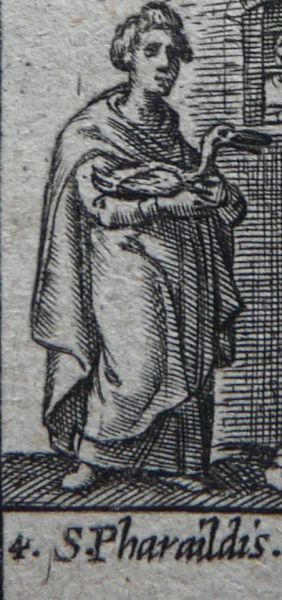
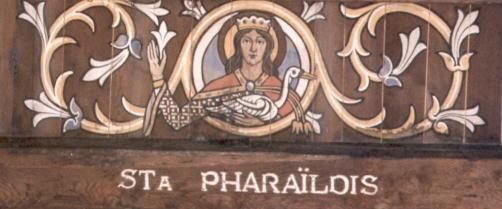
Saint Faraildis is frequently pictured with loaves of bread, given one of the miracles reported at her intercession.  It is told that a poor woman was once begging for bread for her hungry children at a rich home.  However, the woman of the home refused to provide, exclaiming, “May Saint Faraildis change the loaves into stone if I have any here!”  Per legend, all of the woman’s bread turned to stone, with two still preserved in Ghent as holy relics.  Similarly, Saint Faraildis is oftentimes pictured with a goose, whom she is said to have restored to life after it was stolen, killed, cooked, and eaten.  Per holy legend, she gathered the remnants of the bird, and it was reanimated and flew.

Saint Faraildis died at the age of ninety, around the time of the Norman invasion.  Her relics were carried with the monks of the local church, where they were interred at Ghent.  She remains the patron of the city to this day, where a city-wide celebration continues to be held in her honor each feast day.


Daughter of Saint Amalberga and devout niece
of Saint Gertrude, and sister of Saint Gudula,
Despite your desire to consecrate yourself to God
Your parents made you enter into marriage.
On becoming a widow, you lived in prayer.
St Faraildis, pray to Christ for our souls!
Holy Faraildis, pray to God for us.