Why pray the Rosary every day for a year?


Each time the Blessed Virgin has appeared-- whether it be to Saint Bernadette Soubirous at Lourdes; to Lucia, Jacinta, and Francisco at Fatima; or to Mariette Beco at Banneux-- she has asserted the importance, saving grace, and power of praying the Holy Rosary on a daily basis. Based upon her words, the Rosary is penance and conversion for sinners, a pathway to peace, an end to war, and a powerful act of faith in Jesus Christ. Pope Paul VI presented the Rosary as a powerful means to reach Christ "not merely with Mary but indeed, insofar as this is possible to us, in the same way as Mary, who is certainly the one who thought about Him more than anyone else has ever done."

To show us how this is done, perhaps no one has been more eloquent than the great Cardinal Newman, who wrote: "The great power of the Rosary consists in the fact that it translates the Creed into Prayer. Of course, the Creed is already in a certain sense a prayer and a great act of homage towards God, but the Rosary brings us to meditate again on the great truth of His life and death, and brings this truth close to our hearts. Even Christians, although they know God, usually fear rather than love Him. The strength of the Rosary lies in the particular manner in which it considers these mysteries, since all our thinking about Christ is intertwined with the thought of His Mother, in the relations between Mother and Son; the Holy Family is presented to us, the home in which God lived His infinite love."


As Mary said at Fatima, "Jesus wants to use you to make Me known and loved. He wishes to establish the devotion to My Immaculate Heart throughout the world. I promise salvation to whoever embraces it; these souls will be dear to God, like flowers put by Me to adorn his throne."


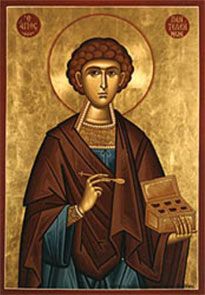
July 28, 2013: Saint Pantaleon the Healer, Patron Saint of Physicians

Posted by Jacob

Today, July 28, we celebrate the feast day of Saint Pantaleon the Healer (also known as Saint Panteleimon, died 303), physician, confessor, and martyr for the faith. While serving as physician to the Emperor Maximianus, Saint Pantaleon lived his faith loudly, despite persecution of Christians, and through his witness and charity to the poor and enslaved, earned the martyrs’ crown. He is considered a contemporary to Saints Cosmas and Damian, also Christian physicians who suffered for their faith. Saint Pantaleon, whose name means the “all-compassionate one,” is the patron saint of physicians.


Pantaleon was born. in the city of Nicodemia (currently called Izmit, in northern Turkey near the Black Sea). His mother, Eubula, was a devout Christian who raised her son in the Christian way of life, while his father, Eustorgius, did not convert until much later. Sadly, Eubula passed away while Pantaleon was still quite young. While he had been exposed to Christianity, Pantaleon did not fully practice as a young man. Handsome, polite, and humble, he radiated happiness and peace to all he encountered, but was drawn to worldly pursuits. His father sent him to study under a famous physician, and eventually was appointed the royal physician to the court of Emperor Maximian.


While at the royal court, Pantaleon fell further from the faith, deceived by hearing the false maxims of the world applauded. It was then that the Lord sent a model of the faith, a zealous and prudent Christian named Hermolaus, to Pantaleon, to serve as advisor and friend. Hermolaus took special notice of the young physician and awakened his conscience, telling him that although the famous physicians of ancient times had possessed the science which cures bodies, Jesus Christ was a far more excellent Physician, able to cure not only bodies, but souls, by His divine doctrine. Through continued discussion and counsel, Pantaleon came to accept Christ into his heart.


Soon thereafter, Pantaleon experienced a miraculous healing, saving a child from certain death after being bitten by a viper. Needing no further proof of the power of the Lord, he was baptized into the faith, and undertook a rigorous course of study on the Sacraments of the Church, Holy Communion, and the teachings and practices of the faithful. Through his faith, he subsequently cured a man of blindness, which led him to the faith. Similarly, his father, hearing of his son’s healings, converted, receiving Christ into his heart.

When Eustorgus, his father, died, Saint Pantaleon liberated all his slaves on the family estate, and, having sold most of his possessions, gave to the liberated ones and others the assistance their poverty required. He cured other illnesses and soon became renowned in Nicodemia, attracting the attention of competing physicians. They wished to betray him to the Emperor, who was actively persecuting Christians.

Pantaleon was ordered to appear before the Emperor, who described the charges against him. The emperor had grown to like and trust Pantaleon, and attempted to save him by offering him the chance to make sacrifice to the pagan Roman gods. Of course, Pantaleon refused, and it was ordered that he be tortured and killed. After multiple attempts to kill him—which he miraculously survived—Saint Pantaleon was beheaded.

The body of Saint Pantaleon was anointed with myrrh and buried outside of the city. His remains, or a portion of them, were later translated to Constantinople, where they are venerated today. It is said that his blood, conserved in a small vial, liquefies on his feast day, becoming oxygenated. Some of his relics, including his head, were later again translated to France by Charlemagne, and reside in the abbey of Saint Denys near Paris and in Lyons.


Prayer of the Sick to Saint Pantaleon

Saint Pantaleon, you know that it is hard to be ill without hope to get well again. Sometimes it is even more difficult to see someone suffer whom we love and whom we cannot help. Pray for the doctors in whom we trust. Give them wisdom and patience for the right way of treatment.


You emulated God's mercy, and He granted you the power of healing, o Pantaleon, victorious martyr of Christ. Heal our spiritual diseases through your intercession, and as we constantly cry out to the Lord, 'Save us!' take away the temptations which the enemy always places before our steps. Grant, we beseech thee, Almighty God: that by the prayers of thy holy Martyr blessed Pantaleon, we may be delivered from all adversities which may happen to the body, and from all evil thoughts which may assault and hurt the soul.


February 3, 2013: Saint Blaise

Posted by Jacob


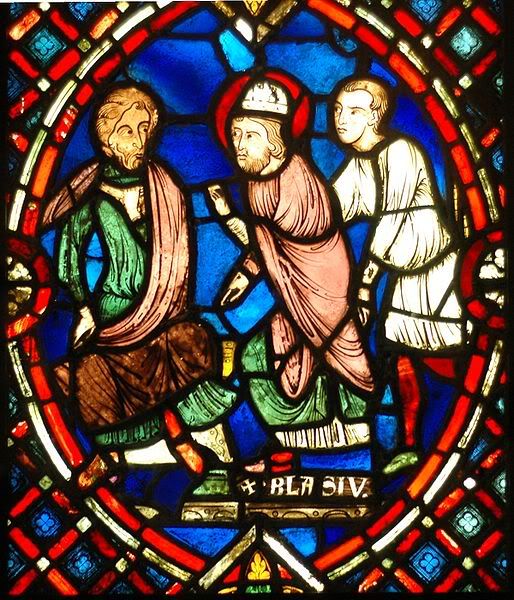
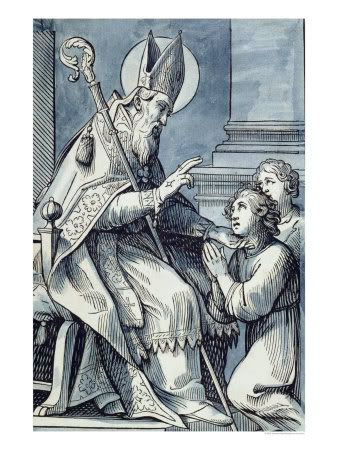
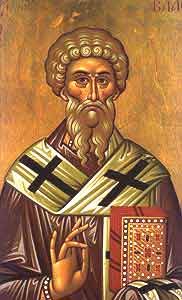
Today, February 3, we celebrate the feast of Saint Blaise, the patron saint of the sick. The life of Saint Blaise is one of Holy Legend, filled with miraculous healings. Today, the Church continues to celebrate the life and intercession of Saint Blaise, in the ritual blessing of throats during Mass. We look to Saint Blaise in times of illness and for healing… But we need remember, as did this holy bishop, that it is not he, nor the ministry of the Church that heals or saves us-- because on their own, neither he nor the Church has such power. It is only through the faith in the power of the Lord whose grace provides comfort to the sick, through the Holy Spirit, that we are able to be blessed and cured. Our health is testimony to the healing love of God, the sacrifice (which all our human suffering is joined to) of Christ, and the graces of the Holy Spirit generously poured forth into our lives!

The Acts of Saint Blaise were recorded approximately 400 years following his death, allowing ample time for the facts of a holy and simple life to become larger than life, yet profoundly inspirational to the devout.

Saint Blaise was born into a rich noble family, likely in Armenia, where he trained as a physician. While the details are unclear, his piety and charity, as well as his ministry to the ill, likely led to his being appointed Bishop of Sebaste (Armenia), shortly after the Edict of Tolerance was passed by the Roman Emperor. While this edict allowed the free religious practices of Christians, the implementation of the edict was slow to arrive in Armenia, and Saint Blaise was at risk of persecution.

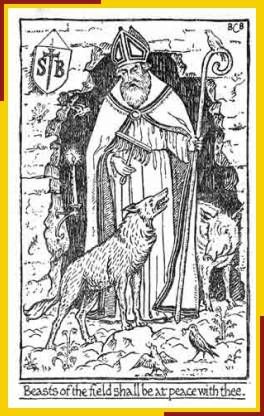
Warned in a dream by the Lord, Saint Blaise fled the city, journeying deep into the wilderness, living as a hermit, and befriending the wild animals that dwelled there. It is in this untamed land that he was found by hunters employed by the local governor, Agricolaus (governor of Cappadocia). These hunters were out looking for wild animals to capture and bring back to the governor for use in the torture of Christians. When they found Saint Blaise, he was kneeling in prayer in a cave, surrounded by sick and dying wild animals, all waiting patiently for him to finish. Upon completion of his prayers, he is said to have healed the wild animals—wolves, lions, and bears-- that had sought him out for that very purpose.

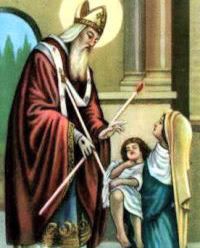
Two additional miracles were recounted following his capture and return to the governor. On the way back to town, Saint Blaise was approached by a woman whose only pig had been stolen by a wolf. She and her child were starving without the food the pig would provide. Saint Blaise found the wolf, convincing it to return the pig. The second, and more famous of the miracles, involves a mother and young child as well. As recounted by the faithful, this mother brought her son, who was choking on a bone, to Saint Blaise, who commanded the bone from his body, saving his life. This is why, even today, Saint Blaise is looked to as intercessor for those with throat ailments. He is also regarded as the patron saint of wild animals.

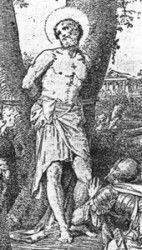
Upon return to the city, the governor ordered Saint Blaise to renounce the Lord and worship the pagan gods of the time. Of course, Saint Blaise refused, and subsequently underwent near continuous torture until his death. While imprisoned, awaiting torture, he is remembered for healing many. First, he was starved, but the woman whose pig he had returned snuck into his cell, delivering him food and candles. Then, he was beaten mercilessly, but refused to recant his beliefs. He was thrown into the lake to be drowned, but floated on top of the water while his guards sunk to the bottom. Frustrated, the governor ordered him hung from a tree and tortured with iron rakes, stripping the flesh from his bones. Finally, Saint Blaise was beheaded, a martyr for his beliefs.

Saint Blaise is regarded as one of the 14 Holy Helpers of the Church, a set of martyrs known for their intercessions for the sick or troubled. At least four miracles have been reported at his shrine.

Today, the Church continues to celebrate the life and intercession of Saint Blaise, in the ritual blessing of throats during Mass. Two blessed candles, held slightly apart, are placed on either side of the throat. At the same time the following blessing is given: "Per intercessionem S. Blasii liberet te Deus a malo gutteris et a quovis alio malo" (May God at the intercession of St. Blasius preserve you from throat troubles and every other evil). Saint Blaise is oftentimes pictured in art with the two candles used in the blessing, as well as surrounded by wild animals.

We pray for the intercession of Saint Blaise during times of illness. We also implore his blessing during the ritual blessing of the throats once a year. But we need remember, as did this holy bishop, that it is not he, nor the ministry of the Church that heals or saves us-- because on their own, neither he nor the Church has such power. It is only through the faith in the power of the Lord whose grace provides comfort to the sick, through the Holy Spirit, that we are able to be blessed and cured. Our health is testimony to the healing love of God, the sacrifice (which all our human suffering is joined to) of Christ, and the graces of the Holy Spirit generously poured forth into our lives!


Invocation of St. Blaise

St. Blaise, gracious benefactor of mankind and faithful servant of God, who for the love of our Savior did suffer so many tortures with patience and resignation; I invoke thy powerful intercession. Preserve me from all evils of soul and body. Because of thy great merits God endowed thee with the special grace to help those that suffer from ills of the throat; relieve and preserve me from them, so that I may always be able to fulfill my duties, and with the aid of God's grace perform good works. I invoke thy help as special physician of souls, that I may confess my sins sincerely in the holy sacrament of Penance and obtain their forgiveness. I recommend to thy merciful intercession also those who unfortunately concealed a sin in confession. Obtain for them the grace to accuse themselves sincerely and contritely of the sin they concealed, of the sacrilegious confessions and communions they made, and of all the sins they committed since then, so that they may receive pardon, the grace of God, and the remission of the eternal punishment. Amen.

My Lord and my God! I offer up to Thee my petition in union with the bitter passion and death of Jesus Christ, Thy Son, together with the merits of His immaculate and blessed Mother, Mary ever virgin, and of all the saints, particularly with those of the holy Helper in whose honor I make this novena.

Look down upon me, merciful Lord! Grant me Thy grace and Thy love, and graciously hear my prayer. Amen


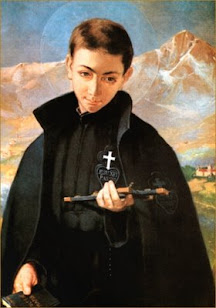
October 25: Saint Antônio de Sant’Anna Galvão

Posted by Jacob

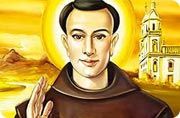
Today, October 25, we celebrate the feast day of Saint Antônio de Sant’Anna Galvão (1739-1822), Brazil’s first saint, Franciscan friar, founder of the order of Our Lady of the Conception of Divine Providence, and miracle worker. Many miracles and gifts of divine origin are attributed to Frei Galvao, among them bilocation, telepathy, premonition and levitation. He is widely known in Brazil for the aptly named “Friar Galvao Pills:” tiny papers with a prayer that can be swallowed. Nuns in the Monastery of the Light make thousands of these prayer aids and distribute them to the faithful for free. Many believe they have healing powers, and numerous miracles have been reported following their use.


Antonio de Sant'Anna Galvao was born in 1739 in Sao Paolo to a deeply religious family. His father had immigrated from Portugal and married his mother, who was of Brazilian descent. The family was socially well-respected, wealthy, and influential. Along with his ten siblings, Antonio enjoyed the privileges of growing up rich and well taken care of.

At age thirteen, Antonio’s father sent him to study under the Jesuits, hoping to aid his cultural and educational formation. Antonio developed quickly in his Christian faith, and upon returning home, declared his intent to become a Jesuit. His father, however, citing the recent persecution of the Jesuits, persuaded his son to join the Franciscan convent at Taubaté, not far from Guaratinguetá. At age 21, Antonio entered the novitiate, giving up his political influence and wealth, and committing himself to a life of service to the Lord. He immediately distinguished himself as both pious and virtuous, and at the age of 22, made his solemn vows. The next year, due to his education and virtue, he was ordained and assigned to Sao Paulo.

In Sao Paulo, Antonio served and studied, working as preacher, confessor and porter. He further consecrated himself to Our Blessed Mother, becoming, in his own words, her “eternal slave and son.” He consecrated himself fully to Mary, Mother of God, signing a letter of consecration in his own blood in 1766. Within a few years he was appointed confessor to the Recollects of Saint Teresa, a group of nuns in that city. As confessor, he met Sister Helena Maria of the Holy Spirit, a sister of great faith and devotion, who recounted to him her visions of Jesus. Together, they founded a new community of sisters under the patronage of Our Lady of the Conception of Divine Providence. Sister Helena Maria’s premature death the next year left Father Antônio responsible for the new congregation, especially for building a convent and church adequate for their growing numbers. He cared for the community with humility and prudence, serving not only the sisters, but all members of the city who flocked to his confessional.

Under his leadership, the community flourished, with a new church and convent becoming required due to the spread of vocations. The buildings, referred to as the Monastery of Light, was declared a "Cultural Heritage site" by UNESCO. Saint Antonio wrote a constitution for the order, which proved to be an excellent guide to inner life and religious discipline. Many times, it was requested that he leave the city to be assigned somewhere else, but the bishop, the citizens of Sao Paulo, and even the city itself seemed to prevent his departure. A letter from the Senator of the city expressed the wish of the people: "This man is so necessary to the Sisters of Light, is precious to all of this City and Towns of the Province of São Paulo, is a man and religiously wise counsel, all flock to ask him, a man of peace and charity."

Frei Galvão traveled constantly throughout the region, preaching and serving the people. he always traveled on foot, not accepting the common practice of being borne by slaves. He walked as much as 60 kilometers a day, reaching gowns and immediately praying, preaching, and hearing the confessions of those who awaited him. Countless miracles were attributed to him, and he was frequently sought for healing in times when there were no resources and medical science available. On one such occasion, inspired by God, Saint Antonio wrote upon a piece of paper a Latin phrase from the Office of Our Lady, which said: "In Thy conception, Thou wast immaculate: the Mother of God, pray for us." He rolled the paper into pill form and gave it to a young man who was dying from renal failure. Immediately the pain ceased and he was cured. By the same method, a woman in labor was cured of her complications. Saint Antonio thereafter taught the sisters of his order to create this miraculous “pills.” Cures on record from his intercessions include curing of breast cancer, infertility, kidney problems, and childbirth complications.

In 1811, at the request of the bishop of Sao Paulo, Frei Galvão founded the Collection of Santa Clara in Sorocaba, Brazil, where he remained for 11 months overseeing the new community. After his death, additional monasteries were founded by the members of his orders. Saint Antonio died in 1822, and at the request of the people of Sao Paulo and the Sisters of his order, was buried before the high altar of the church of the Monastery of Light, which he had built. His tomb remains a place of pilgrimage today.

Sister Celia Cadorin, who spearheaded the cause for his canonization, defined the gentle friar as possessing “the tenderness of God." She said: "He was a priest, a Friar of delicacy, gentleness, and kindness, especially to the poor. He was the brother of prayer. He had a heart of compassion for the sick and all sinners, and conveyed a great peace at all times."

By all accounts, Saint Antônio de Sant’Anna Galvão was 'quite normal' with the exception of his miracles. He lived a life of Franciscan simplicity, extending the testimony of Christ to everyone. He lived a life of holiness in the day-to-day as a man of prayer, preacher, confessor, a missionary popular, and also mason porter of the Franciscan convent in downtown Sao Paulo. As porter, he was cheerful and friendly and welcomed everyone.

During the beatification homily, Pope John Paul II quoted from the Second Letter to Timothy (4:17), "The Lord stood by me and gave me strength to proclaim the word fully," and then said that Antônio "fulfilled his religious consecration by dedicating himself with love and devotion to the afflicted, the suffering and the slaves of his era in Brazil." The pope continued, "His authentically Franciscan faith, evangelically lived and apostolically spent in serving his neighbor, will be an encouragement to imitate this ‘man of peace and charity.’"


Year 2: Day 298 of 365
Prayer Intentions: Simple lives of faith, witnessed by all.
Requested Intentions: Restoration of a marriage (A); Peace and tolerance in a family, support for those with Parkinson’s Disease (M); For the restoration of a daughter’s marriage, end to debt (S); Employment and continued strength (K); Successful examinations for a son (J); Employment and blessings of a child (S); Employment and financial security (F); Successful work placement, continued health (A); Grace and healing for a family (P); Healing of a father (M); Academic success for son, employment for husband and brother (B); Freedom from anxiety and panic attacks (R); Health and healing in preparation for surgery (C); Healing of a chronic illness (P); Safety of a family during storms (A); Successful home ownership (P); Healing of a marriage (M); Employment for a husband, blessings for a marriage (E); Successful examinations for a daughter, healing of a relationships (V); Blessing for a family (V); Healing of baby girl M and all children suffering (M); Special intentions (R); Business success, peace, health (E); Conversion and deliverance of those who suffer, increase in vocations (M); Financial security and safe housing (M); For a daughter (K).

July 30: Saint Leopold Bogdan Mandic, "Apostle of the Confessional"

Posted by Jacob

“We have in heaven the heart of a mother, The Virgin, our Mother, who at the foot of the Cross suffered as much as possible for a human creature, understands our troubles and consoles us.”


"Some say that I am too good. But if you come and kneel before me, isn't this a sufficient proof that you want to have God's pardon? God's mercy is beyond all expectation."

"Be at peace; place everything on my shoulders. I will take care of it. I give my penitents only small penances because I do the rest myself."

"A priest must die from apostolic hard work; there is no other death worthy of a priest."

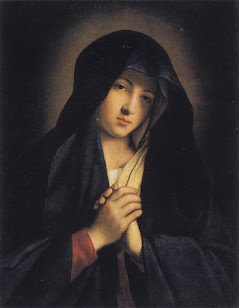
Today, July 30, we celebrate the feast day of Saint Leopold Bogdan Mandic (1866-1942), Capuchin friar, referred to as both the Apostle of the Confessional and the Apostle of Unity. At a time when Pope Pius XII said that the greatest sin of our time is "to have lost all sense of sin," Leopold had a profound sense of sin and an even firmer sense of God’s grace awaiting human cooperation. To all who came to his confessional, Saint Leopold was a guiding voice toward the redemption of Heaven.

Bogdan was born the twelfth child to Peter and Caroline Mandic in Castelnuovo, a small port at the southern tip of Dalmatia (modern-day Croatia). Born physically malformed and frail of health, he was baptized with the name Bogdan, which means 'the God-given-one'. Despite his physical weaknesses, he demonstrated great spiritual strength and integrity as a child. Leopold was physically short and weak, and developed chronic arthritis which would plague him throughout his life. He suffered from abdominal pain and discomfort, spoke with a stammer, and lacked the strength to speak loudly. Even as a child these afflictions plagued him, and would gradually worsen over time, until he would be forced to walk with a cane, stooped over, and his hands would be rendered practically useless due to arthritis. Nevertheless, his humility and faith shone through his crippled frame, and he placed his life in the hands of the Lord, through which all things are possible at the age of 16.

Able to accept all that the Lord had given him, Bogdan left his home and traveled to Italy at 16, where he undertook studies with the Capuchins at their Seraphic School in Udine. Excelling at his studies, he entered the order as a novice at age 22, taking the name Leopold. Making his profession of vows the following year, Leopold began the clerical studies in Padua and Venice, and was ordained at the age of 24. Despite the rigors and austerities of Capuchin life, Saint Leopold was to become a model of spirituality, obedience, and faith.

Wishing nothing more than to be sent as a missionary to Eastern Europe, his heart yearned to assist in the re-unification of the area which had been torn apart by religious strife. However, his superiors denied his every request, due to his frail nature and generally ill health. Rather, he was stationed at various Friaries in Venice, ministering in the confessional and as a spiritual advisor. This was a difficult time for Leopold, but he obediently did as instructed. He once expressed his feelings about this when he said: "I am like a bird in a cage, but my heart is beyond the seas."

In1906, Father Leopold was sent to Padua, where he would spend the majority of the rest of his life. It was there, in Padua, that he embraced his mission as Confessor and Spiritual Director—a role through which the Lord would work within him for nearly 40 years. During World War I, however, Leopold was sent to prison, as he would not renounce his Croat nationality. His year in prison was difficult for him, and his health worsened dramatically.

Returning to Padua, Leopold spent nearly twelve hours each day (sometimes more!) in the confessional, counseling thousands of penitents. His voice was weak, his body frail, but his love and faith in the Lord was always present, as was his hope and belief in reconciliation. Through his tireless work in the confessional, Saint Leopold freed many from the chains of sin. Saint Leopold possessed the knowledge and acceptance of his own lowliness in relation to God's mighty power - that without God he could do nothing. This strong faith was communicated to others when they came to the confessional for spiritual advice. He would say: "Have faith! Everything will be alright. Faith, Faith!"

Saint Leopold had a deep devotion to the Blessed Virgin Mary whom he referred to as "my holy boss.” He was known to pray the rosary quite often, and celebrated the Eucharist daily at the side altar in the Little Office of the Virgin Mary. He would then visit the sick in nursing homes, hospitals and homes all over Padua. He visited the Capuchin infirmary to comfort the sick friars, giving them words of advice and reminding them to have faith. He was an outspoken on issues with children, and being pro-life was especially fond of expectant mothers and young children. He did considerable work in setting up orphanages for children without parents.

On 22nd September, 1940, Father Leopold celebrated his Golden Jubilee of the Priesthood. Soon thereafter, his health declined quickly, as he was diagnosed with esophageal cancer. In 1942, while preparing for the liturgy, he collapsed on the floor. He was then brought to his cell, where he was given the last rites. Friars that had gathered at his bed sang "Salve Regina," and when they got to the words, "O clement, O loving, O sweet Virgin Mary," Leopold died.

During World War II, the church and friary where Leopold had lived in Padua were demolished by bombs, with the exception of Leopold’s cell and confession, which were miraculously left standing. Prior to his death, Saint Leopold had predicted this occurrence, when he stated, “The church and the friary will be hit by the bombs, but not this little cell. Here God exercised so much mercy for people, it must remain as a monument to God's goodness."

The life of Saint Leopold Mandic inspires us today, to embrace our struggles and complaints as opportunities to grow in love, service, obedience, and humility to the Lord. Through the acceptance of ourselves, and our reliance on Our Loving Father for strength and ability, we grow closer to the salvation of Heaven, and are better able to serve others in our communities. Saint Leopold Bogdan Mandic, pray for us!


O God, source of life and love, you gave Saint Leopold a tremendous compassion for sinners and a desire for church unity. Through his prayers, grant that we may acknowledge our need of forgiveness, show love to others, and strive to bring about a living unity among Christians. Through Our Lord Jesus Christ, who lives and reigns for ever and ever. Amen.


We have in heaven the heart of a mother, The Virgin, our Mother, who at the foot of the Cross suffered as much as possible for a human creature, understands our troubles and consoles us. Amen.


Year 2: Day 211 of 365
Prayer Intentions: Humility; Acceptance of our flaws; Reliance on the Lord; Service to others.
Requested Intentions: For a family’s intentions (T); Successful examination results (B); Healing of a friend with cancer, for all those who help others (B); Healing and love (L); Grace and healing (V); Healing of a heart, consecration of a marriage (M); Health of a family, intentions of apostolate (H); For repentance (J); For a family in trouble (R); Healing, successful relationships for son, financial success (J); Success of a company (L); For a religious society (J); Healing of a husband, strength as a faithful caregiver (D); Healing of a son (T); Financial security, Healing and guidance (M); Healing of a heart and relationship (V); Employment for daughter (J); For a marriage that glorifies the Lord (K); Resolution of family situation, parents’ health (A); Positive results (C); For a son’s employment, faith, and relationships (S); Restored family relationships (A); Healthy conception and delivery of children (J); For a girlfriend’s recovery from a debilitating mental illness (J); For a daughter’s successful examination results (A); Occupational success, health and safety of family (S).

July 28: Saint Pantaleon the Healer, Patron Saint of Physicians

Posted by Jacob

Today, July 28, we celebrate the feast day of Saint Pantaleon the Healer (also known as Saint Panteleimon, died 303), physician, confessor, and martyr for the faith. While serving as physician to the Emperor Maximianus, Saint Pantaleon lived his faith loudly, despite persecution of Christians, and through his witness and charity to the poor and enslaved, earned the martyrs’ crown. He is considered a contemporary to Saints Cosmas and Damian, also Christian physicians who suffered for their faith. Saint Pantaleon, whose name means the “all-compassionate one,” is the patron saint of physicians.


Pantaleon was born. in the city of Nicodemia (currently called Izmit, in northern Turkey near the Black Sea). His mother, Eubula, was a devout Christian who raised her son in the Christian way of life, while his father, Eustorgius, did not convert until much later. Sadly, Eubula passed away while Pantaleon was still quite young. While he had been exposed to Christianity, Pantaleon did not fully practice as a young man. Handsome, polite, and humble, he radiated happiness and peace to all he encountered, but was drawn to worldly pursuits. His father sent him to study under a famous physician, and eventually was appointed the royal physician to the court of Emperor Maximian.


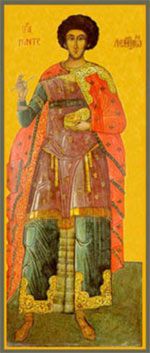
While at the royal court, Pantaleon fell further from the faith, deceived by hearing the false maxims of the world applauded. It was then that the Lord sent a model of the faith, a zealous and prudent Christian named Hermolaus, to Pantaleon, to serve as advisor and friend. Hermolaus took special notice of the young physician and awakened his conscience, telling him that although the famous physicians of ancient times had possessed the science which cures bodies, Jesus Christ was a far more excellent Physician, able to cure not only bodies, but souls, by His divine doctrine. Through continued discussion and counsel, Pantaleon came to accept Christ into his heart.


Soon thereafter, Pantaleon experienced a miraculous healing, saving a child from certain death after being bitten by a viper. Needing no further proof of the power of the Lord, he was baptized into the faith, and undertook a rigorous course of study on the Sacraments of the Church, Holy Communion, and the teachings and practices of the faithful. Through his faith, he subsequently cured a man of blindness, which led him to the faith. Similarly, his father, hearing of his son’s healings, converted, receiving Christ into his heart.

When Eustorgus, his father, died, Saint Pantaleon liberated all his slaves on the family estate, and, having sold most of his possessions, gave to the liberated ones and others the assistance their poverty required. He cured other illnesses and soon became renowned in Nicodemia, attracting the attention of competing physicians. They wished to betray him to the Emperor, who was actively persecuting Christians.

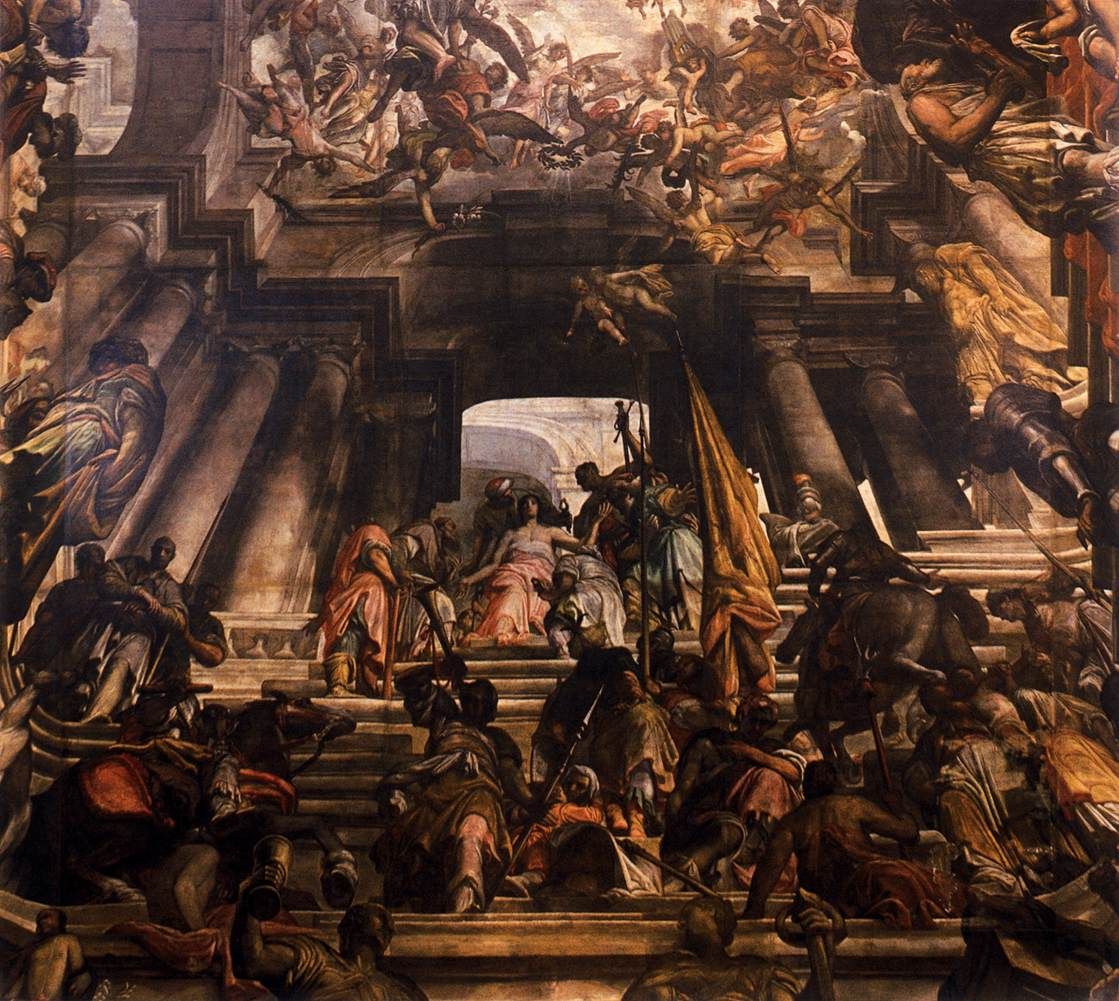
Pantaleon was ordered to appear before the Emperor, who described the charges against him. The emperor had grown to like and trust Pantaleon, and attempted to save him by offering him the chance to make sacrifice to the pagan Roman gods. Of course, Pantaleon refused, and it was ordered that he be tortured and killed. After multiple attempts to kill him—which he miraculously survived—Saint Pantaleon was beheaded.

The body of Saint Pantaleon was anointed with myrrh and buried outside of the city. His remains, or a portion of them, were later translated to Constantinople, where they are venerated today. It is said that his blood, conserved in a small vial, liquefies on his feast day, becoming oxygenated. Some of his relics, including his head, were later again translated to France by Charlemagne, and reside in the abbey of Saint Denys near Paris and in Lyons.


Prayer of the Sick to Saint Pantaleon

Saint Pantaleon, you know that it is hard to be ill without hope to get well again. Sometimes it is even more difficult to see someone suffer whom we love and whom we cannot help. Pray for the doctors in whom we trust. Give them wisdom and patience for the right way of treatment.


You emulated God's mercy, and He granted you the power of healing, o Pantaleon, victorious martyr of Christ. Heal our spiritual diseases through your intercession, and as we constantly cry out to the Lord, 'Save us!' take away the temptations which the enemy always places before our steps. Grant, we beseech thee, Almighty God: that by the prayers of thy holy Martyr blessed Pantaleon, we may be delivered from all adversities which may happen to the body, and from all evil thoughts which may assault and hurt the soul.


Year 2: Day 209 of 365
Prayer Intentions: For all those who suffer; For those who heal and minister to all in need.
Requested Intentions: Healing, successful relationships for son, financial success (J); Success of a company (L); For a religious society (J); Healing of a husband, strength as a faithful caregiver (D); Healing of a son (T); Financial security, Healing and guidance (M); Healing of a heart and relationship (V); Employment for daughter (J); For a marriage that glorifies the Lord (K); Resolution of family situation, parents’ health (A); Positive results (C); For a son’s employment, faith, and relationships (S); Restored family relationships (A); Healthy conception and delivery of children (J); For a girlfriend’s recovery from a debilitating mental illness (J); For a daughter’s successful examination results (A); Occupational success, health and safety of family (S); Reduction in anxiety for husband, financial freedom (S); Healing for a sister-in-law (J); For a family experiencing a difficult child custody case (M); Reunification of a family struggling with separation (M): For a son struggling with mental illness (M); Successful examination results (B); To be freed from the chains of sin (J); Admission to a good university (M); For successful surgery (T); For a mother’s mental health and for kindness and forgiveness, for housing problems, for dental health (T).