Why pray the Rosary every day for a year?


Each time the Blessed Virgin has appeared-- whether it be to Saint Bernadette Soubirous at Lourdes; to Lucia, Jacinta, and Francisco at Fatima; or to Mariette Beco at Banneux-- she has asserted the importance, saving grace, and power of praying the Holy Rosary on a daily basis. Based upon her words, the Rosary is penance and conversion for sinners, a pathway to peace, an end to war, and a powerful act of faith in Jesus Christ. Pope Paul VI presented the Rosary as a powerful means to reach Christ "not merely with Mary but indeed, insofar as this is possible to us, in the same way as Mary, who is certainly the one who thought about Him more than anyone else has ever done."

To show us how this is done, perhaps no one has been more eloquent than the great Cardinal Newman, who wrote: "The great power of the Rosary consists in the fact that it translates the Creed into Prayer. Of course, the Creed is already in a certain sense a prayer and a great act of homage towards God, but the Rosary brings us to meditate again on the great truth of His life and death, and brings this truth close to our hearts. Even Christians, although they know God, usually fear rather than love Him. The strength of the Rosary lies in the particular manner in which it considers these mysteries, since all our thinking about Christ is intertwined with the thought of His Mother, in the relations between Mother and Son; the Holy Family is presented to us, the home in which God lived His infinite love."


As Mary said at Fatima, "Jesus wants to use you to make Me known and loved. He wishes to establish the devotion to My Immaculate Heart throughout the world. I promise salvation to whoever embraces it; these souls will be dear to God, like flowers put by Me to adorn his throne."


May 8, 2013: Saint Victor Maurus (Victor the Moor)

Posted by Jacob


May 8 marks the feast day of Saint Victor Maurus, also known as Victor the Moor (died 303), saint and martyr of the early Church. Little is known about the majority of Saint Victor’s life, but much is known about his passion and martyrdom, given a well-recorded account included below, believed to be written by Saint Gregory of Tours. It is firsthand accounts such as this which the Church maintains and utilizes in the beatification and canonization process.


Saint Victor was born and raised in Mauretania in a Christian household. He is reported to have served in the Roman Army throughout his life, likely as a praetorian guard. Though he was a practicing Christian throughout the time of persecution, he was not discovered until late in life, when he is believed to have been quite elderly, following his destruction of several pagan alters. As his passion describes, he was arrested, brutally tortured—including being basted with molten lead—imprisoned, and eventually decaptitated for his faith. Throughout, he steadfastly refused to sacrifice to pagan gods, asserting his belief in the one true faith—a faith he was happy to confess he had practiced since his youth, stating: "I certainly am a Christian, and I adore Jesus Christ the Son of the Living God who was born of the Virgin Mary. I believe in my heart, and I never stop praising him with my mouth."
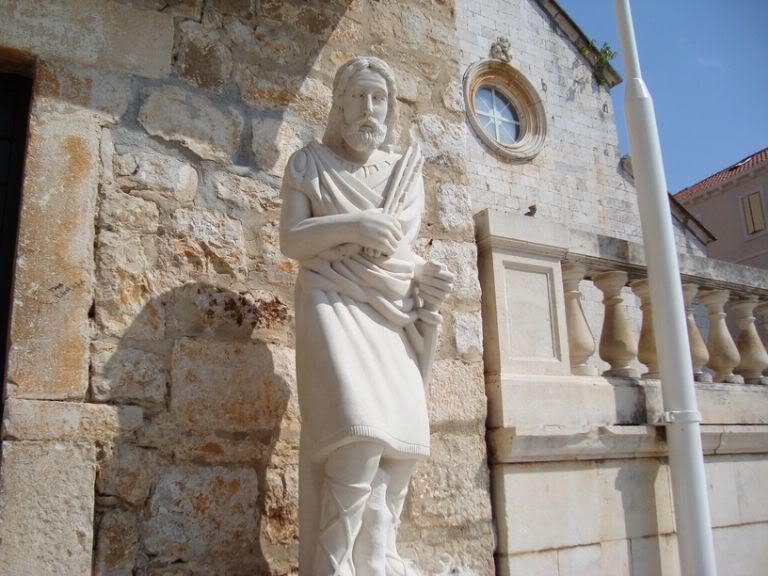
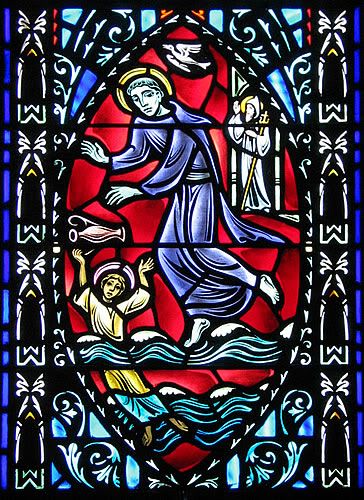
The Emperor, Maximianus, knew Victor, as he had served long in the guard. He gave him every opportunity to recant his faith, hoping that torture would at long last convince him. In the midst of his pain—being stretched on the rack, beaten, having molten lead poured on his body—Victor held true to his belief in Christ. He stated, "Christ is my salvation and my strength. I am nourished by the spirit of him who I have received into my body." The Emperor, not giving up, offered Saint Victor status and riches, should he sacrifice to the pagan gods, similar to the temptations of Jesus by the Devil in the desert. Victor replied, "All the gods of the nations are demons, but our God made the heavens: if, therefore, they are called demons from the start, how will I worship them? I have already said, and will say it again: I will not sacrifice to the demons but I offer myself as a sacrifice of praise to God: because it is written ‘everyone who sacrifices to demons and not to God willbe destroyed.’ I do not accept the rewards promised by you, but I accept strength from my God every day."

Unable to convince him, Victor was beheaded on May 8. The local bishop received permission to bury the body, which remained guarded by wild beasts for 6 days until he could retrieve it. Later a church was erected over his grave. According to St. Gregory of Tours, many miracles occurred at the shrine. In 1576, Victor's relics were transferred to a new church in Milan established by the Olivetan monks. The church still bears Saint Victor's name today.

The life of Saint Victor Maurus is remarkable in its simplicity. He was a lay person—a soldier—who held fast to his faith throughout his life, during a time of growing distrust and eventual persecution of Christians. His death, in contrast, is remarkable for its solidarity with heaven. Saint Victor, at the end of his days, did not fear torture and death, but welcomed it willingly as a testament to his faith and confidence in the Lord. He endured six days of inhuman pain, never losing sight of the glory of God and the love and grace of Our Blessed Mother. His steadfast faith reminds us of how easily distracted we are today, in our own lives, from our faith by seemingly trivial matters. Imagine our response to torture and pain for our beliefs, for the Lord. How might we incorporate Saint Victor Maurus’ single-minded focus on Christ into our daily lives?
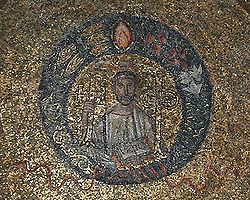


The Passion of St. Victor

 
1. When the impious Maximianus was ruling as emperor there was a great persecution of Christians in the city of Milan. There was there a certain soldier by the name of Victor, Moorish by race, who was very well known to the emperor. Then his ministers made a report to the emperor saying, "O Most Clement Lord and Emperor, Victor the Moor has become a Christian and blasphemes against our gods, saying that they are demons. The emperor was angered and ordered that Victor be brought before him; and he said to him, "Victor my soldier, what do you think that you are lacking that you have become a Christian?" Victor responded, "I have not become a Christian just recently, but have been one since my youth." The emperor Maximianus said, "You are a Christian, then, so you clearly say?" Victor replied, "I certainly am a Christian, and I adore Jesus Christ the Son of the Living God who was born of the Virgin Mary. I believe in my heart, and I never stop praising him with my mouth." Then the emperor Maximianus was filled with anger and ordered that he be thrown into the prison which was near the Circus and on the route to the Ticinese Gate, and that he be closely guarded, saying to him, "Go Victor, think to yourself how you can escape those terrible tortures which will viciously rip you unless you offer sacrifice". Thus he was sent to prison and spent six days there, and the emperor ordered that neither bread nor water were to be given to him. On the seventh day the emperor Maximianus ordered a platform to be readied for him in the hippodrome of the Circus, and that Saint Victor be brought to him. He said to him, "What is it, Victor, what have you decided about your salvation?" Saint Victor replied, "Christ is my salvation and my strength. I am nourished by the spirit of him who I have received into my body."


2. Then the emperor Maximianus was filled with anger and ordered that clubs be brought, and that Victor be stretched out in his sight and beaten. He commanded that the torturers should go beyond the third mark of the rack, and should shout at him, "Sacrifice to the Gods whom the emperor and everyone worship." When Victor had been beaten the emperor ordered that he be set up straight, and said to him, "Victor, hear my advice, yield to and serve those gods: because no-one can better serve them than you, especially since you are distinguished by your grey hairs". Saint Victor replied, "Blessed David, king and prophet, teaches, "All the gods of the nations are demons, but our God made the heavens: if, therefore, they are called demons from the start, how will I worship them?" Then the emperor Maximianus said to him, "Behold I give to you the rank of magister militum, much gold and silver, retinues and property, only sacrifice to the gods whom we worship". Victor replied, "I have already said, and will say it again: I will not sacrifice to the demons but I offer myself as a sacrifice of praise to God: because it is written "everyone who sacrifices to demons and not to God will be destroyed."" The emperor's consiliarius Anolinus said, "Victor, rewards have been promised to you by the most clement emperor: why don't you sacrifice to the gods whom the emperor adores, those to whom he bows his neck?" Saint Victor replied, "I do not accept the rewards promised by you, but I accept strength from my God every- day."


3. Then, angered, the emperor Maximianus ordered that he be thrown into prison again, the prison near the Roman Gate. When he was there for three days the emperor ordered that he be brought forth from the prison, and said to him, "Victor, sacrifice to those gods whose real divinity proves them to be gods". Saint Victor replied, "I do not sacrifice to the gods of the pagans: for it would be shameful for me to desert what I learned in the sanctification of my baptism, even if in a situation of necessity and under the compulsion of an evil man, you. I will not. Do what you will do, for I know that he who fights on my behalf is stronger than you." Then the emperor Maximianus and his Consiliarius Anolinus ordered clubs to be brought, and Victor to be stretched out. They ordered that the torturers should go beyond the fifth mark of the rack, and should shout at him, "Sacrifice to the gods whom the emperor and everyone worship." Then Saint Victor, although he was in the middle of his punishment, did not show any feeling of pain but prayed thus to the Lord, saying, "Lord Jesus Christ by whose bread I am nourished today, my king and my God, help me in the midst of these tortures." Then the emperor Maximianus said to him, "Victor, take thought for your life and sacrifice to the gods whom all adore. For I swear by the gods, by my welfare and by the government of the state, that unless you sacrifice through various punishments I will make you breathe your last breath. And do not hope that if you are punished by me that the Christians will make my servant one of their martyrs: for I will order that you be flung where your body will never be found." Saint Victor replied, "I am not sacrificing: do what seems best to you: you will not make a servant of yours breathe his last as you said, but a servant of Christ." Then the emperor Maximianus, angered because Victor had replied in this manner, ordered that he be thrown into the prison near the Roman Gate again, and that his legs be stretched apart on a slab.


4. When Victor had been let out from there, the Consiliarius Anolinus sent messengers to him saying, "Go and say to Victor "Fellow, you have badly given up hope of your life, take thought for your safety, and do not further provoke your emperor to anger. Hear my advice, sacrifice to our gods and seek from the emperor whatever honour you wish: for by the gods and the welfare of the emperor you are readying many torments for yourself."" Saint Victor said to those who came to him, "Go and tell Anolinus. I do not sacrifice to the gods of the pagans because scripture teaches us that all those who worship idols and glory in their statues will be destroyed. I worship the living and true God that I may live forever." When this had been reported to Anolinus it was reported to the emperor also. Both were extremely angry. On the next day the emperor Maximianus ordered him to be led out of prison, and Anolinus said to him, "Is your heart so stubborn that you will not listen to the commands of the emperor and sacrifice?" Saint Victor replied, "I do not sacrifice to gods which are unclean and senseless. "Then the emperor ordered that all kinds of instruments of torture be brought before him, and he said to him, "Do you see, Victor, what great torments await you if you do not sacrifice?" Saint Victor replied, "Those torments which you wish to inflict upon me are nothing: but greater torments will be prepared for you by my god on the day of righteous judgement." Then the emperor Maximianus, taking it badly that Victor had openly insulted him, ordered lead to be brought forward, melted, and poured over the whole of Victor's body. And when he was being covered in this way, Victor prayed thus to the Lord, saying, "O Lord Jesus Christ, for whose name I endure these things, help me and free me, just as you freed unharmed the three boys from the midst of the burning furnace, and confounded the tyrant: send an aide now in that manner, and free your servant to the embarrassment of Maximianus and his lackeys." And there immediately appeared an angel of the Lord who made the lead as cold as springwater and it did not burn any part of Victor's body. Then, stretching out his hands, Blessed Victor gave thanks to the Lord, saying, "I thank you, Jesus Christ, Son of the Living God, that you deigned to pity your servant, and sent your holy angel who cooled the lead and soothed with the ointment of your mercy the wounds which the wicked Maximianus inflicted upon me." Then Maximianus and all those who were present were amazed that Victor's body had not been burned. Then Saint Victor said, "I thank you, Lord God, Father of Our Lord Jesus Christ, you who cooled the lead and enabled me to overcome the terrible tortures; do not allow me, I beg you, to be overcome by those men."


5. Then the emperor Maximianus ordered that he be led to the Vercelline Gate: and while they awaited the emperor's commands they paused there. Then the soldiers who were guarding Saint Victor fell asleep, and rising Victor fled and hid himself in a stable in front of the theatre. Then the soldiers rose and pursued him, and finding a lone woman they questioned her, asking, "Did you not see a white-haired man with torn clothing come this way?" The woman replied, and said, "I did see a white-haired man with torn clothing flee this way." Then the soldiers continued their pursuit along the road which was named after the stables, and they arrived in front of the theatre; and entering the stables they found Saint Victor hidden in front of the horses. Then the soldiers assaulted him and brought him outside. When Maximianus heard that Victor had fled he was furious with his soldiers, and he ordered other soldiers to take them outside the city to a place called the Garden of Philippus. The emperor himself strolled about in the hippodrome of the circus, and sent runners to Victor, saying "Go and tell Victor "you have despaired for your life, and you are not willing to offer sacrifice: by the gods, if you do not sacrifice I will sentence you to capital punishment."" To these Victor replied, "Go and tell your emperor "do quickly what you are about to do because I want to receive my reward from God, the reward for which I suffer these things, and because it is time: if it should please him who has given me my soul and spirit."" Then the emperor Maximianus ordered his servants to be called, and he told them that Victor was to be led to a small wood named The Elms, where he the emperor had a garden, and that he was to be beheaded there. And when Saint Victor was being brought there, he said to the soldiers who were bringing him, "Tell the emperor Maximianus that he will die this year, and that when he is dead no grave will accept him unless his legs are broken." When he had said these things they reached the place, and Victor made a speech, saying, "I thank you, Lord Jesus Christ, that you have not separated me from your saints, my fellow citizens, Nabor and Felix. I bless and thank you forever. Amen." When the speech was complete his head was cut off by a servant.


6. Then the emperor ordered that no one should bury his body in order that it might be eaten by the wild animals. And after six days the emperor sent his quaestor with soldiers in order to see if it had been eaten by the beasts and serpents. They went and found Victor's body intact, in no part damaged, and two beasts guarding it, one at his head and the other at his feet. They returned and reported to the emperor. Then the emperor ordered that the body should be buried. After permission had been given to bury the martyr the saintly and most blessed bishop Maternus went for it, and found two beasts, one guarding his head and the other guarding his feet. The body itself was as it had been left at the very hour of execution. But the beasts, when they saw the saintly bishop Maternus, gave way; as long as they had stood there the body had been protected. Maternus wrapped the corpse in linen, brought it not far from the little wood, and buried it in peace. Then Anolinus the consiliarius ordered all the exceptores in the palace to beseized, and made them swear by their gods that if any of them had any written record no one would conceal it. Then they all swore by the gods and by the safety of the emperor that no one would conceal such, and all the papers were brought forward, and Anolinus had them burned before him by a servant. This greatly pleased the emperor. Saint Victor was beheaded on 8 May, and buried by the bishop Saint Maternus on 14 May, during the reign of Our Lord Jesus Christ with the Father and the Holy Spirit, forever and ever. Amen. (Act. Sanct. Mai II, 288-90)


March 8, 2013: Saint John of God

Posted by Jacob

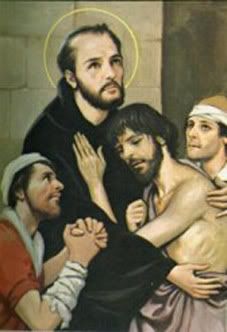
Today, March 8, we celebrate the feast day of Saint John of God (1495-1550). John of God would today be called impulsive—he would likely be medicated for it! But during his lifetime, he followed the innermost longing of his heart, oftentimes to the glory of the Lord, and sometimes to the detriment of the man. He was willful, quick to action, and committed to those in need. By the end of his life, Saint John of God had established an order of religious servants to the sick and poor, and through his model, had opened the doors of Christian charity and love to those in need. But his early life was marked by wandering and impetuousness, all of which eventually led him to Granada, Spain.


Saint John was born in Portugal, the child of devout Catholic parents. At age eight, after hearing a priest touring through the area deliver a homily, John left his parents in the middle of the night, following the priest, and becoming his servant. They lived an austere live, begging, and surviving on the kindness of strangers, until the lifestyle left John sick and weak. The priest, continuing his travels, left John in the care of a wealthy family with a large estate, and John eventually became the herder for their animals. He worked at this post for nearly 20 years, until the age of 27, his time in the mountains with only the sheep creating a broad space for him to pray and contemplate the glories of the Lord. He grew in faith, the Holy Spirit moving within in.

At approximately age 27, John joined the Spanish army in their war against France, leaving the fields to become a soldier. He quickly succumbed to the soldier’s life, engaging in gambling, drinking, pillaging, and other sinful ways. It was not until he was knocked from his horse—much like Saint Paul—and left by his battalion behind enemy lines that he felt a call to true conversion. John changed his ways, turning away from the sinful behaviors he had enjoyed, and devoting himself to God.

Returning to his shepherding job, he again listened to his heart and was moved to sail to Africa to assist Christian martyrs and those being held in captivity there. Joining himself to an exiled family, he sailed from Gibraltar. Upon arriving in Africa, he was appalled by the treatment of local peoples by the Christians, who worked them mercilessly, relying on the whip and beatings to increase performance. John spoke out against such injustices, and was encouraged, for his own safety to return to Spain.

He did so, and set out on a journey to find his birth parents. Unfortunately, upon arrival in his hometown, he found they had both died in his long absence. John, filled with regret, began walking back to Spain, determined to return to his foster family and their sheep. While on this journey, holy tradition tells us that he found a small child on the roadside, dressed in rags and crippled. The boy asked John to carry him part of his way, which John did without a moment’s hesitation. The child, however, grew heavy, and John, after years of begging and poverty, was not very strong. When the pair reached a place to get a drink of water, John proposed to the child that they should stop and rest. The child came down from his shoulders and was transformed into the likeness of the child Jesus. "John of God," He said, "Granada shall be your cross," and immediately disappeared.

Saint John set out for Granada, where he would live the remainder of his years. In Granada he worked back-breaking manual jobs, carrying stone, selling firewood, unloading ships at the docks, and construction, the money from which he gave to the poor. Reading holy books at night, in the safety of the local church, became his refuge. Again, following the yearnings of his heart, John bought a small bookstore with which to share his love of reading with the world. Following a sermon of repentance of Saint John of Avila—the man who would become John of God’s spiritual advisor and mentor-- he ransacked his own store, destroying the secular books he was selling, leaving only those that would bring readers to God.

Those who knew him assumed he was mad, and had him institutionalized at the Royal Hospital asylum. There he spent forty days, tied to his bed (as was the custom at the time), and receiving daily whippings as treatment. On the fortieth day, Saint John of Avila visited, informing him that he had suffered enough, completed enough penance (like the time of Jesus in the desert), and had him released to a more favorable part of the hospital.

It was here, in the Royal Hospital, that John of God declared his intention to start his own hospital, after seeing the way in which patients were treated. Returning to the streets, he again sold firewood and worked menial jobs, giving all that he had to the homeless poor and sick. Eventually, he acquired a small home for the lodging of these forgotten members of society, and a few years later was able to move into a larger space, an abandoned convent. During this time, he established the Order of the Brothers Hospitallers of St. John of God, dedicated to medical service of the poor and indigent.

During this time, seeking clarification of his vocation, John traveled to the shrine of Our Lady of Guadalupe, where he received a vision of Our Lord, Jesus Christ, Our Lady, and Saint John while praying before a crucifix. The Blessed Virgin presented him with a crown of thorns, and pressed it hard upon his head. "John," the Holy Mother said, "it is by thorns and sufferings that you must win the crown my Son has waiting for you in heaven." Although Saint John could feel the thorns piercing his brain, he replied, "From your hand, Lady, thorns and sufferings are welcome. They are my flowers and my roses."

Returning to Granada, Saint John of God worked tirelessly for the poor and sick. He is reported to have worked miracles, including rescuing many from the Royal Hospital when it caught fire. Remembering that patients were tied to their beds, and witnessing others standing and watching them burn from a safe distance, John ran into the burning building, carrying and leading the patients to safety. He then climbed to the roof, removing the burning portions by hand with an axe, so as to prevent having to destroy the entire building to prevent the fire from spreading. Despite falling through the burning room, he emerged unscathed, having saved both the hospital and the lives of countless patients.

Years of hard work, poverty, and hunger took their toll on John, and he fell ill with pneumonia at age 55. Sensing that his time on earth was close to over, he requested the Last Sacraments, and was visited by the bishop himself. When the bishop asked if he had anything left on his mind, Saint John of God responded with a characteristically practical answer, his mind still focused on charity.

"There are three things that make me uneasy," he said. "The first is that I have received so many graces from God, and have not recognized them, and have repaid them with so little of my own. The second is that after I am dead, I fear lest the poor women I have rescued, and the poor sinners I have reclaimed, may be treated badly. The third is that those who have trusted me with money, and whom I have not fully repaid, may suffer loss on my account."

He then asked to be left alone, and kneeling before a crucifix, he died shortly thereafter, his face resting on the feet of Our Lord. He was buried in Granada, with the magistrates and government providing a pomp and lavish funeral, so was he loved by the citizens of the city.

The life of Saint John of God is inspirational in so many ways. His service to those in need reminds us of our Christian call to serve—those who are hungry, thirsty, homeless, unclothed. More than that, his willingness to listen to the Holy Spirit, to let it fill his heart, and to follow those yearnings with abandon serve as a model for us. All too often we live in our heads, rather than our hearts. How many times have we been moved to help others in our hearts, but then listened to the thoughts of our head—it will be too hard, it won’t make any difference, what will people think?, or it’s not practical. How might we better serve our communities, like Saint John of God, if we opened ourselves to the call of the Holy Spirit—a loving and charitable force already residing within us!

June 23: Saint Etheldreda

Posted by Jacob

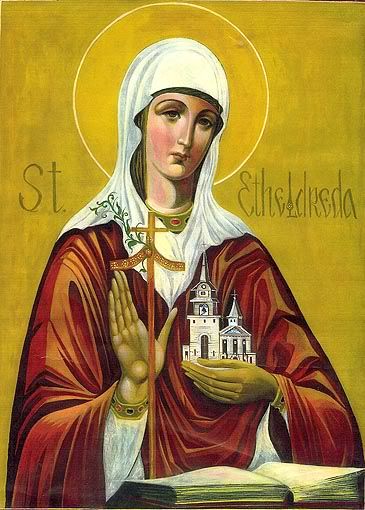
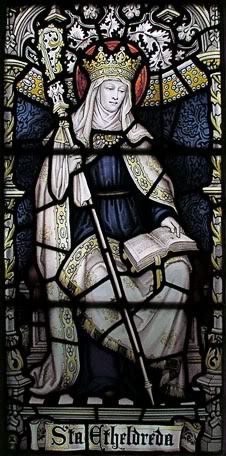
Today, June 23, we celebrate the feast day of Saint Etheldreda (also known as Saint Audrey, 636-379), ascetic, queen, and foundress of the “double monastery” at Ely. Against earthly pressures, and through divine intervention, Saint Etheldreda maintained her personal consecration to the Lord, remaining a virgin and engaging in ascetic pursuits despite her noble station. Her perseverance in faith and commitment to a life of prayer and service is remarkable still today.


Born in Northumbria, the daughter of a king, Etheldreda was brought up in a God-fearing household. From an early age, Etheldreda had but one goal: to consecrate herself entirely to the Lord through entrance into a religious order. Etheldreda longed to fully serve with her life, her wealth, and her actions. Her father, on the other hand, had other plans for her. For political reasons, Etheldreda was married (at quite a young age) to a prince named Tonbert, from who she received a track of land on the Isle of Ely. For three years the couple lived together, and due to her young age and commitment to sanctity, Etheldreda was able to maintain her purity. Upon Tonbert’s untimely death, she relocated to the Isle of Ely, where she intended to devote herself to entirely spiritual pursuits.

However, it was not to be. Her father, again sensing political opportunity, arranged for a second marriage, this time to the young son of the powerful king of Northumbria, Egfrith. Etheldreda obeyed her father’s wishes, but chose to live in the royal palace as a sister to the king, rather than a wife. This was not problematic, due to the youth of the boy, who would sit at Etheldreda’s feet, learning Scripture from her. For twelve years, Etheldreda engaged in purely ascetic activities, forgoing the accoutrements and privilege of her position, and maintaining her purity. Etheldreda became known for devoting her time to works of mercy and love, while observing a scrupulous regularity of discipline.

At the age of twenty-four, Egfrith ascended to the throne of Northumbria, becoming king. As Queen, Etheldreda delighted in the society of monks and nuns, and took care to invite and attract to her those most distinguished for learning and piety. Among these was St. Cuthbert, the young Prior of Lindisfarne, upon whose monastery she bestowed many gifts from her own private property. Over time, Etheldreda became friends with Saint Wilfrid, her confessor, who on her behalf, encouraged the king to allow her to retire for some years to the Convent at Coldingham Abbey. There, she lived as a sister, having received the veil from Saint Wilfrid himself. Her husband, the king, shortly after consenting to her departure from the royal court, changed his mind and pursued her. When Saint Wilfrid pleaded on her behalf, the king made his intentions known: he would find Etheldreda and bring her back to the court by force, where he would consummate his marital privileges.

Etheldreda fled toward her land on the Isle of Ely, with the king in pursuit. She took refuge on a headland on the southern coast of England where a miracle prevented further advance of the king. While she was standing on a large outcropping of rock, the tide rose such that it created an island of refuge for the saint, water surrounding her. Etheldreda remained in this island refuge for seven days, until her royal spouse, recognizing the divine will, agreed to leave her in peace.

Etheldreda, freed from her marriage, continued on her trek to the Isle of Ely. On one extremely hot day during her travels, legend tells us that Etheldreda was overpowered with fatigue. She stuck her staff into the ground and lay down to rest on the open plain. When she awoke, the staff had put forth leaves and branches, and it afterwards became a mighty oak tree, larger than any other for many miles around.

At length, after many days of weary walking, the saint arrived on her own lands in Ely. There, she established a “double monastery,” shepherding both nuns and monks. Saint Wilfrid appointed her abbess, and she governed the abbey for many years, serving as advisor to the pope and other Church officials during that time. Etheldreda ruled over her monastery for seven years, setting a great example of piety and abstinence and all other monastic virtues. Though of royal lineage, and having been delicately reared, Etheldreda abstained from all luxuries. She never wore any linen, but only rough woolen clothing. She denied herself the use of the warm bath, only using the bath that had already served the other nuns. Many of her old friends, relations, and courtiers followed her and her example, engaging in ascetic practices, discipline, and prayer. The monastery grew considerably under her holy leadership

Not only holy and a model of virtue in shepherding her people to the Lord, Etheldreda also was graced with the gift of prophecy. Most notable of her prophecies was that of her own death by plague, and the exact number of her monks and nuns who would be carried off by the same epidemic. True to her prophesy, Etheldreda died of a quinsy, a form of plague which led to the development of a large tumor upon her neck. Etheldreda, never complaining about the pain or the sight of the growth, regarded is as a punishment for her former love of fine clothing, and, in particular, for having worn jewels on her neck.

Seventeen years after her death, Saint Wilfrid and Saint Etheldreda’s physician discovered her body to be incorrupt. The incision that had been made into her tumor shortly before she died had miraculously healed in death. (Saint Etheldreda remains the patron of sufferers of throat complaints.) The linen cloths in which her body was wrapped were as fresh as the day she had been buried. Her body was placed in a stone sarcophagus and reburied at the Abbey. Unfortunately, the tomb of Saint Etheldreda was desecrated during the English Reformation, with only the incorrupt hand of the blessed saint surviving. Her relics remain at St Etheldreda's Roman Catholic church at Ely, where many miracles have been reported through her intercession.

The life of Saint Etheldreda reminds us that we cannot truly be servants of Christ when our souls are distracted by the pleasures and desires of the world. In her wisdom, Saint Etheldreda gave up her wealth, station, and privilege, instead choosing to live the ascetic life of a abbess, guiding people to Christ and contributing to His kingdom on earth. We might take a lesson from Saint Etheldreda today, examining what binds us to the world, preventing us from truly and fully serving our Creator.


Eternal God,
who bestowed such grace upon your servant Etheldreda
that she gave herself wholly to the life of prayer
and to the service of your true religion:
grant that we, like her,
may so live our lives on earth seeking your kingdom
that by your guiding
we may be joined to the glorious fellowship of your saints; through Jesus Christ our Lord. Amen.


June 14: Saint Joseph the Hymnographer

Posted by Jacob

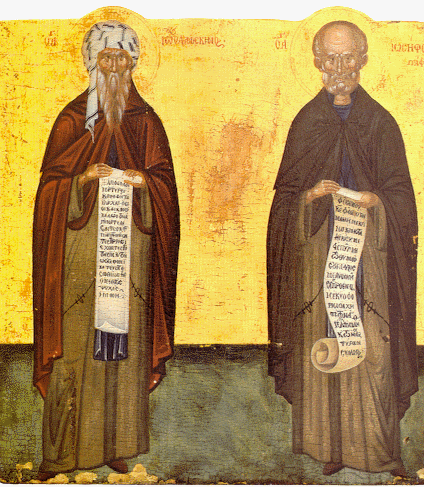
Today, June 14, we celebrate the feast day of Saint Joseph the Hymnographer (810-886), tireless servant of the Lord, glorifying Him in life, in works, and through writing countless hymns and canons to the saints. Despite a lifetime of struggle, suffering, and imprisonment, Saint Joseph produced a catalog of writings which remain today, as well as over 200 hymns, many of which are still sung by modern congregations. He has been called "the sweet-voiced nightingale of the Church." Through his legacy of writings and song, Saint Joseph preserved a priceless record of the history of our faith—a faith which continues, unchanged and unabated, today.


Joseph was born into a pious Christian family in Sicily. His parents, Plotinus and Agatha, in response to an invasion of Arabs, moved the family to Greece. There, at the young age of 15, Joseph entered the monastery at Thessolonica, and earned the love and respect of his community through industriousness, obedience, piety, humility, and scholastic aptitude.

During a routine visit to the monastery, Saint Gregory (then deacon) took notice of the young brother, and asked him to accompany him to the church in Constantinople—then suffering under the iconoclast persecution (see also Saint Theodosia of Constantinople). There, they lived near the Church of the Holy Martyrs, defending religious icons, preaching the Word of God, and ministering to the suffering Christian population. When it was decided that an emissary should be sent to Rome to have audience with Pope Leo III and inform him of the persecution under the Byzantine Emperor, Joseph was selected due to his obedience, wisdom, and gift of oration. He set off for Rome at once.

But life was not to be easy for Saint Joseph. On the way to Rome, he was taken captive by Arab bandits, brought to the island of Crete, and turned over to the Iconoclasts who locked him away in a dungeon. Never giving up hope and faith in the Lord, Joseph ministered to his fellow prisoners, keeping their spirits high, praying with them, and inspiring many to die martyr’s deaths for the faith.

Saint Joseph spent six years in prison, until the death of the Byzantine Emperor and the end of the iconoclast persecution. Prior to his release, he received a heavenly vision from Saint Nicholas of Myra, who provided him with a scroll upon which read: “Hasten, O Bountiful One and as Thou art merciful, hasten to come to our aid, for as Thou wilst, Thou canst…” Saint Joseph, after receiving instruction from Saint Nicholas, sang the words aloud, causing his chains to fall to the ground and the prison gates to be opened. He returned to Constantinople where he established a church in patronage to Saint Nicholas, and later a monastery.

Saint Joseph received the gift of the relics of Saint Bartholomew, which he placed in the church. He felt compelled to sing a hymn of praise to the saint, but no such suitable hymn existed, and he didn’t feel qualified or capable to write a canon for one so deserving. Saint Joseph prayed for 40 days, trying to discern the proper course of action, upon when Saint Bartholomew appeared to him. He said, “May the Right Hand of Almighty God bless thee, may Heavenly Wisdom pour out upon thy tongue, may thy heart be a temple of the Holy Spirit, and may thy hymnody sweeten the universe.” Following the apparition, Joseph wrote the canon to Saint Bartholomew, and from then on began to compose liturgical hymns in honor of Jesus, the Heavenly Father, the Mother of God, and the Saints.

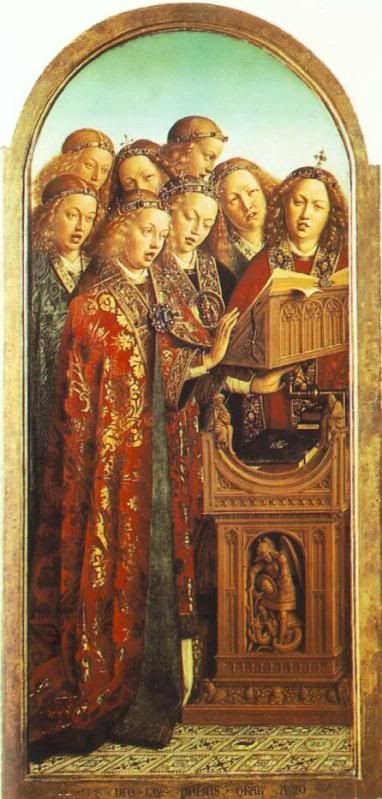
One of those hymns, Stars of the Morning, follows:

Stars of the morning, so gloriously bright,
Filled with celestial splendor and light,
These that, where night never followeth day,
Raise the “Thrice Holy” song ever and aye.

These are Thy ministers, these dost Thou own,
God of Sabaoth, the nearest Thy throne;
These are Thy messengers, These dost Thou send,
Help of the helpless ones! man to defend.


“Who like the Lord?” thunders Michael the chief;
Raphael, “the cure of God,” comforteth grief;
And, as at Nazareth, prophet of peace,
Gabriel, “the light of God,” bringeth release.


Then, when the earth was first poised in mid space,
Then, when the planets first sped on their race,
Then, when were ended the six days’ employ,
Then all the sons of God shouted for joy.


Still let them succor us; still let them fight,
Lord of angelic hosts, battling for right;
Till, where their anthems they ceaselessly pour,
We with the angels may bow and adore.


Upon the resurgence of iconoclasm, Saint Joseph was exiled for eleven years, but was subsequently returned to his position in Constantinople, and eventually made Bishop of Salonica. He continued to write Canons and hymns, many of which survive. After attaining advanced age for that time, Saint Joseph fell ill. Prior to his death, he received a vision from the Lord, telling of his approaching journey to Heaven. Saint Joseph set his affairs in order, and spent the remainder of his days in quiet prayer. He received Holy Eucharist, blessed those from the community who were present, and joyfully gave his life to the Lord. Saint Theodore, later appearing to an impatient friend of Saint Joseph stated, "Why do you become angry O man? Joseph the Hymnographer's soul was being separated from his body and we were with him. When he died this night, all of us whom he glorified in hymns, translated his soul to the heavens and placed it before the Face of God. That is why I was tardy in not appearing to you."

Saint Joseph is credited with 200 hymns and canons, although some place the number he wrote at more than one thousand. Throughout his life, he preached the Word of God—through his writings, through Canons to the Saint, through opposition to persecution, and through joyful song. Encouraged by his visions of saints, Saint Joseph the Hymnographer raised his voice in praise of Our Lord, even when he faced violent opposition, imprisonment, and exile. How often can we say the same of ourselves?


Let Us Now Our Voices Raise (written by Saint Joseph, the Hymnographer)


Let us now our voices raise,
Wake the day with gladness;
God Himself to joy and praise
Turns our human sadness;
Joy that martyrs won their crown,
Opened heav’ns bright portal,
When they laid the mortal down
For the life immortal.


Never flinched they from the flame,
From the torment never;
Vain the tyrant’s sharpest aim,
Vain each fierce endeavor:
For by faith they saw the land
Decked in all its glory,
Where triumphant now they stand
With the victor’s story.


Up and follow, Christian men!
Press through toil and sorrow;
Spurn the night of fear, and then,
O the glorious morrow!
Who will venture on the strife;
Who will first begin it?
Who will grasp the land of life?
Warriors, up and win it!


November 28: Saint James of the Marches

Posted by Jacob

"Beloved and most holy word of God! You enlighten the hearts of the faithful, you satisfy the hungry, console the afflicted; you make the souls of all productive of good and cause all virtues to blossom; you snatch souls from the devil’s jaw; you make the wretched holy, and men of earth citizens of heaven!"


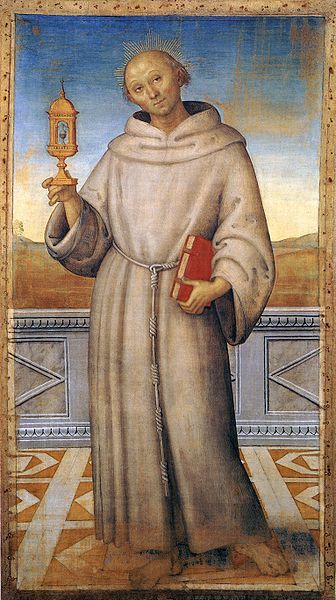
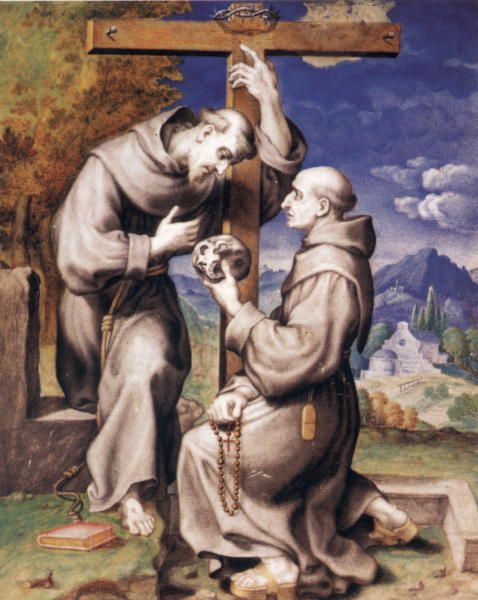
Today, November 28, we celebrate the feast day of Saint James of the Marches (Giacomo della Marca, 1391-1476), Franciscan friar, missionary, preacher, and opponent of heresy. The life of Saint James is remarkable for his commitment to defense of Church doctrine, his tireless preaching and conversions of sinners, miracle working, and austerity.

James Gangala was born into an extremely poor family at Montebrandone (in the Marche of Ancona), in central Italy along the Adriatic Sea. Drawn to the Lord, he began his studies at Offida under the guidance of his uncle, a priest, who soon afterwards put him to school at Ascoli. At the University of Perugia he took the degree of Doctor in Civil Law. After a short stay at Florence as tutor in a noble family, and as judge of sorcerers, James was received into the Order of the Friars Minor, the Franciscan order at Assisi, at the age of 25. Studying under Saint Bernardino of Siena, James was widely recognized for his oratory, delivering both forceful and effective sermons, and converting thousands of souls. Ordained at age twenty-nine, James was sent on mission with Saint John Capistrano, traveling throughout Italy, German, Bohemia, Poland, and Hungary.

Noting his orthodoxy, Pope Saint Martin V appointed him inquisitor to root out heretical sects that were growing in power throughout Italy. He continued his travels, preaching, working against heresy, and attempting to reconcile various branches of the Franciscan Order. He attended the Council of Florence in 1438, working diligently to reconcile the Eastern and Latin Churches, with little success.

Elected bishop of Milan, James humbly declined the position, preferring to continue his itinerant lifestyle, traveling, preaching, and confirming the truth of Church doctrine. Saint James preached every day for 40 years, beginning on the date of his ordination, and ending on the date of his death. He preached a message of penance, which he also put into practice. James slept only three hours each evening, and fasted nine months of the year. Thin, dressed always in the same tattered brown robe, and susceptible to illness, Saint James ate little, giving all he had to the needy. As he grew older, and his health began to observably fail, Pope Martin V ordered him to eat regularly, as a public service, so that he could continue his ministry. Charitable, Saint James instituted several montes pietatis, (literally, “mountains of money”), which provided low-interest loans to all who needed them.

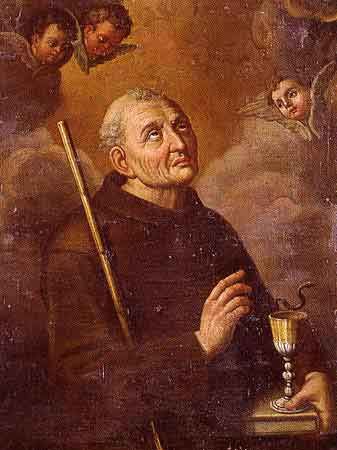
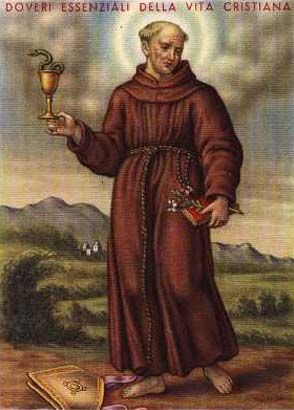
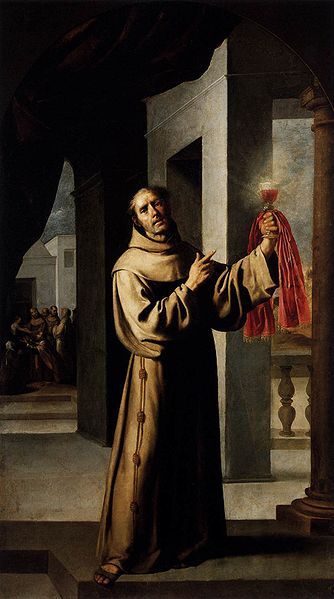
Saint James founded several monasteries in Bohemia, Hungary, and Austria. Especially devoted to the Precious Blood of Jesus, he, himself, was brought up on heresy charges during the Dominican Inquisition in 1462. The Pope intervened, ordering the case put on permanent hold, with no decision ever rendered on his statements. However, during the course of the inquisition, James was the victim of attempted assassination twice, both times in the form of a poisoned chalice (as he is frequently depicted in art).

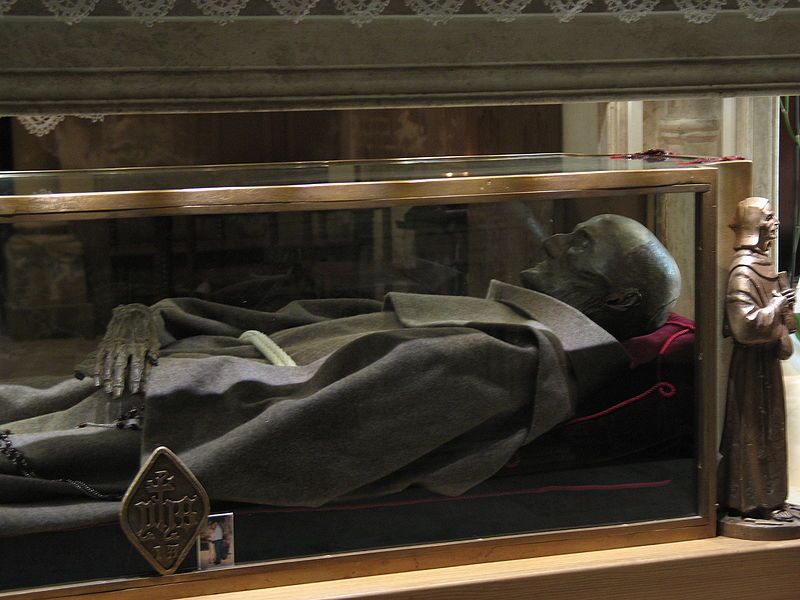
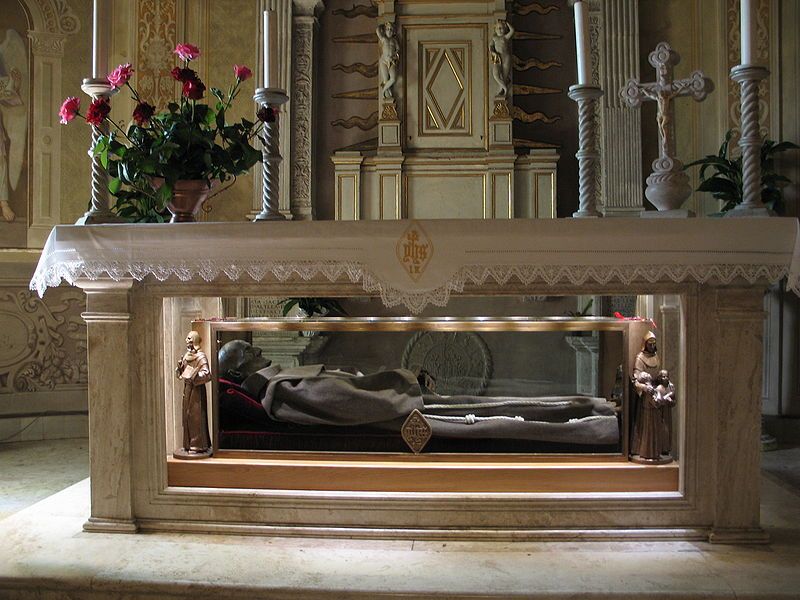
Saint James spent the last three years of his life at Naples, and was buried there in the Franciscan church of San Maria la Nuova, where his body is still to be seen, preserved beneath the alter. Numerous miracles have been reported through his intercession, both while he lived and subsequent to his death.


On today, the feast of Saint James of the Marches, we pray for the fortitude, steadfastness, and endurance that this holy man displayed each day of his life. Saint James, pray for us!


A Prayer for Fortitude

O Holy Spirit who descended upon the twelve as they stood in anxiety, come unto me in my endeavors. Banish from my heart all timidity and false pride; strengthen my soul to avoid all sin, to practice virtue, and to prefer ridicule to the denial of my Lord and Savior Jesus Christ. Let not the goodness of purity, obedience and charity be obscured in the face of adversity. Instill in me the virtue of Fortitude so that I may courageously profess and practice my holy Catholic faith. Open my eyes, O Holy Spirit, that I may recognize my state in life. Give me the confidence to embrace it and the strength to live it as a son of God. I pray that Your guidance, protection and consolation may be with me now and throughout my life. Amen.


Year 2: Day 332 of 365
Prayer Intentions: Fortitude, Steadfastness, Endurance.
Requested Intentions: Financial security for a mother (M); Health, finances, successful marriage (A); Successful resolution of court case for son (K); Continued sobriety (N); Healing of a chronic health condition (B); Successful employment (A): Peace in a family, recovery of a niece from substance use (L); Blessings on a marriage, healing of a husband (P); For the health and recovery of sisters (B); For a daughter and granddaughter (D); Blessings on overseas employment (M); Healing of mother (L); Successful employment for husband (G); Successful employment, personal fulfillment (C); Health and recovery of ill sister (A); Resolution of legal issues; Grace and protection (E); Successful and meaningful employment (S); Restoration of a marriage (A); Peace and tolerance in a family, support for those with Parkinson’s Disease (M); For the restoration of a daughter’s marriage, end to debt (S); Employment and continued strength (K); Successful examinations for a son (J); Employment and blessings of a child (S); Employment and financial security (F); Successful work placement, continued health (A); Grace and healing for a family (P); Healing of a father (M).

October 27: Saint Frumentius of Ethiopia

Posted by Jacob

Today, October 27, we celebrate the feast day of Saint Frumentius of Ethiopia (died 383), also known as “Abuna,” or the Father of Ethiopia. Together with his twin brother, saint Aedesius, he is credited with bringing the faith to that region of Africa, as well as translating the New Testament into local language to make it more accessible to the people there. A disciple of Saint Athanasius of Alexandria, Saint Frumentius turned the tragedy of his youth into a powerful opportunity to preach the truth of the Gospel to those in need.


Born in Tyre, Lebanon, Frumentius and his brother were taken on a voyage to Ethiopia what still young children by their uncle, Meropius, a Christian philosopher and explorer. During the voyage, tragedy struck and the ship was attacked by barbarian pirates while harbored in a community on the Red Sea. The entire crew, with the exception of the two children, were slain, and the ship destroyed. Frumentius and Aedesius were taken as slaves.

The two youth were unlike the people of the region in appearance, and as such were given to the king of Axum as a curiosity. He was immediately taken with their youth, beauty, and wit, and installed them as members of his court, seeing to their education, and providing them protection and care. Aedesius would eventually become the king’s cup-bearer, and Frumentius his secretary.

The brothers grew in faith, serving their king well. On his deathbed, grateful for years of service, the king granted the twins their freedom. However, the queen begged them to stay at court and assist her in governing the country until the heir to the throne came of age. This, they gladly did, convincing her to allow the introduction of Christianity to the country, and opening trade ties with the West. Over time, the brothers used their influence to spread Christianity first throughout the court, and then throughout the country. First they encouraged Christian merchants, who had been recently allowed into the country, to practice their faith openly by meeting at places of public worship. Eventually, this led to the conversion of the native residents. When the prince reached the age of governing, the brothers resigned their posts.

Saint Frumentius traveled to Alexandria, where he arranged a meeting with Saint Athanasius, and begged him to send a bishop back to Ethiopia to shepherd the fledgling Christian community. Athanasius, a wise man of faith, consecrated Frumentius a bishop, sending him back to the Ethiopians, recognizing him to be the best man for the position.

Upon his return, Frumentius was welcomed back with reverence, and through working of miracles and holy example, converted the king, and subsequently, the majority of the nation. He worked tirelessly throughout the country until his death in approximately the year 383. The people of Ethiopia called him Abuna (Our Father), Kesate Birhan (Revealer of Light), and Abba Salama (Father of Peace).

Pray for us, dear Frumentius, that we may also “bloom where we are planted.” You were just a young boy in a strange and pagan land, but you made the best of the situation and brought truth and life to that desolate land and lost people. We pray for your intercession that we may bring the light of Christ with us wherever we go in the hope of inspiring others to follow Him. In His name we pray. Amen.


Year 2: Day 300 of 365
Prayer Intentions: Perseverance, Endurance, Faith in difficult situations.
Requested Intentions: Restoration of a marriage (A); Peace and tolerance in a family, support for those with Parkinson’s Disease (M); For the restoration of a daughter’s marriage, end to debt (S); Employment and continued strength (K); Successful examinations for a son (J); Employment and blessings of a child (S); Employment and financial security (F); Successful work placement, continued health (A); Grace and healing for a family (P); Healing of a father (M); Academic success for son, employment for husband and brother (B); Freedom from anxiety and panic attacks (R); Health and healing in preparation for surgery (C); Healing of a chronic illness (P); Safety of a family during storms (A); Successful home ownership (P); Healing of a marriage (M); Employment for a husband, blessings for a marriage (E); Successful examinations for a daughter, healing of a relationships (V); Blessing for a family (V); Healing of baby girl M and all children suffering (M); Special intentions (R); Business success, peace, health (E); Conversion and deliverance of those who suffer, increase in vocations (M); Financial security and safe housing (M); For a daughter (K).

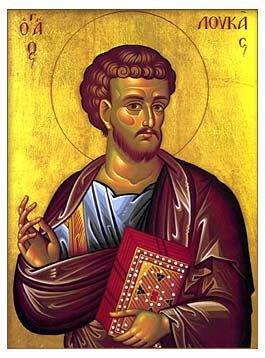
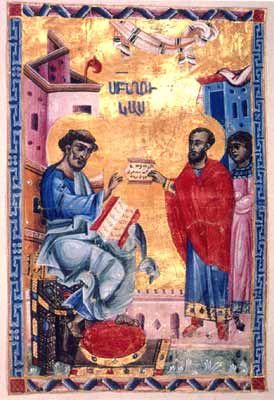
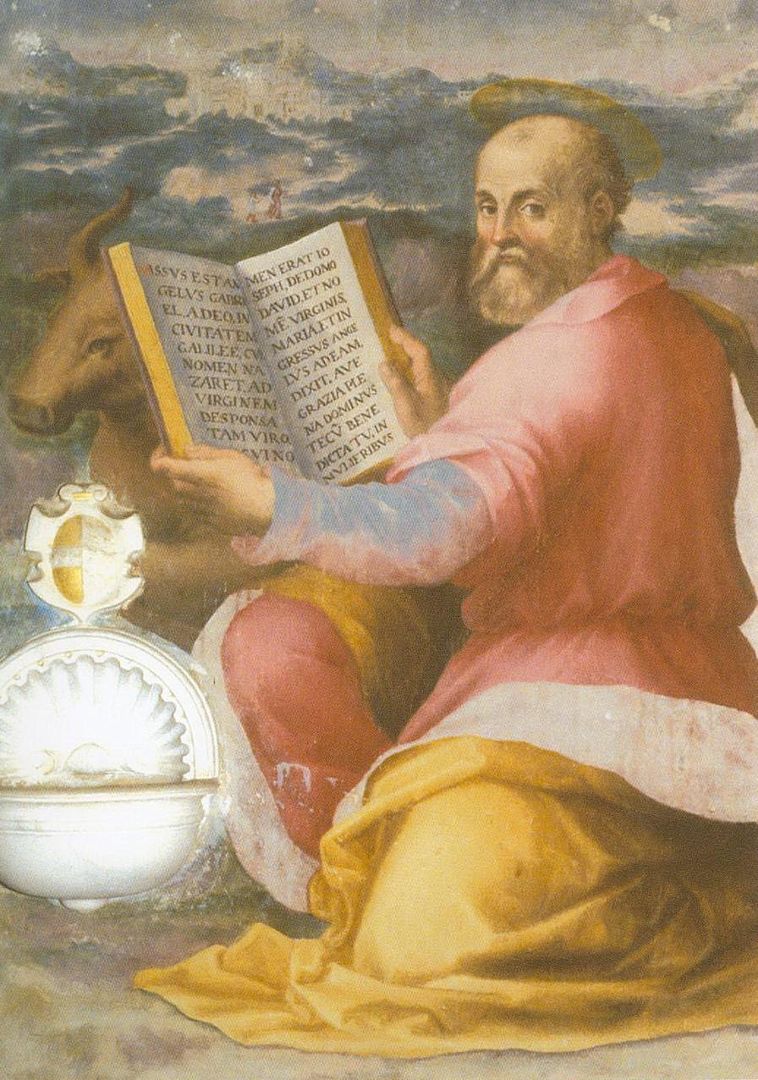
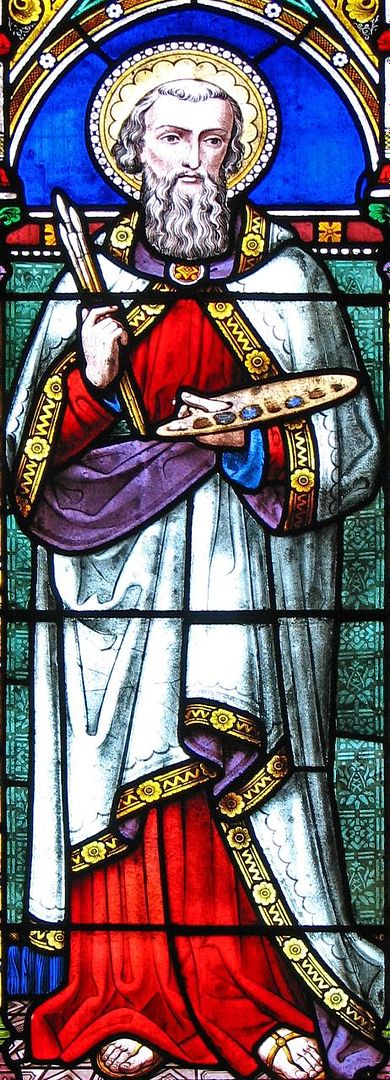
October 18: Saint Luke the Evangelist

Posted by Jacob

"Since many have undertaken to set down an orderly account of the events that have been fulfilled among us, just as they were handed on to us by those who from the beginning were eyewitnesses and servants of the word, I too decided, after investigating everything carefully from the very first, to write an orderly account for you, most excellent Theophilus." (Luke 1:1-3)


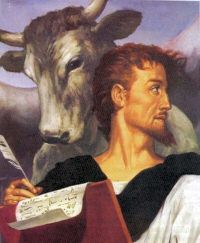
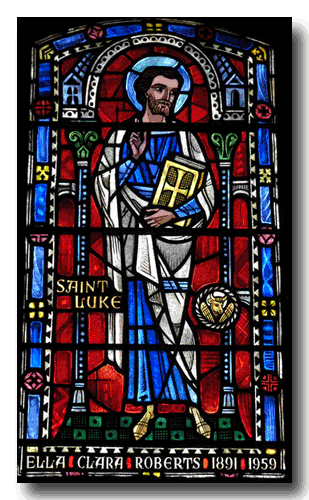
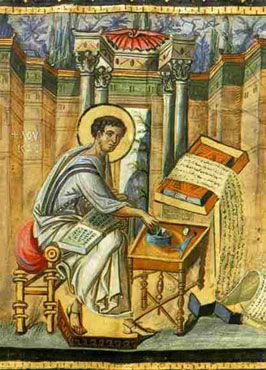
Today, October 18, we celebrate the feast day of Saint Luke (died 74), disciple of Saint Paul, writer of the Gospel and the Acts of the Apostles, and martyr for the Church. Saint Luke is the only Gentile to have written books in the Bible and his writings have been proven to be historically accurate. In his Gospel, Luke emphasizes Christ's compassion for sinners and for all those who suffer. He also records a strong emphasis on the role women played in Christ's ministry.

Little is known about the life of Saint Luke, prior to his joining Saint Paul in his evangelical missions. Virtually all that we know comes from the New Testament, written by his own hand in the Acts of the Apostles, or documented in the epistles of Saint Paul in which he refers to "Luke, the beloved physician." (Colossians 4:14)

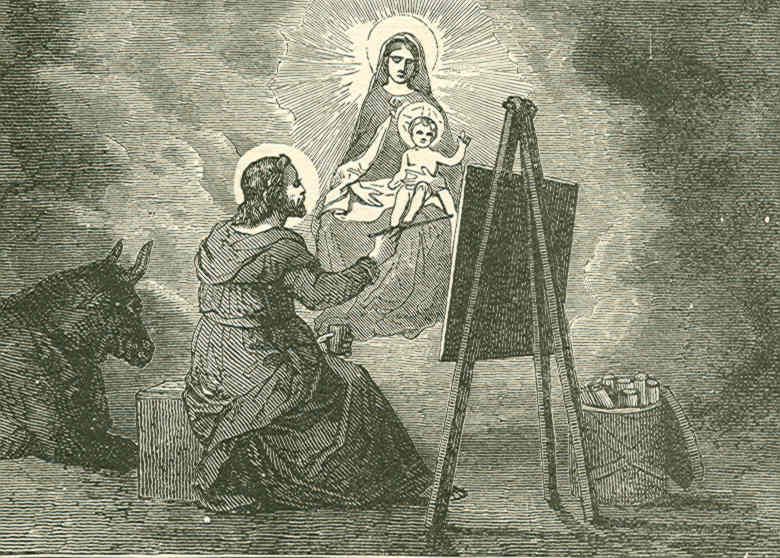
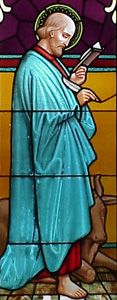
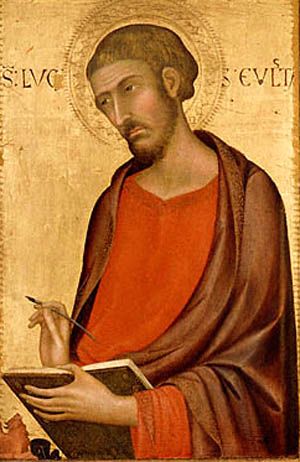
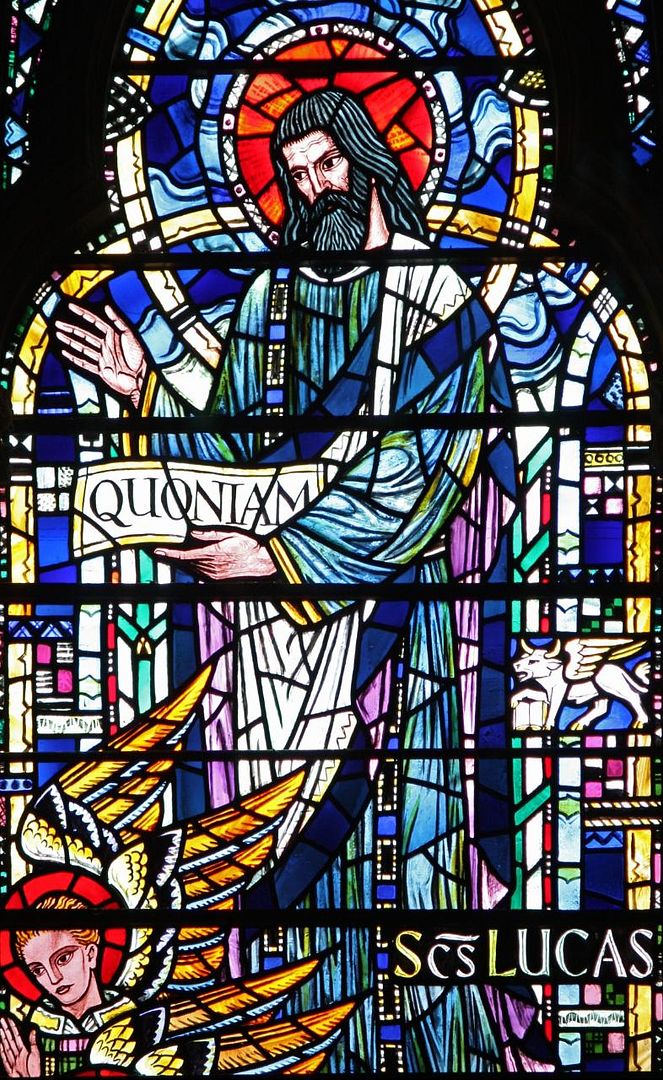
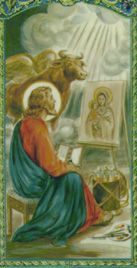
Saint Luke was most likely born both Greek and Gentile, and despite being referred to as a physician was more likely a slave. According to the early Church historian Eusebius, Luke was born at Antioch in Syria. It was not uncommon in that time for slaves to be educated in medicine, so that the family who employed them might have a resident doctor. Legend tells us that Saint Luke was highly educated, respected as a writer, poet, and painter. He is said to have painted many portraits of Madonna and Child, although the authenticity of these paintings (still revered across Europe) has been questioned.

In regards to Saint Luke’s heritage, scholars have pointed to several key pieces of information. First, in referring to his traveling companions, Saint Paul speaks of his Jewish “friends” who are circumcised. In this group of Jewish companions, he does not include Luke in this group. Secondly, Saint Luke’s gospel shows special sensitivity to evangelizing Gentiles. It is only in this gospel that we see the parable of the Good Samaritan, that we hear Jesus praising the faith of Gentiles such as the widow of Zarephath and Naaman the Syrian, and that we read about the one grateful leper who is a Samaritan.

We first hear of Saint Luke in the sixteenth chapter of the Acts of the Apostles. In that chapter, he meets Saint Paul at Troas, around the year 51, and subsequently accompanies him on his evangelical mission throughout Europe. Together, they end up at Philippi, “concluding that God had called us to preach the Gospel to them.”

6Paul and his companions traveled throughout the region of Phrygia and Galatia, having been kept by the Holy Spirit from preaching the word in the province of Asia. 7When they came to the border of Mysia, they tried to enter Bithynia, but the Spirit of Jesus would not allow them to. 8So they passed by Mysia and went down to Troas. 9During the night Paul had a vision of a man of Macedonia standing and begging him, "Come over to Macedonia and help us." 10After Paul had seen the vision, we got ready at once to leave for Macedonia, concluding that God had called us to preach the gospel to them.
11From Troas we put out to sea and sailed straight for Samothrace, and the next day on to Neapolis. 12From there we traveled to Philippi, a Roman colony and the leading city of that district of Macedonia. And we stayed there several days. (Acts 16:6-12)

(Prior to Chapter 16, verse 10, the Acts of the Apostles is recounted in a straight-forward third person historical narrative. In verse 10, Saint Luke interjects the personal pronoun “we,” joining the story and accompanying Saint Paul.) Saint Luke was present at the conversion of Lydia and was recognized spirit: “She followed Paul and us, crying out, “These men are servants of the Most High God, who proclaim to you the way of salvation.” (Acts 16:18)
Saint Luke’s time with Saint Paul was not always easy. For example, Luke saw Paul and Silas arrested, dragged before the Roman magistrates, charged with disturbing the city for “being Jews”, beaten with rods, and thrown into prison. Based upon their appearance, Luke and Saint Timothy likely escaped. When Paul departed from Philippi, Luke was left behind, sending financial aid and assistance to Saint Paul in Thessalonica.

Eventually, after separate evangelical missions, Saint Paul and Saint Luke rejoined each other, traveling through Miletus, Tyre, Caesarea, and to Jerusalem. In Rome, when Saint Paul was imprisoned, Saint Luke remained with him. "Epaphras, my fellow prisoner in Christ Jesus, sends greetings to you, and so do Mark, Aristarchus, Demas, and Luke, my fellow workers" (Philemon 24), Saint Paul writes. And after everyone else deserts him in his final imprisonment and sufferings, it is Luke who remains with Paul to the end: "Only Luke is with me." (2 Timothy 4:11)

The reports of Saint Luke's life after Paul's death are conflicting. Some say he preached in Gaul before settling in Greece to write his Gospel. While the details of his death are unknown, the Church bestows upon him the martyr’s crown for the suffering he endured while preaching the Gospel of Jesus Christ.


The writings of Saint Luke

The gospel of Saint Luke, following from his gentle character, focuses on the poor and oppressed, encouraging tenderness and compassion for the less fortunate. This includes the stories of Lazarus and the Rich Man who ignored him, as well as the parable of the Good Samaritan. Similarly, it is only in the gospel of Luke that the beatitude "Blessed are the poor" rather than "Blessed are the poor in spirit" is referenced.

Unlike most Jewish Gospel writings, women have an important place in Luke's gospel. Luke writes about the women who accompanied Jesus, such as Mary Magdalene, Joanna, Susanna, and Martha and Mary and "many other women who used their own resources to help Jesus and his disciples." (Luke, 8:1).

Luke also appears especially devoted to Our Blessed Mother through his writings. He wrote about the birth of Christ from Mary's point of view, and she remains especially important throughout Luke's gospel. It is, for example, only in the gospel of Luke, that the story of Mary's Annunciation, her visit to Elizabeth, the Magnificat, the Presentation at the Temple, and Jesus' remaining in Jerusalem are told. In Luke's gospel, we learn the words spoken by the Archangel Gabriel to Mary at the Annunciation, "Hail Mary, full of grace" and Elizabeth's words to Mary, "Blessed are you and blessed is the fruit of your womb, Jesus."

“The character of Luke may best be seen by the emphases of his Gospel, which has been given a number of subtitles: (1) The Gospel of Mercy: Luke emphasizes Jesus' compassion and patience with the sinners and the suffering. He has a broadminded openness to all, showing concern for Samaritans, lepers, publicans, soldiers, public sinners, unlettered shepherds, the poor. Luke alone records the stories of the sinful woman, the lost sheep and coin, the prodigal son, the good thief. (2) The Gospel of Universal Salvation: Jesus died for all. He is the son of Adam, not just of David, and Gentiles are his friends too. (3) The Gospel of the Poor: "Little people" are prominent—Zechariah and Elizabeth, Mary and Joseph, shepherds, Simeon and the elderly widow, Anna. He is also concerned with what we now call "evangelical poverty." (4) The Gospel of Absolute Renunciation: He stresses the need for total dedication to Christ. (5) The Gospel of Prayer and the Holy Spirit: He shows Jesus at prayer before every important step of his ministry. The Spirit is bringing the Church to its final perfection. (6) The Gospel of Joy: Luke succeeds in portraying the joy of salvation that permeated the primitive Church.” (From AmericanCatholic.org).


Most charming and saintly Physician, you were animated by the heavenly Spirit of love. In faithfully detailing the humanity of Jesus, you also showed his divinity and his genuine compassion for all human beings. Inspire our physicians with your professionalism and with the divine compassion for their patients. Enable them to cure the ills of both body and spirit that afflict so many in our day.

Almighty God, who inspired Your servant Luke the Physician to set forth in the Gospel the love and healing power of Your Son: Graciously continue in Your Church the love and power to heal, to the praise and glory of Your Name, through Jesus Christ, our Lord.
Amen.


Year 2: Day 291 of 365
Prayer Intentions: Patient Endurance.
Requested Intentions: Successful work placement, continued health (A); Grace and healing for a family (P); Healing of a father (M); Academic success for son, employment for husband and brother (B); Freedom from anxiety and panic attacks (R); Health and healing in preparation for surgery (C); Healing of a chronic illness (P); Safety of a family during storms (A); Successful home ownership (P); Healing of a marriage (M); Employment for a husband, blessings for a marriage (E); Successful examinations for a daughter, healing of a relationships (V); Blessing for a family (V); Healing of baby girl M and all children suffering (M); Special intentions (R); Business success, peace, health (E); Conversion and deliverance of those who suffer, increase in vocations (M); Financial security and safe housing (M); For a daughter (K); Conversion of a family, deliverance of the souls in Purgatory (S); Successful marriage (A); Health, safety, grace, success of a building project (A); Successful treatment and recovery from cancer (D); Clear speech for a child (C); Conversion of a family (A); Successful employment (S); For the healing of impaired vision (F); For a couple experiencing difficulties (L); Successful employment after finishing college (M); Mother’s health (A); Financial security, freedom from anxiety (S).