Why pray the Rosary every day for a year?


Each time the Blessed Virgin has appeared-- whether it be to Saint Bernadette Soubirous at Lourdes; to Lucia, Jacinta, and Francisco at Fatima; or to Mariette Beco at Banneux-- she has asserted the importance, saving grace, and power of praying the Holy Rosary on a daily basis. Based upon her words, the Rosary is penance and conversion for sinners, a pathway to peace, an end to war, and a powerful act of faith in Jesus Christ. Pope Paul VI presented the Rosary as a powerful means to reach Christ "not merely with Mary but indeed, insofar as this is possible to us, in the same way as Mary, who is certainly the one who thought about Him more than anyone else has ever done."

To show us how this is done, perhaps no one has been more eloquent than the great Cardinal Newman, who wrote: "The great power of the Rosary consists in the fact that it translates the Creed into Prayer. Of course, the Creed is already in a certain sense a prayer and a great act of homage towards God, but the Rosary brings us to meditate again on the great truth of His life and death, and brings this truth close to our hearts. Even Christians, although they know God, usually fear rather than love Him. The strength of the Rosary lies in the particular manner in which it considers these mysteries, since all our thinking about Christ is intertwined with the thought of His Mother, in the relations between Mother and Son; the Holy Family is presented to us, the home in which God lived His infinite love."


As Mary said at Fatima, "Jesus wants to use you to make Me known and loved. He wishes to establish the devotion to My Immaculate Heart throughout the world. I promise salvation to whoever embraces it; these souls will be dear to God, like flowers put by Me to adorn his throne."


July 20, 2013: Saint Margaret of Antioch

Posted by Jacob

Today, July 20, we celebrate the feast day of Saint Margaret of Antioch (died 304), Virgin of the Church, and martyr for the faith. As with other early saints, much of what we know of Saint Margaret may be the stuff of pious legend, embroidered with medieval fantasy, somewhat “far-fetched” by today’s scientific standards. Stripping away the dragons, however, we are left with a young woman, committed to Christ, obedient to her calling, who suffered and died for her faith… and those “facts” are enough to inspire us today.


Saint Margaret was born in Antioch (modern day Turkey) near the end of the third century. Margaret’s father was a pagan priest and her mother died when Margaret was very young. Her nurse, a pious Christian woman, raised Margaret, instructing her in the Christian faith against her father’s wishes. When this betrayal was discovered, Margaret’s father disowned her, and she left the home, continuing to live with her nurse. Before the age of 10, Margaret consecrated herself to Jesus, pledging to remain a virgin, a pure bride of Christ.

Margaret spent her days in prayer and contemplation, tending sheep in the fields. One bright day, a local Roman prefect, Olybrius, observed her during her prayer, and was taken by her delicate beauty. He attempted to court her, but she refused his advances. In retaliation, he accused her of being a Christian, which was forbidden at that time under the reign of Emperor Diocletian. Christians were actively persecuted upon discovery, and Margaret, who did not deny the charge, was no exception. She was brought to trial, to which she offered no defense, and was sentenced to execution upon refusing to offer sacrifices to the pagan gods.

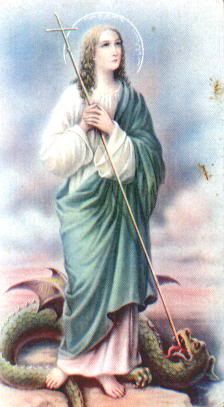
While imprisoned, Margaret is said to have been visited by the Devil, in the form of a hideous, scaly dragon. Holy legend tells us that the dragon, offended by her faith and purity, swallowed her whole. However, the crucifix that Margaret carried with her so irritated his throat, that she was coughed up, indigestible due to her faith, unharmed. Following her emergence from the demon, the dragon transformed into a handsome young man, whom Margaret immediately attacked, resisting his charms. Throwing him to the ground, she exclaimed, “Proud demon, lie prostrate beneath a woman’s foot!” foreshadowing the triumph of the Blessed Virgin over Satan. For this reason, due to her delivery from the belly of the beast, it is believed that Margaret is the patron saint of pregnancy, labor, and childbirth. She is considered one of the Fourteen Holy Helpers, assisting in safe delivery of children.

Multiple attempts were made to martyr Margaret, but each time her prayers kept her safe. First, she was set afire, but remained miraculously unharmed. Next, she was boiled in a large cauldron, and again, emerged unscathed. Finally, at approximately age 15, Saint Margaret was beheaded, the name of Christ upon her lips until the final moment of her life.

Following her death, Saint Margaret is believed to have visited with Saint Joan of Arc, one of the heavenly voices that assisted Joan in her holy mission in France. At her trial, Saint Joan said: "Saint Michael, when he came to me, told me that Saint Catherine and Saint Margaret would come to me and that I should act by their advice, that they were bidden to lead me in what I had to do and that I should believe in what they would say to me and that it was by God's order."

Saint Margaret’s body was buried at Antioch, but her remains were taken translated to Italy where they were divided between shrines in Montefiascone and Venice. She remains a popular saint today throughout Europe, with a common belief that those who read and spread her story will receive an eternal crown in heaven. She is also invoked frequently by women during childbirth, whom she promised to pray for following her encounter with Satan.

Fantastical though it may be, Saint Margaret of Antioch was a young woman who resisted the temptations of the world. Remaining pure in body, spirit, and faith, she went to her death with a confidence far beyond her years, remaining true to the Lord. Whether she physically battled with the Devil, we can be certain that she did so spiritually each day, and in the end, triumphed over him, receiving the martyr’s crown, and taking her rightful place in heaven with the saints.


Jesus, Lover of chastity, Mary, Mother most pure, and Joseph, chaste guardian of the Virgin, to you I come at this hour, begging you to plead with God for me. I earnestly wish to be pure in thought, word and deed in imitation of your own holy purity.


Obtain for me, then, a deep sense of modesty which will be reflected in my external conduct. Protect my eyes, the windows of my soul, from anything that might dim the luster of a heart that must mirror only Christlike purity.


And when the "Bread of Angels becomes the Bread of me" in my heart at Holy Communion, seal it forever against the suggestions of sinful pleasures.


Heart of Jesus, Fount of all purity, have mercy on us.


Amen.

Blessed Antonia Mesina, Patron Saint of Rape Victims

Posted by Jacob


Today, May 17, we celebrate the feast of Blessed Antonia Mesina (1919-1935), a model of virtue, martyr of purity, and patron saint of rape victims.  Despite being only sixteen years old when she died, Antonia’s faith and conviction continue to inspire us today.  She was ever faithful to the Lord, and her virtue continues to infuse strength and grace into the Church, and each one of us, today.

Antonia Mesina was born on the island of Sardinia, of the west coast of Italy.  She was born the second-born of ten children born to an extremely poor family during the years between the first and second world wars.  Times were difficult, but she was offered an opportunity for education, which was eagerly accepted.  After only four years of elementary school, however, Antonia was forced to leave, remaining home and taking care of the household duties and her siblings following her mother becoming bedridden. 

Antonia’s mother, Grazia, had developed a painful heart condition, and despite Antonia’s wishes to remain in school and enjoy the fun of childhood, her mother reported that Antonia "never once went against me.” She was given the household duties, which she accepted both humbly and joyfully.  Obedient and hard working, Antonia willingly and diligently performed her duties and took on responsibilities as if she were already an adult.  She took care of the households cooking, cleaning, laundering of clothes, caring for her siblings, gathering wood, carrying water—all without complaint.  Antonia’s mother, Grazia, referred to her daughter as "the flower of my life."

At the age of 10, Antonia joined a local youth group called “Catholic Action,” Italy’s national apostolic movement for lay people.  Even as a child, she was a model member, reporting that the experience was “beautiful” for her, and that it “helps one to be good.”  Antonia energetically fulfilled her commitments, recruiting other young people to join the group… even on the day of her death.  Honoring Christ, and walking in friendship with Him, became her first priority.

On the day of her martyrdom, at age 16, Antonia was in the forest gathering wood with a friend.  She was attacked by a teenage boy, who pushed her to the ground in attempts to rape her.  While her friend ran for help, Antonia valiantly struggled to maintain her purity, which she had pledged to Christ.  She managed to escape twice, but was caught and beaten repeatedly on the head with a rock.  Despite her mortal wounds, she continued to fight her attacker until help arrived.  Sadly, it was too late to save her mortal body, but autopsy confirmed that Antonia’s efforts had maintained her purity.

Pope John Paul II beatified Antonia Mesina on Sunday, October 4, 1987, proclaiming her a martyr of virtue and purity.   Today we pray for all those who have been victims of violence or crime, that we may be renewed by the Lord, through the gracious intercession of Our Blessed Mother, Mary.


Look down on us, O Mary!
We are united before you in prayer, as you wished us to be:
daughters of Charity, the queen of virtues.
Look down on us with the benevolence of a mother.
We ask your help and protection, peace and pardon,
apostolic zeal and fidelity to the Church,
for ourselves and all who work in society
with an upright heart and good will.

Many are the afflictions of the world,
the miseries of the poor,
the violence performed by those who do not know how to love,
and are carried away by brutal passions.
And we do not know how to see the warnings from heaven
in the calamities that are increasing
and the sacrifice of defenseless and innocent victims.
But you, Mary, are the Mother of Mercy and Forgiveness.
Ask grace for us! Ask God for us and for all,
an increase of faith, the comfort of Christian hope
and the communion of evangelical charity.

May the Father grant the Church unity and testimony of life;
to society, a fraternal spirit,
understanding of every need, sorrow and aspiration;
to Religious families newness of life in your light, O Mary,
in the Spirit of the love of your Son Jesus, our Savior.
Amen.

December 24: Saints Emiliana and Tarsilla

Posted by Jacob

Happy soul! she shall discover

What joy, what bliss,
How many heavens at once it is,
To have a God become her Lover!

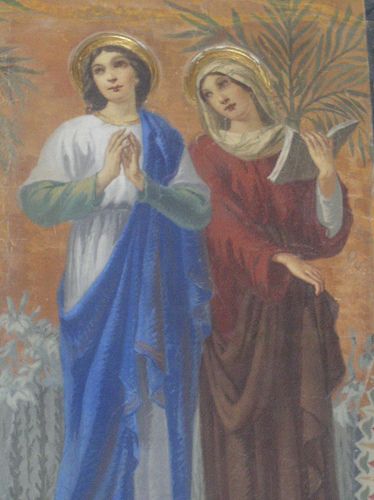
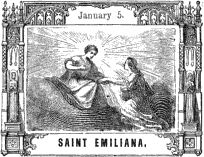
Today, December 24, we celebrate the feast day of Saints Emiliana and Tarsilla (died sixth century), Virgins of the Church, and aunts of Saint Gregory the Great. What we know of their lives was recorded by the holy pope, who was deeply moved by their model of Christian life and virtue.

Born in Rome, Emiliana and Tarsilla were the daughters of senator Gordian and Saint Silvia. Nieces of Pope Saint Felix III, the young women were destined for lives of holiness, and together, while quite young, renounced the world. As young women, they together consecrated themselves to the Lord, desiring to stay pure. Their house was as a convent, and the two spent so much time kneeling in prayer that their knees and elbows arthritically locked in the position of prayer. Living as hermits, they encouraged one another in the ways of the faith, drawing deeper and deeper into the spiritual life.

Tarsilla and Emiliana had a third sister, Gordiana, who had initially made the same vows and consecrated herself to the Lord. Gradually, however, she withdrew from her sisters, returning to the world. Their reproaches fell on deaf ears, and caused them significant sadness and grief.

Saint Tarsilla died prior to Saint Emiliana, but not before she received a vision of her uncle, Pope Saint Felix. In her vision, the pope appeared to her, showing her a place of great beauty. He said, “Come, I will receive you into this habitation of light.” Immediately, she fell ill with fever. Her sister ministered to her, but to no avail. By the following day, her illness had grown worse. Saint Tarsilla, in agonizing pain, called out to those around her; “Make way! Jesus is coming!” With her eyes fixed firmly on heaven, she died soon thereafter, and a heavenly fragrance filled the room, confirming her visions.

Saint Emiliana was deeply saddened, made more difficult by missing her sister on Christmas. Emiliana received consolation in the form of a vision of her sister, however. In this vision, Tarsilla encouraged, “My sister, come! I did not celebrate with you the birth of the Lord, but together we will celebrate the feast of the Epiphany.”

“If you call only me,” Emiliana replied, “what will become of our sister, Gordiana?”

“Come,” Tarsilla sadly answered. “Our sister has decided to remain with the world.”

Soon thereafter, Saint Emiliana fell ill, and promptly joined her sister in heaven. Their relics are kept at the Oratory of Saint Andrew on the Celian Hill in Rome.

Pope Saint Gregory the Great recounted the tale of his aunts throughout his lifetime. He used it to illustrate the point that we must work constantly to save our souls, repenting for our actions. To Saint Gregory, there is no point in beginning the work of salvation, if we do not plan to see it through to the end. As we prepare for the birth of Our Lord, we look to our own commitments. Are we ready to greet the infant Christ, come to redeem and save us?

Tonight, we echo the sentiment of Saint Tarsilla: "Make way!  Jesus is coming!"  How might we use this dark night—lit by the choirs of angels—to prepare for the coming of the Lord?


Year 2: Day 358 of 365
Prayer Intentions: Preparation to greet Our Lord.
Requested Intentions: Healing (M); Safety, security, and sanctity for a family (A); Healing (N); Successful relationship (N); Healing of a friend; growth in the Lord (M); To hear and answer the Lord’s call (M); Healing of a friend undergoing chemotherapy (L); For the peace, safety, and holiness of a sister (J); Financial security (C); Conversion of a newly married couple (M); Peace in a family (S); Peaceful repose of departed mother (J); Blessings on a relationship (J); Financial security, successful employment (J); Obedience to God’s will (A); Conversion of souls (A); Success of business venture; faith of daughter (S); Safe return home (J); Recovery of mother and son; repose of the souls of the dearly departed (A); Blessings upon a relationship (M); Sobriety and recovery for a son (M); Employment and successful marriage (A); Employment, healing, freedom from anxiety (T); Financial security (C); Conversion (T); Peace in difficult times at work (E); Financial security and blessings for mother and children (T); Financial security for a mother (M); Health, finances, successful marriage (A); Successful resolution of court case for son (K); Continued sobriety (N); Healing of a chronic health condition (B); Successful employment (A): Peace in a family, recovery of a niece from substance use (L); Blessings on a marriage, healing of a husband (P); For the health and recovery of sisters (B); For a daughter and granddaughter (D); Blessings on overseas employment (M); Healing of mother (L).


November 22: Saint Cecilia

Posted by Jacob

Glorious saint, who chose to die

Instead of denying your King.
We pray you please to help us
As His fair praise we sing!

We lift our hearts in joyous song
To honor Him this way,
And while we sing, remembering,
To sing is to doubly pray.

At once in our hearts and in our tongues
We offer double prayer
Sent heavenward on winged notes
To praise God dwelling there.

While in our hearts and tongues we try
With song to praise God twice,
We ask dear saint, to help us be
United closed to Christ!


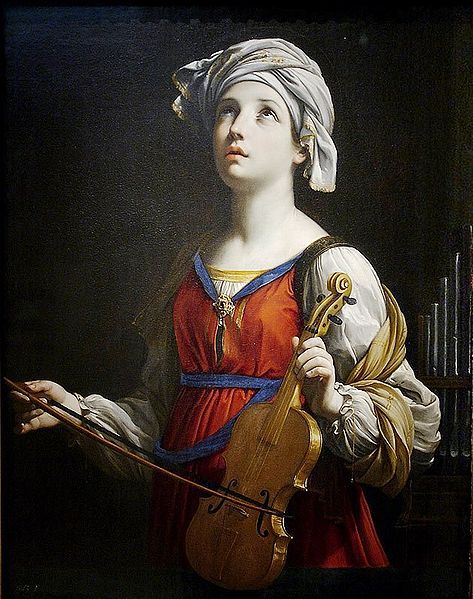
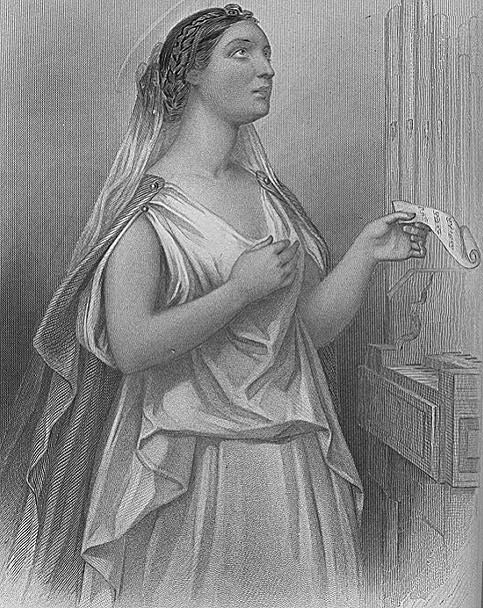
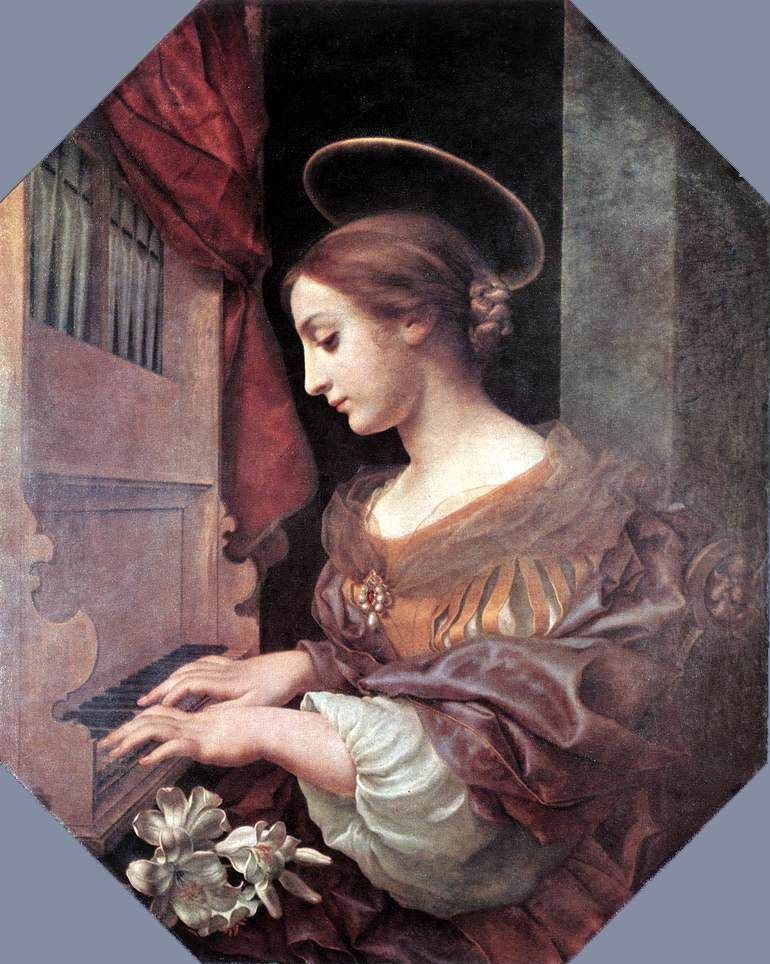
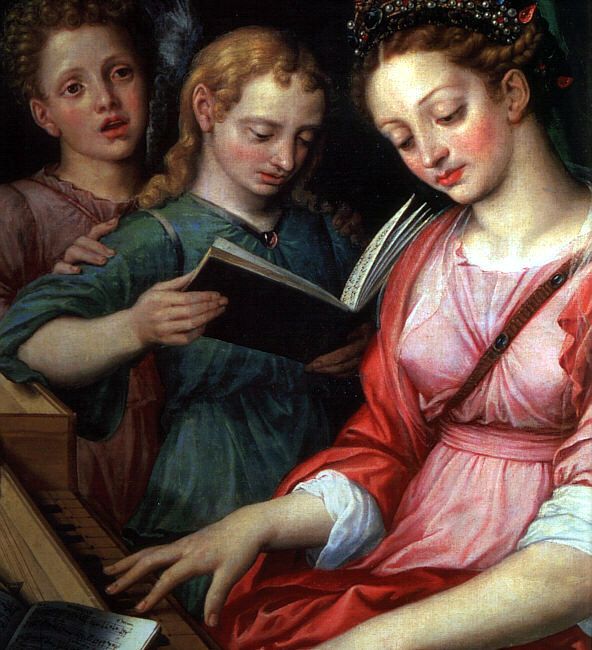
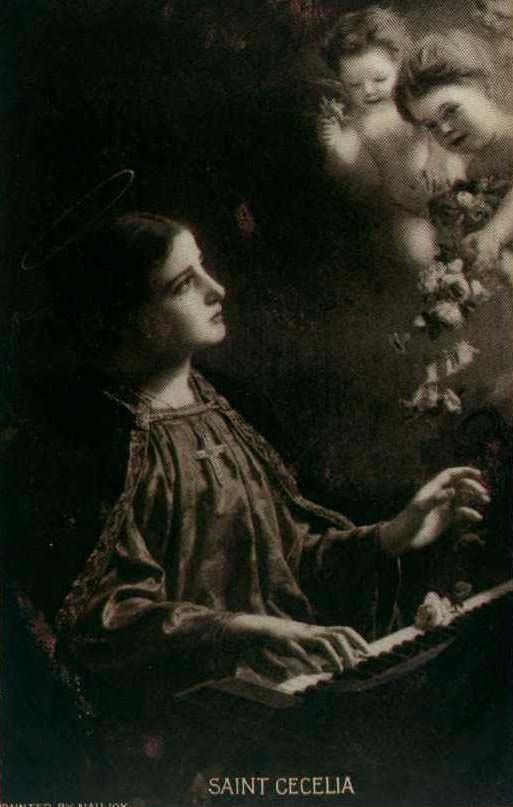
Today, November 22, we celebrate the feast day of Saint Cecilia (died 117), Virgin and Martyr of the Church. Saint Cecilia is one of the most famous of the Roman martyrs, but the facts of her life have been mostly lost to history. Instead, the Holy Legend of Saint Cecilia has been celebrated since the late fourth century. Saint Cecilia further has the distinction of being the patron saint of music—especially the music used during the celebration of Mass—and the patron saint of musicians, composers, instrument makers, and poets. This association grew from her constant song of Christian love in her heart, present throughout her life. From her Acta: “While the profane music of her wedding was heard, Cecilia was singing in her heart a hymn of love for Jesus, her true spouse.”
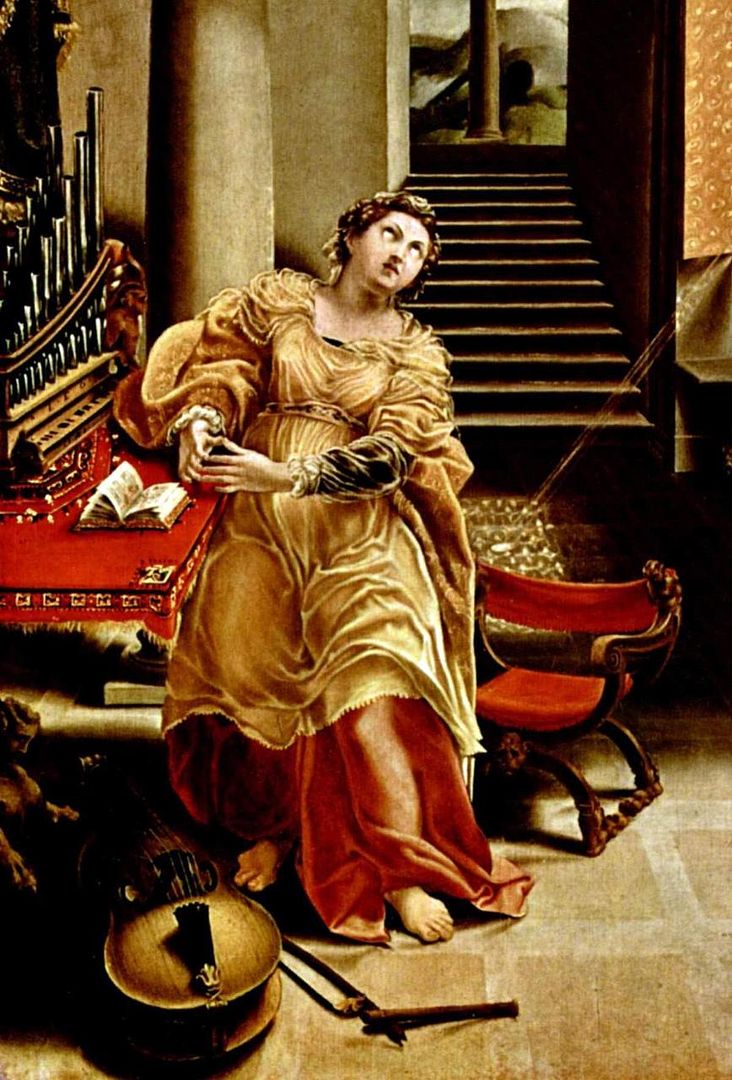
Cecilia was born in the early part of the third century, in Rome. Born to wealthy, pagan parents, she was likely instructed in the Catholic faith by kind relatives or a nurse. As a noble family—known for their bravery and intelligence—her parents were likely to have accepted (although possibly not approved) of her Catholic faith. By all reports, even as a child, Cecilia loved music, and she would spend her days singing the praises of God, accompanying herself on various instruments.
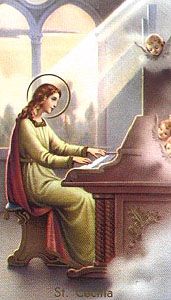
Cecilia embraced the faith from childhood. Drawn to the Lord, she attended Mass daily, desiring nothing more than to embody the virtues of Christ: faith, hope, charity, humility, and purity. As a child, she consecrated herself a bride of Christ, pledging her perpetual virginity to the Lord. As there were no religious orders for women at that time in history (not for at least 200 more years!), Cecilia was limited in her options. She fasted, prayed, and work sackcloth each day. While she spent her days in charitable works, caring for the poor and needy, her parents were searching for a husband for her to marry. They found an upright and honest man, Valerian, who was pagan like themselves.
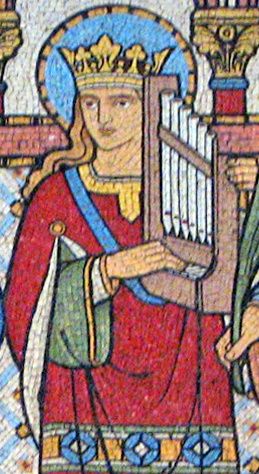
Cecilia was torn. Obediently, she wish to do as her parents bade her, but she had made a vow of virginity for the Lord. She spent her days and nights in prayer, offering herself to Jesus, fasting, and enacting harsh penances. As her wedding day approached she did little but pray… until the Lord sent comfort. The Lord promised to send an angel to Saint Cecilia, to guard her, and to assist her in keeping her vow. Cecilia was married in a lavish ceremony, internally, in her soul, becoming the bride of Christ.

After the ceremony, Cecilia said to her new earthly husband: “Dear friend, I have a secret to confide to you, but will you promise me to keep it?”

He promised her solemnly that nothing would ever make him reveal it, and she continued,

“An Angel of God watches over me, for I belong to God. If he sees that you would approach me under the influence of a sensual love, his anger will be inflamed, and you will succumb to the blows of his vengeance. But if you love me with a perfect love and conserve my virginity inviolable, he will love you as he loves me, and will lavish on you, too, his favors.”

Upon hearing this, Valerian was at first surprised, and then slightly irritated (as one might expect!). "I am very surprised at what you are telling me and I wish to see this angel!"

"You shall see him," Cecilia gently answered, "when you are purified."

"How shall I become so?" asked Valerian.

"Go to Pope Urban," she instructed him. "When you tell the poor that you are Cecilia's friend, they will take you to see the Pope. He will explain to you the mysteries of the Catholic Faith. May God bless you and my angel protect you."

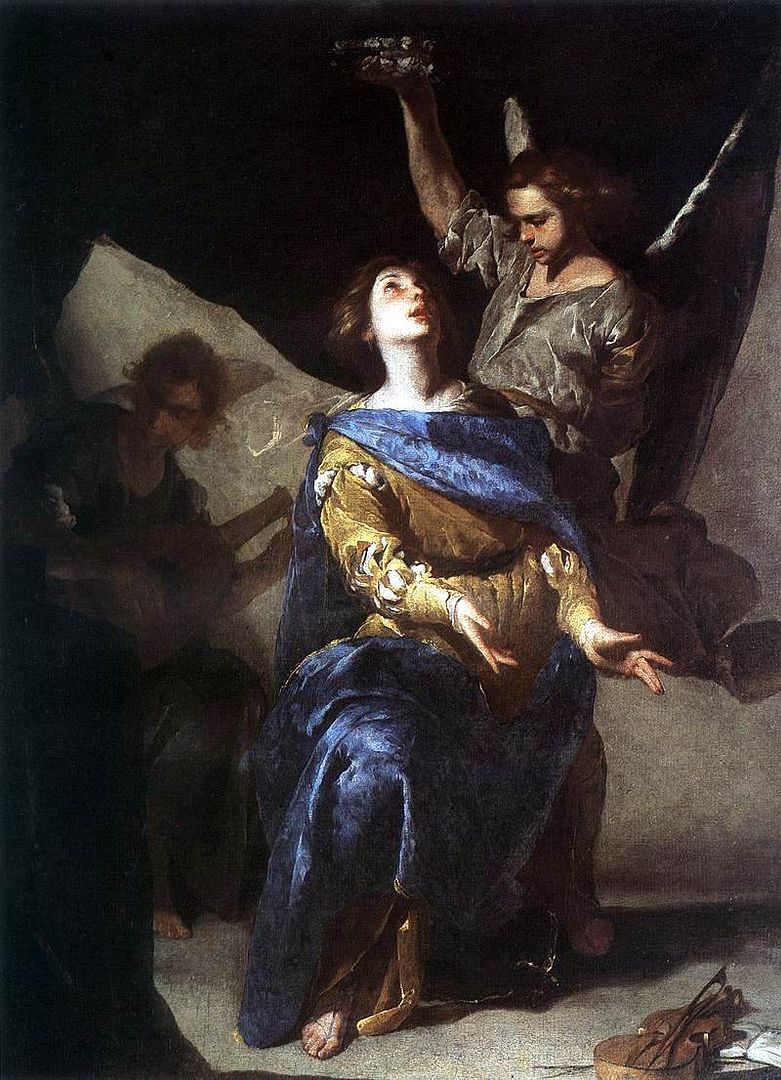
Valerian, for his part, was moved by the grace of the Lord, and traveled to see Pope Urban that very evening. He was converted to Catholicism and baptized into the faith. Wearing his baptismal gown, he returned to his new bride, finding her accompanied by the angel she had promised. The angel, as emissary from the Lord, bestowed upon them both the golden crowns of heaven. Together, they lived in celibacy, and grew in love for the Lord, eventually converting Valerian’s brother, Tiburtius, a man of some importance in Rome—who upon seeing their heavenly crowns was moved to accept Jesus Christ.

Together the brothers made it their mission to find and provide a decent burial to the Christian martyrs being executed throughout Rome. It was not long, however, until word spread of their endeavor. The Governor of Rome, learning of their Christianity through Tiburtius, summoned the brothers before him. When questioned, they refused to recant their faith, stating:

"We are Christians and we believe in Jesus Christ, the One and only true God!"

Upon hearing this, the Governor ordered them martyred. Saint Cecilia, assisted by her angel, recovered and buried the bodies. But soon, she was called before the Governor as well. Courageously, she, too, declared her faith: "I too am a Christian and I believe in Jesus Christ, the One and only true God!"

The Governor was not furious. He sentenced her to death, stating: "Cecilia! You are condemned to die for loving the poor and for adoring Christ crucified!"

But Cecilia was not to be harmed. The soldiers tried to scald and suffocated her in the steam bath in her own home, but rather than suffer, she could be heard singing to the Lord, seemingly accompanied by the choir of angels. After 36 hours, in which she should not have been able to survive, she was released. The Governor then ordered her head cut off, but the guard who attempted sliced her neck three times with a sword, but was unable to sever it. Scared, he ran away, leaving her wounded and in great pain.
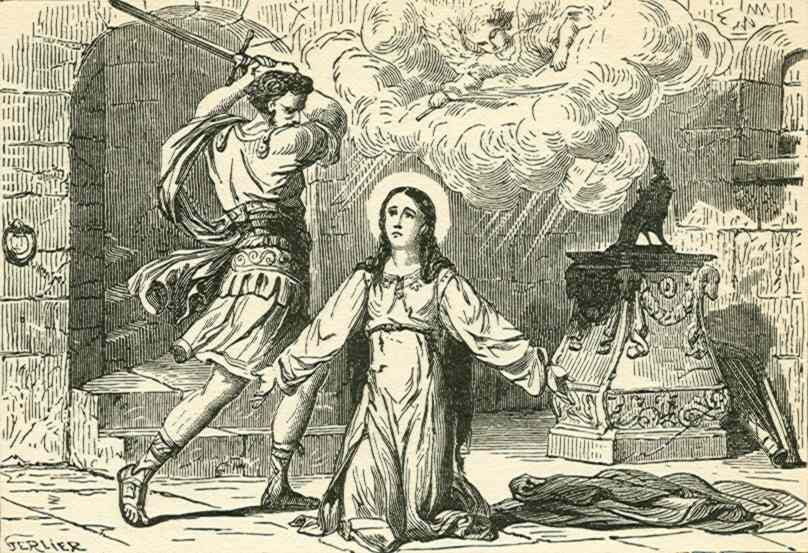
Cecilia survived for three days, bleeding and injured, but cared for by her angel and the Christians in the small community that had developed. During that time, she preached, converting many, gave away all that she had to the poor, and prayed incessantly. Many came to visit her, soaking up her blood with cloths and sponges, reporting miracles at her intercession later. On the last day of her life, Pope Urban traveled to her home, bestowing upon her the Last Rites, and seeing her to Heaven. On her wishes, Pope Urban ordered Cecilia's house converted into a church, with the steam bath—the site of the start of her martyrdom—the chapel. To this day, one can still see the pipes where the hot steam poured in, and the stone floor where Cecilia was struck with the sword.
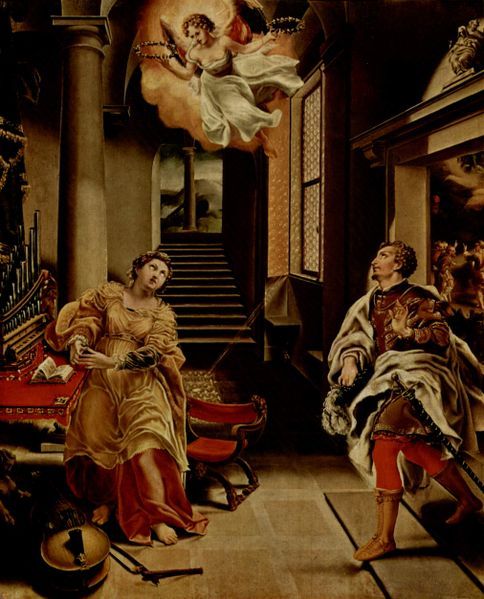
The mysteries of Saint Cecilia’s life did not end in death, but continued. After some years, a grand church was built in Rome to honor her. Pope Pascal I, who undertook to rebuild the church many years later, was troubled that the saints holy body had never been recovered. One Sunday, while praying in Saint Peter’s Basilica, Saint Cecilia appeared to him, consoling him, and declaring that he would find her body. Inspired by her words, a search was begun, and Saint Cecilia’s body was discovered, buried in a cemetery now named after her. Gold cloth wrapped the incorrupt body, and the blood-soaked linens that had bound her neck wound were preserved within the tomb. Nearby, the body of her husband, Saint Valerian, was also discovered. The relics of these saints were moved to Saint Cecilia’s Church in 821.

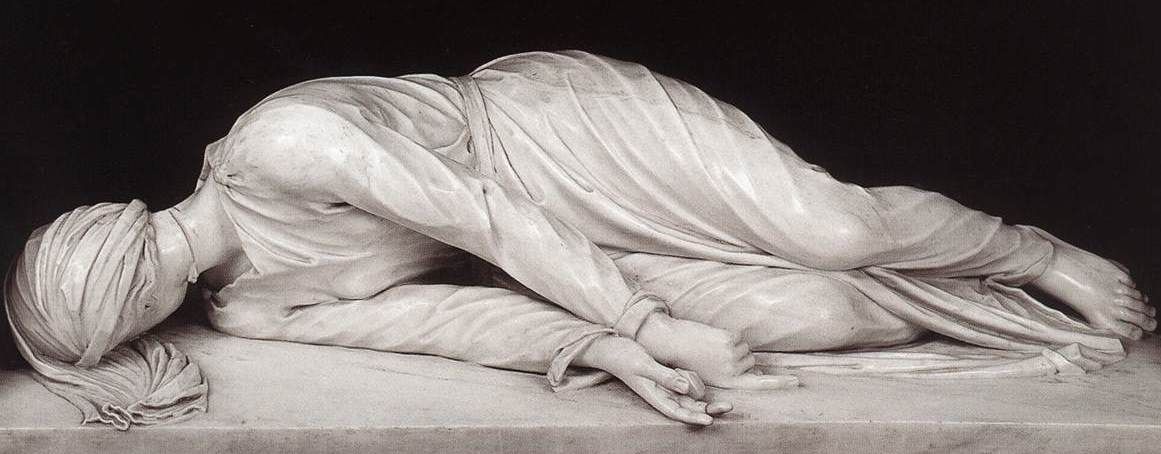
Nearly 800 years later, in 1599, the tomb of Saint Cecilia was opened, and her body was found to be perfectly persevered and incorrupt. At that time, a sculptor was called in to examine and sculpt the body prior to resealing the tomb. A likeness was made with the following carved into the floor at the alter at the base of the statue:

“Behold the body of the most holy virgin Cecilia,
whom I myself saw lying incorrupt in the tomb.
I have in this marble expressed for you the same saint
in the very same posture.”


The life of Saint Cecilia is one of great mystery, as we are left uncertain of the actual events of her marriage and martyrdom. What we do know, from Holy Legend, is that Cecilia was called by the Lord to devote herself to Him—in service to others, in practice of virtues, and in praise and music—all of which she did gladly and with abandon. Despite many obstacles, Saint Cecilia remained pure in the eyes of the Lord, a heavenly instrument of His love on earth!


Lord of mercy,
be close to those who call upon you.
With St. Cecilia to help us
hear and answer our prayers.
Grant this through our Lord Jesus Christ, your Son,
who lives and reigns with you and the Holy Spirit,
one God, for ever and ever. Amen.


Year 2: Day 326 of 365
Prayer Intentions: Longing for the Lord; Emptying of Ourselves to Invite the Lord In!
Requested Intentions: Blessings on overseas employment (M); Healing of mother (L); Successful employment for husband (G); Successful employment, personal fulfillment (C); Health and recovery of ill sister (A);  Resolution of legal issues; Grace and protection (E); Successful and meaningful employment (S); Restoration of a marriage (A); Peace and tolerance in a family, support for those with Parkinson’s Disease (M); For the restoration of a daughter’s marriage, end to debt (S); Employment and continued strength (K); Successful examinations for a son (J); Employment and blessings of a child (S); Employment and financial security (F); Successful work placement, continued health (A); Grace and healing for a family (P); Healing of a father (M); Academic success for son, employment for husband and brother (B); Freedom from anxiety and panic attacks (R); Health and healing in preparation for surgery (C); Healing of a chronic illness (P); Safety of a family during storms (A); Successful home ownership (P); Healing of a marriage (M); Employment for a husband, blessings for a marriage (E); Successful examinations for a daughter, healing of a relationships (V).

July 20: Saint Margaret of Antioch

Posted by Jacob

Today, July 20, we celebrate the feast day of Saint Margaret of Antioch (died 304), Virgin of the Church, and martyr for the faith. As with other early saints, much of what we know of Saint Margaret may be the stuff of pious legend, embroidered with medieval fantasy, somewhat “far-fetched” by today’s scientific standards. Stripping away the dragons, however, we are left with a young woman, committed to Christ, obedient to her calling, who suffered and died for her faith… and those “facts” are enough to inspire us today.


Saint Margaret was born in Antioch (modern day Turkey) near the end of the third century. Margaret’s father was a pagan priest and her mother died when Margaret was very young. Her nurse, a pious Christian woman, raised Margaret, instructing her in the Christian faith against her father’s wishes. When this betrayal was discovered, Margaret’s father disowned her, and she left the home, continuing to live with her nurse. Before the age of 10, Margaret consecrated herself to Jesus, pledging to remain a virgin, a pure bride of Christ.

Margaret spent her days in prayer and contemplation, tending sheep in the fields. One bright day, a local Roman prefect, Olybrius, observed her during her prayer, and was taken by her delicate beauty. He attempted to court her, but she refused his advances. In retaliation, he accused her of being a Christian, which was forbidden at that time under the reign of Emperor Diocletian. Christians were actively persecuted upon discovery, and Margaret, who did not deny the charge, was no exception. She was brought to trial, to which she offered no defense, and was sentenced to execution upon refusing to offer sacrifices to the pagan gods.

While imprisoned, Margaret is said to have been visited by the Devil, in the form of a hideous, scaly dragon. Holy legend tells us that the dragon, offended by her faith and purity, swallowed her whole. However, the crucifix that Margaret carried with her so irritated his throat, that she was coughed up, indigestible due to her faith, unharmed. Following her emergence from the demon, the dragon transformed into a handsome young man, whom Margaret immediately attacked, resisting his charms. Throwing him to the ground, she exclaimed, “Proud demon, lie prostrate beneath a woman’s foot!” foreshadowing the triumph of the Blessed Virgin over Satan. For this reason, due to her delivery from the belly of the beast, it is believed that Margaret is the patron saint of pregnancy, labor, and childbirth. She is considered one of the Fourteen Holy Helpers, assisting in safe delivery of children.

Multiple attempts were made to martyr Margaret, but each time her prayers kept her safe. First, she was set afire, but remained miraculously unharmed. Next, she was boiled in a large cauldron, and again, emerged unscathed. Finally, at approximately age 15, Saint Margaret was beheaded, the name of Christ upon her lips until the final moment of her life.

Following her death, Saint Margaret is believed to have visited with Saint Joan of Arc, one of the heavenly voices that assisted Joan in her holy mission in France. At her trial, Saint Joan said: "Saint Michael, when he came to me, told me that Saint Catherine and Saint Margaret would come to me and that I should act by their advice, that they were bidden to lead me in what I had to do and that I should believe in what they would say to me and that it was by God's order."

Saint Margaret’s body was buried at Antioch, but her remains were taken translated to Italy where they were divided between shrines in Montefiascone and Venice. She remains a popular saint today throughout Europe, with a common belief that those who read and spread her story will receive an eternal crown in heaven. She is also invoked frequently by women during childbirth, whom she promised to pray for following her encounter with Satan.

Fantastical though it may be, Saint Margaret of Antioch was a young woman who resisted the temptations of the world. Remaining pure in body, spirit, and faith, she went to her death with a confidence far beyond her years, remaining true to the Lord. Whether she physically battled with the Devil, we can be certain that she did so spiritually each day, and in the end, triumphed over him, receiving the martyr’s crown, and taking her rightful place in heaven with the saints.


Jesus, Lover of chastity, Mary, Mother most pure, and Joseph, chaste guardian of the Virgin, to you I come at this hour, begging you to plead with God for me. I earnestly wish to be pure in thought, word and deed in imitation of your own holy purity.
Obtain for me, then, a deep sense of modesty which will be reflected in my external conduct. Protect my eyes, the windows of my soul, from anything that might dim the luster of a heart that must mirror only Christlike purity.


And when the "Bread of Angels becomes the Bread of me" in my heart at Holy Communion, seal it forever against the suggestions of sinful pleasures.


Heart of Jesus, Fount of all purity, have mercy on us.


Amen.


Year 2: Day 201 of 365
Prayer Intentions: Purity of heart, soul, and mind.  Unwavering faith; For those wrongly persecuted.
Requested Intentions: Healing, successful relationships for son, financial success (J); Success of a company (L); For a religious society (J); Healing of a husband, strength as a faithful caregiver (D); Healing of a son (T); Financial security, Healing and guidance (M); Healing of a heart and relationship (V); Employment for daughter (J); For a marriage that glorifies the Lord (K); Resolution of family situation, parents’ health (A); Positive results (C); For a son’s employment, faith, and relationships (S); Restored family relationships (A); Healthy conception and delivery of children (J); For a girlfriend’s recovery from a debilitating mental illness (J); For a daughter’s successful examination results (A); Occupational success, health and safety of family (S); Reduction in anxiety for husband, financial freedom (S); Healing for a sister-in-law (J); For a family experiencing a difficult child custody case (M); Reunification of a family struggling with separation (M): For a son struggling with mental illness (M); Successful examination results (B); To be freed from the chains of sin (J); Admission to a good university (M); For successful surgery (T); For a mother’s mental health and for kindness and forgiveness, for housing problems, for dental health (T).

Saint Francis of Paola: "Turn to the Lord with a Pure Heart"

Posted by Jacob

Today, April 2, we celebrate the feast of Saint Francis of Paola (1416-1507), hermit, confessor, and founder of the Order of Minims, a branch of the Franciscans. Saint Francis was a man who deeply loved contemplative solitude and wished only to be the "least in the household of God." Yet, when the Church called him to active service in the world, he became a miracle-worker and influenced the course of nations.


Below, an excerpt from a letter written by Saint Francis of Paola, encouraging us to turn to the Lord with a pure heart.


"May our Lord Jesus Christ, who repays most generously, reward your labour. You must flee from evil, and drive away dangers. We and all our brothers, although unworthy, pray constantly to God the Father and to his Son Jesus Christ, as well as to Mary the Virgin Mother, to be with you as you seek the salvation of your souls and your bodies.


Brothers, I most strongly urge you to work for the salvation of your souls with prudence and diligence. Death is certain, and life is short and vanishes like smoke. Therefore you must fix your minds on the passion of our Lord Jesus Christ who so burned with love for us that he came down from heaven to redeem us. For our sakes he suffered all the agonies of body and mind, and did not shrink from any torment. He gave us a perfect example of patience and love. For our part, we too must be patient when things go against us.


Put aside hatred and hostility. See to it that you refrain from harsh words. But if you do speak them, do not be ashamed to apply the remedy from the same lips that inflicted the wounds. In this way you will show each other mercy and not keep alive the memories of past wrongs. Remembering grievances works great damage. It is accompanied by anger, fosters sin, and brings a hatred for justice. It is a rusty arrow spreading poison in the soul. It destroys virtue and is a cancer in the mind. It thwarts prayer and mangles the petitions we make to God. It drives out love and is a nail driven into the soul, an evil that never sleeps, a sin that never fades away, a kind of daily death.


Be lovers of peace, the most precious treasure that anyone can desire. You are already aware that our sins drive God to anger,"so you must repent of them, that God in his mercy may spare you. What men conceal is open to God. Turn to him with a sincere heart. Live in such a way that you bring upon yourselves the blessing of God, and that the peace of God our Father may be with you always."