Why pray the Rosary every day for a year?


Each time the Blessed Virgin has appeared-- whether it be to Saint Bernadette Soubirous at Lourdes; to Lucia, Jacinta, and Francisco at Fatima; or to Mariette Beco at Banneux-- she has asserted the importance, saving grace, and power of praying the Holy Rosary on a daily basis. Based upon her words, the Rosary is penance and conversion for sinners, a pathway to peace, an end to war, and a powerful act of faith in Jesus Christ. Pope Paul VI presented the Rosary as a powerful means to reach Christ "not merely with Mary but indeed, insofar as this is possible to us, in the same way as Mary, who is certainly the one who thought about Him more than anyone else has ever done."

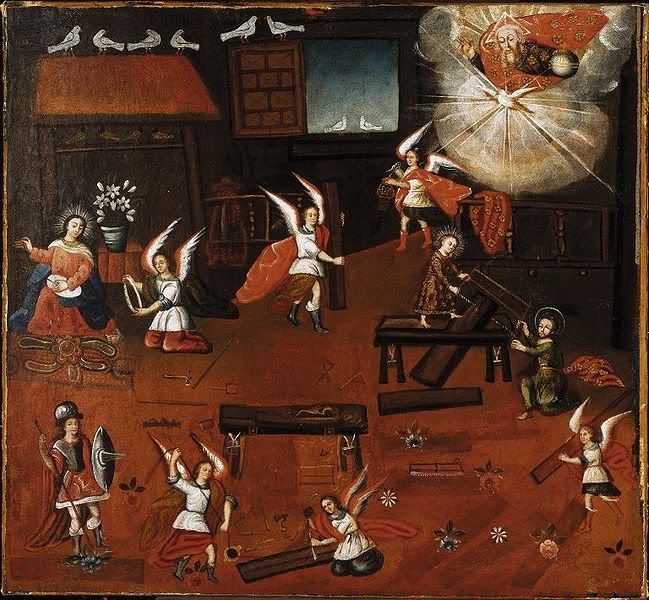
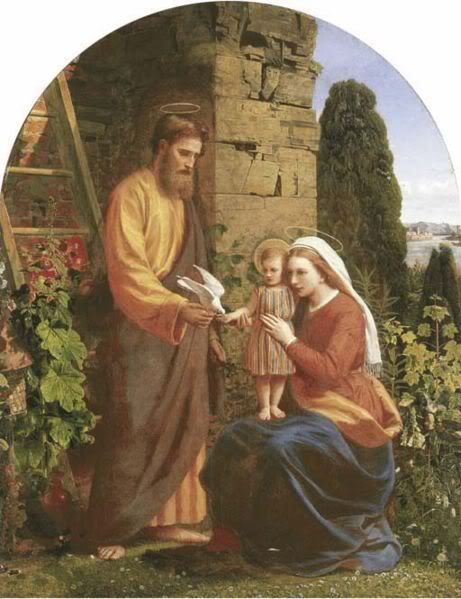
To show us how this is done, perhaps no one has been more eloquent than the great Cardinal Newman, who wrote: "The great power of the Rosary consists in the fact that it translates the Creed into Prayer. Of course, the Creed is already in a certain sense a prayer and a great act of homage towards God, but the Rosary brings us to meditate again on the great truth of His life and death, and brings this truth close to our hearts. Even Christians, although they know God, usually fear rather than love Him. The strength of the Rosary lies in the particular manner in which it considers these mysteries, since all our thinking about Christ is intertwined with the thought of His Mother, in the relations between Mother and Son; the Holy Family is presented to us, the home in which God lived His infinite love."


As Mary said at Fatima, "Jesus wants to use you to make Me known and loved. He wishes to establish the devotion to My Immaculate Heart throughout the world. I promise salvation to whoever embraces it; these souls will be dear to God, like flowers put by Me to adorn his throne."


Novena to Saint Cajetan, Prayers for the Unemployed

Posted by Jacob

Today, August 7, we celebrate the feast of Saint Cajetan of Thiene (also known as Saint Gaetano, 1480-1547), zealous reformer of the clergy, founder of the Theatine Order, and patron saint of the unemployed. As many of the prayer requests that I receive involve prayers for those who are unemployed or seeking work, I will pray this novena to Saint Cajetan beginning today, for the next nine days—for all those who are seeking employment, both requested on this blog and maintained in the quiet of their hearts.


For those of you who wish to join me in this novena to Saint Cajetan, each day of the novena begins with the prayer for that day, followed by saying the Lord’s Prayer, Hail Mary, and Doxology (Glory Be) three times each. The intercession, “Saint Cajetan, pray for us” is prayed three times, followed by the daily prayer (below).


Saint Cajetan, pray for us. Intercede for us with Jesus Our Lord!


Daily Prayer (said each day)

O glorious St. Cajetan, you studied to be a lawyer, but when you felt that the Lord was calling you to his service, you abandoned everything and became a priest. You excelled in virtues, shunning all material rewards for your labor, helping the many unemployed people of your time. You provided loans without interest and you attracted a lot of benefactors who donated to your resources so that you could go on with your activities. Look on us with mercy. We wish to find employment that could help us and our families live with dignity. Listen to our petitions, dear saint; you who could easily give up the food on your table for the needy, bring our petitions to Jesus (here make your request). Amen.


First Day

You were a model of virtue among the priests of your time, O St. Cajetan. You sought not to receive payments from your ministry, and you taught people how to pray the rosary and develop devotions to saints. You were truly a spiritual shepherd, and your concern was always focused on the salvation of souls. But despite this, you were also aware that with hungry stomachs, the faithful would have difficulty in understanding God’s Word. You embarked to help them, not just by giving them bread but helping them gain their living by work. Look on us with pity, O glorious saint. We have many unemployed people in our midst and their families go hungry. We ask you to guide the fathers and mothers who are looking for work. Amen.
Second Day

Despite your busy schedule, dear saint, you spent eight hours a day in prayer. Your happiness consists in being united with Jesus, to savor his presence in the Eucharist. Guide us to be like you by giving priority to prayer in our life. Enable us to savor Jesus’ presence and help us become contemplatives like you. Inspire us to understand that prayer is not just asking Jesus for our needs, but being with him, delighting in his presence. We ask you, dear saint, to lead us in this direction that we may learn to delight in Jesus’ presence. Amen.


Third Day

Since your death, dear St. Cajetan, the unemployed people of the world had sought your intercession. Work is the key to a happy life. Look with pity on the millions of people in our country who wake up each morning without certainty of finding food because they don’t have work. These people become victims of desperation and some even resort to crimes to survive. Help our government leaders formulate policies that will bring about employment. You who established a bank for the needy inspire our leaders to extend loans for the poor so that they may provide for the needs of their families. Amen.


Fourth day

O glorious St. Cajetan, like the society where you lived, we are also beset by the same economic set up where the poor are becoming poorer and the rich, richer. You fasted so that the money you saved could be used to buy food for the poor, you did not accept any payment for your ministries because you wanted people to help the needy. You lived very frugally because you wanted to teach the rich about the need to share. Look with pity on our society where resources are wasted in buying useless goods, while the poor and the needy among us have not received the basic necessities. Inspire us to share that nobody among us would go hungry, and that everybody may live with dignity. Amen.


Fifth day

O glorious St. Cajetan, you spent long hours helping the sick and worked yourself to exhaustion in helping victims of plagues which were frequent in your time. You cared for the sick not just to heal them, but to guide them to a happy death. You wanted their souls, not their bodies. Help us to understand that we have to prepare ourselves to a happy death. May we likewise see that the most terrible sickness is our sinfulness, and we always have to examine ourselves for the sins we commit daily. Inspire us to have repentant hearts that we may always be prepared to meet the Lord. Amen.


Sixth Day

O humble St. Cajetan, you spoke with rulers and kings, but you never gave them much importance. You know that prestige, honor, and positions in society could only be good if they are use to help the needy and the poor. For this reason, you also confronted tyrants and stood against armies that looted, killed, and raped. Your humility did not prevent you from becoming a prophet. You only feared Jesus. Help us to remain humble and self-effacing, knowing that before God, we remain nothing. We can only be someone if we stand close to Jesus. Inspire us to follow your footsteps so that we, too, may fight for justice and help stop corruption in our government. Amen.

Seventh Day

O glorious St. Cajetan, your unceasing fasting and penance help people understand that God must be loved above all things and above all persons. You sacrificed anything or anyone that could block you from loving God with your whole soul, mind, heart and body. By eating little, you showed to others that man does not live on bread alone. You renewed the faith of many people, touched their hearts, and helped much in the reformation of the Church. Inspire us to fast and do penance for our sins. Instill on us the spirit of sacrifice that we, too, may love God intensely as you did. Amen.

Eighth Day

O glorious St. Cajetan, it pained you to see the Catholic Church divided into hostile groups. You always prayed for unity in the Church, asking laypersons, priests, and bishops to support the Pope through preaching, prayer, and sacrifices. You see the Church as the bride of Christ, the sacrament by which men and women can become holy. You worked hard for the return of the Protestants to the Catholic Church, and you preached against Protestant reformers who were attacking the heart of Catholic teachings. Teach us then to work for unity in our Church and at the same time, to defend her from sects and religious movements that attack her. Inspire us to follow your path. Amen.

Ninth day

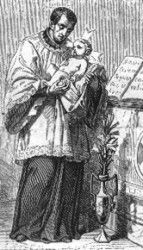
O glorious St. Cajetan, you received many special blessings from Jesus, visions and mystical experiences because of your union with him. While contemplating the mystery of incarnation, Mary appeared to you and put on your lap the baby Jesus. You held on to the baby and made your heart his dwelling place. Jesus truly loved you and his Mother trusted you. Listen then to our petitions on this last day of our novena and bring them to Jesus. Prove to us that now in heaven you are closer to Jesus and he listens to you. Amen.

Feast of Saint Cajetan, Patron Saint of the Unemployed

Posted by Jacob

Today, August 7, we celebrate the feast of Saint Cajetan of Thiene (also known as Saint Gaetano, 1480-1547), zealous reformer of the clergy, founder of the Theatine Order, and patron saint of the unemployed. Throughout his life, Saint Cajetan demonstrated concern and care for those less fortunate than himself, speaking out against exploitation of workers, poor wages, and unhealthy working conditions. Such zeal did he show for the salvation of his fellowmen that he was surnamed the "huntsman for souls." Deeply devoted to Our Blessed Mother, Saint Cajetan was graced by numerous visions of Mary, including at the hour of his death.
Born in Vincenza Italy, of pious and noble parents, Cajetan was dedicated to the Blessed Virgin at birth. From childhood, he was recognized as a saint, given his obedience, temperance, and charity. A distinguished student, he served as a model for his peers in academic achievement and morality, achieving a law degree in Padua. Even as a university student, however, all he wished was to enter the priesthood, although as his diary entries suggest, he did not consider himself worthy:
“I know too well, o Lord, that I am not worthy to be admitted among the consortium of these earthly angels [his way of viewing the priesthood], I wish even so to merit it. You can see my burning desire to bind myself to you forever with priestly promises. Why therefore do you not console me, my dearest goodness? Anyway, my desire is not to want my way but your way. Accept at least these my heart’s desires which in front of you become so real even when they cannot become a reality for me.”

Following his graduation as an attorney, he left that city to seek out humble obscurity in Rome. However, once arriving, he was “invited” by Pope Julius II to accept the position of apostolic protonotary, a high office. Reluctantly, Cajetan accepted the offer, and subsequently joined the Confraternity of Divine Love. Working with his fellow members, Cajetan introduced the concept of frequent Communion, and elsewhere through their influence.

Pope Julius II saw to Cajetan’s ordination, after which he offered many fervent Masses. He was reported to spend at least eight hours each day in solitary prayer. On Christmas Eve at the Church of Saint Mary Major he was greeted with his first vision of Our Blessed mother. When he entered the church he saw the Mary, radiant with light, who came to him and placed Her divine Infant in his arms. These are the words he used to describe his vision: “....I boldly found myself, at the time of the Holy Nativity, in this crib; to give me courage I had with me Saint Jerome my father, who had the crib so close to his heart and whose remains were placed at the entrance of the same crib; and with a little bit of encouragement from the old man (St. Joseph), from the hands of the Virgin Mary, I took into my arms that little Baby: the Eternal Word Who became flesh. My heart was really hard, you must believe me, because if it were not as hard as a diamond, it was sure to liquefy at that moment... patience...” Later in his life, Saint Cajetan would introduce the Forty Hours’ Adoration of the Blessed Sacrament, as an antidote to the heresy of Calvin.

On the death of Pope Julius II, as well as the death of his mother, Cajetan returned to Vincenza. There he sought out the poorest and sick, transporting them to the Hospital of the Incurables, and joining the Confraternity of Divine Love with that of the Confraternity of Saint Jerome whose members were drawn from the lowest classes. His noble family was appalled by his association with the lower class, but Cajetan paid them no heed, spending his fortune in building hospitals and nursing the plague-stricken. He told his brothers, "In this oratory we try to serve God by worship; in our hospital we may say that we actually find him."

Out of obedience to his spiritual director, Saint Cajetan traveled to Venice, enacting immediate reform in the lives of the clergy there. He realized that to reform the Church, a obedient and zealous clergy was the manner in which to inspire the congregation. Along with Paul Caraffa, then Bishop of Theata in the kingdom of Naples (who later would become Pope Paul IV), and two other fervent Christians, he instituted the first community of Regular Clarks, known as Theatines. They devoted themselves to preaching, the administration of the Sacraments, and the careful performance of the Church's rites and ceremonies. Members of the Order lived apostolic lives, looking with disdain upon all earthly belongings, receiving no income, and accepting no salaries from the faithful. Only from that which was freely offered were they allowed to retain the means of livelihood. Thus they were to rely unreservedly upon Divine Providence.

The patron saint of the unemployed, Saint Cajetan further demonstrated considerable care for the livelihood of his parishioners. Not only did he work for wage reform, he founded a bank to help the poor and offer an alternative to usurers (loan sharks). This bank later became the Bank of Naples. Today also known as the patron saint of gamblers, he is remembered for a gentle game he played with parishioners in which he would bet prayers, rosaries or devotional candles on whether he would perform some service for them. Of course, he always performed the service, and the parishioners always had to “pay” by saying the prayers they had bet against him.

Having returned to Rome, Cajetan was captured and scourged by the invading Germans, who were hoping to discover where he had hidden his “riches.” Of course, Saint Cajetan had long since spent all that he had in service to the poor and struggling. Once let out of prison, he never recovered from the vicious torture. Having returned home, his doctors tried to get him to rest on a softer bed then the boards he slept on, but Cajetan answered: "My savior died on a cross. Let me die on wood at least." It was then, when St. Cajetan was on his death-bed, that he again beheld the Blessed Virgin, surrounded by ministering seraphim. In profound veneration, he said, "Lady, bless me!”

Mary replied, "Cajetan, receive the blessing of my Son, and know that I am here as a reward for the sincerity of your love, and to lead you to paradise." She then exhorted him to patience in fighting an evil spirit who troubled him, and gave orders to the choirs of angels to escort his soul in triumph to heaven. Then, turning her countenance full of majesty and sweetness upon him, she said, "Cajetan, my Son calls thee. Let us go in peace." Saint Cajetan died peacefully, surrounded by the choirs of heaven. His relics are interred in the church of San Paolo Maggiore in Naples, outside of which is located the Piazza San Gaetano, with a statue of the saint.

Saint Cajetan sought first and foremost the will of the Lord in his life. Dedicated not only to Church reform, but to also reform of the evils of the world he encountered on a daily basis, this humble saint gave all that he had to service of those around him. He worked with the poorest of the poor, the sickest of the sick, the most undesirable souls he could find—nursing them physically back to help, assisting with their finances, and saving and converting their souls. Saint Cajetan is a model of obedience, service, and Christian charity—three virtues we can all ascribe to. We pray for the intercession of saint Cajetan, that we, too, may turn our gaze from our own lives to those around us in greater need.

Selected Quotations of Saint Cajetan:
“I am a sinner and do not think much of myself; I have recourse to the greatest servants of the Lord, that they may pray for you to the blessed Christ and his Mother. But do not forget that all the saints cannot endear you to Christ as much as you can yourself. It is entirely up to you. If you want Christ to love you and help you, you must love Him and always make an effort to please Him. Do not waver in your purpose, because even if all the saints and every single creature should abandon you, He will always be near you, whatever your needs.”
“There is no one, O Most Holy Mary, who can know God except through thee; no one who can be saved or redeemed but through thee, O Mother of God; no one who can be delivered from dangers but through thee, O Virgin Mother; no one who obtains mercy but through thee, O Filled-With-All-Grace!”


Prayer of Saint Cajetan


Look down, O Lord, from Your sanctuary, from Your dwelling in heaven on high, and behold this sacred Victim which our great High Priest, Your Holy Son our Lord Jesus Christ, offers up to You for the sins of His brethren and be appeased despite the multitude of our sins. Behold, the voice of the Blood of Jesus, our Brother, cries to You from the cross. Listen, O Lord. Be appeased, O Lord. Hearken and do not delay for Your own sake, O my God; for Your Name is invoked upon this city and upon Your people and deal with us according to Your mercy. Amen.


Lord,
You helped Saint Cajetan
to imitate the apostolic way of life.
By his example and prayers
may we trust in You always
and be faithful in seeking Your kingdom.
Grant this through our Lord Jesus Christ, Your Son,
who lives and reigns with You and the Holy Spirit,
one God, for ever and ever. Amen.

May 7, 2013: Saint Rosa Venerini

Posted by Jacob


On May 7, we celebrate a recently canonized saint, Saint Rosa Venerini (1656-1728), who Pope Benedict XVI referred to as an “example of a faithful disciple of Christ, ready to give up all in order to do the will of God.” Saint Rosa is a model of obedience and service, dedicating her life to the education, care, and Christian formation of young women in service of Our Lord.


Rosa was born in Viterbo, Italy, the daughter of a talented and prestigious doctor. At age seven, she declared her intentions to consecrate her life to God. Her desire was nourished by her family faith life, and she matured into an educated and sensible young woman with a heart of service and deeply felt spirituality. At age 20, with her father’s encouragement, Rosa entered the Dominican Monastery of Saint Catherine but remained only a few months. Upon the sudden death of her father, Rosa returned home to care for her mother. Tragedy did not stray from the family, with first her brother dying, followed by her mother succumbing to grief and eventual death.

While Rosa nursed her mother, she established a small community of local women whom she invited over each day to recite the Holy Rosary to Our Blessed Mother. In the conversations that took place before and after prayer, Rosa realized that the vast majority of women at that time had little education or knowledge, especially in regards to the formative teachings of the Church. Rosa began instructing these women, under the spiritual direction of a Jesuit priest, Father Ignatius Martinelli.

Upon her mother’s death, Rosa felt called to remain “in the world,” teaching and forming young Christian women, rather than returning to a contemplative monastic life. Her spiritual director encouraged her vocation, understanding it to be the will of the Lord, and with permission from the Bishop of Viterbo, Saint Rosa opened her first school for girls. With her typical grace and sensibility, there was little fanfare—only a small humble sign which read “Public School for Girls in Italy.” Saint Rosa structured her school according to an innovative plan that had matured in prayer and her search for the will of God. Her primary objective was to provide the “girls of the common people” a complete Christian formation and prepare them for life in society.

Over the course of the next decade, Saint Rosa opened a dozen more schools across the area, meeting great resistance each time. Not only did the public regard her work with suspicion and disdain, oftentimes vocally opposed to the brashness of a woman opening a school, the local clergy in each town also resisted her mission, stating their beliefs that only priests could effectively teach the Catechism. Over time, Rosa’s strength, steadfastness, charity, and grace made her mission impossible to resist. In 1716, Rosa received a visit from Pope Clement XI, accompanied by eight Cardinals, who wanted to attend the lessons provided by her teachers. Amazed and pleased, at the end of the morning he addressed these words to the Foundress: “Signora Rosa, you are doing that which we cannot do. We thank you very much because with these schools you will sanctify Rome.”
Following the papal visit, Rosa’s schools were in high demand, requested across the country, and the communities she taught in became her biggest supporters and advocates. From her devotion to the Blessed Mother, Rosa understood herself, as a woman, to be the carrier of a plan of love, like Mary. She never strayed from her obedient love of the Lord, and her focus on fulfilling His mission for her on earth. “Educate to save” became the motto that urged the Venerini Teachers (Maestre Pie Venerini) to continue the Work of the Lord intended by their Foundress and radiate the charism of Rosa to the world: to free from ignorance and evil so that the project of God which every person carries within can be visible.

In addition to her difficult labors in creating schools and converting communities, Rosa ministered to the sick and discouraged, oftentimes healing through prayer. She spent countless hours in mental prayer and communion with the Lord, which she referred to as “essential nourishment for the soul.” Saint Rosa stated, “I feel so nailed to the Will of God that nothing else matters, neither death nor life. I want what He wants; I want to serve Him as much as pleases Him and no more.” She united with love the sufferings, hard work and joys of her own life to the sufferings of Jesus Christ, concerned that His Precious Blood would not be shed in vain.

Saint Rosa died a saintly death in the community of St. Mark’s in Rome on the evening of May 7, 1728. She had opened more than forty schools over her lifetime. Her remains were entombed in the nearby Church of the Gesù, so loved by her. In 1952, on the occasion of her Beatification, they were transferred to the chapel of the Generalate in Rome. In 2006, she was formally canonized by Pope Benedict XVI. During his homily, he stated:

“Saint Rose Venerini is another example of a faithful disciple of Christ, ready to give up all in order to do the will of God. She loved to say: "I find myself so bound to the divine will that neither death nor life is important: I want to live as he wishes and I want to serve him as he likes, and nothing more."


From here, from this surrender to God, sprang the long-admired work that she courageously developed in favor of the spiritual elevation and authentic emancipation of the young women of her time.


Saint Rose did not content herself with providing the girls an adequate education, but she was concerned with assuring their complete formation, with sound references to the Church's doctrinal teaching.


Her own apostolic style continues to characterize the life of the Congregation of the Religious Teachers Venerini which she founded. And how timely and important for today's society is this service, which puts them in the field of education and especially of the formation of women.”


Today, the Maestre Pie Venerini continue to serve and transmit the apostolic concern and charism of their founder, Saint Rosa. The community can be found in Italy, as well as the United States, Switzerland, India, Brazil, Cameroon, Romania, Albania, Chile, Venezuela and Nigeria. In each location, preference is always given to the poor, with both their educational and spiritual needs attended to.

The life of Saint Rosa demonstrates to each of us the call that the Lord gives and our need to be willing to listen and obey. Rosa’s life changed dramatically, and she accomplished great works for the glory of the Lord, because she was willing to listen to Him, to persevere through hardship and opposition, and remain steadfast to her mission and His will. Saint Rosa’s life touched countless souls, and her community continues to do so today. What could each of us accomplish if we courageously submitted to the plan of the Almighty? What radical change in the world are we preventing by failing to do so?


May 1, 2013: Saint Joseph the Worker

Posted by Jacob


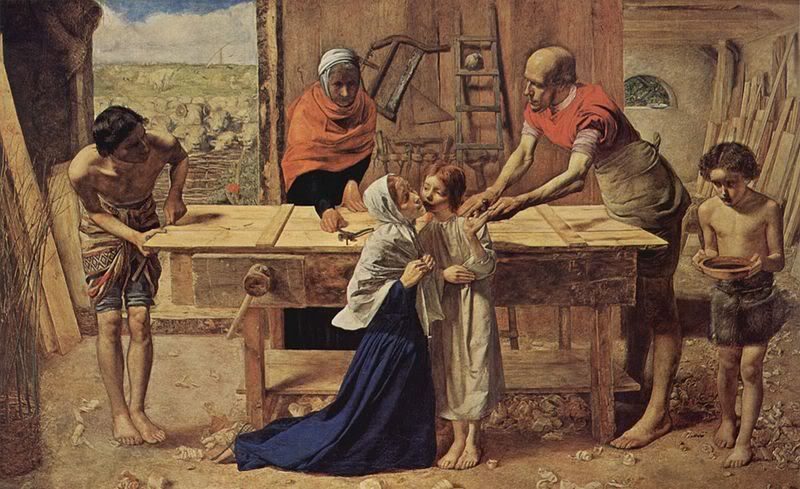
Today, May 1, is the beginning of the Month of Our Blessed Mother, Mary. It is also the feast day of Saint Joseph the Worker, Our Mother’s husband, and foster-father to Our Lord and Savior, Jesus. This second feast day of Saint Joseph was instituted in 1955 by Pope Pius XII. Celebrated on May 1—a day in which labor and those who labor are celebrated in many countries across the world—the feast of Saint Joseph the Worker reminds us of why in the Gospels of our Lord, Jesus was referred to as “the son of the carpenter.” We are reminded, much as we were on the feast of Saint Zita, that honest work, no matter how seemingly trivial, unimportant, unglamorous, or menial, can be sanctified. That is, hard work is the Lord’s work. Hard work is holy. Through work we can sanctify ourselves and others, making each of us participants in the work of redemption!


Saint Joseph was a model of tireless work, providing for his family and our Lord. Pius XII emphasized this, proclaiming, “The spirit flows to you and to all men from the heart of the God-man, Savior of the world. But certainly, no worker was ever more completely and profoundly penetrated by it than the foster father of Jesus, who lived with Him in closest intimacy and community of family life and work. Thus, if you wish to be close to Christ, we again today repeat, ‘Go to Joseph.’”

Many saints and popes have spoken at great length of the sanctity of Saint Joseph and his work. Pope John Paul II said, “Saint Joseph was a just man, a tireless worker, the upright guardian of those entrusted to his care. May he always guard, protect and enlighten families.”

Blessed Josemaria Escriva declared, “St. Joseph was an ordinary sort of man on whom God relied to do great things. He did exactly what the Lord wanted him to do, in each and every event that went to make up his life.”

Lastly, just a few days ago in his weekly address, Pope Benedict XVI spoke of the feast day of Saint Joseph the Worker, proclaiming, "May this day be an opportunity for deeper reflection on the meaning of work and its proper place in family life. I entrust those of you present here, and all workers, to the protection of St. Joseph."

The feast of Saint Joseph is celebrated on March 19. Visit here for more on the life of the holy foster-father of Jesus.

God, our Father,
Creator and ruler of the universe,
in every age You call man
to develop and use his gifts for the good of others.
With Saint Joseph as our example and guide,
help us to do the work you have asked
and come to the rewards you have promised.
We ask this through our Lord Jesus Christ, Your Son,
who lives and reigns with You and the Holy Spirit,
one God, for ever and ever. Amen.


Prayer to Saint Joseph the Worker (Written by Pope Saint Pius IX)

Glorious St. Joseph, model of all who are devoted to labor, obtain for me the grace to work in the spirit of penance in expiation of my many sins; to work conscientiously by placing love of duty above my inclinations; to gratefully and joyously deem it an honor to employ and to develop by labor the gifts I have received from God, to work methodically, peacefully, and in moderation and patience, without ever shrinking from it through weariness or difficulty to work; above all, with purity of intention and unselfishness, having unceasingly before my eyes death and the account I have to render of time lost, talents unused, good not done, and vain complacency in success, so baneful to the work of God. All for Jesus, all for Mary, all to imitate thee, O patriarch St. Joseph! This shall be my motto for life and eternity. Amen.

April 27, 2013: Saint Zita

Posted by Jacob


Today, April 27, is the feast of Saint Zita (1212-1272), virgin of the Church, patron saint of housework, servants, and lost keys. The life of Saint Zita is a simple one, filled with a profound love of the Lord, compassion and service to others, and daily toil. Throughout her lift, Zita suffered hardship, hard work, jealousy and mockery, yet never strayed from her path of holy patience, joyful suffering, obedience, and industry. For Saint Zita, and indeed for us, holiness was found not only in helping others, but also in hard work (reminding us of Proverbs 6:6, “Look to the ant, you sluggard! Consider it’s ways and be wise!")


Saint Zita was born to a poor working family in a village in Tuscany, Monsagrati. She was raised by her pious and hard-working parents, and taught to realize that there were more important things than gold or money—Christian virtues of love, kindness, and compassion towards others. Despite hard work, the family often went hungry, too poor to buy enough food, and suffering terribly during the cold of winter.

From a young age, Zita was recognized for her obedience, goodness, and charity. She ran with the love of a child to church each day, kneeling and praying of her own accord until her parents bade her come home. She frequently spoke of how she envisioned the Baby Jesus being born into similarly poor circumstances, but giving all He had, wandering the world, helping the poor.

At age 12, Zita was sent to live with a wealthy family in nearby Lucca, hired as a domestic servant. Her mother instructed her to serve the family well, for in serving her master, she was serving the Lord. Zita cheerfully undertook her work, striving to do her best at every task. Her zeal for her work, cheerful attitude, and industriousness immediately made her the envy of the other household servants. They treated her poorly, beating her, mocking her, and shirking their own responsibilities in the knowledge that she would do the work for them. Zita worked tirelessly, never complaining to her masters or the others.

Zita worked for the same family for the next 48 years, until her death. During that time, she rose long before the rest of the household each morning, walking a distance to the local church and attending morning Mass. She would then return to the household, bake bread for the family, and set about her daily chores until she went to bed late in the evening. Despite her busy schedule, Zita found time to serve the poor, never wasting leftover household food. While her master was initially irritated by her generosity to those in need, over time, her patience and holy disposition won him over. Under her generosity and careful oversight, the household supplies multiplied!

Throughout her life, Zita worked many miracles, and the heavenly host themselves intervened on her behalf. One morning at church, Zita was so engrossed in her prayers, she forgot to return home to bake the household bread. When she realized the time, she ran back to the house, out of breath, only to find freshly baked, perfect loaves, scented with the perfume of heaven. Her fellow servants reported that angels of heaven had baked the bread, and from that day, treated Zita with respect and dignity. The household had never tasted such incredibly delicious—truly heavenly—bread!
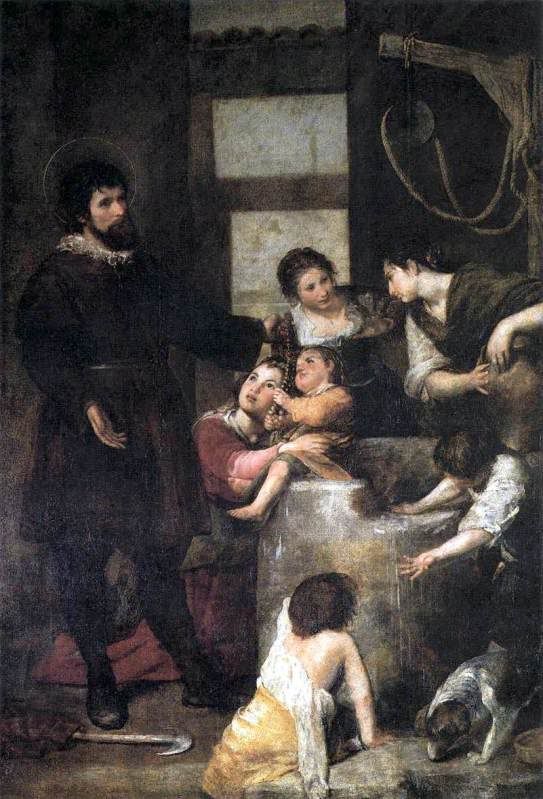
On another occasion, during the heat of summer, a poor traveler came to the door of the kitchen asking only for a drink of water. Zita knew that due to the heat, the water from the family well was unsafe to drink without treating it first. Yet, the traveler insisted that he only take water from the well, so as not to inconvenience her. Aloud, she spoke, “I wish this water were wine,” which the traveler echoed. Upon drawing the water from the well and drinking it, he found, indeed, that the Lord had transformed the well water into wine, per Zita’s prayer.

Lastly, on the feast of Christ the King, one bitter winter morning, Zita set off for church only to hear her master’s voice from the doorway calling her. As it was so cold, he suggested she stay home, but Zita was not to be deterred from visiting the Lord on His feast day at church. The master, fearing for her health, provided her with his warm, soft cloak—to be returned to him when she came back. The cloak was the most luxurious garment Zita had ever worn, and while comfortable, it filled her with guilt and regret as she prayed at the church. Christ had never had such comfortable clothing, and here, His humble servant, Zita, was wearing better garments than her king. At that moment, she noticed a poor beggar man, kneeling in church, shivering. She wrapped him in the cloak, instructing him that it needed to be returned to her at the end of the prayers, so she could return it to her master.

At the end of Mass, when she turned to invite the beggar home to warm himself by the kitchen hearth, she found him gone. Afraid, and certain of the beating she was to receive, Zita trudged through the cold winter morning, finding her master at the door. As expected, he was livid, and began violently reprimanding her, when the beggar man appeared at her side, his face shining with golden light. He returned the coat, both Zita and her master realizing him to be an angel of the Lord. From that moment on, Zita’s master treated her with respect and dignity, eventually entrusting her with the keys to the manor house, and placing her in charge of its operations. The home became a center of charity and Christian love—with each charitable act to those in need, whether they be poor, criminals, the ill, only increasing the fortune of the household!

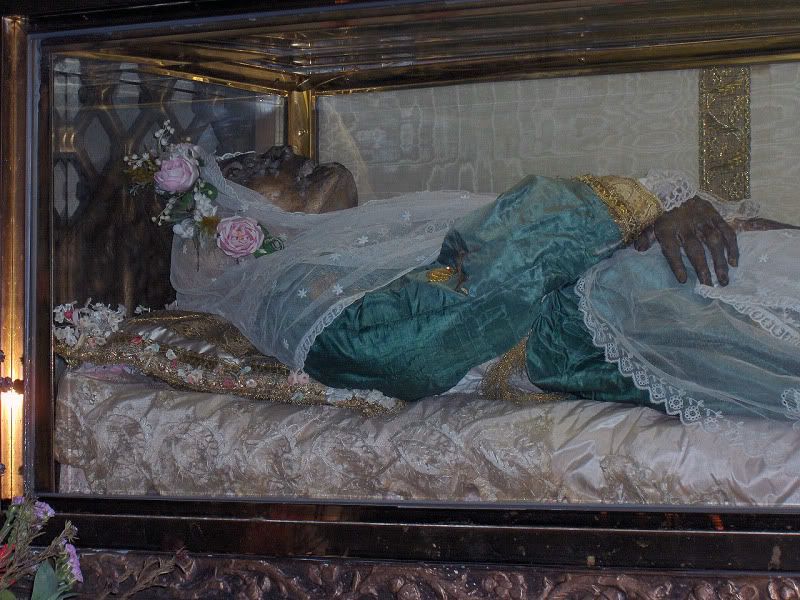
Saint Zita died comfortably in the home she oversaw in 1272. At the moment of her death, a bright star appeared in the sky above the home, where it remained. Her funeral drew all the townspeople, who proclaimed that a saint had lived among them, and strained to kiss her hand or touch her garment sleeves. Many miracles were performed at her tomb. In the sixteenth century, nearly 300 years after her death, Saint Zita’s body was exhumed to be moved, and found to be incorrupt. It lies now, encased in a crystal coffin, in the Church of San Frediano.

Saint Zita’s life demonstrates that faith and hard work lead to holiness and sanctity. She was often heard remarking that ‘devotion that is slothful is false.’ Through her obedience and charity, patience and hard work, Zita brought honor and grace to the household in which she worked, surrounding all those she came into contact with a heavenly grace and light. We look to Saint Zita as a reminder—as an inspiration—to toil tirelessly in the vineyard of the Lord. For Zita, and indeed for our God, no work is too menial, too unimportant, or too trivial if undertaken with a heart of service, a love of neighbor, and a mind centered on God.

March 8, 2013: Saint John of God

Posted by Jacob

Today, March 8, we celebrate the feast day of Saint John of God (1495-1550). John of God would today be called impulsive—he would likely be medicated for it! But during his lifetime, he followed the innermost longing of his heart, oftentimes to the glory of the Lord, and sometimes to the detriment of the man. He was willful, quick to action, and committed to those in need. By the end of his life, Saint John of God had established an order of religious servants to the sick and poor, and through his model, had opened the doors of Christian charity and love to those in need. But his early life was marked by wandering and impetuousness, all of which eventually led him to Granada, Spain.

Saint John was born in Portugal, the child of devout Catholic parents. At age eight, after hearing a priest touring through the area deliver a homily, John left his parents in the middle of the night, following the priest, and becoming his servant. They lived an austere live, begging, and surviving on the kindness of strangers, until the lifestyle left John sick and weak. The priest, continuing his travels, left John in the care of a wealthy family with a large estate, and John eventually became the herder for their animals. He worked at this post for nearly 20 years, until the age of 27, his time in the mountains with only the sheep creating a broad space for him to pray and contemplate the glories of the Lord. He grew in faith, the Holy Spirit moving within in.

At approximately age 27, John joined the Spanish army in their war against France, leaving the fields to become a soldier. He quickly succumbed to the soldier’s life, engaging in gambling, drinking, pillaging, and other sinful ways. It was not until he was knocked from his horse—much like Saint Paul—and left by his battalion behind enemy lines that he felt a call to true conversion. John changed his ways, turning away from the sinful behaviors he had enjoyed, and devoting himself to God.

Returning to his shepherding job, he again listened to his heart and was moved to sail to Africa to assist Christian martyrs and those being held in captivity there. Joining himself to an exiled family, he sailed from Gibraltar. Upon arriving in Africa, he was appalled by the treatment of local peoples by the Christians, who worked them mercilessly, relying on the whip and beatings to increase performance. John spoke out against such injustices, and was encouraged, for his own safety to return to Spain.

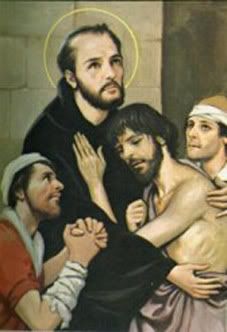
He did so, and set out on a journey to find his birth parents. Unfortunately, upon arrival in his hometown, he found they had both died in his long absence. John, filled with regret, began walking back to Spain, determined to return to his foster family and their sheep. While on this journey, holy tradition tells us that he found a small child on the roadside, dressed in rags and crippled. The boy asked John to carry him part of his way, which John did without a moment’s hesitation. The child, however, grew heavy, and John, after years of begging and poverty, was not very strong. When the pair reached a place to get a drink of water, John proposed to the child that they should stop and rest. The child came down from his shoulders and was transformed into the likeness of the child Jesus. "John of God," He said, "Granada shall be your cross," and immediately disappeared.

Saint John set out for Granada, where he would live the remainder of his years. In Granada he worked back-breaking manual jobs, carrying stone, selling firewood, unloading ships at the docks, and construction, the money from which he gave to the poor. Reading holy books at night, in the safety of the local church, became his refuge. Again, following the yearnings of his heart, John bought a small bookstore with which to share his love of reading with the world. Following a sermon of repentance of Saint John of Avila—the man who would become John of God’s spiritual advisor and mentor-- he ransacked his own store, destroying the secular books he was selling, leaving only those that would bring readers to God.

Those who knew him assumed he was mad, and had him institutionalized at the Royal Hospital asylum. There he spent forty days, tied to his bed (as was the custom at the time), and receiving daily whippings as treatment. On the fortieth day, Saint John of Avila visited, informing him that he had suffered enough, completed enough penance (like the time of Jesus in the desert), and had him released to a more favorable part of the hospital.

It was here, in the Royal Hospital, that John of God declared his intention to start his own hospital, after seeing the way in which patients were treated. Returning to the streets, he again sold firewood and worked menial jobs, giving all that he had to the homeless poor and sick. Eventually, he acquired a small home for the lodging of these forgotten members of society, and a few years later was able to move into a larger space, an abandoned convent. During this time, he established the Order of the Brothers Hospitallers of St. John of God, dedicated to medical service of the poor and indigent.

During this time, seeking clarification of his vocation, John traveled to the shrine of Our Lady of Guadalupe, where he received a vision of Our Lord, Jesus Christ, Our Lady, and Saint John while praying before a crucifix. The Blessed Virgin presented him with a crown of thorns, and pressed it hard upon his head. "John," the Holy Mother said, "it is by thorns and sufferings that you must win the crown my Son has waiting for you in heaven." Although Saint John could feel the thorns piercing his brain, he replied, "From your hand, Lady, thorns and sufferings are welcome. They are my flowers and my roses."

Returning to Granada, Saint John of God worked tirelessly for the poor and sick. He is reported to have worked miracles, including rescuing many from the Royal Hospital when it caught fire. Remembering that patients were tied to their beds, and witnessing others standing and watching them burn from a safe distance, John ran into the burning building, carrying and leading the patients to safety. He then climbed to the roof, removing the burning portions by hand with an axe, so as to prevent having to destroy the entire building to prevent the fire from spreading. Despite falling through the burning room, he emerged unscathed, having saved both the hospital and the lives of countless patients.

Years of hard work, poverty, and hunger took their toll on John, and he fell ill with pneumonia at age 55. Sensing that his time on earth was close to over, he requested the Last Sacraments, and was visited by the bishop himself. When the bishop asked if he had anything left on his mind, Saint John of God responded with a characteristically practical answer, his mind still focused on charity.

"There are three things that make me uneasy," he said. "The first is that I have received so many graces from God, and have not recognized them, and have repaid them with so little of my own. The second is that after I am dead, I fear lest the poor women I have rescued, and the poor sinners I have reclaimed, may be treated badly. The third is that those who have trusted me with money, and whom I have not fully repaid, may suffer loss on my account."

He then asked to be left alone, and kneeling before a crucifix, he died shortly thereafter, his face resting on the feet of Our Lord. He was buried in Granada, with the magistrates and government providing a pomp and lavish funeral, so was he loved by the citizens of the city.

The life of Saint John of God is inspirational in so many ways. His service to those in need reminds us of our Christian call to serve—those who are hungry, thirsty, homeless, unclothed. More than that, his willingness to listen to the Holy Spirit, to let it fill his heart, and to follow those yearnings with abandon serve as a model for us. All too often we live in our heads, rather than our hearts. How many times have we been moved to help others in our hearts, but then listened to the thoughts of our head—it will be too hard, it won’t make any difference, what will people think?, or it’s not practical. How might we better serve our communities, like Saint John of God, if we opened ourselves to the call of the Holy Spirit—a loving and charitable force already residing within us!

May 15: Saint Isidore the Farmer

Posted by Jacob


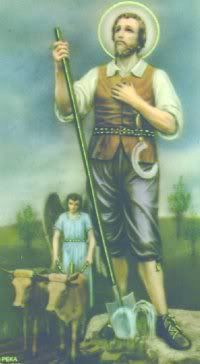
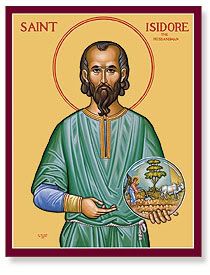
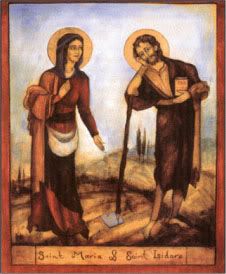
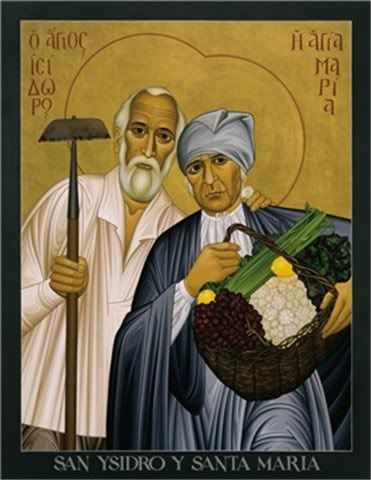
Today, May 15, marks the feast day of a saint remembered for his hard work, humility, and visions, Saint Isidore the Farmer (also known as Isidore the Laborer, 1060-1120). Saint Isidore, along with his wife, Saint Maria de la Cabeza (due to the custom of carrying her head in procession to bring down rain in times of drought-- who is sometimes venerated with her husband on May 15, but is commemorated on her own feast day in September), are the patron saints of farmers, good harvest, and humble work in the fields of the Lord.

Saint Isidore was born in Madrid, Spain, where he worked the majority of his life in the fields. At a very young age—when Isidore was just old enough to carry a hoe—he entered the service of a wealthy Spanish landowner, John de Vergas, and proceeded to work humbly and diligently in the fields for the remainder of his life (60 years!). He married his wife, Maria Torribio, also humble and holy, and together they had one son, who died as a child. Following his death, both Isidore and Maria vowed to live lives of perfect continence.

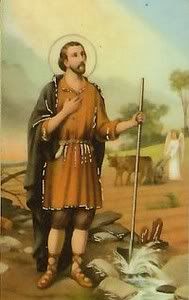
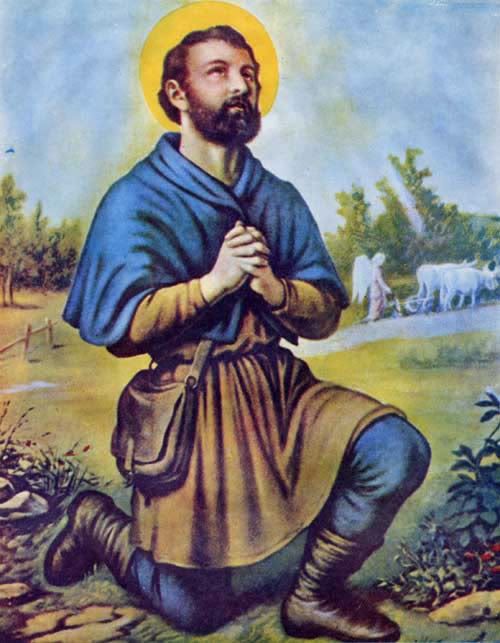
Isidore lifted all that he did to the Lord, praying each day behind the plow. He rose early each morning, attending Mass, and spent the majority of his days off from work praying in the churches of Madrid. His master was accepting (but suspicious) of his devotion, even when Isidore would arrive late to work as time escaped him in prayer! When his master questioned him, Isidore replied: "Sir, it may be true that I am later at my work than some of the other laborers, but I do my utmost to make up for the few minutes snatched for prayer; I pray you compare my work with theirs, and if you find I have defrauded you in the least, gladly will I make amends by paying you out of my private store." His master, still suspicious, followed Isidore to church one morning, and then back to the fields. Holy legend recounts that upon this occasion (and others), angels came down from Heaven, dressed in white and working the plow behind teams of snow-white oxen in his absence. The angels were three times as productive as a man, so how could an employer complain! Running to Isidore, Senor Vergas questioned him as to who they were. Isidore replied, “Sir, I work alone and know of none save God to whom I look for strength." He continued, "I know, sir, that I am your servant but I have another Master as well, to Whom I owe service and obedience." Recognizing his sanctity, generosity, and humility, and having witnessed these miraculous events, Senor Vergas treated Isidore with the utmost respect throughout his life, looking to him for spiritual guidance and advice.

Isidore and Maria were both known for their love of the poor, and the miraculous food they could produce for those who were starving. Saint Isidore is further remembered for his great kindness to the animals of the farm, concerned with their proper treatment, and treating them as creatures of the Lord. In times of drought an famine, Isidore was known to miraculously produce food for not only people, but for large flocks of birds and other animals. Additional miracles attributed to the intercession of Saint Isidore include bringing back to life the daughter of his master following an accident, the appearance of a miraculous well of fresh water during drought, and many others.

Isidore died at the age of sixty and his body was interred in a local cemetery. Forty years after his death, his body—found to be incorrupt-- was transferred from the cemetery to the church of St. Andrew. King Philip III of Spain was cured of a deadly disease by touching the relics of the saint, and subsequently, he replaced the old reliquary with a costly silver one. Numerous additional miracles of healing have been reported at his tomb.

The lives of Saints Isidore and Maria remind us that humble work and charity are sanctified by God. The simple faith of these two saints, and their concern and love for all of God’s creatures around them, allowed the working of miracles. God’s own angels descended from Heaven to assist in their daily chores, chores that they lifted to the Lord in prayer, humility, and obedience. We are reminded that the work we undertake in our everyday lives—however menial it may seem to us—is important in the eyes of the Lord. Our everyday toils are opportunities for us to life our gaze to Heaven, offering the work of our hands as joyful praise to God as His obedient, humble servants.


O God, Who didst give Thy people blessed Isidore as a minister of eternal salvation, we beseech Thee; grant that we may deserve to have him as an intercessor in heaven, whom we had as a teacher of life on earth.


O God, who taught Adam the simple art of tilling the soil, and who through Jesus Christ, the true vine, revealed yourself the husbandman of our souls, deign, we pray, through the merits of blessed Isidore, to instill into our hearts a horror of sin and a love of prayer, so that, working the soil in the sweat of our brow, we may enjoy eternal happiness in heaven, through the same Christ our Lord.


O God, through the intercession of St. Isidore, the holy Farmer, grant that we may overcome all feelings of pride. May we always serve You with that humility which pleases You, through his merits and example.


O holy Isidore and Maria, continue to intercede for those who work the fields and grow our daily food. Ask our Merciful God to continue to bless their efforts to produce abundant food and fiber.


We ask your prayerful aid in the cultivation of the fields of our hearts. Help us through God’s grace to grow in holiness and accept the grace-filled opportunities God gives to us in our work, our marriages and our everyday lives.


O holy Isidore, intercede with our Lord to send angels to aid us in opening our hearts so that one day, enlightened by God’s wisdom and having grown in God's likeness, we may join you and all the Saints in Heaven.


O Most Holy Trinity, you have created us out of your love. We pray that we will always recognize your presence in all that we are, all that we do, and all that we will become.


Help us realize that your Message of Salvation is found in all of Creation -- the fields, the plants, living water, fresh air, all creatures, love for one another.


We await in joy and hope for the day, O Merciful God, when we will be united with You in your Heavenly Kingdom. Amen.