Why pray the Rosary every day for a year?


Each time the Blessed Virgin has appeared-- whether it be to Saint Bernadette Soubirous at Lourdes; to Lucia, Jacinta, and Francisco at Fatima; or to Mariette Beco at Banneux-- she has asserted the importance, saving grace, and power of praying the Holy Rosary on a daily basis. Based upon her words, the Rosary is penance and conversion for sinners, a pathway to peace, an end to war, and a powerful act of faith in Jesus Christ. Pope Paul VI presented the Rosary as a powerful means to reach Christ "not merely with Mary but indeed, insofar as this is possible to us, in the same way as Mary, who is certainly the one who thought about Him more than anyone else has ever done."

To show us how this is done, perhaps no one has been more eloquent than the great Cardinal Newman, who wrote: "The great power of the Rosary consists in the fact that it translates the Creed into Prayer. Of course, the Creed is already in a certain sense a prayer and a great act of homage towards God, but the Rosary brings us to meditate again on the great truth of His life and death, and brings this truth close to our hearts. Even Christians, although they know God, usually fear rather than love Him. The strength of the Rosary lies in the particular manner in which it considers these mysteries, since all our thinking about Christ is intertwined with the thought of His Mother, in the relations between Mother and Son; the Holy Family is presented to us, the home in which God lived His infinite love."


As Mary said at Fatima, "Jesus wants to use you to make Me known and loved. He wishes to establish the devotion to My Immaculate Heart throughout the world. I promise salvation to whoever embraces it; these souls will be dear to God, like flowers put by Me to adorn his throne."


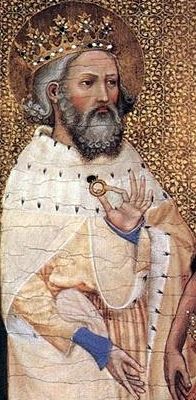
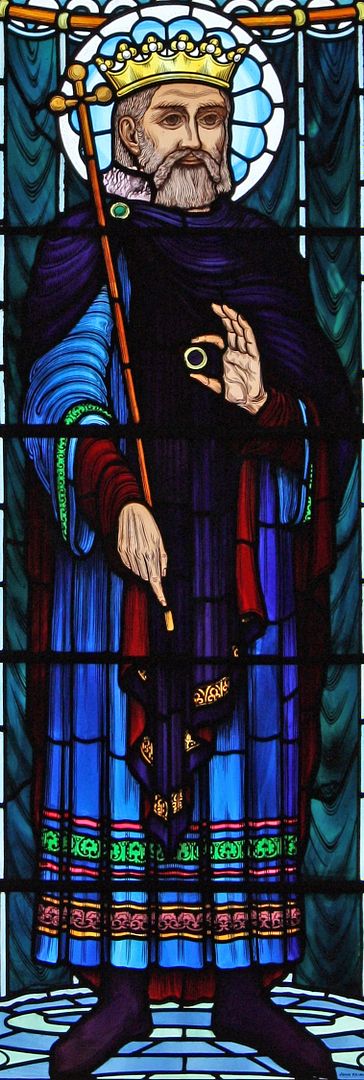
October 13: Saint Edward the Confessor

Posted by Jacob

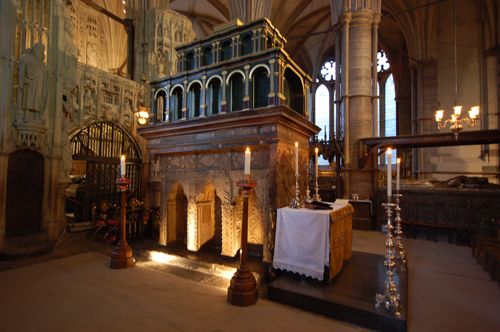
Today, October 13 we celebrate the feast day of Saint Edward the Confessor (1003-1066), benevolent and pious ruler of England. Through worthy and just rule, Edward worked for the glory of the Lord, serving the poor, enacting social change, and building and consecrating many churches (including London’s Westminster Abbey). He is remembered for miraculous healing touch, curing many sick and ill, both prior to and following his death.


Edward was born the second son of King Ethelred, whose kingdom of England fell to Danish invaders when Edward was just a boy. Following his father’s loss of the throne, Edward and his brother were sent to Denmark to be quietly killed, but the officer in charge took pity on the boys, and sent them instead to Sweden. From there, they were moved to the court of the King of Hungary to be raised and educated. From an early age, Edward’s interests were in things religious, and he prayed and meditated each day on the glory of the Lord. Remaining pious, chaste, and virtuous throughout his young life, along with his brother, Edward moved to Normandy, where they awaited their chance to return to England.

In 1035, when Edward was approximately 33, Edward and Alfred (his brother) tried to regain the crown of England, but they were turned back and Alfred was killed. Edward returned to Normandy, and waited seven years before again coming to England. At that time, he was chosen king by public acclamation, and ascended to the throne in 1042, and the age of 40. Edward gained a reputation as just and worthy of the kingship, and the people of England supported him without question or doubt.


When Edward ascended to the throne, his virtues, evident during his youth - simplicity, gentleness, humility and charity, but above all his angelic purity-- shone with new brightness and inspired his subjects. Pressed into marriage by the masses, he took a wife, but together they decided to live in virtuous chastity, maintaining their virginity for the Lord. All Edward had, he gave away, caring little for riches or fineries. It is said that on three separate occasions, he caught his servant robbing the treasury, and on each occasion, he let the man go recognizing that he needed the gold more than Edward. As king, he spent time with his people, standing at the palace gates, speaking kindly to the poor beggars and lepers who crowded about him, healing many of their illnesses and maladies with a simple touch. The people rejoiced in having a Saint for their king.


Edward’s reign ushered in twenty four years of peace, which restored the kingdom long devastated by war. The country grew prosperous, ruined churches rose again under his hand, the weak lived securely, and to this day, people still speak of the “laws of good Saint Edward.” Particularly devoted to the holy Apostles Saint Peter and Saint John the Evangelist, Edward made a promise never to refuse any alms asked in the name of the latter. One day when he had no money with him, Edward chose to give up a valuable ring to a beggar. This act inspired the holy legend (taken from Percy Dearmer's 'The Little Lives of the Saints'):

"One day, the old king was attending the dedication of a church in honor of St. John, when a poor man came up to him, and begged an alms "for the love of St. John." St. Edward put his hand to his purse, but neither silver nor gold could he find. He sent for his almoner, but he was lost in the crowd; and still the poor man stood before him and begged. Edward was in great distress, till he remembered that he wore a large and very precious ring. This he drew from his finger; and for the love of St. John he gave it to the beggar, who thanked him gently, and disappeared.


And now you shall hear what happened to the ring. That night, far away in Palestine, two English pilgrims lost their way in the wilderness. The sun had set behind the bare mountains, and the two men were all alone in the desolate place, knowing not which way to turn, nor where to find shelter from robbers and wild beasts. As they were wondering what to do, a band of youths in bright raiment appeared before them; and in their midst was an old man, white and hoary, and wonderful to look upon.


"Dear friends," he said to the pilgrims, "Whence come you? Of what creed and birth are you? Of what kingdom and king? What seek you here?"


"We are Christians, and from England. We have come to expiate our sins, seeking the holy places where Jesus lived and died. Our king is named Edward; and we have lost our way."


"Come after me, and I will conduct you to a good hostelry for the love of King Edward." So he led them to a city, where they found an inn with the table laid for supper; and, after they had eaten, they went to rest.


Next morning the old man came to them, and said: "I am John the Evangelist. For the love of Edward I will not fail you, and you shall arrive safe and sound in England. Then go to Edward, and say you have brought a ring which he gave to me at the dedication of my church, when I besought him in poor array. And tell him that in six months he shall come to me in Paradise."


The pilgrims came back to England without misadventure, and gave the ring back to Edward with St. John's message.


When the king heard that he was soon to die, he gave away all his money to those who were in need, and passed his time in devotion."

Edward died approximately six months later, on January 5, 1066. Numerous miracles occurred at his tomb. In 1102 his body was exhumed and found intact and flexible, with its habits perfectly preserved and appearing to be new. He was canonized in 1161 by Pope Alexander III.


Tomb of Saint Edward the Confessor


Year 2: Day 286 of 365
Prayer Intentions: Simplicity, gentleness, humility and charity
Requested Intentions: Successful work placement, continued health (A); Grace and healing for a family (P); Healing of a father (M); Academic success for son, employment for husband and brother (B); Freedom from anxiety and panic attacks (R); Health and healing in preparation for surgery (C); Healing of a chronic illness (P); Safety of a family during storms (A); Successful home ownership (P); Healing of a marriage (M); Employment for a husband, blessings for a marriage (E); Successful examinations for a daughter, healing of a relationships (V); Blessing for a family (V); Healing of baby girl M and all children suffering (M); Special intentions (R); Business success, peace, health (E); Conversion and deliverance of those who suffer, increase in vocations (M); Financial security and safe housing (M); For a daughter (K); Conversion of a family, deliverance of the souls in Purgatory (S); Successful marriage (A); Health, safety, grace, success of a building project (A); Successful treatment and recovery from cancer (D); Clear speech for a child (C); Conversion of a family (A); Successful employment (S); For the healing of impaired vision (F); For a couple experiencing difficulties (L); Successful employment after finishing college (M); Mother’s health (A); Financial security, freedom from anxiety (S).

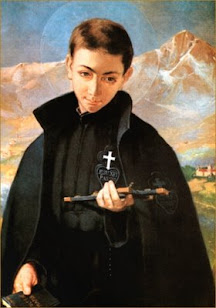
October 12: Saint Serafino of Montegranaro

Posted by Jacob

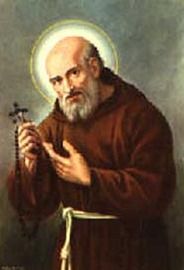
Today, October 12, we celebrate the feast day of Saint Serafino of Montegranaro (1540- 1604), miracle worker, and model of humility, obedience, and charity. A Capuchin, Saint Serafino served as counsel and spiritual advisor to many, despite his own limited education. He is remembered for his holiness, unwavering commitment to serve the poor, and devotion to the Blessed Sacrament and Our Blessed Mother.


Born Felice de Nicola at Montegranaro of a poor, pious family, the future saint was forced to take a job as a shepherd early in his youth to help support the family. In the fields with his sheep, he spent long hours in prayer and contemplation of the Lord, having been inspired by his mother from an early age to remain pure and innocent, and work toward sainthood. However, his early employment prevented him from gaining any formal education.

Early in life, he developed a special devotion to Our Blessed Mother, and would travel as pilgrim to the shrine devoted to her at Loreto (which was not too far from his home). On one occasion, when he reached the Potenza River, which we had to cross, he found the water so high that no boatman would assist him. In his eagerness to reach the shrine, he stepped into the river, which became as solid ground beneath his feet, allowing him to cross without danger or becoming wet!

While still a teenager, both of Felice’s parents died, and he was from that point to be looked after by his elder brother. A bricklayer, and man of extremely violent temper, his brother employed him, but provided him no warmth or family connection. Rather, he delivered harsh words and blows, and significant abuse, regardless of how hard Felice worked to please him. The future saint, however, for his part, accepted all the trials given to him with great penance, recognizing his suffering as the path to holiness.

At the young age of 16, Felice entered the Order of Friars Minor Capuchin convent as a lay brother at Ascoli Piceno, desiring to consecrate himself fully to the Lord. Upon acceptance, he is reported to have said: "I have nothing-- just a crucifix and a rosary--but with these I hope to benefit the friars and become a saint." He took the name Serafino, giving up his former identity and life.

At first, Serafino was mocked by his brothers due to his illiteracy. He turned to prayer as comfort, later recalling, "When I entered religious life I was a poor, unskilled laborer, lacking both talent and potential. I remained as I was, and this caused so many humiliations and rebukes which the devil used as opportunities to tempt me to leave religious life and retreat to some desert, withdrawing into myself. I entrusted myself to the Lord, and one night I heard a voice coming from the tabernacle say, ‘To serve God you must die to yourself and accept adversity, of whatever type.’ So I accepted them and resolved to recite a rosary for anyone who caused me trouble. Then I heard the voice from the tabernacle say, 'Your prayers for those who mortify you are very pleasing to me. In exchange, I am ready to grant you many graces.’” Eventually, despite his lack of education and young age, the brothers at the convent recognized his piety and holiness, as well as his unaffected simplicity, and soon he was respected and admired by his community. He encouraged them in the ways of humility, obedience, limitless charity to those in need, mortification, and self-sacrifice, and worked tirelessly at the most menial chores in service to his brothers. He was graced with considerable spiritual gifts and wisdom, as well as devotion to the Blessed Sacrament and Our Lady.

Serafino was further endowed by the Lord with the gift of reading the secrets of hearts, and with that of miracles (restoring the sick to health via his intercession and the Sign of the Cross) and prophecy. Although uneducated, his advice was sought by secular and ecclesiastical dignitaries, and was a fruitful source of virtue to souls.

Saint Serafino ate very little, frequently taking only one fourth of his meager rations, and distributing the rest to the poor. As porter for the community, he was responsible for feeding those in need, and he would frequently empty the larders and vegetable garden, distributing all the community had to the poor. On one such occasion, his superior reprimanded him for endangering the welfare of his brothers, giving away all their food. Ever obedient, Serafino assured the superior that it would not happen again, and that the community would in no way suffer. Sure enough, the following morning, the vegetable garden was again full of new vegetables, having miraculously grown overnight!

Despite the attention and recognition he received from leaders and dignitaries, Saint Serafino desired to withdraw from the world. His reputation captured the attention of all, including the dukes of Bavaria and Parma, the Peopli nobles of Bologna, and Cardinal Bandini. To avoid having people kiss his hand or tunic to show their respect, Serafino would carry a crucifix with him, offering it for them to kiss.

Serafino found his solace in quiet prayer and contemplation before the Blessed Sacrament, contemplating the suffering of Christ. He devoted each night to prayer, and would remain in front of the Sacrament for hours at a time, absorbed in the Light of Christ. He would then take a short rest, rising again to attend the Midnight Office, and after another short rest, rise in prayer and service to his brothers. The Lord preserved his bodily strength, allowing him to continue his rigorous routine on little sleep for the majority of his life.

Saint Serafino prayed each day:

Holy Mother, pierce me through,
In my heart each wound renew
Of my Savior Crucified.

Saint Serafino died peacefully on October 12, 1604, at the age of 64. Many miracles were reported at his tomb, which lies in the Capuchin friary at Ascoli.

John Paul II wrote that the message and life of Saint Serafino as an "eloquent witness of the universal vocation to holiness." The Holy Father went on to say:

"With the passage of time, holiness does not lose its force of attraction; more than that, it shines with greater luminosity. This is evident in the person of Brother Serafino, a simple and illiterate man whom all, both the humble and powerful, regarded as a real 'brother.' Precisely because of this," the "humble son of St. Francis" is "an eloquent witness of that universal vocation to holiness.”

Pope John Paul II also had the following to say about Saint Serafino, holding him up as a holy example of prayer, penance, and mortification:

Saint Serafino"had assimilated so profoundly the evangelical exhortation 'pray without ceasing' that his mind was habitually immersed in things of the spirit.” He contemplated "the divine presence in creation and in people" and "his prayer was prolonged for hours … before the tabernacle.” Moved also "by an intense love for the passion of Christ, he would pause to meditate on the Lord's sorrows and those of the Blessed Virgin." His spirit in the course of the years "made transparent the real greatness of his soul.”

Saint Serafino "had well understood the evangelical page that proclaims: 'Whoever would be great among you must be your servant, and whoever would be first among you must be slave of all.'" In the posts he held as caretaker and alms-giver, he came in contact with the most varied people. This saint "loved to frequent the more underprivileged and marginalized sectors of the population to discover their hidden needs and to alleviate their physical and spiritual sufferings.” Moreover, "he was a great peacemaker in families, wisely tempering, according to the circumstances, strong reprimands, gestures of loving solidarity, and words of encouraging consolation.”


We are reminded by the life of Saint Serafino of Montegranaro that simplicity in devotion and spirit are what the Lord calls each of us to. We all to frequently get caught up in the need to dramatically or philosophically proclaim our faith—or even support our faith with study and discourse, attempting to make a logical or rational argument for our beliefs. Saint Serafino could do none of this, having never learned to read. Rather, he proclaimed the simple Christian faith by imitating the life of Christ in service, obedience, and charity towards those in need. The humility and simplicity of his actions are far more dramatic and inspiring than the most learned scholarly arguments. We are reminded today that our witness is also through our actions!


God, our Father, You endowed Saint Serafino with the manifold gifts of the Holy Spirit, and made him an admirable witness of the riches of Christ. Through his intercession make us grow in knowledge of You that we may walk faithfully before You according to the truth of the gospel. Amen.


Year 2: Day 285 of 365
Prayer Intentions: Simple Faith; Obedience; Humility; Charity.
Requested Intentions: Successful work placement, continued health (A); Grace and healing for a family (P); Healing of a father (M); Academic success for son, employment for husband and brother (B); Freedom from anxiety and panic attacks (R); Health and healing in preparation for surgery (C); Healing of a chronic illness (P); Safety of a family during storms (A); Successful home ownership (P); Healing of a marriage (M); Employment for a husband, blessings for a marriage (E); Successful examinations for a daughter, healing of a relationships (V); Blessing for a family (V); Healing of baby girl M and all children suffering (M); Special intentions (R); Business success, peace, health (E); Conversion and deliverance of those who suffer, increase in vocations (M); Financial security and safe housing (M); For a daughter (K); Conversion of a family, deliverance of the souls in Purgatory (S); Successful marriage (A); Health, safety, grace, success of a building project (A); Successful treatment and recovery from cancer (D); Clear speech for a child (C); Conversion of a family (A); Successful employment (S); For the healing of impaired vision (F); For a couple experiencing difficulties (L); Successful employment after finishing college (M); Mother’s health (A); Financial security, freedom from anxiety (S).


January 18: Saint Charles of Sezze

Posted by Jacob

“God does not command us to live in hair shirts and chains, or to chastise our flesh with scourges, but to love Him above all things and our neighbor as ourselves.”


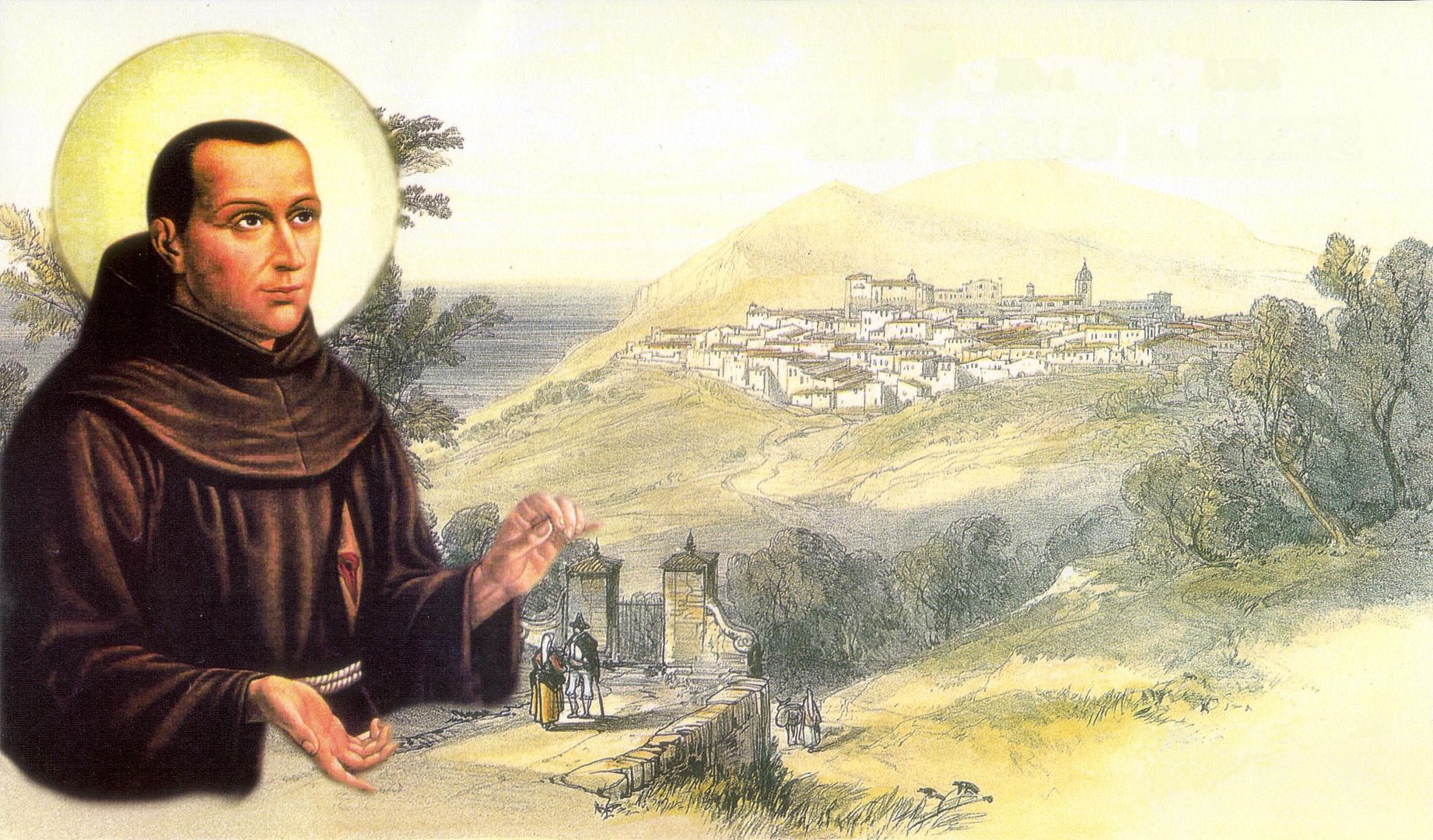
Today, January 18, we celebrate the feast of Saint Charles of Sezze (San Carlo de Sezze, 1613-1670), a man remembered for holiness, simplicity, service, and humility. His devotion to the Lord, and love of the Eucharist, was such that he was graced with a mystical wound on his heart. Throughout his life, Saint Charles demonstrated the virtues of charity and self-giving love to all he encountered.

Born John Charles Marchioni, the future saint belonged to a pious, but poor family, in rural Sezze, Italy. As a child—like many of the region—John worked as a shepherd, and spent long hours in the fields with the family sheep. Due to his work, he had little time for education, and was barely able to read and write. In the fields, the love of the Lord, the Eucharist, and the Blessed Virgin grew deeper within him, and he felt certain that he was destined to become a priest. While his family encouraged his call to vocation, John’s poor academic abilities precluded the seminary as a viable option. Instead, he entered the Franciscan Order as a lay brother, joining a community in Naziano, and working in the most menial of positions. He served his brothers as cook, porter, and gardener, and never complained. While Charles wished to participate and assist in foreign missions, his poor health prevented this as well. Instead, he embraced his role at the monastery, serving with simplicity, humility, and love for all he encountered.

In his autobiography, Charles tells us, "Our Lord put in my heart a determination to become a lay brother with a great desire to be poor and to beg alms for his love." Following this determination, Charles became well known for his holiness and charity. He was frequently sought out for spiritual advice and counsel. Even the dying Pope Clement IX called Charles, the simple lay brother, to his bedside for a blessing. Charles also became known for his generosity and charitable nature. His superior, worried that his constant charity would deplete the monastery’s stores, forbade Charles to continue with his generosity to all travelers. Instead, he was ordered to only provide food to visiting friars. Ever obedient, Charles followed the rule strictly, but immediately noticed that alms to the friary decreased at the same time. After some time, he was able to convince his superior that the decrease in charity was related to the decrease in generosity of the community. As he was allowed to provide food generously to all, so, too, did the alms increase!

In 1656, Italy was struck with the plague, and Charles worked tirelessly among the victims. He traveled amongst the sickest of the sick, providing prayer, medical care, food, and assistance. He performed numerous miracles of healing and multiplication of foods to serve all in need. This, like all his works, were completed with sincerity and humility.

Charles’ devotion to the Passion and Eucharist—devotion that had begun in the fields of his youth—continued to grow each day. He was rewarded by the Lord, in recognition of his devotion and extraordinary faith—with the mystical experience of the stigmata. One morning, while Charles was participating in Mass, a bright ray of light emanated from the Sacred Host as it was elevated, and struck Charles in the heart. The experience left him deeply wounded, yet filled with incredible joy. One of his brothers described him in the following manner: "It was between two extremes, that is between pain and sweet bliss, and it seemed as if the spirit wanted to leave the body. I would have sustained whatever great torment or any hardship because of the sweetness.”

Sick the majority of his life, Charles died in the convent of Saint Francis in Ripa, Italy. The wound that had resulted form his miraculous encounter with the Holy Eucharist changed into the form of a cross following his death. His body remains incorrupt.


Saint Charles wrote several mystical works during his lifetime—despite having limited education—including his autobiography entitled “The Grandeurs of the Mercies of God.” Of this work, Father Serverino Gori wrote, “The autobiography of Charles stands as a very strong refutation of the opinion, quite common among religious people, that saints are born saints, that they are privileged right from their first appearance on this earth. This is not so. Saints become saints in the usual way, due to the generous fidelity of their correspondence to divine grace. They had to fight just as we do, and more so, against their passions, the world and the devil.”

Saint Charles of Sezze followed where the Lord led him. When he was unable to become a priest, he entered the Franciscans as a lay brother. When he was unable to go on foreign missions, he embraced the most menial of tasks with charity, obedience, and humility. Saint Charles, in his quiet and simple way, is the perfect example of the love of Our Lord, shining forth to the world, through those who adore Him.


Lord our God, You are the shield and glorious reward of those who walk blamelessly in Your sight. keep us steadfast in Your holy service so that aided by the wise teaching and intercession of Brother Charles of Sezze, we may with hearts open to You run the way of perfect charity.


Year 2: Day 18 of 365
Prayer Intentions: True devotion to the Lord.
Requested Intentions: Freedom from persecution (A); For a friend struggling with medical problems and surgery (L); Financial blessings (D); For the success of a project (T); Improved financial stability (A); Improved relationship with business partner (A); For employment (N); Reconciliation of a workplace relationship (R); Healing of son, cousin, and friend (L); Healing of a husband from cancer, end to medical problems (T); Freedom from persecution (E); Successful employment (R); Reconciliation of a marriage (M); Successful marriage, employment, healing (J); For a family struggling with a difficult situation (M); For family intentions (I); Reconciliation of a marriage (S); For blessings upon a family (R); Permanent employment (N); Successful employment (M); Healing of a father following stroke (S).

October 12: Saint Serafino of Montegranaro

Posted by Jacob

Today, October 12, we celebrate the feast day of Saint Serafino of Montegranaro (1540- 1604), miracle worker, and model of humility, obedience, and charity. A Capuchin, Saint Serafino served as counsel and spiritual advisor to many, despite his own limited education. He is remembered for his holiness, unwavering commitment to serve the poor, and devotion to the Blessed Sacrament and Our Blessed Mother.


Born Felice de Nicola at Montegranaro of a poor, pious family, the future saint was forced to take a job as a shepherd early in his youth to help support the family. In the fields with his sheep, he spent long hours in prayer and contemplation of the Lord, having been inspired by his mother from an early age to remain pure and innocent, and work toward sainthood. However, his early employment prevented him from gaining any formal education.

Early in life, he developed a special devotion to Our Blessed Mother, and would travel as pilgrim to the shrine devoted to her at Loreto (which was not too far from his home). On one occasion, when he reached the Potenza River, which we had to cross, he found the water so high that no boatman would assist him. In his eagerness to reach the shrine, he stepped into the river, which became as solid ground beneath his feet, allowing him to cross without danger or becoming wet!

While still a teenager, both of Felice’s parents died, and he was from that point to be looked after by his elder brother. A bricklayer, and man of extremely violent temper, his brother employed him, but provided him no warmth or family connection. Rather, he delivered harsh words and blows, and significant abuse, regardless of how hard Felice worked to please him. The future saint, however, for his part, accepted all the trials given to him with great penance, recognizing his suffering as the path to holiness.

At the young age of 16, Felice entered the Order of Friars Minor Capuchin convent as a lay brother at Ascoli Piceno, desiring to consecrate himself fully to the Lord. Upon acceptance, he is reported to have said: "I have nothing-- just a crucifix and a rosary--but with these I hope to benefit the friars and become a saint." He took the name Serafino, giving up his former identity and life.

At first, Serafino was mocked by his brothers due to his illiteracy. He turned to prayer as comfort, later recalling, "When I entered religious life I was a poor, unskilled laborer, lacking both talent and potential. I remained as I was, and this caused so many humiliations and rebukes which the devil used as opportunities to tempt me to leave religious life and retreat to some desert, withdrawing into myself. I entrusted myself to the Lord, and one night I heard a voice coming from the tabernacle say, ‘To serve God you must die to yourself and accept adversity, of whatever type.’ So I accepted them and resolved to recite a rosary for anyone who caused me trouble. Then I heard the voice from the tabernacle say, 'Your prayers for those who mortify you are very pleasing to me. In exchange, I am ready to grant you many graces.’” Eventually, despite his lack of education and young age, the brothers at the convent recognized his piety and holiness, as well as his unaffected simplicity, and soon he was respected and admired by his community. He encouraged them in the ways of humility, obedience, limitless charity to those in need, mortification, and self-sacrifice, and worked tirelessly at the most menial chores in service to his brothers. He was graced with considerable spiritual gifts and wisdom, as well as devotion to the Blessed Sacrament and Our Lady.

Serafino was further endowed by the Lord with the gift of reading the secrets of hearts, and with that of miracles (restoring the sick to health via his intercession and the Sign of the Cross) and prophecy. Although uneducated, his advice was sought by secular and ecclesiastical dignitaries, and was a fruitful source of virtue to souls.

Saint Serafino ate very little, frequently taking only one fourth of his meager rations, and distributing the rest to the poor. As porter for the community, he was responsible for feeding those in need, and he would frequently empty the larders and vegetable garden, distributing all the community had to the poor. On one such occasion, his superior reprimanded him for endangering the welfare of his brothers, giving away all their food. Ever obedient, Serafino assured the superior that it would not happen again, and that the community would in no way suffer. Sure enough, the following morning, the vegetable garden was again full of new vegetables, having miraculously grown overnight!

Despite the attention and recognition he received from leaders and dignitaries, Saint Serafino desired to withdraw from the world. His reputation captured the attention of all, including the dukes of Bavaria and Parma, the Peopli nobles of Bologna, and Cardinal Bandini. To avoid having people kiss his hand or tunic to show their respect, Serafino would carry a crucifix with him, offering it for them to kiss.

Serafino found his solace in quiet prayer and contemplation before the Blessed Sacrament, contemplating the suffering of Christ. He devoted each night to prayer, and would remain in front of the Sacrament for hours at a time, absorbed in the Light of Christ. He would then take a short rest, rising again to attend the Midnight Office, and after another short rest, rise in prayer and service to his brothers. The Lord preserved his bodily strength, allowing him to continue his rigorous routine on little sleep for the majority of his life.

Saint Serafino prayed each day:

Holy Mother, pierce me through,
In my heart each wound renew
Of my Savior Crucified.

Saint Serafino died peacefully on October 12, 1604, at the age of 64. Many miracles were reported at his tomb, which lies in the Capuchin friary at Ascoli.

John Paul II wrote that the message and life of Saint Serafino as an "eloquent witness of the universal vocation to holiness." The Holy Father went on to say:

"With the passage of time, holiness does not lose its force of attraction; more than that, it shines with greater luminosity. This is evident in the person of Brother Serafino, a simple and illiterate man whom all, both the humble and powerful, regarded as a real 'brother.' Precisely because of this," the "humble son of St. Francis" is "an eloquent witness of that universal vocation to holiness.”

Pope John Paul II also had the following to say about Saint Serafino, holding him up as a holy example of prayer, penance, and mortification:

Saint Serafino"had assimilated so profoundly the evangelical exhortation 'pray without ceasing' that his mind was habitually immersed in things of the spirit.” He contemplated "the divine presence in creation and in people" and "his prayer was prolonged for hours … before the tabernacle.” Moved also "by an intense love for the passion of Christ, he would pause to meditate on the Lord's sorrows and those of the Blessed Virgin." His spirit in the course of the years "made transparent the real greatness of his soul.”

Saint Serafino "had well understood the evangelical page that proclaims: 'Whoever would be great among you must be your servant, and whoever would be first among you must be slave of all.'" In the posts he held as caretaker and alms-giver, he came in contact with the most varied people. This saint "loved to frequent the more underprivileged and marginalized sectors of the population to discover their hidden needs and to alleviate their physical and spiritual sufferings.” Moreover, "he was a great peacemaker in families, wisely tempering, according to the circumstances, strong reprimands, gestures of loving solidarity, and words of encouraging consolation.”


We are reminded by the life of Saint Serafino of Montegranaro that simplicity in devotion and spirit are what the Lord calls each of us to. We all to frequently get caught up in the need to dramatically or philosophically proclaim our faith—or even support our faith with study and discourse, attempting to make a logical or rational argument for our beliefs. Saint Serafino could do none of this, having never learned to read. Rather, he proclaimed the simple Christian faith by imitating the life of Christ in service, obedience, and charity towards those in need. The humility and simplicity of his actions are far more dramatic and inspiring than the most learned scholarly arguments. We are reminded today that our witness is also through our actions!


God, our Father, You endowed Saint Serafino with the manifold gifts of the Holy Spirit, and made him an admirable witness of the riches of Christ. Through his intercession make us grow in knowledge of You that we may walk faithfully before You according to the truth of the gospel. Amen.


Day 285 of 365
Prayer Intentions: Simple Faith; Obedience; Humility; Charity.
Requested Intentions: Successful outcome of court case and employment (L); For guidance and righteous love (K); Restoration of a relationship (H); For successful employment (I); For a daughter’s successful relationship (M); For a relationship sanctified by God (M); For health of father; For canonization of Pope John Paul II (A); For the conversion of a family (L); For the ill (A); For the health of a family (I); For a father’s successful surgery and recovery (G); For those who are ill, and their caretakers (D); For the safety of a sister who is traveling (A); Recovery of mother with cancer (R); Successful acquisition of a visa (T); Restoration of a marriage (A); For employment and health of mother (G); Successful employment (M); Restoration of a family, End to brother's addiction, Successful marriage (R); Employment (I); Successful recovery of a mother; for all stroke victims (D); Successful return to the faith (A); Emotional, physical, and financial healing (D); Diagnosis and recovery (A); For a successful relationship (J); Those suffering from depression (J); Successful adoption (S); Healing of a father battling cancer (S).