Why pray the Rosary every day for a year?


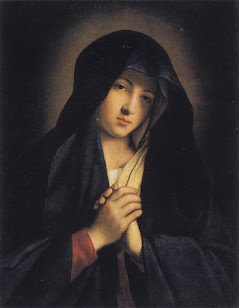
Each time the Blessed Virgin has appeared-- whether it be to Saint Bernadette Soubirous at Lourdes; to Lucia, Jacinta, and Francisco at Fatima; or to Mariette Beco at Banneux-- she has asserted the importance, saving grace, and power of praying the Holy Rosary on a daily basis. Based upon her words, the Rosary is penance and conversion for sinners, a pathway to peace, an end to war, and a powerful act of faith in Jesus Christ. Pope Paul VI presented the Rosary as a powerful means to reach Christ "not merely with Mary but indeed, insofar as this is possible to us, in the same way as Mary, who is certainly the one who thought about Him more than anyone else has ever done."

To show us how this is done, perhaps no one has been more eloquent than the great Cardinal Newman, who wrote: "The great power of the Rosary consists in the fact that it translates the Creed into Prayer. Of course, the Creed is already in a certain sense a prayer and a great act of homage towards God, but the Rosary brings us to meditate again on the great truth of His life and death, and brings this truth close to our hearts. Even Christians, although they know God, usually fear rather than love Him. The strength of the Rosary lies in the particular manner in which it considers these mysteries, since all our thinking about Christ is intertwined with the thought of His Mother, in the relations between Mother and Son; the Holy Family is presented to us, the home in which God lived His infinite love."


As Mary said at Fatima, "Jesus wants to use you to make Me known and loved. He wishes to establish the devotion to My Immaculate Heart throughout the world. I promise salvation to whoever embraces it; these souls will be dear to God, like flowers put by Me to adorn his throne."


July 25, 2013: Saint James the Greater, "Son of Thunder"

Posted by Jacob

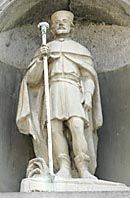
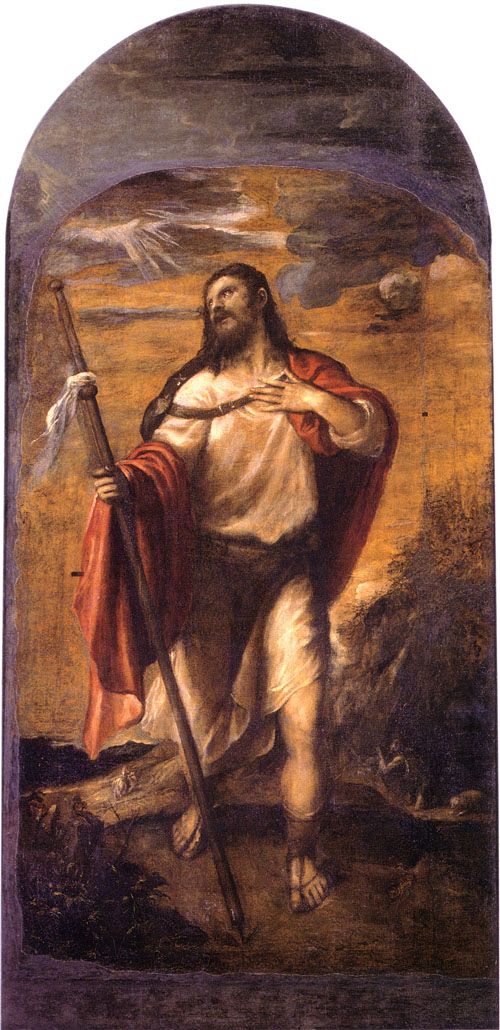
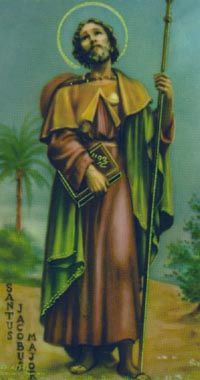
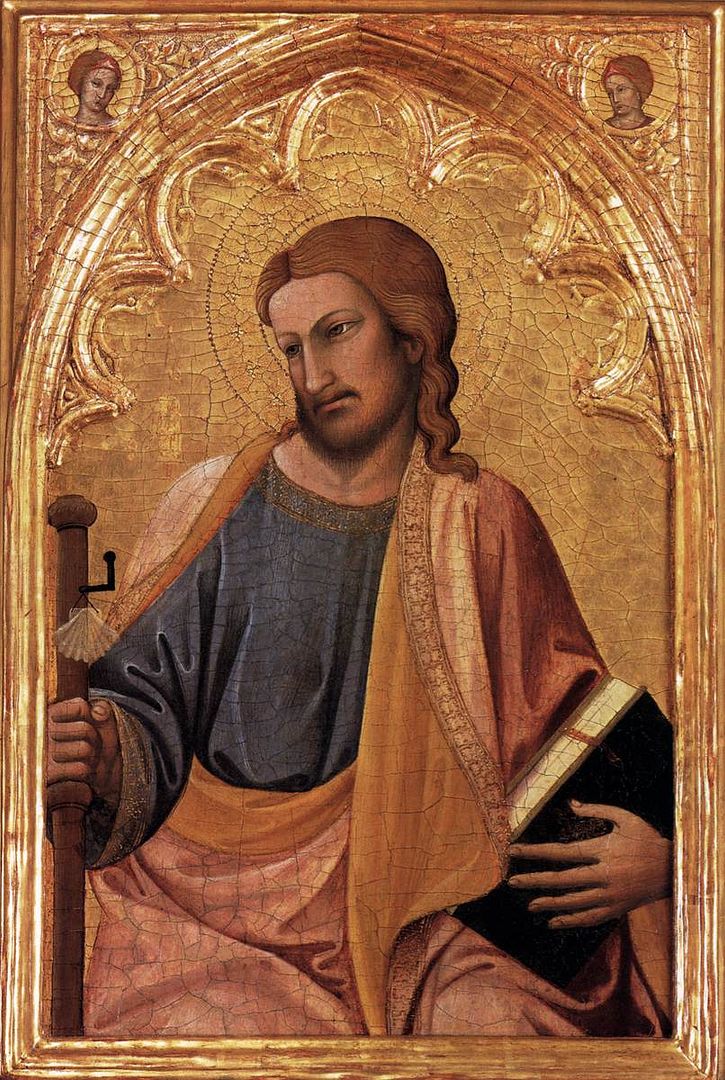
Today, July 25, we celebrate the feast day of Saint James the Greater (died 44), Disciple and friend of Christ, “Son of Thunder,” and first martyr of the Church. Impetuous and quick to temper, James was also a faithful companion to Our Lord, present at significant moments in His life. A gifted preacher, following the death of Jesus, James spent the days until his martyrdom in Spain, establishing the still-popular pilgrimage site of Santiago de Compostela. According to Saint Epiphanus and other historians, he also conserved his virginity in consecration to the Lord. He is honored as the patron of Spain, equestrians, blacksmiths, tanners, veterinarians, and many other locales and professions.

(For “James the Greater,” General Audience delivered by Pope Benedict XVI, June 21, 2006, visit here.)
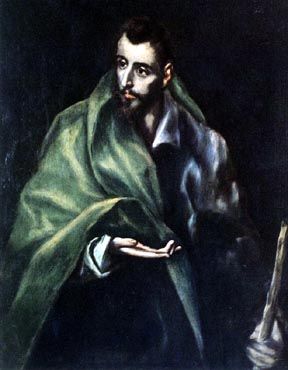
Saint James was the son of Zebedee, a Galilean fisherman, and Salome, a pious woman who tended after Christ. He and his younger brother, Saint John, were called as disciples just after Simon Peter and Andrew were called.

19When he had gone a little farther, he saw James son of Zebedee and his brother John in a boat, preparing their nets. 20Without delay he called them, and they left their father Zebedee in the boat with the hired men and followed him. (Mark 1: 19-20)
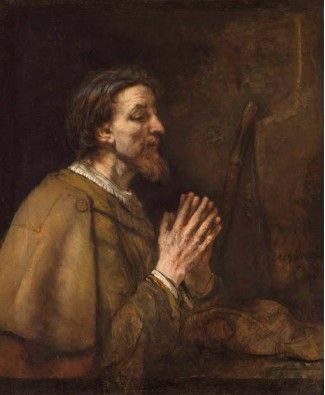

Saint James, along with Peter and John, are often mentioned together in Scripture, as the closest companions of Jesus. They were present at the healing of Peter’s mother in law:

29As soon as they left the synagogue, they went with James and John to the home of Simon and Andrew. 30Simon's mother-in-law was in bed with a fever, and they told Jesus about her. 31So he went to her, took her hand and helped her up. The fever left her and she began to wait on them. (Mark 1:29)
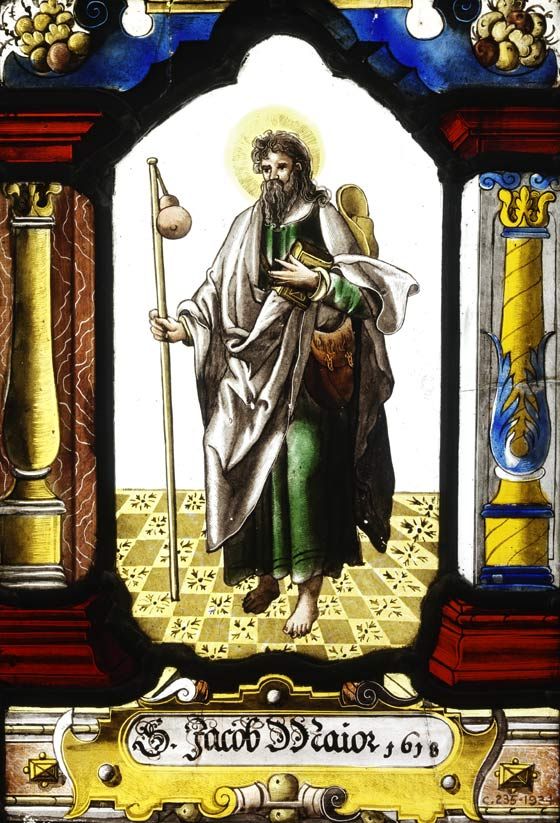

… and the raising of Jairus’ daughter:

51When he arrived at the house of Jairus, he did not let anyone go in with him except Peter, John and James, and the child's father and mother. 52Meanwhile, all the people were wailing and mourning for her. "Stop wailing," Jesus said. "She is not dead but asleep."
53They laughed at him, knowing that she was dead. 54But he took her by the hand and said, "My child, get up!" 55Her spirit returned, and at once she stood up. Then Jesus told them to give her something to eat. 56Her parents were astonished, but he ordered them not to tell anyone what had happened. (Luke 8: 51-56)
Saint James, Peter, and John were present at the Transfiguration of Our Lord:

2After six days Jesus took Peter, James and John with him and led them up a high mountain, where they were all alone. There he was transfigured before them. 3His clothes became dazzling white, whiter than anyone in the world could bleach them. 4And there appeared before them Elijah and Moses, who were talking with Jesus.
5Peter said to Jesus, "Rabbi, it is good for us to be here. Let us put up three shelters—one for you, one for Moses and one for Elijah." 6(He did not know what to say, they were so frightened.)
7Then a cloud appeared and enveloped them, and a voice came from the cloud: "This is my Son, whom I love. Listen to him!"
8Suddenly, when they looked around, they no longer saw anyone with them except Jesus. (Mark 9:2-8)

… and the Lord’s Agony in the Garden of Gethsemane:

36Then Jesus went with his disciples to a place called Gethsemane, and he said to them, "Sit here while I go over there and pray." 37He took Peter and the two sons of Zebedee along with him, and he began to be sorrowful and troubled. 38Then he said to them, "My soul is overwhelmed with sorrow to the point of death. Stay here and keep watch with me."

39Going a little farther, he fell with his face to the ground and prayed, "My Father, if it is possible, may this cup be taken from me. Yet not as I will, but as you will."
40Then he returned to his disciples and found them sleeping. "Could you men not keep watch with me for one hour?" he asked Peter. 41"Watch and pray so that you will not fall into temptation. The spirit is willing, but the body is weak."

42He went away a second time and prayed, "My Father, if it is not possible for this cup to be taken away unless I drink it, may your will be done."

43When he came back, he again found them sleeping, because their eyes were heavy. 44So he left them and went away once more and prayed the third time, saying the same thing.
45Then he returned to the disciples and said to them, "Are you still sleeping and resting? Look, the hour is near, and the Son of Man is betrayed into the hands of sinners. 46Rise, let us go! Here comes my betrayer!" (Matthew 26: 36-46)


Earning their nickname “Sons of Thunder,” James and his brother John are recorded as wishing to reign down fire from heaven on a Samaritan village which refused them hospitality:

51As the time approached for him to be taken up to heaven, Jesus resolutely set out for Jerusalem. 52And he sent messengers on ahead, who went into a Samaritan village to get things ready for him; 53but the people there did not welcome him, because he was heading for Jerusalem. 54When the disciples James and John saw this, they asked, "Lord, do you want us to call fire down from heaven to destroy them?" 55But Jesus turned and rebuked them, 56and they went to another village. (Luke 9: 51-56)

Perhaps James is remembered most for the conversation his mother, Salome, had with Jesus, requesting that her two sons be placed at His right and left-- not realizing the crucifixion and death that lie in store for Christ, but rather imagining an earthly kingdom and throne:

20Then the mother of Zebedee's sons came to Jesus with her sons and, kneeling down, asked a favor of him.

21"What is it you want?" he asked.
She said, "Grant that one of these two sons of mine may sit at your right and the other at your left in your kingdom."
22"You don't know what you are asking," Jesus said to them. "Can you drink the cup I am going to drink?"
"We can," they answered.
23Jesus said to them, "You will indeed drink from my cup, but to sit at my right or left is not for me to grant. These places belong to those for whom they have been prepared by my Father."
24When the ten heard about this, they were indignant with the two brothers. 25Jesus called them together and said, "You know that the rulers of the Gentiles lord it over them, and their high officials exercise authority over them. 26Not so with you. Instead, whoever wants to become great among you must be your servant, 27and whoever wants to be first must be your slave— 28just as the Son of Man did not come to be served, but to serve, and to give his life as a ransom for many." (Matthew 20: 20-28)
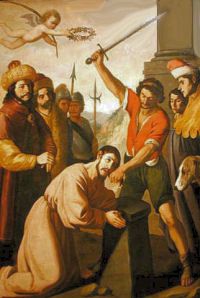
Following the death of Christ, James was present in the Upper Room, and on more than one recorded appearance of the Resurrected Jesus. From the time of Jesus’ Ascension into Heaven, there is little recorded history of James’ missionary activity until that of his martyrdom. Biblical scholars suggest that he probably traveled between Judea and Samaria, and tradition speaks of his journey to Spain, where later his mortal remains were received.

Saint James was the first of the apostles to suffer martyrdom, in Jerusalem, in approximately 44. After nine years preaching in Spain, he had returned to Jerusalem, and was brought before King Herod Agrippa. The Apostle had been preaching fearlessly there, curing the sick and the blind, and delivering possessed persons. Herod promptly sentenced James to execution, reported sparsely by Luke in the Acts of the Apostles: “About that time Herod the king laid violent hands upon some who belonged to the Church, and he killed James, the brother of John with the sword” (Acts 12, 1-2). As Clement of Alexandria, James died by beheading after having converting his accuser: “He who had brought him to the tribunal was so moved seeing him give testimony that he also confessed to being a Christian himself.”

Tradition holds that following his martyrdom in Jerusalem, his followers are believed to have carried his body down the coast and placed it in a stone boat—which was carried by angels to the northern coast of Spain. There, his remains were buried, and promptly forgotten about until the ninth century, when a hermit was led by heavenly vision to the spot. The tomb was rediscovered, and the relics authenticated. From that time, the spot-- Santiago (Iago translating as James) de Compostela—became a center of miracle and pilgrimage-- so much so that Compostela became the third greatest place of pilgrimage, just after Jerusalem and Rome. Today, pilgrims continue to flock to Compostelo, taking one of the many routes known as the “Camino." Pilgrims attach cockleshells—the symbol of Saint James-- or their facsimile to their hats or clothes as "pilgrim badges," signs that they'd venerated the holy relics of the great saint.

(For a recipe for Coquilles St. Jacques à la Provençale, traditionally eaten on the feast of Saint James, see here.)

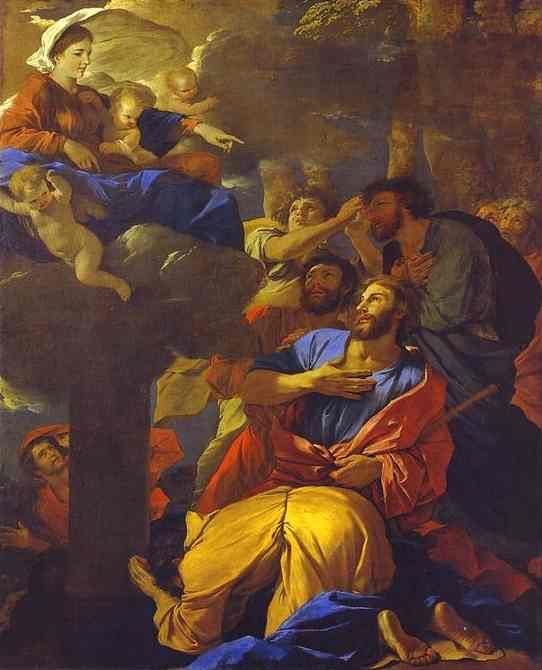
Saint James is also recognized as having appeared in corporeal form, during the Spanish defense of their land and Christianity from the invading Moors. The saint is said to have appeared on a white horse at the Battle of Clavijo, adorned in cockle shells, in 844, while the Christians were in retreat before the onslaught of the Arab and Berber invaders. Thanks to James’ miraculous appearance, the Moors were defeated. The rallying cry of the Spanish troops, from that time, became “Santiago!”


Saint James the Greater is recognized for his special place within the Disciples of Christ-- having been selected by Our Lord because of his burning, impetuous, and outspoken faith. Through his interaction with Jesus, these qualities were purified, and the former “Son of Thunder” could then proclaim the Gospel of peace. We could all benefit from the same purification, the conversion of our anger, temper, and frustration to righteous instruments of peace and Christian virtue. We look to Saint James today, for inspiration and intercession, that we might better embody the peaceful message of Jesus Christ.

Almighty Father,
by the martyrdom of Saint James you blessed the work of the early Church.
May his profession of faith give us courage and his prayers bring us strength.
Grant, O merciful God, that as thine holy Apostle Saint James, leaving his father and all that he had, without delay was obedient unto the calling of thy Son Jesus Christ, and followed him; so we, forsaking all worldly and carnal affections, may be evermore ready to follow thy holy commandments; through Jesus Christ our Lord. Amen.


October 11: Saint Gummarus

Posted by Jacob

Today, October 11, we celebrate the feast of Saint Gummarus (also known as Saint Gommer or Gommaire, died 714), knight of King Pepin, founder of Lier (in modern-day Belgium), and worker of many miracles. The faith and patience of Saint Gummarus are recounted in pious legend, and he is venerated for his virtues.
Gummarus was the son of the Lord of Emblem, born in Lier. He received no formal education, and was unable to read and write. However, he demonstrated a profound holiness and sense of piety, innately grasping theological concepts, and putting them into practice with constant works of charity and mercy. Gummarus served in the court of Pepin the Younger, who raised him to a high post and proposed a marriage between he and a lady of good social standing. Her name was Guinmarie, and the were married.

Gummarus was in for a surprise, however, as upon marriage he discovered that his new wife was extravagantly greedy, cruel, and disinterested in the ways of the faith. Gummarus, however, rather than become disheartened, persisted in patience and virtue, living the life of a saint, enduring constant trials and sufferings at her hands. For years, he encouraged his wife to engage in acts of charity, given their social standing, but she refused, preferring to spend the money on herself. Gummarus was left to minister to those in need on his own.

Life continued in this difficult manner until Gummarus was summoned by King Pepin to serve in the army. He traveled, leading troops in battle with Christian instruction and fortitude for eight years, serving in Lombardy, Saxony, and the Aquitaine. At the end of that time, returning home, Gummarus discovered that his wife had thrown all things into disorder, and that few among his servants, vassals or tenants had escaped her oppression. She was so mean that she even refused beer to the reapers at harvest, quite uncommon in that region of the world! Gummarus made full restitution and satisfaction to every wronged member of the community and the staff, seeking them out, begging forgiveness, and offering penance and prayer. Guinimarie was so far overcome by his patience and kindness as to be ashamed of her past conduct, and for a time appeared penitent. However, this was only temporary, and when she returned to her cruel and capricious ways, Gummarus was forced to leave. With Saint Rumbold, he became a hermit at Nivesdonck, and subsequently founded the abbey at Lier. There he died in 714. His relics, venerated in the abbey today, are processed through the streets of Lier each October in celebration of his feast day.

Many miracles and patronages are attributed to Saint Gummarus. He is, for example, the patron bad marriages, woodworkers, and of all those with “a broken face.” One miracle he is said to have performed occurred one day while sitting with his wife. She was so cruel that the oak tree which they say beneath—an old, sturdy tree—cracked and broke, falling to the ground. Gummarus removed his belt, wrapping it around the fractured tree, which immediately mended itself and bloomed. Saint Gummarus is further known for creating a miraculous spring by tapping the earth with his walking stick. The spring led to the healings of many, including the deaf and mute (some of which regained their voice and found they were able to now speak Latin!) and the crippled.

Saint Gummarus found himself in a difficult situation. He had pledged to the Lord to love his wife, who turned out to be quite difficult to live with. Despite these challenges, Gummarus remained steadfast and patient, turning to the Lord and to works of virtue and charity to sustain himself in the midst of his daily trials. We might be reminded of Saint Gummarus on those days when our lives feel much the same way. How might we persevere in the ways of the Christ by helping others?


Year 2: Day 284 of 365
Prayer Intentions: Patient Endurance.
Requested Intentions: Successful work placement, continued health (A); Grace and healing for a family (P); Healing of a father (M); Academic success for son, employment for husband and brother (B); Freedom from anxiety and panic attacks (R); Health and healing in preparation for surgery (C); Healing of a chronic illness (P); Safety of a family during storms (A); Successful home ownership (P); Healing of a marriage (M); Employment for a husband, blessings for a marriage (E); Successful examinations for a daughter, healing of a relationships (V); Blessing for a family (V); Healing of baby girl M and all children suffering (M); Special intentions (R); Business success, peace, health (E); Conversion and deliverance of those who suffer, increase in vocations (M); Financial security and safe housing (M); For a daughter (K); Conversion of a family, deliverance of the souls in Purgatory (S); Successful marriage (A); Health, safety, grace, success of a building project (A); Successful treatment and recovery from cancer (D); Clear speech for a child (C); Conversion of a family (A); Successful employment (S); For the healing of impaired vision (F); For a couple experiencing difficulties (L); Successful employment after finishing college (M); Mother’s health (A); Financial security, freedom from anxiety (S).

August 27: Saint Monica, Patron Saint of Mothers

Posted by Jacob

“Nothing is far from God.”


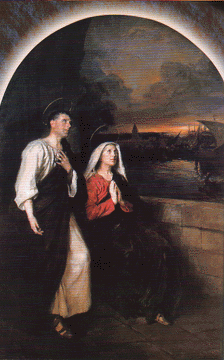
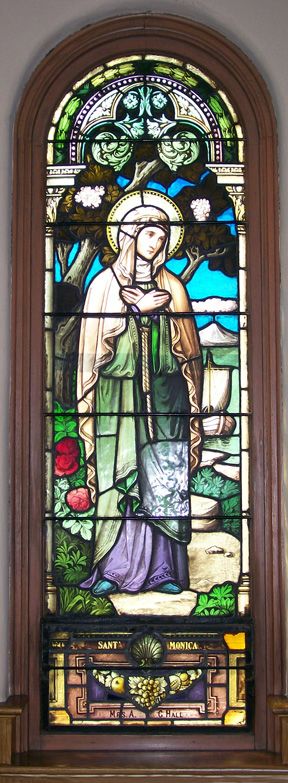
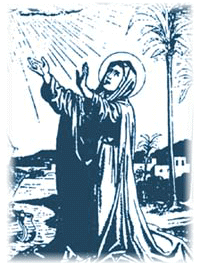
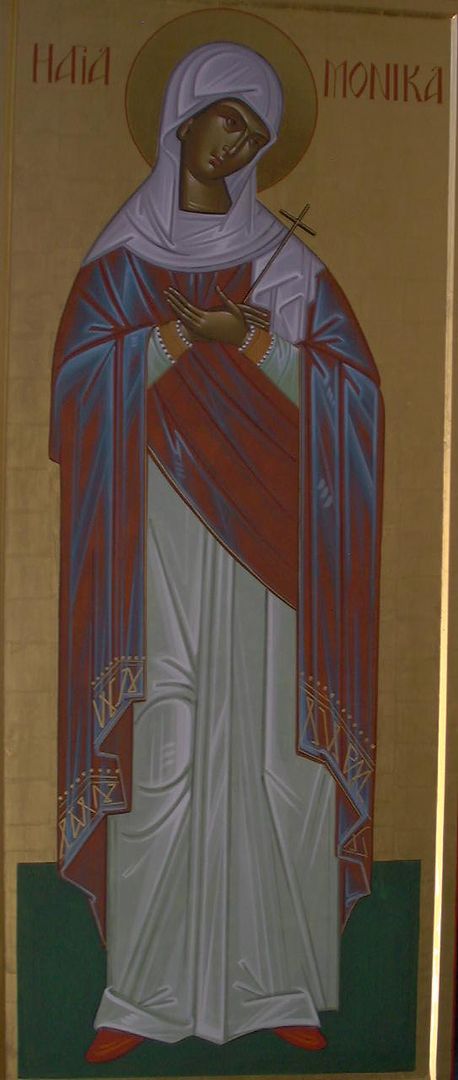
Today, August 27, we celebrate the feast day of Saint Monica (322-387), Model of Christian Motherhood, mother to Saint Augustine (whose feast we celebrate tomorrow), and patron saint of mothers. Her life is a perfect example of Christian patience, endurance, charity, prayer, and conversion, and her tireless prayers on behalf of her son are inspiration for all Christians.

Saint Monica was born in Tagaste, North Africa, to pious Christian parents. She was married young by her parents to a local government official, Patricius, who was not a Christian. Patricius, who was much older than she, was generous and generally well-intentioned. However, he also was adulterous, prone to excessive alcohol consumption, and possessed a violent temper, which Monica occasionally was on the receiving end of. Throughout her difficulties—including an extremely difficult mother-in-law who resided with the couple-- Monica bore her burdens patiently. Together, they raised three children: Augustine, Navigius, and a daughter, Perpetua.

Saint Monica spent her days in prayer, demonstrating the virtues of Christianity to her children. Through her patience and constant prayers, she accomplished the conversion of her husband (and his mother), shortly before his death. Her two youngest children, Perpetua and Navigius, entered religious orders, for which Monica gave great thanks to the Lord.

Her eldest son, Augustine, was a very different story. Despite being recognized as a brilliant scholar, Augustine was, in his own words, “a lazy and dissolute youth whose bad behavior caused his mother much grief.” Having fully embraced the ways of the world, Augustine left his mother to attend school at Madaura and Carthage. Throughout his youth, he recklessly pursued pleasures, joining a heretical cult at age 19. Augustine seemed a hopeless cause to most, but Monica was not to be deterred She intensified her prayers for her son, and continued these prayers tirelessly for 17 years. Whenever possible, she attempted to enlist the assistance of priests (many of whom began to avoid her due to what they viewed as an impossible task!).

In the Confessions, Saint Augustine’s “memoir,” he recounts a dream that Saint Monica had regarding his conversion—a dream which consoled and encouraged her:

"In her dream she saw herself standing on a sort of wooden rule, and saw a bright youth approaching her, joyous and smiling at her, while she was grieving and bowed down with sorrow. But when he inquired of her the cause of her sorrow and daily weeping (not to learn from her, but to teach her, as is customary in visions), and when she answered that it was my soul's doom she was lamenting, he bade her rest content and told her to look and see that where she was there I was also. And when she looked she saw me standing near her on the same rule."

Monica’s concern for her son caused her daily anguish, sleeplessness, and anxiety—yet she never turned from prayer. During this time, she consulted with a bishop who had himself been a member of the same cult Augustine had joined. The bishop declined to intervene with Augustine, whom, he correctly observed, was not open to hearing the truth. She persisted tearfully, but he refused to intervene. Nevertheless, the bishop consoled Monica that "the child of those tears shall never perish,” which she took as a sign from God. Though he continued in his heresies for nine more years, Monica never gave up. When he deceived his mother and left for Rome without her, she followed him alone—a difficult task for a woman to travel alone at that time! Upon arrival in Rome, she learned that he had departed for Milan, and again she followed, praying constantly in an effort to rescue him from his errors. In Milan she met Saint Ambrose, who helped lead Augustine into the true faith.

Saint Augustine was baptized in Rome by Saint Ambrose. Shortly thereafter, he decided to return to Africa, and Monica accompanied him. In Ostia, the port city of Rome, Monica became ill, and is was soon certain that she would die. In the Confessions, Augustine wrote:

“On the ninth day then of her sickness, and the fifty-sixth year of her age, and the three-and-thirtieth of mine, was that religious and holy soul freed from the body. . . . For we thought it not fitting to solemnize that funeral with tearful lament, and groanings; for thereby do they for the most part express grief for the departed, as though unhappy, or altogether dead; whereas she was neither unhappy in her death, nor altogether dead. Of this we were assured on good grounds, the testimony of her good conversation and her faith unfeigned.”

In an earlier conversation, while waiting for their ship, Saint Monica had told her son: “There was one reason, and one alone, why I wished to remain a little longer in this life, and that was to see you a Catholic Christian before I died. God has granted my wish and more besides, for I now see you as his servant, spurning such happiness as the world can give.” With her earthly work finished—the protection of her children’s souls complete—Monica was ready to return home to her Lord. Prior to her death, she encouraged Augustine, her last words being: “It does not matter where you bury my body. All I ask of you, is that wherever you may be, you should remember me at the altar of the Lord.”

Monica suffered severely with fever for nine days, all of which she endured with patience. She died in prayer, with Augustine at her side. He was so deeply moved by his mother's death that he was inspired to write his Confessions, "So be fulfilled what my mother desired of me--more richly in the prayers of so many gained for her through these confessions of mine than by my prayers alone."

Saint Monica’s relics were buried in Ostia. Later, in 1162, some of her relics were translated to an abbey of Augustinian Canons in Arrouaise in the north of France. Then in 1430, other relics were translated from Ostia to the high alter of the church of San Agostino in Rome, where they are venerated today.

Augustine, in the Confessions, wrote of his mother, Monica:

"I will not speak of her gifts, but of thy gift in her; for she neither made herself nor trained herself. Thou didst create her, and neither her father nor her mother knew what kind of being was to come forth from them. And it was the rod of thy Christ, the discipline of thy only Son, that trained her in thy fear, in the house of one of thy faithful ones who was a sound member of thy Church.”


The life of Saint Monica inspires us today—it was not an easy life, but rather one filled with struggles and challenges. Through her life, Monica chose not to focus on the negative circumstances she sometimes found herself in, or the negative behaviors of those in her life, but rather focused on the conversion and salvation of souls. Patiently and without losing hope, Saint Monica prayed for the conversion of her abusive husband and mother-in-law, and then spent 17 years praying for her son—a man who became one of the greatest writers in the history of the Church! As we contemplate the selfless life of this great saint, how might we incorporate her lessons of prayer, patience, charity, and endurance into our own lives?


God of mercy, comfort of those in sorrow, the tears of St. Monica moved you to convert her son St. Augustine to the faith of Christ.
By their prayers, help us to turn from our sins and to find your loving forgiveness.
Grant this through our Lord Jesus Christ, your Son, who lives and reigns with you and the Holy Spirit, one God, for ever and ever.  Amen.


Prayer to Saint Monica


Exemplary Mother of the Great Augustine,
You perseveringly pursued your wayward son
Not with wild threats but with prayerful cries to heaven.
Intercede for all mothers in our day
So that they may learn to draw their children to God.
Teach them how to remain close to their children,
Even the prodigal sons and daughters who have sadly gone astray.


Dear Saint Monica, troubled wife and mother,
Many sorrows pierced your heart during your lifetime.
Yet you never despaired or lost faith.
With confidence, persistence and profound faith,
You prayed daily for the conversion of your beloved husband, Patricius,
And your beloved son, Augustine.
Grant me that same fortitude, patience and trust in the Lord.


Intercede for me, dear Saint Monica,
That God may favorably hear my plea for (mention your petition here)
And grant me the grace to accept His will in all things.
Through Jesus Christ, our Lord, in the unity of the Holy Spirit,
One God forever and ever. Amen.


Year 2: Day 239 of 365
Prayer Intentions: For all mothers; For true conversion of ourselves and those we love; Patience and enduranace.
Requested Intentions: Successful examination results (D); Safety of family, strength, courage, wisdom (C); For the souls of a departed father and brother, finding of a suitable marriage partner (R); Successful pilgrimage, deepening of prayer life (R); Restoration of health (J); Restoration of health (S); Freedom from pride (A); For children and marriage (M); For the birth of a healthy baby (Y); For personal family intentions, for the sick, poor, hungry, and homeless (G); Financial security and peace (J); Grace, peace, and obedience to the will of God in a marriage (H); Successful and blessed marriage for sin, freedom from anxiety for husband, spiritual contentedness for family (N); Employment and health for a husband (B); Recovery and health of a mother (J); For a family to grow closer to the Church, salvation for all children (D); Successful employment (L); Successful employment (S); Renewal of faith life (A); Support for an intended marriage, health for friend and aunt (J); Mental health assistance for son (G); Freedom from illness (S); Successful employment (C); Financial assistance and employment (B); For a family’s intentions (T); Successful examination results (B); Healing of a friend with cancer, for all those who help others (B); Healing and love (L); Grace and healing (V); Healing of a heart, consecration of a marriage (M); Health of a family, intentions of apostolate (H); For repentance (J); For a family in trouble (R); Healing, successful relationships for son, financial success (J); Success of a company (L); For a religious society (J); Healing of a husband, strength as a faithful caregiver (D); Healing of a son (T).

July 25: Saint James the Greater, "Son of Thunder"

Posted by Jacob

Today, July 25, we celebrate the feast day of Saint James the Greater (died 44), Disciple and friend of Christ, “Son of Thunder,” and first martyr of the Church. Impetuous and quick to temper, James was also a faithful companion to Our Lord, present at significant moments in His life. A gifted preacher, following the death of Jesus, James spent the days until his martyrdom in Spain, establishing the still-popular pilgrimage site of Santiago de Compostela. According to Saint Epiphanus and other historians, he also conserved his virginity in consecration to the Lord. He is honored as the patron of Spain, equestrians, blacksmiths, tanners, veterinarians, and many other locales and professions.

(For “James the Greater,” General Audience delivered by Pope Benedict XVI, June 21, 2006, visit here.)

Saint James was the son of Zebedee, a Galilean fisherman, and Salome, a pious woman who tended after Christ. He and his younger brother, Saint John, were called as disciples just after Simon Peter and Andrew were called.

19When he had gone a little farther, he saw James son of Zebedee and his brother John in a boat, preparing their nets. 20Without delay he called them, and they left their father Zebedee in the boat with the hired men and followed him. (Mark 1: 19-20)


Saint James, along with Peter and John, are often mentioned together in Scripture, as the closest companions of Jesus. They were present at the healing of Peter’s mother in law:

29As soon as they left the synagogue, they went with James and John to the home of Simon and Andrew. 30Simon's mother-in-law was in bed with a fever, and they told Jesus about her. 31So he went to her, took her hand and helped her up. The fever left her and she began to wait on them. (Mark 1:29)


… and the raising of Jairus’ daughter:

51When he arrived at the house of Jairus, he did not let anyone go in with him except Peter, John and James, and the child's father and mother. 52Meanwhile, all the people were wailing and mourning for her. "Stop wailing," Jesus said. "She is not dead but asleep."
53They laughed at him, knowing that she was dead. 54But he took her by the hand and said, "My child, get up!" 55Her spirit returned, and at once she stood up. Then Jesus told them to give her something to eat. 56Her parents were astonished, but he ordered them not to tell anyone what had happened. (Luke 8: 51-56)

Saint James, Peter, and John were present at the Transfiguration of Our Lord:

2After six days Jesus took Peter, James and John with him and led them up a high mountain, where they were all alone. There he was transfigured before them. 3His clothes became dazzling white, whiter than anyone in the world could bleach them. 4And there appeared before them Elijah and Moses, who were talking with Jesus.
5Peter said to Jesus, "Rabbi, it is good for us to be here. Let us put up three shelters—one for you, one for Moses and one for Elijah." 6(He did not know what to say, they were so frightened.)
7Then a cloud appeared and enveloped them, and a voice came from the cloud: "This is my Son, whom I love. Listen to him!"
8Suddenly, when they looked around, they no longer saw anyone with them except Jesus. (Mark 9:2-8)


… and the Lord’s Agony in the Garden of Gethsemane:

36Then Jesus went with his disciples to a place called Gethsemane, and he said to them, "Sit here while I go over there and pray." 37He took Peter and the two sons of Zebedee along with him, and he began to be sorrowful and troubled. 38Then he said to them, "My soul is overwhelmed with sorrow to the point of death. Stay here and keep watch with me."

39Going a little farther, he fell with his face to the ground and prayed, "My Father, if it is possible, may this cup be taken from me. Yet not as I will, but as you will."
40Then he returned to his disciples and found them sleeping. "Could you men not keep watch with me for one hour?" he asked Peter. 41"Watch and pray so that you will not fall into temptation. The spirit is willing, but the body is weak."

42He went away a second time and prayed, "My Father, if it is not possible for this cup to be taken away unless I drink it, may your will be done."

43When he came back, he again found them sleeping, because their eyes were heavy. 44So he left them and went away once more and prayed the third time, saying the same thing.
45Then he returned to the disciples and said to them, "Are you still sleeping and resting? Look, the hour is near, and the Son of Man is betrayed into the hands of sinners. 46Rise, let us go! Here comes my betrayer!" (Matthew 26: 36-46)


Earning their nickname “Sons of Thunder,” James and his brother John are recorded as wishing to reign down fire from heaven on a Samaritan village which refused them hospitality:

51As the time approached for him to be taken up to heaven, Jesus resolutely set out for Jerusalem. 52And he sent messengers on ahead, who went into a Samaritan village to get things ready for him; 53but the people there did not welcome him, because he was heading for Jerusalem. 54When the disciples James and John saw this, they asked, "Lord, do you want us to call fire down from heaven to destroy them?" 55But Jesus turned and rebuked them, 56and they went to another village. (Luke 9: 51-56)


Perhaps James is remembered most for the conversation his mother, Salome, had with Jesus, requesting that her two sons be placed at His right and left-- not realizing the crucifixion and death that lie in store for Christ, but rather imagining an earthly kingdom and throne:

20Then the mother of Zebedee's sons came to Jesus with her sons and, kneeling down, asked a favor of him.

21"What is it you want?" he asked.
She said, "Grant that one of these two sons of mine may sit at your right and the other at your left in your kingdom."
22"You don't know what you are asking," Jesus said to them. "Can you drink the cup I am going to drink?"
"We can," they answered.
23Jesus said to them, "You will indeed drink from my cup, but to sit at my right or left is not for me to grant. These places belong to those for whom they have been prepared by my Father."
24When the ten heard about this, they were indignant with the two brothers. 25Jesus called them together and said, "You know that the rulers of the Gentiles lord it over them, and their high officials exercise authority over them. 26Not so with you. Instead, whoever wants to become great among you must be your servant, 27and whoever wants to be first must be your slave— 28just as the Son of Man did not come to be served, but to serve, and to give his life as a ransom for many." (Matthew 20: 20-28)
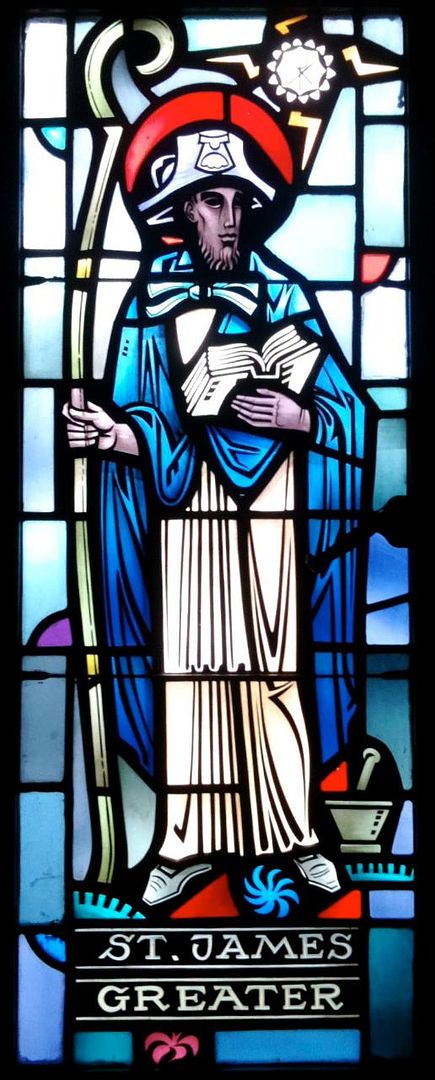
Following the death of Christ, James was present in the Upper Room, and on more than one recorded appearance of the Resurrected Jesus. From the time of Jesus’ Ascension into Heaven, there is little recorded history of James’ missionary activity until that of his martyrdom. Biblical scholars suggest that he probably traveled between Judea and Samaria, and tradition speaks of his journey to Spain, where later his mortal remains were received.

Saint James was the first of the apostles to suffer martyrdom, in Jerusalem, in approximately 44. After nine years preaching in Spain, he had returned to Jerusalem, and was brought before King Herod Agrippa. The Apostle had been preaching fearlessly there, curing the sick and the blind, and delivering possessed persons. Herod promptly sentenced James to execution, reported sparsely by Luke in the Acts of the Apostles: “About that time Herod the king laid violent hands upon some who belonged to the Church, and he killed James, the brother of John with the sword” (Acts 12, 1-2). As Clement of Alexandria, James died by beheading after having converting his accuser: “He who had brought him to the tribunal was so moved seeing him give testimony that he also confessed to being a Christian himself.”

Tradition holds that following his martyrdom in Jerusalem, his followers are believed to have carried his body down the coast and placed it in a stone boat—which was carried by angels to the northern coast of Spain. There, his remains were buried, and promptly forgotten about until the ninth century, when a hermit was led by heavenly vision to the spot. The tomb was rediscovered, and the relics authenticated. From that time, the spot-- Santiago (Iago translating as James) de Compostela—became a center of miracle and pilgrimage-- so much so that Compostela became the third greatest place of pilgrimage, just after Jerusalem and Rome. Today, pilgrims continue to flock to Compostelo, taking one of the many routes known as the “Camino." Pilgrims attach cockleshells—the symbol of Saint James-- or their facsimile to their hats or clothes as "pilgrim badges," signs that they'd venerated the holy relics of the great saint.

(For a recipe for Coquilles St. Jacques à la Provençale, traditionally eaten on the feast of Saint James, see here.)

Saint James is also recognized as having appeared in corporeal form, during the Spanish defense of their land and Christianity from the invading Moors. The saint is said to have appeared on a white horse at the Battle of Clavijo, adorned in cockle shells, in 844, while the Christians were in retreat before the onslaught of the Arab and Berber invaders. Thanks to James’ miraculous appearance, the Moors were defeated. The rallying cry of the Spanish troops, from that time, became “Santiago!”


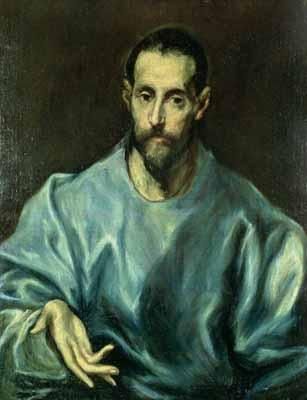
Saint James the Greater is recognized for his special place within the Disciples of Christ-- having been selected by Our Lord because of his burning, impetuous, and outspoken faith. Through his interaction with Jesus, these qualities were purified, and the former “Son of Thunder” could then proclaim the Gospel of peace. We could all benefit from the same purification, the conversion of our anger, temper, and frustration to righteous instruments of peace and Christian virtue. We look to Saint James today, for inspiration and intercession, that we might better embody the peaceful message of Jesus Christ.
Almighty Father,
by the martyrdom of Saint James you blessed the work of the early Church.
May his profession of faith give us courage and his prayers bring us strength.
Grant, O merciful God, that as thine holy Apostle Saint James, leaving his father and all that he had, without delay was obedient unto the calling of thy Son Jesus Christ, and followed him; so we, forsaking all worldly and carnal affections, may be evermore ready to follow thy holy commandments; through Jesus Christ our Lord. Amen.




Year 2: Day 206 of 365
Prayer Intentions: Deeper faith; Lives of charity and service; Suffering united with Christ.
Requested Intentions: Healing, successful relationships for son, financial success (J); Success of a company (L); For a religious society (J); Healing of a husband, strength as a faithful caregiver (D); Healing of a son (T); Financial security, Healing and guidance (M); Healing of a heart and relationship (V); Employment for daughter (J); For a marriage that glorifies the Lord (K); Resolution of family situation, parents’ health (A); Positive results (C); For a son’s employment, faith, and relationships (S); Restored family relationships (A); Healthy conception and delivery of children (J); For a girlfriend’s recovery from a debilitating mental illness (J); For a daughter’s successful examination results (A); Occupational success, health and safety of family (S); Reduction in anxiety for husband, financial freedom (S); Healing for a sister-in-law (J); For a family experiencing a difficult child custody case (M); Reunification of a family struggling with separation (M): For a son struggling with mental illness (M); Successful examination results (B); To be freed from the chains of sin (J); Admission to a good university (M); For successful surgery (T); For a mother’s mental health and for kindness and forgiveness, for housing problems, for dental health (T).

June 25: Saint William of Vercelli

Posted by Jacob

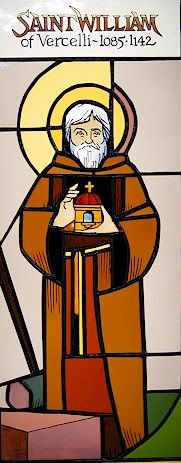
Today, June 25, we celebrate the feast day of Saint William of Vercelli (1085-1142), founder of the Order of Monte Vergine, also known as the “Williamites.” Saint William lived a quiet life of solitude and contemplation, listening intently for the voice of God, and following the directions he received. Through his obedience, William was taken far from home, worked many miracles, and established a thriving religious community—all because he was quiet, and paused to discern the Will of the Lord.

Born to nobility in Vercelli, Italy, William was orphaned at a young age when both his parents were killed. Subsequently raised by a pious family member, William matured into a contemplative young man with only one desire—to devote his life to the Lord. At the young age of 15, William left home, setting out on pilgrimage to Santiago de Compostela, Spain. As the journey was not difficult enough for him, he encircled his legs with tight iron bands, causing pain and making walking difficult, his suffering bringing him closer to God. Upon arrival, he worked some miracles including the healing of a blind man through prayer, and subsequently felt called to journey to the Holy Land. However, soon after departing, he was set upon by thieves, and following that encounter, felt the Will of God calling him to Italy.

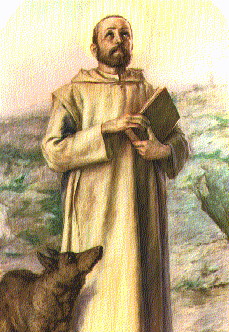
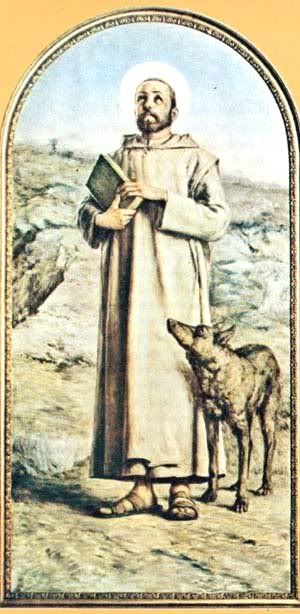
Saint William retired to Monte Vergiliano (today known as Monte Vergine, named for Our Blessed Mother), and became a hermit. There, he spent his days in prayer, fasting, and contemplation of the Lord. Especially devoted to the Blessed Virgin Mary, he began construction of a church in her honor, mining the rocks from the mountain by hand with the assistance of a lone donkey. As holy legend tells us, one evening, the donkey was killed and eaten by a wolf. Saint William called the wolf to him, ordering it to take the donkey’s place. The wolf, bowing in respect, and realizing that it had interrupted the work of God, immediately took up the task of dragging rocks from the quarry. The faithful who continue to travel on pilgrimage to Monte Vergine report that the wolf is still spotted today, visible to those who call upon the name of the Blessed Virgin.

Eventually, due to his working of more miraculous cures (none of which he sought credit for), the faithful began seeking William out on his mountain. His reputation for holiness attracted many disciples, both men and women, and he founded the Order of Mount Vergine—a religious community with strict rules of austerity. William and the nuns and monks of his order lived in peace and contemplation for some time, until the members of the order began complaining that William’s rules of poverty, fasting, and penance were too extreme.

There is evidence of heavenly support for the austerities of William’s rule. For example, William did not permit the order to eat meat, eggs, milk, or cheese. If someone tried to violate this regulation, storm clouds would appear in the sky and the lightning would destroy the illicit foodstuff that had been brought into the monastery.

With the members of the Order growing more disgruntled, William humbly removed himself from the situation to remove controversy, and ensure the future of the order. He traveled to Naples, where he served as advisor to the King Roger I, and established several more monasteries.

Saint William died of natural causes at the Guglielmo monastery near Nusco, Italy, where he was buried. Church tradition holds that William predicted the date and time of his death, and went to meet his Maker with peace and joy. At the time of his death, he had not yet written a Rule for his religious to govern their affairs. His successor, fearing the dissolution of a community without constitutions, placed them under the Rule of Saint Benedict. The community, which continues to exist today, now belongs to the Benedictine congregation of Subiaco, and has a much venerated picture of our Lady of Constantinople, to which pilgrimages are frequently made by the faithful. While Benedictine monks generally wear black robes, the monks who reside at Monte Vergine today continue to wear the white robes of the Williamites in honor of this holy man.

Saint William had complete trust in the Lord and in His Divine Providence. Ever faithful and contemplative, William was willing to leave his home as a youth, and subsequently leave the community he had built with his own hands in service to God. Patient, humble, and obedient, Saint William of Vercelli put the Lord’s work above his own desires at every moment of his life. We could do well by observing Saint William’s confidence in the Lord, and striving to imitate him by creating quiet moments in our own lives for prayer, reflection, and contemplation. It is in those moments that the Divine Plan for our own lives quietly unfolds… if we listen.


O God, Who hast set for us in Thy saints an example and a help to our weakness, to assist us to tread the path of salvation, grant us so to venerate the virtues of the blessed abbot William, that we may share in his prayers and follow in his footsteps. Through our Lord Jesus Christ, Thy Son, Who liveth and reigneth with Thee in the unity of the Holy Ghost, one God forever and ever. Amen.


Year 2: Day 176 of 365
Prayer Intentions: Quiet moments of contemplation; Open hearts to the Will of God.
Requested Intentions: For a mother’s mental health and for kindness and forgiveness, for housing problems, for dental health (T); For the soul of a departed friend (X); Restoration of health (D); Successful employment for couple (N); For employment for children (K); For health of friend, for successful relationships for children, for safe pregnancy for daughter (C); For the health of a mother (J); Virtue for daughter (V); Successful acceptance to college for nephew (M); For the health of a cousin (T); Freedom from legal difficulties for husband (S); Husband’s freedom from illness (L); Personal intentions (S); Successful passing of dental board examination (P); Blessings on a family (Z); Successful permanent employment (C); Healing of a son with autism (J).