Why pray the Rosary every day for a year?


Each time the Blessed Virgin has appeared-- whether it be to Saint Bernadette Soubirous at Lourdes; to Lucia, Jacinta, and Francisco at Fatima; or to Mariette Beco at Banneux-- she has asserted the importance, saving grace, and power of praying the Holy Rosary on a daily basis. Based upon her words, the Rosary is penance and conversion for sinners, a pathway to peace, an end to war, and a powerful act of faith in Jesus Christ. Pope Paul VI presented the Rosary as a powerful means to reach Christ "not merely with Mary but indeed, insofar as this is possible to us, in the same way as Mary, who is certainly the one who thought about Him more than anyone else has ever done."

To show us how this is done, perhaps no one has been more eloquent than the great Cardinal Newman, who wrote: "The great power of the Rosary consists in the fact that it translates the Creed into Prayer. Of course, the Creed is already in a certain sense a prayer and a great act of homage towards God, but the Rosary brings us to meditate again on the great truth of His life and death, and brings this truth close to our hearts. Even Christians, although they know God, usually fear rather than love Him. The strength of the Rosary lies in the particular manner in which it considers these mysteries, since all our thinking about Christ is intertwined with the thought of His Mother, in the relations between Mother and Son; the Holy Family is presented to us, the home in which God lived His infinite love."


As Mary said at Fatima, "Jesus wants to use you to make Me known and loved. He wishes to establish the devotion to My Immaculate Heart throughout the world. I promise salvation to whoever embraces it; these souls will be dear to God, like flowers put by Me to adorn his throne."


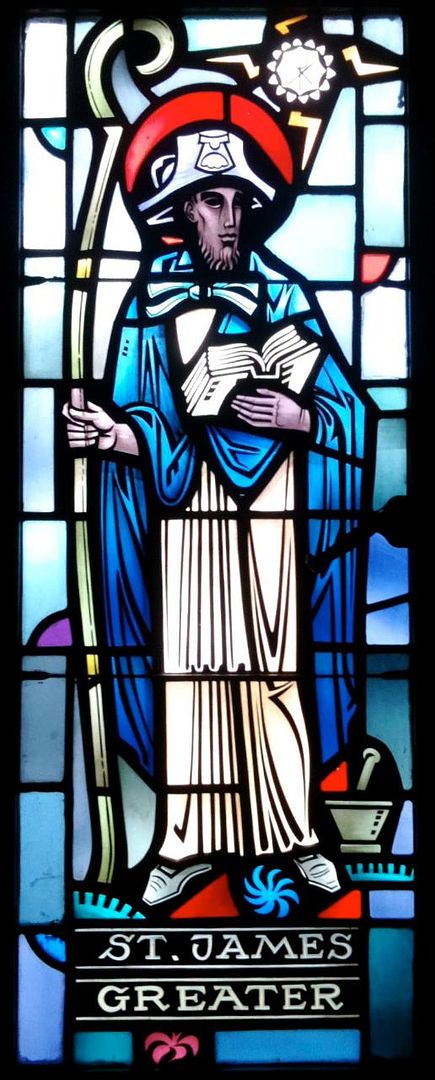
July 25, 2013: Saint James the Greater, "Son of Thunder"

Posted by Jacob

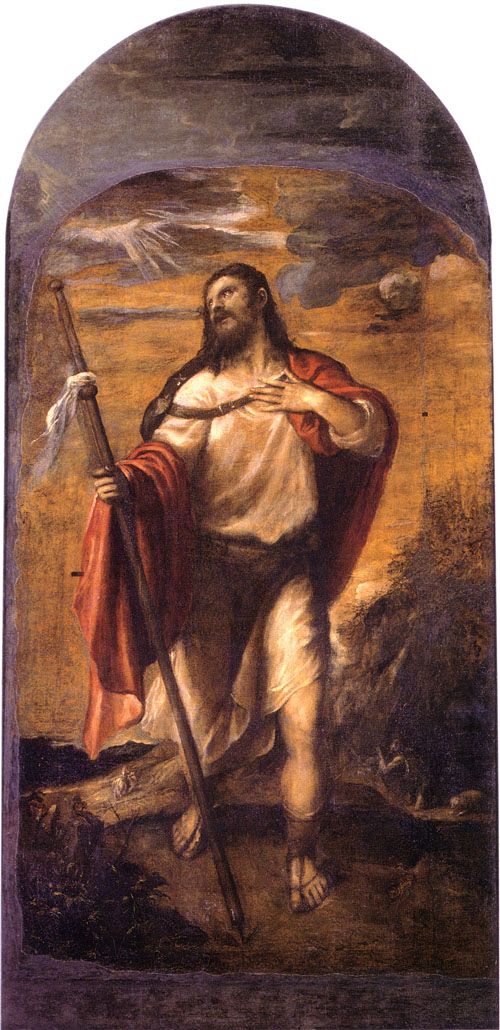
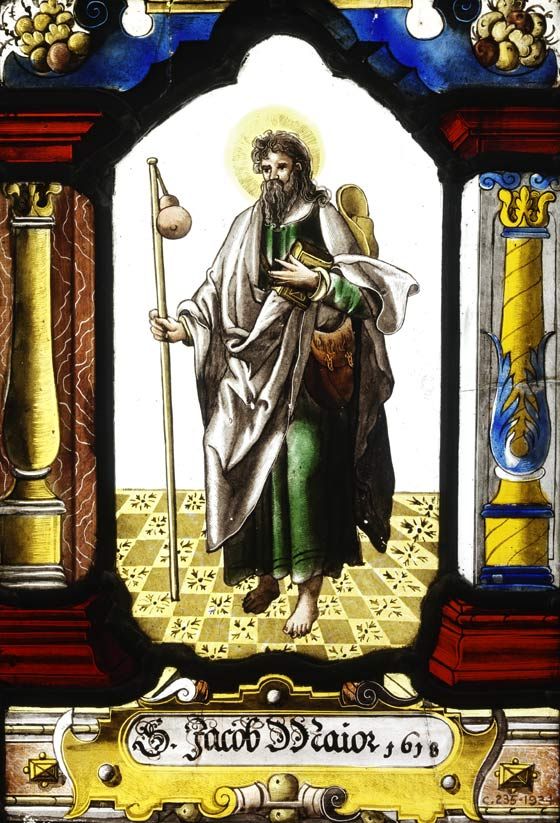
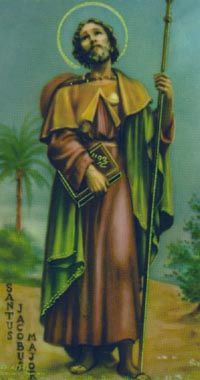
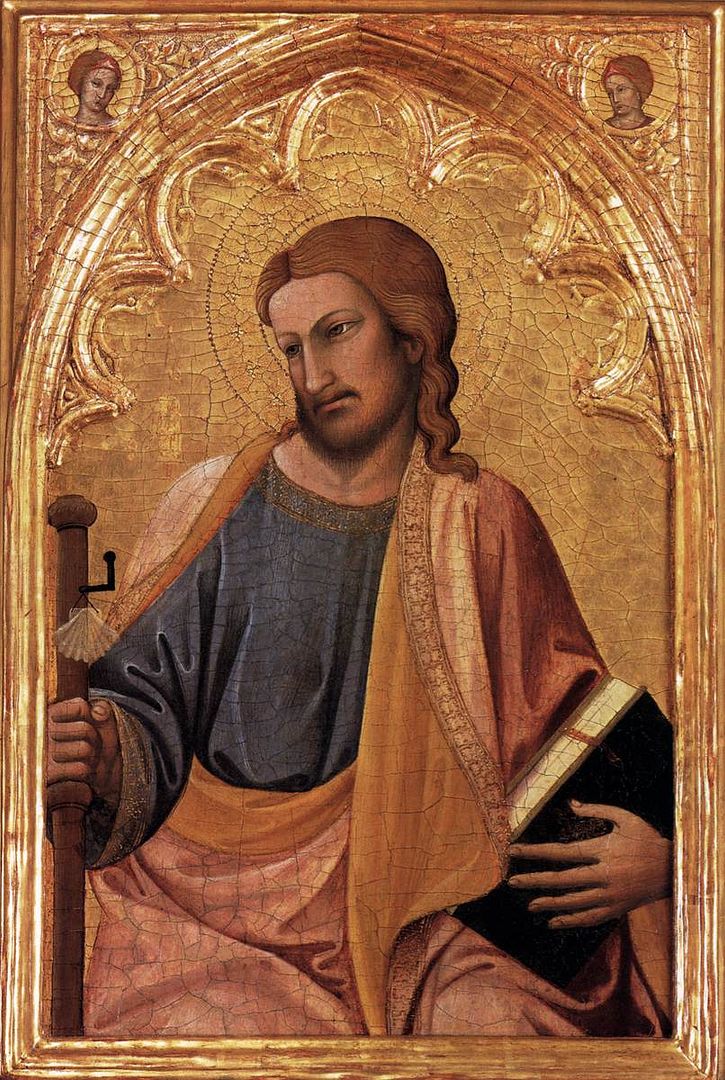
Today, July 25, we celebrate the feast day of Saint James the Greater (died 44), Disciple and friend of Christ, “Son of Thunder,” and first martyr of the Church. Impetuous and quick to temper, James was also a faithful companion to Our Lord, present at significant moments in His life. A gifted preacher, following the death of Jesus, James spent the days until his martyrdom in Spain, establishing the still-popular pilgrimage site of Santiago de Compostela. According to Saint Epiphanus and other historians, he also conserved his virginity in consecration to the Lord. He is honored as the patron of Spain, equestrians, blacksmiths, tanners, veterinarians, and many other locales and professions.

(For “James the Greater,” General Audience delivered by Pope Benedict XVI, June 21, 2006, visit here.)
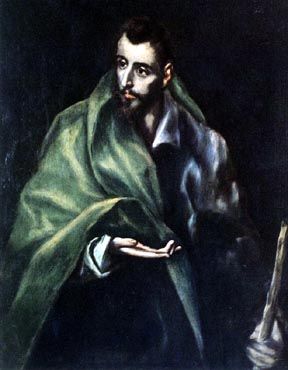
Saint James was the son of Zebedee, a Galilean fisherman, and Salome, a pious woman who tended after Christ. He and his younger brother, Saint John, were called as disciples just after Simon Peter and Andrew were called.

19When he had gone a little farther, he saw James son of Zebedee and his brother John in a boat, preparing their nets. 20Without delay he called them, and they left their father Zebedee in the boat with the hired men and followed him. (Mark 1: 19-20)
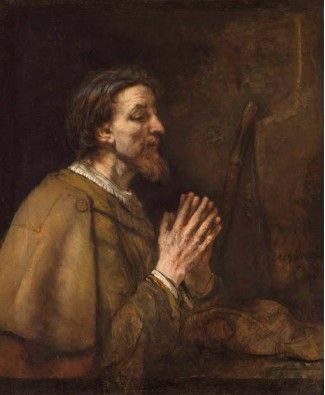

Saint James, along with Peter and John, are often mentioned together in Scripture, as the closest companions of Jesus. They were present at the healing of Peter’s mother in law:

29As soon as they left the synagogue, they went with James and John to the home of Simon and Andrew. 30Simon's mother-in-law was in bed with a fever, and they told Jesus about her. 31So he went to her, took her hand and helped her up. The fever left her and she began to wait on them. (Mark 1:29)

… and the raising of Jairus’ daughter:

51When he arrived at the house of Jairus, he did not let anyone go in with him except Peter, John and James, and the child's father and mother. 52Meanwhile, all the people were wailing and mourning for her. "Stop wailing," Jesus said. "She is not dead but asleep."
53They laughed at him, knowing that she was dead. 54But he took her by the hand and said, "My child, get up!" 55Her spirit returned, and at once she stood up. Then Jesus told them to give her something to eat. 56Her parents were astonished, but he ordered them not to tell anyone what had happened. (Luke 8: 51-56)
Saint James, Peter, and John were present at the Transfiguration of Our Lord:

2After six days Jesus took Peter, James and John with him and led them up a high mountain, where they were all alone. There he was transfigured before them. 3His clothes became dazzling white, whiter than anyone in the world could bleach them. 4And there appeared before them Elijah and Moses, who were talking with Jesus.
5Peter said to Jesus, "Rabbi, it is good for us to be here. Let us put up three shelters—one for you, one for Moses and one for Elijah." 6(He did not know what to say, they were so frightened.)
7Then a cloud appeared and enveloped them, and a voice came from the cloud: "This is my Son, whom I love. Listen to him!"
8Suddenly, when they looked around, they no longer saw anyone with them except Jesus. (Mark 9:2-8)

… and the Lord’s Agony in the Garden of Gethsemane:

36Then Jesus went with his disciples to a place called Gethsemane, and he said to them, "Sit here while I go over there and pray." 37He took Peter and the two sons of Zebedee along with him, and he began to be sorrowful and troubled. 38Then he said to them, "My soul is overwhelmed with sorrow to the point of death. Stay here and keep watch with me."

39Going a little farther, he fell with his face to the ground and prayed, "My Father, if it is possible, may this cup be taken from me. Yet not as I will, but as you will."
40Then he returned to his disciples and found them sleeping. "Could you men not keep watch with me for one hour?" he asked Peter. 41"Watch and pray so that you will not fall into temptation. The spirit is willing, but the body is weak."

42He went away a second time and prayed, "My Father, if it is not possible for this cup to be taken away unless I drink it, may your will be done."

43When he came back, he again found them sleeping, because their eyes were heavy. 44So he left them and went away once more and prayed the third time, saying the same thing.
45Then he returned to the disciples and said to them, "Are you still sleeping and resting? Look, the hour is near, and the Son of Man is betrayed into the hands of sinners. 46Rise, let us go! Here comes my betrayer!" (Matthew 26: 36-46)


Earning their nickname “Sons of Thunder,” James and his brother John are recorded as wishing to reign down fire from heaven on a Samaritan village which refused them hospitality:

51As the time approached for him to be taken up to heaven, Jesus resolutely set out for Jerusalem. 52And he sent messengers on ahead, who went into a Samaritan village to get things ready for him; 53but the people there did not welcome him, because he was heading for Jerusalem. 54When the disciples James and John saw this, they asked, "Lord, do you want us to call fire down from heaven to destroy them?" 55But Jesus turned and rebuked them, 56and they went to another village. (Luke 9: 51-56)
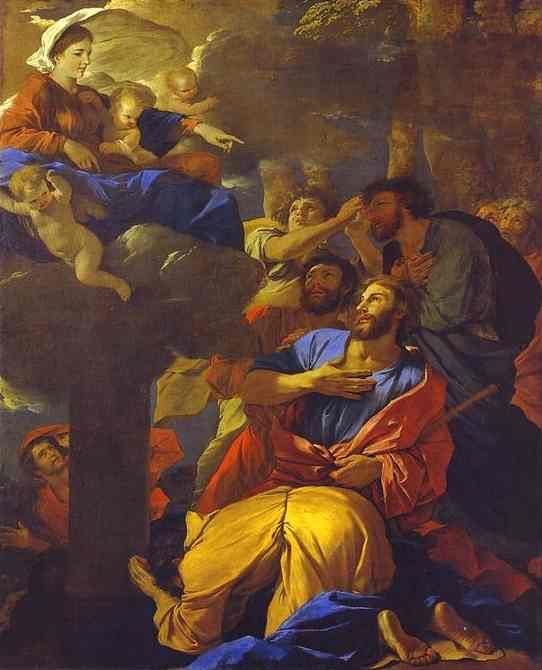

Perhaps James is remembered most for the conversation his mother, Salome, had with Jesus, requesting that her two sons be placed at His right and left-- not realizing the crucifixion and death that lie in store for Christ, but rather imagining an earthly kingdom and throne:

20Then the mother of Zebedee's sons came to Jesus with her sons and, kneeling down, asked a favor of him.

21"What is it you want?" he asked.
She said, "Grant that one of these two sons of mine may sit at your right and the other at your left in your kingdom."
22"You don't know what you are asking," Jesus said to them. "Can you drink the cup I am going to drink?"
"We can," they answered.
23Jesus said to them, "You will indeed drink from my cup, but to sit at my right or left is not for me to grant. These places belong to those for whom they have been prepared by my Father."
24When the ten heard about this, they were indignant with the two brothers. 25Jesus called them together and said, "You know that the rulers of the Gentiles lord it over them, and their high officials exercise authority over them. 26Not so with you. Instead, whoever wants to become great among you must be your servant, 27and whoever wants to be first must be your slave— 28just as the Son of Man did not come to be served, but to serve, and to give his life as a ransom for many." (Matthew 20: 20-28)
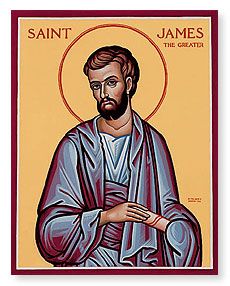
Following the death of Christ, James was present in the Upper Room, and on more than one recorded appearance of the Resurrected Jesus. From the time of Jesus’ Ascension into Heaven, there is little recorded history of James’ missionary activity until that of his martyrdom. Biblical scholars suggest that he probably traveled between Judea and Samaria, and tradition speaks of his journey to Spain, where later his mortal remains were received.

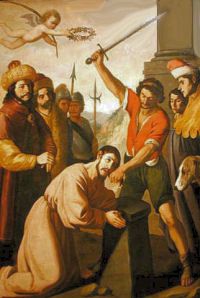
Saint James was the first of the apostles to suffer martyrdom, in Jerusalem, in approximately 44. After nine years preaching in Spain, he had returned to Jerusalem, and was brought before King Herod Agrippa. The Apostle had been preaching fearlessly there, curing the sick and the blind, and delivering possessed persons. Herod promptly sentenced James to execution, reported sparsely by Luke in the Acts of the Apostles: “About that time Herod the king laid violent hands upon some who belonged to the Church, and he killed James, the brother of John with the sword” (Acts 12, 1-2). As Clement of Alexandria, James died by beheading after having converting his accuser: “He who had brought him to the tribunal was so moved seeing him give testimony that he also confessed to being a Christian himself.”

Tradition holds that following his martyrdom in Jerusalem, his followers are believed to have carried his body down the coast and placed it in a stone boat—which was carried by angels to the northern coast of Spain. There, his remains were buried, and promptly forgotten about until the ninth century, when a hermit was led by heavenly vision to the spot. The tomb was rediscovered, and the relics authenticated. From that time, the spot-- Santiago (Iago translating as James) de Compostela—became a center of miracle and pilgrimage-- so much so that Compostela became the third greatest place of pilgrimage, just after Jerusalem and Rome. Today, pilgrims continue to flock to Compostelo, taking one of the many routes known as the “Camino." Pilgrims attach cockleshells—the symbol of Saint James-- or their facsimile to their hats or clothes as "pilgrim badges," signs that they'd venerated the holy relics of the great saint.

(For a recipe for Coquilles St. Jacques à la Provençale, traditionally eaten on the feast of Saint James, see here.)

Saint James is also recognized as having appeared in corporeal form, during the Spanish defense of their land and Christianity from the invading Moors. The saint is said to have appeared on a white horse at the Battle of Clavijo, adorned in cockle shells, in 844, while the Christians were in retreat before the onslaught of the Arab and Berber invaders. Thanks to James’ miraculous appearance, the Moors were defeated. The rallying cry of the Spanish troops, from that time, became “Santiago!”


Saint James the Greater is recognized for his special place within the Disciples of Christ-- having been selected by Our Lord because of his burning, impetuous, and outspoken faith. Through his interaction with Jesus, these qualities were purified, and the former “Son of Thunder” could then proclaim the Gospel of peace. We could all benefit from the same purification, the conversion of our anger, temper, and frustration to righteous instruments of peace and Christian virtue. We look to Saint James today, for inspiration and intercession, that we might better embody the peaceful message of Jesus Christ.
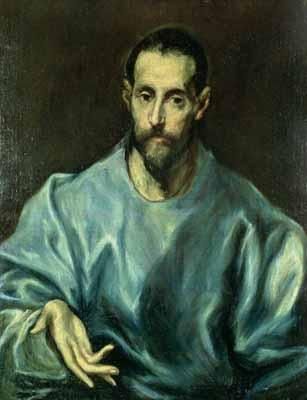
Almighty Father,
by the martyrdom of Saint James you blessed the work of the early Church.
May his profession of faith give us courage and his prayers bring us strength.
Grant, O merciful God, that as thine holy Apostle Saint James, leaving his father and all that he had, without delay was obedient unto the calling of thy Son Jesus Christ, and followed him; so we, forsaking all worldly and carnal affections, may be evermore ready to follow thy holy commandments; through Jesus Christ our Lord. Amen.


July 22, 2013: Saint Mary Magdalene

Posted by Jacob

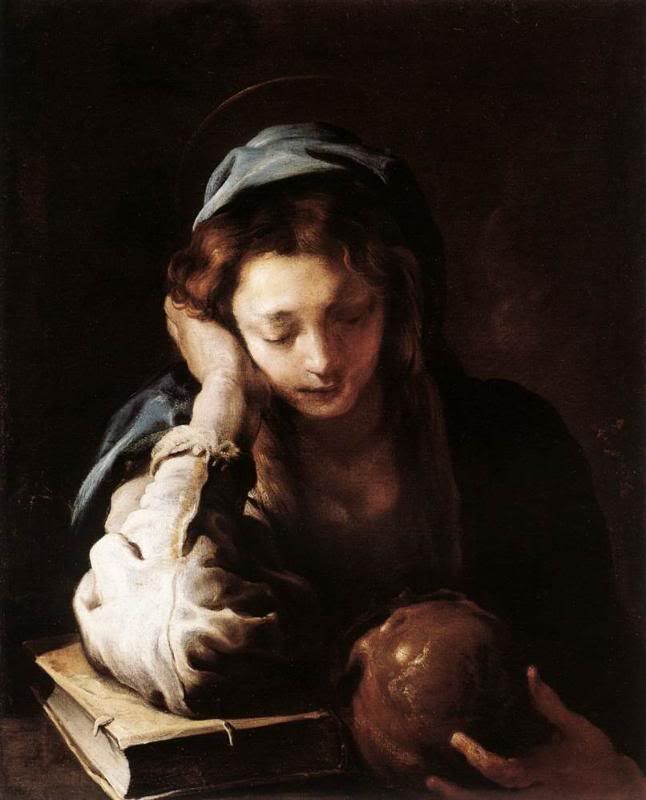
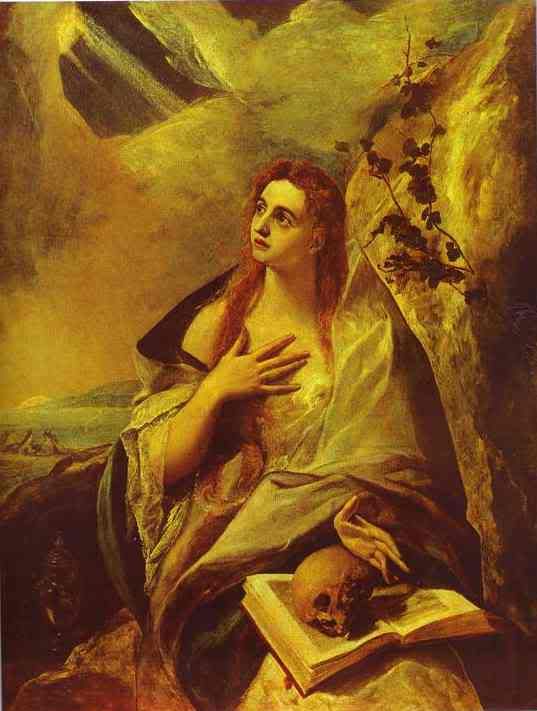
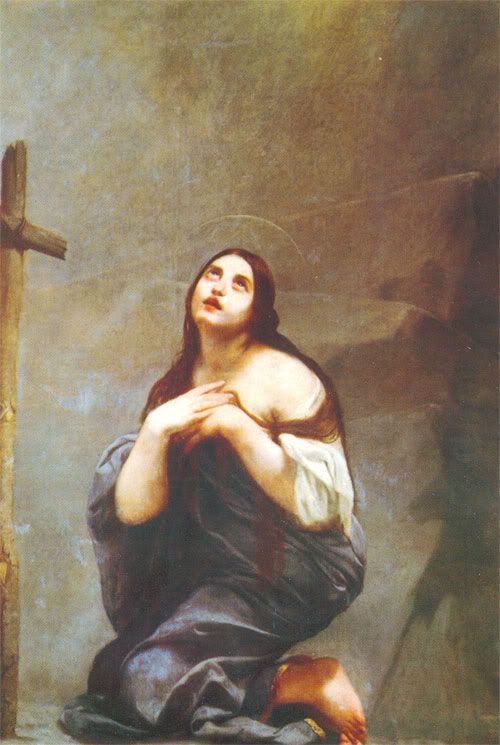
Today, July 22, we celebrate the feast day of Saint Mary Magdalene (dates unknown, first century), friend and disciple of Jesus, honored woman of Scripture, Penitent, and “Apostle of the Apostles.” What we know of the life of this saintly woman comes directly from Scripture:


1After this, Jesus traveled about from one town and village to another, proclaiming the good news of the kingdom of God. The Twelve were with him, 2and also some women who had been cured of evil spirits and diseases: Mary (called Magdalene) from whom seven demons had come out; 3Joanna the wife of Cuza, the manager of Herod's household; Susanna; and many others. These women were helping to support them out of their own means. (Luke 8: 1-3)

From this passage in Luke, we understand that Mary was offering support—possibly financial support, as well as tending to basic needs-- of Jesus and His disciples. She further is described as having been exorcised of seven demons, although some scholars belief this to be a description of illness (mental), rather than an indication of a past sinful life. In either case, it is clear that the grace of the Lord, through the love of Jesus Christ, healed Saint Mary Magdalene.

Despite being mentioned by name in all the Gospels, Biblical scholars are divided on the identity of Mary Magdalene throughout the Bible. In the sixth century, Pope Saint Gregory the Great conflated Mary Magdalene with the nameless woman who washed Christ's feet with her tears (Luke 7:36-50):

36Now one of the Pharisees invited Jesus to have dinner with him, so he went to the Pharisee's house and reclined at the table. 37When a woman who had lived a sinful life in that town learned that Jesus was eating at the Pharisee's house, she brought an alabaster jar of perfume, 38and as she stood behind him at his feet weeping, she began to wet his feet with her tears. Then she wiped them with her hair, kissed them and poured perfume on them.


39When the Pharisee who had invited him saw this, he said to himself, "If this man were a prophet, he would know who is touching him and what kind of woman she is—that she is a sinner."


40Jesus answered him, "Simon, I have something to tell you."


"Tell me, teacher," he said.


41"Two men owed money to a certain moneylender. One owed him five hundred denarii, and the other fifty. 42Neither of them had the money to pay him back, so he canceled the debts of both. Now which of them will love him more?"


43Simon replied, "I suppose the one who had the bigger debt canceled."


"You have judged correctly," Jesus said.


44Then he turned toward the woman and said to Simon, "Do you see this woman? I came into your house. You did not give me any water for my feet, but she wet my feet with her tears and wiped them with her hair. 45You did not give me a kiss, but this woman, from the time I entered, has not stopped kissing my feet. 46You did not put oil on my head, but she has poured perfume on my feet. 47Therefore, I tell you, her many sins have been forgiven—for she loved much. But he who has been forgiven little loves little."


48Then Jesus said to her, "Your sins are forgiven."


49The other guests began to say among themselves, "Who is this who even forgives sins?"


50Jesus said to the woman, "Your faith has saved you; go in peace." (Luke 7: 36-50)

Pope Saint Gregory the Great also identified Mary Magdalene as Mary of Bethany, sister of Martha and Lazarus (Luke 10:38-42):

38As Jesus and his disciples were on their way, he came to a village where a woman named Martha opened her home to him. 39She had a sister called Mary, who sat at the Lord's feet listening to what he said. 40But Martha was distracted by all the preparations that had to be made. She came to him and asked, "Lord, don't you care that my sister has left me to do the work by myself? Tell her to help me!"


41"Martha, Martha," the Lord answered, "you are worried and upset about many things, 42but only one thing is needed. Mary has chosen what is better, and it will not be taken away from her." (Luke 10:38-42)


Combining these Scriptures into the same figure gives the Church, and indeed the faithful, a powerful figure of repentance and spiritual renewal. Saint Mary Magdalene is at once a reformed prostitute—a penitent. She is identified as the first contemplative, sitting at the feet of Christ. She is one of the very few who stayed with Christ at the Crucifixion. And as we know from the Gospel of Saint John, Mary was chosen by the Lord to be the first witness to the Resurrection. For this, she has earned the title: the Apostle to the Apostles.
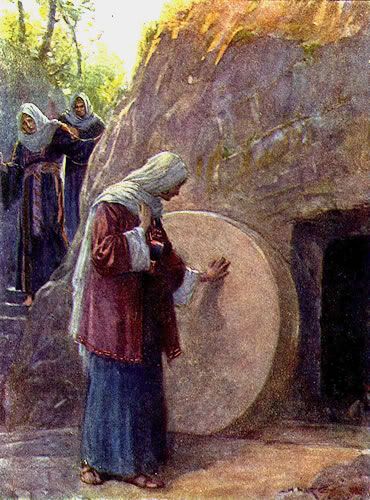
1 Early on the first day of the week, while it was still dark, Mary Magdalene went to the tomb and saw that the stone had been removed from the entrance. 2So she came running to Simon Peter and the other disciple, the one Jesus loved, and said, "They have taken the Lord out of the tomb, and we don't know where they have put him!"


10Then the disciples went back to their homes, 11but Mary stood outside the tomb crying. As she wept, she bent over to look into the tomb 12and saw two angels in white, seated where Jesus' body had been, one at the head and the other at the foot.


13They asked her, "Woman, why are you crying?"


"They have taken my Lord away," she said, "and I don't know where they have put him." 14At this, she turned around and saw Jesus standing there, but she did not realize that it was Jesus.


15"Woman," he said, "why are you crying? Who is it you are looking for?"


Thinking he was the gardener, she said, "Sir, if you have carried him away, tell me where you have put him, and I will get him."


16Jesus said to her, "Mary."


She turned toward him and cried out in Aramaic, "Rabboni!" (which means Teacher).


17Jesus said, "Do not hold on to me, for I have not yet returned to the Father. Go instead to my brothers and tell them, 'I am returning to my Father and your Father, to my God and your God.' "


18Mary Magdalene went to the disciples with the news: "I have seen the Lord!" And she told them that he had said these things to her. (John 20: 1-2; 10-18)


Pope Saint Gregory the Great said of Saint Mary Magdalene in a homily: “When Mary Magdalene came to the tomb and did not find the Lord’s body, she thought it had been taken away and so informed the disciples. After they came and saw the tomb, they too believed what Mary had told them. The text then says: “The disciples went back home,” and it adds: “but Mary wept and remained standing outside the tomb.” We should reflect on Mary’s attitude and the great love she felt for Christ; for though the disciples had left the tomb, she remained. She was still seeking the one she had not found, and while she sought she wept; burning with the fire of love, she longed for him who she thought had been taken away. And so it happened that the woman who stayed behind to seek Christ was the only one to see him. For perseverance is essential to any good deed, as the voice of truth tell us: 'Whoever perseveres to the end will be saved.'”

After Jesus ascended into heaven, Saint Mary Magdalene continued to be a vibrant and powerful witness to the people who knew her of the life transforming power of our Lord, God, and Savior Jesus Christ. She is thought to have worked under both Saints Peter and Paul, in Rome and Ephesus during that time. Tradition holds that fourteen years after Our Lord's death, she was put in a boat by the Jews without sails or oars along with Saints Lazarus and Martha, Saint Maximinus (who had baptized her), Saint. Sidonius ("the man born blind"), her maid Sera, and the body of Saint Anne, the mother of the Blessed Virgin. Per Holy Legend, these holy men and women were sent drifting out to sea and miraculously landed on the shores of Southern France, where Mary spent the rest of her life as a contemplative hermitess in a cave known as Sainte-Baume. She is said to have fasted so rigorously that angels delivered the Holy Eucharist to her as her only sustenance. Reportedly dying at age 72, Saint Mary was transported miraculously by nine angels, just before she died, to the oratory of Saint Maximinus (in Aix), where she received the last sacraments.

The relics of Mary Magdalene were interred in the oratory of Saint Maximinus, and later (approximately 745) translated to Vezelay (to protect them from Saracen invaders). In the thirteenth century, the relics were re-interred at the Dominican convent at the hermitage on La Sainte-Baume. During the French Revolution, the relics were secured in a sarcophagus sent by Pope Clement VIII, and were not re-consecrated until 1814, when the church on La Saint-Baume was restored. In 1822, the grotto at La Saint-Baume was re-consecrated, the head of this holy saint interred at the chapel. La Saint-Baume remains a vibrant center of pilgrimage for the faithful.

Saint Bede asserted that "what Magdalene once did, remains the type of what the whole Church does, and of what every perfect soul must ever do." Saint Mary Magdalene is an example of profound repentance and forgiveness. Her life, explained through the Holy Scriptures, reminds us of the mystery of Christianity—the absolute transition from sinfulness to sanctity possible through the grace of God. We pray today, on the feast of this Apostle of the Apostles, that we may undergo a miraculous transformation in our own lives, washed clean and made holy, repentant and joyful in the light of Christ!


Father,
your Son first entrusted to Mary Magdalene
the joyful news of His resurrection.
By her prayers and example
may we proclaim Christ as our living Lord
and one day see Him in glory,
for he lives and reigns with you and the Holy Spirit,
one God, for ever and ever. Amen.

 
Praise be to Thee, O Christ, Creator, Redeemer, and Savior,Of heaven and earth and seas, of angels and of menWhom we confess to be both God and Man,Who didst come in order to save sinners,Thyself without sin, taking the appearance of sin.


Among this poor flock, Thou didst visit the Canaanite woman and Mary Magdalene.


From the same table Thou didst nourish the one with the crumbs of the Divine Word, the other with Thy inebriating cup.


While Thou art seated at the typical feast in the house of Simon the Leper.


The Pharisee murmurs, while the woman weeps, conscious of her guilt.

The sinner despises his fellow-sinner, Thou, sinless one hearest the prayer of the penitent, cleanses her from stains, lovest her so as to make her beautiful.

She embraces the feet of her Lord, washes them with her tears, dries them with her hair: washing and wiping them, she anoints them with sweet ointment, and covers them with kisses.


Such, O Wisdom of the Father, is the banquet that delights Thee!


Though born of a Virgin, Thou cost not disdain to be touched by a sinful woman.


The Pharisee invited Thee but it is Mary that gives Thee a feast.


Thou forgivest much to her that loves much, and that falls not again into sin.

From seven devils cost Thou free her by Thy sevenfold Spirit.

To her, when Thou risest from the dead, Thou showest Thyself first of all.

By her, O Christ. Thou cost designate the Gentile Church, the stranger whom Thou callest to the children's table;


Who, at the feast of the Law and at the feast of grace, is despised by the pride of Pharisees, and harassed by leprous heresy.


Thou knowest what manner of woman she is, it is because she is a sinner that she touches Thee, and because she longs for pardon.


What could she have, poor sick one, without receiving it, and without the physician assisting her?


O King of kings, rich unto all, save us, wash away all the stains of our sins, O Thou the hope and glory of the saints. Amen.


March 13, 2013: Saint Leander of Seville

Posted by Jacob

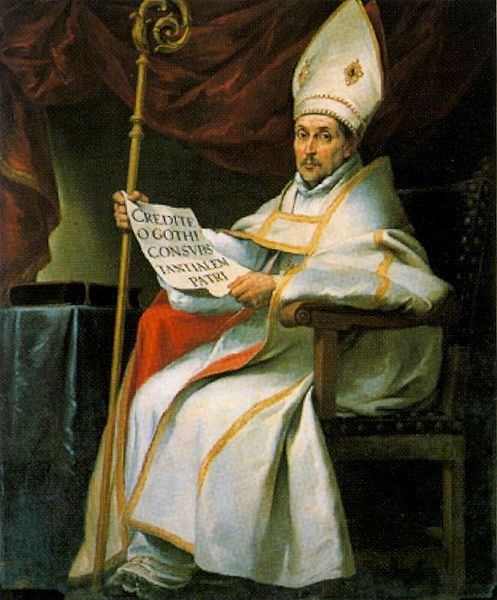
Today, March 13, we celebrate the feast of Saint Leander of Seville (534-600), bishop and confessor of the faith, apostle of Spain, and Doctor of the Church. Saint Leander, as bishop, instituted the practice of praying the Nicene Creed during Mass—a practice which continues today. He viewed the Creed as a manner in which to proclaim the divinity of Christ at a time when the Church suffered attack from various heresies, as well as an opportunity to reinforce the faith of the people. Through his diligent work, Saint Leander saw Catholicism flourish in Spain at a time of great political and religious uncertainty.


Leander was born in Cartagena, Spain to pious parents, Severianus and Theodora. He was the eldest of four children, his younger brothers and sisters being Saint Isidore of Seville (who would succeed him as Bishop of Seville), Saint Fulgentius of Ecija (who became bishop of Cartagena), and Saint Florentina of Cartagena. (who would become an Abbess). The children spent their youth in pious and humble pursuits, and upon reaching the age of consent, Saint Leander entered a Benedictine monastery in Seville. There, he became a model of learning and piety, and as a monk earned the respect of both the religious and lay communities alike. In 579 he was elected Bishop of Seville, which he accepted, although continued to practice his life of austerity and penance, rather than adopt the more comfortable lifestyle of a bishop.

Spain, at that time in history, was experiencing considerable political upheaval, with the Visogoths dominating part of the territory. Not only had this invading force captured much of the land, their rulers had also spread the Arian heresy amongst the people, with many of the congregations and bishops accepting this affront to the divinity of Christ. Upon his election as bishop, Saint Leander immediately began to combat this heresy with all his strength, relying on the Lord, and seeing almost immediately the fruits of his labor. The heresy began to lose hold over the people, including the two sons of the Visogothic King Leovigild, Hermenegild and Reccared. These conversions angered the king considerably, and Leander was exiled to Constantinople.

In Constantinople, Leander met and became close friends with the Papal Legate stationed there, the future Pope Saint Gregory the Great. This action earned him the king's wrath and exile to Constantinople, where he met and became close friends of the Papal Legate, the future Pope Gregory the Great. Saint Leander served as a contemporary and advisor to Saint Gregory, encouraging him to write his famous commentary on the Book of Job entitled the “Moralia.”

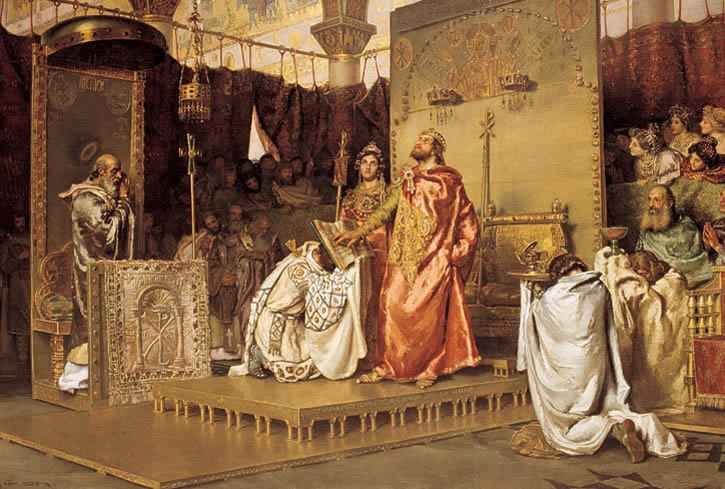
After some time, King Leovigild summoned Leander back to Seville. Having experienced a change of heart, he wished for Leander to instruct his son Reccared—who would inherit the throne—in the ways of the faith. Through Leander’s instruction and model, the people of Spain were converted. He presided over the third Council of Toledo, which upheld the consubstantiality of the Trinity, and brought about many moral reforms in the Church. Saint Leader further wrote an influential Rule for Spanish nuns and introduced the practice of praying the Nicene Creed at Mass. A prolific writer, unfortunately most of his works have been lost to history, although much of the correspondence written by Gregory the Great to his attention remains extant.

King Leovigild rejects Arianism and embraces the true faith in front of Saint Leander

After a long life of fighting heresies and preaching the truth, Saint Leander died around the year 600. He was succeeded by his brother, Isidore, who said of him: "This man of suave eloquence and eminent talent shone as brightly by his virtues as by his doctrine. By his faith and zeal the Gothic people have been converted from Arianism to the Catholic faith"

Saint Leander held to the truth of the faith, despite overwhelming opposition and exile. Not only did he believe the truth, he sought to bring others to the light of the faith through tireless work. As modern Christians, we rarely consider the work of these early defenders of the faith, who lived their lives in constant proclamation of the Kingdom of Heaven. We might, during this Lenten season, take a lesson from these holy men and women, not only believing our faith, but living it visibly as witness to others!


Saint Leander, pray for us that we will always seek truth, and never shy away from defending it. In Christ’s Name, we pray. Amen


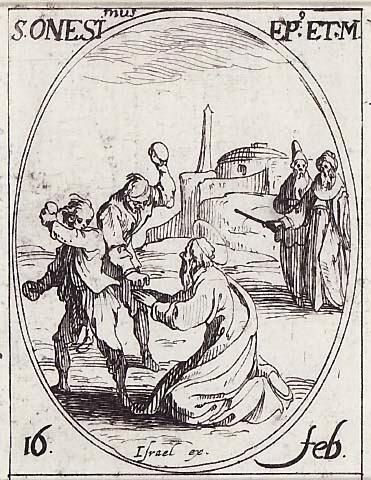
February 16, 2013: Saint Onesimus, the "Saved Slave"

Posted by Jacob


Today, February 16, we celebrate the feast day of Saint Onesimus, the “Saved Slave” (died 68, also know as Saint Onesimus of Byzantium and the Holy Apostle Onesimus).  Saint Onesimus was a slave to Philemon who was converted by Saint Paul. Onesimus had stolen from Philemon, and was forced to flee for safety.  He sought out Saint Paul, who was being held captive in Rome.  There, Saint Paul received him with kindness and love, helping him realize that his theft was wrong.  Not only did Onesimus repent for his crimes, he accepted the Christian faith and was baptized by Saint Paul.

Filled with the Holy Spirit, Onesimus was sent back to Philemon accompanied by a beautiful letter penned by the imprisoned saint.  In Paul’s Epistle to Philemon, he makes a strong case for Philemon to grant Onesimus his freedom, so that he might accompany Paul and preach the Gospel as a disciple. 

1 Paul, a prisoner of Jesus Christ, and Timothy our brother, unto Philemon our dearly beloved, and fellow laborer,
2 And to our beloved Apphia, and Archippus our fellow soldier, and to the church in thy house:
3 Grace to you, and peace, from God our Father and the Lord Jesus Christ.
4 I thank my God, making mention of thee always in my prayers,
5 Hearing of thy love and faith, which thou hast toward the Lord Jesus, and toward all saints;
6 That the communication of thy faith may become effectual by the acknowledging of every good thing which is in you in Christ Jesus.
7 For we have great joy and consolation in thy love, because the bowels of the saints are refreshed by thee, brother.
8 Wherefore, though I might be much bold in Christ to enjoin thee that which is convenient,
9 Yet for love's sake I rather beseech thee, being such an one as Paul the aged, and now also a prisoner of Jesus Christ.
10 I beseech thee for my son Onesimus, whom I have begotten in my bonds:
11 Which in time past was to thee unprofitable, but now profitable to thee and to me:
12 Whom I have sent again: thou therefore receive him, that is, mine own bowels:
13 Whom I would have retained with me, that in thy stead he might have ministered unto me in the bonds of the gospel:
14 But without thy mind would I do nothing; that thy benefit should not be as it were of necessity, but willingly.
15 For perhaps he therefore departed for a season, that thou shouldest receive him for ever;
16 Not now as a servant, but above a servant, a brother beloved, specially to me, but how much more unto thee, both in the flesh, and in the Lord?
17 If thou count me therefore a partner, receive him as myself.
18 If he hath wronged thee, or oweth thee ought, put that on mine account;
19 I Paul have written it with mine own hand, I will repay it: albeit I do not say to thee how thou owest unto me even thine own self besides.
20 Yea, brother, let me have joy of thee in the Lord: refresh my bowels in the Lord.
21 Having confidence in thy obedience I wrote unto thee, knowing that thou wilt also do more than I say.
22 But withal prepare me also a lodging: for I trust that through your prayers I shall be given unto you.
23 There salute thee Epaphras, my fellow prisoner in Christ Jesus;
24 Marcus, Aristarchus, Demas, Lucas, my fellow laborers.
25 The grace of our Lord Jesus Christ be with your spirit. Amen.

Philemon, for his part, forgave Onesimus, and he promptly returned to his spiritual father in prison.  Thereafter, he faithfully served Saint Paul, and among his many deeds, bore Paul’s Epistle to the Colossians on its journey of faith.

Saint Onesimus, as recorded by Saint Jerome and other Church fathers, became a zealous preacher of the Gospel throughout the region, eventually succeeding Saint Timothy as bishop of Ephesus.  There he preached frequently and ardently, inflamed with love and the Holy Spirit.  His preaching, of course, attracted the attention of the authorities, and during the persecutions under Emperor Trajan, he was arrested and taken in chains to Rome.  There, he was imprisoned for 18 days, during which time he was encouraged to recant his faith.  When he refused, his legs and thighs were broken with bludgeons, and he was subsequently stoned to death.  Following his death, his head was separated from his body with a sword, and local Christians buried him in a silver coffin.

The life of Saint Onesimus is one that holds great lessons for us as Christians.  Paul brings Onesimus to the faith through gentle love and support, coupled with firm teachings grounded in Christian virtue:  to truly become free, one must repent and ask forgiveness for sinful behavior.  And with that freedom, the soul can grow and flourish into a great vehicle of God’s love and grace, illustrated by the life of Onesimus and the many he brought to Christ.


God of liberty, through Saint Paul the Apostle you brought your servant Saint Onesimus to spiritual and temporal freedom; liberate us, we pray, so that we may be equipped to serve you fully.  We ask this through Christ, our Lord and Savior.  Amen.

January 25, 2013: The Conversion of Saint Paul

Posted by Jacob

O ruler of the universe, Lord God,

great deeds are they that you have done,
surpassing human understanding.
Your ways are ways of righteousness and truth,


O King of all the ages.
Who can fail to do you homage, Lord
and sing the praises of your Name?
for you only are the Holy One.


All nations will draw near and fall down before you
because your just and holy works have been revealed.
Glory to the Father, and to the Son, and to the Holy Spirit:
as it was in the beginning, is now, and will be for ever. Amen.

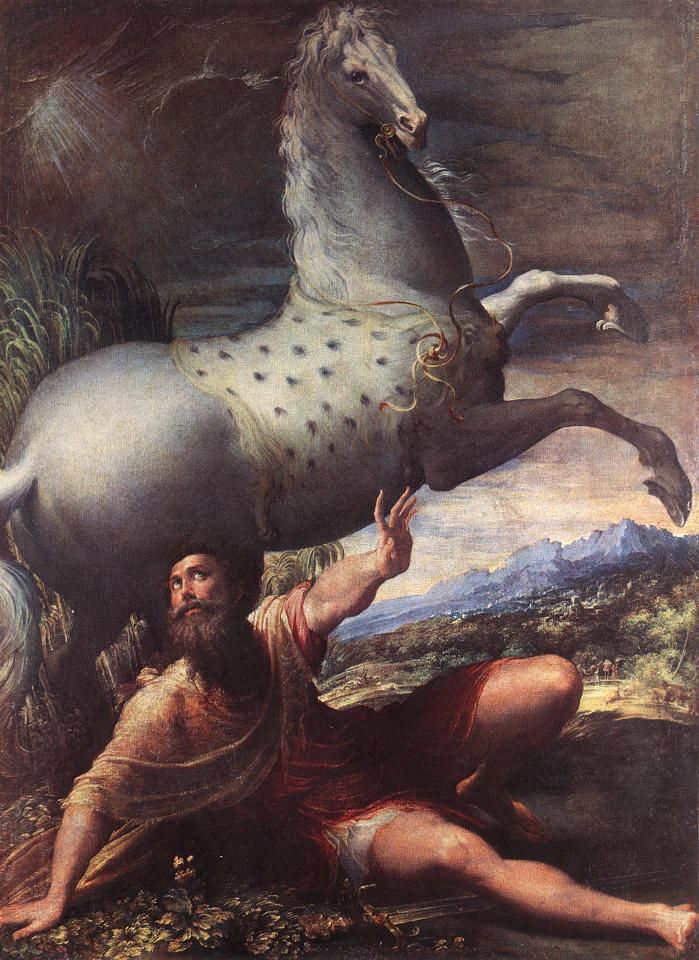
January 25 marks the feast day of the Conversion of Saint Paul, while traveling on the road to Damascus. During this remarkable moment, Paul comes face to face with Jesus, who states, “I am Jesus, the one you are persecuting.” Paul’s heart is changed, as is his life. His encounter with Jesus transforms his beliefs, and his prolific theology springs forth, which he shares with all who will listen. For Paul, an everyday trip becomes the start of an extraordinary journey toward the Lord. And for him, the path to God is love.
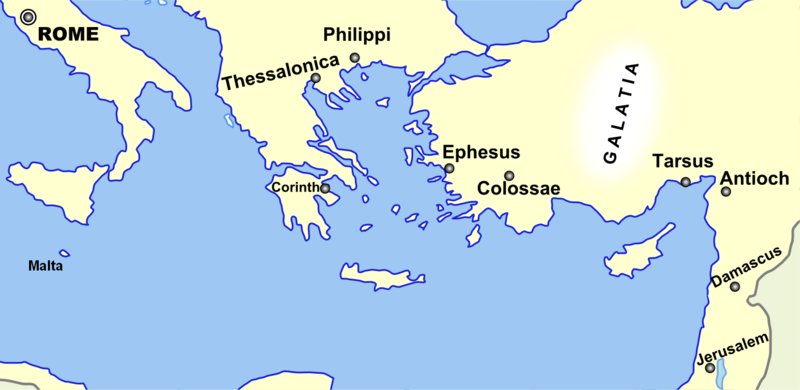
Born in Tarsus to a noble family, Saint Paul was at first named Saul. His family, given the laws at the time, were bestowed the rights and privileges of citizens of the Roman Empire. Saul grew up instructed in Mosaic Law, which he strictly observed. Sent to Jerusalem to study, Saul mentored with the strictest and most prideful sect of Pharisees. As was the Jewish rule of the time, he also learned the craft of tent-making. During this time (36 A.D.), Christianity was spreading throughout the region, but was not to be tolerated.

Saint Stephen the Deacon was an early martyr of the church at that time. He was persecuted and put on trial by the Sanhedrin for preaching the message of Christ. Throughout his trial, he remained steadfast in his faith, with “the countenance of an angel.” Eventually, the observers, acting “as a single man,” rushed at him, dragged him from the city, and stoned him to death. While they were doing so, they laid their cloaks at the feet of Saul, who kept them—a sign at the times for responsibility of the execution. While he was dying, Saint Stephen pleaded for the forgiveness of his tormentors, including Saul. 60 He fell to his knees and cried out in a loud voice, “Lord do not hold this sin against them.” And with that he died. (Acts of the Apostles, 7:60) Saints and theologians credit Saint Stephen’s intercession as one of the precursors to the Lord’s conversion of Saul.
1 Saul, for his part, concurred in the act of killing. That day saw the beginning of a great persecution of the church in Jerusalem. (Acts of the Apostles, 8:1) By virtue of the power he had received from the high priest, Saul dragged Christians out of their homes, loaded them with chains, and thrust them into prison where they were tortured and oftentimes executed. He was ruthless and unmoved by their pleas for mercy. In the fury of his zeal he asked for permission to persecute all the Jews in Damascus who confessed to Jesus Christ, and to bring them in bonds to Jerusalem, that they might serve as examples for the others. It was with this permission that Saul, and his assistants, set off on the road to Damascus, where he would encounter the saving grace, and unquestionable patience and mercy of the Lord.

1 Saul, still breathing murderous threats against the Lord’s disciples, went to the high priest 2 and asked him for letters to the synagogues in Damascus which would empower him to arrest and bring to Jerusalem anyone he might find, man or woman, living according to the new way. 3 As he traveled along and was approaching Damascus, a light form the sky suddenly flashed about him. 4 He fell to the ground and at the same time heard a voice saying, “Saul, Saul, why do you persecute me?” 5 “Who are you, sir?” he asked. The voice answered, “I am Jesus, the one you are persecuting. 6 Get up and go into the city, where you will be told what to do.” (Acts of the Apostles, 9:1-6)

In his epistles, Paul details that while he was struck down and blinded, he experienced a vision of Jesus. But he further explains that vision does not fully capture the experience. Rather, an “illumination” of his life, and above all, a “revelation” of the vocation that will become his calling. He preaches throughout the world the mysteries of Christ, and the simple truth that conversion was not the result of a development of thought or reflection, but the fruit of divine intervention-- an unforeseeable, divine grace. Paul’s message is clear: Jesus Christ must remain the center of our lives, so that our identity is tied to his, just as Paul’s identity was reborn through his encounter with Christ. Our lives are made whole through the Eucharist, by communion with Christ, and in his Word which restores purity and virtue.

Saint Paul went on to preach throughout the Mediterranean. He authored thirteen epistles of the New Testament, spreading the word of God, and greatly contributing to the growth of the Church. The blasphemer and persecutor had become the greatest writer of that time.


Upon returning to Jerusalem (approximately 60 AD), Saint Paul was beheaded, a Christian martyr. His remains are buried at the Basilica of Saint Paul, outside the walls of Rome. Recent scientific inquiry into the remains, at the behest of Pope Benedict XVI, has confirmed their authenticity.

Pope Benedict XVI, in a general audience, spoke of Saint Paul, saying, “Clement of Rome, my Predecessor to this Apostolic See, wrote of [Paul of Tarsus] in the last years of the first century: ‘Because of jealousy and discord, Paul was obliged to show us how one obtains the prize of patience.... After preaching justice to all in the world, and after having arrived at the limits of the West, he endured martyrdom before the political rulers; in this way he left this world and reached the holy place, thus becoming the greatest model of perseverance.’”

Saint Paul was a tireless preacher of the truth of Christ’s love, his letter beautiful and elegant instruction in the salvation of the Lord. But he is the same man, Saul, who ceaselessly persecuted Christians, prior to his meeting Jesus on the road to Damascus. In considering that meeting, we are struck by his amazing conversion, his rebirth into life through the love and saving grace of Christ. No longer was redemption bound by the law, or acquired through works, but instead, assured through commitment to Christ and his loving forgiveness. We are left with the certainty that if the Lord can enable Saul to start anew as Saint Paul, He will change us for the better if we believe whole-heartedly and with conviction. Called to conversion on a daily basis, today we pause to examine what we could do better, and ask our Lord to change our hearts.


38 For I am certain that neither death nor life, neither angels nor principalities, neither the present nor the future, nor powers, 39 neither height nor depth nor any other creature, will be able to separate us from the love of God that comes to us in Jesus Christ, our Lord. (Romans 8:38-39)


O God, by the preaching of your apostle Paul you have caused the light of the Gospel to shine throughout the world: Grant, we pray, that we, having his wonderful conversion in remembrance, may show ourselves thankful to you by following his holy teaching; through Jesus Christ our Lord, who lives and reigns with you, in the unity of the Holy Spirit, one God, now and for ever. Amen.