Why pray the Rosary every day for a year?


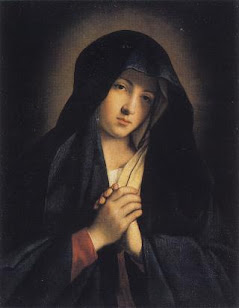
Each time the Blessed Virgin has appeared-- whether it be to Saint Bernadette Soubirous at Lourdes; to Lucia, Jacinta, and Francisco at Fatima; or to Mariette Beco at Banneux-- she has asserted the importance, saving grace, and power of praying the Holy Rosary on a daily basis. Based upon her words, the Rosary is penance and conversion for sinners, a pathway to peace, an end to war, and a powerful act of faith in Jesus Christ. Pope Paul VI presented the Rosary as a powerful means to reach Christ "not merely with Mary but indeed, insofar as this is possible to us, in the same way as Mary, who is certainly the one who thought about Him more than anyone else has ever done."

To show us how this is done, perhaps no one has been more eloquent than the great Cardinal Newman, who wrote: "The great power of the Rosary consists in the fact that it translates the Creed into Prayer. Of course, the Creed is already in a certain sense a prayer and a great act of homage towards God, but the Rosary brings us to meditate again on the great truth of His life and death, and brings this truth close to our hearts. Even Christians, although they know God, usually fear rather than love Him. The strength of the Rosary lies in the particular manner in which it considers these mysteries, since all our thinking about Christ is intertwined with the thought of His Mother, in the relations between Mother and Son; the Holy Family is presented to us, the home in which God lived His infinite love."


As Mary said at Fatima, "Jesus wants to use you to make Me known and loved. He wishes to establish the devotion to My Immaculate Heart throughout the world. I promise salvation to whoever embraces it; these souls will be dear to God, like flowers put by Me to adorn his throne."


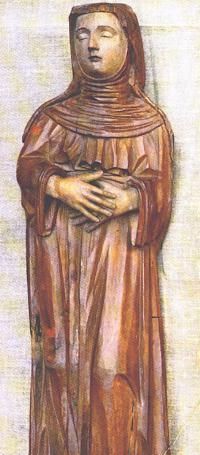
January 5, 2013: Saint Genoveva Torres Morales

Posted by Jacob


“Only love pushes me to work.”

Today, January 5, we celebrate the feast day of a courageous “modern” saint, Saint Genoveva Torres Morales (1870-1956), foundress of the Congregation of the Sacred Heart of Jesus and the Holy Angels (The AngĂ©licas).   In his canonization homily, Pope John Paul II proclaimed, “Saint Genoveva Torres was an instrument of God's tender love for lonely people in need of love, comfort and physical and spiritual care. The characteristic note that fuelled her spirituality was adoration of the Eucharist for the expiation of sins, which formed the basis of an apostolate full of humility and simplicity, of self-denial and charity. “

Genoveva was born in Almenara, Spain, in 1870.  She was the youngest of six children born to her parents, and sadly, by the time she reached eight years of age, her parents and four of her siblings had died.  Genoveva, despite her young age, was left to care for herself and her younger brother, Jose.  Jose was respectful to his sister, but was also demanding and difficult to raise, and Genoveva found herself alone most of the time.  It was from this early age that she found joy in her solitude, using it to grow closer to the Lord.  By age 10, Genoveva had become a voracious reader, reading everything she could, particularly spiritual books. Here, she found her life’s rule, that the only pathway to true happiness was through submission to the will of God.  For Genoveva, this became her life’s mission, to follow God’s directives, and fulfill the meaning of her creation.

Genoveva’s life was far from easy.  Not only did she raise her brother single-handedly, as a child, at approximately age 13, her left leg was amputated due to an infection and subsequent gangrene.  As anesthesia was expensive, she suffered without sufficient pain medication, and her physical suffering—in the form of pain and sickness—continued throughout her life.  While she became accustomed to using crutches, Saint Genoveva’s leg never properly healed, and for the remainder of her life, she was never far from suffering.

Following surgery, Genoveva took up residence at the Mercy Home, run by Carmelite nuns.  For nine years, from ages 15 to 24, she deepened her life of piety and faith, and honed her practical sewing skills.  She also, during this time, met and befriended Father Carlos Ferris, a Jesuit priest, who became her spiritual guide in founding her own order and charitable organization.

While Genoveva intended fully to join the Carmelite order, she was denied due to her physical limitations.  Wishing for nothing more than to be consecrated to the Lord, Genoveva continued in prayer and piety, praying for guidance, and seeking to form herself to His will.

At the age of 41, Genoveva was encouraged to form her own religious community for women, who might live together and support themselves through charity and works.  The congregation was named the Congregation of the Sacred Heart of Jesus and the Holy Angels. The order would also care for those women who had suffered extensive hardship in life, which Genoveva was all too familiar with.  Her first community was established in Valencia, Spain. With its establishment, women began arriving, wishing to join in the apostolic and spiritual life created, and soon, other communities were formed throughout Spain.  Saint Genoveva’s order received papal approval in 1953, three years before her death.
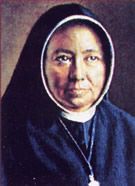
The constant establishment of new foundations and communities was difficult for Mother Genoveva, who wished nothing more than to return to her interior solitude, alone with the Lord.  However, she never let her own personal discomfort or physical suffering interfere with the acceptance of God’s call.  She is remembered for saying, "Even if I must suffer greatly, thanks be to God's mercy, I will not lack courage".  Saint Genoveva further inspires us today with her reputed kindness and acceptance of all people as God’s creations, as well as for her sense of humor despite her pain and suffering. 


Quotations from Saint Genoveva:

“I loved freedom of heart very much, and worked and am working to achieve it fully. It does the soul so much good that every effort is nothing compared with this free condition of the heart.” 

“Even if I must suffer greatly, thanks be to God's mercy, I will not lack courage.”

"That the torch of faith be our beacon. Love God and neighbor our guide, our strength and hope.

“No proof is needed that we love God, if we leave a little difficulty to serve you faithfully. To cope with the difficulties of life is necessary fortitude. "

“Charity is manifested daily in kindness, mutual respect, support, and small sacrifices. Living without suffering, is to live without love, love without suffering, is killed.”
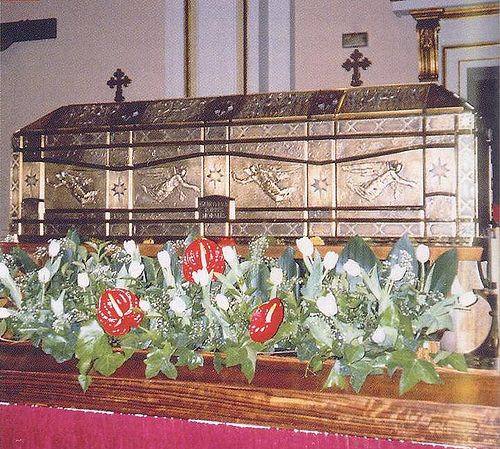
Saint Genoveva's Entombed Relics


Oh God, rich in mercy, who through Santa Genoveva Torres Morales, virgin, invalid in her body, you have shown the greatness of the love of the love of the Heart of Christ, especially for those living alone.  By his intercession, grant us the ability to faithfully imitate and follow your Son Jesus Christ. He, who lives and reigns with you and the Holy Spirit, one God, for ever and ever. Amen.
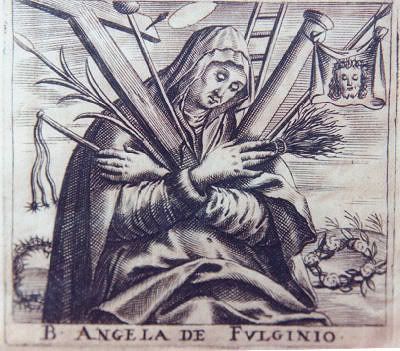
January 4, 2013: Blessed Angela of Foligno, "Mistress of Theologians"

Posted by Jacob

“God is the one who leads me and elevates me to that state. I do not go to it on my own, for by myself I would not know how to want, desire, or seek it. I am now continually in this state. Furthermore, God very often elevates me to this state with no need, even, for my consent; for when I hope or expect it least, when I am not thinking about anything, suddenly my soul is elevated by God and I hold dominion over and comprehend the whole world. It seems, then, as if I am no longer on earth but in heaven, in God.”

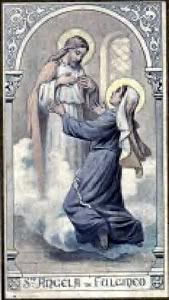
Today, January 4, we celebrate the feast day of Blessed Angela of Foligno (1248-1309).  Blessed Angela was born into a wealthy Italian family. In her own words, she lived a “mortally sinful” life for her first 40 years, proud and comfortable in her wealth and privilege. Angela was reportedly so embarrassed of her life, she made “false confessions” during the Sacrament of Reconciliation so that she could publicly receive the Eucharist and avoid the scrutiny of others. Following one such occasion, overcome with shame, she prayed in earnest for forgiveness and was visited by a vision of St. Francis of Assisi who offered help.

Shortly after this initial vision, Saint Angela’s remaining family members (husband, mother, and children) died, and she fully converted to Christ. Angela joined the Third Order of Saint Francis, and grew a large community committed to poverty, chastity, and obedience and serving the poor of the community. Throughout her life, Angela continued to experience mystical visions during her deep and reverent prayer. She came to record her conversion and visions in the Book of Visions and Instructions, and based on this work came to be known as the “Mistress of Theologians.”

For Angela “the whole world was filled with God,” and she was in almost constant communion with Him. Angela herself tells us that at times she was overcome with grief because she could see nothing but the extraordinary goodness of God and, in contrast, the vanity of earthly things and the ingratitude of creatures. The sight of a crucifix produced in Saint Angela torrents of tears.

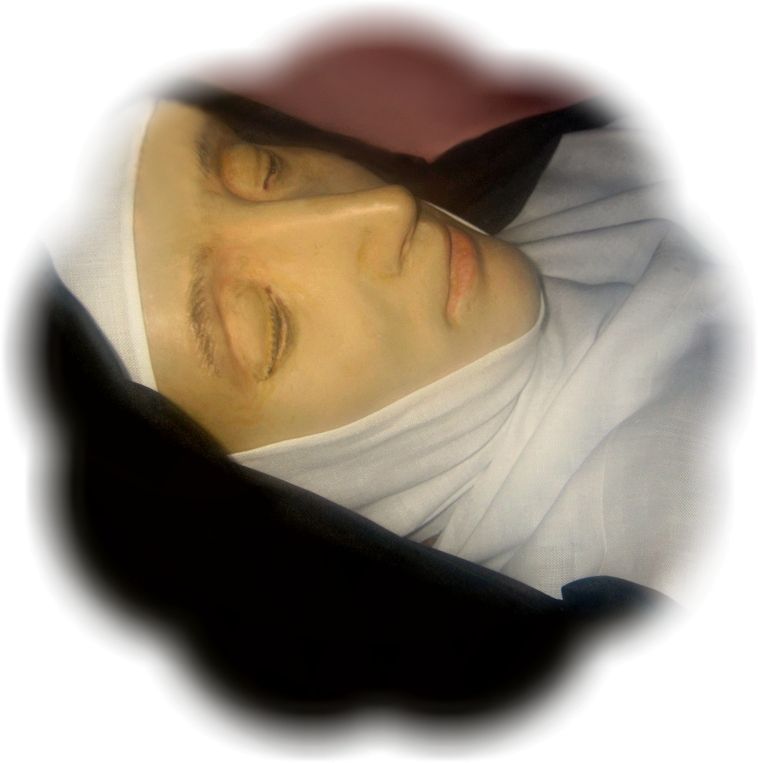
Angela’s incorruptible remains repose at the church of Saint Francis in Foligno. Numerous miracles are reported to have occurred at her tomb.

Today we look to Saint Angela’s life, inspiring us to sincerely and contritely ask the Lord for forgiveness for our worldly “mortally sinful” lives. We pray for all of us, struggling with temptations that distract our hearts and minds from the goodness of the Lord. We pray for those who are afraid to ask for forgiveness.


Almighty God, 
You caused blessed Angela to excel 
in contemplating the mysteries of Your Son. 
Through he merits and prayers 
may we share in the same mysteries on earth 
and rejoice exultantly in the revelation of Your glory.
Amen.


Quotations of Blessed Angela of Foligno:


"Humility exists only in those who are poor enough to see that they possess nothing of their own."

"O my soul, how can you refrain from plunging yourself ever deeper and deeper into the love of Christ, who did not forget you in life or in death, but who willed to give Himself wholly to you, and to unite you to Himself forever?"

"It is the Sacrament of Love that excites the soul to ardent prayer. It stirs up the virtue of impetration and, as it were, forces God to grant our petition. It deepens the abyss of humility, above all it enkindles the flame of love in the heart; hence the Sacrament is the Gift of gifts, and the Grace of graces."

“Our condition is most noble, being so beloved of the Most High God that He was willing to die for our sake- which He would not have done if man had not been a most noble creature and of great worth.”

“Our perfection certainly consists in knowing God and ourselves.”

“By virtue of love is the lover transformed in the beloved and the beloved transformed in the lover.”

“No one can be saved without divine light. Divine light causes us to begin and to make progress, and it leads us to the summit of perfection. Therefore if you want to begin and to receive this divine light, pray. If you have begun to make progress and want this light to be intensified within you, pray. And if you have reached the summit of perfection, and want to be super-illumined so as to remain in that state, pray.”

”This embrace of God sets ablaze a fire within the soul with which the whole soul burns for Christ. It also produces a light so great that the soul understands the fullness of God's goodness, which it experiences in itself, and which is, moreover, much greater than the soul's experience of it. The effect then of this fire within the soul is to render it certain and secure that Christ is within it. And yet, what we have said is nothing in comparison to what this experience really is.”

January 4, 2013: Saint Faraildis of Ghent, Patron of Widows, Sick Children, Cattle, Small Animals, Victims of Abuse, and... Butter?

Posted by Jacob


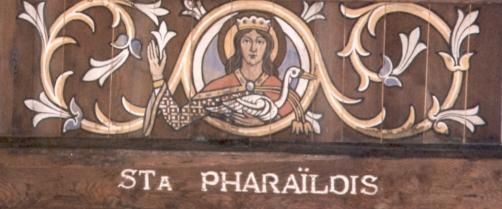
Today, January 4, we celebrate the feast day of Saint Faraildis of Ghent (650 – 740, also known as Saint Pharaildis), patron saint of sick children, cattle, small animals, widows, victims of abuse, and strangely, butter.   Saint Faraildis lived a life of quiet devotion to the Lord, despite pressures and physical abuse at the hands of her husband.  Saint Faraildis demonstrates perseverance and steadfast hope and faith in the Lord, even in the midst of difficult times.  Perhaps there is a lesson there for all of us!

Saint Faraildis’ lineage is somewhat unclear, with historians best estimates that she was daughter to Theodoric, Duke of Lorraine and Saint Amelberga of Maubeuge, and half-sister to Saints Gudula, Reinhildis, Ermentrudis, and Emebertus  As per the custom of her times, she was married off by her father to a husband, Guido, when she reached the age of maturity.  However, unbeknownst to her father and her new husband, Faraildis had consecrated herself a virgin to the Lord, pledging eternal devotion and earthly chastity.  Rather than spend her nights with her husband, Faraildis frequently visited the nearby church, spending her evenings in prayer.   Guido, wishing for children, became increasingly jealous of her devotion to the Lord, and angry by her refusal to subjugate herself to him.  He eventually became violent, inflicting physical abuse and torment upon her.  She withstood all insult with pious dignity, nursing her husband without ill will following an accident that broke his legs.  During this time, she ministered to him, and spoke to him of the Lord and salvation, but this only served to infuriate him more.

It is unclear when or how Guido died, but he left Faraildis a widow.  From the time of his death, she devoted herself entirely to a humble and simple life, offering daily penance, and spending long hours in prayer.  She further became recognized as a holy woman in her town, and was sought out for advice, counsel, and reportedly, miracles.  She is said to have led the life of a saintly nun, rising before sunrise each morning and journeying to a nearby monastery for matins. 

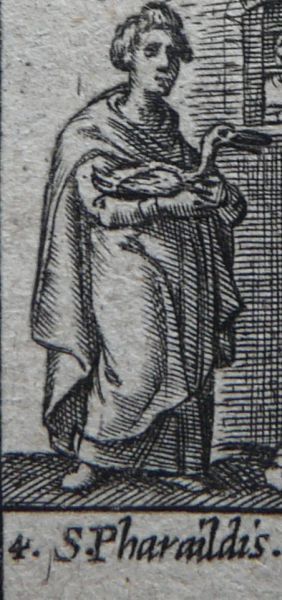
Saint Faraildis is frequently pictured with loaves of bread, given one of the miracles reported at her intercession.  It is told that a poor woman was once begging for bread for her hungry children at a rich home.  However, the woman of the home refused to provide, exclaiming, “May Saint Faraildis change the loaves into stone if I have any here!”  Per legend, all of the woman’s bread turned to stone, with two still preserved in Ghent as holy relics.  Similarly, Saint Faraildis is oftentimes pictured with a goose, whom she is said to have restored to life after it was stolen, killed, cooked, and eaten.  Per holy legend, she gathered the remnants of the bird, and it was reanimated and flew.

Saint Faraildis died at the age of ninety, around the time of the Norman invasion.  Her relics were carried with the monks of the local church, where they were interred at Ghent.  She remains the patron of the city to this day, where a city-wide celebration continues to be held in her honor each feast day.


Daughter of Saint Amalberga and devout niece
of Saint Gertrude, and sister of Saint Gudula,
Despite your desire to consecrate yourself to God
Your parents made you enter into marriage.
On becoming a widow, you lived in prayer.
St Faraildis, pray to Christ for our souls!
Holy Faraildis, pray to God for us.

January 3, 2013: Saint Daniel of Padua

Posted by Jacob


Today, January 3, we celebrate the feast of a lesser known saint and martyr, Saint Daniel of Padua (died, 168).  Saint Daniel is invoked by many, include women whose husbands are at war, those suffering confinement or imprisonment, and for those in search of lost objects.  While many are aware that Saint Anthony of Padua intercedes in the event of lost objects, few remember to pray to the saintly Daniel from the same region, who came more than a century before Saint Anthony.

Saint Daniel was the companion to, and deacon of, Saint Prosdocimus, the first bishop of Padua.  Jewish by descent, Daniel converted to Christianity, and assisted Bishop Prosdocimus in the evangelization of northeastern Nava.
The Martyrdom of Saint Daniel of Padua

During his courageous witness, Daniel was martyred via crushing, although holy legend is unclear as to why.  His body was discovered nearly 1000 years later, and his relics were translated to the church of Saint Sofia, in Padua, on January 3, 1064.


In art, Daniel of Padua is often depicted holding a towel and laver, signifying his diligent service to Bishop Prosdocimus, as well as the Church.  These symbols also remind us of his life of service to others, just as Jesus washed the feet of his disciples.

While we know little of the daily life of Saint Daniel of Padua, we recognize in him the call of the Lord, conversion, service, and courageous martyrdom for the faith.  We pray for the courage and faith to live our lives as boldly as the holy men and women who came before us.

January 2, 2013: Saint Adelard of Corbie, Abbot, Patron of Gardeners and Typhus Sufferers

Posted by Jacob


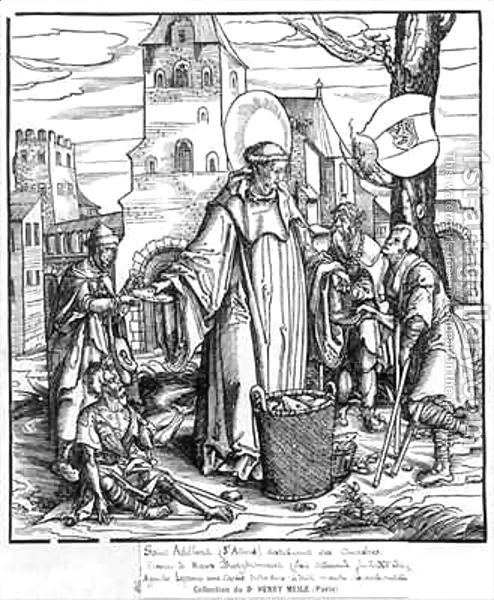
Today, January 2, we celebrate the feast of Saint Adelard of Corbie (752-827), abbot, patron of gardeners, and honored as patron of those suffering from Typhus.  Saint Adelard, despite being born into a powerful family, wished for nothing more than to serve the Lord with pious devotion.  Throughout his life, however, he was forced to play other roles, even suffering exile.  Saint Adelard is an example of patient service, keeping himself centered firmly in the faith, despite difficult times.

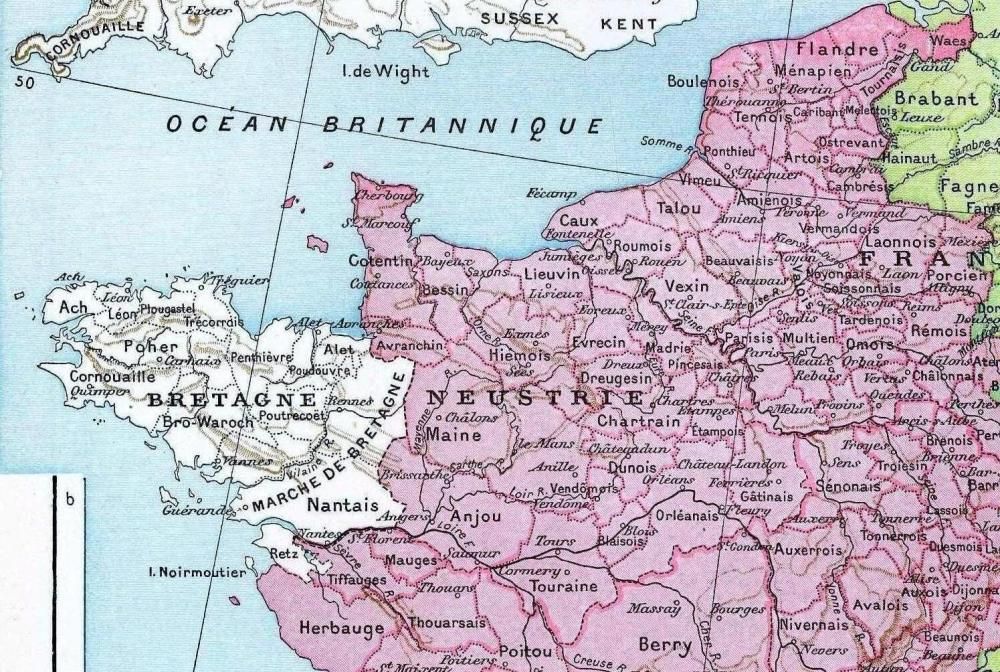
Saint Adelard was born into a powerful and royal family, the grandson of Charles Martel, and son of Bernard, the brother of King Pippin.  Wishing to serve the Lord, Adelard became a Benedictine monk at Corbie, in Picardy, France.  There, he began his service as a gardener, spending his days in solitude.  Despite his attempts to avoid political life, he was frequently called upon by his cousin, Charlemagne, and in attempts to distance himself from court, moved to the monastery at Monte Cassino.  However, he was shortly recalled by Charlemagne, and upon his return to Corbie, was elected Abbot of the monastery.  Later, Charlemagne appointed him chief minister to Pepin (Charlemagne’s oldest son), who was ruling as King of Italy, in the Carolingian Empire. Adelard served the king well, instructing Pepin, and raising his son, Bernard, in the ways of the faith.

Northern France, circa 843
Due to political suspicion, Adelard was banished in 817, when Bernard aspired to take the Imperial Crown.  Adelard spent seven years on the island of Niormoutier, off the coast of Aquitaine, during which time his reputation for holiness, austerity, and concern for the sick and poor became legendary.  After seven years, Adelard was again recalled to court, and again made chief advisor to the crown.

Upon his return, Adelard and his brother, Wala, founded “New Corbie” Abbey in Saxony, broadening the approach of teaching in their monasteries to the local languages.  Whereas previously, all teaching and learning was conducted in Latin, Adelard and Wala attracted a new faithful through use of local vernacular, including German and French.  In this way, the faith spread quickly throughout Saxony.  Saint Adelard remains the patron saint of many towns and villages in that region, along the Rhine.

Saint Adelard was struck ill, likely by Typhus, and died after several days.  His relics were placed in the Abbey, and miraculous cures of the deaf, mute, and paralyzed have been reported through his intercession.  Saint Adelard was canonized by Pope John XIX in 1026.

O God,
whose blessed Son became poor that we through his poverty might be rich:
Deliver us from an inordinate love of this world,
that we, inspired by the devotion of your servant Saint Adelard of Corbie,
may serve you with singleness of heart,
and attain to the riches of the age to come;
through Jesus Christ our Lord,
who lives and reigns with you,
in the unity of the Holy Spirit,
one God, now and for ever.  Amen.