Why pray the Rosary every day for a year?


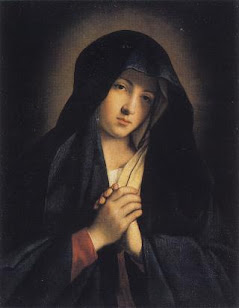
Each time the Blessed Virgin has appeared-- whether it be to Saint Bernadette Soubirous at Lourdes; to Lucia, Jacinta, and Francisco at Fatima; or to Mariette Beco at Banneux-- she has asserted the importance, saving grace, and power of praying the Holy Rosary on a daily basis. Based upon her words, the Rosary is penance and conversion for sinners, a pathway to peace, an end to war, and a powerful act of faith in Jesus Christ. Pope Paul VI presented the Rosary as a powerful means to reach Christ "not merely with Mary but indeed, insofar as this is possible to us, in the same way as Mary, who is certainly the one who thought about Him more than anyone else has ever done."

To show us how this is done, perhaps no one has been more eloquent than the great Cardinal Newman, who wrote: "The great power of the Rosary consists in the fact that it translates the Creed into Prayer. Of course, the Creed is already in a certain sense a prayer and a great act of homage towards God, but the Rosary brings us to meditate again on the great truth of His life and death, and brings this truth close to our hearts. Even Christians, although they know God, usually fear rather than love Him. The strength of the Rosary lies in the particular manner in which it considers these mysteries, since all our thinking about Christ is intertwined with the thought of His Mother, in the relations between Mother and Son; the Holy Family is presented to us, the home in which God lived His infinite love."


As Mary said at Fatima, "Jesus wants to use you to make Me known and loved. He wishes to establish the devotion to My Immaculate Heart throughout the world. I promise salvation to whoever embraces it; these souls will be dear to God, like flowers put by Me to adorn his throne."


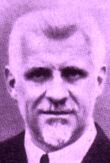
January 10, 2013: Ludovico “Vico” Necchi, Servant of God

Posted by Jacob


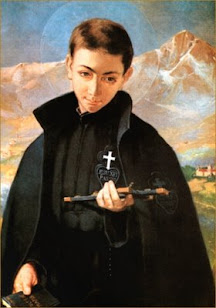
Today, January 10, we celebrate the feast day of the Venerable Ludovico “Vico” Necchi, Servant of God (1876-1930).  Dr. Necchi is remembered for his writings on the faith, his tireless service to others, and his deep commitment to promoting Christian love and conversion.  The decree which proclaimed him Blessed read: "he had an admirable serenity of the mind and the habit of command to himself, that he obtained with constant vigilance and struggle against his character brought to anger, also the spirit of poverty, which was filled, and for which he was completely detached from the possession of wealth. Throughout the course of life he was guided by the Franciscan spirit, cheerful and happy in the midst of adversity and harassment; patient and simple, inflamed by the desire to promote the salvation of others, and compassion toward the poor and needy that he assisted with his hand, money and advice. "

Vico was born in Milan in 1876.  Having lost his father at a young age, his mother remarried, and Vico grew up in a household that practiced atheism.  However, he was guided in the faith by two maternal aunts, despite the prevailing anti-Christian sentiment of the times.  His schools actively preached against the faith, but Vico’s resolve only strengthened.  Despite the beliefs of his classmates and professors, Vico tirelessly witnessed to others, demonstrating the simple joy and love of Christianity.  By his attractive, joyful character he exercised a wholesome influence upon those with whom he came into personal contact. Everyone knew he was a militant and a convinced Catholic - but no one avoided him for that reason. Even his opponents could not help admiring him, for his conduct was in full harmony with the faith.

Blessed Vico strove to increase the visibility of Christianity, helping initiate a Christian Center in Milan. The objects of the Center were expressed in these terms: "To exercise an influence on social problems, upon the solution of which depends the well-being of the community and in particular of the laboring classes; to exercise an influence on all questions of nation-wide importance, and to co-ordinate the studies and work of members toward the supreme interests of religion."

He spent his weekends in the countryside surrounding Milan, preaching to the agricultural workers.  During these mission trips, he fasted, subsisting only on the Eucharist, which gave him strength.

Vico earned a doctorate degree from the University of Pavia, and was assigned to the Military Hospital of Saint Abrose in Milan (serving his required military service).  It was there that he encountered a group of Franciscans, and eventually joined the Tertiary Order.  As a Franciscan, Vico attended Mass daily, oftentimes missing sleep and other requirements of his job.  "The heart of this Tertiary," wrote Msgr. Olgiati, Necchi's Spiritual Director, "burned with a flame similar to that which devoured the heart of St. Francis."

At the conclusion of his military service, Vico attended the University of Berlin where he earned his degree in neuropathology.  He returned to Italy, started a family, and worked for the remainder of his life to solve social problems through the propagation of the faith.  Vico further served in the military during the first World War, as a doctor, ministering to the sick and dying of all armies, bringing Christian love and comfort to those in need.

Vico was a prayerful, humble, charming and cheerful man who stood at the forefront of the new Italian Catholic Action. Despite opposition and trials, he used his medical profession as a holy apostolate for the conversion of his patients while his charity was being lavished on retarded children.  He also used his higher education to co-found the University of the Sacred Heart.

Doctor Necchi's patience and charity were especially manifest in his work for mental sufferers. For the task of dealing with patients afflicted with morbid anxieties and scruples Doctor Necchi was especially fit. During his youth he had passed through a period when he himself was tortured by scruples. He wrote: "In order to acquire that degree of self-denial necessary to cure these diseases, a spirit of self-sacrifice is required which no motive of mere financial gain or of scientific interest is powerful enough to create.....One must have undergone these torments oneself. And I have suffered them."

Blessed Vico was diagnosed privately with cancer in 1929, but did not let on that he was suffering or in pain.  Rather, he continued to treat his patients and teach his students, inspiring all with his love and joy.  On January 9, 1930, he died. According to his will, his headstone was to be inscribed with the simple words: “Vico Necchi, Franciscan Tertiary.”  An extraordinary man, he is buried in the chapel of the University of the Sacred Heart in Milan in the expectation that one day he will be raised to the altars.

January 9, 2013: Saints Julian and Basilissa, Models of Christian Service

Posted by Jacob


Today, January 9, we celebrate the feast day of Saints Julian and Basilissa (died 4th Century), married saints, and martyrs for the Church.  Julian and Basilissa were married, and later died together as martyrs in Antioch during the reign of Diocletian.  Along with them, it is likely that Saints Celsus, Marcionilla, Anthony, and Anastasius were also martyred at the same time- a total of 31 Christians!

While little substantive information is known of the lives of this holy couple, it appears that Julian was forced by his family to marry.  To comply with their pressure, Julian selected Basilissa as his spouse, and together, they both pledged to live in celibacy, preserving their chastity before the Lord.  Basilissa eventually founded a convent for women, of which she became the superior.  Similarly, Julian gathered a large number of monks to himself and served as their spiritual director.  Together, the two converted their home into a hospice for those in need, housing approximately 1,000 people at any given time.  The sisters and monks provided daily food and care to the ill, poor, and dying, and accepted no money in return.  As their hospital was located in Egypt, and many were introduced to the faith through their work, conversions were numerous.  As word spread of their heroic and Christian work, they attracted the attention of those who were actively persecuting Christianity.


Saint Basilissa died a holy death after years of Christian persecution, worn out from hard work and constant threats.  Before her death, she foretold that her husband would die a martyr.  Saint Julian survived for some time, keeping the hospital running, and providing the Lord’s care to all who needed it.  Eventually, he was arrested during the reign of Diocletian and beheaded for refusing to recent his faith. His interrogation and his tortures were accompanied by astonishing prodigies and numerous conversions.  Following his burial, numerous miracles were reported at his tomb, including the cure of ten lepers in a single day.

Saints Julian and Basilissa devoted their life to service to the Lord through service to those around them needing the most help.  In their hearts grew the flame of Christian love, illuminated for all to see.  In their touch, those in need found the healing and redemption of a life in Christ.  We look to them today as inspiration for our own calls to service.  How can we better reflect the light of Christ to those we encounter?

Prayer to Serve the Lord Well


Father of Mercy,
forgive my failings,
keep me in Your Grace,
and lead me in the way of salvation.
Give me strength in serving You
as a follower of Christ.
May the Eucharist bring me Your Forgiveness
and give me freedom to serve You all my life.
May it help me to remain faithful
and give me the grace I need in Your service.
May it teach me the way to eternal life. 


January 8, 2013: Saint Severinus

Posted by Jacob


Today, we celebrate the feast day of Saint Severinus (died 482), monk, hermit, prophet, and founder of monasteries.  Saint Severinus labored diligently for the Lord, focusing his attention on the region of Noricum (modern day Austria).  Through his efforts, the faith was spread to those regions, where he practiced charity and provided refuge to all trying to escape war and poverty.  Saint Severinus lived the Gospel, demonstrating through his actions and words the love and redemption made possible through Christ.

Severinus left home at an early age, and took great pains to hide his family origins.  Given what we know of him, including his well-developed Latin abilities, he was likely a Roman of noble birth.  However, he gave up this life of wealth and privilege, and spent his early years in the deserts of the East.  There, he lived the life of a hermit, growing closer to God, listening attentively to His will, and following where He might lead.  While there, he served as spiritual director and father to Saint Anthony of Egpyt.


Eventually, Saint Severinus felt called to a life of evangelization, and left the desert.  He traveled to Noricum, where he spent the next 30 years of his life evangelizing and ministering to the peoples living along the banks of the Danube River, near modern-day Vienna.  He labored to establish several monasteries, but found that the local citizens were none too keen to embrace Christianity.  Given the gift of prophecy, Severinus predicted the arrival of the Huns and the destruction that would occur, and prepared by creating shelters and refuges (in advance!) for those who would need them.  Having laid in food and provisions, he assisted many in surviving the deadly attacks.

Following this, Severinus’ reputation for holiness spread quickly throughout the region, and many were converted.  The monasteries were soon full, and more were constructed.  He was sought out for assistance in times of famine, natural disaster, and other calamities.  Always quiet and steady, Saint Severinus would preach penance and conversion to the people, and each time, crises were averted.  He lived to spread the Word of God, and focused solely on this noble mission throughout the end years of his life.

Saint Severinus also practiced what he preached.  He ate only once each day, fasting almost completely during Lent.  He always traveled barefoot, and dressed in thin robes regardless of the weather.  He slept on sackcloth on the ground, and urged the monks in his monasteries to do the same.  All this, considered penance, he offered for those in need.

Generally surrounded by people, Severinus occasionally took refuge in a hermitage, where he harkened back to his days in the desert, communing internally with the Lord.  It was there that he died, on January 8, 482, in his cell, singing Psalm 150.  Of course, always a prophet, Severinus had predicted the date and time of his own death accurately.  He was laid to rest, but during subsequent invasion, his relics were moved and interred in Naples, Italy at the Benedictine monastery of San Severino.

Psalm 150

1 Praise the Lord.
Praise God in his sanctuary;
                    praise him in his mighty heavens.
2 Praise him for his acts of power;
                    praise him for his surpassing greatness.
3 Praise him with the sounding of the trumpet,
                    praise him with the harp and lyre,
4 praise him with timbrel and dancing,
                    praise him with the strings and pipe,
5 praise him with the clash of cymbals,
                    praise him with resounding cymbals.
6 Let everything that has breath praise the Lord.
Praise the Lord.

Paul the Deacon described the qualities of Saint Severinus in the 8th Century as: “In these territories of the Noricans at that time was the monastery of the blessed Severinus, who, endowed with the sanctity of every abstinence, was already renowned for his many virtues, and though he dwelt in these places up to the end of his life: now however, Neapolis keeps his remains.”

We pray today for the quiet determination and piety of Saint Severinus, and for all those who are in need, displaced by war or suffering from famine.  May the Lord bless each of us in our daily life, as He so blessed Saint Severinus.


January 7, 2013: Saint Brannock

Posted by Jacob


Today, January 7, we celebrate the feast day of Saint Brannock (6th century), a simple Welsh farmer, who became a monk and brought Christianity to the English county of Devon.  Famed for his holiness and zeal, as well as the miracles of his ministry, Saint Brannock is still celebrated today by the residents of Braunton, where he founded his monastery.

Saint Brannock is believed to have migrated from South Wales to Braunton (in Devon) in the sixth century, founding a monastery.  He is said to have ridden into town on a donkey, although legend also tells of his floating across the Bristol Channel in a stone coffin.  Regardless of his means of travel, upon his arrival, he discovered the local peoples to practice Paganism.  Here, in the small Pagan community of farmsteads, Saint Brannock taught the natives more productive farming methods, eventually teaching them the Christian faith and turning them from worship of nature spirits believed to live in the forests and rivers.  With the help of his new congregation, Saint Brannock built the first church in North Devon.

Saint Brannock's Church, Braunton
Of course, the construction was marred with many difficulties.  Most often, the workers would find their hard work from the day before destroyed by some inexplicable force during the night.  Saint Brannock urged them to keep the faith, and himself was visited by an angel.  The angel instructed the monk to seek a meadow with a gently flowing stream, near which he would find a white sow suckling her seven piglets.  Brannock undertook the search, and finding this sign, consecrated the ground to the Lord and began construction on the site where today’s parish church remains.


Saint Brannock's Church, Interior
Saint Brannock was recognized widely for his holiness and zeal for the Lord, as well as for the miracles that followed him.  On one occasion, it is said that Brannock’s prized family cow was stolen, chopped up, and set to boil over a fire.  When Saint Brannock discovered this, it was found that the water refused to boil, and after he breathed life into the pot, the cow was miraculously revived.  This same cow is said to have provided sufficient milk for the entire monastery upon completion, and is frequently pictured in art with the saintly monk.


Following a long and just life, Saint Brannock died peacefully in the Lord, and his remains were interred at the church in Braunton.  There, they have remained to this day. On June 26th, during the reign of Elizabeth I, his body was interred beneath the high alter of the church.  To this day, Saint Brannock’s relics are paraded through the streets of Braunton in memory of his holy life and service to the community.

Righteous tutor of the children of Brychan, O wise Father Brannock,
thou didst win many souls for Christ by thy tireless endeavors.
In Devon's Braunton Church are your concealed precious relics.
Pray that we, being ever mindful of our heritage,
may never deviate from the true faith,
thereby, receiving the reward of the blest.

January 6, 2013: Saint Erminold of Prüffening

Posted by Jacob


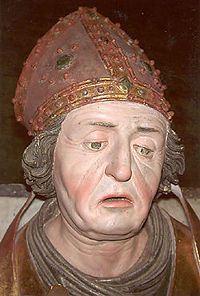
Today, January 6, we celebrate the fest of Saint Erminold of Prüffening (died, 1121), abbot and martyr for the faith.  Saint Erminold was a Benedictine abbot, who maintained such strictness in his monastery, that he was slain by one of his own lay brothers.  His life is an example of order and devotion, in a troubled world.  He is famed for his spirit of prayer and charity for the poor and needy.

Erminold was born to one of the royal families in Swabia (one  of the four original provinces of Germany), and was given to the abbot of Hirschau, a local monastery, to be educated. His tutor, William, was one of the most learned and pious men of those times, and Erminold flourished under his tutelage, by the grace of God.  He made rapid progress in his studies, and upon completion, promptly took the vows of monastic life.  There, he lived a life of quiet devotion and strict adherence to community rules.

In 1110, Erminold was appointed Abbot of the Monastery at Lorch by Emperor Hney V.  However, as the Emperor owed Erminold’s brother a favor, he refused the position, given the appearance of simony (the buying or selling of ecclesiastical positions, or profit from sacred things).   Returning to Hirschau, he resumed his quiet life.

Only seven years later, the Bishop of Bamberg, invited Erminold to assume the abbotship of the Abbey at Pruffening, near Ratisbon, Germany.  He became the first father there, attracting new members and growing the congregation in the faith.

Saint Erminold was a great friend of the poor. Upon assuming leadership at Pruffening, Erminold emptied all the storehouses of his monastery to feed the needy during a famine. When at length nothing was left to feed his monks, the saintly man begged God to intervene, and invoked the intercession of the martyr, Saint George. His prayers were answered when the next day a rich noble came to the abbot, promising to relieve their want from his own wealth.

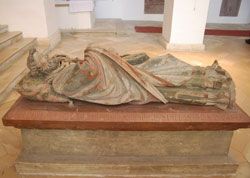
Saint Erminold insisted on strict discipline, according to the Rule of Saint Benedict.  While the majority of his community lived in harmony, some lay brothers took offense at his strictness, and in 1121, one named Aaron killed him.  It is said by some that he was beaten with a piece of timber, whereas other accounts indicate he was stabbed.  All accounts agree that following his mortal wound, he lingered in life for a few days, passing into Heaven on Epiphany at the hour he had predicted. He had stated, “Tomorrow, during the solemnities of the greater Mass, with the choir singing, ‘Glory to God in the highest,’ I shall depart from this world.”   Following his death, a large number of miracles were recorded at his tomb at St. George Church at Prüffening Abbey in Regensburg, Germany


Throughout 2013, I will be posting the prayer requests received from the previous week on Sundays.  Please join me in lifting these intentions to Our Lord, through the intercession of Our Blessed Mother.

Prayer requests, 2013: Week 1:
For healing of a brain disorder (J, United Kindgom); Improved relationship with the Lord, increased faith and grace (E, Finland); For a family’s successful reconciliation (M, USA-MA); Health, safety, and protection (J, Ireland);  Healing of an ill husband, blessings upon a daughter’s family (S, India); For financial security and protection (P, India); Blessings and health, financial security (J, Oman).