“All things belong to God, who is our Father and the Father of all things. We are all of the same family; all of us are brothers. Amongst brothers, it is best that all inherit equal portions.”
Today, January 10, we celebrate the feast of
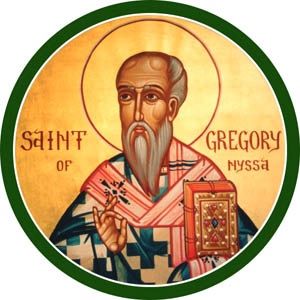
Saint Gregory of Nyssa (333-398), younger brother of
Saints Basil the Great and Macrina, and one of the greatest of the Easter Fathers of the Church. Along with his brother, Basil, and Saint Gregory Nazianzen, Saint Gregory of Nyssa is known as one of the Cappadocian Fathers. A deep and contemplative theologian, the works of Saint Gregory greatly impacted the manner in which we understand the Scriptures, the Lord’s Prayer, the Beatitudes, and the life of Moses.
Gregory was born in modern-day Turkey in the years following the persecution of Christians. His grandparents had fled to Turkey during the reign of Emperor Diocletian. He was raised by his elder brother and sister, Saints Basil the Great and Macrina. From a young age, Saint Gregory excelled at his studies, becoming a professor of rhetoric at an early age, working for several years before entering the monastery founded by Saint Basil. Ordained a priest, he was later consecrated the Bishop of Nyssa (in Lower Armenia) in 371, at the age of 38.
At the time of Saint Gregory’s election, the Church found itself in the midst of the great Arian heresy—a school of thought which denied the divinity of Christ. Saint Gregory’s enemies had him arrested on false charges of embezzlement. He was acquitted after some time and restored to his see, to the great joy of his followers.
Saint Gregory fought tirelessly against heresies, and preached the tenets of the Trinitarian faith. Following the death of his brother, he was recognized as a defender of orthodoxy, writing and preaching effectively against Arianism and other questionable doctrines. Saint Gregory held a position of prominence at the Council of Constantinople, which reaffirmed the divinity of the Trinity. He spent the remainder of his life, following this great council, writing, preaching, and traveling.
Generally considered one of the great pillars of mystical writing of the Church, Saint Gregory is referred to as the “Father of Mysticism.” While his brother, Saint Basil the Great, is credited with providing structure and organization to the eastern Church, Saint Gregory’s writings filled the hearts of the faithful with spirituality and the mystical vision of Christ. He penned countless reflections and commentaries on the Holy Scriptures, including a well-known text on the Life of Moses. His other writings and homilies included treatises on the Lord's Prayer, the Song of Songs, and the Beatitudes.
Pope Benedict XVI, in his General Audience regarding Saint Gregory of Nyssa praised the writings, interpretations, and contemplations of Saint Gregory, especially as they related to the sanctity of the human body, as created in God’s image:
“Man was honoured by God and placed above every other creature: "The sky was not made in God's image, not the moon, not the sun, not the beauty of the stars, no other things which appear in creation. Only you (human soul) were made to be the image of nature that surpasses every intellect, likeness of incorruptible beauty, mark of true divinity, vessel of blessed life, image of true light, that when you look upon it you become what he is, because through the reflected ray coming from your purity you imitate he who shines within you. Nothing that exists can measure up to your greatness" (Homilia in Canticum 2: PG 44, 805d).
Let us meditate on this praise of the human being. Let us also see how man was degraded by sin. And let us try to return to that original greatness: only if God is present, does man attain his true greatness.
Man therefore recognizes in himself the reflection of the divine light: by purifying his heart he is once more, as he was in the beginning, a clear image of God, exemplary Beauty (cf. Oratio Catechetica 6: SC 453, 174).
Thus, by purifying himself, man can see God, as do the pure of heart (cf. Mt 5: 8): "If, with a diligent and attentive standard of living, you wash away the bad things that have deposited upon your heart, the divine beauty will shine in you.... Contemplating yourself, you will see within you he who is the desire of your heart, and you will be blessed" (De Beatitudinibus 6: PG 44, 1272ab). We should therefore wash away the ugliness stored within our hearts and rediscover God's light within us.
Man's goal is therefore the contemplation of God. In him alone can he find his fulfilment.
To somehow anticipate this goal in this life, he must work ceaselessly toward a spiritual life, a life in dialogue with God. In other words - and this is the most important lesson that St Gregory of Nyssa has bequeathed to us - total human fulfilment consists in holiness, in a life lived in the encounter with God, which thus becomes luminous also to others and to the world.”
Selected Quotations of Saint Gregory of Nyssa
“When we lay bare the hidden meaning of the history, scripture is seen to teach that the birth which distresses the tyrant is the beginning of the virtuous life. I am speaking of the kind of birth in which free will serves as the midwife, delivering the child amid great pain. For no one causes grief to his antagonist unless he exhibits in himself those marks which give proof of his victory over the other."
"A greedy appetite for food is terminated by satiety and the pleasure of drinking ends when our thirst is quenched. And so it is with the other things... But the possession of virtue, once it is solidly achieved, cannot be measured by time nor limited by satiety. Rather, to those who are its disciples it always appears as something ever new and fresh."
 "The soul has followed Moses and the cloud, both of these serving as guides for those who would advance in virtue; Moses here represents the commandments of the Law; and the cloud that leads the way, its spiritual meaning. The soul has been purified by crossing the Sea; it has removed from itself and destroyed the enemy army. It has tasted of the waters of Marah, that is, of life deprived of all sinful pleasure; and this at first had seemed bitter and unpleasant to the taste but offered a sensation of sweetness to those who accepted the wood. Next it enjoyed the beauty of the palm trees of the gospel and the springs; it filled itself with the living water, that is, the rock. It took within itself the bread of heaven. It overwhelmed the foreign host—a victory due to the extended arms of the Lawgiver, which thus foreshadowed the mystery of the Cross. Only then can the soul go on to the contemplation of transcendent Being."
"So we say to God: Give us bread. Not delicacies or riches, nor magnificent purple robes, golden ornaments, and precious stones, or silver dishes. Nor do we ask Him for landed estates, or military commands, or political leadership. We pray neither for herds of horses and oxen or other cattle in great numbers, nor for a host of slaves. We do not say, give us a prominent position in assemblies or monuments and statues raised to us, nor silken robes and musicians at meals, nor any other thing by which the soul is estranged from the thought of God and higher things; no--but only bread!”
 “In speaking of God, when there is question of His essence, then is the time to keep silence. When however, it is a question of His operation, a knowledge of which can come down even to us, that is the time to speak of His omnipotence by telling of His works and explaining His deeds, and to use words to this extent. In matters which go beyond this, however, the creature must not exceed the bounds of his nature, but must be content to know itself. For, indeed, in my view, if the creature never comes to know itself, never understands the essence of the soul or the nature of the body, the cause of being…, if the creature does not know itself, how can it ever explain things which are beyond it? Of such things it is the time to keep silence; here silence is surely better. There is, however, a time to speak of those things by which we can in our lives make progress in virtue.”
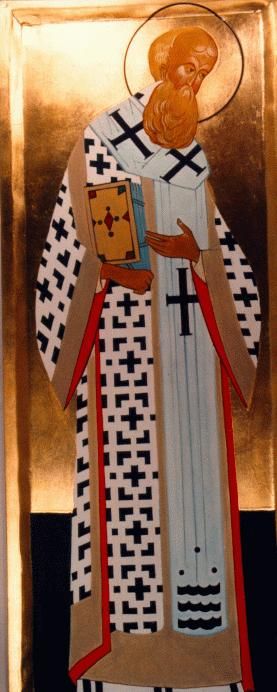
You have shown forth your watchfulness, and were a fervent Preacher of godliness: by the wisdom of the teachings you have gladden the Church's faithful, Righteous Father Gregory, entreat Christ our God to grant us his great mercy.
Year 2: Day 10 of 365
Prayer Intentions: Lives lived in encounter with the Lord
Requested Intentions: Improved financial stability (A); Improved relationship with business partner (A); For employment (N); Reconciliation of a workplace relationship (R); Healing of son, cousin, and friend (L); Healing of a husband from cancer, end to medical problems (T); Freedom from persecution (E); Successful employment (R); Reconciliation of a marriage (M); Successful marriage, employment, healing (J); For a family struggling with a difficult situation (M); For family intentions (I); Reconciliation of a marriage (S); For blessings upon a family (R); Permanent employment (N); Successful employment (M); Healing of a father following stroke (S).