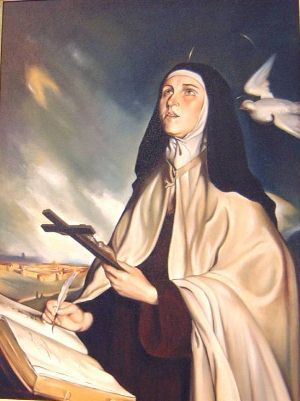
Today, October 15 we celebrate the feast day of Saint Teresa of Avila (also known as Saint Teresa of Jesus, 1515-1582), Virgin, mystic, reformer of the Carmelite Order, and Doctor of the Church. Throughout her life, Saint Teresa was graced with mystical visions and ecstasies, through which she embraced the suffering of Christ.
Below, excerpts from the General Audience of Pope Benedict XVI on Saint Teresa of Avila:
Our catechesis today deals with Saint Teresa of Avila, the great sixteenth-century Carmelite reformer proclaimed a Doctor of the Church by Pope Paul VI.
Teresa entered the Carmel in Avila at the age of twenty. Maturing in the spiritual life, she embraced the ideal of a renewal of her Order and with the support of Saint John of the Cross she founded a chain of reformed Carmels throughout Spain.
Her highly influential writings, which include the Autobiography, The Way of Perfection and The Interior Castle, reveal her profound christocentric spirituality and her breadth of human experience.
Teresa considered the evangelical and human virtues the basis of an authentic Christian life. She identified deeply with Christ in his humanity and stressed the importance of contemplation of his Passion and of his real presence in the Eucharist. She presents prayer as an intimate friendship with Christ leading to an ever greater union of love with the Blessed Trinity.
In her life and in her death Teresa embodied an unconditional love for the Church. May the example and prayers of Saint Teresa of Avila inspire us to greater fidelity to prayer and, through prayer, to greater love for the Lord and his Church, and more perfect charity towards our brothers and sisters.
Why pray the Rosary every day for a year?
Each time the Blessed Virgin has appeared-- whether it be to Saint Bernadette Soubirous at Lourdes; to Lucia, Jacinta, and Francisco at Fatima; or to Mariette Beco at Banneux-- she has asserted the importance, saving grace, and power of praying the Holy Rosary on a daily basis. Based upon her words, the Rosary is penance and conversion for sinners, a pathway to peace, an end to war, and a powerful act of faith in Jesus Christ. Pope Paul VI presented the Rosary as a powerful means to reach Christ "not merely with Mary but indeed, insofar as this is possible to us, in the same way as Mary, who is certainly the one who thought about Him more than anyone else has ever done."
To show us how this is done, perhaps no one has been more eloquent than the great Cardinal Newman, who wrote: "The great power of the Rosary consists in the fact that it translates the Creed into Prayer. Of course, the Creed is already in a certain sense a prayer and a great act of homage towards God, but the Rosary brings us to meditate again on the great truth of His life and death, and brings this truth close to our hearts. Even Christians, although they know God, usually fear rather than love Him. The strength of the Rosary lies in the particular manner in which it considers these mysteries, since all our thinking about Christ is intertwined with the thought of His Mother, in the relations between Mother and Son; the Holy Family is presented to us, the home in which God lived His infinite love."
As Mary said at Fatima, "Jesus wants to use you to make Me known and loved. He wishes to establish the devotion to My Immaculate Heart throughout the world. I promise salvation to whoever embraces it; these souls will be dear to God, like flowers put by Me to adorn his throne."
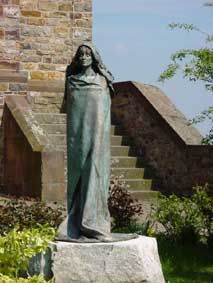
Today, September 17, we celebrate the feast day of Saint Hildegarde von Bingen (1098-1179), mystic, anchorite, and Benedictine abbotess. Saint Hildegarde was a preacher at a time when women were forbidden to preach, a named composer when most music was anonymous, a visionary, a theologian, a writer, an artist, a hagiographer, a prolific letter-writer and an early scientist, botanist, herbalist, physician and healer. She even invented her own coded language. Saint Hildegarde accomplished these things through a mystic connection to the Lord, especially impressive given that she lived her youth and half of her adulthood enclosed in her cell, with her only contact to the outside world through a tiny window! When few women were respected, she was consulted by and advised bishops, popes, and kings. She founded a vibrant convent, where her musical plays were performed.
Below, the text of Pope Benedict XVI’s General Audience (2010) on Saint Hildegarde von Bingen.
Dear Brothers and Sisters,
Today I would like to take up and continue my Reflection on St Hildegard of Bingen, an important female figure of the Middle Ages who was distinguished for her spiritual wisdom and the holiness of her life. Hildegard's mystical visions resemble those of the Old Testament prophets: expressing herself in the cultural and religious categories of her time, she interpreted the Sacred Scriptures in the light of God, applying them to the various circumstances of life. Thus all those who heard her felt the need to live a consistent and committed Christian lifestyle. In a letter to St Bernard the mystic from the Rhineland confesses: "The vision fascinates my whole being: I do not see with the eyes of the body but it appears to me in the spirit of the mysteries.... I recognize the deep meaning of what is expounded on in the Psalter, in the Gospels and in other books, which have been shown to me in the vision. This vision burns like a flame in my breast and in my soul and teaches me to understand the text profoundly" (Epistolarium pars prima I-XC: CCCM 91).
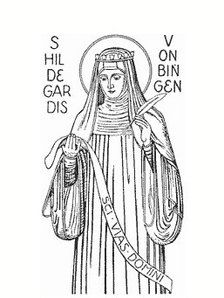
Hildegard's mystical visions have a rich theological content. They refer to the principal events of salvation history, and use a language for the most part poetic and symbolic. For example, in her best known work entitled Scivias, that is, "You know the ways" she sums up in 35 visions the events of the history of salvation from the creation of the world to the end of time. With the characteristic traits of feminine sensitivity, Hildegard develops at the very heart of her work the theme of the mysterious marriage between God and humanity that is brought about in the Incarnation. On the tree of the Cross take place the nuptials of the Son of God with the Church, his Bride, filled with grace and the ability to give new children to God, in the love of the Holy Spirit (cf. Visio tertia: PL 197, 453c).
From these brief references we already see that theology too can receive a special contribution from women because they are able to talk about God and the mysteries of faith using their own particular intelligence and sensitivity. I therefore encourage all those who carry out this service to do it with a profound ecclesial spirit, nourishing their own reflection with prayer and looking to the great riches, not yet fully explored, of the medieval mystic tradition, especially that represented by luminous models such as Hildegard of Bingen.
The Rhenish mystic is also the author of other writings, two of which are particularly important since, like Scivias, they record her mystical visions: they are the Liber vitae meritorum (Book of the merits of life) and the Liber divinorum operum (Book of the divine works), also called De operatione Dei. In the former she describes a unique and powerful vision of God who gives life to the cosmos with his power and his light. Hildegard stresses the deep relationship that exists between man and God and reminds us that the whole creation, of which man is the summit, receives life from the Trinity. The work is centred on the relationship between virtue and vice, which is why human beings must face the daily challenge of vice that distances them on their way towards God and of virtue that benefits them. The invitation is to distance themselves from evil in order to glorify God and, after a virtuous existence, enter the life that consists "wholly of joy". In her second work that many consider her masterpiece she once again describes creation in its relationship with God and the centrality of the human being, expressing a strong Christo-centrism with a biblical-Patristic flavour. The Saint, who presents five visions inspired by the Prologue of the Gospel according to St John, cites the words of the Son to the Father: "The whole task that you wanted and entrusted to me I have carried out successfully, and so here I am in you and you in me and we are one" (Pars III, Visio X: PL 197, 1025a).
Finally, in other writings Hildegard manifests the versatility of interests and cultural vivacity of the female monasteries of the Middle Ages, in a manner contrary to the prejudices which still weighed on that period. Hildegard took an interest in medicine and in the natural sciences as well as in music, since she was endowed with artistic talent. Thus she composed hymns, antiphons and songs, gathered under the title: Symphonia Harmoniae Caelestium Revelationum (Symphony of the Harmony of Heavenly Revelations), that were performed joyously in her monasteries, spreading an atmosphere of tranquillity and that have also come down to us. For her, the entire creation is a symphony of the Holy Spirit who is in himself joy and jubilation.
The popularity that surrounded Hildegard impelled many people to seek her advice. It is for this reason that we have so many of her letters at our disposal. Many male and female monastic communities turned to her, as well as Bishops and Abbots. And many of her answers still apply for us. For instance, Hildegard wrote these words to a community of women religious: "The spiritual life must be tended with great dedication. At first the effort is burdensome because it demands the renunciation of caprices of the pleasures of the flesh and of other such things. But if she lets herself be enthralled by holiness a holy soul will find even contempt for the world sweet and lovable. All that is needed is to take care that the soul does not shrivel" (E. Gronau, Hildegard. Vita di una donna profetica alle origini dell'età moderna, Milan 1996, p. 402). And when the Emperor Frederic Barbarossa caused a schism in the Church by supporting at least three anti-popes against Alexander iii, the legitimate Pope, Hildegard did not hesitate, inspired by her visions, to remind him that even he, the Emperor, was subject to God's judgement. With fearlessness, a feature of every prophet, she wrote to the Emperor these words as spoken by God: "You will be sorry for this wicked conduct of the godless who despise me! Listen, O King, if you wish to live! Otherwise my sword will pierce you!" (ibid., p. 412).
With the spiritual authority with which she was endowed, in the last years of her life Hildegard set out on journeys, despite her advanced age and the uncomfortable conditions of travel, in order to speak to the people of God. They all listened willingly, even when she spoke severely: they considered her a messenger sent by God. She called above all the monastic communities and the clergy to a life in conformity with their vocation. In a special way Hildegard countered the movement of German cátari (Cathars). They cátari means literally "pure" advocated a radical reform of the Church, especially to combat the abuses of the clergy. She harshly reprimanded them for seeking to subvert the very nature of the Church, reminding them that a true renewal of the ecclesial community is obtained with a sincere spirit of repentance and a demanding process of conversion, rather than with a change of structures. This is a message that we should never forget. Let us always invoke the Holy Spirit, so that he may inspire in the Church holy and courageous women, like St Hildegard of Bingen, who, developing the gifts they have received from God, make their own special and valuable contribution to the spiritual development of our communities and of the Church in our time.
Below, the text of Pope Benedict XVI’s General Audience (2010) on Saint Hildegarde von Bingen.
Dear Brothers and Sisters,
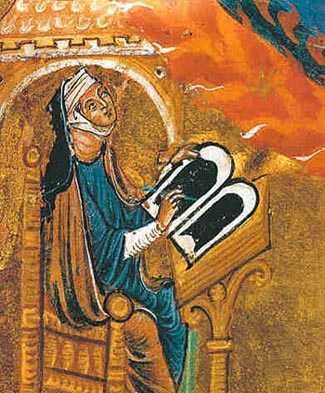
Today I would like to take up and continue my Reflection on St Hildegard of Bingen, an important female figure of the Middle Ages who was distinguished for her spiritual wisdom and the holiness of her life. Hildegard's mystical visions resemble those of the Old Testament prophets: expressing herself in the cultural and religious categories of her time, she interpreted the Sacred Scriptures in the light of God, applying them to the various circumstances of life. Thus all those who heard her felt the need to live a consistent and committed Christian lifestyle. In a letter to St Bernard the mystic from the Rhineland confesses: "The vision fascinates my whole being: I do not see with the eyes of the body but it appears to me in the spirit of the mysteries.... I recognize the deep meaning of what is expounded on in the Psalter, in the Gospels and in other books, which have been shown to me in the vision. This vision burns like a flame in my breast and in my soul and teaches me to understand the text profoundly" (Epistolarium pars prima I-XC: CCCM 91).
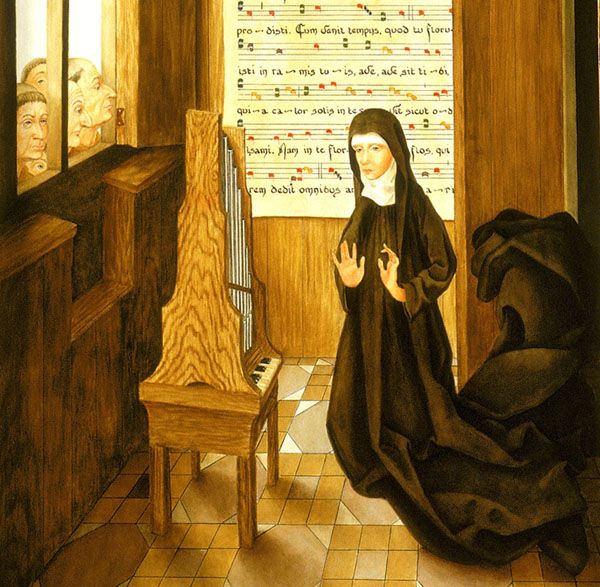
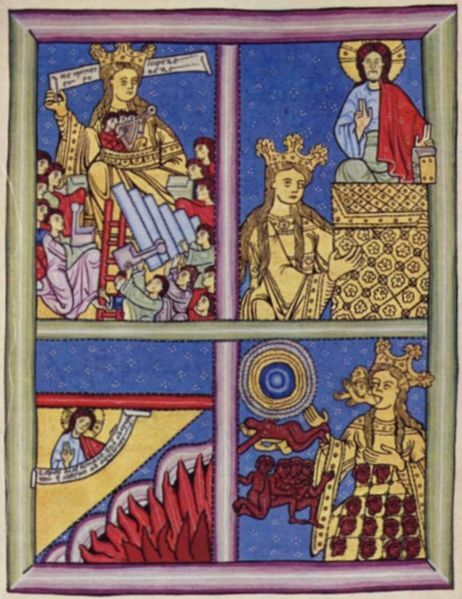
Hildegard's mystical visions have a rich theological content. They refer to the principal events of salvation history, and use a language for the most part poetic and symbolic. For example, in her best known work entitled Scivias, that is, "You know the ways" she sums up in 35 visions the events of the history of salvation from the creation of the world to the end of time. With the characteristic traits of feminine sensitivity, Hildegard develops at the very heart of her work the theme of the mysterious marriage between God and humanity that is brought about in the Incarnation. On the tree of the Cross take place the nuptials of the Son of God with the Church, his Bride, filled with grace and the ability to give new children to God, in the love of the Holy Spirit (cf. Visio tertia: PL 197, 453c).
From these brief references we already see that theology too can receive a special contribution from women because they are able to talk about God and the mysteries of faith using their own particular intelligence and sensitivity. I therefore encourage all those who carry out this service to do it with a profound ecclesial spirit, nourishing their own reflection with prayer and looking to the great riches, not yet fully explored, of the medieval mystic tradition, especially that represented by luminous models such as Hildegard of Bingen.
The Rhenish mystic is also the author of other writings, two of which are particularly important since, like Scivias, they record her mystical visions: they are the Liber vitae meritorum (Book of the merits of life) and the Liber divinorum operum (Book of the divine works), also called De operatione Dei. In the former she describes a unique and powerful vision of God who gives life to the cosmos with his power and his light. Hildegard stresses the deep relationship that exists between man and God and reminds us that the whole creation, of which man is the summit, receives life from the Trinity. The work is centred on the relationship between virtue and vice, which is why human beings must face the daily challenge of vice that distances them on their way towards God and of virtue that benefits them. The invitation is to distance themselves from evil in order to glorify God and, after a virtuous existence, enter the life that consists "wholly of joy". In her second work that many consider her masterpiece she once again describes creation in its relationship with God and the centrality of the human being, expressing a strong Christo-centrism with a biblical-Patristic flavour. The Saint, who presents five visions inspired by the Prologue of the Gospel according to St John, cites the words of the Son to the Father: "The whole task that you wanted and entrusted to me I have carried out successfully, and so here I am in you and you in me and we are one" (Pars III, Visio X: PL 197, 1025a).
Finally, in other writings Hildegard manifests the versatility of interests and cultural vivacity of the female monasteries of the Middle Ages, in a manner contrary to the prejudices which still weighed on that period. Hildegard took an interest in medicine and in the natural sciences as well as in music, since she was endowed with artistic talent. Thus she composed hymns, antiphons and songs, gathered under the title: Symphonia Harmoniae Caelestium Revelationum (Symphony of the Harmony of Heavenly Revelations), that were performed joyously in her monasteries, spreading an atmosphere of tranquillity and that have also come down to us. For her, the entire creation is a symphony of the Holy Spirit who is in himself joy and jubilation.
The popularity that surrounded Hildegard impelled many people to seek her advice. It is for this reason that we have so many of her letters at our disposal. Many male and female monastic communities turned to her, as well as Bishops and Abbots. And many of her answers still apply for us. For instance, Hildegard wrote these words to a community of women religious: "The spiritual life must be tended with great dedication. At first the effort is burdensome because it demands the renunciation of caprices of the pleasures of the flesh and of other such things. But if she lets herself be enthralled by holiness a holy soul will find even contempt for the world sweet and lovable. All that is needed is to take care that the soul does not shrivel" (E. Gronau, Hildegard. Vita di una donna profetica alle origini dell'età moderna, Milan 1996, p. 402). And when the Emperor Frederic Barbarossa caused a schism in the Church by supporting at least three anti-popes against Alexander iii, the legitimate Pope, Hildegard did not hesitate, inspired by her visions, to remind him that even he, the Emperor, was subject to God's judgement. With fearlessness, a feature of every prophet, she wrote to the Emperor these words as spoken by God: "You will be sorry for this wicked conduct of the godless who despise me! Listen, O King, if you wish to live! Otherwise my sword will pierce you!" (ibid., p. 412).
With the spiritual authority with which she was endowed, in the last years of her life Hildegard set out on journeys, despite her advanced age and the uncomfortable conditions of travel, in order to speak to the people of God. They all listened willingly, even when she spoke severely: they considered her a messenger sent by God. She called above all the monastic communities and the clergy to a life in conformity with their vocation. In a special way Hildegard countered the movement of German cátari (Cathars). They cátari means literally "pure" advocated a radical reform of the Church, especially to combat the abuses of the clergy. She harshly reprimanded them for seeking to subvert the very nature of the Church, reminding them that a true renewal of the ecclesial community is obtained with a sincere spirit of repentance and a demanding process of conversion, rather than with a change of structures. This is a message that we should never forget. Let us always invoke the Holy Spirit, so that he may inspire in the Church holy and courageous women, like St Hildegard of Bingen, who, developing the gifts they have received from God, make their own special and valuable contribution to the spiritual development of our communities and of the Church in our time.
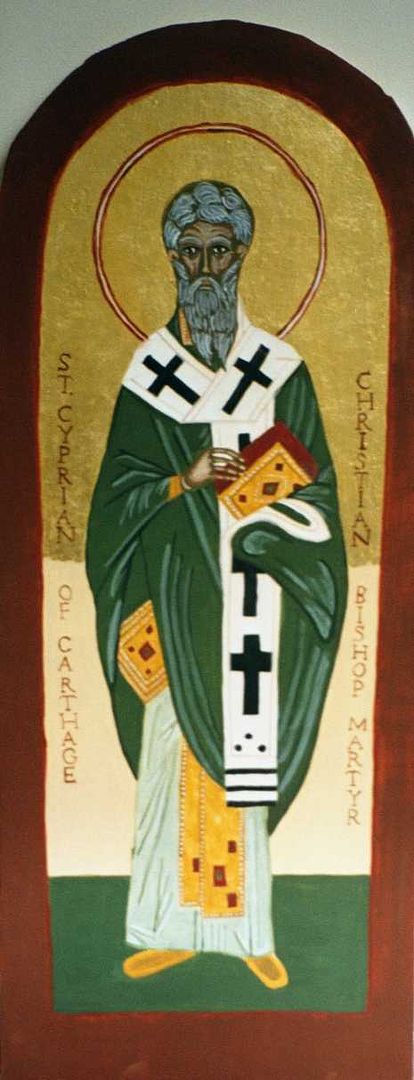
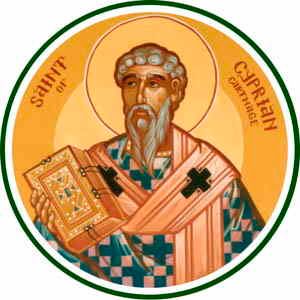
Today, September 16, we celebrate the feast day of Saint Cyprian (died 258), Bishop of Carthage, and Martyr for the Faith. Saint Cyprian is remembered for his importance in the development of Christian thought and practice, especially in northern Africa. His sermons and writings, extant today, continue to inspire us. Saint Jerome said of him: "It is superfluous to speak of his greatness, for his works are more luminous than the sun."
Below, the 2007 General Audience of Pope Benedict XVI regarding the importance of St Cyprian.
"Dear Brothers and Sisters,
In the series of our catecheses on the great figures of the ancient Church, today we come to an excellent African Bishop of the third century, St Cyprian, "the first Bishop in Africa to obtain the crown of martyrdom".
His fame, Pontius the Deacon his first biographer attests, is also linked to his literary corpus and pastoral activity during the 13 years between his conversion and his martyrdom (cf. Life and Passion of St Cyprian, 19, 1; 1, 1).
Cyprian was born in Carthage into a rich pagan family. After a dissipated youth, he converted to Christianity at the age of 35.
He himself often told of his spiritual journey, "When I was still lying in darkness and gloomy night", he wrote a few months after his Baptism, "I used to regard it as extremely difficult and demanding to do what God's mercy was suggesting to me. "I myself was held in bonds by the innumerable errors of my previous life, from which I did not believe I could possibly be delivered, so I was disposed to acquiesce in my clinging vices and to indulge my sins....
"But after that, by the help of the water of new birth, the stain of my former life was washed away, and a light from above, serene and pure, was infused into my reconciled heart... a second birth restored me to a new man. Then, in a wondrous manner every doubt began to fade.... I clearly understood that what had first lived within me, enslaved by the vices of the flesh, was earthly and that what, instead, the Holy Spirit had wrought within me was divine and heavenly" (Ad Donatum, 3-4).
Immediately after his conversion, despite envy and resistance, Cyprian was chosen for the priestly office and raised to the dignity of Bishop. In the brief period of his episcopacy he had to face the first two persecutions sanctioned by imperial decree: that of Decius (250) and that of Valerian (257-258).
After the particularly harsh persecution of Decius, the Bishop had to work strenuously to restore order to the Christian community. Indeed, many of the faithful had abjured or at any rate had not behaved correctly when put to the test. They were the so-called lapsi - that is, the "fallen" - who ardently desired to be readmitted to the community.
The debate on their readmission actually divided the Christians of Carthage into laxists and rigorists. These difficulties were compounded by a serious epidemic of the plague which swept through Africa and gave rise to anguished theological questions both within the community and in the confrontation with pagans. Lastly, the controversy between St Cyprian and Stephen, Bishop of Rome, concerning the validity of Baptism administered to pagans by heretical Christians, must not be forgotten.
In these truly difficult circumstances, Cyprian revealed his choice gifts of government: he was severe but not inflexible with the laxists, granting them the possibility of forgiveness after exemplary repentance. Before Rome, he staunchly defended the healthy traditions of the African Church; he was deeply human and steeped with the most authentic Gospel spirit when he urged Christians to offer brotherly assistance to pagans during the plague; he knew how to maintain the proper balance when reminding the faithful - excessively afraid of losing their lives and their earthly possessions - that true life and true goods are not those of this world; he was implacable in combating corrupt morality and the sins that devastated moral life, especially avarice.
"Thus he spent his days", Pontius the Deacon tells at this point, "when at the bidding of the proconsul, the officer with his soldiers all of a sudden came unexpectedly upon him in his grounds" (Life and Passion of St Cyprian, 15, 1).
On that day, the holy Bishop was arrested and after being questioned briefly, courageously faced martyrdom in the midst of his people.
The numerous treatises and letters that Cyprian wrote were always connected with his pastoral ministry. Little inclined to theological speculation, he wrote above all for the edification of the community and to encourage the good conduct of the faithful.
Indeed, the Church was easily his favourite subject. Cyprian distinguished between the visible, hierarchical Church and the invisible mystical Church but forcefully affirmed that the Church is one, founded on Peter.
He never wearied of repeating that "if a man deserts the Chair of Peter upon whom the Church was built, does he think that he is in the Church?" (cf. De unit. [On the unity of the Catholic Church], 4).
Cyprian knew well that "outside the Church there is no salvation", and said so in strong words (Epistles 4, 4 and 73, 21); and he knew that "no one can have God as Father who does not have the Church as mother" (De unit., 6). An indispensable characteristic of the Church is unity, symbolized by Christ's seamless garment (ibid., 7): Cyprian said, this unity is founded on Peter (ibid., 4), and its perfect fulfilment in the Eucharist (Epistle 63, 13).
"God is one and Christ is one", Cyprian cautioned, "and his Church is one, and the faith is one, and the Christian people is joined into a substantial unity of body by the cement of concord. Unity cannot be severed. And what is one by its nature cannot be separated" (De unit., 23).
We have spoken of his thought on the Church but, lastly, let us not forget Cyprian's teaching on prayer. I am particularly fond of his treatise on the "Our Father", which has been a great help to me in understanding and reciting the Lord's Prayer better.
Cyprian teaches that it is precisely in the Lord's Prayer that the proper way to pray is presented to Christians. And he stresses that this prayer is in the plural in order that "the person who prays it might not pray for himself alone. Our prayer", he wrote, "is public and common; and when we pray, we pray not for one, but for the whole people, because we the whole people, are one (De Dom. orat. [Treatise on the Lord's Prayer], 8).
Thus, personal and liturgical prayer seem to be strongly bound. Their unity stems from the fact that they respond to the same Word of God. The Christian does not say "my Father" but "our Father", even in the secrecy of a closed room, because he knows that in every place, on every occasion, he is a member of one and the same Body.
"Therefore let us pray, beloved Brethren", the Bishop of Carthage wrote, "as God our Teacher has taught us. It is a trusting and intimate prayer to beseech God with his own word, to raise to his ears the prayer of Christ. Let the Father acknowledge the words of his Son when we pray, and let him also who dwells within our breast himself dwell in our voice....
"But let our speech and petition when we pray be under discipline, observing quietness and modesty. Let us consider that we are standing in God's sight. We must please the divine eyes both with the position of the body and with the measure of voice....
"Moreover, when we meet together with the brethren in one place, and celebrate divine sacrifices with God's priest, we ought to be mindful of modesty and discipline - not to throw abroad our prayers indiscriminately, with unsubdued voices, nor to cast to God with tumultuous wordiness a petition that ought to be commended to God by modesty; for God is the hearer, not of the voice, but of the heart (non vocis sed cordis auditor est)" (3-4). Today too, these words still apply and help us to celebrate the Holy Liturgy well.
Ultimately, Cyprian placed himself at the root of that fruitful theological and spiritual tradition which sees the "heart" as the privileged place for prayer.
Indeed, in accordance with the Bible and the Fathers, the heart is the intimate depths of man, the place in which God dwells. In it occurs the encounter in which God speaks to man, and man listens to God; man speaks to God and God listens to man. All this happens through one divine Word. In this very sense - re-echoing Cyprian - Smaragdus, Abbot of St Michael on the Meuse in the early years of the ninth century, attests that prayer "is the work of the heart, not of the lips, because God does not look at the words but at the heart of the person praying" (Diadema monachorum [Diadem of the monks], 1).
Dear friends, let us make our own this receptive heart and "understanding mind" of which the Bible (cf. I Kgs 3: 9) and the Fathers speak. How great is our need for it! Only then will we be able to experience fully that God is our Father and that the Church, the holy Bride of Christ, is truly our Mother. "
Below, the 2007 General Audience of Pope Benedict XVI regarding the importance of St Cyprian.
"Dear Brothers and Sisters,
In the series of our catecheses on the great figures of the ancient Church, today we come to an excellent African Bishop of the third century, St Cyprian, "the first Bishop in Africa to obtain the crown of martyrdom".
His fame, Pontius the Deacon his first biographer attests, is also linked to his literary corpus and pastoral activity during the 13 years between his conversion and his martyrdom (cf. Life and Passion of St Cyprian, 19, 1; 1, 1).
Cyprian was born in Carthage into a rich pagan family. After a dissipated youth, he converted to Christianity at the age of 35.
He himself often told of his spiritual journey, "When I was still lying in darkness and gloomy night", he wrote a few months after his Baptism, "I used to regard it as extremely difficult and demanding to do what God's mercy was suggesting to me. "I myself was held in bonds by the innumerable errors of my previous life, from which I did not believe I could possibly be delivered, so I was disposed to acquiesce in my clinging vices and to indulge my sins....
"But after that, by the help of the water of new birth, the stain of my former life was washed away, and a light from above, serene and pure, was infused into my reconciled heart... a second birth restored me to a new man. Then, in a wondrous manner every doubt began to fade.... I clearly understood that what had first lived within me, enslaved by the vices of the flesh, was earthly and that what, instead, the Holy Spirit had wrought within me was divine and heavenly" (Ad Donatum, 3-4).
Immediately after his conversion, despite envy and resistance, Cyprian was chosen for the priestly office and raised to the dignity of Bishop. In the brief period of his episcopacy he had to face the first two persecutions sanctioned by imperial decree: that of Decius (250) and that of Valerian (257-258).
After the particularly harsh persecution of Decius, the Bishop had to work strenuously to restore order to the Christian community. Indeed, many of the faithful had abjured or at any rate had not behaved correctly when put to the test. They were the so-called lapsi - that is, the "fallen" - who ardently desired to be readmitted to the community.
The debate on their readmission actually divided the Christians of Carthage into laxists and rigorists. These difficulties were compounded by a serious epidemic of the plague which swept through Africa and gave rise to anguished theological questions both within the community and in the confrontation with pagans. Lastly, the controversy between St Cyprian and Stephen, Bishop of Rome, concerning the validity of Baptism administered to pagans by heretical Christians, must not be forgotten.
In these truly difficult circumstances, Cyprian revealed his choice gifts of government: he was severe but not inflexible with the laxists, granting them the possibility of forgiveness after exemplary repentance. Before Rome, he staunchly defended the healthy traditions of the African Church; he was deeply human and steeped with the most authentic Gospel spirit when he urged Christians to offer brotherly assistance to pagans during the plague; he knew how to maintain the proper balance when reminding the faithful - excessively afraid of losing their lives and their earthly possessions - that true life and true goods are not those of this world; he was implacable in combating corrupt morality and the sins that devastated moral life, especially avarice.
"Thus he spent his days", Pontius the Deacon tells at this point, "when at the bidding of the proconsul, the officer with his soldiers all of a sudden came unexpectedly upon him in his grounds" (Life and Passion of St Cyprian, 15, 1).
On that day, the holy Bishop was arrested and after being questioned briefly, courageously faced martyrdom in the midst of his people.
The numerous treatises and letters that Cyprian wrote were always connected with his pastoral ministry. Little inclined to theological speculation, he wrote above all for the edification of the community and to encourage the good conduct of the faithful.
Indeed, the Church was easily his favourite subject. Cyprian distinguished between the visible, hierarchical Church and the invisible mystical Church but forcefully affirmed that the Church is one, founded on Peter.
He never wearied of repeating that "if a man deserts the Chair of Peter upon whom the Church was built, does he think that he is in the Church?" (cf. De unit. [On the unity of the Catholic Church], 4).
Cyprian knew well that "outside the Church there is no salvation", and said so in strong words (Epistles 4, 4 and 73, 21); and he knew that "no one can have God as Father who does not have the Church as mother" (De unit., 6). An indispensable characteristic of the Church is unity, symbolized by Christ's seamless garment (ibid., 7): Cyprian said, this unity is founded on Peter (ibid., 4), and its perfect fulfilment in the Eucharist (Epistle 63, 13).
"God is one and Christ is one", Cyprian cautioned, "and his Church is one, and the faith is one, and the Christian people is joined into a substantial unity of body by the cement of concord. Unity cannot be severed. And what is one by its nature cannot be separated" (De unit., 23).
We have spoken of his thought on the Church but, lastly, let us not forget Cyprian's teaching on prayer. I am particularly fond of his treatise on the "Our Father", which has been a great help to me in understanding and reciting the Lord's Prayer better.
Cyprian teaches that it is precisely in the Lord's Prayer that the proper way to pray is presented to Christians. And he stresses that this prayer is in the plural in order that "the person who prays it might not pray for himself alone. Our prayer", he wrote, "is public and common; and when we pray, we pray not for one, but for the whole people, because we the whole people, are one (De Dom. orat. [Treatise on the Lord's Prayer], 8).
Thus, personal and liturgical prayer seem to be strongly bound. Their unity stems from the fact that they respond to the same Word of God. The Christian does not say "my Father" but "our Father", even in the secrecy of a closed room, because he knows that in every place, on every occasion, he is a member of one and the same Body.
"Therefore let us pray, beloved Brethren", the Bishop of Carthage wrote, "as God our Teacher has taught us. It is a trusting and intimate prayer to beseech God with his own word, to raise to his ears the prayer of Christ. Let the Father acknowledge the words of his Son when we pray, and let him also who dwells within our breast himself dwell in our voice....
"But let our speech and petition when we pray be under discipline, observing quietness and modesty. Let us consider that we are standing in God's sight. We must please the divine eyes both with the position of the body and with the measure of voice....
"Moreover, when we meet together with the brethren in one place, and celebrate divine sacrifices with God's priest, we ought to be mindful of modesty and discipline - not to throw abroad our prayers indiscriminately, with unsubdued voices, nor to cast to God with tumultuous wordiness a petition that ought to be commended to God by modesty; for God is the hearer, not of the voice, but of the heart (non vocis sed cordis auditor est)" (3-4). Today too, these words still apply and help us to celebrate the Holy Liturgy well.
Ultimately, Cyprian placed himself at the root of that fruitful theological and spiritual tradition which sees the "heart" as the privileged place for prayer.
Indeed, in accordance with the Bible and the Fathers, the heart is the intimate depths of man, the place in which God dwells. In it occurs the encounter in which God speaks to man, and man listens to God; man speaks to God and God listens to man. All this happens through one divine Word. In this very sense - re-echoing Cyprian - Smaragdus, Abbot of St Michael on the Meuse in the early years of the ninth century, attests that prayer "is the work of the heart, not of the lips, because God does not look at the words but at the heart of the person praying" (Diadema monachorum [Diadem of the monks], 1).
Dear friends, let us make our own this receptive heart and "understanding mind" of which the Bible (cf. I Kgs 3: 9) and the Fathers speak. How great is our need for it! Only then will we be able to experience fully that God is our Father and that the Church, the holy Bride of Christ, is truly our Mother. "
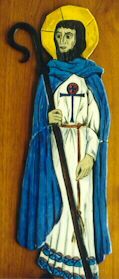
Today, August 8, we celebrate the feast day of Saint Dominic de Guzman (1170-1221), founder of the Order of Preachers, now known as the Dominicans. As we read in the General Audience of Pope Benedict XVI (February 2003), Saint Dominic taught and lived the contemplative life of the Dominican, in such that all his thoughts, words, and deeds were both about God and with God.
Dear brothers and sisters,
Last week I presented the luminous figure of Francis of Assisi; today I would like to speak to you of another saint who, in the same period, made an essential contribution to the renewal of the Church of his time. It is St. Dominic, the founder of the Order of Preachers, known also as the Dominican Friars.
His successor in the leadership of the order, Blessed Giordano di Saxony, gives a complete portrait of St. Dominic in the text of a famous prayer: "Inflamed by zeal for God and supernatural ardor, by your limitless charity and the fervor of a vehement spirit, you consecrated yourself wholly with the vow of perpetual poverty to apostolic observance and to evangelical preaching." It is in fact this essential feature of Dominic's witness that is underlined: He always spoke with God and about God. In the life of saints, love of the Lord and of neighbor, the seeking of God's glory and the salvation of souls always go together.
Dominic was born in Spain, in Caleruega, around 1170. He belonged to a noble family of Old Castille and, supported by an uncle priest, he was educated in a famous school of Palencia. He was distinguished immediately for his interest in the study of sacred Scripture and for his love of the poor, to the point of selling books, which in his time constituted a good of great value, to help victims of famine with what he collected.
Ordained a priest, he was elected canon of the chapter of the cathedral in his native diocese, Osma. Although this appointment could represent for him some motive of prestige in the Church and in society, he did not interpret it as a personal privilege, or as the beginning of a brilliant ecclesiastical career, but as a service to render with dedication and humility. Is not perhaps the temptation to a career, to power, a temptation to which not even those who have a role of leadership and governance in the Church are immune? I recalled this a few months ago, during the consecration of some bishops: "We do not seek power, prestige or esteem for ourselves. [...] We know how in civil society and often also in the Church things suffer because many people on whom responsibility has been conferred work for themselves rather than for the community" (Homily, Cappella Papale per l'Ordinazione episcopale di cinque Ecc. mi Presuli, Sept. 12, 2009).
The bishop of Osma, who was named Diego, a true and zealous pastor, very soon noticed the spiritual quality of Dominic, and wished to make use of his collaboration. Together they went to Northern Europe to carry out diplomatic missions entrusted to them by the king of Castille.
While traveling, Dominic became aware of two great challenges for the Church of his time: the existence of people who were not yet evangelized, in the northern limits of the European continent, and the religious scourge that weakened Christian life in southern France, where the action of some heretical groups created disturbance and a falling away from the truth of the faith. Missionary work on behalf of those who do not know the light of the Gospel and the work of re-evangelization of the Christian community thus became the apostolic goals that Dominic intended to pursue. It was the Pope, to whom Bishop Diego and Dominic went to ask advice, who requested the latter to dedicate himself to preaching to the Albigensians, a heretical group which held a dualistic concept of reality, that is, of two equally powerful creative principles, Good and Evil. This group, consequently, had contempt for matter as coming from the principle of evil, even rejecting marriage, and reaching the point of denying the incarnation of Christ, the sacraments in which the Lord "touches" us through matter, and the resurrection of bodies. The Albigensians esteemed a poor and austere life -- in this sense they were even exemplary -- and they criticized the wealth of the clergy of that time.
Dominic accepted this mission enthusiastically, which he carried out precisely with the example of his poor and austere existence, with the preaching of the Gospel and with public debates. He dedicated the rest of his life to this mission of preaching the Good News. His sons would fulfill St. Dominic's other dreams: the mission ad gentes, that is, to those who did not yet know Jesus, and the mission to those who lived in the city, especially in the universities, where new intellectual tendencies were a challenge for the faith of the well-educated.
This great saint reminds us that a missionary fire must always burn in the heart of the Church, which drives incessantly to take the first proclamation of the Gospel and, where necessary, to a new evangelization: Christ is, in fact, the most precious good that men and women of all times and all places have the right to know and to love! And it is consoling to see how also in the Church of today there are so many -- pastors and lay faithful, members of old religious orders and of new ecclesial movements -- that with joy spend their life for this supreme ideal: to proclaim and witness the Gospel!
Other men associated themselves to Dominic Guzmán, attracted by the same aspiration. Thus, gradually, from the first foundation of Tolosa, was born the Order of Preachers. Dominic, in fact, in full obedience to the directives of the Popes of his time, Innocent III and Honorius III, adopted the ancient Rule of St. Augustine, adapting it to the needs of apostolic life, which led him and his companions to preach, moving from one post to another, but returning, later, to their own monasteries, places of study, prayer and community life. In a particular way, Dominic wished to highlight two values considered indispensable for the success of the evangelizing mission: community life in poverty and study.
First of all, Dominic and the Friars Preachers presented themselves as mendicants, that is, without vast properties of land to administer. This element rendered them more available for study and itinerant preaching and constituted a concrete witness for the people. The internal government of the Dominican monasteries and provinces was structured on the system of chapters, which elected their own superiors, confirmed later by major superiors; hence, an organization that stimulated fraternal life and the responsibility of all the members of the community, exacting strong personal convictions. The choice of this system stemmed precisely from the fact that the Dominicans, as preachers of the truth of God, had to be consistent with what they proclaimed. Truth studied and shared in charity with brothers is the most profound foundation of joy. Blessed Giordano of Saxony said of St. Dominic: "He received every man in the great bosom of charity and, because he loved everyone, everyone loved him. He made a personal law for himself of being joyful with happy persons and of weeping with those who wept" (Libellus de principiis Ordinis Praedicatorum autore Iordano de Saxonia, ed. H.C. Scheeben, [Monumenta Historica Sancti Patris Nostri Dominici, Romae, 1935]).
In the second place, with a courageous gesture Dominic wished that his followers acquire a solid theological formation, and he did not hesitate to send them to the universities of the time, even though not a few ecclesiastics regarded with diffidence these cultural institutions. The Constitutions of the Order of Preachers give great importance to study as preparation for the apostolate. Dominic wanted his Friars to dedicate themselves to study, sparing no effort, with diligence and compassion -- to study founded on the soul of all theological learning, that is, on sacred Scripture, and respectful of the questions posed by reason.
The development of culture imposes on those who carry out the ministry of the Word, at various levels, to be well prepared. Hence I exhort all, pastors and laity, to cultivate this "cultural dimension" of faith, so that the beauty of the Christian truth can be better understood and faith can be truly nourished, reinforced and also defended. In this Year for Priests, I invite seminarians and priests to appreciate the spiritual value of study. The quality of the priestly ministry depends also on the generosity with which one applies oneself to the study of revealed truths.
Dominic, who wished to found a religious Order of Preachers-Theologians, reminds us that theology has a spiritual and pastoral dimension, which enriches the spirit and life. Priests, consecrated persons and also all the faithful can find a profound "interior joy" in contemplating the beauty of the truth that comes from God, truth that is always up-to-date and always living. Hence, the motto of the Friars Preachers -- contemplata aliis tradere -- helps us to discover a pastoral yearning in the contemplative study of such truth, by the need to communicate to others the fruit of one's contemplation.
When Dominic died in 1221 in Bologna, the city that declared him its patron, his work had already had great success. The Order of Preachers, with the support of the Holy See, had spread to many countries of Europe to the benefit of the whole Church. Dominic was canonized in 1234, and it is he himself, with his sanctity, who indicates to us two indispensable means for apostolic action to be incisive. First of all, Marian devotion, which he cultivated with tenderness and which he left as precious legacy to his spiritual children, who in the history of the Church have had the great merit of spreading the prayer of the holy rosary, so dear to the Christian people and so rich in evangelical values, a true school of faith and piety. In the second place, Dominic, who took care of some women's convents in France and in Rome, believed profoundly in the value of intercessory prayer for the success of apostolic work. Only in Paradise will we understand how much the prayer of the cloistered effectively supports apostolic action! To each one of them I direct my grateful and affectionate thoughts.
Dear brothers and sisters, may Dominic Guzmán's life spur all of us to be fervent in prayer, courageous in living the faith, profoundly in love with Jesus Christ. Through his intercession, we ask God to enrich the Church always with genuine preachers of the Gospel.
Dear brothers and sisters,
Last week I presented the luminous figure of Francis of Assisi; today I would like to speak to you of another saint who, in the same period, made an essential contribution to the renewal of the Church of his time. It is St. Dominic, the founder of the Order of Preachers, known also as the Dominican Friars.
His successor in the leadership of the order, Blessed Giordano di Saxony, gives a complete portrait of St. Dominic in the text of a famous prayer: "Inflamed by zeal for God and supernatural ardor, by your limitless charity and the fervor of a vehement spirit, you consecrated yourself wholly with the vow of perpetual poverty to apostolic observance and to evangelical preaching." It is in fact this essential feature of Dominic's witness that is underlined: He always spoke with God and about God. In the life of saints, love of the Lord and of neighbor, the seeking of God's glory and the salvation of souls always go together.
Dominic was born in Spain, in Caleruega, around 1170. He belonged to a noble family of Old Castille and, supported by an uncle priest, he was educated in a famous school of Palencia. He was distinguished immediately for his interest in the study of sacred Scripture and for his love of the poor, to the point of selling books, which in his time constituted a good of great value, to help victims of famine with what he collected.
Ordained a priest, he was elected canon of the chapter of the cathedral in his native diocese, Osma. Although this appointment could represent for him some motive of prestige in the Church and in society, he did not interpret it as a personal privilege, or as the beginning of a brilliant ecclesiastical career, but as a service to render with dedication and humility. Is not perhaps the temptation to a career, to power, a temptation to which not even those who have a role of leadership and governance in the Church are immune? I recalled this a few months ago, during the consecration of some bishops: "We do not seek power, prestige or esteem for ourselves. [...] We know how in civil society and often also in the Church things suffer because many people on whom responsibility has been conferred work for themselves rather than for the community" (Homily, Cappella Papale per l'Ordinazione episcopale di cinque Ecc. mi Presuli, Sept. 12, 2009).
The bishop of Osma, who was named Diego, a true and zealous pastor, very soon noticed the spiritual quality of Dominic, and wished to make use of his collaboration. Together they went to Northern Europe to carry out diplomatic missions entrusted to them by the king of Castille.
While traveling, Dominic became aware of two great challenges for the Church of his time: the existence of people who were not yet evangelized, in the northern limits of the European continent, and the religious scourge that weakened Christian life in southern France, where the action of some heretical groups created disturbance and a falling away from the truth of the faith. Missionary work on behalf of those who do not know the light of the Gospel and the work of re-evangelization of the Christian community thus became the apostolic goals that Dominic intended to pursue. It was the Pope, to whom Bishop Diego and Dominic went to ask advice, who requested the latter to dedicate himself to preaching to the Albigensians, a heretical group which held a dualistic concept of reality, that is, of two equally powerful creative principles, Good and Evil. This group, consequently, had contempt for matter as coming from the principle of evil, even rejecting marriage, and reaching the point of denying the incarnation of Christ, the sacraments in which the Lord "touches" us through matter, and the resurrection of bodies. The Albigensians esteemed a poor and austere life -- in this sense they were even exemplary -- and they criticized the wealth of the clergy of that time.
Dominic accepted this mission enthusiastically, which he carried out precisely with the example of his poor and austere existence, with the preaching of the Gospel and with public debates. He dedicated the rest of his life to this mission of preaching the Good News. His sons would fulfill St. Dominic's other dreams: the mission ad gentes, that is, to those who did not yet know Jesus, and the mission to those who lived in the city, especially in the universities, where new intellectual tendencies were a challenge for the faith of the well-educated.
This great saint reminds us that a missionary fire must always burn in the heart of the Church, which drives incessantly to take the first proclamation of the Gospel and, where necessary, to a new evangelization: Christ is, in fact, the most precious good that men and women of all times and all places have the right to know and to love! And it is consoling to see how also in the Church of today there are so many -- pastors and lay faithful, members of old religious orders and of new ecclesial movements -- that with joy spend their life for this supreme ideal: to proclaim and witness the Gospel!
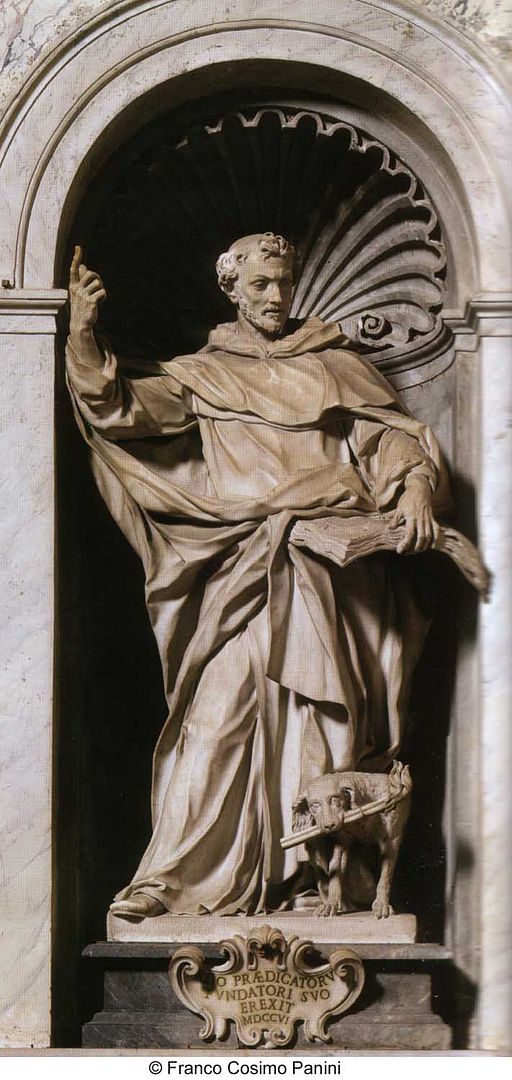
Other men associated themselves to Dominic Guzmán, attracted by the same aspiration. Thus, gradually, from the first foundation of Tolosa, was born the Order of Preachers. Dominic, in fact, in full obedience to the directives of the Popes of his time, Innocent III and Honorius III, adopted the ancient Rule of St. Augustine, adapting it to the needs of apostolic life, which led him and his companions to preach, moving from one post to another, but returning, later, to their own monasteries, places of study, prayer and community life. In a particular way, Dominic wished to highlight two values considered indispensable for the success of the evangelizing mission: community life in poverty and study.
First of all, Dominic and the Friars Preachers presented themselves as mendicants, that is, without vast properties of land to administer. This element rendered them more available for study and itinerant preaching and constituted a concrete witness for the people. The internal government of the Dominican monasteries and provinces was structured on the system of chapters, which elected their own superiors, confirmed later by major superiors; hence, an organization that stimulated fraternal life and the responsibility of all the members of the community, exacting strong personal convictions. The choice of this system stemmed precisely from the fact that the Dominicans, as preachers of the truth of God, had to be consistent with what they proclaimed. Truth studied and shared in charity with brothers is the most profound foundation of joy. Blessed Giordano of Saxony said of St. Dominic: "He received every man in the great bosom of charity and, because he loved everyone, everyone loved him. He made a personal law for himself of being joyful with happy persons and of weeping with those who wept" (Libellus de principiis Ordinis Praedicatorum autore Iordano de Saxonia, ed. H.C. Scheeben, [Monumenta Historica Sancti Patris Nostri Dominici, Romae, 1935]).
In the second place, with a courageous gesture Dominic wished that his followers acquire a solid theological formation, and he did not hesitate to send them to the universities of the time, even though not a few ecclesiastics regarded with diffidence these cultural institutions. The Constitutions of the Order of Preachers give great importance to study as preparation for the apostolate. Dominic wanted his Friars to dedicate themselves to study, sparing no effort, with diligence and compassion -- to study founded on the soul of all theological learning, that is, on sacred Scripture, and respectful of the questions posed by reason.
The development of culture imposes on those who carry out the ministry of the Word, at various levels, to be well prepared. Hence I exhort all, pastors and laity, to cultivate this "cultural dimension" of faith, so that the beauty of the Christian truth can be better understood and faith can be truly nourished, reinforced and also defended. In this Year for Priests, I invite seminarians and priests to appreciate the spiritual value of study. The quality of the priestly ministry depends also on the generosity with which one applies oneself to the study of revealed truths.
Dominic, who wished to found a religious Order of Preachers-Theologians, reminds us that theology has a spiritual and pastoral dimension, which enriches the spirit and life. Priests, consecrated persons and also all the faithful can find a profound "interior joy" in contemplating the beauty of the truth that comes from God, truth that is always up-to-date and always living. Hence, the motto of the Friars Preachers -- contemplata aliis tradere -- helps us to discover a pastoral yearning in the contemplative study of such truth, by the need to communicate to others the fruit of one's contemplation.
When Dominic died in 1221 in Bologna, the city that declared him its patron, his work had already had great success. The Order of Preachers, with the support of the Holy See, had spread to many countries of Europe to the benefit of the whole Church. Dominic was canonized in 1234, and it is he himself, with his sanctity, who indicates to us two indispensable means for apostolic action to be incisive. First of all, Marian devotion, which he cultivated with tenderness and which he left as precious legacy to his spiritual children, who in the history of the Church have had the great merit of spreading the prayer of the holy rosary, so dear to the Christian people and so rich in evangelical values, a true school of faith and piety. In the second place, Dominic, who took care of some women's convents in France and in Rome, believed profoundly in the value of intercessory prayer for the success of apostolic work. Only in Paradise will we understand how much the prayer of the cloistered effectively supports apostolic action! To each one of them I direct my grateful and affectionate thoughts.
Dear brothers and sisters, may Dominic Guzmán's life spur all of us to be fervent in prayer, courageous in living the faith, profoundly in love with Jesus Christ. Through his intercession, we ask God to enrich the Church always with genuine preachers of the Gospel.
Today, July 30, we celebrate the feast day of Saint Leopold Bogdan Mandic (1866-1942), Capuchin friar, referred to as both the Apostle of the Confessional and the Apostle of Unity. At a time when Pope Pius XII said that the greatest sin of our time is "to have lost all sense of sin," Leopold had a profound sense of sin and an even firmer sense of God’s grace awaiting human cooperation. To all who came to his confessional, Saint Leopold was a guiding voice toward the redemption of Heaven.
From the canonization homily, delivered by Pope Paul VI:
Who is it, who is the one who brings us together today to celebrate in his blessed name a manifestation of Christ’s Gospel, an event inexpressible, yet clear and evident, that marvelous appearance which allows us to glimpse in the outline of a humble friar an uplifting and at the same time almost disconcerting figure?
Look! Look! Saint Francis! Do you see him? Look how poor he is, how human. It is indeed Saint Francis himself, so humble, so serene, so absorbed as to appear carried away in his own inner vision of the invisible presence of God. And yet to us and for us he remains so present, so accessible, so available that he appears to know us, to await us, to know all about us and to be able to read our hearts. Look well: he is a poor little Capuchin, he looks ill and frail and yet so strangely strong that we seem to be drawn to him spellbound. Look at him through Franciscan eyes. Do you see him? Are you astonished? Who is he? Yes, let us admit it, he is frail, popular yet true image of Jesus, of that very Jesus who speaks at once to the ineffable God, to the Father who is Lord of heaven and earth, and also to us, bound up as we are in the littleness of our suffering humanity. And what is Jesus saying through this poor little spokesman of his? Great mysteries of the infinite transcendence of God, enchanting us and being clothed in moving and enthralling language, echoing the Gospel words: “Come to me, all you that labour and are burdened; I will give you rest.” (Matthew 11:28)
But who is it, then? It is Father Leopold. Yes, the Servant of God, Father Leopold of Castelnovo, who was called Adeodato Mandic before he became a friar. Born in Dalmatia, like Saint Jerome, he surely had in his character and in his memory the sweetness of that charming land on the Adriatic coast, and in his heart, in his homelife, the goodness and piety of that sturdy nation. Born on 12 May 1866, he died in Padua, where, having become a Capuchin, he had lived most of his life, until he concluded it, on 30 July 1942, aged 76, just over thirty years ago. Here, in this case, Canon Law has been indulgent, departing from the rule which does not permit the discussion of the virtues of a Servant of God until fifty years after his death. Yet, how could his case be delayed when the voice of the people in favour of his holiness, instead of fading with the passing of time, grew ever more insistent, more well-documented and more certainly authenticated? The judgement of the Church (cfr. can. 2101), in anticipation a favourable conclusion, had to give way to the spontaneous chorus of all who had known this humble Capuchin or had experienced his marvelous intercession. So it is not only those who have benefited from his prayers who proclaim Father Leopold’s exceptional moral and spiritual worth. There are a few still living who can testify to this, saying: “I knew him. Yes, he was a holy religious, a man of God, one of those exceptional souls who at once impress their sanctity upon us.” And in the memory of those who know something of the history of the Capuchin Order there appears again the remembrance of those great friars of the past, faithful to the most strict Franciscan traditions personifying his holiness. Let us just recall one typical literary figure, well-known to all: Manzoni’s Father Cristoforo.
But no: Father Leopold was smaller in stature and perhaps also in natural talent. He was not a preacher (as a good many capable Capuchins are), he did not enjoy good health being, indeed, a very frail man. All the same we must not forget one particular point. Coming from the Levantine shore of the Adriatic, from Castelnovo on the Mouth of Cattaro, in the territory of Croatia-Montenegro-Herzegovina-Bosnia, he ever kept a faithful love for his native land event though, living in Padua, he became equally attached to the new country which welcomed him and above all to the people among whom he carried on his silent and unwearying ministry. Blessed Leopold, therefore, unites in himself this two-fold loyalty, fusing it into a symbol of friendship and brotherhood which every one of his followers must adopt. It was in this way that he fulfilled a dominant thought and theme of his life. As we all know, Blessed Leopold was “ecumenical” before his time, that is to say he dreamed and looked forward and worked without fuss for the restoration of the perfect unity of the Church which yet jealously respects the manifold ethnic differences within her fold. Such unity is dictated by her own and still more by the sacred and mysterious will of Christ who founded a Church totally imbued with the essential demand of that supreme prayer of Jesus: “Ut unum sint”, may all be one those whom the same faith, the same baptism, the same Lord, in one Spirit, a bond of peace (cf. Ephesians 4:3 fol. John 17:11-21). Oh, that Blessed Leopold may be the prophet and the intercessor of such a great grace for the Church of God!

But the very special mark of the heroism and charismatic virtue of Blessed Leopold was something else. Everyone knows it, it was his ministry in hearing confessions. The late Cardinal Larraona, then Prefect of the Sacred Congregation of Rites, in the 1962 decree regarding the Beatification of Father Leopold wrote as follows: “This was his daily routine; after saying Mass early in the morning, he used to sit in the confessional and stay there the whole day long hearing confessions. He kept this up for about forty years without any complaint.” This is, we believe, the primary reason that has won for this humble Capuchin the Beatification which we are now celebrating.
He became holy principally in the exercise of the Sacrament of Penance. Thank God, many splendid accounts of this aspect of the sanctity of the new Blessed have already appeared. We have only to admire and thank the Lord for offering to the Church in these days such a singular figure of a minister of the sacramental grace of Penance. Thus, on the one hand, priests are reminded of the capital importance of this ministry both as regards instruction and its incomparable spiritual good, whilst on the other hand there is a reminder for the faithful, whether fervent or lukewarm or indifferent, what a providential and marvelous help this individual and auricular Confession still is today. In fact, more than ever today here is a source of grace and of peace, a school of Christian living, and incomparable comfort in the earthly pilgrimage towards eternal happiness.
May Blessed Leopold strengthen souls eager for spiritual advancement to assiduous frequenting of Confession which some critics, certainly not inspired by mature Christian wisdom, would like to see relegated among the outmoded forms of living, and personal spirituality. May our new Blessed succeed in calling to this tribunal of Penance – severe, it is true, but not less a sweet haven of comfort, of interior truth, of resurrection to grace and of training in the therapy of Christian authenticity – many, many souls dulled by the deceits of present day manners and make them feel for themselves by the secret and inspiring vigour of the Gospel through speaking with the Father, through meeting with Christ and being caught up in the Holy Spirit. So may they be renewed in their concern for the good of others, for justice and for worthiness of living.
To you Franciscan Brothers of the Capuchin Order: our thanks for having given to the Church and to the world a typical example of your strict, friendly and wholesome school of Christianity as faithful to itself as it is able to rouse up again the joy of prayer and goodness in the hearts of the people.
To you sons of Croatia, Montenegro, Bosnia-Herzegovina, and the whole of Yugoslavia: honour to you for having brought forth in our time such a lofty and yet human example of your Catholic tradition.
And to you Paduans: we wish you to honour, beside your own Saint Anthony, this not dissimilar Franciscan brother so that from them both you may hand on to the next generations the Christian and human virtues already so splendidly enshrined in your history.
From the canonization homily, delivered by Pope Paul VI:
Who is it, who is the one who brings us together today to celebrate in his blessed name a manifestation of Christ’s Gospel, an event inexpressible, yet clear and evident, that marvelous appearance which allows us to glimpse in the outline of a humble friar an uplifting and at the same time almost disconcerting figure?
Look! Look! Saint Francis! Do you see him? Look how poor he is, how human. It is indeed Saint Francis himself, so humble, so serene, so absorbed as to appear carried away in his own inner vision of the invisible presence of God. And yet to us and for us he remains so present, so accessible, so available that he appears to know us, to await us, to know all about us and to be able to read our hearts. Look well: he is a poor little Capuchin, he looks ill and frail and yet so strangely strong that we seem to be drawn to him spellbound. Look at him through Franciscan eyes. Do you see him? Are you astonished? Who is he? Yes, let us admit it, he is frail, popular yet true image of Jesus, of that very Jesus who speaks at once to the ineffable God, to the Father who is Lord of heaven and earth, and also to us, bound up as we are in the littleness of our suffering humanity. And what is Jesus saying through this poor little spokesman of his? Great mysteries of the infinite transcendence of God, enchanting us and being clothed in moving and enthralling language, echoing the Gospel words: “Come to me, all you that labour and are burdened; I will give you rest.” (Matthew 11:28)
But who is it, then? It is Father Leopold. Yes, the Servant of God, Father Leopold of Castelnovo, who was called Adeodato Mandic before he became a friar. Born in Dalmatia, like Saint Jerome, he surely had in his character and in his memory the sweetness of that charming land on the Adriatic coast, and in his heart, in his homelife, the goodness and piety of that sturdy nation. Born on 12 May 1866, he died in Padua, where, having become a Capuchin, he had lived most of his life, until he concluded it, on 30 July 1942, aged 76, just over thirty years ago. Here, in this case, Canon Law has been indulgent, departing from the rule which does not permit the discussion of the virtues of a Servant of God until fifty years after his death. Yet, how could his case be delayed when the voice of the people in favour of his holiness, instead of fading with the passing of time, grew ever more insistent, more well-documented and more certainly authenticated? The judgement of the Church (cfr. can. 2101), in anticipation a favourable conclusion, had to give way to the spontaneous chorus of all who had known this humble Capuchin or had experienced his marvelous intercession. So it is not only those who have benefited from his prayers who proclaim Father Leopold’s exceptional moral and spiritual worth. There are a few still living who can testify to this, saying: “I knew him. Yes, he was a holy religious, a man of God, one of those exceptional souls who at once impress their sanctity upon us.” And in the memory of those who know something of the history of the Capuchin Order there appears again the remembrance of those great friars of the past, faithful to the most strict Franciscan traditions personifying his holiness. Let us just recall one typical literary figure, well-known to all: Manzoni’s Father Cristoforo.
But no: Father Leopold was smaller in stature and perhaps also in natural talent. He was not a preacher (as a good many capable Capuchins are), he did not enjoy good health being, indeed, a very frail man. All the same we must not forget one particular point. Coming from the Levantine shore of the Adriatic, from Castelnovo on the Mouth of Cattaro, in the territory of Croatia-Montenegro-Herzegovina-Bosnia, he ever kept a faithful love for his native land event though, living in Padua, he became equally attached to the new country which welcomed him and above all to the people among whom he carried on his silent and unwearying ministry. Blessed Leopold, therefore, unites in himself this two-fold loyalty, fusing it into a symbol of friendship and brotherhood which every one of his followers must adopt. It was in this way that he fulfilled a dominant thought and theme of his life. As we all know, Blessed Leopold was “ecumenical” before his time, that is to say he dreamed and looked forward and worked without fuss for the restoration of the perfect unity of the Church which yet jealously respects the manifold ethnic differences within her fold. Such unity is dictated by her own and still more by the sacred and mysterious will of Christ who founded a Church totally imbued with the essential demand of that supreme prayer of Jesus: “Ut unum sint”, may all be one those whom the same faith, the same baptism, the same Lord, in one Spirit, a bond of peace (cf. Ephesians 4:3 fol. John 17:11-21). Oh, that Blessed Leopold may be the prophet and the intercessor of such a great grace for the Church of God!

But the very special mark of the heroism and charismatic virtue of Blessed Leopold was something else. Everyone knows it, it was his ministry in hearing confessions. The late Cardinal Larraona, then Prefect of the Sacred Congregation of Rites, in the 1962 decree regarding the Beatification of Father Leopold wrote as follows: “This was his daily routine; after saying Mass early in the morning, he used to sit in the confessional and stay there the whole day long hearing confessions. He kept this up for about forty years without any complaint.” This is, we believe, the primary reason that has won for this humble Capuchin the Beatification which we are now celebrating.
He became holy principally in the exercise of the Sacrament of Penance. Thank God, many splendid accounts of this aspect of the sanctity of the new Blessed have already appeared. We have only to admire and thank the Lord for offering to the Church in these days such a singular figure of a minister of the sacramental grace of Penance. Thus, on the one hand, priests are reminded of the capital importance of this ministry both as regards instruction and its incomparable spiritual good, whilst on the other hand there is a reminder for the faithful, whether fervent or lukewarm or indifferent, what a providential and marvelous help this individual and auricular Confession still is today. In fact, more than ever today here is a source of grace and of peace, a school of Christian living, and incomparable comfort in the earthly pilgrimage towards eternal happiness.
May Blessed Leopold strengthen souls eager for spiritual advancement to assiduous frequenting of Confession which some critics, certainly not inspired by mature Christian wisdom, would like to see relegated among the outmoded forms of living, and personal spirituality. May our new Blessed succeed in calling to this tribunal of Penance – severe, it is true, but not less a sweet haven of comfort, of interior truth, of resurrection to grace and of training in the therapy of Christian authenticity – many, many souls dulled by the deceits of present day manners and make them feel for themselves by the secret and inspiring vigour of the Gospel through speaking with the Father, through meeting with Christ and being caught up in the Holy Spirit. So may they be renewed in their concern for the good of others, for justice and for worthiness of living.
To you Franciscan Brothers of the Capuchin Order: our thanks for having given to the Church and to the world a typical example of your strict, friendly and wholesome school of Christianity as faithful to itself as it is able to rouse up again the joy of prayer and goodness in the hearts of the people.
To you sons of Croatia, Montenegro, Bosnia-Herzegovina, and the whole of Yugoslavia: honour to you for having brought forth in our time such a lofty and yet human example of your Catholic tradition.
And to you Paduans: we wish you to honour, beside your own Saint Anthony, this not dissimilar Franciscan brother so that from them both you may hand on to the next generations the Christian and human virtues already so splendidly enshrined in your history.
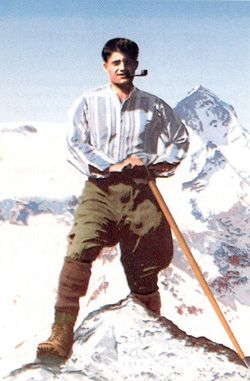
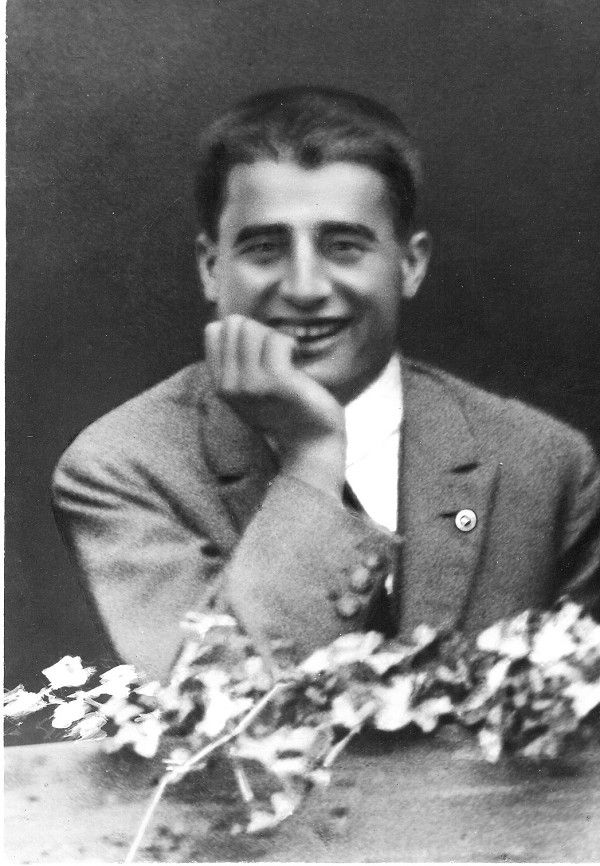
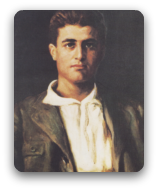
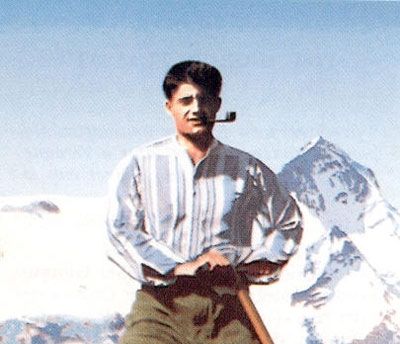
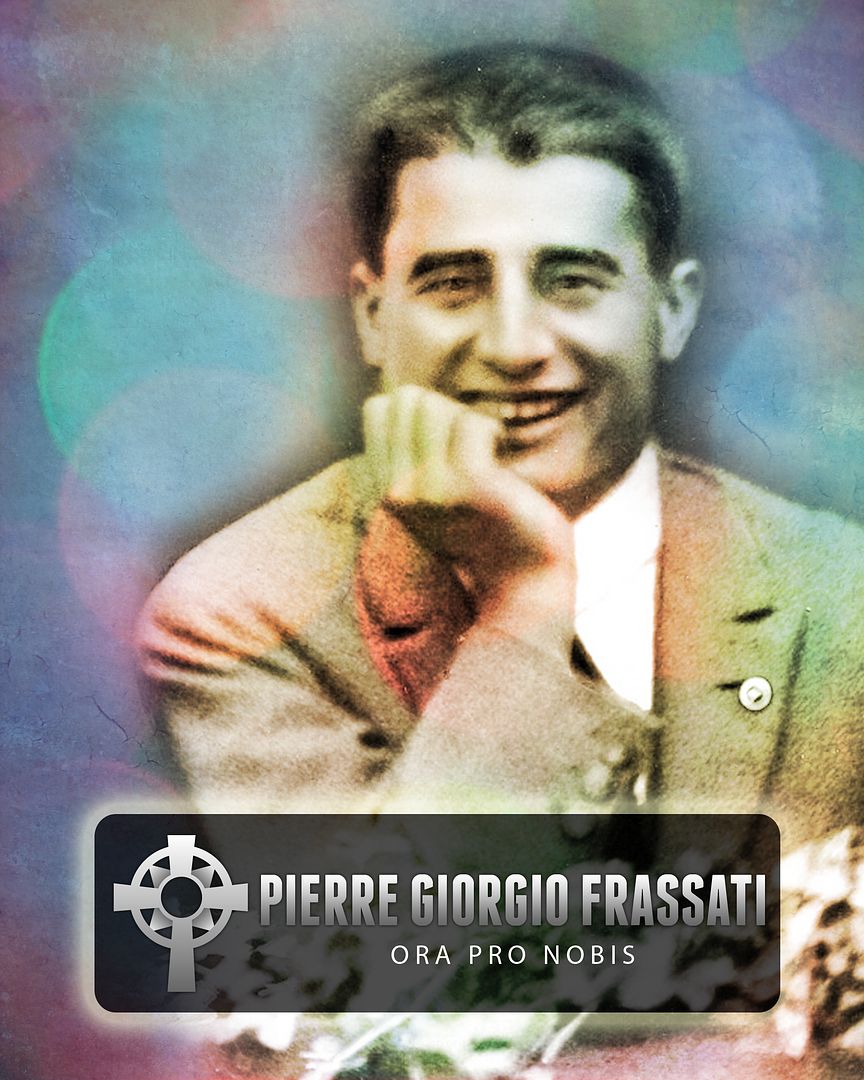
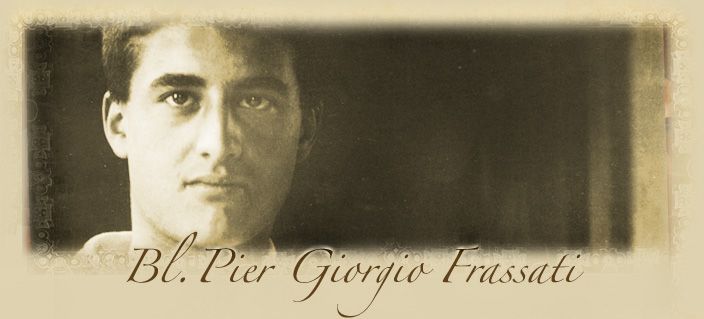
Today, July 4, we celebrate the feast day of Blessed Pier Giorgio Frassanti (1901-1925), known as “The Man of the Eight Beatitudes.” Blessed Pier lived a life full of the joy of the Lord, tirelessly serving all he encountered, and working for social justice. Pope John Paul II referred to this holy young man as embodying the Beatitudes, and delivered the following homily at his beatification in 1990:
1. "I will ask the Father, and he will send you another Advocate to be with you always, the Spirit of truth" (Jn 14:16). During the Easter season, as we progressively draw near to Pentecost, these words become more and more timely. They were spoken by Jesus in the Upper Room the day before his Passion, as he took leave of his Apostles. His departure--the departure of the Beloved Master through his death and resurrection--prepares the way for another Advocate (Jn 16:7). The Paraclete will come; he will come precisely because of Christ's redemptive departure which makes possible and inaugurates God's new merciful presence among people. The Spirit of Truth, whom the world neither sees nor knows, however, makes itself known by the Apostles, because "it remains with them and will be in them" (cf. Jn 14:17). And everyone will become witnesses to this on the day of Pentecost.
2. Pentecost, however, is only the beginning, because the Spirit of Truth comes to remain with the Church for ever (cf. Jn 14:16), endlessly renewing itself in future generations. Therefore the words of the Apostle Peter are addressed not only to the people of his day, but also to all of us and our contemporaries. "Sanctify Christ as Lord in your hearts. Always be ready to give an explanation to anyone who asks you for a reason for your hope" (1 Peter 3:15). In our century, Pier Giorgio Frassati incarnated these words of St. Peter in his own life. The power of the Spirit of Truth, united to Christ, made him a modern witness to the hope which springs from the Gospel and to the grace of salvation which works in human hearts. Thus he became a living witness and courageous defender of this hope in the name of Christian youth of the twentieth century.
3. Faith and charity, the true driving forces of his existence, made him active and diligent in the milieu in which he lived, in his family and school, in the university and society; they transformed him into a joyful, enthusiastic apostle of Christ, a passionate follower of his message and charity. The secret of his apostolic zeal and holiness is to be sought in the ascetical and spiritual journey which he traveled; in prayer, in persevering adoration, even at night, of the Blessed Sacrament, in his thirst for the Word of God, which he sought in Biblical texts; in the peaceful acceptance of life's difficulties, in family life as well; in chastity lived as a cheerful, uncompromising discipline; in his daily love of silence and life's "ordinariness." It is precisely in these factors that we are given to understand the deep well-spring of his spiritual vitality. Indeed, it is through the Eucharist that Christ communicates his Spirit; it is through listening to the word that the readiness to welcome others grows, and it is also through prayerful abandonment to God's will that life's great decisions mature. Only by adoring God who is present in his or her own heart can the baptized Christian respond to the person who "asks you for a reason for your hope" (1 Pt 3:15). And the young Frassati knew it, felt it, lived it. In his life, faith was fused with charity: firm in faith and active in charity, because without works, faith is dead (cf. James 2:20).
4. Certainly, at a superficial glance, Frassati's lifestyle, that of a modern young man who was full of life, does not present anything out of the ordinary. This, however, is the originality of his virtue, which invites us to reflect upon it and impels us to imitate it. In him faith and daily events are harmoniously fused, so that adherence to the Gospel is translated into loving care for the poor and the needy in a continual crescendo until the very last days of the sickness which led to his death. His love for beauty and art, his passion for sports and mountains, his attention to society's problems did not inhibit his constant relationship with the Absolute. Entirely immersed in the mystery if God and totally dedicated to the constant service of his neighbor: thus we can sum up his earthly life!
He fulfilled his vocation as a lay Christian in many associative and political involvements in a society in ferment, a society which was indifferent and sometimes even hostile to the Church. In this spirit, Pier Giorgio succeeded in giving new impulse to various Catholic movements, which he enthusiastically joined, but especially to Catholic Action, as well as Federation of Italian Catholic University Students [FUCI], in which he found the true gymnasium of his Christian training and the right fields of his apostolate. In Catholic Action he joyfully and proudly lived his Christian vocation and strove to love Jesus and to see in him the brothers and sisters whom he met on his way or whom he actively sought in their places of suffering, marginalization and isolation, in order to help them feel the warmth of his human solidarity and the supernatural comfort of faith in Christ.
He died young, at the end of a short life, but one which was extraordinarily filled with spiritual fruits, setting out for his "true homeland and singing God's praises."
5. Today's celebration invites all of us to receive the message which Pier Giorgio Frassati is sending to the men and women of our day, but especially to you young people, who want to make a concrete contribution to the spiritual renewal of our world, which sometimes seems to be falling apart and wasting away because of a lack of ideals. By his example he proclaims that a life lived in Christ's Spirit, the Spirit of the Beatitudes, is "blessed", and that only the person who becomes a "man or woman of the Beatitudes" can succeed in communicating love and peace to others. He repeats that it is really worth giving up everything to serve the Lord. He testifies that holiness is possible for everyone, and that only the revolution of charity can enkindle the hope of a better future in the hearts of people.
6. Yes, "tremendous are the deeds of the Lord's. Shout joyfully to God all you on earth" (Ps 66:1-3). The verse of the Psalm resound in this Sunday liturgy as a living echo of young Frassati's soul. Indeed, we all know how much he loved the world God created! "Come and see the works of God" (Ps 65/66:5): this is also an invitation which we receive from his young soul and which is particularly addressed to young people. Come and see God's "tremendous deeds among men" (ibid.). Tremendous deeds among men and women! Human eyes -- young, sensitive eyes -- must be able to admire God's work in the external, visible world. The eyes of the spirit must be able to turn from this external, visible world to the inner, invisible one: thus they can reveal to others the realm of the spirit in which the light of the Word that enlightens every person is reflected (cf. Jn 1:9). In this light the Spirit of Truth acts.
7. This is the "inner" person. This is how Pier Giorgio appears to us. Indeed, his entire life seems to sum up Christ's words which we find in John's Gospel: "Whoever loves me will keep my word, and my Father will love him, and we will come and make our dwelling with him" (Jn 14:23). This is the "inner" person loved by the Father, loved because he or she has loved much! Is love not possibly what is most needed in our twentieth century, at its beginning, as well as at its end? Is it perhaps not true that the only thing that lasts, without ever losing its validity, is the fact that a person "has loved"?
8. He left this world rather young, but he made a mark upon our entire century, and not only on our century. He left this world, but in the Easter power of his Baptism, he can say to everyone, especially to the young generations of today and tomorrow:
"You will see me, because I live and you will live" (Jn 14:19).
These words were spoken by Jesus Christ when he took leave of his Apostles before undergoing his Passion. I like to think of them as forming on the lips of our new Blessed himself as a persuasive invitation to live from Christ and in Christ. This invitation is still valid, it is valid today as well, especially for today's young people, valid for everyone. It is a valid invitation which Pier Giorgio Frassati has left for us. Amen.
1. "I will ask the Father, and he will send you another Advocate to be with you always, the Spirit of truth" (Jn 14:16). During the Easter season, as we progressively draw near to Pentecost, these words become more and more timely. They were spoken by Jesus in the Upper Room the day before his Passion, as he took leave of his Apostles. His departure--the departure of the Beloved Master through his death and resurrection--prepares the way for another Advocate (Jn 16:7). The Paraclete will come; he will come precisely because of Christ's redemptive departure which makes possible and inaugurates God's new merciful presence among people. The Spirit of Truth, whom the world neither sees nor knows, however, makes itself known by the Apostles, because "it remains with them and will be in them" (cf. Jn 14:17). And everyone will become witnesses to this on the day of Pentecost.
2. Pentecost, however, is only the beginning, because the Spirit of Truth comes to remain with the Church for ever (cf. Jn 14:16), endlessly renewing itself in future generations. Therefore the words of the Apostle Peter are addressed not only to the people of his day, but also to all of us and our contemporaries. "Sanctify Christ as Lord in your hearts. Always be ready to give an explanation to anyone who asks you for a reason for your hope" (1 Peter 3:15). In our century, Pier Giorgio Frassati incarnated these words of St. Peter in his own life. The power of the Spirit of Truth, united to Christ, made him a modern witness to the hope which springs from the Gospel and to the grace of salvation which works in human hearts. Thus he became a living witness and courageous defender of this hope in the name of Christian youth of the twentieth century.
3. Faith and charity, the true driving forces of his existence, made him active and diligent in the milieu in which he lived, in his family and school, in the university and society; they transformed him into a joyful, enthusiastic apostle of Christ, a passionate follower of his message and charity. The secret of his apostolic zeal and holiness is to be sought in the ascetical and spiritual journey which he traveled; in prayer, in persevering adoration, even at night, of the Blessed Sacrament, in his thirst for the Word of God, which he sought in Biblical texts; in the peaceful acceptance of life's difficulties, in family life as well; in chastity lived as a cheerful, uncompromising discipline; in his daily love of silence and life's "ordinariness." It is precisely in these factors that we are given to understand the deep well-spring of his spiritual vitality. Indeed, it is through the Eucharist that Christ communicates his Spirit; it is through listening to the word that the readiness to welcome others grows, and it is also through prayerful abandonment to God's will that life's great decisions mature. Only by adoring God who is present in his or her own heart can the baptized Christian respond to the person who "asks you for a reason for your hope" (1 Pt 3:15). And the young Frassati knew it, felt it, lived it. In his life, faith was fused with charity: firm in faith and active in charity, because without works, faith is dead (cf. James 2:20).
4. Certainly, at a superficial glance, Frassati's lifestyle, that of a modern young man who was full of life, does not present anything out of the ordinary. This, however, is the originality of his virtue, which invites us to reflect upon it and impels us to imitate it. In him faith and daily events are harmoniously fused, so that adherence to the Gospel is translated into loving care for the poor and the needy in a continual crescendo until the very last days of the sickness which led to his death. His love for beauty and art, his passion for sports and mountains, his attention to society's problems did not inhibit his constant relationship with the Absolute. Entirely immersed in the mystery if God and totally dedicated to the constant service of his neighbor: thus we can sum up his earthly life!
He fulfilled his vocation as a lay Christian in many associative and political involvements in a society in ferment, a society which was indifferent and sometimes even hostile to the Church. In this spirit, Pier Giorgio succeeded in giving new impulse to various Catholic movements, which he enthusiastically joined, but especially to Catholic Action, as well as Federation of Italian Catholic University Students [FUCI], in which he found the true gymnasium of his Christian training and the right fields of his apostolate. In Catholic Action he joyfully and proudly lived his Christian vocation and strove to love Jesus and to see in him the brothers and sisters whom he met on his way or whom he actively sought in their places of suffering, marginalization and isolation, in order to help them feel the warmth of his human solidarity and the supernatural comfort of faith in Christ.
He died young, at the end of a short life, but one which was extraordinarily filled with spiritual fruits, setting out for his "true homeland and singing God's praises."
5. Today's celebration invites all of us to receive the message which Pier Giorgio Frassati is sending to the men and women of our day, but especially to you young people, who want to make a concrete contribution to the spiritual renewal of our world, which sometimes seems to be falling apart and wasting away because of a lack of ideals. By his example he proclaims that a life lived in Christ's Spirit, the Spirit of the Beatitudes, is "blessed", and that only the person who becomes a "man or woman of the Beatitudes" can succeed in communicating love and peace to others. He repeats that it is really worth giving up everything to serve the Lord. He testifies that holiness is possible for everyone, and that only the revolution of charity can enkindle the hope of a better future in the hearts of people.
6. Yes, "tremendous are the deeds of the Lord's. Shout joyfully to God all you on earth" (Ps 66:1-3). The verse of the Psalm resound in this Sunday liturgy as a living echo of young Frassati's soul. Indeed, we all know how much he loved the world God created! "Come and see the works of God" (Ps 65/66:5): this is also an invitation which we receive from his young soul and which is particularly addressed to young people. Come and see God's "tremendous deeds among men" (ibid.). Tremendous deeds among men and women! Human eyes -- young, sensitive eyes -- must be able to admire God's work in the external, visible world. The eyes of the spirit must be able to turn from this external, visible world to the inner, invisible one: thus they can reveal to others the realm of the spirit in which the light of the Word that enlightens every person is reflected (cf. Jn 1:9). In this light the Spirit of Truth acts.
7. This is the "inner" person. This is how Pier Giorgio appears to us. Indeed, his entire life seems to sum up Christ's words which we find in John's Gospel: "Whoever loves me will keep my word, and my Father will love him, and we will come and make our dwelling with him" (Jn 14:23). This is the "inner" person loved by the Father, loved because he or she has loved much! Is love not possibly what is most needed in our twentieth century, at its beginning, as well as at its end? Is it perhaps not true that the only thing that lasts, without ever losing its validity, is the fact that a person "has loved"?
8. He left this world rather young, but he made a mark upon our entire century, and not only on our century. He left this world, but in the Easter power of his Baptism, he can say to everyone, especially to the young generations of today and tomorrow:
"You will see me, because I live and you will live" (Jn 14:19).
These words were spoken by Jesus Christ when he took leave of his Apostles before undergoing his Passion. I like to think of them as forming on the lips of our new Blessed himself as a persuasive invitation to live from Christ and in Christ. This invitation is still valid, it is valid today as well, especially for today's young people, valid for everyone. It is a valid invitation which Pier Giorgio Frassati has left for us. Amen.
Subscribe to:
Posts (Atom)