Why pray the Rosary every day for a year?


Each time the Blessed Virgin has appeared-- whether it be to Saint Bernadette Soubirous at Lourdes; to Lucia, Jacinta, and Francisco at Fatima; or to Mariette Beco at Banneux-- she has asserted the importance, saving grace, and power of praying the Holy Rosary on a daily basis. Based upon her words, the Rosary is penance and conversion for sinners, a pathway to peace, an end to war, and a powerful act of faith in Jesus Christ. Pope Paul VI presented the Rosary as a powerful means to reach Christ "not merely with Mary but indeed, insofar as this is possible to us, in the same way as Mary, who is certainly the one who thought about Him more than anyone else has ever done."

To show us how this is done, perhaps no one has been more eloquent than the great Cardinal Newman, who wrote: "The great power of the Rosary consists in the fact that it translates the Creed into Prayer. Of course, the Creed is already in a certain sense a prayer and a great act of homage towards God, but the Rosary brings us to meditate again on the great truth of His life and death, and brings this truth close to our hearts. Even Christians, although they know God, usually fear rather than love Him. The strength of the Rosary lies in the particular manner in which it considers these mysteries, since all our thinking about Christ is intertwined with the thought of His Mother, in the relations between Mother and Son; the Holy Family is presented to us, the home in which God lived His infinite love."


As Mary said at Fatima, "Jesus wants to use you to make Me known and loved. He wishes to establish the devotion to My Immaculate Heart throughout the world. I promise salvation to whoever embraces it; these souls will be dear to God, like flowers put by Me to adorn his throne."


July 16, 2013: Feast of Our Lady of Mount Carmel

Posted by Jacob


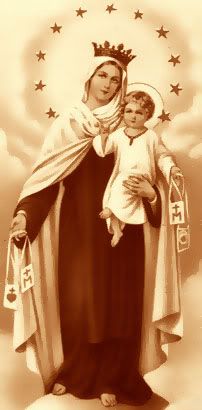
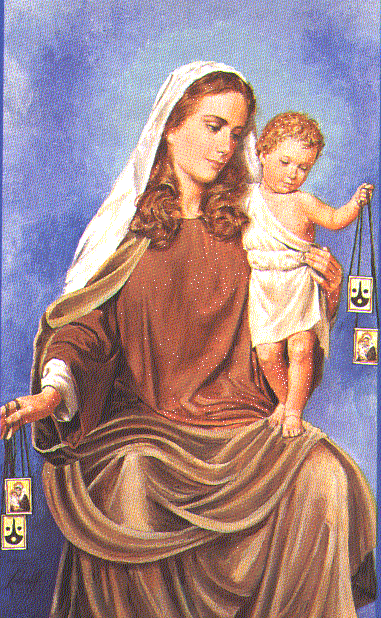
Today, July 16, we celebrate the feast of Our Lady of Mount Carmel, the Madonna of the Brown Scapular. It is our Lady of Mount Carmel who appeared to Saint Simon Stock, providing gentle instruction on Consecration to Her Sacred Heart through the Scapular, which led to the growth of the Carmelite Order. Consecration to Our Blessed Mother through wearing of the Scapular, however, is not reserved only for the Carmelites. Rather, it is a Church tradition available to all. As Pope Pius XII proclaimed, “Let the Scapular be for them a sign of Consecration to the Immaculate Heart of Mary."


Similarly, Pope John Paul II, on the 750th anniversary of the Brown Scapular to Saint Simon Stock, declared:

“The sign of the Scapular nourishes the devotion of believers and makes them sensitive to the Virgin Mother's loving presence in their lives. The Scapular is essentially a 'habit'. Those who receive it are associated with the Order of Carmel and dedicate themselves to the service of Our Lady for the good of the whole Church.


Therefore two truths are evoked by the sign of the Scapular:


- the constant protection of the Blessed Virgin, not only on life's journey but also at the moment of passing into the fullness of eternal glory


- the awareness that devotion to Mary cannot be limited to prayers and tributes in her honor on certain occasions, but must become a 'habit', that is, a permanent orientation of one's own Christian conduct, woven of prayer and interior life, through frequent reception of the sacraments and the concrete practice of the spiritual and corporal works of mercy.”


While we may traditionally view Our Blessed Mother’s appearance to Saint Simon Stock, and the subsequent bestowal of the Brown Scapular to him and the world as the origin of devotion to Our Lady of Mount Carmel, this devotion mystically (and somewhat miraculously) precedes these events. In fact, devotion to Our Blessed Mother—not yet born—dates back to the 8th century before Christ when the prophet Elias ascended the holy mountain of Carmel in Palestine, beginning a long tradition of contemplative monastic life and prayer. At that time, long before the glorious plan of God had reached fruition, Elias and his followers dedicated themselves to God’s “Mother-to-come,” Mary, Virgin of Mount Carmel. Nearly three thousand years later, today, this devotion continues on Mount Carmel—an active monastic religious community dedicated to contemplation, prayer, and devotion to Our Blessed Mother.

Following the time of Christ, on the Feast of Pentecost, the spiritual descendants of Elias and his followers came down from Mount Carmel. They were among the first to accept the message of Christ and to be baptized by the disciple. Upon meeting Our Lady, and hearing the sweetest words from Her lips, they were overcome with a sense of majesty and sanctity—a love and gentleness they never forgot. Returning to their holy mountain, these first Carmelites erected the first chapel built in honor of the Blessed Virgin Mary. From Butler’s Lives of the Saints:


When on the holy day of Pentecost the Apostles, through heavenly inspiration, spake in foreign tongues, and worked many wonders by the invocation of the most sacred Name of Jesus ; it is said that many men, who were walking in the footsteps of the holy prophets Elijah and Elisha, and had been prepared for the coming of Christ by the heralding of John the Baptist, saw and were assured of the truth. They at once embraced the faith of the Gospel, and began to venerate the most blessed Virgin (whose conversation and familiar intercourse they were happily able to enjoy) with a certain peculiar affection, so that they, before all others, built a chapel to that purest of Virgins on that very spot of Mount Carmel where Elijah of old had seen a cloud arising, a remarkable symbol of the Virgin.”

From that time devotion to God's Mother was handed down by the hermits on Mount Carmel as a treasured spiritual legacy. In the twelfth century, the Carmelite Order was officially founded.

From the Divine Office: “Sacred Scripture celebrated the beauty of Carmel where the prophet Elijah defended the purity of Israel's faith in the living God. In the twelfth century, hermits withdrew to that mountain and later founded the Order devoted to the contemplative life under the patronage of Mary, the holy Mother of God.”

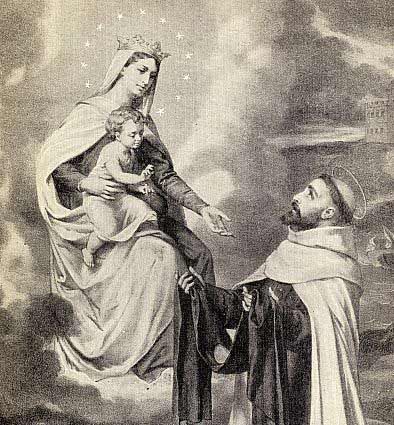
As written about previously (see here, the Feast of Saint Simon Stock), the Blessed Virgin appeared to Saint Simon, bestowing upon him the Brown Scapular. Saint Simon was a hermit who eventually joined the Carmelite Order, and after many years of tireless work in service of his brothers, was elected Vicar General. Following his election, he was graced with a visitation of Our Blessed Mother. According to Carmelite tradition, July 16, 1251, St. Simon Stock was given the Brown Scapular by the Blessed Virgin Mary, who said to him:

“Receive, my dear son, this scapular of thy Order, as the distinctive sign of my confraternity, and the mark of the privilege which I have obtained for thee and the children of Carmel. It is a sign of salvation, a safeguard in danger, and a special pledge of peace and protection till the end of time. Whosoever dies wearing this shall be preserved from eternal flames.”

In order to share in the merits of the Scapular devotion to Our Blessed Mother, one who wears the Scapular must: 1)Shun sin, and, according to his state of life, live chastely; 2)Say every day, if possible, seven times, Our Father, Hail Mary, and Glory be to the Father; 3) Strive to serve God by venerating Mary, and imitating her virtues.


Father Gabriel of Saint Mary Magdalene de' Pazzi, OCD, an authority on Carmelite spirituality, wrote that devotion to Our Lady of Mount Carmel means:

“a special call to the interior life, which is preeminently a Marian life. Our Lady wants us to resemble her not only in our outward vesture but, far more, in heart and spirit. If we gaze into Mary's soul, we shall see that grace in her has flowered into a spiritual life of incalcuable wealth: a life of recollection, prayer, uninterrupted oblation to God, continual contact, and intimate union with him. Mary's soul is a sanctuary reserved for God alone, where no human creature has ever left its trace, where love and zeal for the glory of God and the salvation of mankind reign supreme. Those who want to live their devotion to Our Lady of Mt. Carmel to the full must follow Mary into the depths of her interior life. Carmel is the symbol of the contemplative life, the life wholly dedicated to the quest for God, wholly orientated towards intimacy with God; and the one who has best realized this highest of ideals is Our Lady herself, 'Queen and Splendor of Carmel'."


We pray today for the grace and peace of Our Blessed Mother, through our total consecration to her sacred heart. May she never cease her intercessions on our behalf with Our Loving God in heaven. We pray for those who, through devotion to Mary, wear the Scapular- an external sign of love for Mary, of the trust her children have in her, and of the commitment to live like her.


(For a detailed explanation of the Scapular, written by Carmelite Sisters, click here.)


A PRAYER TO THE BLESSED VIRGIN, OUR LADY OF MOUNT CARMEL

O most beautiful Flower of Mount Carmel,
Fruitful Vine,
Splendor of Heaven,
Blessed Mother of the Son of God,
Immaculate Virgin,
assist me this my necessity.

O Star of the Sea,
help me and show me herein you are my Mother.


O Holy Mary,
Mother of God,
Queen of Heaven and Earth,
I humbly beseech you from the bottom of my heart,
to succor me in this necessity;
there are none that can withstand your power.


O, show me herein you are my Mother,
O Mary, conceived without sin,
pray for us who have recourse to thee.


Sweet Mother,
I place this cause in your hands.


July 16: Feast of Our Lady of Mount Carmel

Posted by Jacob

Today, July 16, we celebrate the feast of Our Lady of Mount Carmel, the Madonna of the Brown Scapular. It is our Lady of Mount Carmel who appeared to Saint Simon Stock, providing gentle instruction on Consecration to Her Sacred Heart through the Scapular, which led to the growth of the Carmelite Order. Consecration to Our Blessed Mother through wearing of the Scapular, however, is not reserved only for the Carmelites. Rather, it is a Church tradition available to all. As Pope Pius XII proclaimed, “Let the Scapular be for them a sign of Consecration to the Immaculate Heart of Mary."


Similarly, Pope John Paul II, on the 750th anniversary of the Brown Scapular to Saint Simon Stock, declared:

“The sign of the Scapular nourishes the devotion of believers and makes them sensitive to the Virgin Mother's loving presence in their lives. The Scapular is essentially a 'habit'. Those who receive it are associated with the Order of Carmel and dedicate themselves to the service of Our Lady for the good of the whole Church.


Therefore two truths are evoked by the sign of the Scapular:


- the constant protection of the Blessed Virgin, not only on life's journey but also at the moment of passing into the fullness of eternal glory


- the awareness that devotion to Mary cannot be limited to prayers and tributes in her honor on certain occasions, but must become a 'habit', that is, a permanent orientation of one's own Christian conduct, woven of prayer and interior life, through frequent reception of the sacraments and the concrete practice of the spiritual and corporal works of mercy.”


While we may traditionally view Our Blessed Mother’s appearance to Saint Simon Stock, and the subsequent bestowal of the Brown Scapular to him and the world as the origin of devotion to Our Lady of Mount Carmel, this devotion mystically (and somewhat miraculously) precedes these events. In fact, devotion to Our Blessed Mother—not yet born—dates back to the 8th century before Christ when the prophet Elias ascended the holy mountain of Carmel in Palestine, beginning a long tradition of contemplative monastic life and prayer. At that time, long before the glorious plan of God had reached fruition, Elias and his followers dedicated themselves to God’s “Mother-to-come,” Mary, Virgin of Mount Carmel. Nearly three thousand years later, today, this devotion continues on Mount Carmel—an active monastic religious community dedicated to contemplation, prayer, and devotion to Our Blessed Mother.

Following the time of Christ, on the Feast of Pentecost, the spiritual descendants of Elias and his followers came down from Mount Carmel. They were among the first to accept the message of Christ and to be baptized by the disciple. Upon meeting Our Lady, and hearing the sweetest words from Her lips, they were overcome with a sense of majesty and sanctity—a love and gentleness they never forgot. Returning to their holy mountain, these first Carmelites erected the first chapel built in honor of the Blessed Virgin Mary. From Butler’s Lives of the Saints:


When on the holy day of Pentecost the Apostles, through heavenly inspiration, spake in foreign tongues, and worked many wonders by the invocation of the most sacred Name of Jesus ; it is said that many men, who were walking in the footsteps of the holy prophets Elijah and Elisha, and had been prepared for the coming of Christ by the heralding of John the Baptist, saw and were assured of the truth. They at once embraced the faith of the Gospel, and began to venerate the most blessed Virgin (whose conversation and familiar intercourse they were happily able to enjoy) with a certain peculiar affection, so that they, before all others, built a chapel to that purest of Virgins on that very spot of Mount Carmel where Elijah of old had seen a cloud arising, a remarkable symbol of the Virgin.”

From that time devotion to God's Mother was handed down by the hermits on Mount Carmel as a treasured spiritual legacy. In the twelfth century, the Carmelite Order was officially founded.

From the Divine Office: “Sacred Scripture celebrated the beauty of Carmel where the prophet Elijah defended the purity of Israel's faith in the living God. In the twelfth century, hermits withdrew to that mountain and later founded the Order devoted to the contemplative life under the patronage of Mary, the holy Mother of God.”

As written about previously (see here, the Feast of Saint Simon Stock), the Blessed Virgin appeared to Saint Simon, bestowing upon him the Brown Scapular. Saint Simon was a hermit who eventually joined the Carmelite Order, and after many years of tireless work in service of his brothers, was elected Vicar General. Following his election, he was graced with a visitation of Our Blessed Mother. According to Carmelite tradition, July 16, 1251, St. Simon Stock was given the Brown Scapular by the Blessed Virgin Mary, who said to him:

“Receive, my dear son, this scapular of thy Order, as the distinctive sign of my confraternity, and the mark of the privilege which I have obtained for thee and the children of Carmel. It is a sign of salvation, a safeguard in danger, and a special pledge of peace and protection till the end of time. Whosoever dies wearing this shall be preserved from eternal flames.”

In order to share in the merits of the Scapular devotion to Our Blessed Mother, one who wears the Scapular must: 1)Shun sin, and, according to his state of life, live chastely; 2)Say every day, if possible, seven times, Our Father, Hail Mary, and Glory be to the Father; 3) Strive to serve God by venerating Mary, and imitating her virtues.


Father Gabriel of Saint Mary Magdalene de' Pazzi, OCD, an authority on Carmelite spirituality, wrote that devotion to Our Lady of Mount Carmel means:

“a special call to the interior life, which is preeminently a Marian life. Our Lady wants us to resemble her not only in our outward vesture but, far more, in heart and spirit. If we gaze into Mary's soul, we shall see that grace in her has flowered into a spiritual life of incalcuable wealth: a life of recollection, prayer, uninterrupted oblation to God, continual contact, and intimate union with him. Mary's soul is a sanctuary reserved for God alone, where no human creature has ever left its trace, where love and zeal for the glory of God and the salvation of mankind reign supreme. Those who want to live their devotion to Our Lady of Mt. Carmel to the full must follow Mary into the depths of her interior life. Carmel is the symbol of the contemplative life, the life wholly dedicated to the quest for God, wholly orientated towards intimacy with God; and the one who has best realized this highest of ideals is Our Lady herself, 'Queen and Splendor of Carmel'."


We pray today for the grace and peace of Our Blessed Mother, through our total consecration to her sacred heart. May she never cease her intercessions on our behalf with Our Loving God in heaven. We pray for those who, through devotion to Mary, wear the Scapular- an external sign of love for Mary, of the trust her children have in her, and of the commitment to live like her.


(For a detailed explanation of the Scapular, written by Carmelite Sisters, click here.)


A PRAYER TO THE BLESSED VIRGIN, OUR LADY OF MOUNT CARMEL

O most beautiful Flower of Mount Carmel,
Fruitful Vine,
Splendor of Heaven,
Blessed Mother of the Son of God,
Immaculate Virgin,
assist me this my necessity.

O Star of the Sea,
help me and show me herein you are my Mother.


O Holy Mary,
Mother of God,
Queen of Heaven and Earth,
I humbly beseech you from the bottom of my heart,
to succor me in this necessity;
there are none that can withstand your power.


O, show me herein you are my Mother,
O Mary, conceived without sin,
pray for us who have recourse to thee.


Sweet Mother,
I place this cause in your hands.


Year 2: Day 197 of 365
Prayer Intentions: Consecration to Our Lady; Grace and Peace; Protection from sin.
Requested Intentions: Healing of a heart and relationship (V); Employment for daughter (J); For a marriage that glorifies the Lord (K); Resolution of family situation, parents’ health (A); Positive results (C); For a son’s employment, faith, and relationships (S); Restored family relationships (A); Healthy conception and delivery of children (J); For a girlfriend’s recovery from a debilitating mental illness (J); For a daughter’s successful examination results (A); Occupational success, health and safety of family (S); Reduction in anxiety for husband, financial freedom (S); Healing for a sister-in-law (J); For a family experiencing a difficult child custody case (M); Reunification of a family struggling with separation (M): For a son struggling with mental illness (M); Successful examination results (B); To be freed from the chains of sin (J); Admission to a good university (M); For successful surgery (T); For a mother’s mental health and for kindness and forgiveness, for housing problems, for dental health (T); For the soul of a departed friend (X); Restoration of health (D); Successful employment for couple (N); For employment for children (K); For health of friend, for successful relationships for children, for safe pregnancy for daughter (C); For the health of a mother (J); Virtue for daughter (V); Successful acceptance to college for nephew (M); For the health of a cousin (T); Freedom from legal difficulties for husband (S); Husband’s freedom from illness (L).

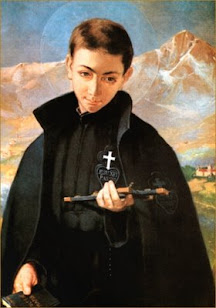
May 16: Saint Simon Stock & the Brown Scapular of Our Lady of Mount Carmel

Posted by Jacob

Today, May 16, marks the feast day of Saint Simon Stock (1164-1265), Superior General of the Carmelite Order, and blessed receiver of a vision and gift from the Blessed Virgin, Our Lady of Mount Carmel. Through the visitation of Our Lady, the world was presented with the brown Scapular, referred to as “the armor of Our Lady” by Pope Benedict XV, a devotional aid in the consecration of our lives to Our Holy Mother.
Simon was born in Aylesford, England, to one of the most well-known and respected Christian families in the County of Kent. While still an infant, he was chosen by the Blessed Mother for her own, with his parents and others hearing him recite the Angelic Salutation of the Archangel Gabriel long before he had learned to speak. Prodigious as a child, he learned and memorized the Little Office of the Blessed Virgin before he was able to read, reciting it on a daily basis. He was observed to read the Holy Scripture, kneeling in his room, by the age of six.

At the age of twelve, Simon left home, living as a hermit in the hollowed trunk of a large oak tree, earning him the name Simon “Stock.” There he triumphed over the demon, as he would later tell his religious, only by the assistance of the Most Holy Virgin. While living as a hermit, he drank only water and ate only herbs, roots, and wild apples. Eventually, after eight years of solitude, Simon felt called back to communion with others, and joined the Carmelite Order. He finished his studies at Oxford, and later (in 1215) was appointed Vicar General of the Order.

Saint Simon worked tirelessly to spread the Carmelite Order throughout Europe, rounding many communities in university towns such as Cambridge, Oxford, Paris, and Bologna. He was responsible for the revision of the Rules of the Order, leading the community from lives as hermits to those of mendicant friars. Known for his deep devotion to Our Blessed mother, as well as for the spiritual gifts of miracles and prophecy, Simon was elected as the sixty Superior General of the Carmelites at age 82. He continued to govern the order for twenty years, demonstrating holiness, vision, and prudence.

During his tenure as Superior General, Simon was graced with a visitation from the Blessed Mother, to whom he was so devoted. Radiantly surrounded by a multitude of Angels, Our Lady of Mount Carmel appeared to him as he knelt in prayer at Aylesford, England. Presenting to him the Carmelite Brown Scapular, She made Her Promise of unparalleled generosity to him, his spiritual children, and to all those who wished to consecrate themselves to her by this special sign: Her words were: "Receive, my beloved son, this scapular of your Order; it is the special sign of my favor, which I have obtained for you and for your children of Mount Carmel. He who dies clothed with this habit shall be preserved from eternal fire. It is the badge of salvation, a shield in time of danger, and a pledge of special peace and protection."

The scapular (from the Latin, scapula, meaning "shoulder blade") consists of two pieces of cloth, one worn on the chest, and the other on the back, which were connected by straps or strings passing over the shoulders. In certain Orders, monks and nuns wear scapulars that reach from the shoulders almost to the ground as outer garments. Lay persons usually wear scapulars underneath their clothing, consisting of two pieces of material only a few inches square. Although the scapular may be worn by any Catholic, even an infant, proper investiture must be done by a priest. Subsequently, the scapular must be worn in the proper manner, the individual forfeiting its holy benefits if neglectful or careless.

Saint Simon Stock died on May 16, 1265, at the age of 100 and was buried in the cathedral of Bordeaux, where he was visiting at the time of his death. The Saint's bones are still preserved in a cathedral in Bordeaux; a tibia was brought to England in the 1860s for the Carmelite church in Kensington, a part of the skull was enshrined at Aylesford in 1950.


Carmel's Flower,
Vine ever blossoming,
Heaven's splendor!
Virgin who bore a child.
No one is like thee.
Mother gentle and kind.
Yet never touched by man!
To Carmelites give thou the privilege.
Help us Star of the Sea.
(written by Saint Simon Stock)


The brown Scapular of the Carmelite Order has gained considerable popularity and use among those devoted to the Blessed Mother. The following prayer, addressed to Our Lady of Mount Carmel, prays for her continued protection and grace for those who wear the scapular:

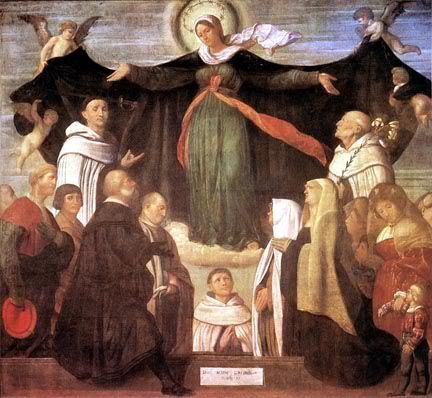
O all-blessed, immaculate Virgin, ornament and glory of Mount Carmel, thou who dost look with most gracious countenance on those who have been clothed with thy venerable livery, look kindly also on me and take me under the mantle of thy maternal protection. Strengthen my weakness with thy might; enlighten the darkness of my heart with thy wisdom; increase in me faith, hope and charity. So adorn my souls with graces and virtues that it may always be dear to thy divine Son and thee. Assist me during life, comfort me in death with thy most sweet presence, and present me as thy child and faithful servant to the most Holy Trinity, that I may be enabled to praise and extol thee in heaven forever. Amen.


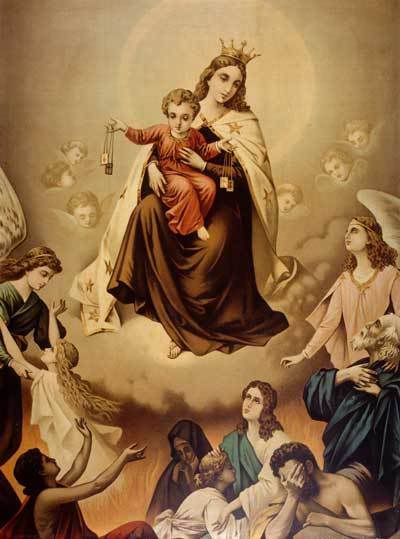
In 1322, Pope John XXII issued a document known as a Papal Bull in which he included a promise from Our Lady of Mount Carmel. In his document, the Pope revealed that he had received an apparition of Our Blessed Mother, during which she made a promise to all mankind. Her “Sabbatine Privilege” was as follows: on the First Saturday after the death of one of the faithful, Our Blessed Mother would free from Purgatory her Scapular children who have fulfilled certain conditions. She stated to Pope John XXII: "I, the Mother of Graces, shall descend on the Saturday after their death, and as many as I find in Purgatory I shall free.”

The Church has since formalized the Sabbatine Privilege, based on this revelation. Containing three conditions, those who follow practice true devotion will be released from Purgatory by Our Lady’s intercession on the Saturday after their death. As set forth by the Church, the three conditions include: 1)Wear the brown scapular devoutly, once you’ve been enrolled in the Scapular Confraternity of the Blessed Virgin of Mount Carmel; 2) Observe chastity according to your state in life; 3) Recite daily the Little Office of the Blessed Virgin Mary. (Given the length of this beautiful prayer, with permission of a priest you can substitute five decades of the rosary, abstinence from meat on Wednesdays and Saturdays or another approved good work). His Holiness, Pope Pius XII, wrote concerning the Sabbatine Privilege, "Certainly, this most gentle Mother will not delay to open as soon as possible, through Her intercession with God, the gates of Heaven for children expiating their faults in Purgatory."

Once one has been enrolled in the Scapular Confraternity of the Blessed Virgin of Mount Carmel, one shares in the daily prayers and other spiritual benefits of the Carmelite Order. Our Lady of Mount Carmel’s scapular promise of salvation to Saint Simon Stock and the Carmelites applies to the enrollee as well!

Many popes and other religious figures over the centuries have extolled the virtues of the brown scapular devotion. Pope Pius XII went so far as to say: "The Scapular is a practice of piety which by its very simplicity is suited to everyone, and has spread widely among the faithful of Christ to their spiritual profit." More recently, Pope Paul VI said: "Let the faithful hold in high esteem the practices and devotions to the Blessed Virgin ... the Rosary and the Scapular of Carmel.” Still, they caution that, although our Lady of Mount Carmel promised that the scapular would protect us from eternal fire, wearing it in itself doesn’t guarantee our salvation.

The scapular is not to be worn as a substitute for leading a devout life of love and obedience to our Lord. The Most Reverend. Kilian Lynch, former prior general of the Carmelite Order, warned that the scapular was not “endowed with some kind of supernatural power which will save us no matter what we do or how much we sin.” He said, “Fidelity to the commandments is required by those seeking 'the special love and protection of Our Lady.’”

The immeasurable benefits of the Scapular result from the fact that the wearing of "the armor of Mary" is not merely an external act of devotion-- it is a sign of our internal consecration to the Immaculate Virgin. The scapular recommends us to her endless grace and generosity. At Fatima in 1917, the Mother of God ncouraged all people to consecrate themselves to Her Immaculate Heart. And in the final Fatima vision on October 13th, the Blessed Virgin appeared as Our Lady of Mount Carmel, wearing the robes of the Carmelite Order, holding aloft the Brown Scapular.  On that occasion, Our Blessed Mother reminded us that the devoted living of the Brown Scapular consecration, paired with daily prayer of the Holy Rosary, is a necessary part of the amendment of life-- the random of a sinful world-- for which she so earnestly pleaded. Pope Pius XII stressed this important truth: "May the Scapular be a sign to them (all who wear it) of their consecration to the Most Pure Heart of the Immaculate Virgin.” In wearing the brown scapular devoutly, in living in love and obedience to God, we join our hearts to Mary’s and thus, to her divine Son’s Sacred Heart as well!


Father,
You called St. Simon Stock to serve You in the brotherhood of Our Lady of Mt. Carmel.
Through his prayers help us like him to live in Your presence and to work for man’s salvation. Grant this through our Lord Jesus Christ, Your Son, Who lives and reigns
with You and the Holy Spirit, one God, for ever and ever. Amen.

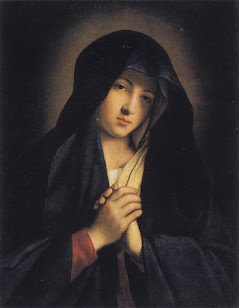
Song of Gratitude to Our Lady of Mount Carmel

Posted by Jacob

On the feast of Our Lady of Mount Carmel, we offer a song of gratitude to Our Blessed Mother for her constant intercession, protection, and mediation of all graces.  This beautiful ode to Mary was written by Saint Therese of Lisieux, a cloistered Carmelite known by many as "the Little Flower."


From the first moments of my life,
You took me in your arms.
Ever since that day, dear Mother,
You’ve protected me here below.


To preserve my innocence,
You placed me in a soft nest.
You watched over my childhood
In the shade of a holy cloister.


Later, in the days of my youth,
I heard Jesus’ call!…
In your ineffable tenderness,
You showed Carmel to me.


“Come, my child, be generous,”
You sweetly said to me.
“Near me, you’ll be happy,
Come sacrifice yourself for your Savior.”


Close to you, 0 my loving Mother!
I’ve found rest for my heart.
I want nothing more on earth.
Jesus alone is all my happiness.

If sometimes I feel sadness
And fear coming to assail me,
Always supporting me in my weakness,
Mother, you deign to bless me.

Grant that I may be faithful
To my divine Spouse Jesus.
One day may his sweet voice call me
To fly away among the elect.

Then, no more exile, no more suffering.
In Heaven I’ll keep repeating
The song of my gratitude,
Lovable Queen of Carmel!

Our Lady of Mount Carmel: The Brown Scapular

Posted by Jacob

When Our Lady of Mount Carmel appeared to Saint Simon Stock, she bestowed upon him the Brown Scapular of the Carmelite Order.  A beautiful description of the Scapular and the devotion it signifies, written by Carmelite Sisters, is below.  To read more about the Carmelite Order, please visit their site at  http://www.carmelitenuns.com/.

"The original rule of the order was changed to conform to that of the mendicant orders on the initiative of St. Simon Stock and at the command of Pope Innocent IV. Their former habit of a mantle with black and white or brown and white stripes was discarded, and they wore the same habit as the Dominicans, except that the cloak was white. They also borrowed much from the Dominican and Franciscan rules. Their distinctive garment was a scapular of two strips of gray cloth, worn on the breast and back, and fastened at the shoulders. The Virgin herself, who appeared to him and promised that all who died clothed in it would be saved, gave this to St. Simon Stock. Thus arose a sodality of the scapular, which affiliated a large number of laymen with the Carmelites.


The Scapular, if worn faithfully and by a person who persists in living the Gospel that Christ taught with faith in the intercession of Mary, will guarantee the bearer salvation. The Scapular promise comes from the apparition of the Virgin to St. Simon Stock, who observed many miracles with it. Observances of miracles stemming from the proper wearing of the Scapular abound, most notably one in which a ship was caught in a grave storm and a Catholic who wore the Scapular prayed for Our Lady's intercession and subsequently tossed his scapular into the raging waters. The storm ceased instantly and the ship was saved. A Protestant family onboard, the father being a Protestant minister, was awestruck by the miracle and soon afterward converted to the Catholic faith.


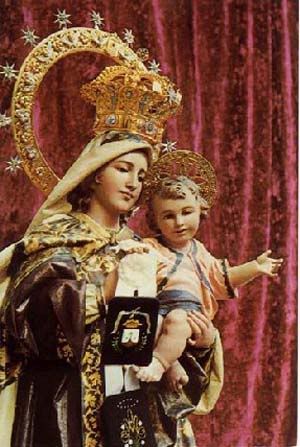
The Scapular, as it is commonly known today, is merely a smaller version of the actual monastic habit worn by the friars and sisters. It has two thin brown cords that connect to two small brown rectangular patches that hang in front of and behind the wearer. Usually Catholics wear the Scapular under their regular clothing. The original rule concerning the Scapular was that it be of 100% brown wool. However, the rule today is that any suitable brown material may be used. The Scapular Medal may be substituted for the actual scapular, but the Pope who created this exception did so only for those who could not, for grave situations, wear the actual scapular. It is not meant to be a substitute for vanity.


It is notable that no recorded or approved miracles have come from anything other than the real and traditional Scapular.


Furthermore, one should note that there are many Catholic scapulars from various orders, time periods, revelations, and traditions, the most notable being the Trinity Scapular (white), the Scapular of the Immaculate Conception (blue), the Scapular of the Passion (red), and the Scapular of the Sorrows of Mary (black). These four, together with the Scapular of Our Lady of Mount Carmel (brown), are often sewn one on top of the other (with the Trinity Scapular on very top) and attached to two cords to form a Five-Fold Scapular. However, since the Carmelite Scapular is most popular and well known, any reference to "the Scapular" implies the Carmelite Scapular, which is the only scapular to carry the promise of salvation. Other scapulars have various graces associated with them or form part of special devotions.


To wear a scapular must be distinguished from enrollment. Any person can wear a Catholic scapular and may or may not obtain graces from them, depending on the faith they place in the Lord and the virtues lived in his or her life. Generally, scapulars are viewed as privileges and are usually entrusted by the Holy See to the authority of a particular order or community. Since the Carmelite Friars have authority over the Carmelite Scapular, only that Order can allow lay people to wear their scapular. The Order has since granted permission to all Catholic priests to invest or enroll Catholics in their scapular. The priest asking the Lord to grant the graces associated with the particular scapular to the Catholic that requests enrollment does this. This can take the form of a short (10 minute) prayer with the priest or can take place in a lengthy and elaborate liturgical rite."

July 16: Feast of Our Lady of Mount Carmel

Posted by Jacob

Today, July 16, we celebrate the feast of Our Lady of Mount Carmel, the Madonna of the Brown Scapular. It is our Lady of Mount Carmel who appeared to Saint Simon Stock, providing gentle instruction on Consecration to Her Sacred Heart through the Scapular, which led to the growth of the Carmelite Order. Consecration to Our Blessed Mother through wearing of the Scapular, however, is not reserved only for the Carmelites. Rather, it is a Church tradition available to all. As Pope Pius XII proclaimed, “Let the Scapular be for them a sign of Consecration to the Immaculate Heart of Mary."


Similarly, Pope John Paul II, on the 750th anniversary of the Brown Scapular to Saint Simon Stock, declared:

“The sign of the Scapular nourishes the devotion of believers and makes them sensitive to the Virgin Mother's loving presence in their lives. The Scapular is essentially a 'habit'. Those who receive it are associated with the Order of Carmel and dedicate themselves to the service of Our Lady for the good of the whole Church.


Therefore two truths are evoked by the sign of the Scapular:


- the constant protection of the Blessed Virgin, not only on life's journey but also at the moment of passing into the fullness of eternal glory


- the awareness that devotion to Mary cannot be limited to prayers and tributes in her honor on certain occasions, but must become a 'habit', that is, a permanent orientation of one's own Christian conduct, woven of prayer and interior life, through frequent reception of the sacraments and the concrete practice of the spiritual and corporal works of mercy.”


While we may traditionally view Our Blessed Mother’s appearance to Saint Simon Stock, and the subsequent bestowal of the Brown Scapular to him and the world as the origin of devotion to Our Lady of Mount Carmel, this devotion mystically (and somewhat miraculously) precedes these events. In fact, devotion to Our Blessed Mother—not yet born—dates back to the 8th century before Christ when the prophet Elias ascended the holy mountain of Carmel in Palestine, beginning a long tradition of contemplative monastic life and prayer. At that time, long before the glorious plan of God had reached fruition, Elias and his followers dedicated themselves to God’s “Mother-to-come,” Mary, Virgin of Mount Carmel. Nearly three thousand years later, today, this devotion continues on Mount Carmel—an active monastic religious community dedicated to contemplation, prayer, and devotion to Our Blessed Mother.

Following the time of Christ, on the Feast of Pentecost, the spiritual descendants of Elias and his followers came down from Mount Carmel. They were among the first to accept the message of Christ and to be baptized by the disciple. Upon meeting Our Lady, and hearing the sweetest words from Her lips, they were overcome with a sense of majesty and sanctity—a love and gentleness they never forgot. Returning to their holy mountain, these first Carmelites erected the first chapel built in honor of the Blessed Virgin Mary. From Butler’s Lives of the Saints:


When on the holy day of Pentecost the Apostles, through heavenly inspiration, spake in foreign tongues, and worked many wonders by the invocation of the most sacred Name of Jesus ; it is said that many men, who were walking in the footsteps of the holy prophets Elijah and Elisha, and had been prepared for the coming of Christ by the heralding of John the Baptist, saw and were assured of the truth. They at once embraced the faith of the Gospel, and began to venerate the most blessed Virgin (whose conversation and familiar intercourse they were happily able to enjoy) with a certain peculiar affection, so that they, before all others, built a chapel to that purest of Virgins on that very spot of Mount Carmel where Elijah of old had seen a cloud arising, a remarkable symbol of the Virgin.”

From that time devotion to God's Mother was handed down by the hermits on Mount Carmel as a treasured spiritual legacy. In the twelfth century, the Carmelite Order was officially founded.

From the Divine Office: “Sacred Scripture celebrated the beauty of Carmel where the prophet Elijah defended the purity of Israel's faith in the living God. In the twelfth century, hermits withdrew to that mountain and later founded the Order devoted to the contemplative life under the patronage of Mary, the holy Mother of God.”

As written about previously (see here, the Feast of Saint Simon Stock), the Blessed Virgin appeared to Saint Simon, bestowing upon him the Brown Scapular. Saint Simon was a hermit who eventually joined the Carmelite Order, and after many years of tireless work in service of his brothers, was elected Vicar General. Following his election, he was graced with a visitation of Our Blessed Mother. According to Carmelite tradition, July 16, 1251, St. Simon Stock was given the Brown Scapular by the Blessed Virgin Mary, who said to him:

“Receive, my dear son, this scapular of thy Order, as the distinctive sign of my confraternity, and the mark of the privilege which I have obtained for thee and the children of Carmel. It is a sign of salvation, a safeguard in danger, and a special pledge of peace and protection till the end of time. Whosoever dies wearing this shall be preserved from eternal flames.”

In order to share in the merits of the Scapular devotion to Our Blessed Mother, one who wears the Scapular must: 1)Shun sin, and, according to his state of life, live chastely; 2)Say every day, if possible, seven times, Our Father, Hail Mary, and Glory be to the Father; 3) Strive to serve God by venerating Mary, and imitating her virtues.


Father Gabriel of Saint Mary Magdalene de' Pazzi, OCD, an authority on Carmelite spirituality, wrote that devotion to Our Lady of Mount Carmel means:

“a special call to the interior life, which is preeminently a Marian life. Our Lady wants us to resemble her not only in our outward vesture but, far more, in heart and spirit. If we gaze into Mary's soul, we shall see that grace in her has flowered into a spiritual life of incalcuable wealth: a life of recollection, prayer, uninterrupted oblation to God, continual contact, and intimate union with him. Mary's soul is a sanctuary reserved for God alone, where no human creature has ever left its trace, where love and zeal for the glory of God and the salvation of mankind reign supreme. Those who want to live their devotion to Our Lady of Mt. Carmel to the full must follow Mary into the depths of her interior life. Carmel is the symbol of the contemplative life, the life wholly dedicated to the quest for God, wholly orientated towards intimacy with God; and the one who has best realized this highest of ideals is Our Lady herself, 'Queen and Splendor of Carmel'."


We pray today for the grace and peace of Our Blessed Mother, through our total consecration to her sacred heart. May she never cease her intercessions on our behalf with Our Loving God in heaven. We pray for those who, through devotion to Mary, wear the Scapular- an external sign of love for Mary, of the trust her children have in her, and of the commitment to live like her.


(For a detailed explanation of the Scapular, written by Carmelite Sisters, click here.)


A PRAYER TO THE BLESSED VIRGIN, OUR LADY OF MOUNT CARMEL

O most beautiful Flower of Mount Carmel,
Fruitful Vine,
Splendor of Heaven,
Blessed Mother of the Son of God,
Immaculate Virgin,
assist me this my necessity.

O Star of the Sea,
help me and show me herein you are my Mother.


O Holy Mary,
Mother of God,
Queen of Heaven and Earth,
I humbly beseech you from the bottom of my heart,
to succor me in this necessity;
there are none that can withstand your power.


O, show me herein you are my Mother,
O Mary, conceived without sin,
pray for us who have recourse to thee.


Sweet Mother,
I place this cause in your hands.


Inspired by the origins and spiritual history of the Holy Rosary, we continue our meditation on the psalms, one each day, in order, for 150 days.
Today’s Psalm: Psalm 82: Judgment Against Wicked Judges

1 God presides in the great assembly;
he gives judgment among the "gods":
2 "How long will you defend the unjust
and show partiality to the wicked?
3 Defend the cause of the weak and fatherless;
maintain the rights of the poor and oppressed.
4 Rescue the weak and needy;
deliver them from the hand of the wicked.
5 "They know nothing, they understand nothing.
They walk about in darkness;
all the foundations of the earth are shaken.
6 "I said, 'You are "gods";
you are all sons of the Most High.'
7 But you will die like mere men;
you will fall like every other ruler."
8 Rise up, O God, judge the earth,
for all the nations are your inheritance.


Day 197 of 365
Prayer Intentions: Consecration to Our Lady; Grace and Peace; Protection from sin.
Requested Intentions: Employment for husband and wife (K); Wisdom; Closer walk with Jesus (R); For successful conception (I); Thanksgiving for blessings received (K); Healing and financial assistance (F); Employment; Discernment of God’s will (A); Healing of illness (P); Small business assistance, blessings on jobs, financial aid for college student (M); Financial assistance (F); For a recovery and sanctification (X); For a daughter struggling with disease and illness (T); For all lost children (I); Prosperity, health, healing, and conversion for a family (M); Health and healing of a mother (A); Healing of heart and mind (T); Health for an ailing nephew (A); Those suffering from depression (J); Successful adoption (S); Healing of a father battling cancer (S).
Psalm: Psalm 82: Judgment Against Wicked Judges