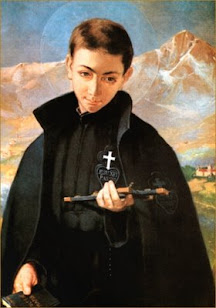
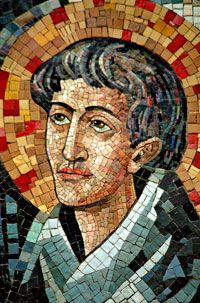
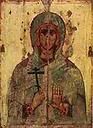
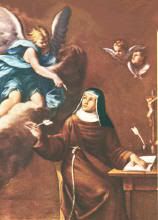
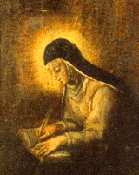
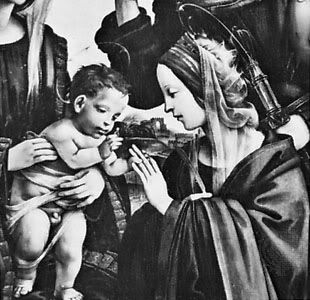
Today, June 7, we celebrate the feast day of Saint Robert of Newminster (1100-1159), man of God, and co-founder of the Cistercian (Benedictine) Abbey at Shedale, England. While little is known about the life of Saint Robert, what is remembered is his gentle spirit, merciful judgment, and love of the Lord. His daily sacrifice and self-denial, through concern for sinfulness, remains a model of temperate living today.
Robert was born in Gargrave in Yorkshire, England. He studied for the priesthood in Paris, France, during which time he wrote a commentary on the Psalms which has unfortunately been lost to history. Upon ordination, he returned home to his place of birth, where he served as a parish priest.
After years serving as rector of Gargrave, Robert joined the Benedictine Order, having received permission from his local bishop, and working with a group of monks founded a monastery in which the strict Benedictine Rule would be revived (a movement initiated by Saint Bernard of Clairvaux, whom Robert met). For their community, they chose a beautiful spot—surrounded by natural springs-- in the valley of Sheldale (within the town of Sutton) on land given to them by the local archbishop. The monastery became known as Fountains Abbey, given the natural flowing waters mirroring the flowing of the Holy Spirit from within. The group of monks became known for their holiness, poverty, and austere way of life, with Robert recognized for his devotion and self-denial. In time, Fountains Abbey became the center of religious study in North England, and eventually affiliated with the Cistercian reform.
Given the success of Fountains Abbey, a local lord built another abbey on his land, the Abbey of Newminster. To Newminster, he brought Robert and a dozen companions. Robert was appointed Abbot, and under his leadership, the community prospered, establishing two additional abbeys in later years.
While Robert grew the religious communities at Newminster, his life was not without trials. At one point, while serving as Abbot, members of the community accused him of impropriety, suggesting that he had engaged in lascivious acts with a local pious woman. Saint Robert traveled to France, visiting Saint Bernard of Clairvaux, the head of the Order. Saint Bernard determined the accusations to be false, and as a symbol of his belief in Robert's innocence, presented him with a golden girdle to be used to affect miraculous cures of the sick at Newminster.
Robert ruled and directed the monks at Newminster for 21 years. He was a man of prayer, favored with gifts of prophecy and miracles. He is described as a devout and gentle man. While he is known for being merciful in his judgment of others, and a warm and considerate companion, he was also very zealous toward his own vows of poverty. Saint Robert is recorded as having had supernatural gifts, including visions and encounters with demons, and the gift of exorcism. In one such encounter, the Devil himself entered the church while Robert and his brothers were praying. The Devil, seeking a weak soul to tempt, was thwarted by Robert’s prayers for strength and encouragement for the monks in his charge.
Saint Robert is said to have fasted so rigorously during Lent that his brothers grew concerned, and asked him the reason for his refusal to eat. Robert responded that he might be able to eat a small piece of buttered oatcake, but once it was placed before him, fearing gluttony, he requested that it instead be given to the poor. Over the protest of his brothers, the food was taken to the front gates of the Abbey, where a beautiful stranger took both the cake and the dish it sat upon. While a brother was explaining the loss, the dish miraculously appeared on the table before the abbot, leading the men to realize that the beautiful stranger had been an angel of the Lord.
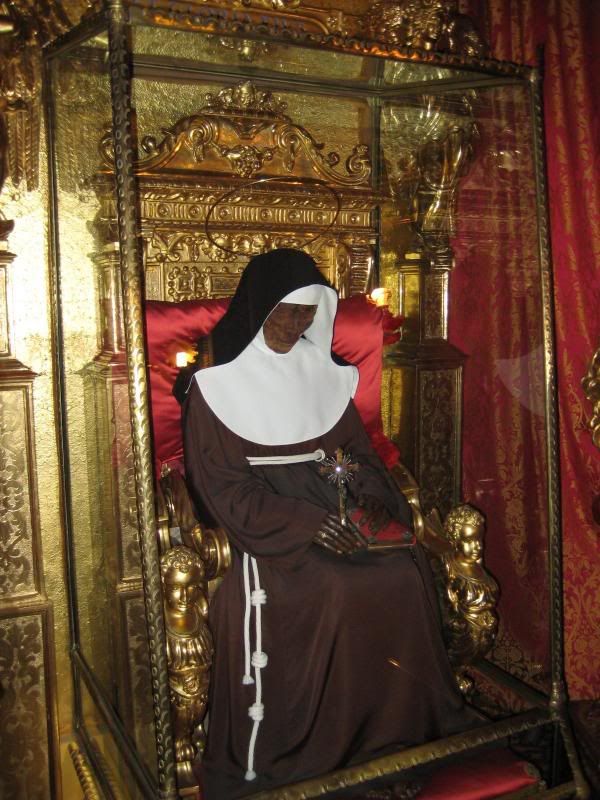
Saint Robert was close friends with the hermit Saint Godric, whom he visited frequently. On the night Robert died, Godric is said to have seen a vision of Robert's soul, like a ball of fire, being lifted by angels on a pathway of light toward the gates of Heaven. As they approached, Godric heard a voice saying, "Enter now my friends." His relics were translated to the church at Newminster. Numerous miracles have been reported at his tomb, including one in which a brother monk is said to have fallen unhurt from a ladder while whitewashing the dormitory. His tomb remains a center of pilgrimage.
The life of Saint Robert of Newminster reminds us that one does not need to live a life filled with extravagant miracles or preaching, or die a martyrs’ death to be holy. Saint Robert lived a simple life, rich in the spirit of the Lord. He gave all that he have, sacrificed, and spent his days in prayer and self-denial—oftentimes for the souls of his brothers and those who were less fortunate. Robert considered his actions carefully, always on the look-out for temptation, and wary of the pathways to sinfulness. Through fasting and prayer he converted many souls, grew the Church of God on earth, and earned himself a saint’s place in Heaven. How might we better live up to the example of this holy man?
God our loving Father, you inspired Robert
to establish a new monastery, and to preside as abbot
with gentleness and justice.
As we honor today this man of prayer, may we also learn from his example.
We ask this through our Lord Jesus Christ, your Son, who lives and reigns with you and the Holy Spirit, one God, for ever and ever. Amen.
Year 2: Day 158 of 365
Prayer Intentions: Courageous lives of faith
Requested Intentions: Restoration of health (D); Successful employment for couple (N); For employment for children (K); For health of friend, for successful relationships for children, for safe pregnancy for daughter (C); For the health of a mother (J); Virtue for daughter (V); Successful acceptance to college for nephew (M); For the health of a cousin (T); Freedom from legal difficulties for husband (S); Husband’s freedom from illness (L); Personal intentions (S); Successful passing of dental board examination (P); Blessings on a family (Z); Successful permanent employment (C); Healing of a son with autism (J); Son’s successful employment (L); For the intentions of family and relatives, for the Carthusian community (T); For personal intentions (A); Restoration of lost hearing (C); Resolution of relational and financial challenges (S); Comfort following loss of husband, security for family, assistance with housing (B); Healing and return of brother (O); Successful hermitage foundation (S); Support from family, permission to marry (H); Recovery of wife following surgery, freedom from depression (W); Protection and recovery of mentally ill daughter (J); Successful resolution to legal proceedings (N); Freedom from worry and successful employment (M); For successful sale of home and freedom from debt (J); Freedom from pain and illness (E).
Why pray the Rosary every day for a year?
Each time the Blessed Virgin has appeared-- whether it be to Saint Bernadette Soubirous at Lourdes; to Lucia, Jacinta, and Francisco at Fatima; or to Mariette Beco at Banneux-- she has asserted the importance, saving grace, and power of praying the Holy Rosary on a daily basis. Based upon her words, the Rosary is penance and conversion for sinners, a pathway to peace, an end to war, and a powerful act of faith in Jesus Christ. Pope Paul VI presented the Rosary as a powerful means to reach Christ "not merely with Mary but indeed, insofar as this is possible to us, in the same way as Mary, who is certainly the one who thought about Him more than anyone else has ever done."
To show us how this is done, perhaps no one has been more eloquent than the great Cardinal Newman, who wrote: "The great power of the Rosary consists in the fact that it translates the Creed into Prayer. Of course, the Creed is already in a certain sense a prayer and a great act of homage towards God, but the Rosary brings us to meditate again on the great truth of His life and death, and brings this truth close to our hearts. Even Christians, although they know God, usually fear rather than love Him. The strength of the Rosary lies in the particular manner in which it considers these mysteries, since all our thinking about Christ is intertwined with the thought of His Mother, in the relations between Mother and Son; the Holy Family is presented to us, the home in which God lived His infinite love."
As Mary said at Fatima, "Jesus wants to use you to make Me known and loved. He wishes to establish the devotion to My Immaculate Heart throughout the world. I promise salvation to whoever embraces it; these souls will be dear to God, like flowers put by Me to adorn his throne."
Today, April 5, we celebrate the feast day of Saint Vincent Ferrer (1350-1419), a tireless healer and builder of the Church. Born during the time of the great schism, when there was no clear pope, Saint Vincent first worked to heal the divide, and later, after a vision of Christ, traveled throughout the world converting thousands to the faith.
Below, an excerpt from his writings, “A Treatise on the Spiritual Life,” encouraging his readers to avoid falling into spiritual temptation and sin.
Chapter XII: Remedies against certain spiritual temptations
I shall teach you, in the Name of our Lord Jesus Christ, the remedies against certain spiritual temptations which are very common in these times, and which God permits for the purpose of purifying and testing His elect. And although they do not appear to attack faith directly, yet they who carefully examine them cannot fail to see that-they destroy the chief dogmas of religion, and set up the throne of Antichrist. I shall not explain what these temptations are, so as not to be an occasion of sin or scandal to any one; but I will show with what prudence you should act, in order not to be overcome by them.
These temptations, then, are of two kinds: the first is the suggestion of the devil, who causes man to fall and to estrange himself from God and the things that have reference to Him; the second is the corrupt teaching of certain persons, and the pernicious example of those who have already yielded to such temptations. I shall teach you how to comport yourself towards God and in all that relates to Him, that you may be secured against these temptations. 1 shall afterwards show you how you should act in regard to men, touching their doctrine and manner of life.
The first remedy against the spiritual temptations which the devil plants in the hearts of many persons in these unhappy times, is to have no desire to procure by prayer, meditation, or any other good work, what are called revelations, or spiritual experiences, beyond what happens in the ordinary course of things; such a desire of things which surpass the common order can have no other root or foundation but pride, presumption, a vain curiosity in what regards the things of God, and, in short, an exceedingly weak faith. It is to punish this evil desire that God abandons the soul, and permits it to fall into the illusions and temptations of the devil, who seduces it, and represents to it false visions and delusive revelations. Here we have the source of most of the spiritual temptations that prevail at the present time; temptations which the spirit of evil roots in the souls of those who may be called the precursors of Antichrist, as we shall see by what follows.
Be thoroughly persuaded, then, that true revelations, and the extraordinary means by which God's secrets are known, are not the result of the desire of which we have spoken, nor of any diligence or effort on the part of the soul itself; but that they are solely the effects of the pure goodness of God communicating itself to a soul filled with humility, who respectfully seeks for Him and sighs after Him with all its strength.
Nor ought we even to exercise ourselves in acts of humility, and in the fear of God, with a view to being favoured with visions, revelations, and extraordinary sensations; for this would be to fall into the very sins to which such desires lead.
The second remedy is to dispossess the soul when at prayer, of consolation, small though it be, if perchance you perceive that it engenders in your heart sentiments of presumption or of self-esteem. This would insensibly lead you to abuse what is termed honour and reputation, and would induce you to believe that you merit to be honoured and applauded in this world, and to have a share in the glory of heaven. The soul that attaches itself to these false consolations falls into very dangerous errors; for God justly permits the devil to have power to augment in it these kinds of spiritual tastes, to repeat them frequently, and to inspire it with sentiments that are false, dangerous, and full of illusions, but which the misguided soul imagines to be true.
Alas! how many souls have been seduced by these deceitful consolations? The majority of raptures and ecstacies [sic], or, to call them by their proper name, the frenzies of these forerunners of Antichrist spring from this cause. Hence, the only consolation you should admit into your soul in time of prayer, is that which is produced by the consciousness of your nothingness and misery; a consciousness which will preserve you in humility, and inspire you with profound reverence for the grandeur and majesty of God, and the desire that he may be honoured and glorified. Consolations such as these cannot mislead you.
The third remedy is to have - a horror of every thought and sentiment, however elevated they may be, which gives indications of a desire to penetrate into the secrets of God when you perceive that they are capable of wounding any article of faith or morals, especially if they are contrary to humility and purity, for, doubtless, such can come only from the devil. Pay no attention, therefore, to visions that afford no certainty that they are from God, or that they lead you to what is pleasing to Him.
The fourth remedy is not to attach yourself to any person, notwithstanding the apparent sanctity of his life, or the capabilities he possesses, when you have reason to doubt that his advice is not according to God, that it is not regulated by real prudence, that is not in harmony with what the law of God prescribes, or with what is proposed to us for imitation in the life of Jesus Christ and His saints, or taught us by the Holy Scriptures and the Fathers. Fear not to sin by pride or presumption when you despise such counsel, for such is due to zeal and to the love of truth.
The fifth remedy is to shun all intercourse and familiarity with those who sow broadcast, so to speak, the temptations of which I have spoken; with those who uphold or commend them. Neither listen to their words, nor be desirous to witness what they do; for the devil will avail himself of that curiosity to captivate you by the sublimity of their speech, and by their outward show of perfection, that you may thence be led to adopt their evil principles.
Chapter XIII: Remedies against false revelations
I shall further instruct you in the remedies to be adopted in regard to those who propagate, by their lives and teaching, the temptations to which I have referred above.
First, then, take little account of their visions, their extraordinary sensations, their ecstacies and raptures, and should they assert anything contrary to faith, Holy Scripture, and morals, despise their visions, look upon them as pure follies, and treat the ecstacies and raptures of such people as the results of a diseased imagination. If, however, their sentiments and language are in perfect accord with the dogma of religion, with what we are taught in the sacred writings, and there is nothing in them that is offensive to morality, then we must not despise them, for this would be to despise the things of God; yet it will be well not to entirely rely on them, since it frequently happens, and especially in spiritual temptations, that falsehood is concealed under the appearance of what is good and virtuous.
Often does the devil avail himself of these appearances in order to deceive, and diffuse more easily his fatal poison, when there is less reason to suspect him. I am of opinion that, on such occasions, it will be more pleasing to God not to pass judgment on these extraordinary matters, despite the appearance of truth with which they are clothed, and to leave them for what they are worth, unless they occur to persons whose probity, prudence, and humility, are so far beyond the reach of suspicion. that we have every reason to suppose that they can neither fall into illusion, nor be misled by the spirit of the devil. Even then, though we may approve of the visions and supernatural sentiments of such persons, it is not absolutely necessary to credit them on account of all these qualities which distinguish them, but only because of the conformity of these facts with Catholic faith, morals, the words, and teachings of the saints.
2. Let us suppose that you are interiorly led by some revelation or feeling, whatever it may be, to enter upon an important undertaking in which you have had no experience, and that you are uncertain as to whether or not it is pleasing to God; on the contrary, you have good reason for doubting it; in that case, take time to examine the act, weigh well all its circumstances; above all, see what its end is, in order to discover if it be agreeable to God. I do not, however, say that you may judge of it yourself; but apply to it, as far as is possible, the rules that are given to Christians in the Holy Scriptures, and in the lives of the saints whom you can imitate. I say, whom you can Imitate; for, according to the opinion of St. Gregory, there are saints some of whose examples should not be imitated, although they were good in relation to them, and which we must regard with respect and veneration. But, if you are unable of yourself to discover whether or not the thing you desire is pleasing to God, consult persons of approved learning and piety, who cannot be doubted; their advice will enable you to discover the truth.
3. If you are exempt from the temptations to which I have alluded, either because you have never experienced them, or because, having been tempted, you have happily been delivered from them, be careful to raise your heart and soul to God, and not to attribute to your own strength, your wisdom, your merits, and the regularity of your life what you owe simply to the grace and pure goodness of God, to Whom you ought continually to render humble acts of thanksgiving. Do not imagine that you were delivered from these temptations by mere chance. According to the teaching of the saints, it is chiefly with a view to punish such thoughts that God withdraws His grace from man, and permits him to yield to the temptations of the devil, and to be miserably deceived by the spirit of lies.
4. Never be influenced by your own will to take in hand any important matter to which you are unaccustomed, while you are actually under these sort of temptations, which place you in doubt; but repress the desires of your heart, waiting with humility, fear, and respect, till God shall enlighten you by His divine light. For acts begun under such circumstances could hardly be expected to lead to any good result. I speak here only of such acts as are of importance, and out of the common run, which should never be undertaken while we are in a state of temptation and doubt.
5. If, on the other hand, you have begun some good work before being assailed by this temptation, let it not prevent you from fulfilling it; especially omit not prayer, confession, communion, the fasts and acts of humility which you are wont to perform, although you may find neither sweetness nor consolation in them.
6. When troubled with these temptations, raise up your heart and soul to God, humbly beseeching Him to turn them to His greater glory, and to your salvation, supporting the temptations as long as it shall please Him, and imploring Him to grant you grace never to offend Him.
Below, an excerpt from his writings, “A Treatise on the Spiritual Life,” encouraging his readers to avoid falling into spiritual temptation and sin.
Chapter XII: Remedies against certain spiritual temptations
I shall teach you, in the Name of our Lord Jesus Christ, the remedies against certain spiritual temptations which are very common in these times, and which God permits for the purpose of purifying and testing His elect. And although they do not appear to attack faith directly, yet they who carefully examine them cannot fail to see that-they destroy the chief dogmas of religion, and set up the throne of Antichrist. I shall not explain what these temptations are, so as not to be an occasion of sin or scandal to any one; but I will show with what prudence you should act, in order not to be overcome by them.
These temptations, then, are of two kinds: the first is the suggestion of the devil, who causes man to fall and to estrange himself from God and the things that have reference to Him; the second is the corrupt teaching of certain persons, and the pernicious example of those who have already yielded to such temptations. I shall teach you how to comport yourself towards God and in all that relates to Him, that you may be secured against these temptations. 1 shall afterwards show you how you should act in regard to men, touching their doctrine and manner of life.
The first remedy against the spiritual temptations which the devil plants in the hearts of many persons in these unhappy times, is to have no desire to procure by prayer, meditation, or any other good work, what are called revelations, or spiritual experiences, beyond what happens in the ordinary course of things; such a desire of things which surpass the common order can have no other root or foundation but pride, presumption, a vain curiosity in what regards the things of God, and, in short, an exceedingly weak faith. It is to punish this evil desire that God abandons the soul, and permits it to fall into the illusions and temptations of the devil, who seduces it, and represents to it false visions and delusive revelations. Here we have the source of most of the spiritual temptations that prevail at the present time; temptations which the spirit of evil roots in the souls of those who may be called the precursors of Antichrist, as we shall see by what follows.
Be thoroughly persuaded, then, that true revelations, and the extraordinary means by which God's secrets are known, are not the result of the desire of which we have spoken, nor of any diligence or effort on the part of the soul itself; but that they are solely the effects of the pure goodness of God communicating itself to a soul filled with humility, who respectfully seeks for Him and sighs after Him with all its strength.
Nor ought we even to exercise ourselves in acts of humility, and in the fear of God, with a view to being favoured with visions, revelations, and extraordinary sensations; for this would be to fall into the very sins to which such desires lead.
The second remedy is to dispossess the soul when at prayer, of consolation, small though it be, if perchance you perceive that it engenders in your heart sentiments of presumption or of self-esteem. This would insensibly lead you to abuse what is termed honour and reputation, and would induce you to believe that you merit to be honoured and applauded in this world, and to have a share in the glory of heaven. The soul that attaches itself to these false consolations falls into very dangerous errors; for God justly permits the devil to have power to augment in it these kinds of spiritual tastes, to repeat them frequently, and to inspire it with sentiments that are false, dangerous, and full of illusions, but which the misguided soul imagines to be true.
Alas! how many souls have been seduced by these deceitful consolations? The majority of raptures and ecstacies [sic], or, to call them by their proper name, the frenzies of these forerunners of Antichrist spring from this cause. Hence, the only consolation you should admit into your soul in time of prayer, is that which is produced by the consciousness of your nothingness and misery; a consciousness which will preserve you in humility, and inspire you with profound reverence for the grandeur and majesty of God, and the desire that he may be honoured and glorified. Consolations such as these cannot mislead you.
The third remedy is to have - a horror of every thought and sentiment, however elevated they may be, which gives indications of a desire to penetrate into the secrets of God when you perceive that they are capable of wounding any article of faith or morals, especially if they are contrary to humility and purity, for, doubtless, such can come only from the devil. Pay no attention, therefore, to visions that afford no certainty that they are from God, or that they lead you to what is pleasing to Him.
The fourth remedy is not to attach yourself to any person, notwithstanding the apparent sanctity of his life, or the capabilities he possesses, when you have reason to doubt that his advice is not according to God, that it is not regulated by real prudence, that is not in harmony with what the law of God prescribes, or with what is proposed to us for imitation in the life of Jesus Christ and His saints, or taught us by the Holy Scriptures and the Fathers. Fear not to sin by pride or presumption when you despise such counsel, for such is due to zeal and to the love of truth.
The fifth remedy is to shun all intercourse and familiarity with those who sow broadcast, so to speak, the temptations of which I have spoken; with those who uphold or commend them. Neither listen to their words, nor be desirous to witness what they do; for the devil will avail himself of that curiosity to captivate you by the sublimity of their speech, and by their outward show of perfection, that you may thence be led to adopt their evil principles.
Chapter XIII: Remedies against false revelations
I shall further instruct you in the remedies to be adopted in regard to those who propagate, by their lives and teaching, the temptations to which I have referred above.
First, then, take little account of their visions, their extraordinary sensations, their ecstacies and raptures, and should they assert anything contrary to faith, Holy Scripture, and morals, despise their visions, look upon them as pure follies, and treat the ecstacies and raptures of such people as the results of a diseased imagination. If, however, their sentiments and language are in perfect accord with the dogma of religion, with what we are taught in the sacred writings, and there is nothing in them that is offensive to morality, then we must not despise them, for this would be to despise the things of God; yet it will be well not to entirely rely on them, since it frequently happens, and especially in spiritual temptations, that falsehood is concealed under the appearance of what is good and virtuous.
Often does the devil avail himself of these appearances in order to deceive, and diffuse more easily his fatal poison, when there is less reason to suspect him. I am of opinion that, on such occasions, it will be more pleasing to God not to pass judgment on these extraordinary matters, despite the appearance of truth with which they are clothed, and to leave them for what they are worth, unless they occur to persons whose probity, prudence, and humility, are so far beyond the reach of suspicion. that we have every reason to suppose that they can neither fall into illusion, nor be misled by the spirit of the devil. Even then, though we may approve of the visions and supernatural sentiments of such persons, it is not absolutely necessary to credit them on account of all these qualities which distinguish them, but only because of the conformity of these facts with Catholic faith, morals, the words, and teachings of the saints.
2. Let us suppose that you are interiorly led by some revelation or feeling, whatever it may be, to enter upon an important undertaking in which you have had no experience, and that you are uncertain as to whether or not it is pleasing to God; on the contrary, you have good reason for doubting it; in that case, take time to examine the act, weigh well all its circumstances; above all, see what its end is, in order to discover if it be agreeable to God. I do not, however, say that you may judge of it yourself; but apply to it, as far as is possible, the rules that are given to Christians in the Holy Scriptures, and in the lives of the saints whom you can imitate. I say, whom you can Imitate; for, according to the opinion of St. Gregory, there are saints some of whose examples should not be imitated, although they were good in relation to them, and which we must regard with respect and veneration. But, if you are unable of yourself to discover whether or not the thing you desire is pleasing to God, consult persons of approved learning and piety, who cannot be doubted; their advice will enable you to discover the truth.
3. If you are exempt from the temptations to which I have alluded, either because you have never experienced them, or because, having been tempted, you have happily been delivered from them, be careful to raise your heart and soul to God, and not to attribute to your own strength, your wisdom, your merits, and the regularity of your life what you owe simply to the grace and pure goodness of God, to Whom you ought continually to render humble acts of thanksgiving. Do not imagine that you were delivered from these temptations by mere chance. According to the teaching of the saints, it is chiefly with a view to punish such thoughts that God withdraws His grace from man, and permits him to yield to the temptations of the devil, and to be miserably deceived by the spirit of lies.
4. Never be influenced by your own will to take in hand any important matter to which you are unaccustomed, while you are actually under these sort of temptations, which place you in doubt; but repress the desires of your heart, waiting with humility, fear, and respect, till God shall enlighten you by His divine light. For acts begun under such circumstances could hardly be expected to lead to any good result. I speak here only of such acts as are of importance, and out of the common run, which should never be undertaken while we are in a state of temptation and doubt.
5. If, on the other hand, you have begun some good work before being assailed by this temptation, let it not prevent you from fulfilling it; especially omit not prayer, confession, communion, the fasts and acts of humility which you are wont to perform, although you may find neither sweetness nor consolation in them.
6. When troubled with these temptations, raise up your heart and soul to God, humbly beseeching Him to turn them to His greater glory, and to your salvation, supporting the temptations as long as it shall please Him, and imploring Him to grant you grace never to offend Him.
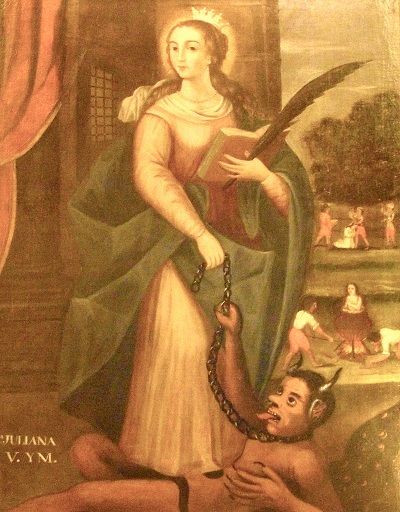
Today, February 16, we celebrate the feast of Saint Juliana of Cumae (also known as Juliana of Nicomedia, died 305), virgin and martyr of the Church. Saint Juliana became widely venerated in Medieval times, with epic poems written about her battle and eventual victory over the Devil. Her Acts, recorded by the Venerable Saint Bede, and detailed in the Golden Legend, are thought to be Holy Legend, although like most Holy Legend, remain inspirational today.
Juliana was born in Cumae, Italy, the daughter of a pagan official named Africanus. Betrothed at a young age to a nobleman named Evilase, Juliana refused to marry until he first became the prefect of Nicomedia. While he was working to meet this demand—which he eventually did—Juliana converted to Christianity, and made a vow of chastity. She then insisted that Evilase convert as well prior to marriage. Of course, as a Roman prefect, this was not something he was able to do and maintain his position and status.
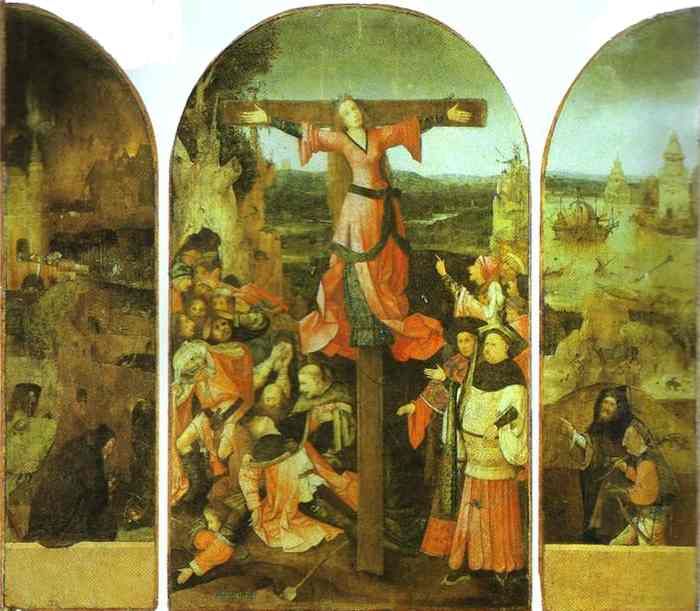
Juliana’s father, who himself despised Christians, beat and abused her in attempts to change her mind, but she would not relent, holding firm to her faith in Christ. Evilase, now well established as prefect, called Juliana before the tribunal, and denounced her as a Christian. As this was during the persecution of Christians under the order of Emperor Maximianus, there was little choice than to have her executed unless she would recant her faith. Of course, Juliana refused, finding her refuge in the Lord, and was subjected to horrible torture.
From the poem, “Juliana,” written by the English poet Cynewulf, we learn that during this torture, the Devil, disguised as an angel from Heaven, appeared to her and suggested she give in to the torturer’s request:
“Then suddenly came into the prison the Enemy of mankind, skilled in evil; and he had the form of an angel. Wise was he in afflictions, this enemy of the soul, this captain of Hell, and unto the holy maid he said, “Why sufferest thou who art most dear and precious unto the King of glory, our God ? This judge hath prepared for thee the worst tortures, torment without end, if thou wilt not prudently sacrifice and make propitiation unto his gods. Be thou in haste when he bids thee be led outward hence, that thou make a sacrifice, an offering of victory, before that death come upon thee, death in the presence of the warriors. In this wise shalt thou survive the anger of this judge, O blessed maid!””
Juliana is not to be fooled by the snares of the Devil, and prays to the Lord for guidance. In return, she receives a message from God:
“Then unto her spake a glorious voice from the clouds and uttered this word: “Do thou seize this vile one and hold him fast, till that he rightly declare unto thee his purpose, even from the beginning what his kinship may be.” And the heart of the glorious maid was glad; and she seized upon that devil.”
Juliana captures the Devil, holding fast to him, and forces him to recount his sinfulness. As he recounts a very long list of deceit and trickery, Juliana is dragged before the tribunal. She drags the Devil with her—he, all the while, pleading for freedom:
“I entreat thee, gracious Juliana, by the grace of God, that thou work upon me no further insult or reproach before men than thou hast already done, when thou overcamest the wisest in the prison shades, the king of the dwellers in Hell, in the city of fiends, who is our father, the lord of death. Behold thou hast afflicted me with painful blows, and in truth I know that, before or since, never did I meet in the kingdoms of the world a woman like unto thee, of more courageous heart, or more perverse, of all the race of women. Clear is it to me that thou wouldst be in all things unashamed in thy wise heart.”
Juliana let the Devil go, and he embarrassedly returned to Hell. Juliana, for her part, bravely met her executioner. Per her Acts, she was first partially burnt in flames, then plunged into a pot of boiling oil, and finally beheaded.
While Saint Juliana was martyred in Nicomedia, her relics were translated to Cumae, the place of her birth, where they were first enshrined. In the thirteenth century, her relics were again translated, this time to Naples, Italy, where they are venerated today.
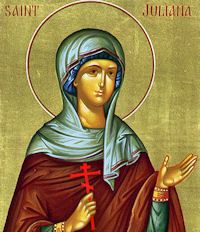
Saint Juliana bravely battled the Devil, in the same manner we battle temptations every day. In the case of her legend, Satan appeared to her in the guise of a heavenly angel, encouraging her to accept the things of the world as Godly and perfect, rather than renouncing temptation and focusing on the Lord. In much the same way, we all too often fall victim to the Devil’s snare, placing great importance on earthly temptations and desires at the expense of our relationship with God. When Juliana wasn’t convinced, she prayed, called upon the Lord, who answered her prayer and opened her eyes to the Devil’s trickery. Today’s holy saint reminds us to be vigilant and to keep our eyes firmly fixed on the Lord—from whom our help and salvation comes!
Lord God,
You gave St. Juliana the crown of
eternal joy because she gave her life
rather than renounce the virginity she
had promised in witness to Christ.
Encouraged by her generosity, help us to
rise out of the bondage of our earthly
desires and attain to the glory of your
kingdom. Grant this through our Lord
Jesus Christ, your Son, who lives and
reigns with you and the Holy Spirit.
One God, for ever and ever.
Amen.
The Golden Legend: The Life of Saint Juliana
Here followeth the Life of Saint Juliana, and first the interpretation of her name.
Juliana is as much to say as burning plainly, for she burnt herself against the temptation of the devil which would have deceived her, and she helped many others to believe in the faith of our Lord Jesu Christ.
On the morn the provost commanded that Saint Juliana should be brought tofore him in judgment; and when he saw her so well guerished, and her visage so fair and so shining, then said the provost to her: Juliana, who hath taught thee, and how mayest thou vanquish the torments? And she said: Hearken to me and I shall say to thee: My Lord Jesu Christ hath taught me to adore the Father, the Son, and the Holy Ghost, for I have overcome and vanquished Satan thy father, and all his other devils; for God hath sent his angel for to comfort and to help me. Mechant man, knowest thou not that the torments be made ready for thee everlasting, where thou shalt be tormented perpetually in a perpetual darkness and obscurity. Anon the provost made to be brought a wheel of iron between two pillars, and four horses to draw it forth, and four knights at one side, and four knights on that other to draw, and four for to draw forth the wheel, so that all the body was tobroken in such wise that the marrow came out of the bones, and the wheel was all bloody. Then came an angel of God and brake the wheel, and healed the wounds of Saint Juliana perfectly. And for this miracle were converted all they that were present. And anon after, for the faith of Jesu Christ were beheaded men and women to the number of one hundred and thirty persons. After, commanded the provost that she should be put in a great pot full of boiling lead, and when she entered into the said pot, all the lead became cold, so that she felt no harm. And the provost cursed his gods because they might not punish a maid that so vanquished them. And then he commanded to smite off her head. And when she was led to be beheaded, the devil appeared to the provost in figure of a young man, and said: Spare not good people, and of her have no mercy, for she hath blamed your gods and done much harm, and me she hath beaten this night past, therefore render to her that she hath deserved. With these words Saint Juliana looked behind her for to wit who said such words of her. Anon the devil said: Alas! alas ! caitiff that I am, I doubt me that yet she will take and bind me, and so he vanished away. After this, that she had admonished the people to love and serve Jesu Christ she prayed them all to pray for her, and then her head was smitten off. The provost entered into a ship with thirty-four men for to pass an arm of the sea; anon came a great orage and a tempest, which drowned the provost and all his company in the sea, and the sea threw their bodies to the rivage, and wild beasts came thither and ate them. Let us pray to her that she pray for us.
Year 2: Day 47 of 365
Prayer Intentions: Courageous and steadfast avoidance of sin and temptation.
Requested Intentions: Financial freedom (J); Successful passing of occupational examination (S); Healing and conversion, sale of house (L); Occupational success for employee and colleagues (J); Employment for a son (C); Successful attainment of an important appointed position (J); Recovery from cancer for a friend (Z); For a family’s freedom from sin (M); For a daughter with Diabetes (A); Reconciliation of a marriage (D); Assistance with a legal matter, financial freedom (R); Healing for a friend (M); For a son in medical school (H); Financial assistance (M); Successful employment (N): Freedom from mental illness for a friend (L); For successful marriage (N); For friends having and recovering from surgery; for the reduction of a brain tumor (L); For resolution of a housing crisis (P); For a brother who is struggling financially, for a son who is struggling academically (B); For financial security for a friend (C); Success in business; familial happiness and health (J); Health and recovery of a sister (I); Healing of a father following stroke (S).
Juliana was born in Cumae, Italy, the daughter of a pagan official named Africanus. Betrothed at a young age to a nobleman named Evilase, Juliana refused to marry until he first became the prefect of Nicomedia. While he was working to meet this demand—which he eventually did—Juliana converted to Christianity, and made a vow of chastity. She then insisted that Evilase convert as well prior to marriage. Of course, as a Roman prefect, this was not something he was able to do and maintain his position and status.
Juliana’s father, who himself despised Christians, beat and abused her in attempts to change her mind, but she would not relent, holding firm to her faith in Christ. Evilase, now well established as prefect, called Juliana before the tribunal, and denounced her as a Christian. As this was during the persecution of Christians under the order of Emperor Maximianus, there was little choice than to have her executed unless she would recant her faith. Of course, Juliana refused, finding her refuge in the Lord, and was subjected to horrible torture.
From the poem, “Juliana,” written by the English poet Cynewulf, we learn that during this torture, the Devil, disguised as an angel from Heaven, appeared to her and suggested she give in to the torturer’s request:
“Then suddenly came into the prison the Enemy of mankind, skilled in evil; and he had the form of an angel. Wise was he in afflictions, this enemy of the soul, this captain of Hell, and unto the holy maid he said, “Why sufferest thou who art most dear and precious unto the King of glory, our God ? This judge hath prepared for thee the worst tortures, torment without end, if thou wilt not prudently sacrifice and make propitiation unto his gods. Be thou in haste when he bids thee be led outward hence, that thou make a sacrifice, an offering of victory, before that death come upon thee, death in the presence of the warriors. In this wise shalt thou survive the anger of this judge, O blessed maid!””
Juliana is not to be fooled by the snares of the Devil, and prays to the Lord for guidance. In return, she receives a message from God:
“Then unto her spake a glorious voice from the clouds and uttered this word: “Do thou seize this vile one and hold him fast, till that he rightly declare unto thee his purpose, even from the beginning what his kinship may be.” And the heart of the glorious maid was glad; and she seized upon that devil.”
Juliana captures the Devil, holding fast to him, and forces him to recount his sinfulness. As he recounts a very long list of deceit and trickery, Juliana is dragged before the tribunal. She drags the Devil with her—he, all the while, pleading for freedom:
“I entreat thee, gracious Juliana, by the grace of God, that thou work upon me no further insult or reproach before men than thou hast already done, when thou overcamest the wisest in the prison shades, the king of the dwellers in Hell, in the city of fiends, who is our father, the lord of death. Behold thou hast afflicted me with painful blows, and in truth I know that, before or since, never did I meet in the kingdoms of the world a woman like unto thee, of more courageous heart, or more perverse, of all the race of women. Clear is it to me that thou wouldst be in all things unashamed in thy wise heart.”
Juliana let the Devil go, and he embarrassedly returned to Hell. Juliana, for her part, bravely met her executioner. Per her Acts, she was first partially burnt in flames, then plunged into a pot of boiling oil, and finally beheaded.
While Saint Juliana was martyred in Nicomedia, her relics were translated to Cumae, the place of her birth, where they were first enshrined. In the thirteenth century, her relics were again translated, this time to Naples, Italy, where they are venerated today.
Saint Juliana bravely battled the Devil, in the same manner we battle temptations every day. In the case of her legend, Satan appeared to her in the guise of a heavenly angel, encouraging her to accept the things of the world as Godly and perfect, rather than renouncing temptation and focusing on the Lord. In much the same way, we all too often fall victim to the Devil’s snare, placing great importance on earthly temptations and desires at the expense of our relationship with God. When Juliana wasn’t convinced, she prayed, called upon the Lord, who answered her prayer and opened her eyes to the Devil’s trickery. Today’s holy saint reminds us to be vigilant and to keep our eyes firmly fixed on the Lord—from whom our help and salvation comes!
Lord God,
You gave St. Juliana the crown of
eternal joy because she gave her life
rather than renounce the virginity she
had promised in witness to Christ.
Encouraged by her generosity, help us to
rise out of the bondage of our earthly
desires and attain to the glory of your
kingdom. Grant this through our Lord
Jesus Christ, your Son, who lives and
reigns with you and the Holy Spirit.
One God, for ever and ever.
Amen.
The Golden Legend: The Life of Saint Juliana
Here followeth the Life of Saint Juliana, and first the interpretation of her name.
Juliana is as much to say as burning plainly, for she burnt herself against the temptation of the devil which would have deceived her, and she helped many others to believe in the faith of our Lord Jesu Christ.
Saint Juliana was given in marriage to the provost of Nicomedia, which was named Eulogius, and he was a paynim, and therefore she would not assent to the marriage, ne assemble with him, but if he would first take the faith of Christ and be baptized. When her father saw this, anon he did do her to be naked, and made her to be beaten sore, and after delivered her to the provost. And after when the provost beheld her, and saw the great beauty in her, he said to her: My most sweet Juliana, why hast thou brought me in such confusion that I am mocked because thou refusest to take me? She said: If thou wilt adore my God, I shall assent and agree to take thee, and otherwise shalt thou never be my lord. To whom the provost said: Fair lady, that may I not do, for the emperor should then smite off my head. And she said: If thou doubtest so much the emperor, which is mortal, why should not I doubt mine emperor Jesu Christ, which is immortal; do what thou wilt, for thou mayst not deceive me. Then the provost did do her to be beat most cruelly with rods, and half a day to hang by the hairs of her head, and molten lead to be cast on her head. And when he saw that all this grieved her not, he made her to be bounden in chains, and to be set in prison. To whom the devil came then in the likeness of an angel, which said to her in this manner: Juliana, I am the angel of God, which hath sent me to thee to warn thee and say that thou make sacrifice to the idols for to escape the torments of evil death. Then she began to weep, and made to God this prayer: Lord God, suffer not me to be lost, but of thy grace show to me what he is that maketh to me this monition.The same time came to her a voice that said that she should set hand on him, and that she constrain him to confess what he was, and anon she took him and demanded him, and he said that he was the devil, and that his father had sent him thither for to deceive her. She demanded him: Who is thy father? And he answered: Beelzebub, which sendeth us for to do all evil, and maketh us grievously to be beaten when we come vanquished of the christian people. And therefore I am certain I shall have much harm because I may not overcome thee. She said to him: Of what craft is thy father Beelzebub? The devil said: He contriveth all evil, and when we come into hell he sendeth us for to tempt the souls of the people. She demanded: What torments suffereth he that cometh vanquished of a christian creature? The devil said: We suffer then much grievous torment, and by cause when we be vanquished of a good man we dare not return, and when we be sought and cannot be found, then commandeth our master to other devils that they torment us wheresomever they find us, and therefore we must obey to him as to our father. And of what craft art thou? I take solace in the shrewdness of the people; I love homicide, luxury, battle, and make debate and war. And she demanded him: Goest thou never to do good works and profitable? The devil answered: Madam, to the end that I answer the truth, to my right great harm and evil am I come hither, for I had well supposed to have deceived thee, and made thee to make sacrifice to the idols and to renounce thy God. When we come to a good christian man and we find him ready to do service to God, we send into him many thoughts vain and evil, and also many evil desires, and turn his thought by this that we set tofore him, and we send errors into his thoughts, and we let him not persevere in his orisons ne in no good works; yet if we see any that will go to the church or in other place for any good, anon we be in their ways, and cast into their hearts divers thoughts and occasions by which they be distorned for to do well. But whosomever may understand our temptations and apperceive them, to the end that he put away from him evil cogitations and thoughts, and will make his prayers, and do his good works, and hear the words of God and the divine service, of him we be cast out, and when they receive the body of Jesu Christ we depart forthwith from them. We set our intent to nothing but to deceive good persons that lead an holy life, and when we see them do good works, we send into them bitter and grievous thoughts for to leave all and do our will. Saint Juliana said: O thou spirit! how art thou so hardy to tempt any christian person? And the devil answered: How darest thou thus hold me, if it were not thou affiest in Jesu Christ? Right so trust I in my father, which is a malefactor, and I do that pleaseth him; I have pained me to do oft many evils, and sometime I come to mine intent, and accomplish my desire, but at this time I have failed: I would I had not come hither! Alas! how understood my father of this that should not hap. Madam, let me go, and give me leave to go in to some other place, for it is no need that I accuse thee to my father. At the last she let him go.
On the morn the provost commanded that Saint Juliana should be brought tofore him in judgment; and when he saw her so well guerished, and her visage so fair and so shining, then said the provost to her: Juliana, who hath taught thee, and how mayest thou vanquish the torments? And she said: Hearken to me and I shall say to thee: My Lord Jesu Christ hath taught me to adore the Father, the Son, and the Holy Ghost, for I have overcome and vanquished Satan thy father, and all his other devils; for God hath sent his angel for to comfort and to help me. Mechant man, knowest thou not that the torments be made ready for thee everlasting, where thou shalt be tormented perpetually in a perpetual darkness and obscurity. Anon the provost made to be brought a wheel of iron between two pillars, and four horses to draw it forth, and four knights at one side, and four knights on that other to draw, and four for to draw forth the wheel, so that all the body was tobroken in such wise that the marrow came out of the bones, and the wheel was all bloody. Then came an angel of God and brake the wheel, and healed the wounds of Saint Juliana perfectly. And for this miracle were converted all they that were present. And anon after, for the faith of Jesu Christ were beheaded men and women to the number of one hundred and thirty persons. After, commanded the provost that she should be put in a great pot full of boiling lead, and when she entered into the said pot, all the lead became cold, so that she felt no harm. And the provost cursed his gods because they might not punish a maid that so vanquished them. And then he commanded to smite off her head. And when she was led to be beheaded, the devil appeared to the provost in figure of a young man, and said: Spare not good people, and of her have no mercy, for she hath blamed your gods and done much harm, and me she hath beaten this night past, therefore render to her that she hath deserved. With these words Saint Juliana looked behind her for to wit who said such words of her. Anon the devil said: Alas! alas ! caitiff that I am, I doubt me that yet she will take and bind me, and so he vanished away. After this, that she had admonished the people to love and serve Jesu Christ she prayed them all to pray for her, and then her head was smitten off. The provost entered into a ship with thirty-four men for to pass an arm of the sea; anon came a great orage and a tempest, which drowned the provost and all his company in the sea, and the sea threw their bodies to the rivage, and wild beasts came thither and ate them. Let us pray to her that she pray for us.
Year 2: Day 47 of 365
Prayer Intentions: Courageous and steadfast avoidance of sin and temptation.
Requested Intentions: Financial freedom (J); Successful passing of occupational examination (S); Healing and conversion, sale of house (L); Occupational success for employee and colleagues (J); Employment for a son (C); Successful attainment of an important appointed position (J); Recovery from cancer for a friend (Z); For a family’s freedom from sin (M); For a daughter with Diabetes (A); Reconciliation of a marriage (D); Assistance with a legal matter, financial freedom (R); Healing for a friend (M); For a son in medical school (H); Financial assistance (M); Successful employment (N): Freedom from mental illness for a friend (L); For successful marriage (N); For friends having and recovering from surgery; for the reduction of a brain tumor (L); For resolution of a housing crisis (P); For a brother who is struggling financially, for a son who is struggling academically (B); For financial security for a friend (C); Success in business; familial happiness and health (J); Health and recovery of a sister (I); Healing of a father following stroke (S).
Today, August 4, we celebrate the feast day of Saint John Marie Baptiste Vianney (1786-1859), CurĂ© d’Ars, confessor, and patron saint of priests. Saint John was a model priest, mystic, and confessor sought out by the faithful from all over the world. The writing style of Saint John was quite simple and easy to understand, and his translation and reflections of the catechism caused his community to flourish. His catechetical writings survive him, including the following sermon entitled, “We Must Expect Temptation.”
It is most unfortunate for ourselves if we do not know that we are tempted in almost all our actions, at one time by pride, by vanity, by the good opinion which we think people should have of us, at another by jealousy, by hatred and by revenge.
At other times, the Devil comes to us with the foulest and most impure images. You see that even in our prayers he distracts us and turns our minds this way and that. It seems indeed that we are in a state .... since we are in the holy presence of God [sentence incomplete - Trans.].
And even more, since the time of Adam, you will not find a saint who has not been tempted -- some in one way, some in another -- and the greatest saints are those who have been tempted the most.
If Our Lord was tempted, it was in order to show us that we must be also. It follows, therefore, that we must expect temptation. If you ask me what is the cause of our temptations, I shall tell you that it is the beauty and the great worth and importance of our souls which the Devil values and which he loves so much that he would consent to suffer two Hells, if necessary, if by so doing he could drag our souls into Hell.
We should never cease to keep a watch on ourselves, lest the Devil might deceive us at the moment when we are least expecting it.
St. Francis tells us that one day God allowed him to see the way in which the Devil tempted his religious, especially in matters of purity. He allowed him to see a band of devils who did nothing but shoot their arrows against his religious. Some returned violently against the devils who had discharged them.
They then fled, shrieking hideous yells of rage. Some of the arrows glanced off those they were intended for and dropped at their feet without doing any harm. Others pierced just as far as the tip of the arrow and finally penetrated, bit by bit.
If we wish to hunt these temptations away, we must, as St. Anthony tells us, make use of the same weapons. When we are tempted by pride, we must immediately humble and abase ourselves before God.
If we are tempted against the holy virtue of purity, we must try to mortify our bodies and all our senses and to be ever more vigilant of ourselves.
If our temptation consists in a distaste for prayers, we must say even more prayers, with greater attention, and the more the Devil prompts us to give them up, the more we must increase their number.
The temptations we must fear most are those of which we are not conscious of.
St. Gregory gave him permission to leave. But when he was leaving the monastery, the latter went on his knees to ask God to let this poor religious know that it was the Devil who wanted to make him lose his soul. The religious had scarcely put his foot over the threshold of the door to leave when he saw an enormous dragon, which attacked him.
It is most unfortunate for ourselves if we do not know that we are tempted in almost all our actions, at one time by pride, by vanity, by the good opinion which we think people should have of us, at another by jealousy, by hatred and by revenge.
At other times, the Devil comes to us with the foulest and most impure images. You see that even in our prayers he distracts us and turns our minds this way and that. It seems indeed that we are in a state .... since we are in the holy presence of God [sentence incomplete - Trans.].
And even more, since the time of Adam, you will not find a saint who has not been tempted -- some in one way, some in another -- and the greatest saints are those who have been tempted the most.
If Our Lord was tempted, it was in order to show us that we must be also. It follows, therefore, that we must expect temptation. If you ask me what is the cause of our temptations, I shall tell you that it is the beauty and the great worth and importance of our souls which the Devil values and which he loves so much that he would consent to suffer two Hells, if necessary, if by so doing he could drag our souls into Hell.
We should never cease to keep a watch on ourselves, lest the Devil might deceive us at the moment when we are least expecting it.
St. Francis tells us that one day God allowed him to see the way in which the Devil tempted his religious, especially in matters of purity. He allowed him to see a band of devils who did nothing but shoot their arrows against his religious. Some returned violently against the devils who had discharged them. They then fled, shrieking hideous yells of rage. Some of the arrows glanced off those they were intended for and dropped at their feet without doing any harm. Others pierced just as far as the tip of the arrow and finally penetrated, bit by bit.
If we wish to hunt these temptations away, we must, as St. Anthony tells us, make use of the same weapons. When we are tempted by pride, we must immediately humble and abase ourselves before God.
If we are tempted against the holy virtue of purity, we must try to mortify our bodies and all our senses and to be ever more vigilant of ourselves.
If our temptation consists in a distaste for prayers, we must say even more prayers, with greater attention, and the more the Devil prompts us to give them up, the more we must increase their number. The temptations we must fear most are those of which we are not conscious of.
St. Gregory tells us that there was a religious who for long had been a good member of his community. Then he developed a very strong desire to leave the monastery and to return to the world, saying that God did not wish him to be in that monastery. His saintly superior told him: "My friend, it is the Devil who is angry because you may be able to save your soul. Fight against him." But no, the other continued to believe that it was as he claimed.
St. Gregory gave him permission to leave. But when he was leaving the monastery, the latter went on his knees to ask God to let this poor religious know that it was the Devil who wanted to make him lose his soul. The religious had scarcely put his foot over the threshold of the door to leave when he saw an enormous dragon, which attacked him. "Oh, brothers," he cried out, "come to my aid! Look at the dragon which will devour me!"
And indeed, the brethren who came running when they heard the noise found this poor monk stretched out on the ground, half-dead. They carried him back into the monastery, and he realized that truly it was the Devil who wanted to tempt him and who was bursting with rage because the superior had prayed for him and so had prevented the Devil from getting him.
Alas, my dear brethren, how greatly we should fear, lest we do not recognize our temptations! And we shall never recognize them if we do not ask God to allow us to do so.
Today, June 7, we celebrate the feast day of Saint Robert of Newminster (1100-1159), man of God, and co-founder of the Cistercian (Benedictine) Abbey at Shedale, England. While little is known about the life of Saint Robert, what is remembered is his gentle spirit, merciful judgment, and love of the Lord. His daily sacrifice and self-denial, through concern for sinfulness, remains a model of temperate living today.
Robert was born in Gargrave in Yorkshire, England. He studied for the priesthood in Paris, France, during which time he wrote a commentary on the Psalms which has unfortunately been lost to history. Upon ordination, he returned home to his place of birth, where he served as a parish priest.
After years serving as rector of Gargrave, Robert joined the Benedictine Order, having received permission from his local bishop, and working with a group of monks founded a monastery in which the strict Benedictine Rule would be revived (a movement initiated by Saint Bernard of Clairvaux, whom Robert met). For their community, they chose a beautiful spot—surrounded by natural springs-- in the valley of Sheldale (within the town of Sutton) on land given to them by the local archbishop. The monastery became known as Fountains Abbey, given the natural flowing waters mirroring the flowing of the Holy Spirit from within. The group of monks became known for their holiness, poverty, and austere way of life, with Robert recognized for his devotion and self-denial. In time, Fountains Abbey became the center of religious study in North England, and eventually affiliated with the Cistercian reform.
Given the success of Fountains Abbey, a local lord built another abbey on his land, the Abbey of Newminster. To Newminster, he brought Robert and a dozen companions. Robert was appointed Abbot, and under his leadership, the community prospered, establishing two additional abbeys in later years.
While Robert grew the religious communities at Newminster, his life was not without trials. At one point, while serving as Abbot, members of the community accused him of impropriety, suggesting that he had engaged in lascivious acts with a local pious woman. Saint Robert traveled to France, visiting Saint Bernard of Clairvaux, the head of the Order. Saint Bernard determined the accusations to be false, and as a symbol of his belief in Robert's innocence, presented him with a golden girdle to be used to affect miraculous cures of the sick at Newminster.
Robert ruled and directed the monks at Newminster for 21 years. He was a man of prayer, favored with gifts of prophecy and miracles. He is described as a devout and gentle man. While he is known for being merciful in his judgment of others, and a warm and considerate companion, he was also very zealous toward his own vows of poverty. Saint Robert is recorded as having had supernatural gifts, including visions and encounters with demons, and the gift of exorcism. In one such encounter, the Devil himself entered the church while Robert and his brothers were praying. The Devil, seeking a weak soul to tempt, was thwarted by Robert’s prayers for strength and encouragement for the monks in his charge.
Saint Robert is said to have fasted so rigorously during Lent that his brothers grew concerned, and asked him the reason for his refusal to eat. Robert responded that he might be able to eat a small piece of buttered oatcake, but once it was placed before him, fearing gluttony, he requested that it instead be given to the poor. Over the protest of his brothers, the food was taken to the front gates of the Abbey, where a beautiful stranger took both the cake and the dish it sat upon. While a brother was explaining the loss, the dish miraculously appeared on the table before the abbot, leading the men to realize that the beautiful stranger had been an angel of the Lord.
Saint Robert was close friends with the hermit Saint Godric, whom he visited frequently. On the night Robert died, Godric is said to have seen a vision of Robert's soul, like a ball of fire, being lifted by angels on a pathway of light toward the gates of Heaven. As they approached, Godric heard a voice saying, "Enter now my friends." His relics were translated to the church at Newminster. Numerous miracles have been reported at his tomb, including one in which a brother monk is said to have fallen unhurt from a ladder while whitewashing the dormitory. His tomb remains a center of pilgrimage.
The life of Saint Robert of Newminster reminds us that one does not need to live a life filled with extravagant miracles or preaching, or die a martyrs’ death to be holy. Saint Robert lived a simple life, rich in the spirit of the Lord. He gave all that he have, sacrificed, and spent his days in prayer and self-denial—oftentimes for the souls of his brothers and those who were less fortunate. Robert considered his actions carefully, always on the look-out for temptation, and wary of the pathways to sinfulness. Through fasting and prayer he converted many souls, grew the Church of God on earth, and earned himself a saint’s place in Heaven. How might we better live up to the example of this holy man?
God our loving Father, you inspired Robert
to establish a new monastery, and to preside as abbot
with gentleness and justice.
As we honor today this man of prayer, may we also learn from his example.
We ask this through our Lord Jesus Christ, your Son, who lives and reigns with you and the Holy Spirit, one God, for ever and ever. Amen.
Inspired by the origins and spiritual history of the Holy Rosary, we continue our meditation on the psalms, one each day, in order, for 150 days.
Today’s Psalm: Psalm 44: Israel’s Past Glory and Present Need
1 We have heard with our ears, O God;
our fathers have told us
what you did in their days,
in days long ago.
2 With your hand you drove out the nations
and planted our fathers;
you crushed the peoples
and made our fathers flourish.
3 It was not by their sword that they won the land,
nor did their arm bring them victory;
it was your right hand, your arm,
and the light of your face, for you loved them.
4 You are my King and my God,
who decrees victories for Jacob.
5 Through you we push back our enemies;
through your name we trample our foes.
6 I do not trust in my bow,
my sword does not bring me victory;
7 but you give us victory over our enemies,
you put our adversaries to shame.
8 In God we make our boast all day long,
and we will praise your name forever.
9 But now you have rejected and humbled us;
you no longer go out with our armies.
10 You made us retreat before the enemy,
and our adversaries have plundered us.
11 You gave us up to be devoured like sheep
and have scattered us among the nations.
12 You sold your people for a pittance,
gaining nothing from their sale.
13 You have made us a reproach to our neighbors,
the scorn and derision of those around us.
14 You have made us a byword among the nations;
the peoples shake their heads at us.
15 My disgrace is before me all day long,
and my face is covered with shame
16 at the taunts of those who reproach and revile me,
because of the enemy, who is bent on revenge.
17 All this happened to us,
though we had not forgotten you
or been false to your covenant.
18 Our hearts had not turned back;
our feet had not strayed from your path.
19 But you crushed us and made us a haunt for jackals
and covered us over with deep darkness.
20 If we had forgotten the name of our God
or spread out our hands to a foreign god,
21 would not God have discovered it,
since he knows the secrets of the heart?
22 Yet for your sake we face death all day long;
we are considered as sheep to be slaughtered.
23 Awake, O Lord! Why do you sleep?
Rouse yourself! Do not reject us forever.
24 Why do you hide your face
and forget our misery and oppression?
25 We are brought down to the dust;
our bodies cling to the ground.
26 Rise up and help us;
redeem us because of your unfailing love.
Day 158 of 365
Prayer Intentions: Simple lives of faith, self-denial, and avoidance of sin; For all religious leaders.
Requested Intentions: For healing of a stomach illness (L); For the repose of the soul of a sister (C); Vocational security for family, Financial security for daughter beginning college (M); Vocational guidance, courage and strength (I); Reconciliation of a relationship (M); Strength, financial security, motivation, repose of a loved one (V); Recovery of left shoulder fracture (E); Financial recovery (A); The repose of a lonely soul (L); Health for an ailing nephew (A); Those suffering from depression (J); Successful conception of a child (D); Successful adoption (S); Healing of a father battling cancer (S).
Psalm: Psalm 44: Israel’s Past Glory and Present Need
Robert was born in Gargrave in Yorkshire, England. He studied for the priesthood in Paris, France, during which time he wrote a commentary on the Psalms which has unfortunately been lost to history. Upon ordination, he returned home to his place of birth, where he served as a parish priest.
After years serving as rector of Gargrave, Robert joined the Benedictine Order, having received permission from his local bishop, and working with a group of monks founded a monastery in which the strict Benedictine Rule would be revived (a movement initiated by Saint Bernard of Clairvaux, whom Robert met). For their community, they chose a beautiful spot—surrounded by natural springs-- in the valley of Sheldale (within the town of Sutton) on land given to them by the local archbishop. The monastery became known as Fountains Abbey, given the natural flowing waters mirroring the flowing of the Holy Spirit from within. The group of monks became known for their holiness, poverty, and austere way of life, with Robert recognized for his devotion and self-denial. In time, Fountains Abbey became the center of religious study in North England, and eventually affiliated with the Cistercian reform.
Given the success of Fountains Abbey, a local lord built another abbey on his land, the Abbey of Newminster. To Newminster, he brought Robert and a dozen companions. Robert was appointed Abbot, and under his leadership, the community prospered, establishing two additional abbeys in later years.
While Robert grew the religious communities at Newminster, his life was not without trials. At one point, while serving as Abbot, members of the community accused him of impropriety, suggesting that he had engaged in lascivious acts with a local pious woman. Saint Robert traveled to France, visiting Saint Bernard of Clairvaux, the head of the Order. Saint Bernard determined the accusations to be false, and as a symbol of his belief in Robert's innocence, presented him with a golden girdle to be used to affect miraculous cures of the sick at Newminster.
Robert ruled and directed the monks at Newminster for 21 years. He was a man of prayer, favored with gifts of prophecy and miracles. He is described as a devout and gentle man. While he is known for being merciful in his judgment of others, and a warm and considerate companion, he was also very zealous toward his own vows of poverty. Saint Robert is recorded as having had supernatural gifts, including visions and encounters with demons, and the gift of exorcism. In one such encounter, the Devil himself entered the church while Robert and his brothers were praying. The Devil, seeking a weak soul to tempt, was thwarted by Robert’s prayers for strength and encouragement for the monks in his charge.
Saint Robert is said to have fasted so rigorously during Lent that his brothers grew concerned, and asked him the reason for his refusal to eat. Robert responded that he might be able to eat a small piece of buttered oatcake, but once it was placed before him, fearing gluttony, he requested that it instead be given to the poor. Over the protest of his brothers, the food was taken to the front gates of the Abbey, where a beautiful stranger took both the cake and the dish it sat upon. While a brother was explaining the loss, the dish miraculously appeared on the table before the abbot, leading the men to realize that the beautiful stranger had been an angel of the Lord.
Saint Robert was close friends with the hermit Saint Godric, whom he visited frequently. On the night Robert died, Godric is said to have seen a vision of Robert's soul, like a ball of fire, being lifted by angels on a pathway of light toward the gates of Heaven. As they approached, Godric heard a voice saying, "Enter now my friends." His relics were translated to the church at Newminster. Numerous miracles have been reported at his tomb, including one in which a brother monk is said to have fallen unhurt from a ladder while whitewashing the dormitory. His tomb remains a center of pilgrimage.
The life of Saint Robert of Newminster reminds us that one does not need to live a life filled with extravagant miracles or preaching, or die a martyrs’ death to be holy. Saint Robert lived a simple life, rich in the spirit of the Lord. He gave all that he have, sacrificed, and spent his days in prayer and self-denial—oftentimes for the souls of his brothers and those who were less fortunate. Robert considered his actions carefully, always on the look-out for temptation, and wary of the pathways to sinfulness. Through fasting and prayer he converted many souls, grew the Church of God on earth, and earned himself a saint’s place in Heaven. How might we better live up to the example of this holy man?
God our loving Father, you inspired Robert
to establish a new monastery, and to preside as abbot
with gentleness and justice.
As we honor today this man of prayer, may we also learn from his example.
We ask this through our Lord Jesus Christ, your Son, who lives and reigns with you and the Holy Spirit, one God, for ever and ever. Amen.
Inspired by the origins and spiritual history of the Holy Rosary, we continue our meditation on the psalms, one each day, in order, for 150 days.
Today’s Psalm: Psalm 44: Israel’s Past Glory and Present Need
1 We have heard with our ears, O God;
our fathers have told us
what you did in their days,
in days long ago.
2 With your hand you drove out the nations
and planted our fathers;
you crushed the peoples
and made our fathers flourish.
3 It was not by their sword that they won the land,
nor did their arm bring them victory;
it was your right hand, your arm,
and the light of your face, for you loved them.
4 You are my King and my God,
who decrees victories for Jacob.
5 Through you we push back our enemies;
through your name we trample our foes.
6 I do not trust in my bow,
my sword does not bring me victory;
7 but you give us victory over our enemies,
you put our adversaries to shame.
8 In God we make our boast all day long,
and we will praise your name forever.
9 But now you have rejected and humbled us;
you no longer go out with our armies.
10 You made us retreat before the enemy,
and our adversaries have plundered us.
11 You gave us up to be devoured like sheep
and have scattered us among the nations.
12 You sold your people for a pittance,
gaining nothing from their sale.
13 You have made us a reproach to our neighbors,
the scorn and derision of those around us.
14 You have made us a byword among the nations;
the peoples shake their heads at us.
15 My disgrace is before me all day long,
and my face is covered with shame
16 at the taunts of those who reproach and revile me,
because of the enemy, who is bent on revenge.
17 All this happened to us,
though we had not forgotten you
or been false to your covenant.
18 Our hearts had not turned back;
our feet had not strayed from your path.
19 But you crushed us and made us a haunt for jackals
and covered us over with deep darkness.
20 If we had forgotten the name of our God
or spread out our hands to a foreign god,
21 would not God have discovered it,
since he knows the secrets of the heart?
22 Yet for your sake we face death all day long;
we are considered as sheep to be slaughtered.
23 Awake, O Lord! Why do you sleep?
Rouse yourself! Do not reject us forever.
24 Why do you hide your face
and forget our misery and oppression?
25 We are brought down to the dust;
our bodies cling to the ground.
26 Rise up and help us;
redeem us because of your unfailing love.
Day 158 of 365
Prayer Intentions: Simple lives of faith, self-denial, and avoidance of sin; For all religious leaders.
Requested Intentions: For healing of a stomach illness (L); For the repose of the soul of a sister (C); Vocational security for family, Financial security for daughter beginning college (M); Vocational guidance, courage and strength (I); Reconciliation of a relationship (M); Strength, financial security, motivation, repose of a loved one (V); Recovery of left shoulder fracture (E); Financial recovery (A); The repose of a lonely soul (L); Health for an ailing nephew (A); Those suffering from depression (J); Successful conception of a child (D); Successful adoption (S); Healing of a father battling cancer (S).
Psalm: Psalm 44: Israel’s Past Glory and Present Need
March 9 commemorates the feast day of Saint Catherine of Bologna (1413-1463), virgin of the Church, mystic, and patron saint of artists and those who are tempted. Saint Catherine was born in Bologna, and appointed as the maid of honor to the daughter of the Marquis of Ferrara, for whom her father served as an aide. Catherine moved into the palace, and became best friends with her mistress, Margaret. Upon the engagement of Margaret, who wished Catherine to remain with her, Catherine instead entered the religious life. At age 14, she joined the third order of the Franciscans, who lived a semi-monastic life.
Eventually, the community to which Catherine belonged adopted the second rule of the Franciscans, joining the Order of the Poor Clares. There, Catherine lived in poverty and obedience, joyfully serving the Lord. However, Catherine felt that the rule was not strict enough in the community she served, and eventually was moved to a more austere community, where she reluctantly agreed to be Abbess.
Saint Catherine was graced with many spiritual gifts, beginning early in her religious life, and persisting until the end of her days. A mystic, she frequently experienced visions of the Blessed Mother, Christ at the hour of His crucifixion, and was tormented by visions and temptations of the Devil. All of these she passed along to her sisters, for their spiritual direction, and some she recorded in Latin, having been schooled in Latin at the court of the Marquis.
The most remarkable of her visions occurred on Christmas Eve. She had asked permission, at that time, to spend Christmas Eve alone in the convent chapel, intending to pray one thousand Hail Marys in honor of the Blessed Mother and the Nativity of Our Lord. As she later recounted, at approximately midnight, the dawning of Christmas morning, the Blessed Virgin appeared to Catherine with the swaddled baby Jesus in her arms. The Mother of God handed the Infant to Saint Catherine, who joyously held Him and kissed His cheek. Following that worship, He disappeared, but her heart was left changed forever.
Under the direction of Saint Catherine, the community became known for austerity, service to the poor, and holiness. But Catherine, led by her joyous heart, was also a woman filled with joy, which she passed along to her sisters. They suffered gladly for Christ, eschewing wealth and comfort, but their hearts leapt and danced for joy. Saint Catherine wrote in her book Le sette armi spirituali (The Seven Spiritual Weapons):Let every lover who loves the Lord
Come to the dance singing of love,
Let her come dancing all afire
Desiring only him who created her
And separated her from the dangerous worldly state.
Saint Catherine is also known as a talented artist and musician, her love and joy in the Lord spilling forth in whatever artistic medium she chose. (See picture of Mary and Jesus, Mother and Child, left, painted by Saint Catherine).
Saint Catherine strove to live a life of perfection. She instructed her community in the ways of holiness, including penance and suffering. In preparation for loving Christ, Catherine enumerated seven spiritual weapons of use to the faithful:
“Whoever from deep within her noble and zealous heart wished to take up the cross..., let her first take up the arms necessary for such battles...: first is diligence; second, distrust of self; third, confidence in God; fourth, memory of his passion; fifth, memory of one's own death; sixth, memory of the glory of God; seventh and last, the authority of Holy Scripture as it gives the example of Christ Jesus in the desert.”
While she was frail throughout her days, Catherine lived a relatively healthy life until shortly before her death due to a terminal illness. Upon her deathbed, her sisters observed that her aged face had been restored to the smooth youth of her teen years when she had entered the order. Buried without a coffin, her body was exhumed 18 days later, due to the overpowering sweet fragrance emanating from the gravesite. Found incorrupt, Saint Catherine was seated in a golden throne, in the small chapel of Cheisa della Santa, where she remains today. Her incorrupt body and face appear smooth and featureless, although somewhat blackened by the soot of 500 years of burning candles.
Saint Catherine’s search for perfection, her faith, and her piety are worthy of aspiring to. But more than that, the joy that Saint Catherine found, even in her suffering and death, is remarkable. She was confident in the love of Christ, confident that He would never stop caring for her, confident in His grace and mercy. During Lent, we often feel as if we should be morose and gloomy, fasting, abstaining, and enacting other mild forms of mortification and penance. Saint Catherine undertood these physical acts of repentence as well, but did so with a joyful heart, dancing and singing of the love of the Lord. This Lent, perhaps it is our turn to join in this glorious dance, hearts afire, desiring only Him who created us!
Day 68 of 365
Prayer Intentions: Heart of joy in our penance.
Requested Intentions: Safety of travelers (J); Improved family relationship with the Lord, using gifts for His glory (L); For the orphans of Saint Francis Xavier in India (Fr. B); For the health of a family member with Rett’s Disorder (C); For the restoration of hearing (L); For a restorative, faith-deepening Lent for all those who are struggling (L).
Special Intentions (Day 27 of 45-day Novena to Our Blessed Lady of Lourdes): The intentions of all those who read this blog, whether submitted or retained in the quiet of their hearts; Penance, Penance, Penance for sinners; For all those who are suffering.
Subscribe to:
Posts (Atom)