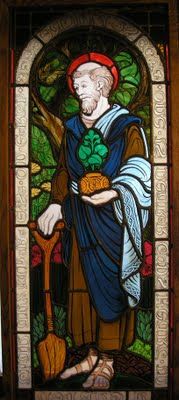
Why pray the Rosary every day for a year?


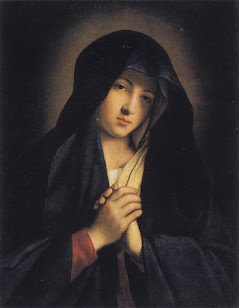
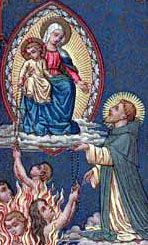
Each time the Blessed Virgin has appeared-- whether it be to Saint Bernadette Soubirous at Lourdes; to Lucia, Jacinta, and Francisco at Fatima; or to Mariette Beco at Banneux-- she has asserted the importance, saving grace, and power of praying the Holy Rosary on a daily basis. Based upon her words, the Rosary is penance and conversion for sinners, a pathway to peace, an end to war, and a powerful act of faith in Jesus Christ. Pope Paul VI presented the Rosary as a powerful means to reach Christ "not merely with Mary but indeed, insofar as this is possible to us, in the same way as Mary, who is certainly the one who thought about Him more than anyone else has ever done."

To show us how this is done, perhaps no one has been more eloquent than the great Cardinal Newman, who wrote: "The great power of the Rosary consists in the fact that it translates the Creed into Prayer. Of course, the Creed is already in a certain sense a prayer and a great act of homage towards God, but the Rosary brings us to meditate again on the great truth of His life and death, and brings this truth close to our hearts. Even Christians, although they know God, usually fear rather than love Him. The strength of the Rosary lies in the particular manner in which it considers these mysteries, since all our thinking about Christ is intertwined with the thought of His Mother, in the relations between Mother and Son; the Holy Family is presented to us, the home in which God lived His infinite love."


As Mary said at Fatima, "Jesus wants to use you to make Me known and loved. He wishes to establish the devotion to My Immaculate Heart throughout the world. I promise salvation to whoever embraces it; these souls will be dear to God, like flowers put by Me to adorn his throne."


February 13, 2013: Blessed Archangela Girlani

Posted by Jacob

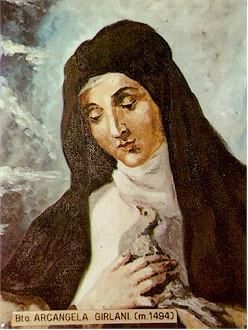
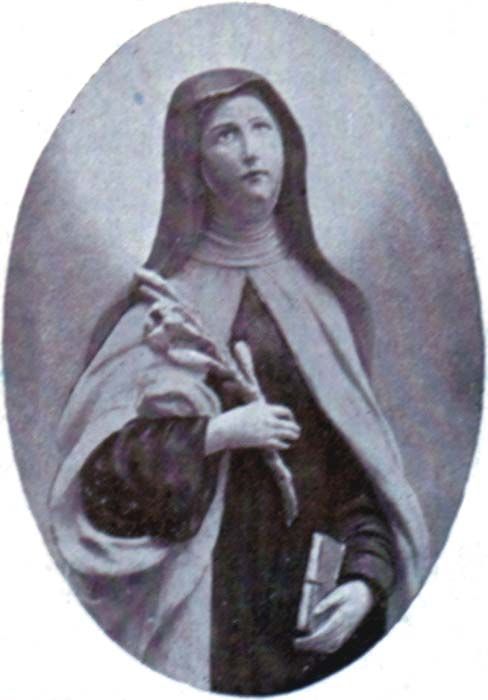
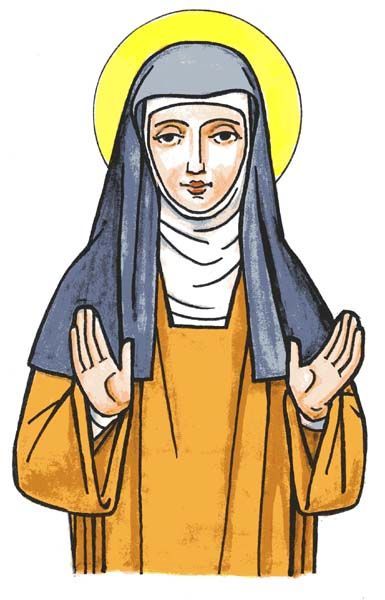
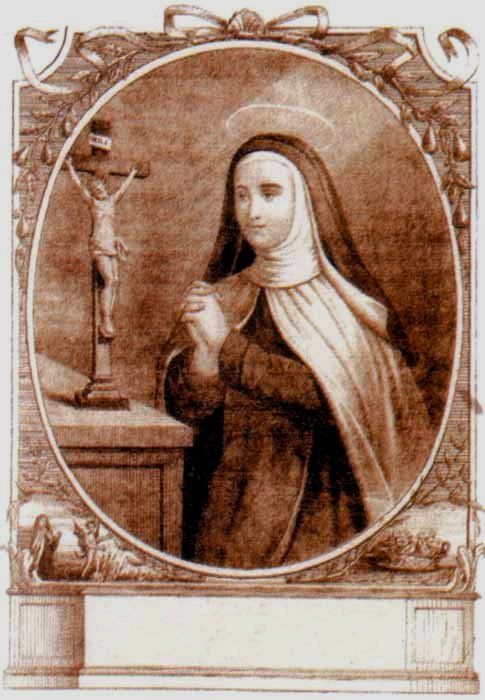
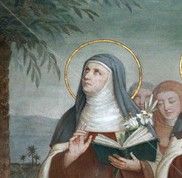
Today, February 13, we celebrate the feast of Blessed Archangela Girlani (1460-1495), virgin, foundress, and miracle worker. The life of Blessed Archangela is one of deep faith and commitment to the Lord. Willing to reconsider her own plans for those that the Lord placed before her, Archangela served and followed wherever the Holy Spirit led her.


Born Eleanor Girlani in the small Italian town of Trino (Piedmont), Eleanor demonstrated great piety and holiness as a child. Despite her family’s noble heritage, her only ambition in life was to become a Benedictine sister, and together with some friends and relatives, she prepared to travel to the monastery of Rocca delle Donne, who had agreed to accept and raise her as a member of the Order. However, this was not to occur. Upon mounting her horse to travel, the animal refused to carry her to the monastery. As this particular horse was one of gentle and obedient spirit, the animal’s refusal to move was interpreted as a sign from the Lord, and Eleanor returned home. Despairing, she prayed for guidance and contented herself in her own daily practices of contemplation, penance, and service to others.

Eleanor soon encountered a Carmelite monk, who introduced her to the sisters of the Carmelite Order. Understanding this as divine intervention, Eleanor sought admission, and was accepted into the Order on her seventeenth birthday. She lived and served in the convent of Maria Maddalena in Parma, along with her sisters Mary and Scholastica.

Eleanor received the veil as a Carmelite sister at age eighteen, taking the name Archangela as her own. She was made Prioress of the abbey, given her nobility (as was the custom of the time), and became a model of Christian virtue to her sisters. Especially devoted to the Holy Trinity, Archangela spent hours in the chapel praying and contemplating the divinity of the Lord.

Sister Archangela soon was requested to found an additional abbey in Mantua, which was named Santa Maria del Paradiso (The Convent of Mary in Paradise). There, under her direction, sisters of the Order lived as if already absorbed into heaven. The monastery developed a reputation for great holiness, and received many new sisters. As prioress, Archangela experienced great ecstasies, some lasting well over 24 hours, and on more than on occasion was discovered by her sisters to be levitating above the ground while contemplating the Holy Trinity. She further performed many miracles.

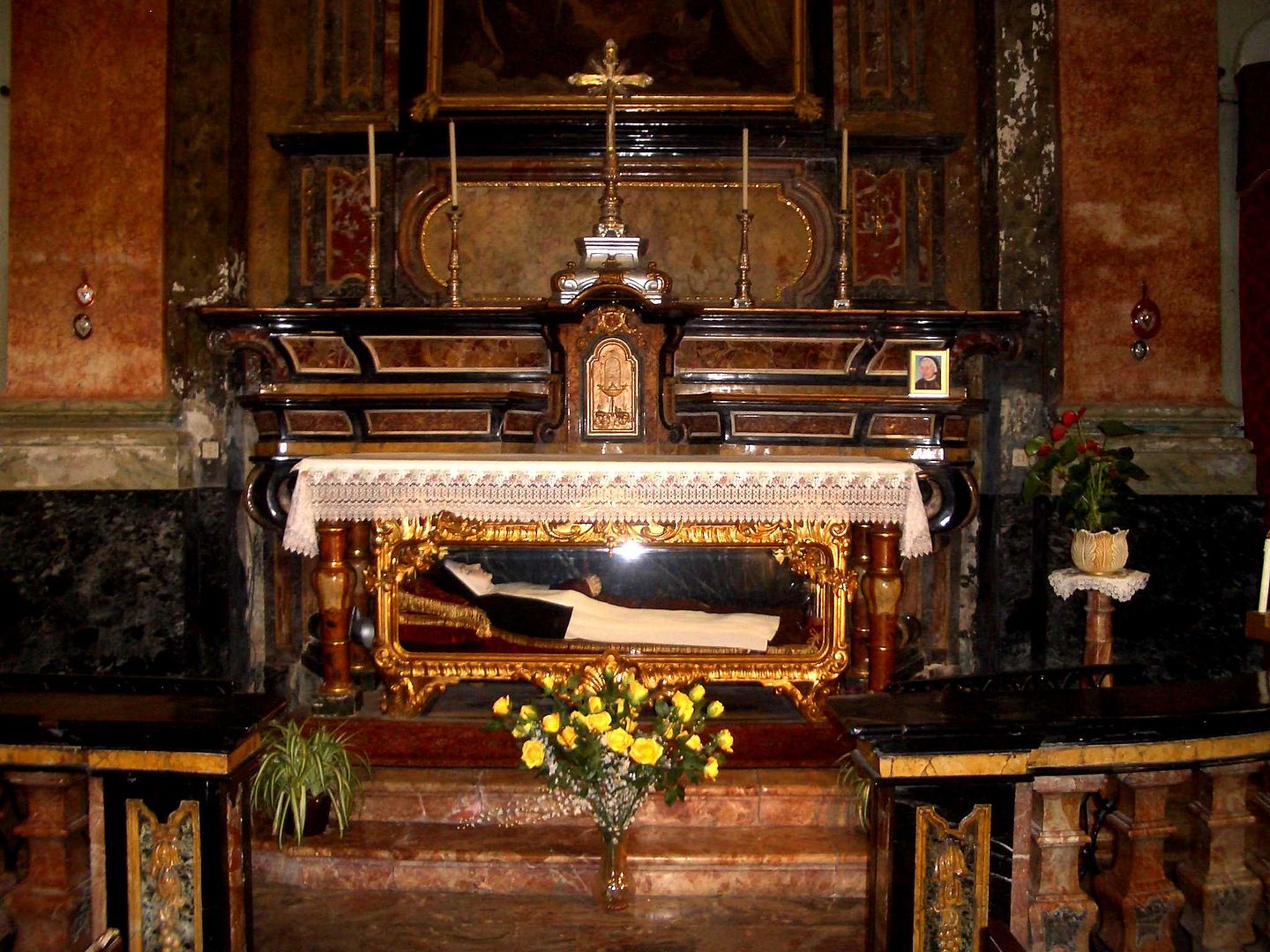
Only three years after founding the monastery at Mantua, Blessed Archangela fell gravely ill. Strengthened with the Sacraments and with her eyes fixed on an image of the Crucified Christ, she repeated her frequently uttered words; “Jesus, my Love" and peacefully died at the young age of thirty-four. Based upon her request, was buried in the simplicity of a common grave at the monastery. Three years later, when the tomb was re-opened to commit another sister to the earth, her remains were found incorrupt and exuding the fragrance of holiness. Great miracles were reported, and her relics were enclosed in a crystal tomb, and placed above the alter at the monastery.

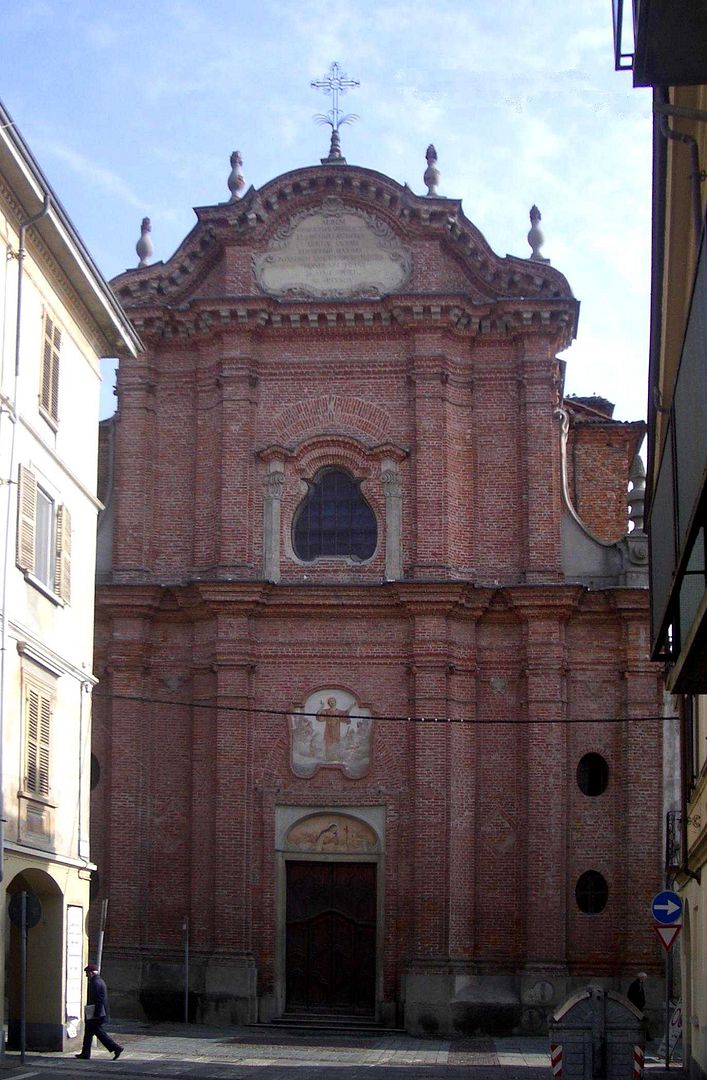
Nearly 300 years after her death, the monastery in Mantua was closed, and Archangela’s relics were translated to Trino, where she had been born. Her relics, still venerated today, were placed in the church of Saint Lorenzo. There, her body rests, wearing the habit of the barefoot Carmelite, in a casket of crystal.

Incorrupt Body of Beata Archangela Girlani


Church of San Lorenzo in Trino

Blessed Archangela’s life reminds us that we should remain vigilant in our daily lives, seeking out the plan of God, and following it to the best of our abilities. Blessed Archangela placed her life and destiny squarely in the hands of the Lord, and He led her to a place of deep connection, mysticism, ecstasy, and miracle-working. We pray for her same dedication and willingness to listen to the call of the Lord, that we might follow in her footsteps.


Father in heaven,
you gave the virgin Blessed Archangela Girlani
particular dedication to the mystery of the eternal Trinity.
Through her prayers
may we taste the delights of your glory
already here on earth,
and look upon you for ever in heaven.

We ask this through Christ, our Lord.
Amen.


January 20, 2013: Blessed Cyprian Michael Iwene Tansi

Posted by Jacob


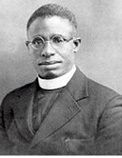
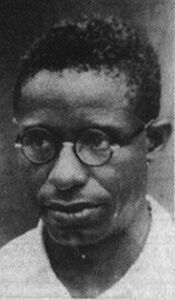
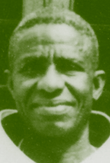
Today, we celebrate the feast day of Blessed Cyprian Michael Iwene Tansi (1903-1964), the first Nigerian to be beatified for his holiness and service to the people of his country.  Father Tansi spent his life, despite sickness and adversity, caring for those he loved in a country where Catholics are frequently persecuted.  His courage and dedication to the Word of God remains an inspiration for all of us.

During his beatification Mass in Nigeria, Pope John Paul II proclaimed of him: “The life and witness of Fr Tansi is an inspiration to everyone in the Nigeria that he loved so much. He was first of all a man of God: his long hours before the Blessed Sacrament filled his heart with generous and courageous love. Those who knew him testify to his great love of God. Everyone who met him was touched by his personal goodness. He was then a man of the people: he always put others before himself, and was especially attentive to the pastoral needs of families. He took great care to prepare couples well for Holy Matrimony and preached the importance of chastity. He tried in every way to promote the dignity of women. In a special way, the education of young people was precious to him. Even when he was sent by Bishop Heerey to the Cistercian Abbey of Mount St Bernard in England to pursue his monastic vocation, with the hope of bringing the contemplative life back to Africa, he did not forget his own people. He did not fail to offer prayers and sacrifices for their continuing sanctification. 

Father Tansi knew that there is something of the Prodigal Son in every human being. He knew that all men and women are tempted to separate themselves from God in order to lead their own independent and selfish existence. He knew that they are then disappointed by the emptiness of the illusion which had fascinated them, and that they eventually find in the depths of their heart the road leading back to the Father's house (cf. Reconciliatio et Paenitentia, n. 5). He encouraged people to confess their sins and receive God's forgiveness in the sacrament of Reconciliation. He implored them to forgive one another as God forgives us, and to hand on the gift of reconciliation, making it a reality at every level of Nigerian life. Fr Tansi tried to imitate the father in the parable:  he was always available for those searching for reconciliation. He spread the joy of restored communion with God. He inspired people to welcome the peace of Christ, and encouraged them to nourish the life of grace with the word of God and with Holy Communion.... 

Blessed Cyprian Michael Tansi is a prime example of the fruits of holiness which have grown and matured in the Church in Nigeria since the Gospel was first preached in this land. He received the gift of faith through the efforts of the missionaries, and taking the Christian way of life as his own he made it truly African and Nigerian. So too the Nigerians of today young and old alike are called to reap the spiritual fruits which have been planted among them and are now ready for the harvest. In this regard, I wish to thank and to encourage the Church in Nigeria for her missionary work in Nigeria, in Africa and beyond. Fr Tansi's witness to the Gospel and to Christian charity is a spiritual gift which this local Church now offers to the universal Church.”


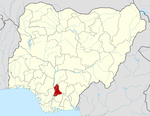
Onitsha, Nigeria
Iwene Tansi was born in Aguleri, Near Onitsha, Negeria in 1903. One of five children, his parents sent him to be raised by a Christian uncle, who instilled in him a love of God.  Baptized when only 9 years old, he took the Christian name Michael and surprised his parents by destroying his personal idol—a traditional symbol given to each male child at birth in Nigeria.  His baptism impacted him deeply, and he devoted himself to study of the Gospel and charitable works.  Blinded in his left eye while playing as a child, Michael never complained.

At the age of 22, after working as a catechist and school teacher at the Holy Trinity School in Onitsha, he became headmaster of Saint Joseph’s School.  Not long afterwards, he entered the seminary of Saint Paul’s, called to a deeper level of service.  Ordained in the Onitsha diocese at the age of 34, he dedicated himself to constant service of the people of Easter Nigeria for the next 13 years.  Given the geographical spread of the diocese, Father Tansi spent most of his days walking from village to village, spending time at each parish, hearing confessions all day (and oftentimes through the night).  He preached the importance of preparation for marriage, and the joy of Christian love, actively working against the cultural tradition of “trial marriages.”  Many were converted throughout the Igbo villages he visited, a testament to his constancy and zeal.

Father Tansi felt called, however, to devote himself more fully to the formation of Catholicism in Nigeria.  He wished to serve the Lord more directly in contemplation and prayer, and in doing so, bring the monastic life to Nigeria.  He traveled to Mount Saint Bernard Monastery, a Trappist Abbey, near Nottingham, England, and undertook training in the establishment of contemplative monastic communities.  Taking the name Cyprian, he devoted himself to his eventual goal of building a monastery in Onitsha. However, the change of weather, cuisine, and community provided a drastic shock to his system, and Father Cyprian found himself quite ill.

When Mount Saint Bernard founded a monastery in Africa (in Cameroon, rather than neighboring Nigeria), Father Cyprian was appointed as Novice Master.  However, the years of toil that he had undertaken had exerted their toll on him, and he was too ill to participate.  He died only a few months later.  However, his reputation had never left Nigeria, and many reported miracles and favors via his intercession. The call for his beatification began shortly following his death.  On March 22, 1998, at Onitsha, during a trip to Nigeria made for that very purpose, Pope John Paul II beatified Father Cyprian Michael Tansi, proclaiming him to be a model of priestly zeal and prayer.

An extract from a retreat Father Cyprian Michael Tansi gave in 1962:

We do very little good when we embark on our own. We do much good when we allow God to direct us and direct our enterprises. The apostles, you remember, went out fishing, laboured the whole night and got nothing. They were on their own, the Lord came and told them to cast the net and they would find. They did so and were not able to draw up the net, so great was the number of fish caught.

When they worked by themselves, they took nothing. When they worked in the company of our Lord, they were full. So with us. We must learn to avoid worrying ourselves about things, learn to do away with anxieties of all sorts.

When you have something to do, an assignment to perform, remembering that we are not doing our work, but God's work, we must first go to our Lord in the Blessed Sacrament, place our plans before Him and ask for his advice and assistance. We must examine before him how he would like us to produce, whether he would like us to do one thing or the other. If any doubt, consult your spiritual director for advice. You should never undertake to do anything unless you are sure that God wants it done in the way you are planning. Above all things you should never do your own will: you should do only what the superiors want to be done. You should never force the superiors to yield to your will by any stratagem.

And while doing whatever you have to do, you should do it at a pace and speed that will allow you time continually to turn to God for guidance. Your conversation with God should be continual. Remember that you cannot achieve this spiritual disposition in a day. You need time, practice and patience. All that I request you now is to examine and to see whether what you are told is the truth. If it is, then make a resolution to continue to make effort in this direction without minding whether you succeed or fail.


Please join me in lifting these intentions to Our Lord, through the intercession of Our Blessed Mother.

Prayer requests, 2013: Week 3:

Health and healing for the ill, success of a charitable organization (D, United Kingdom); Protection, healing, and recovery for a premature baby (M, USA-MA); Healing, successful employment, end to financial difficulties (M, USA-OH); Resolution of financial difficulties (M, USA-CA); Healing of a sick husband, blessings upon a daughter and family (S, India); Financial blessings and security (A, USA-NM); Healing of a woman undergoing medical treatment (D, India); Healing and health, financial stability, occupational success, hope (R, USA-CT); Healing for a brother and friend (E, Zimbabwe).

January 5, 2013: Saint Genoveva Torres Morales

Posted by Jacob


“Only love pushes me to work.”

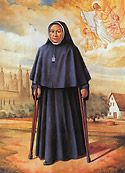
Today, January 5, we celebrate the feast day of a courageous “modern” saint, Saint Genoveva Torres Morales (1870-1956), foundress of the Congregation of the Sacred Heart of Jesus and the Holy Angels (The AngĂ©licas).   In his canonization homily, Pope John Paul II proclaimed, “Saint Genoveva Torres was an instrument of God's tender love for lonely people in need of love, comfort and physical and spiritual care. The characteristic note that fuelled her spirituality was adoration of the Eucharist for the expiation of sins, which formed the basis of an apostolate full of humility and simplicity, of self-denial and charity. “

Genoveva was born in Almenara, Spain, in 1870.  She was the youngest of six children born to her parents, and sadly, by the time she reached eight years of age, her parents and four of her siblings had died.  Genoveva, despite her young age, was left to care for herself and her younger brother, Jose.  Jose was respectful to his sister, but was also demanding and difficult to raise, and Genoveva found herself alone most of the time.  It was from this early age that she found joy in her solitude, using it to grow closer to the Lord.  By age 10, Genoveva had become a voracious reader, reading everything she could, particularly spiritual books. Here, she found her life’s rule, that the only pathway to true happiness was through submission to the will of God.  For Genoveva, this became her life’s mission, to follow God’s directives, and fulfill the meaning of her creation.

Genoveva’s life was far from easy.  Not only did she raise her brother single-handedly, as a child, at approximately age 13, her left leg was amputated due to an infection and subsequent gangrene.  As anesthesia was expensive, she suffered without sufficient pain medication, and her physical suffering—in the form of pain and sickness—continued throughout her life.  While she became accustomed to using crutches, Saint Genoveva’s leg never properly healed, and for the remainder of her life, she was never far from suffering.

Following surgery, Genoveva took up residence at the Mercy Home, run by Carmelite nuns.  For nine years, from ages 15 to 24, she deepened her life of piety and faith, and honed her practical sewing skills.  She also, during this time, met and befriended Father Carlos Ferris, a Jesuit priest, who became her spiritual guide in founding her own order and charitable organization.

While Genoveva intended fully to join the Carmelite order, she was denied due to her physical limitations.  Wishing for nothing more than to be consecrated to the Lord, Genoveva continued in prayer and piety, praying for guidance, and seeking to form herself to His will.

At the age of 41, Genoveva was encouraged to form her own religious community for women, who might live together and support themselves through charity and works.  The congregation was named the Congregation of the Sacred Heart of Jesus and the Holy Angels. The order would also care for those women who had suffered extensive hardship in life, which Genoveva was all too familiar with.  Her first community was established in Valencia, Spain. With its establishment, women began arriving, wishing to join in the apostolic and spiritual life created, and soon, other communities were formed throughout Spain.  Saint Genoveva’s order received papal approval in 1953, three years before her death.
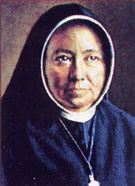
The constant establishment of new foundations and communities was difficult for Mother Genoveva, who wished nothing more than to return to her interior solitude, alone with the Lord.  However, she never let her own personal discomfort or physical suffering interfere with the acceptance of God’s call.  She is remembered for saying, "Even if I must suffer greatly, thanks be to God's mercy, I will not lack courage".  Saint Genoveva further inspires us today with her reputed kindness and acceptance of all people as God’s creations, as well as for her sense of humor despite her pain and suffering. 


Quotations from Saint Genoveva:

“I loved freedom of heart very much, and worked and am working to achieve it fully. It does the soul so much good that every effort is nothing compared with this free condition of the heart.” 

“Even if I must suffer greatly, thanks be to God's mercy, I will not lack courage.

"That the torch of faith be our beacon. Love God and neighbor our guide, our strength and hope.

“No proof is needed that we love God, if we leave a little difficulty to serve you faithfully. To cope with the difficulties of life is necessary fortitude. "

“Charity is manifested daily in kindness, mutual respect, support, and small sacrifices. Living without suffering, is to live without love, love without suffering, is killed.”
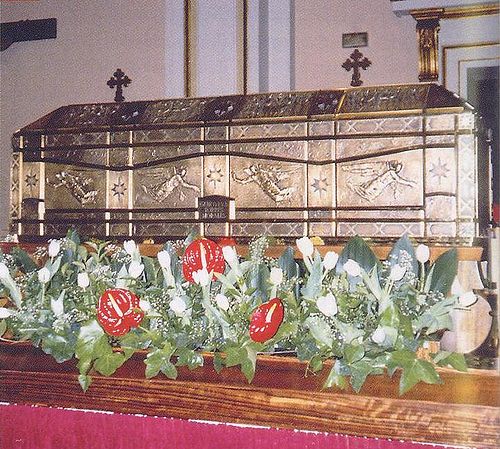
Saint Genoveva's Entombed Relics


Oh God, rich in mercy, who through Santa Genoveva Torres Morales, virgin, invalid in her body, you have shown the greatness of the love of the love of the Heart of Christ, especially for those living alone.  By his intercession, grant us the ability to faithfully imitate and follow your Son Jesus Christ. He, who lives and reigns with you and the Holy Spirit, one God, for ever and ever. Amen.

Saint Peter of Tarentaise, the "Runaway Bishop"

Posted by Jacob


Today, we celebrate the feast day of Saint Peter of Tarentaise (1102-1175), Archbishop, minister to the poor, and saintly model of charity.  Known as the “runaway bishop,” Saint Peter’s ideal life was to live as a simple monk… but he recognized that the Lord had other plans for him, and was willing to follow the path put before him.  Once he realized that his place was in service to the diocese of Tarentaise, Peter threw himself whole-heartedly into his duties, sacrificing his own wants for those of God.  Today, on his feast day, we are reminded to seek the Lord’s will in our own lives, keeping our eyes fixed firmly on the heavens, and following where He might lead us.

Peter was born in Vienne, France, to a peasant family.  He was a model of steadfastness and holiness as a youth, joining the Cistercian monastery at Bonnevaux at the age of twenty.  There, he shone so brightly as a holy light, he attracted many followers, including his two brothers and his father, who joined the order.  By age 30, Peter was elected abbot of a new Cistercian house in the Tarentaise mountains.  There, the monastery sat atop a perch which overlooked the major traveling route between Geneva and Savoy.  To aid travelers, Peter saw to the construction of a hospice for those far from home, especially the poor and ill.  Despite his position as abbot, he spent his days humbly, serving all who entered the doors of the hospice, and providing Christian hospitality.

Not long thereafter, having grown the faith in the area through his model, Peter was elected Archbishop of Tarentaise (in 1142).  Reluctantly, Peter accepted the post.  His preference would have been to continue his current service to the poor and wayward, but he felt called to obey the people’s wishes.  Immediately, Peter set about correcting the mismanagement of funds and corruption that had preceded his election.  He replaced those who extorted the faithful with canons regular of the Order of Saint Augustine, rebuilt the cathedral in the glory of holiness, and spent much time creating public programs for the poor and uneducated.  Saint Peter became known for miracles, including physical healings of the lame and sick, and multiplication of scarce provisions during famine and drought.

After 13 years of service, Saint Peter disappeared from his post, only to be discovered one year later in a remote area of Switzerland.  There he had offered himself as a lay member of a Cistercian house, and lived simply as a monk.  Upon discovery, he returned to his see, and lived out the remainder of his life in service. Delighted to see how much he had been missed by his flock, Peter threw himself back into service with renewed vigor.

With his strength renewed, Peter focused his attention on the poor, providing spiritual, physical, and educational nourishment.  He rebuilt the hospice of Little Saint Bernard at the mountain pass, and erected many more hospices for the sick and travelers along the Alpine pass routes. He instituted public bread lines for those who were poor, a practice which continued in the region for hundreds of years.
Always preaching peace, Saint Peter was called upon by Pope Alexander III to assist in minimizing bloodshed throughout France, and later England.  Saint Peter counseled kings and leaders, preaching the Gospel of peace.  He fell ill on a return trip from England, and died at the age of 73 at the Bellevaux monastery.

Saint Peter was a model of charity and peace, one the world would have lost had he followed his own plan, rather than the Lord’s.  What are we depriving the world of when we close our hearts and minds to God’s plan?  Let us recommit ourselves to sowing the seeds of love, service, and peace, as did Saint Peter of Tarentaise.


Almighty God, you have raised up faithful bishops of your church, including your servant Saint Peter of Tarentaise.
May the memory of his life be a source of joy for us and a bulwark of our faith,
so that we may serve and confess your name before the world,
through Jesus Christ, our Savior and Lord, who lives and reigns with you and the Holy Spirit, one God, now and forever.  Amen.

September 18: Saint Juan de Massias

Posted by Jacob

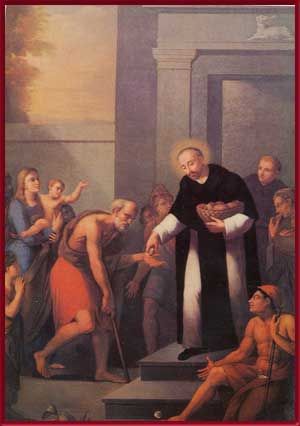
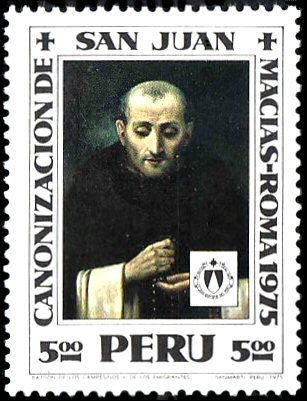
Today, September 18, we celebrate the feast day of Saint Juan de Massias (1585-1645), Dominican monk in Lima, Peru, who was especially devoted to caring for the poor of the city. Saint Juan served his brethren in the most menial of tasks, always without complaint. He is remembered for his austerities, miracles, and visions.


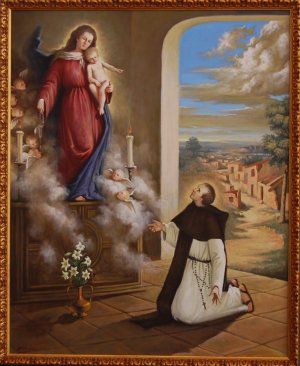
Born as Juan de Arcas Sanchez, Juan grew up in Extremadura, Spain. His parents were pious, but poor, and died while Juan was quite young. At four years old, orphaned, and living with his uncle, Juan apparently changed his name, and began working as a shepherd. It was during his youth that he received a heavenly vision which commanded him to travel to Peru. During his long hours in the fields with the sheep, when there was nothing particular to do except keep his eyes open, Juan would pray the Rosary and meditate on the Christian mysteries, and it sometimes appeared that the holy ones were there, visible and talking to him. He was especially comforted by visions of Our Blessed Mother and Saint John the Evangelist.

At the age of 25, Juan began working for a wealthy businessman, who offered him the opportunity to travel to South America. Juan took advantage of the offer, landing in Colombia, where he worked for some time as a shepherd. Over time, he worked his way to Ecuador, and then finally to Peru, arriving in his mid-thirties. Confident in his abilities and talents as a sheepherder, he worked with other shepherds in the outskirts of the capital city.

Receiving another vision, Juan found his way into the heart of Lima, and was received by the Dominican lay brothers at their house. Following his observation of the brothers, his sense of piety eventually led him to part with all of his belongings, giving them to the poor. He was admitted to the Order as a cooperator brother, and one year later took his vows. At the Dominican friary, he worked as porter and doorkeeper for over 20 years. He befriended Dominican saint, Martin de Porres, and like Saint Martin worked tirelessly for the care of the poor.

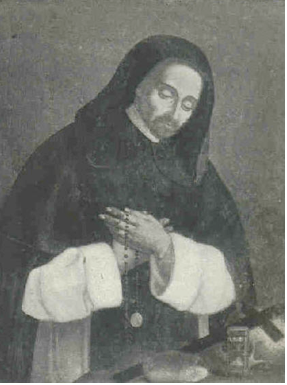
At the friary, Juan’s life was filled with fervent prayer, frequent penance, and charity. As a result of his austerity (and the fact that he slept only one hour each night, always on his knees), he soon fell ill and had to have a risky surgery. Nevertheless, he continued to care for the sick and needy as they waited at the friary gates. Beggars, disabled people, and others of the disadvantaged where commonplace throughout Lima, and they flocked to him at the friary gates for counsel and comfort. The upper classes where also no strangers to him; they also sought his counsel at the gates. While Juan desired more than anything a quiet, contemplative life, his job as porter forced him to interact consistently with all those who came to the friary. Through his obedience to his post, Juan perfected his submission to the will of God. He found joy in the most menial of tasks, spending his days cleaning and engaged in manual labor. He was further noted for his visions and his endless praying of the Holy Rosary-- It is said that through his prayers for the release of the souls in purgatory, he freed over a million souls through his daily Rosaries!

Saint Juan died at the age of 60 of natural causes. He is venerated at the church of Our Lady of the Rosary in Lima. He never preached eloquent sermons or left written homilies or texts. Rather, his humility, service, and obedience to the Will of God, inspire us to live lives more fully realized in the grace of God.


O God, who was pleased that John, Thy Confessor, early endowed with the richness of Thy grace, should in a lowly state of life blossom with a brilliance of virtue, grant us, we beseech Thee, so to follow his footsteps that by purity of mind we may merit to come to Thee. Through Christ our Lord. Amen.


Year 2: Day 259 of 365
Prayer Intentions: Sincere spirits of repentance and conversion
Requested Intentions: Clear speech for a child (C); Conversion of a family (A); Successful employment (S); For the healing of impaired vision (F); For a couple experiencing difficulties (L); Successful employment after finishing college (M); Mother’s health (A); Financial security, freedom from anxiety (S); For a son and cousins (L); Peace and civility (B); Successful examination results (D); Safety of family, strength, courage, wisdom (C); For the souls of a departed father and brother, finding of a suitable marriage partner (R); Successful pilgrimage, deepening of prayer life (R); Restoration of health (J); Restoration of health (S); Freedom from pride (A); For children and marriage (M); For the birth of a healthy baby (Y); For personal family intentions, for the sick, poor, hungry, and homeless (G); Financial security and peace (J); Grace, peace, and obedience to the will of God in a marriage (H); Successful and blessed marriage for sin, freedom from anxiety for husband, spiritual contentedness for family (N); Employment and health for a husband (B); Recovery and health of a mother (J); For a family to grow closer to the Church, salvation for all children (D); Successful employment (L); Successful employment (S); Renewal of faith life (A); Support for an intended marriage, health for friend and aunt (J); Mental health assistance for son (G); Freedom from illness (S); Successful employment (C).

September 7: Saint Clodoald

Posted by Jacob

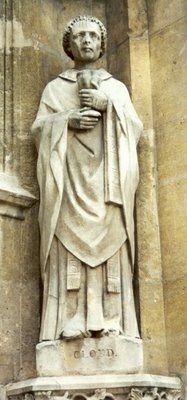
Today, September 7, we celebrate the feast day of Saint Clodoald (also known as Saint Cloud, 522-560), a noble man born into privilege and royalty who renounced his life of ease for one of service to the Lord. Saint Cloud reminds us that our daily choices allow us to grow closer to, or further from, the great plan and gifts that the Lord has in store for us. By accepting God’s Will for us, we are able to better serve others, becoming a part of the grace and love of the Lord.


Clodoald was born in 552, the grandson of King Clovis the First of France. He was named after the city of the same name, suggested by the city-plotter, and foretelling of his life of humility and humble service. Clodoald was raised in Paris by his grandmother, Saint Clotilde, who instructed he and his two brothers—Theodoald and Gunther—in the ways of the faith. Clodoald and his brothers were also being groomed for the throne, with the area of control of their grandfather to be split amongst them. However, sadness and bitter family rivalry was to prevent that as the boys’ uncle, Clotaire I, had Clodoad’s brothers assassinated. Clodoald managed to escape to Provence, and drawn to a more contemplative life, renounced all claims to the throne.

In Provence, Clodoald found a mentor in Saint Severinus of Noricum, and lived and studied with him as a disciple for eleven years. Over time, he became known for his gentleness, humility, and counsel, and many visited him for spiritual direction and healing. Remembering the excess of his upbringing, Clodoald gave all he had to those in need, but gradually felt the need to return to society. Returning to Paris, he was received with joy, and at the urging of the people, was ordained a priest by Bishop Eusebius. As a priest, he went about his daily tasks with profound humility, diligence, and impact on those he encountered.

Saint Clodoald established a holy place at Nogent-sur-Seine that is now a collegiate church of canons regular called Saint Cloud. His relics are venerated there, whereas the village hosting his tomb has been renamed in his honor.


Today, as we celebrate the feast of Saint Clodoald, we pray for the acceptance of God’s Will in our own lives.

Prayer for Acceptance of God’s Will

Lord, teach me to be patient - with life, with people, and with myself. I sometimes try to hurry things along too much, and I push for answers before the time is right. Teach me to trust Your sense of timing rather than my own and to surrender my will to Your greater and wiser plan. Help me let life unfold slowly, like the small rosebud whose petals unravel bit by bit, and remind me that in hurrying the bloom along, I destroy the bud and much of the beauty therein.


Instead, let me wait for all to unfold in its own time. Each moment and state of growth contains a loveliness. Teach me to slow down enough to appreciate life and all it holds. Amen.

September 1: Saint Fiacre

Posted by Jacob

Today, September 1, we celebrate the feast day of Saint Fiacre (also known as Fiacre of Meaux, or Saint Fiachra, died 670), miracle worker, monastery founder, and patron saint of gardeners and cab drivers. Through a simple life of solitude, Saint Fiacre brought many to the Lord, as his hermitage became a place of pilgrimage, miraculous healings, and spiritual guidance and direction.


Fiacre was born in Ireland, and raised in a monastery surrounded by pious and contemplative monks. As was common at the time, new knowledge and learning from around the globe was deposited at monasteries, which were the seats of knowledge. Along with spices and other exotic discoveries, the monastery where Fiacre was raised was also home to many seeds and exotic plants brought from Europe and the Holy Land. Fiacre spent his days at the monastery in quiet contemplation, working in the garden, learning to find the Lord in the silence and radiance of nature.

Fiacre longed to worship and serve the Lord with his entire being, but preferred to do so in silence and isolation, lest he be distracted by others. He established a hermitage in a wooded area far from the monastery, living in a cave. His quest for peace was not to be, however, as soon many flocked to his cave, longing for prayers, food, and healing. He served all who sought him, both bodily and spiritually, and the herbs from his garden became known for miraculous cures of illnesses. Fiacre had the gift of healing by laying on his hands-- blindness, tumors, and fevers are mentioned as being cured by his touch.

Having attracted too great a following, Fiacre left his homeland and traveled to France where the Bishop of Meaux granted him land to build a new hermitage. Located near the Marne river, Fiacre build a small hut in which to live and worship. He also built an oratory in honor of the Blessed Virgin, and made a hospice for travelers which developed into the village of Saint-Fiacre in Seine-et-Marne. However, he missed his garden and requested more land from the kindly bishop. Bishop Faro told Fiacre he could have as much land as he could clear in one day. Holy legend recounts Fiacre’s first miracle in France, as upon waking the next morning, he dragged his walking staff along the ground, and in doing so, the trees toppled and bushes were uprooted. He cleared for himself a sizable garden in which to grow fruits, herbs, and vegetables. As word of his miracle spread, people again began visiting the hermit in pilgrimage, praying for food, healing, and spiritual direction. Anne of Austria, Queen of France, was a frequent pilgrim, offering her prayers outside the door, amongst the other pilgrims.

Fiacre, despite his wishes for solitude, turned no one away. Soon, a small community, later becoming a monastery, had grown up in the woods around his garden. He welcomed all, providing food, healing, and beauty through his garden—which became the center of the monastery. Under his cultivation, a fruit and vegetable garden fed the poor, an herb garden cured the sick of their maladies, and a flower garden reminded all who visited of the splendor and glory of the Lord.
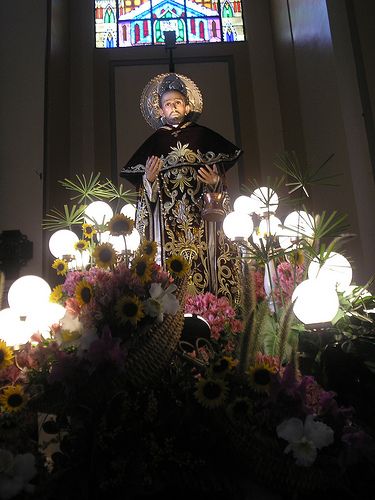
Saint Fiacre died in advances years, and his monastery continued to thrive. Pilgrims still visit the shrine of Saint Fiacre, and miraculous cures of mind, body, and spirit continue to be reported. His relics at Meaux are invoked against all sorts of physical ills, including venereal disease (for which he is considered a patron). He is also a patron saint of gardeners and of cab-drivers of Paris. French cabs are called fiacres because the first establishment to let coaches on hire, in the middle of the seventeenth century, was in the Rue Saint-Martin, near the hotel Saint-Fiacre, in Paris.

Saint Fiacre’s life reminds us that our wishes are not always what the Lord has planned for us. Time and time again, Fiacre attempted to withdraw from the world and live in solitude, but every time he tried, the Lord bestowed upon him miraculous abilities to restore the faith of countless pilgrims. Saint Fiacre reminds us to look for the Lord in all we do, and to find Him in the beauty that surround us.


Year 2: Day 244 of 365
Prayer Intentions: Hearts open to the Will of God.
Requested Intentions: Mother’s health (A); Financial security, freedom from anxiety (S); For a son and cousins (L); Peace and civility (B); Successful examination results (D); Safety of family, strength, courage, wisdom (C); For the souls of a departed father and brother, finding of a suitable marriage partner (R); Successful pilgrimage, deepening of prayer life (R); Restoration of health (J); Restoration of health (S); Freedom from pride (A); For children and marriage (M); For the birth of a healthy baby (Y); For personal family intentions, for the sick, poor, hungry, and homeless (G); Financial security and peace (J); Grace, peace, and obedience to the will of God in a marriage (H); Successful and blessed marriage for sin, freedom from anxiety for husband, spiritual contentedness for family (N); Employment and health for a husband (B); Recovery and health of a mother (J); For a family to grow closer to the Church, salvation for all children (D); Successful employment (L); Successful employment (S); Renewal of faith life (A); Support for an intended marriage, health for friend and aunt (J); Mental health assistance for son (G); Freedom from illness (S); Successful employment (C); Financial assistance and employment (B); For a family’s intentions (T); Successful examination results (B); Healing of a friend with cancer, for all those who help others (B); Healing and love (L); Grace and healing (V); Healing of a heart, consecration of a marriage (M); Health of a family, intentions of apostolate (H); For repentance (J); For a family in trouble (R).