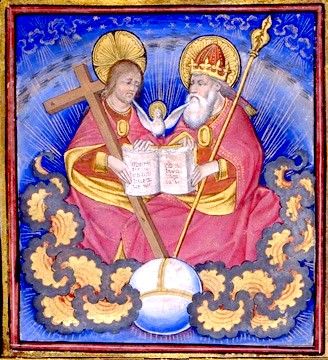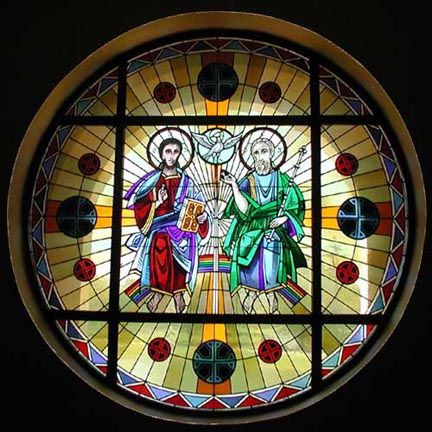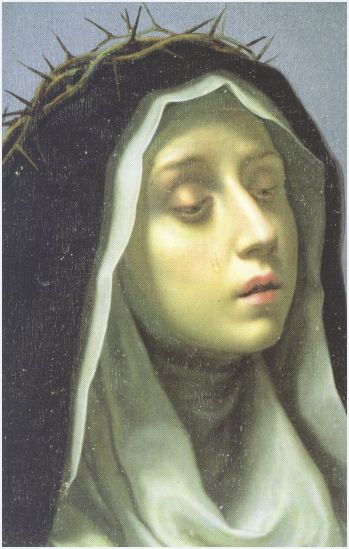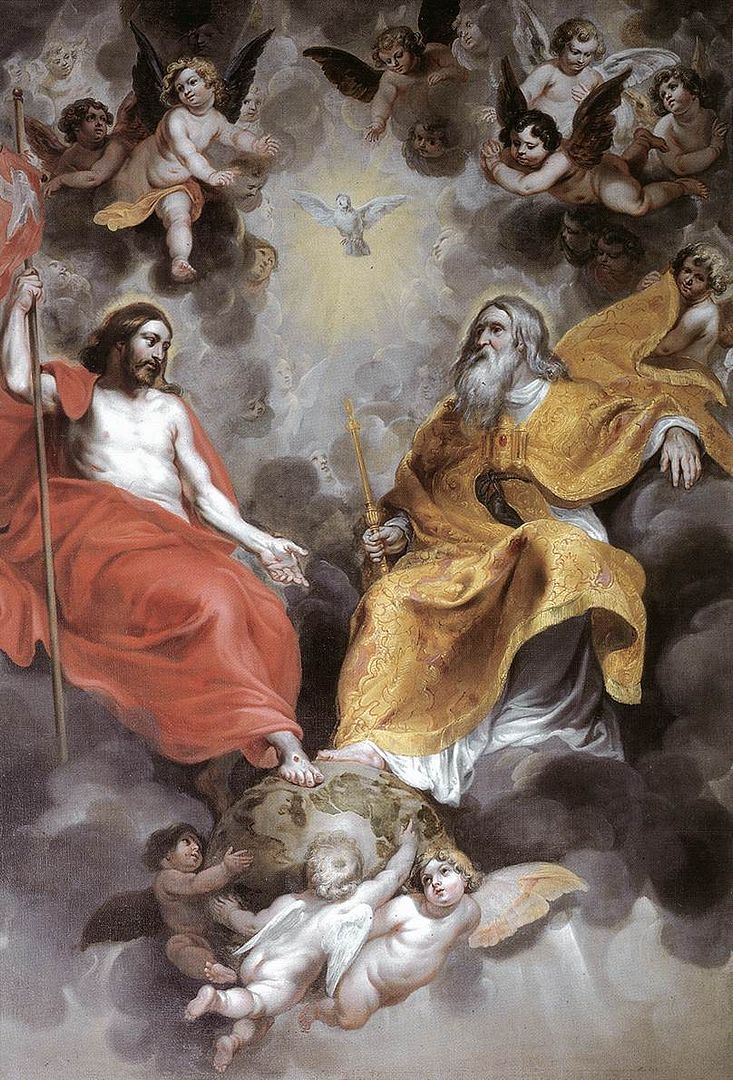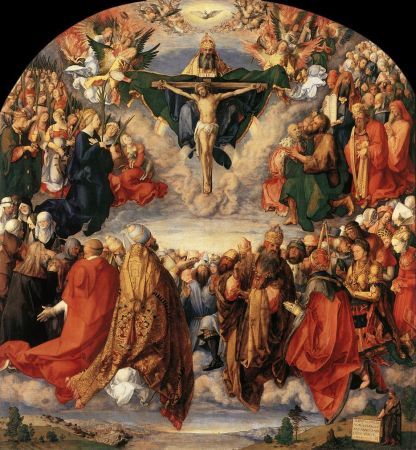
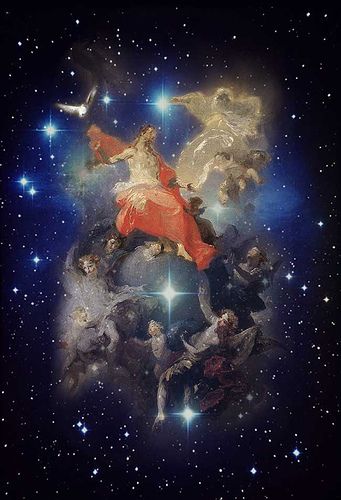
"You see the revolving circle of the glory moving from Like to Like. The Son is glorified by the Spirit; the Father is glorified by the Son; again the Son has His glory from the Father; and the Only-begotten thus becomes the glory of the Spirit. For with what shall the Father be glorified, but with the true glory of the Son: and with what again shall the Son be glorified, but with the majesty of the Spirit? In like manner, again, Faith completes the circle, and glorifies the Son by means of the Spirit, and the Father by means of the Son" (St. Gregory of Nyssa).
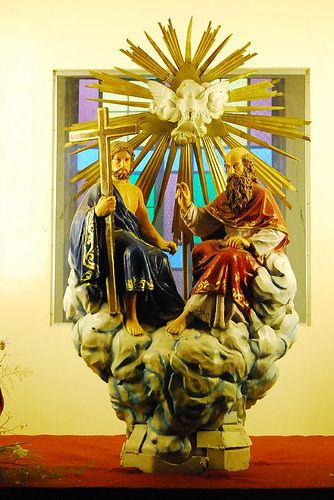
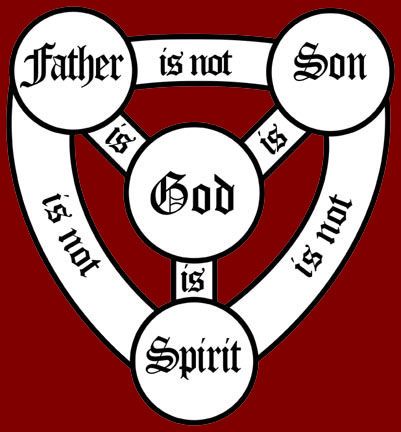
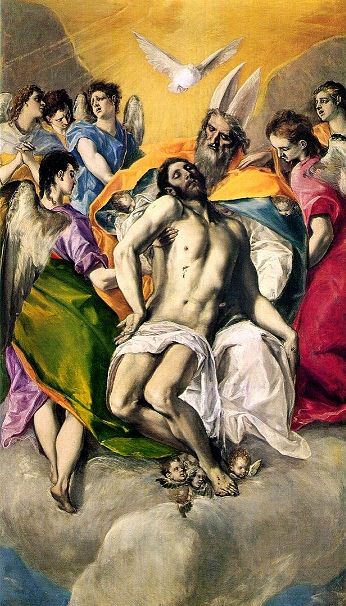
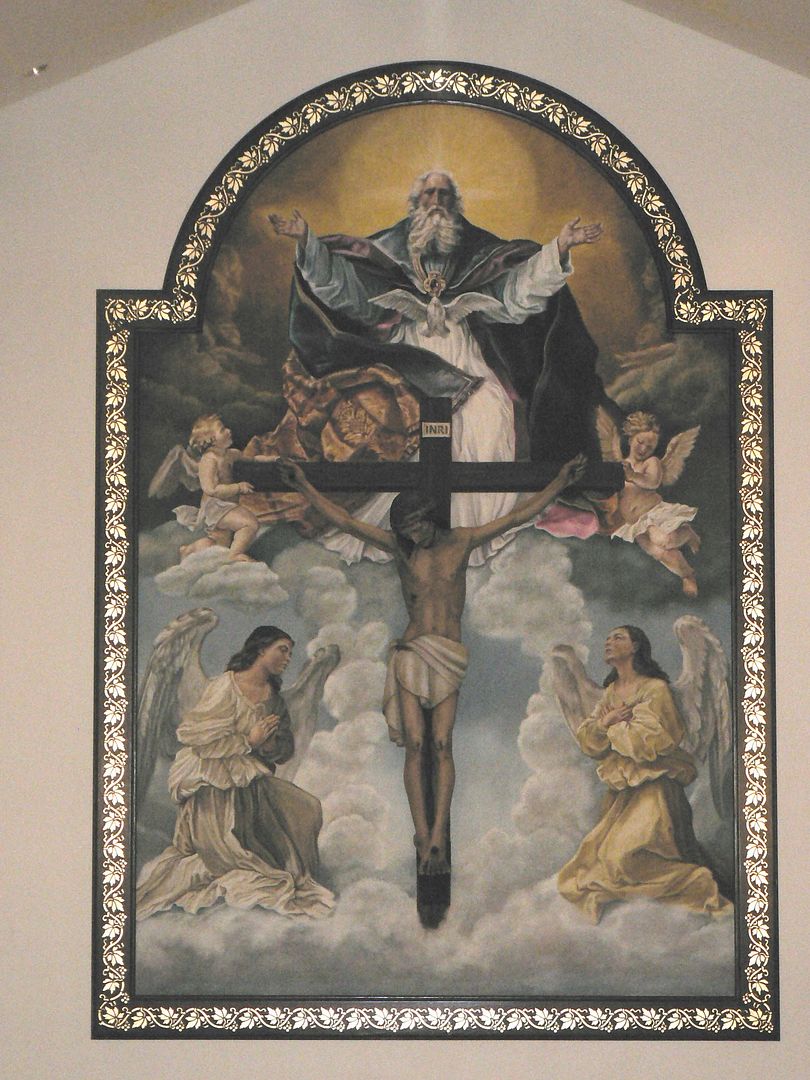
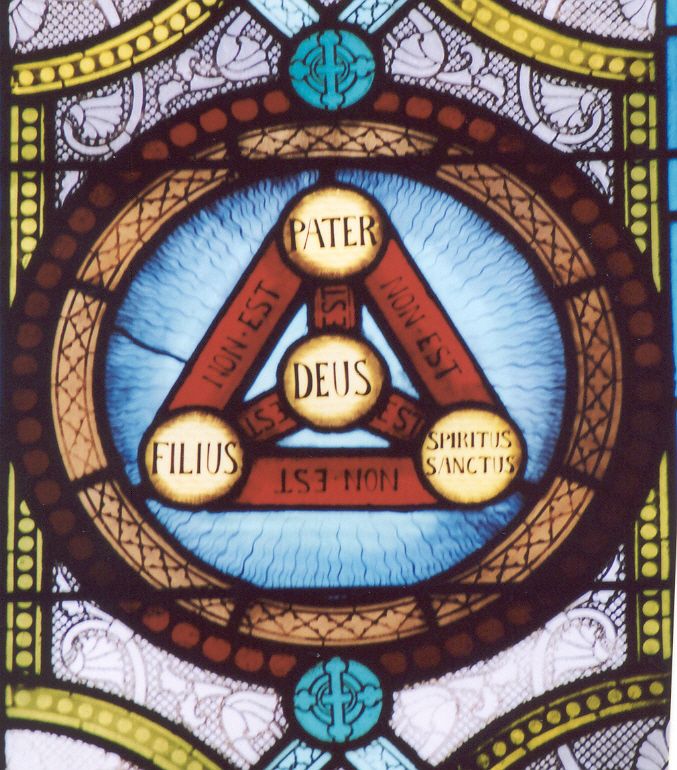
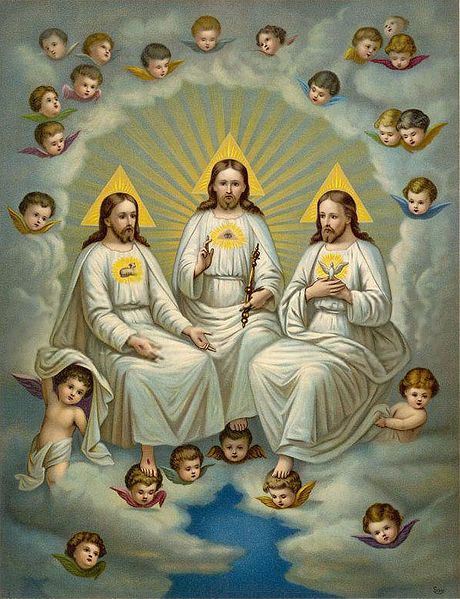
Today, June 19, we celebrate the Solemnity of the Holy Trinity, or “Trinity Sunday”—a day in which we contemplate and celebrate the most profound mystery of our faith: the Blessed threefold unity of our Lord. God the Father, God the Son, and God the Holy Spirit are one God, albeit in three persons.
We may never fully understand the mystery of the Trinity, for the complexity and magnitude of the triune God defies understanding by the human mind. Saint Augustine of Hippo told the story of his own quest for comprehension of the Trinity, so that he might explain it more logically to others. One day, in his own account, he was walking along the seashore and reflecting on this matter. Suddenly, he saw a little child all alone on the shore. The child made a hole in the sand, ran to the sea with a little cup, filled her cup with sea water, ran up and emptied the cup into the hole she had made in the sand. He watched her do this repeatedly, running to the sea, filling her cup, and pouring it into the small hoe she had dug. Finally, he addressed her: “Little child, what are you doing?”
She replied, “I am trying to empty the sea into this hole.”
“How do you think,” Augustine asked her, “that you can empty this immense sea into this tiny hole and with this tiny cup?”
She answered back, “And you, how do you suppose that with your small head you can comprehend the immensity of God?” With that the child disappeared.
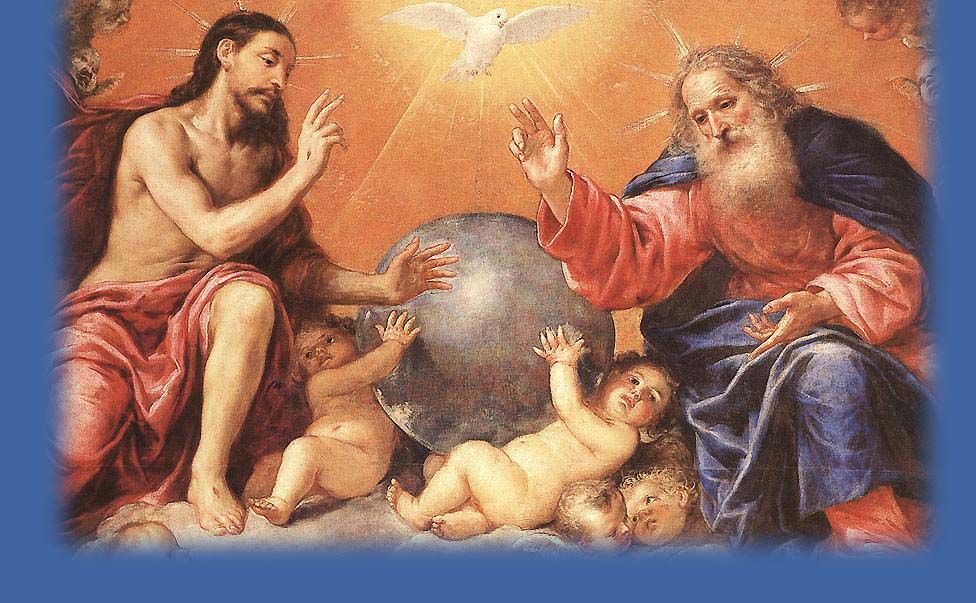
It is not for us to fully understand the immensity of Our Lord, but it is in contemplation of this divine gift that we are drawn closer into the life of Christ, the mission of the Church, and indeed, the underpinnings of our faith. Pope John Paul II, in his series of General Audiences on the Holy Trinity, reminds us that in this contemplation, we are entering into the mystical experience of the saints and becoming one with the Church. As we are created in the image of God, the more we understand the Trinity, the more we come to understand ourselves.
Dear Brothers and Sisters,
1. "O superessential Trinity, infinitely divine and good, guardian of the divine wisdom of Christians, lead us beyond all light and everything unknown to the highest summit of the mystical Scriptures, where the simple, absolute and imperishable mysteries of theology are revealed in the luminous darkness of silence". With this prayer of Dionysius the Areopagite, an Eastern theologian (Theologia mystica, I, 1), we begin a difficult but fascinating journey of contemplating the mystery of God. After having reflected in the past few years on each of the three divine persons — the Son, the Spirit and the Father — in this Jubilee Year we intend to take a comprehensive look at the glory common to the Three who are one God "not in the unity of a single person but in the Trinity of one substance" (Preface for the Solemnity of the Holy Trinity). This choice corresponds to what was suggested in the Apostolic Letter Tertio millennio adveniente, which said that during the celebration phase of the Great Jubilee the aim would be "to give glory to the Trinity, from whom everything in the world and in history comes and to whom everything returns" (n. 55).
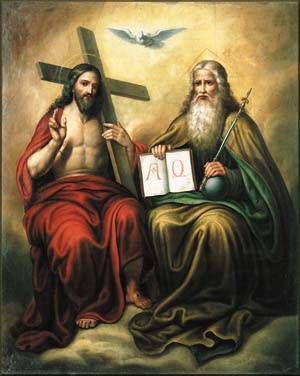
2. Taking our inspiration from an image offered by the Book of Revelation (cf. 22: 1), we could compare this journey to a pilgrimage along the banks of God's river, that is, of his presence and revelation in human history.
As a brief sketch of this journey, today we will dwell on the two extremities of that river: its source and its mouth, joining them in a single horizon. The divine Trinity, in fact, is at the very origins of existence and history and is present in their final goal. It constitutes the beginning and the end of salvation history. Between the two extremities, the garden of Eden (cf. Gn 2) and the tree of life in the heavenly Jerusalem (cf. Rv 22), flows a long history marked by darkness and light, by sin and grace. Sin has separated us from the splendour of God's paradise; redemption brings us back to the glory of a new heaven and a new earth, where "death shall be no more, neither shall there be mourning nor crying nor pain any more" (ibid., 21: 4).
3. An initial view of this horizon is offered by the first page of Sacred Scripture, which indicates the moment when God's creative power makes the world out of nothing: "In the beginning God created the heavens and the earth" (Gn 1: 1). This view is deepened in the New Testament, going back to the very heart of the divine life, when John proclaims at the beginning of his Gospel: "In the beginning was the Word, and the Word was with God, and the Word was God" (Jn 1: 1). Before creation and as its foundation, revelation has us contemplate the mystery of the one God in the trinity of persons: the Father and his Word united in the Spirit.
The biblical author who wrote the creation text could not have suspected the depths of this mystery. Even less could mere philosophical reflection have attained it, since the Trinity is beyond the capacities of our understanding and can only be known through revelation.
Nevertheless, this mystery which infinitely transcends us is also the reality closest to us, because it is the very source of our being. For in God we "live and move and have our being" (Acts 17: 28), and what St Augustine says of God must be applied to all three divine persons: he is "intimior intimo meo" (Conf., 3, 6, 11). In the depths of our being, where not even our gaze can penetrate, the Father, Son and Holy Spirit, one God in three persons, are present through grace. Far from being a dry intellectual truth, the mystery of the Trinity is the life that dwells in us and sustains us.
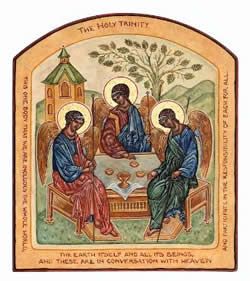
4. Our reflection in this Jubilee Year will take its themes from this Trinitarian life, which precedes and grounds creation. The mystery of the origins from which all things flow, God appears to us as the One who is the fullness of being and communicates being, as the light that "enlightens every man" (cf. Jn 1: 9), as the Living One and giver of life. He appears to us above all as Love, according to the beautiful definition in the First Letter of John (cf. 1 Jn 4: 8). He is love in his inner life, where the Trinitarian dynamism is the very expression of the eternal love with which the Father begets the Son and both give themselves to each other in the Holy Spirit. He is love in his relationship to the world, since the free decision to make it out of nothing is the fruit of this infinite love which radiates into the sphere of creation. If the eyes of our heart, enlightened by revelation, become pure and penetrating enough, they can by faith encounter this mystery in which everything that exists has its root and foundation.
5. But as we mentioned at the beginning, the mystery of the Trinity also lies before us as the goal to which history is directed, as the homeland for which we long. Our reflection on the Trinity, in the various realms of creation and history, will look at this goal, which the Book of Revelation very powerfully points to as the seal of history.
This is the second and final part of God's river, which we referred to a few moments ago. In the heavenly Jerusalem the beginning and the end reconverge. For God the Father, who sits on the throne, appears and says: "Behold, I make all things new" (Rv 21: 5). At his side is the Lamb, i.e., Christ, on his throne, with his light, with the book of life containing the names of the redeemed (cf. ibid., 21: 23, 27; 22: 1, 3). And see: at the end, in a gentle and intense dialogue, the Spirit who prays in us and with the Church, the Bride of the Lamb, says: "Come, Lord Jesus" (cf. ibid., 22: 17, 20).
At the end of this first sketch of our long pilgrimage into the mystery of God, let us return then to the prayer of Dionysius the Areopagite, who reminds us of the need for contemplation: "It is really in silence that we learn the secrets of this darkness ... which shines with dazzling light.... While remaining completely intangible and invisible, it fills minds that know how to close their eyes with the most beautiful splendours" (Theologia mystica, I, 1).
We are reminded that our God is not solitary-- the three parts of the Trinity exist in communion with one another, just as we—as a community of faith—exist in communion with each other, those who have come before us, the Holy Saints and Martyrs, and Our Blessed Mother. The Trinity is a model of perfect communion, which we must continue to strive for in our lives, families, parishes, and communities.
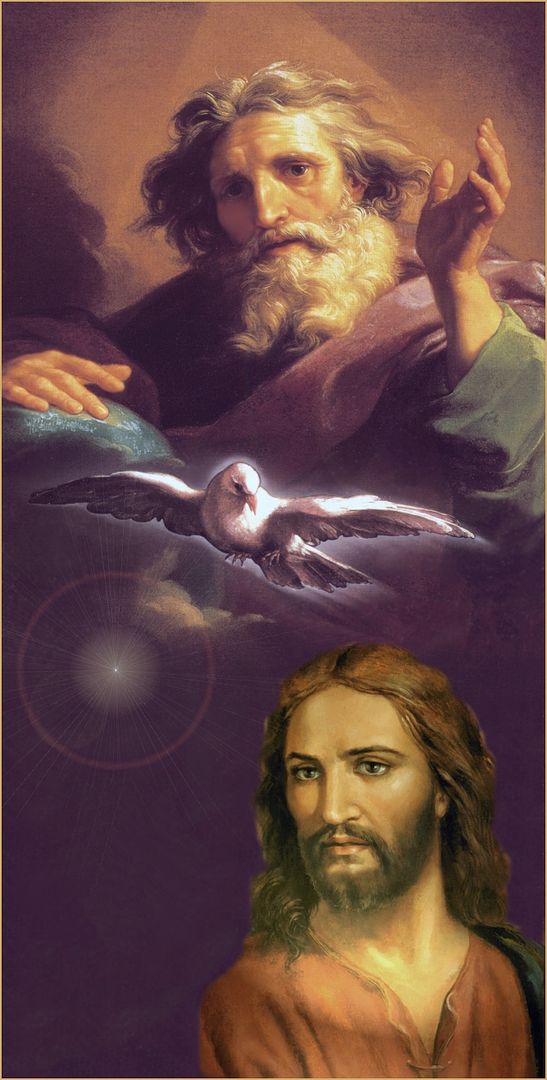
Saint John Damascene wrote of the Holy Trinity:
We believe in Father and Son and Holy Ghost;
one Godhead in three hypostases;
one will, one operation, alike in three persons;
wisdom incorporeal, uncreated, immortal, incomprehensible,
without beginning, unmoved, unaffected, without quantity,
without quality, ineffable, immutable, unchangeable, uncontained,
equal in glory, equal in power, equal in majesty, equal in might, equal in nature,
exceedingly substantial, exceedingly good,
thrice radiant, thrice bright, thrice brilliant.
Light is the Father, Light the Son, Light the Holy Ghost;
Wisdom the Father, Wisdom the Son, Wisdom the Holy Ghost;
one God and not three Gods;
one Lord the Holy Trinity discovered in three hypostases.
Father is the Father, and unbegotten;
Son is the Son, begotten and not unbegotten, for He is from the Father;
Holy Ghost, not begotten but proceeding, for He is from the Father.
There is nothing created, nothing of the first and second order, nothing lord and servant;
but there is unity and trinity
- there was, there is, and there shall be forever -
which is perceived and adored by faith -
by faith, not by inquiry, nor by searching out, nor by visible manifestation;
for the more He is sought out, the more He is unknown, and the more He is investigated, the more He is hidden.
And so, let the faithful adore God with a mind that is not overcurious. And believe that He is God in three hypostases, although the manner in which He is so is beyond manner, for God is incomprehensible. Do not ask how the Trinity is Trinity, for the Trinity is inscrutable.
But, if you are curious about God, first tell me of yourself and the things that pertain to you. How does your soul have existence? How is your mind set in motion? How do you produce your mental concepts? How is it that you are both mortal and immortal? But, if you are ignorant of these things which are within you, then why do you not shudder at the thought of investigating the sublime things of heaven?
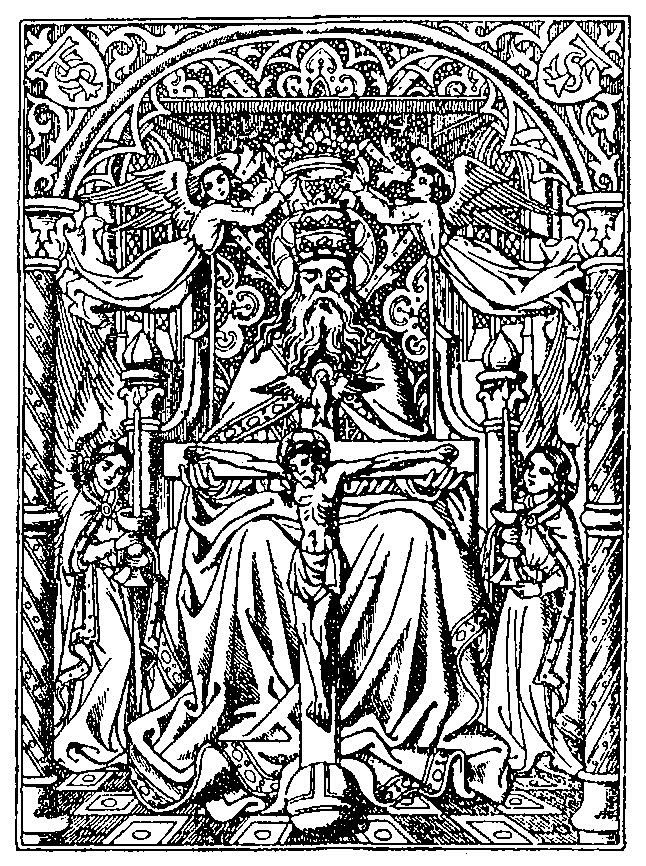
Think of the Father as a spring of life begetting the Son like a river and the Holy Ghost like a sea, for the spring and the river and sea are all one nature.
Think of the Father as a root, and of the Son as a branch, and the Spirit as a fruit, for the substance in these three is one.
The Father is a sun with the Son as rays and the Holy Ghost as heat.
The Holy Trinity transcends by far every similitude and figure. So, when you hear of an offspring of the Father, do not think of a corporeal offspring. And when you hear that there is a Word, do not suppose Him to be a corporeal word. And when you hear of the Spirit of God, do not think of wind and breath. Rather, hold you persuasion with a simple faith alone. For the concept of the Creator is arrived at by analogy from His creatures.
Be persuaded, moreover, that the incarnate dispensation of the Son of God was begotten ineffably without seed of the blessed Virgin, believing Him to be without confusion and without change both God and man, who for your sake worked all the dispensation. And to Him by good works give worship and adoration, and venerate and revere the most holy Mother of God and ever-virgin Mary as true Mother of God, and all the saints as His attendants.
Doing thus, you will be a right worshiper of the holy and undivided Trinity, Father and Son and Holy Ghost, of the one Godhead, to whom be glory and honor and adoration forever and ever. Amen.
Glory be to the Father,
Who by His almighty power and love created me,
making me in the image and likeness of God.
Glory be to the Son,
Who by His Precious Blood delivered me from hell,
and opened for me the gates of heaven.
Glory be to the Holy Spirit,
Who has sanctified me in the sacrament of Baptism,
and continues to sanctify me
by the graces I receive daily from His bounty.
Glory be to the Three adorable Persons of the Holy Trinity,
now and forever.
Amen.
Why pray the Rosary every day for a year?
Each time the Blessed Virgin has appeared-- whether it be to Saint Bernadette Soubirous at Lourdes; to Lucia, Jacinta, and Francisco at Fatima; or to Mariette Beco at Banneux-- she has asserted the importance, saving grace, and power of praying the Holy Rosary on a daily basis. Based upon her words, the Rosary is penance and conversion for sinners, a pathway to peace, an end to war, and a powerful act of faith in Jesus Christ. Pope Paul VI presented the Rosary as a powerful means to reach Christ "not merely with Mary but indeed, insofar as this is possible to us, in the same way as Mary, who is certainly the one who thought about Him more than anyone else has ever done."
To show us how this is done, perhaps no one has been more eloquent than the great Cardinal Newman, who wrote: "The great power of the Rosary consists in the fact that it translates the Creed into Prayer. Of course, the Creed is already in a certain sense a prayer and a great act of homage towards God, but the Rosary brings us to meditate again on the great truth of His life and death, and brings this truth close to our hearts. Even Christians, although they know God, usually fear rather than love Him. The strength of the Rosary lies in the particular manner in which it considers these mysteries, since all our thinking about Christ is intertwined with the thought of His Mother, in the relations between Mother and Son; the Holy Family is presented to us, the home in which God lived His infinite love."
As Mary said at Fatima, "Jesus wants to use you to make Me known and loved. He wishes to establish the devotion to My Immaculate Heart throughout the world. I promise salvation to whoever embraces it; these souls will be dear to God, like flowers put by Me to adorn his throne."
Today, April 29, we celebrate the feast day of a truly holy woman, Saint Catherine of Siena (1347-1380), virgin, mystic, and Doctor of the Church. A individual must fulfill three requirements to be deemed a Doctor of the Church: 1) holiness that is truly outstanding, even among saints; 2) depth of doctrinal insight; and 3) an extensive body of writings which the church can recommend as an expression of the authentic and life-giving Catholic Tradition. The life of Saint Catherine of Siena easily meets these criteria.
Saint Catherine wrote many works, including prayers, treatises, and dialogues with the Lord. Below, and excerpt on the Trinity, from “On Divine Providence.”
Eternal God, eternal Trinity, you have made the blood of Christ so precious through his sharing in your divine nature. You are a mystery as deep as the sea; the more I search, the more I find, and the more I find the more I search for you. But I can never be satisfied; what I receive will ever leave me desiring more. When you fill my soul I have an even greater hunger, and I grow more famished for your light. I desire above all to see you, the true light, as you really are.
I have tasted and seen the depth of your mystery and the beauty of your creation with the light of my understanding. I have clothed myself with your likeness and have seen what I shall be. Eternal Father, you have given me a share in your power and the wisdom that Christ claims as his own, and your Holy Spirit has given me the desire to love you. You are my Creator, eternal Trinity, and I am your creature. You have made of me a new creation in the blood of your Son, and I know that you are moved with love at the beauty of your creation, for you have enlightened me.
Eternal Trinity, Godhead, mystery deep as the sea, you could give me no greater gift than the gift of yourself. For you are a fire ever burning and never consumed, which itself consumes all the selfish love that fills my being. Yes, you are a fire that takes away the coldness, illuminates the mind with its light and causes me to know your truth. By this light, reflected as it were in a mirror, I recognise that you are the highest good, one we can neither comprehend nor fathom. And I know that you are beauty and wisdom itself. The food of angels, you gave yourself to man in the fire of your love.
You are the garment which covers our nakedness, and in our hunger you are a satisfying food, for you are sweetness and in you there is no taste of bitterness, O triune God!
Saint Catherine wrote many works, including prayers, treatises, and dialogues with the Lord. Below, and excerpt on the Trinity, from “On Divine Providence.”
Eternal God, eternal Trinity, you have made the blood of Christ so precious through his sharing in your divine nature. You are a mystery as deep as the sea; the more I search, the more I find, and the more I find the more I search for you. But I can never be satisfied; what I receive will ever leave me desiring more. When you fill my soul I have an even greater hunger, and I grow more famished for your light. I desire above all to see you, the true light, as you really are.
I have tasted and seen the depth of your mystery and the beauty of your creation with the light of my understanding. I have clothed myself with your likeness and have seen what I shall be. Eternal Father, you have given me a share in your power and the wisdom that Christ claims as his own, and your Holy Spirit has given me the desire to love you. You are my Creator, eternal Trinity, and I am your creature. You have made of me a new creation in the blood of your Son, and I know that you are moved with love at the beauty of your creation, for you have enlightened me.
Eternal Trinity, Godhead, mystery deep as the sea, you could give me no greater gift than the gift of yourself. For you are a fire ever burning and never consumed, which itself consumes all the selfish love that fills my being. Yes, you are a fire that takes away the coldness, illuminates the mind with its light and causes me to know your truth. By this light, reflected as it were in a mirror, I recognise that you are the highest good, one we can neither comprehend nor fathom. And I know that you are beauty and wisdom itself. The food of angels, you gave yourself to man in the fire of your love.
You are the garment which covers our nakedness, and in our hunger you are a satisfying food, for you are sweetness and in you there is no taste of bitterness, O triune God!
Today, January 13, marks the memorial of Saint Hilary of Poiters (A.D. 368), Church bishop and Doctor. Known as a staunch defender of the faith, Saint Hilary suffered persecution and exile for asserting the truth of the divinity of Jesus. Saint Hilary orthodoxy and public defense of the faith led to exile on the coast of then, Phyrgia (now Turkey). While in exile he penned a 12 volume set of books devoted to exploration of the divinity of Christ and the Holy Trinity.
Below, an excerpt from a sermon delivered by Saint Hilary on the Holy Trinity.
I am well aware, almighty God and Father, that in my life I owe you a most particular duty. It is to make my every thought and word speak of you.
In fact, you have conferred on me this gift of speech, and it can yield no greater return than to be at your service. It is for making you known as Father, the Father of the only-begotten God, and preaching this to the world that knows you not and to the heretics who refuse to believe in you.
In this matter the declaration of my intention is only of limited value. For the rest, I need to pray for the gift of your help and your mercy. As we spread our sails of trusting faith and public avowal before you, fill them with the breath of your Spirit, to drive us on as we begin this course of proclaiming your truth. We have been promised, and he who made the promise is trustworthy: Ask, and it will be given to you; seek, and you will find; knock, and it will be opened to you.
Yes, in our poverty we will pray for our needs. We will study the sayings of your prophets and apostles with unflagging attention, and knock for admittance wherever the gift of understanding is safely kept. But yours it is, Lord, to grant our petitions, to be present when we seek you and to open when we knock.
There is an inertia in our nature that makes us dull; and in our attempt to penetrate your truth we are held within the bounds of ignorance by the weakness of our minds. Yet we do comprehend divine ideas by earnest attention to your teaching and by obedience to the faith which carries us beyond mere human apprehension.
So we trust in you to inspire the beginnings of this ambitious venture, to strengthen its progress, and to call us into a partnership in the spirit with the prophets and the apostles. To that end, may we grasp precisely what they meant to say, taking each word in its real and authentic sense. For we are about to say what they already have declared as part of the mystery of revelation: that you are the eternal God, the Father of the eternal, only-begotten God; that you are one and not born from another; and that the Lord Jesus is also one, born of you from all eternity. We must not proclaim a change in truth regarding the number of gods. We must not deny that he is begotten of you who are the one God; nor must we assert that he is other than the true God, born of you who are truly God the Father.
Impart to us, then, the meaning of the words of Scripture and the light to understand it, with reverence for the doctrine and confidence in its truth. Grant that we may express what we believe. Through the prophets and apostles we know about you, the one God the Father, and the one Lord Jesus Christ. May we have the grace, in the face of heretics who deny you, to honor you as God, who is not alone, and to proclaim this as truth.
Below, an excerpt from a sermon delivered by Saint Hilary on the Holy Trinity.
I am well aware, almighty God and Father, that in my life I owe you a most particular duty. It is to make my every thought and word speak of you.
In fact, you have conferred on me this gift of speech, and it can yield no greater return than to be at your service. It is for making you known as Father, the Father of the only-begotten God, and preaching this to the world that knows you not and to the heretics who refuse to believe in you.
In this matter the declaration of my intention is only of limited value. For the rest, I need to pray for the gift of your help and your mercy. As we spread our sails of trusting faith and public avowal before you, fill them with the breath of your Spirit, to drive us on as we begin this course of proclaiming your truth. We have been promised, and he who made the promise is trustworthy: Ask, and it will be given to you; seek, and you will find; knock, and it will be opened to you.
Yes, in our poverty we will pray for our needs. We will study the sayings of your prophets and apostles with unflagging attention, and knock for admittance wherever the gift of understanding is safely kept. But yours it is, Lord, to grant our petitions, to be present when we seek you and to open when we knock.
There is an inertia in our nature that makes us dull; and in our attempt to penetrate your truth we are held within the bounds of ignorance by the weakness of our minds. Yet we do comprehend divine ideas by earnest attention to your teaching and by obedience to the faith which carries us beyond mere human apprehension.
So we trust in you to inspire the beginnings of this ambitious venture, to strengthen its progress, and to call us into a partnership in the spirit with the prophets and the apostles. To that end, may we grasp precisely what they meant to say, taking each word in its real and authentic sense. For we are about to say what they already have declared as part of the mystery of revelation: that you are the eternal God, the Father of the eternal, only-begotten God; that you are one and not born from another; and that the Lord Jesus is also one, born of you from all eternity. We must not proclaim a change in truth regarding the number of gods. We must not deny that he is begotten of you who are the one God; nor must we assert that he is other than the true God, born of you who are truly God the Father.
Impart to us, then, the meaning of the words of Scripture and the light to understand it, with reverence for the doctrine and confidence in its truth. Grant that we may express what we believe. Through the prophets and apostles we know about you, the one God the Father, and the one Lord Jesus Christ. May we have the grace, in the face of heretics who deny you, to honor you as God, who is not alone, and to proclaim this as truth.
Today, December 4, we celebrate the feast day of Saint John Damascene (John of Damascus, 676-749), hymn-writer, defender of icons, and Doctor of the Church. Saint John is considered the last of the four fathers of the Eastern Church. He devoted himself to religious poetry, theological arguments in defense of Church doctrine, and refutation of heresies. A prolific writer, many of his works remain, including beautiful canons on the Assumption of Our Blessed Mother, Easter, and the Ascension. His eloquent defense of icons and Christian art earned him the title, “The Doctor of Christian Art.”
A prolific writer, Saint John wrote a text entitled “On Heresies.” Below, an excerpt on the Holy Trinity.
We believe in Father and Son and Holy Ghost;
one Godhead in three hypostases;
one will, one operation, alike in three persons;
wisdom incorporeal, uncreated, immortal, incomprehensible,
without beginning, unmoved, unaffected, without quantity,
without quality, ineffable, immutable, unchangeable, uncontained,
equal in glory, equal in power, equal in majesty, equal in might, equal in nature,
exceedingly substantial, exceedingly good,
thrice radiant, thrice bright, thrice brilliant.
Light is the Father, Light the Son, Light the Holy Ghost;
Wisdom the Father, Wisdom the Son, Wisdom the Holy Ghost;
one God and not three Gods;
one Lord the Holy Trinity discovered in three hypostases.
Father is the Father, and unbegotten;
Son is the Son, begotten and not unbegotten, for He is from the Father;
Holy Ghost, not begotten but proceeding, for He is from the Father.
There is nothing created, nothing of the first and second order, nothing lord and servant;
but there is unity and trinity
- there was, there is, and there shall be forever -
which is perceived and adored by faith -
by faith, not by inquiry, nor by searching out, nor by visible manifestation;
for the more He is sought out, the more He is unknown, and the more He is investigated, the more He is hidden.
And so, let the faithful adore God with a mind that is not overcurious. And believe that He is God in three hypostases, although the manner in which He is so is beyond manner, for God is incomprehensible. Do not ask how the Trinity is Trinity, for the Trinity is inscrutable.
But, if you are curious about God, first tell me of yourself and the things that pertain to you. How does your soul have existence? How is your mind set in motion? How do you produce your mental concepts? How is it that you are both mortal and immortal? But, if you are ignorant of these things which are within you, then why do you not shudder at the thought of investigating the sublime things of heaven?
Think of the Father as a spring of life begetting the Son like a river and the Holy Ghost like a sea, for the spring and the river and sea are all one nature.
Think of the Father as a root, and of the Son as a branch, and the Spirit as a fruit, for the substance in these three is one.
The Father is a sun with the Son as rays and the Holy Ghost as heat.
The Holy Trinity transcends by far every similitude and figure. So, when you hear of an offspring of the Father, do not think of a corporeal offspring. And when you hear that there is a Word, do not suppose Him to be a corporeal word. And when you hear of the Spirit of God, do not think of wind and breath. Rather, hold you persuasion with a simple faith alone. For the concept of the Creator is arrived at by analogy from His creatures.
Be persuaded, moreover, that the incarnate dispensation of the Son of God was begotten ineffably without seed of the blessed Virgin, believing Him to be without confusion and without change both God and man, who for your sake worked all the dispensation. And to Him by good works give worship and adoration, and venerate and revere the most holy Mother of God and ever-virgin Mary as true Mother of God, and all the saints as His attendants.
Doing thus, you will be a right worshiper of the holy and undivided Trinity, Father and Son and Holy Ghost, of the one Godhead, to whom be glory and honor and adoration forever and ever. Amen
A prolific writer, Saint John wrote a text entitled “On Heresies.” Below, an excerpt on the Holy Trinity.
We believe in Father and Son and Holy Ghost;
one Godhead in three hypostases;
one will, one operation, alike in three persons;
wisdom incorporeal, uncreated, immortal, incomprehensible,
without beginning, unmoved, unaffected, without quantity,
without quality, ineffable, immutable, unchangeable, uncontained,
equal in glory, equal in power, equal in majesty, equal in might, equal in nature,
exceedingly substantial, exceedingly good,
thrice radiant, thrice bright, thrice brilliant.
Light is the Father, Light the Son, Light the Holy Ghost;
Wisdom the Father, Wisdom the Son, Wisdom the Holy Ghost;
one God and not three Gods;
one Lord the Holy Trinity discovered in three hypostases.
Father is the Father, and unbegotten;
Son is the Son, begotten and not unbegotten, for He is from the Father;
Holy Ghost, not begotten but proceeding, for He is from the Father.
There is nothing created, nothing of the first and second order, nothing lord and servant;
but there is unity and trinity
- there was, there is, and there shall be forever -
which is perceived and adored by faith -
by faith, not by inquiry, nor by searching out, nor by visible manifestation;
for the more He is sought out, the more He is unknown, and the more He is investigated, the more He is hidden.
And so, let the faithful adore God with a mind that is not overcurious. And believe that He is God in three hypostases, although the manner in which He is so is beyond manner, for God is incomprehensible. Do not ask how the Trinity is Trinity, for the Trinity is inscrutable.
But, if you are curious about God, first tell me of yourself and the things that pertain to you. How does your soul have existence? How is your mind set in motion? How do you produce your mental concepts? How is it that you are both mortal and immortal? But, if you are ignorant of these things which are within you, then why do you not shudder at the thought of investigating the sublime things of heaven?
Think of the Father as a spring of life begetting the Son like a river and the Holy Ghost like a sea, for the spring and the river and sea are all one nature.
Think of the Father as a root, and of the Son as a branch, and the Spirit as a fruit, for the substance in these three is one.
The Father is a sun with the Son as rays and the Holy Ghost as heat.
The Holy Trinity transcends by far every similitude and figure. So, when you hear of an offspring of the Father, do not think of a corporeal offspring. And when you hear that there is a Word, do not suppose Him to be a corporeal word. And when you hear of the Spirit of God, do not think of wind and breath. Rather, hold you persuasion with a simple faith alone. For the concept of the Creator is arrived at by analogy from His creatures.
Be persuaded, moreover, that the incarnate dispensation of the Son of God was begotten ineffably without seed of the blessed Virgin, believing Him to be without confusion and without change both God and man, who for your sake worked all the dispensation. And to Him by good works give worship and adoration, and venerate and revere the most holy Mother of God and ever-virgin Mary as true Mother of God, and all the saints as His attendants.
Doing thus, you will be a right worshiper of the holy and undivided Trinity, Father and Son and Holy Ghost, of the one Godhead, to whom be glory and honor and adoration forever and ever. Amen
Today, September 30, we celebrate the feast day of Saint Jerome (347-419), Father of the Church and Doctor of the Church. One of the great spiritual and theological minds of the faith, Saint Jerome has inspired countless saints and scholars, among them, Saint Augustine of Hippo who said: “What Jerome is ignorant of, no man has ever known.” The writings of Saint Jerome continue to unlock the meaning of the Scriptures for the faithful today, and the lessons from his life remind us that the Lord uses us each in our own way to glorify His name!
Below, a sermon delivered by Saint Jerome on Psalm 41 on the mysteries of the Holy Trinity.
Like a deer that longs for springs of water, so my soul longs for you, O God. Now just as those deer long for springs of water, so do our deer. Fleeing Egypt – that is, fleeing worldly things – they have killed Pharaoh and drowned all his army in the waters of baptism. Now, after the devil has been killed, they long for the springs of the Church: the Father, the Son, and the Holy Spirit.
We can find the Father described as a spring in Jeremiah: They have abandoned me, the fountain of living water, to dig themselves leaky cisterns that cannot hold water. About the Son we read somewhere: They have forsaken the fountain of wisdom. Finally, of the Holy Spirit: Anyone who drinks the water that I shall give will have a spring inside him, welling up to eternal life. Here the evangelist is saying that the words of the Saviour come from the Holy Spirit. So you see it very clearly confirmed that the springs that water the Church are the mystery of the Trinity.
These are the springs that believers long for. These are the springs that the souls of the baptized seek, saying My soul thirsts for God, the living God. The soul does not just feel like seeing God, it longs for him fervently, it is on fire with thirst for him. Before they received baptism, the catechumens spoke to each other and said, When shall I come and stand before the face of God? What they asked for has now been given them: they have come and stood before the face of God. They have come before the altar and been confronted by the mystery of the Savior.
Welcomed into the body of Christ and reborn in the springs of life, they confidently say: I will go up to your glorious dwelling-place and into the house of God. The house of God is the Church, the ‘dwelling-place’ where dwells the sound of joy and thanksgiving, the crowds at the festival.
So then, you who have followed our lead and robed yourselves in Christ, let the words of God lift you out of this turbulent age as a net lifts the little fishes out of the water. In us the laws of nature are turned upside down – for fish, taken out of the water, die; but the Apostles have fished us out of the sea that is this world not to kill us but to bring us from death to life. As long as we were in the world, our eyes were peering into the depths and we led our lives in the mud. Now we have been torn from the waves, we begin to see the true light. Moved by overwhelming joy, we say to our souls: Put your hope in the Lord, I will praise him still, my savior and my God.
Below, a sermon delivered by Saint Jerome on Psalm 41 on the mysteries of the Holy Trinity.
Like a deer that longs for springs of water, so my soul longs for you, O God. Now just as those deer long for springs of water, so do our deer. Fleeing Egypt – that is, fleeing worldly things – they have killed Pharaoh and drowned all his army in the waters of baptism. Now, after the devil has been killed, they long for the springs of the Church: the Father, the Son, and the Holy Spirit.
We can find the Father described as a spring in Jeremiah: They have abandoned me, the fountain of living water, to dig themselves leaky cisterns that cannot hold water. About the Son we read somewhere: They have forsaken the fountain of wisdom. Finally, of the Holy Spirit: Anyone who drinks the water that I shall give will have a spring inside him, welling up to eternal life. Here the evangelist is saying that the words of the Saviour come from the Holy Spirit. So you see it very clearly confirmed that the springs that water the Church are the mystery of the Trinity.
These are the springs that believers long for. These are the springs that the souls of the baptized seek, saying My soul thirsts for God, the living God. The soul does not just feel like seeing God, it longs for him fervently, it is on fire with thirst for him. Before they received baptism, the catechumens spoke to each other and said, When shall I come and stand before the face of God? What they asked for has now been given them: they have come and stood before the face of God. They have come before the altar and been confronted by the mystery of the Savior.
Welcomed into the body of Christ and reborn in the springs of life, they confidently say: I will go up to your glorious dwelling-place and into the house of God. The house of God is the Church, the ‘dwelling-place’ where dwells the sound of joy and thanksgiving, the crowds at the festival.
So then, you who have followed our lead and robed yourselves in Christ, let the words of God lift you out of this turbulent age as a net lifts the little fishes out of the water. In us the laws of nature are turned upside down – for fish, taken out of the water, die; but the Apostles have fished us out of the sea that is this world not to kill us but to bring us from death to life. As long as we were in the world, our eyes were peering into the depths and we led our lives in the mud. Now we have been torn from the waves, we begin to see the true light. Moved by overwhelming joy, we say to our souls: Put your hope in the Lord, I will praise him still, my savior and my God.
Today’s Gospel, sometimes referred to as “Jesus’ farewell discourse,” introduces a number of important themes, including the greatest commandment of love. Jesus spoke these words to His disciples shortly before his betrayal, Passion, and crucifixion. But the manner in which the words were spoken suggests something greater—something transcendent of time given the consistency of God’s glorification throughout time. These words, spoken by Jesus, were spoken from heaven, not just for the disciples present, but for all then, now, and evermore.
31When he was gone, Jesus said, "Now is the Son of Man glorified and God is glorified in him. 32If God is glorified in him, God will glorify the Son in himself, and will glorify him at once.
33"My children, I will be with you only a little longer. 34"A new command I give you: Love one another. As I have loved you, so you must love one another. 35By this all men will know that you are my disciples, if you love one another." (John 13: 31-33a; 34-35)
Jesus’ discourse, which continues throughout John 14 and 15, is the best elaborated section of Biblical text detailing the indwelling of the Lord, the Trinity, and the role of all men and women in that mystery. We realize in this verses that our lives as disciples of Christ are mirror and reflect the love of the Godhead—the love between Father and Son which was always present, but made physical and experiential for us in the Incarnation. The glorification Jesus speaks of, of course, is the cross—the moment of self-sacrifice and sacrifice of God the Father for all men, in which we are fully invited into the redemptive love of the Trinity. Our lives are more fully realized, in that moment, as a portion of the glory of the loving Lord, and as vessels of His love, we are filled with the Holy Spirit.
Speaking to His disciples as children—again mirroring His own relationship with the Father in Heaven—Jesus provides a new commandment. Love. This commandment is not new, in and of itself, as He has been preaching a similar message throughout His ministry. But the manner in which this love is made present and tangible is entirely new. Whereas prior to Christ, love was a widely known directive, the mystery of the Incarnation made this love completely and radically new—mediated by the physical presence of a loving God. The disciples, and us through them, are able to more fully partake of this love—present for eternity—but made new and more fully possible through the Incarnation. This love is the core of Christianity and our relationship with Christ, who in turn, loves the Father.
This all-consuming and profound love is revealed not in a simple feeling or emotion, but in obedience to the Lord. As we recognize that God’s will alone is the perfect good of any moment in our lives, true love—the love offered by Christ—is that which acts in complete obedience to the perfect good of God’s will. As one becomes more and more able, though the grace and guidance of the Holy Spirit, to discern and follow God’s perfect will, feelings of love, compassion, and concern will well up and shower humanity with goodness.
In the month of May, we are reminded that the perfect example of this type of obedient love is found in the Blessed Virgin, Mary, our Heavenly Mother (also written about here). From the moment of the Annunciation to the day she stood beneath the cross as Jesus suffered and died for us, the life of Mary serves as the epitome of obedient love. And through her love, the joy and suffering of the life of Christ—mirrored in her own joy and suffering as a loving mother—were made possible. We look to Our Blessed Mother as a perfect example of the love which Jesus spoke about, praying for her intercession that we may be more obedient and loving disciples of Our Lord.
Today’s Psalm: Psalm 8: The Majesty of God and the Dignity of Man
1 O LORD, our Lord,
how majestic is your name in all the earth!
You have set your glory
above the heavens.
2 From the lips of children and infants
you have ordained praise
because of your enemies,
to silence the foe and the avenger.
3 When I consider your heavens,
the work of your fingers,
the moon and the stars,
which you have set in place,
4 what is man that you are mindful of him,
the son of man that you care for him?
5 You made him a little lower than the heavenly beings
and crowned him with glory and honor.
6 You made him ruler over the works of your hands;
you put everything under his feet:
7 all flocks and herds,
and the beasts of the field,
8 the birds of the air,
and the fish of the sea,
all that swim the paths of the seas.
9 O LORD, our Lord,
how majestic is your name in all the earth!
Day 122 of 365
Prayer Intentions: Obedient Love and Dignity in the Lord.
Requested Intentions: For financial security and housing for a son (B); For a friend undergoing a medical procedure (L); A father’s birthday (J); Restoration and healing of marriage, family, and financial situation (M); For the repose of the soul of M (J); Financial security and employment (A); For financial security (M); Health and recovery of Cardinal Sean Brady (R); Healing from a chronic illness (J); Deepening of faith and true conversion for a family (J); Successful employment (H); Restoration of a marriage (J); For a friend’s daughter, seeking medical treatment for a blood disorder (D).
Psalm: Psalm 8: The Majesty of God and the Dignity of Man
31When he was gone, Jesus said, "Now is the Son of Man glorified and God is glorified in him. 32If God is glorified in him, God will glorify the Son in himself, and will glorify him at once.
33"My children, I will be with you only a little longer. 34"A new command I give you: Love one another. As I have loved you, so you must love one another. 35By this all men will know that you are my disciples, if you love one another." (John 13: 31-33a; 34-35)
Jesus’ discourse, which continues throughout John 14 and 15, is the best elaborated section of Biblical text detailing the indwelling of the Lord, the Trinity, and the role of all men and women in that mystery. We realize in this verses that our lives as disciples of Christ are mirror and reflect the love of the Godhead—the love between Father and Son which was always present, but made physical and experiential for us in the Incarnation. The glorification Jesus speaks of, of course, is the cross—the moment of self-sacrifice and sacrifice of God the Father for all men, in which we are fully invited into the redemptive love of the Trinity. Our lives are more fully realized, in that moment, as a portion of the glory of the loving Lord, and as vessels of His love, we are filled with the Holy Spirit.
Speaking to His disciples as children—again mirroring His own relationship with the Father in Heaven—Jesus provides a new commandment. Love. This commandment is not new, in and of itself, as He has been preaching a similar message throughout His ministry. But the manner in which this love is made present and tangible is entirely new. Whereas prior to Christ, love was a widely known directive, the mystery of the Incarnation made this love completely and radically new—mediated by the physical presence of a loving God. The disciples, and us through them, are able to more fully partake of this love—present for eternity—but made new and more fully possible through the Incarnation. This love is the core of Christianity and our relationship with Christ, who in turn, loves the Father.
This all-consuming and profound love is revealed not in a simple feeling or emotion, but in obedience to the Lord. As we recognize that God’s will alone is the perfect good of any moment in our lives, true love—the love offered by Christ—is that which acts in complete obedience to the perfect good of God’s will. As one becomes more and more able, though the grace and guidance of the Holy Spirit, to discern and follow God’s perfect will, feelings of love, compassion, and concern will well up and shower humanity with goodness.
In the month of May, we are reminded that the perfect example of this type of obedient love is found in the Blessed Virgin, Mary, our Heavenly Mother (also written about here). From the moment of the Annunciation to the day she stood beneath the cross as Jesus suffered and died for us, the life of Mary serves as the epitome of obedient love. And through her love, the joy and suffering of the life of Christ—mirrored in her own joy and suffering as a loving mother—were made possible. We look to Our Blessed Mother as a perfect example of the love which Jesus spoke about, praying for her intercession that we may be more obedient and loving disciples of Our Lord.
Today’s Psalm: Psalm 8: The Majesty of God and the Dignity of Man
1 O LORD, our Lord,
how majestic is your name in all the earth!
You have set your glory
above the heavens.
2 From the lips of children and infants
you have ordained praise
because of your enemies,
to silence the foe and the avenger.
3 When I consider your heavens,
the work of your fingers,
the moon and the stars,
which you have set in place,
4 what is man that you are mindful of him,
the son of man that you care for him?
5 You made him a little lower than the heavenly beings
and crowned him with glory and honor.
6 You made him ruler over the works of your hands;
you put everything under his feet:
7 all flocks and herds,
and the beasts of the field,
8 the birds of the air,
and the fish of the sea,
all that swim the paths of the seas.
9 O LORD, our Lord,
how majestic is your name in all the earth!
Day 122 of 365
Prayer Intentions: Obedient Love and Dignity in the Lord.
Requested Intentions: For financial security and housing for a son (B); For a friend undergoing a medical procedure (L); A father’s birthday (J); Restoration and healing of marriage, family, and financial situation (M); For the repose of the soul of M (J); Financial security and employment (A); For financial security (M); Health and recovery of Cardinal Sean Brady (R); Healing from a chronic illness (J); Deepening of faith and true conversion for a family (J); Successful employment (H); Restoration of a marriage (J); For a friend’s daughter, seeking medical treatment for a blood disorder (D).
Psalm: Psalm 8: The Majesty of God and the Dignity of Man
Subscribe to:
Posts (Atom)