Why pray the Rosary every day for a year?
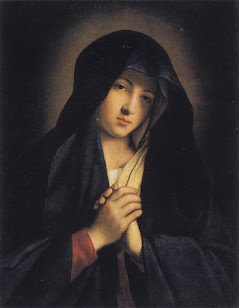
Each time the Blessed Virgin has appeared-- whether it be to Saint Bernadette Soubirous at Lourdes; to Lucia, Jacinta, and Francisco at Fatima; or to Mariette Beco at Banneux-- she has asserted the importance, saving grace, and power of praying the Holy Rosary on a daily basis. Based upon her words, the Rosary is penance and conversion for sinners, a pathway to peace, an end to war, and a powerful act of faith in Jesus Christ. Pope Paul VI presented the Rosary as a powerful means to reach Christ "not merely with Mary but indeed, insofar as this is possible to us, in the same way as Mary, who is certainly the one who thought about Him more than anyone else has ever done."
To show us how this is done, perhaps no one has been more eloquent than the great Cardinal Newman, who wrote: "The great power of the Rosary consists in the fact that it translates the Creed into Prayer. Of course, the Creed is already in a certain sense a prayer and a great act of homage towards God, but the Rosary brings us to meditate again on the great truth of His life and death, and brings this truth close to our hearts. Even Christians, although they know God, usually fear rather than love Him. The strength of the Rosary lies in the particular manner in which it considers these mysteries, since all our thinking about Christ is intertwined with the thought of His Mother, in the relations between Mother and Son; the Holy Family is presented to us, the home in which God lived His infinite love."
As Mary said at Fatima, "Jesus wants to use you to make Me known and loved. He wishes to establish the devotion to My Immaculate Heart throughout the world. I promise salvation to whoever embraces it; these souls will be dear to God, like flowers put by Me to adorn his throne."
Today, September 28 we celebrate the feast day of
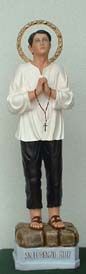
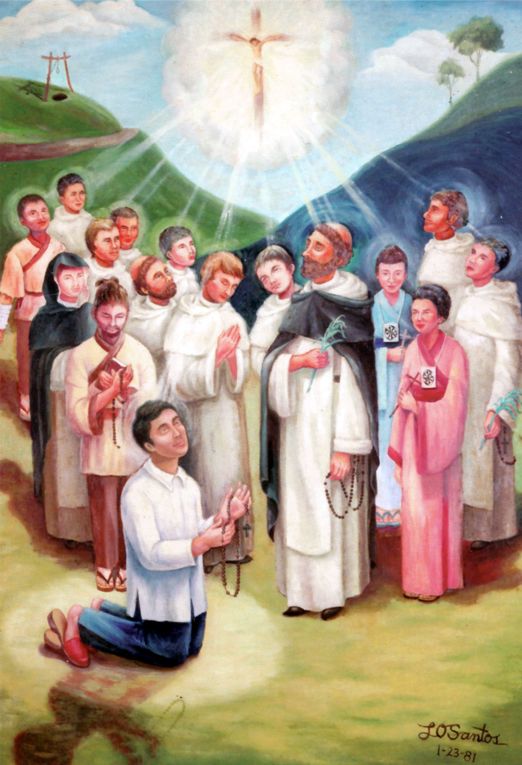
Saint Lorenzo Ruiz (1600-1637), Dominican missionary, the first saint of the Philippines, and the first Filipino martyred for the faith.
Saint Lorenzo experienced difficulty in his early life, and may have fallen victim to sin.
However, he turned to the Lord, realizing it is never too late for forgiveness.
He embraced his faith, approached his role as missionary with zeal, and gave his life for the encouragement of others. Pope John Paul II described him as the
"most improbable of saints" during his canonization ceremony.
Below, the Homily of Pope John Paul II delivered at the Vatican during the Canonization Rite of Blessed Lorenzo Ruiz and his Companion Martyrs in Nagasaki:
"Today's canonization of Blessed Lorenzo Ruiz and his companions, martyred in and around Nagasaki between 1633 and 1637, constitutes an eloquent confirmation of these words. Sixteen men and women bore witness, by their heroic sufferings and death, to their belief in the message of salvation in Christ which has reached them after being proclaimed from generation to generation since the time of the Apostles.
In their sufferings, their love and imitation of Jesus reached its fulfillment, and their sacramental configuration with Jesus, the one Mediator, was brought to perfection.
These holy martyrs, different in origin, language, race and social condition, are united with each other and with the entire People of God in the saving mystery of Christ, the Redeemer.
The martyrs' message of supreme fidelity to Christ speaks to Europe, with its common Christian foundation laid by Apostles Peter and Paul, which has been a seedbed of missionaries for two thousand years.
It speaks to the Philippines, which was the place of immediate preparation and strengthening in faith for eleven of the new Saints, which, as I remarked on the occasion of the martyrs. Beatification in Manila in 1981, from being evangelized is called to become an evangelizer in the great work of bringing the Gospel to the peoples of Asia.
May this task of evangelization begin in Philippine families, following the example of Lorenzo Ruiz, husband and father of three children, who first collaborated with the Dominican Fathers in Manila, and then shared their martyrdom in Nagasaki, and who is now the first canonized Filipino saint.
The Holy Martyrs speak to the Church in Japan, particularly to the Archdiocese of Nagasaki, to the Church in Taiwan and in Macao, and to all Christ's followers in Asia. May the example and intercession of the new Saints help to extend Christian truth and love throughout the length and breadth of this vast continent.
The great Dominican Family, and in particular the Province of the Holy Rosary, which celebrates the Fourth Centennial of its foundation, receives today, with legitimate pride, among its saints, these martyrs, some of whom were especially associated to the Colegio de Santo Tomas de Manila. This center of learning, today a University, like other meritorious ecclesiastical institutions, has contributed in a notable manner to the implantation and development of the Church in the Far East.
The missionaries who are canonized today, speak to the faithful in this World Day of Prayer for the Missions and exhort them to reawaken their missionary conscience. The new Saints should be our models in following the call of God with total surrender."
Today, July 30, we celebrate the feast day of
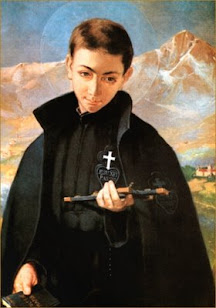
Saint Leopold Bogdan Mandic (1866-1942), Capuchin friar, referred to as both the Apostle of the Confessional and the Apostle of Unity. At a time when Pope Pius XII said that the greatest sin of our time is "to have lost all sense of sin," Leopold had a profound sense of sin and an even firmer sense of God’s grace awaiting human cooperation. To all who came to his confessional, Saint Leopold was a guiding voice toward the redemption of Heaven.
From the canonization homily, delivered by Pope Paul VI:
Who is it, who is the one who brings us together today to celebrate in his blessed name a manifestation of Christ’s Gospel, an event inexpressible, yet clear and evident, that marvelous appearance which allows us to glimpse in the outline of a humble friar an uplifting and at the same time almost disconcerting figure?


 But the very special mark of the heroism and charismatic virtue of Blessed Leopold was something else. Everyone knows it, it was his ministry in hearing confessions. The late Cardinal Larraona, then Prefect of the Sacred Congregation of Rites, in the 1962 decree regarding the Beatification of Father Leopold wrote as follows: “This was his daily routine; after saying Mass early in the morning, he used to sit in the confessional and stay there the whole day long hearing confessions. He kept this up for about forty years without any complaint.” This is, we believe, the primary reason that has won for this humble Capuchin the Beatification which we are now celebrating.


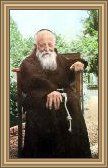
To you sons of Croatia, Montenegro, Bosnia-Herzegovina, and the whole of Yugoslavia: honour to you for having brought forth in our time such a lofty and yet human example of your Catholic tradition.
And to you Paduans: we wish you to honour, beside your own Saint Anthony, this not dissimilar Franciscan brother so that from them both you may hand on to the next generations the Christian and human virtues already so splendidly enshrined in your history.