Why pray the Rosary every day for a year?


Each time the Blessed Virgin has appeared-- whether it be to Saint Bernadette Soubirous at Lourdes; to Lucia, Jacinta, and Francisco at Fatima; or to Mariette Beco at Banneux-- she has asserted the importance, saving grace, and power of praying the Holy Rosary on a daily basis. Based upon her words, the Rosary is penance and conversion for sinners, a pathway to peace, an end to war, and a powerful act of faith in Jesus Christ. Pope Paul VI presented the Rosary as a powerful means to reach Christ "not merely with Mary but indeed, insofar as this is possible to us, in the same way as Mary, who is certainly the one who thought about Him more than anyone else has ever done."

To show us how this is done, perhaps no one has been more eloquent than the great Cardinal Newman, who wrote: "The great power of the Rosary consists in the fact that it translates the Creed into Prayer. Of course, the Creed is already in a certain sense a prayer and a great act of homage towards God, but the Rosary brings us to meditate again on the great truth of His life and death, and brings this truth close to our hearts. Even Christians, although they know God, usually fear rather than love Him. The strength of the Rosary lies in the particular manner in which it considers these mysteries, since all our thinking about Christ is intertwined with the thought of His Mother, in the relations between Mother and Son; the Holy Family is presented to us, the home in which God lived His infinite love."


As Mary said at Fatima, "Jesus wants to use you to make Me known and loved. He wishes to establish the devotion to My Immaculate Heart throughout the world. I promise salvation to whoever embraces it; these souls will be dear to God, like flowers put by Me to adorn his throne."


May 22: Saint Quiteria, Virgin Martyr of the Church

Posted by Jacob


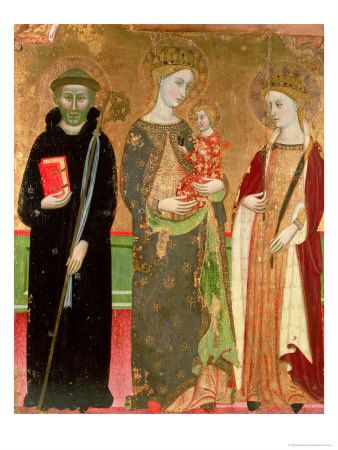
Today, May 22, we celebrate the feast day of Saint Quiteria (2nd century), virgin martyr for the faith.  Depending on which account of her life you read, Saint Quiteria and her sisters were soldiers for Christ—traveling the countryside, freeing Christians from imprisonment, and smashing pagan idols.   Her courageous proclamation of the Gospel led to her eventual capture and death, although her faith never wavered.  Quiteria and her sisters demonstrate that from the direst of circumstances, the Lord can create miraculous moments of love and truth!
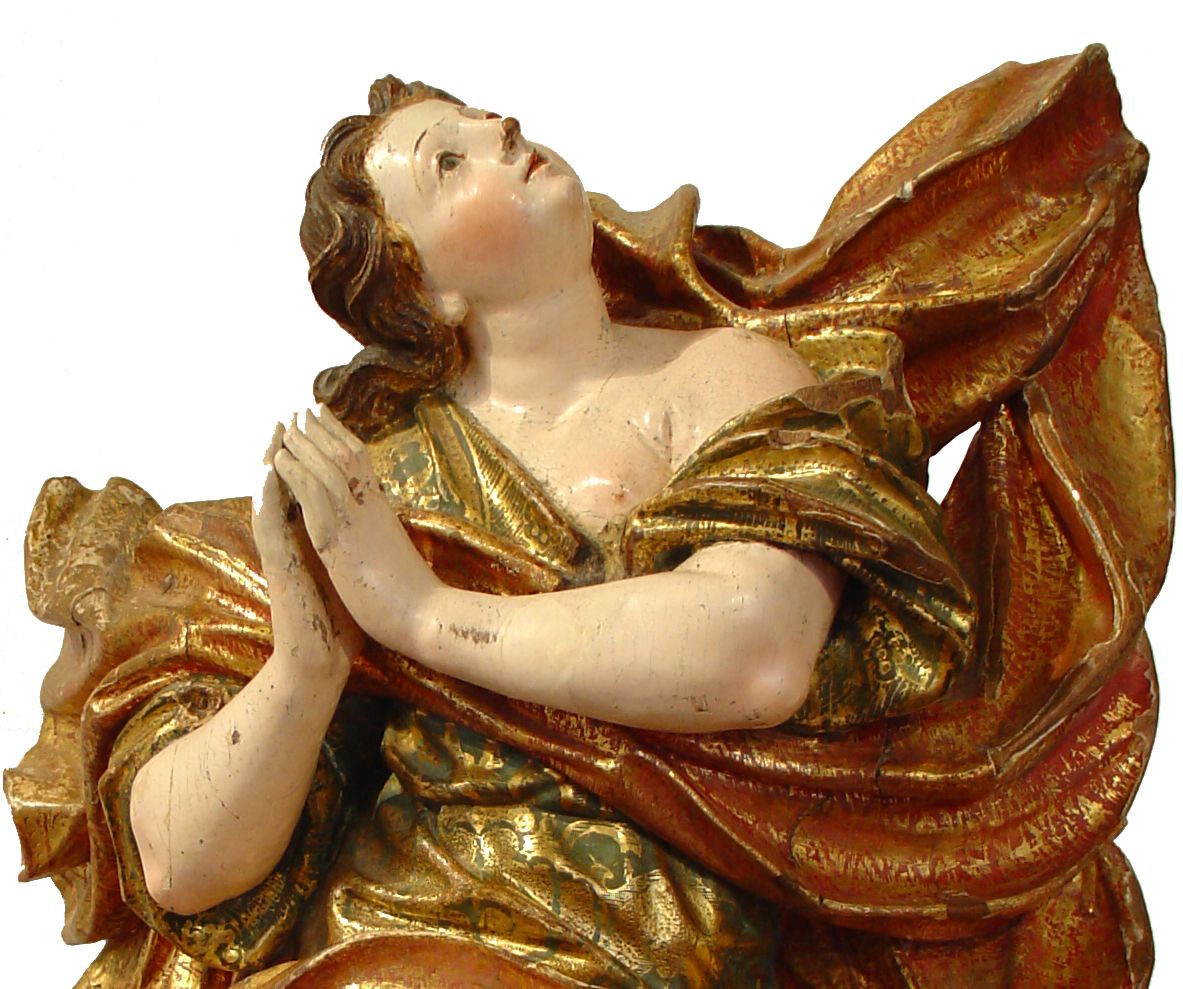
Quiteria was born into royalty, the daughter of a Galician prince.  She was one of nine daughters born together (nonuplets).  Her mother, Calsia, was disgusted at the fact that she had produced nine daughters (rather than sons), and suffered through nine childbirths. Viewing the experience as a waste of her time, she ordered her maid, Sila, to take the nine girls to the river and drown them.  Sila, however, was a Christian, and secretly refused the task, instead delivering the infants to a Cistercian monastery to be raised in community.
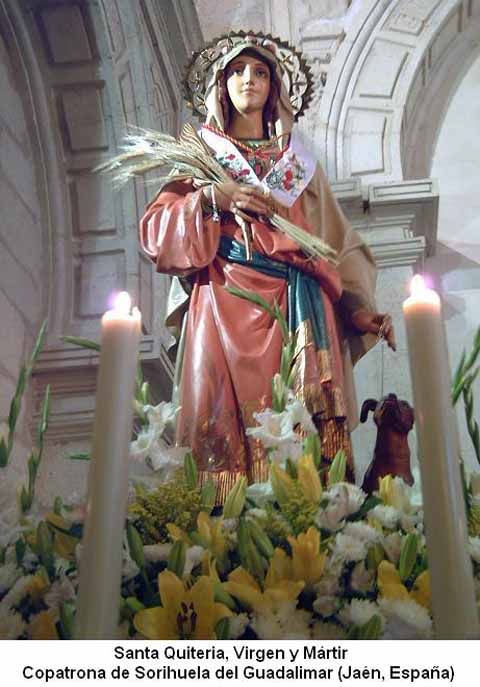
Quiteria and her sisters were raised by monks, baptized as Christians, and embraced the faith.  Quiteria was the most dedicated of her sisters, studying and practicing the tenets of the faith, reading the Gospel, praying, and developing a profound devotion to Our Blessed Mother.  The monks, placing a strong premium on truth, informed the girls of their royal lineage when they were old enough to understand.  Yet, none of the girls wished to return to the palace or live a luxurious lifestyle.  Instead, they became warriors for Christ, forming a “gang” who traveled the country, breaking Christians out of jail, proclaiming the Gospel, and smashing pagan idols. 
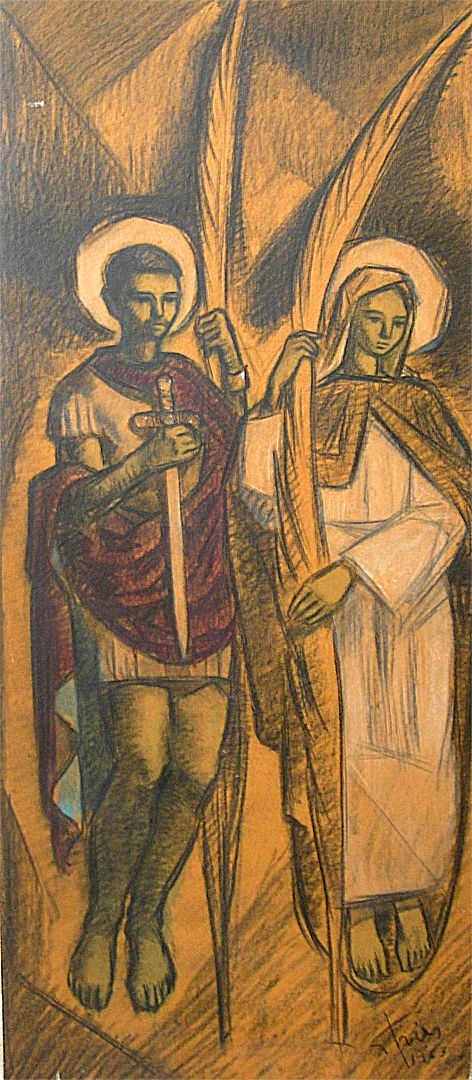
The gang survived for a few years, but were eventually caught and brought before the King, their father.  Recognizing his daughters, he requested that they give up their reckless ways and come live in the palace with him.  This they did, but only to witness to the royal court.  The sisters converted their rooms into prayer halls, and spent their days praying and praising the Lord.   When the king realized they were Christians, he ordered them to renounce their ways, sacrifice to the Roman gods, and marry pagan husbands. 

The sisters refused, led by Quiteria.  They were immediately jailed, but their imprisonment did little to lessen their faith or joy in the Lord.  In jail they praised and glorified Jesus, and eventually an angel came and proclaimed to Quiteria, “Happy and fortunate you are, for you deserved to find grace in front of God, so that God has chosen you as his spouse. It is God's will, that you are to live in solitude in the Mount Oria and there you will exercise in oration and contemplation.”

Released from imprisonment by the angel of God, the sisters split up, escaping by each traveling in a separate direction.  It is said that they were each eventually killed for their Christian faith.  Quiteria, for her part, followed the angel and did as instructed, forming a small community of women on the hills of Mount Oria, and living for a brief time in peaceful contemplation of the Lord.  She was eventually captured, and subsequently freed from imprisonment again by an angel.  In the process of her imprisonment, she converted many, and her community continued to grow.
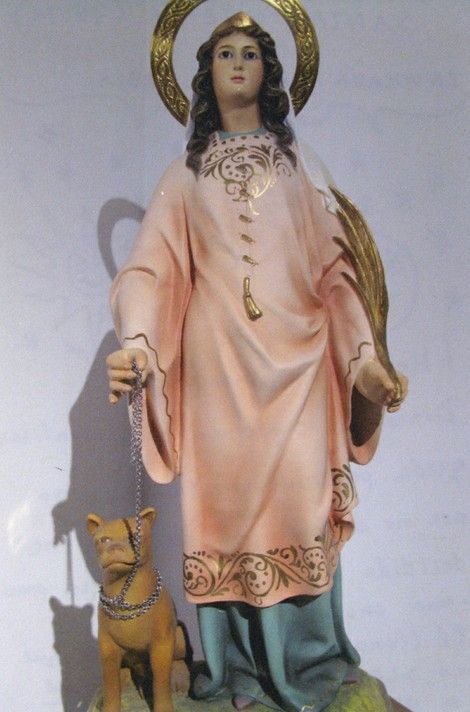
Eventually, Quiteria encountered the powerful ruler of the city of Aufragia, Prosen Lastiano.  She successfully converted him to Christianity, but a few days later he reverted to his pagan beliefs.  Humiliated in front of his people, he ordered Quiteria tracked down and killed.  His soldiers tracked her to her hillside community, but upon approach, Prosen suffered inexplicable injuries, including the loss of feeling in his hands and legs.  Quiteria prayed for him, and his senses and movements were restored.  Again, he converted to Christianity, this time filled with the faith of God.  Many of his followers did the same, which infuriated the king.
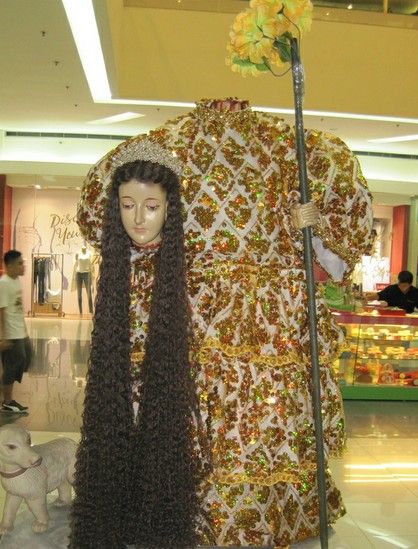
Under his order, Quiteria was found and beheaded for her Christian faith.  Prior to beheading, she is said to have kept the king’s vicious attack dogs at bay, with simply a gentle word.  For this reason, she is often invoked against rabies, and frequently pictured leading a dog.  (In rural Spain and France, farmers continue to lead their livestock to a bridge that is said to contain a relic of Saint Quiteria.  Passing the animals over the bridge is said to protect them from contracting disease).  Each of the women who had found refuge in her community was beheaded as well.  Legend states that following her martyrdom, Saint Quiteria walked to the Church of the Virgin Mary, carrying her head in her hands.  There, at Airein Gascony, her relics were interred (until later scattered by the Huguenots), and she continues to be venerated in southern France and northern Spain.
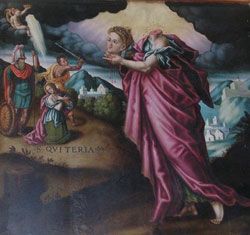
The live of Saint Quiteria, while possibly pious legend, is one of struggle for the faith.  Despite a chance at a luxurious lifestyle, this lovely young woman and her sisters instead chose to fight for the truth of the Gospel, forsaking her family, her comfort, and eventually her life.  Saint Quiteria’s courage and faith remind us that in our moments of difficulty, we need only turn to the Lord for inspiration and support, and that He will send His angels to protect and assist us.  We pray today for the confident faith in Christ, as exemplified by so many of the saints and martyrs that have come before us!


July 19: Saint Macrina the Younger

Posted by Jacob

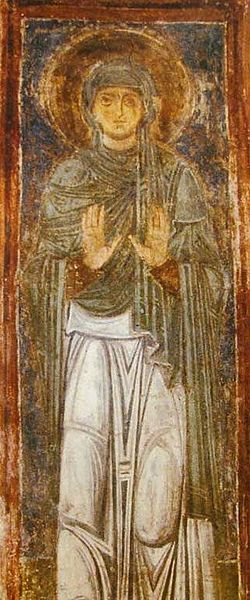
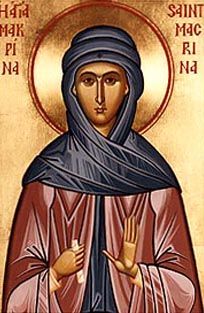
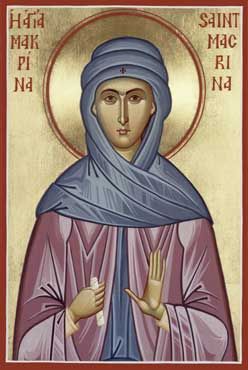
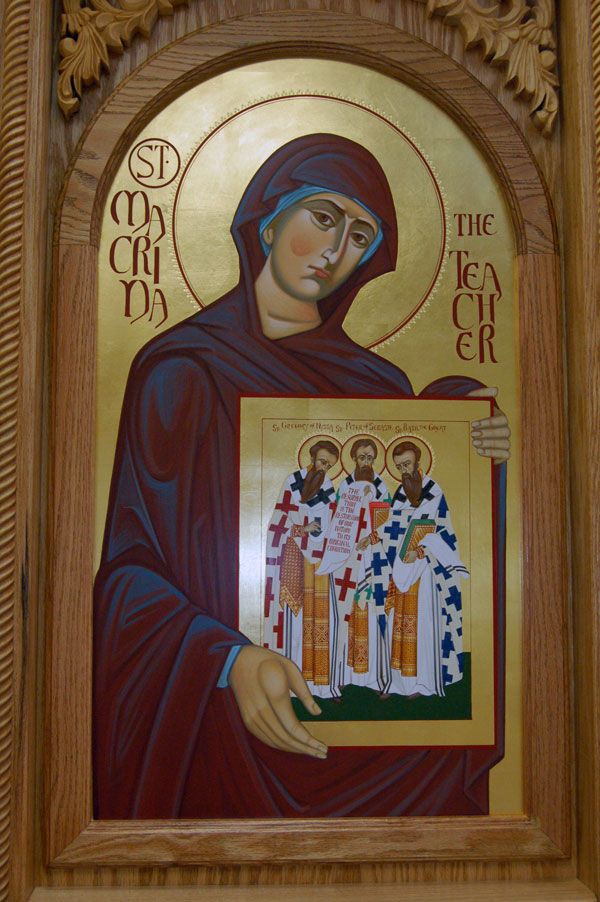
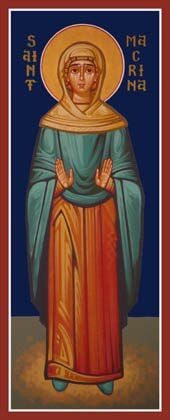
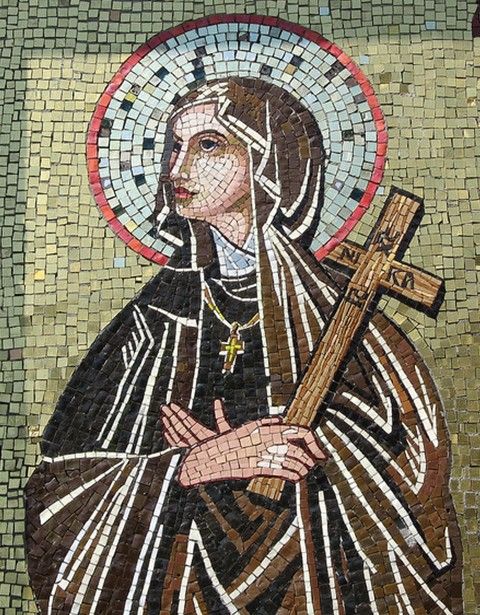
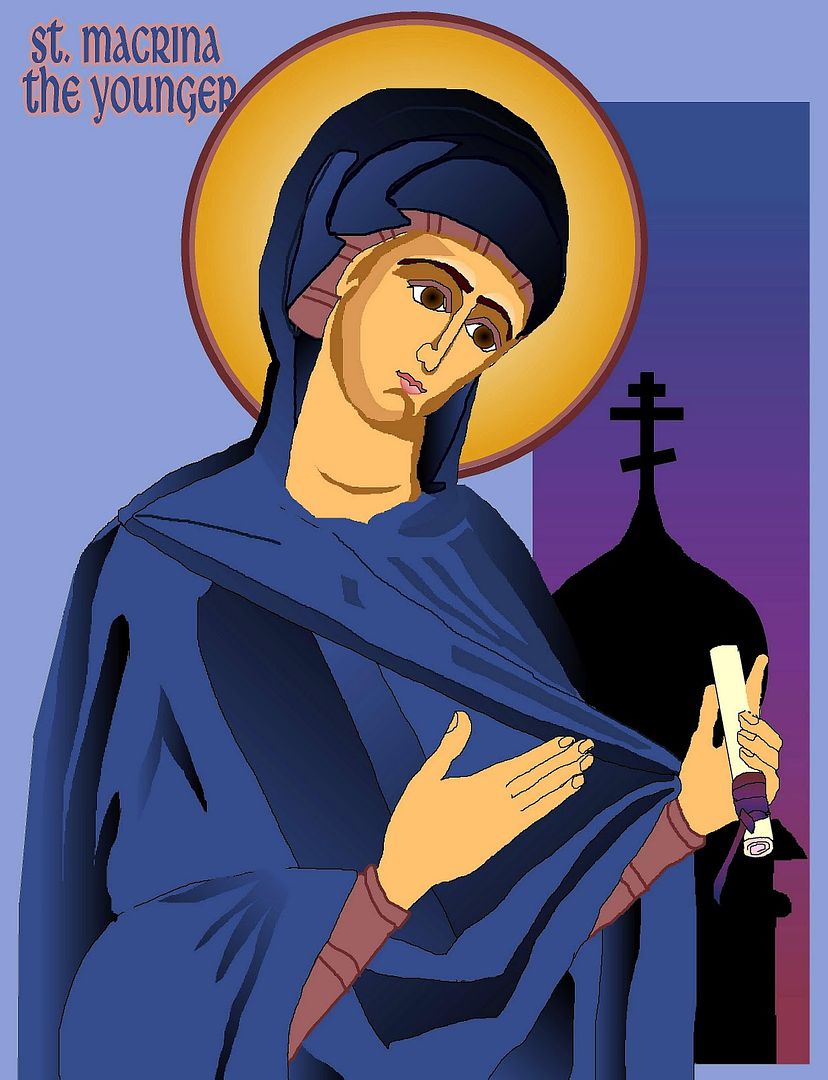
Today, July 19, we celebrate the feast day of Saint Macrina the Younger (330-379), Virgin of the Church. Macrina was the granddaughter of Saint Macrina the Elder and sister of Saint Basil, Saint Gregory of Nyssa, and Saint Peter of Sebastea. Saint Macrina lived a holy life, providing inspiration and encouragement to her brothers, forming her own religious community, and serving others to the glory of the Lord.


Macrina was born in Cesarea, the eldest child of Basil and Emmelia. Her mother raised the family in piety, based upon the Book of Wisdom, and chanted the psaltery with the children each day. At the young age of 12, Macrina was engaged to be married. Sadly, her fiancé died, and Macrina committed herself to the Lord, vowing perpetual chastity, and deciding to never marry. Instead, she dedicated herself to her family, helping raise her brothers, and assisting her mother with the household tasks. She became known to her holy brothers as “Macrina the Great” and “Macrina the Teacher,” both signs of the high respect they held her in.

Saint Macrina became well known as a holy woman and instructed many young women religiously. She is recognized and honored as one of the most prominent nuns of the Easter Church, and she founded an order on the family’s estate in Pontus, where many religious women flourished in their faith ender her direction. With her brother, Peter, she constructed both a monastery and convent. Macrina embraced an ascetic life, living in austerity, and spending much time in contemplation and prayer. Her brother, Saint Gregory of Nyssa, wrote a work entitled Life of Macrina in which he describes her sanctity throughout her life.

Near the end of her life, Macrina became gravely ill and was close to death. Saint Gregory of Nyssa went to see her and found her laying on a wood board and wearing a hair-shirt. He carefully lifted her and placed her on a bed. The dying woman, seeing her last hour was at hand, remembered all the good things God had given her during her lifetime and gave glory to Him. She said:

“Oh, Lord! Thou didst destroy the fear of death. Because of Thy sacrifice, true life begins when the present life finishes. We will sleep for a while and then, to the sound of the trumpet, we will resurrect. Thou didst save us from the curse of the sin, redeeming us from both sin and its curse.”

Kissing an iron Crucifix that held the relics of the Cross of the Savior, which she always had close to her, Saint Macrina serenely died. She was buried beside her parents, where her relics are venerated today.

It is principally to Saint Gregory of Nyssa that we are indebted for what we know of his admirable sister. In a panegyric on her he mentions two miracles: one in which St. Emmelia cured a growth that Macrina was suffering, by a simple sign of the cross; one in which Macrina herself healed the eye disease of a little girl. Gregory states that many other cures had been attributed to her intervention, on good grounds. The picture he gives of her is that of an exceptionally able and endearing woman with a secure set of values, possessed of that refreshing calmness of spirit that comes from close union with God. As he said of her, she "reached the highest summit of human virtue by true wisdom."


Merciful God, who didst call thy servant Macrina to reveal in her life and her teaching the riches of thy grace and truth: Mercifully grant that we, following her example, may seek after thy wisdom and live according to her way; through Jesus Christ our Savior, who liveth and reigneth with thee and the Holy Spirit, one God, for ever and ever. Amen.


Prayer of Saint Macrina the Younger before her death:
Recorded by St. Gregory of Nyssa:
You have released us, O Lord, from the fear of death. You have made the end of life here on earth a beginning of true life for us. You let our bodies rest in sleep in due season and you awaken them again at the sound of the last trumpet. You entrust to the earth our bodies of earth which you fashioned with your own hands and you restore again what you have given, transforming with incorruptibility and grace what is mortal and deformed in us. You redeemed us from the curse and from sin, having become both on our behalf. You have crushed the heads of the serpent who had seized man in his jaws because of the abyss of our disobedience. You have opened up for us a path to the resurrection, having broken down the gates of hell and reduced to impotence the one who had power over deaths. You have given to those who fear you a visible token, the sign of the holy cross, for the destruction of the Adversary and for the protection of our life.


God eternal, Upon whom I have cast myself from my mother’s womb, Whom my soul has loved with all its strength, To whom I have consecrated flesh and soul from my infancy up to this moment, Put down beside me a shining angel to lead me by the hand to the place of refreshment where is the water of repose near the lap of the holy fathers. You who have cut through the flame of the fiery sword and brought to paradise the man who was crucified with you, who entreated your pity, remember me also in your kingdom, for I too have been crucified with you, for I have nailed my flesh out of reverence for you and have feared your judgments. Let not eh dreadful abyss separate me from your chosen ones. Let not the Slanderer stand against me on my journey. Let no my sin be discovered before your eyes if I have been overcome in any way because of our nature’s weakness and have sinned in word or deed or thought. You who have on earth the power to forgive sins, forgive me, so that I may draw breath again and may be found before you in the stripping off of my body without strain or blemish in the beauty of my soul, but may my soul be received blameless and immaculate into your hands as an incense offering before your face.


Year 2: Day 200 of 365
Prayer Intentions: Lives of virtue; Families rich in faith and grace
Requested Intentions: Healing, successful relationships for son, financial success (J); Success of a company (L); For a religious society (J); Healing of a husband, strength as a faithful caregiver (D); Healing of a son (T); Financial security, Healing and guidance (M); Healing of a heart and relationship (V); Employment for daughter (J); For a marriage that glorifies the Lord (K); Resolution of family situation, parents’ health (A); Positive results (C); For a son’s employment, faith, and relationships (S); Restored family relationships (A); Healthy conception and delivery of children (J); For a girlfriend’s recovery from a debilitating mental illness (J); For a daughter’s successful examination results (A); Occupational success, health and safety of family (S); Reduction in anxiety for husband, financial freedom (S); Healing for a sister-in-law (J); For a family experiencing a difficult child custody case (M); Reunification of a family struggling with separation (M): For a son struggling with mental illness (M); Successful examination results (B); To be freed from the chains of sin (J); Admission to a good university (M); For successful surgery (T); For a mother’s mental health and for kindness and forgiveness, for housing problems, for dental health (T).

June 10: Blessed Olivia of Palermo

Posted by Jacob

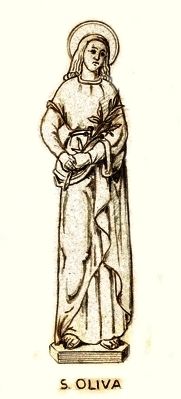
Today, June 10, we celebrate the feast of Blessed Olivia of Palermo (ninth century), holy Virgin and martyr of the Church. While it is commonly believed that Blessed Olivia is a fictitious character, whose story reached prominence in the early Church when it was mistaken as biography, she has been venerated as Blessed since that time. As with many of the early Church saints, lessons may be learned from their virtuous lives—lessons which strengthen our faith today and remind us of the importance of Christian virtue.


Not much is known specifically about the life of Blessed Olivia. Her legend states that she was a beautiful young woman of approximately thirteen years old, who had been born and piously raised in Palermo, Sicily. When she reached her thirteenth year, invading Muslims from Tunisia, Africa, kidnapped her from her noble home, and took her with them back to Africa. There, she was made to serve as a slave, which she did with cheerfulness, obedience, and diligence.

She was observed to go about her duties—some the most undesirable and menial—with a song in her heart. She was frequently heard singing and writing songs, which is why today she is considered the patroness of music by some.

Eventually, her captors were so impressed with her attitude, virtue, chastity, and beauty, they freed her from her servitude, allowing her to take up residence in a nearby cave and live as a hermitess. There, she spent her days in prayer and penance, and was the recipient of heavenly visions. Local residents sought her out for pious advise, miraculous cures, and instruction in the faith. Through her witness, many were brought to Christianity, which later angered local leaders. Eventually, due to her influence with the people, she was imprisoned, tortured, and subsequently executed for her faith. Sentenced to be burned alive, her torturers grew fearful when she was unharmed by the flames that leapt around her. Blessed Olivia was then beheaded, earning her the glorious crown of the martyrs. At the moment of her death, her soul was observed flying to heaven, in the form of a pure white dove.

Blessed Olivia continues to be venerated today, especially in Carthage and Palermo (where she is one of four patrons, alongside Saint Agatha, Saint Christina, and Saint Nympha). She continues to be held in great esteem in Tunisia, where the great mosque is named for her. Tunisian Muslims, to this day, assert that any who speaks ill of Blessed Olivia is always punished by the Lord.

The name Olivia is a symbol of peace, fruitfulness, dignity, and beauty. We are inspired today, through her pious legend, to embrace these virtues of our faith, and live them visibly for all to see.


Holy Virgin of the Lord, Olivia, pray that after we are gone from this life that the memory of our purity remains. Amen.


Year 2: Day 161 of 365
Prayer Intentions: For the ability to live virtuously.
Requested Intentions: Restoration of health (D); Successful employment for couple (N); For employment for children (K); For health of friend, for successful relationships for children, for safe pregnancy for daughter (C); For the health of a mother (J); Virtue for daughter (V); Successful acceptance to college for nephew (M); For the health of a cousin (T); Freedom from legal difficulties for husband (S); Husband’s freedom from illness (L); Personal intentions (S); Successful passing of dental board examination (P); Blessings on a family (Z); Successful permanent employment (C); Healing of a son with autism (J); Son’s successful employment (L); For the intentions of family and relatives, for the Carthusian community (T); For personal intentions (A); Restoration of lost hearing (C); Resolution of relational and financial challenges (S); Comfort following loss of husband, security for family, assistance with housing (B); Healing and return of brother (O); Successful hermitage foundation (S); Support from family, permission to marry (H); Recovery of wife following surgery, freedom from depression (W); Protection and recovery of mentally ill daughter (J); Successful resolution to legal proceedings (N); Freedom from worry and successful employment (M); For successful sale of home and freedom from debt (J); Freedom from pain and illness (E).

March 10: Saint Anastasia the Patrician

Posted by Jacob

One time, a glorious patrician, Venerable Anastasia,

Money, flattery, abandoned she all,
To Christ, her entire life she directed;
Christ, her bread; Christ, her water;
Christ, her joy and freedom,
Christ, the restorer of her soul,
Christ, the bridge over death.
Anastasia became shriveled,
The spirit through her withered face shines;
The spirit raises her higher to God,
With the Spirit of God, she breathes,
Until illuminated, she became,
By Grace enlightened,
By the power of God strengthened
And among the Living inscribed.
All she forgave, all she loved,
And for the entire world, she prays,
Like an angel, she was indeed,
Wholly fixed on Christ;
By the power of God, more powerful was she
And by riches, more wealthy
Than the Empress Theodora
Amidst the opulence of the imperial court.
(St. Nikolai Velimirovich)


Today, March 10, we celebrate the feast of Saint Anastasia the Patrician (died 567), a young woman who gave up all she had to avoid breaking her vow of chastity, fleeing a privileged and noble life to life in the desert as a monk. Saint Anastasia’s sacrifice reminds us of our own opportunities to sacrifice and life in repentance and conversion during this Lenten season.

Anastasia was born a Christian Byzantine noble and lady-in-waiting to the Empress Theodora in the court of Emperor Justinian of Constantinople. An image of virtue and chastity from birth, she was greatly admired and respected by the emperor, which concerned her a great deal. Wishing to give up the world and it’s trappings, Anastasia fled Constantinople, moving to Alexandria and founding a small monastery there. She spent her days in prayer and penance, devoting herself fully to the Lord.

Upon the death of Empress Theodora, Emperor Justinian launched a search for his fair Anastasia, whom he had never forgotten. When Anastasia learned of this, she left her monastery, journeying further into the remote desert, and searching for a well-known and pious monk, Abba Daniel, for assistance.

To protect her, Daniel dressed her as a male monk, and referred to her only as “the eunuch Anastasius.” He settled her in an extremely remote cave, and provided her with a rule of prayer and cloister. From that moment on, Anastasia never left her cave, nor did she receive any visitors. Only one other monk knew of her existence, and it was his task to bring her a pitcher of water and a loaf of bread once each week, leaving it at the entrance. In this manner, Anastasia lived in solitude with the Lord for twenty-eight years, avoiding the detection of Justinian.

During her communion with the Lord, it was revealed to Anastasia the hour and day of her death. Understanding fully, she wrote “Bring the spades and come here” on a piece of pottery, and left it at the entrance of her cave. The monk who found this message brought it to Abba Daniel, who immediately understood that her time approached. He brought all that was necessary for burial, and upon his arrival found her still alive. Together they contemplated the Holy Mysteries, and following a blessing (which Abba Daniel requested from the pious woman), Anastasia said, “Lord, into Thy hands I commend my spirit.” With that she died peacefully, in the year 567.

While dressing Anastasia for burial, the monk noticed that she was a woman, and upon questioning, Abba Daniel related her life of sacrifice, commitment, and love for the Lord. The monk, in turn, recorded her story. Eventually, in 1200, Saint Anastasia’s relics were translated to Constantinople, and placed near the Church of Hagia Sophia, where they are venerated today.

The life of Saint Anastasia the Patrician inspires us today. When Anastasia identified those things in her life that might lead her into temptation and away from the Lord, she took measures—drastic measures—to ensure the safety and sanctity of her soul. During this Lenten season, we might pause to consider her example. What in our lives leads us into sin?


Year 2: Day 69 of 365
Prayer Intentions: Conversion and turning from sin.
Requested Intentions: Healing (E); For a son struggling with depression (B); Successful conception (M); Freedom from social anxiety; confidence in the Lord (J); Improved success in employment and studies (D); Freedom from illness (T); For a wife’s employment (E); Healing of a husband’s knee (M); Freedom from sickness (R); Healing (C); Restoration of marriage (F); Freedom from medical difficulties, employment, successful relationship (D); End to suffering for sick brother; reconciliation of estranged family (E); End to husband’s addiction; Improved relationship; strength (M); Successful God-centered marriage; Sacramental life (M); Healing, successful relationship (S); For successful marriage (A); For a husband’s freedom from addiction (C); Freedom from pain and illness for a friend (M); Financial freedom (J); Successful passing of occupational examination (S); Healing and conversion, sale of house (L); Occupational success for employee and colleagues (J); Employment for a son (C); Successful attainment of an important appointed position (J); Recovery from cancer for a friend (Z); For a family’s freedom from sin (M); For a daughter with Diabetes (A); Healing of a father following stroke (S).

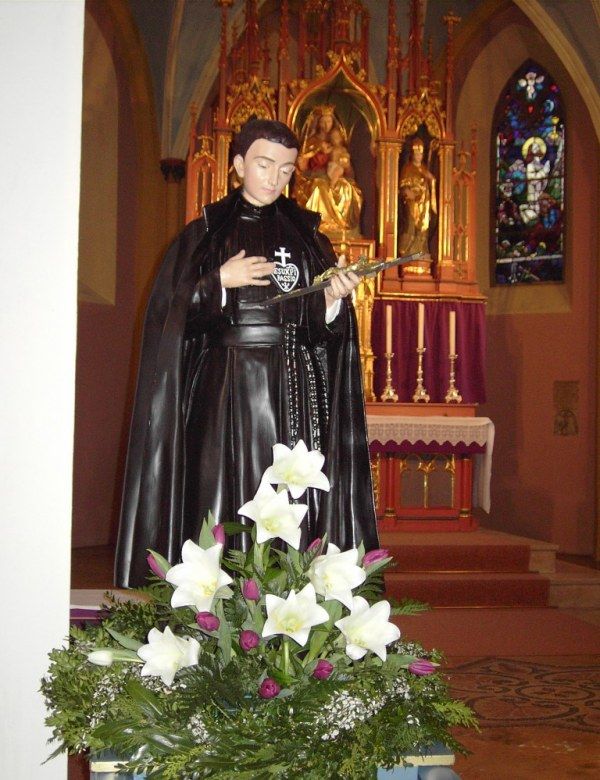
Saint Gabriel of Our Lady of Sorrows: 41 Resolutions

Posted by Jacob

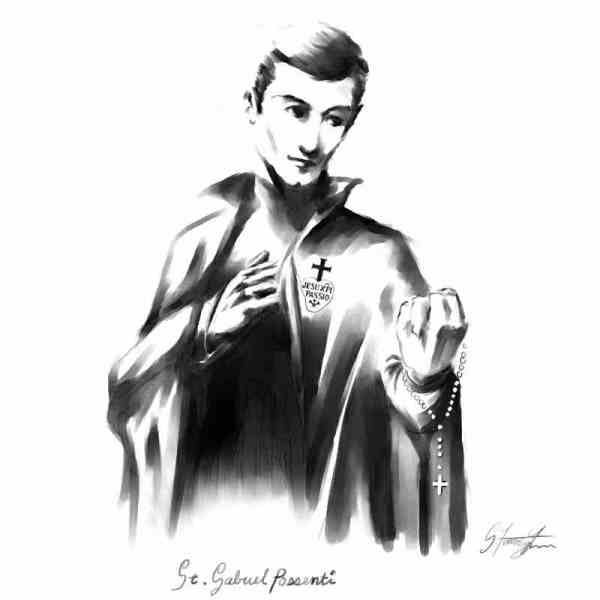
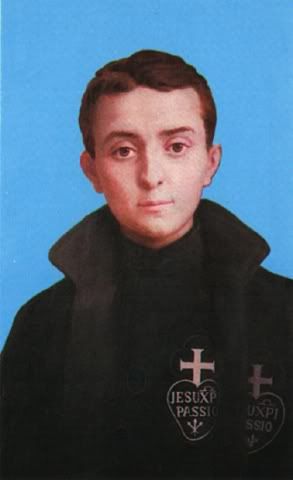
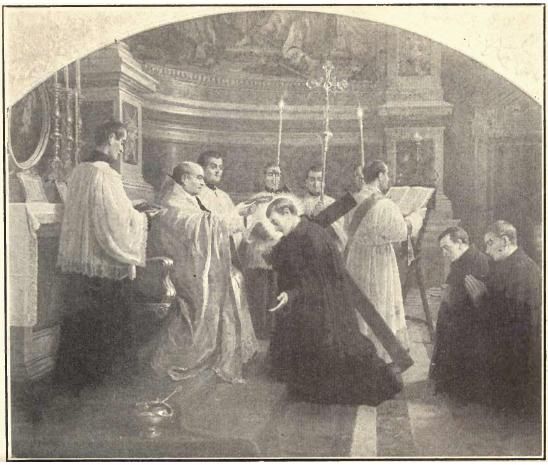
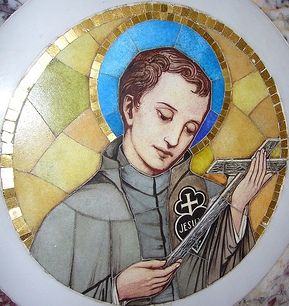
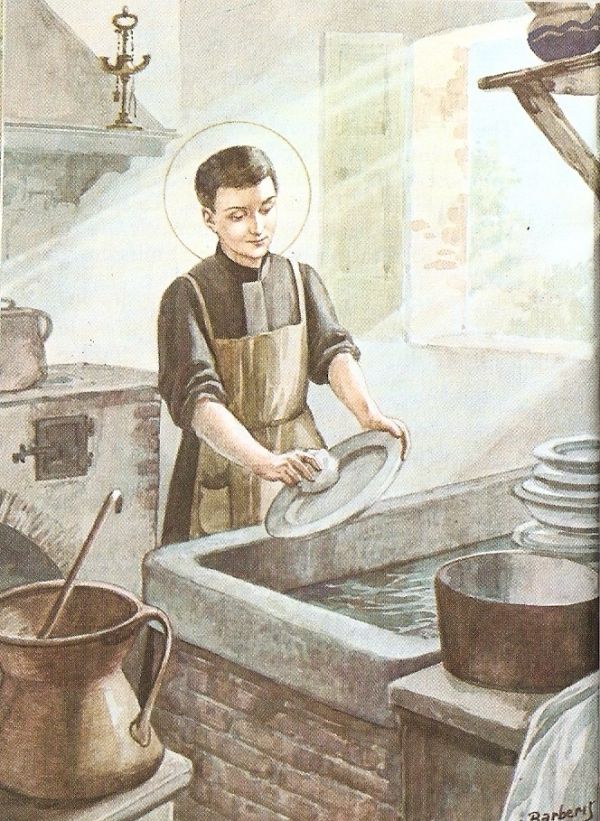
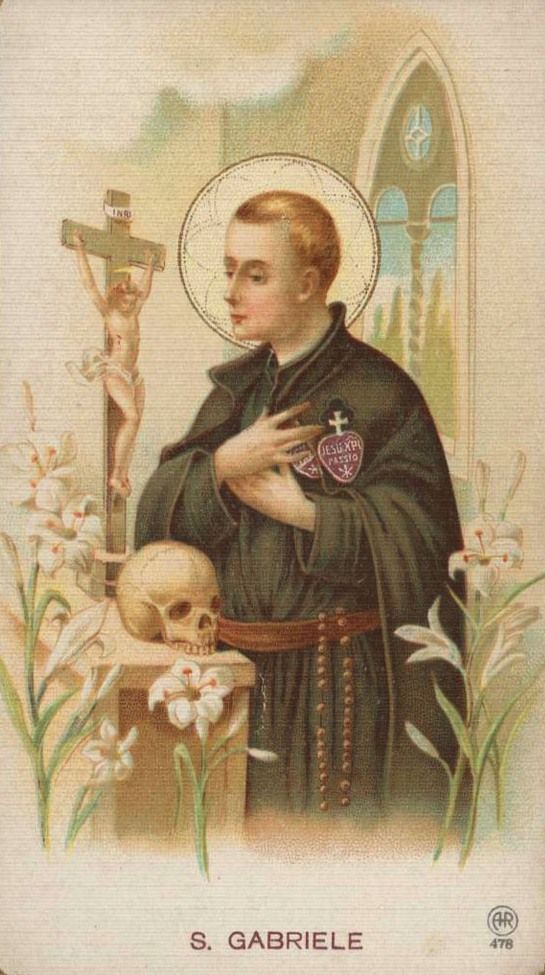
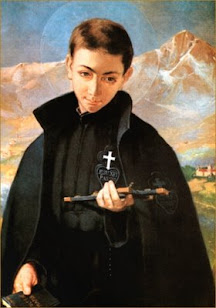
Today, February 27, marks the feast day of Saint Gabriel of Our Lady of Sorrows (1838-1862), the patron saint of young people, students, and young religious. Saint Gabriel’s short life is marked by piety, faith, and obedience to the Lord, and religious vocation at the behest of Our Blessed Mother. While the last six years of his life, spent as a brother in the Passionist Order, were marked by humility, self-denial, and simplicity, Gabriel’s early life was quite the opposite. His complete consecration of his life to the Lord, despite the temptations of the modern world which he so loved, make his sacrifice a vivid example of the Christian love and obedience we should strive for.

Saint Gabriel modeled his life on that of Christ and Our Blessed Mother, committing himself to embody every virtue and shun every sin. To that end, he committed to writing a list of 41 Resolutions, guiding his daily life:


Gabriel’s 41 Resolutions

I will keep my rule, even the smallest thing.


I will not neglect any of my spiritual exercises.


I will shun idleness.


I will be punctual.


I will obey the sound of the bell as though it were the voice of God.


I will receive all things from the hand of God, as being sent by Him for my own personal benefit.


I will profit by every occasion for mortification that may occur.


I will fulfil exactly my ordinary duties, mortifying self in whatever would prove an obstacle to perfect obedience.


I will mortify my eyes and my tongue.


I will not leave my cell without necessity.


I will not inquire after anything through curiosity.


I will check my desire to talk.


I will increase the number of such like acts daily.


I will not take any food outside of mealtime.


I am poor and I should act accordingly.


I should be willing to put up with any inconvenience gladly.


I will not eat with avidity, but rather with reserve and with modesty, subjecting my appetite to reason.


I will mortify myself in ordinary things and whatever I feel inclined to do, saying in my heart: “O my God, I will not do this thing through mere inclination, but because it is thy will”.


I will be reserved toward those to whom I feel most inclined, prudently avoiding their presence and conversation.


I will not utter a word that might, in the least, turn to my praise.


I will not take pleasure in any praise bestowed upon me.


I will never excuse myself when I am blamed or corrected, nor even resent it interiorly, much less put the blame upon others.


I will never speak of the faults of others, even though they may be public, nor will I ever show want of esteem for others, whether in their presence or in their absence.


I will not judge ill of anyone.


I will show the good opinion I have of each one by covering up his faults.


I will consider everyone my superior, treating all with humility and reverence.


I will rejoice at the good done by others.


I will not permit myself to become interested in vain and useless things.


I will rejoice at the success of others.


I will practice charity and kindness, assisting, serving and pleasing all.


I will shun particular friendships, so as to offend no one.


Every morning and evening I will practice some act of humility, and gradually increase the number.


I will close my heart against disquiet of any kind.


I will suppress immediately all emotions of impetuosity and all affections that might cloud my mind, even lightly.


I will obey the voice of the Superior as if it were the voice of God himself.


In my obedience I will neither examine the why nor the wherefore.


I will conform my judgment to that of my Superior.


I will not employ time in conversing about purely worldly matters.


“Faithfulness in little things” is the motto I will always follow in my efforts to reach holiness.


I will try to reproduce in myself whatever I see edifying and virtuous in the conduct of others.


I will give to God the best that I have — the entire affection of my heart.

February 25: Saint Tarasius, Patriarch of Constantinople

Posted by Jacob

You appeared to your flock as a rule of faith,

An image of humility and a teacher of abstinence.
Because of your lowliness, Heaven was opened to you.
Because of your poverty, riches were granted to you.
O holy bishop, Tarasius, pray to Christ our God to save our souls!


You shone forth as a light of the Spirit,
Adorned with an exemplary life and clothed in hierarchical vesture.
You stilled the turbulence of heresy
And became a pillar and foundation of the Church,
Which praises your struggles, holy Father Tarasius.


You illumined the Church with Orthodox doctrine
and taught all to venerate and honor the precious image of Christ.
You vanquished the godless doctrine of the iconoclasts.
Therefore we cry to you:
"Rejoice, wise Father Tarasius."


Today, February 25, we celebrate the feast of Saint Tarasius (750-806 ), bishop, and Patriarch of Constantinople. Saint Tarasius led a life of service and charity, courageously confronting injustices and defending the faith against powerful rulers—oftentimes at risk to himself. His orthodoxy, coupled with his charitable nature, thoughtfulness, and fair-mindedness, allowed him to successfully lead the church at Constantinople for almost twenty-five years.

Tarasius was born in Constantinople to a noble family. Educated by his mother, he displayed an aptitude for study and embodied the Christian virtues from an early age. He was soon recognized and admired by all he encountered, and quickly rose through the public service and political ranks of the time. Appointed Secretary of State to Emperor Constantine IV and the Empress Irene. Despite his achievements and presence at the opulent court of Constantine, Tarasius lived an austere life of penance and prayer, similar to that of an Eastern monk.

In time, Tarasius was unanimously chosen by the court to ascend to the position of Patriarch of Constantinople. This position was responsible for leading and governing the See of Constantinople. Tarasius, for his part, declined the position, as he could not accept governance of a see that had been cut off from the Catholic Church. He persuaded the emperor to allow him to convene a general council to address the practices that separated Constantinople from the Church, specifically a dispute concerning icons and holy images. Receiving permission, he accepted the position of Patriarch, and was consecrated on Christmas Day.

The Council, which initially took place in 786 in Constantinople was disrupted by violence, and adjourned to the following year in Nicea. There, the Council declared the approval of holy images and icons, which was later approved by the Pope, re-establishing ties between the See of Constantinople and the Church.

Having renewed relations and accountability, Tarasius undertook significant reform within the see, which influenced the Eastern Church. He was a model of perfection and penance for his clergy, and through his model, reform was quickly established. He slept little, ate even less, and spent his days praying and engaged in charitable activities. It is said that he visited every home in Constantinople personally, distributing alms, and caring for the needs of those he encountered.

Saint Tarasius often found himself in the difficult position of disagreeing with the emperor, and defending both the Church and Christian virtues. When the emperor sought to re-marry, he pressured Tarasius to approve the marriage. Saint Tarasius, for his part, refused repeatedly, ending up in prison for his defense of the faith. Tarasius was only released upon the emperor’s death.

Saint Tarasius continued to lead the Church for twenty-two years, prior to his death in 806. Holy legend tells us that shortly Before his death, devils examined his life from the time of his youth, attempting to get the saint to admit to sins that he had not committed. "I am innocent of that of which you accuse me," replied Saint Tarasius, "and you falsely slander me. You have no power over me at all."

The relics of Saint Tarasius were buried in a monastery he built on the Bosphorus. There, they are venerated today. Many miracles have been reported at his tomb.

Saint Tarasius lived a life of prayer, penance, and service, despite opportunity to acquire great wealth, power, and luxury. He resolutely defended and upheld the tenets of our faith, despite personal persecution and imprisonment. Throughout all, he demonstrated strength of character, humility, and virtue, caring for those in need, and placing the Lord before all things. Saint Tarasius, pray for us!


Saint Tarasius, we pray that we might have the strength and humility to live our lives for our Creator and not for the praise of men. Intercede for us, dear saint, that we might obtain the grace to live such humble lives. Amen.


Year 2: Day 56 of 365
Prayer Intentions: Strength, humility, charity.
Requested Intentions: Freedom from medical difficulties, employment, successful relationship (D); End to suffering for sick brother; reconciliation of estranged family (E); End to husband’s addiction; Improved relationship; strength (M); Successful God-centered marriage; Sacramental life (M); Healing, successful relationship (S); For successful marriage (A); For a husband’s freedom from addiction (C); Freedom from pain and illness for a friend (M); Financial freedom (J); Successful passing of occupational examination (S); Healing and conversion, sale of house (L); Occupational success for employee and colleagues (J); Employment for a son (C); Successful attainment of an important appointed position (J); Recovery from cancer for a friend (Z); For a family’s freedom from sin (M); For a daughter with Diabetes (A); Healing of a father following stroke (S).

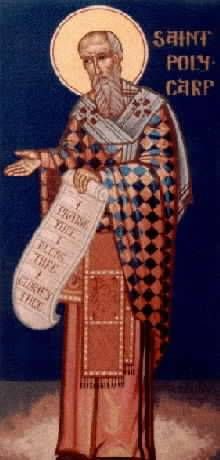
Saint Polycarp of Smyrna: Epistle to the Philippians

Posted by Jacob

Saint Polycarp of Smyrna (69-155), whose feast day we celebrate today, was a holy and learned bishop of Smyrna—a second generation Christian who heard the word of the Lord directly from the apostle John. He is the first Christian martyr whose acts of martyrdom were written at the time of his death, and preserved to demonstrate his faith and lack of fear in persecution. In a time of struggle an unrest in the fledgling faith, Polycarp, along with his friend Saint Ignatius of Antioch, looked to the life and Word of Christ as the example of how to celebrate the liturgy, how to worship, and how to live. Saint Ignatius said of Saint Polycarp, “Your mind is grounded in God as on an unmovable rock.”


Below, the text of an epistle of Saint Polycarp to the Philippian church:


CHAP. I.--PRAISE OF THE PHILIPPIANS.


I have greatly rejoiced with you in our Lord Jesus Christ, because ye have followed the example(3) of true love [as displayed by God], and have accompanied, as became you, those who were bound in chains, the fitting ornaments of saints, and which are indeed the diadems of the true elect of God and our Lord; and because the strong root of your faith, spoken of in days(4) long gone by, endureth even until now, and bringeth forth fruit to our Lord Jesus Christ, who for our sins suffered even unto death, [but] "whom God raised froth the dead, having loosed the bands of the grave."(5) "In whom, though now ye see Him not, ye believe, and believing, rejoice with joy unspeakable and full of glory; "(6) into which joy many desire to enter, knowing that "by grace ye are saved, not of works,"(7) but by the will of God through Jesus Christ.


CHAP. II.--AN EXHORTATION TO VIRTUE.


"Wherefore, girding up your loins,"(8) "serve the Lord in fear"(9) and truth, as those who have forsaken the vain, empty talk and error of the multitude, and "believed in Him who raised up our Lord Jesus Christ from the dead, and gave Him glory,"(10) and a throne at His right hand. To Him all things" in heaven and on earth are subject. Him every spirit serves. He comes as the Judge of the living and the dead.(12) His blood will God require of those who do not believe in Him.(13) But He who raised Him up from the dead will raise(14) up us also, if we do His will, and walk in His commandments, and love what He loved, keeping ourselves from all unrighteousness, covetousness, love of money, evil speaking, falsewitness; "not rendering evil for evil, or railing for railing,"(15) or blow for blow, or cursing for cursing, but being mindful of what the Lord said in His teaching: "Judge not, that ye be not judged;(16) forgive, and it shall be forgiven unto you;(17) be merciful, that ye may obtain mercy;(18) with what measure ye mete, it shall be measured to you again;(19) and once more, "Blessed are the poor, and those that are persecuted for righteousness' sake, for theirs is the kingdom of God."(20)


CHAP. III.--EXPRESSIONS OR PERSONAL UNWORTHINESS.


These things, brethren, I write to you concerning righteousness, not because I take anything upon myself, but because ye have invited me to do so. For neither I, nor any other such one, can come up to the wisdom" of the blessed and glorified Paul. He, when among you, accurately and stedfastly taught the word of truth in the presence of those who were then alive. And when absent from you, he wrote you a letter,(22) which, if you carefully study, you will find to be the means of building you up in that faith which has been given you, and which, being followed by hope, and preceded by love towards God, and Christ, and our neighbour, "is the mother of us all."(23) For if any one be inwardly possessed of these graces, he hath fulfilled the command of righteousness, since he that hath love is far from all sin.


CHAP. IV.--VARIOUS EXHORTATIONS.


"But the love of money is the root of all evils."(1) Knowing, therefore, that "as we brought nothing into the world, so we can carry nothing out,"(2) let us arm ourselves with the armour of righteousness;(3) and let us teach, first of all, ourselves to walk in the commandments of the Lord. Next, [teach] your wives [to walk] in the faith given to them, and in love and purity tenderly loving their own husbands in all truth, and loving all [others] equally in all chastity; and to train up their children in the knowledge and fear of God. Teach the widows to be discreet as respects the faith of the Lord, praying continually(4) for all, being far from all slandering, evil-speaking, false-witnessing, love of money, and every kind of evil; knowing that they are the altar s of God, that He clearly perceives all things, and that nothing is hid from Him, neither reasonings, nor reflections, nor any one of the secret things of the heart.


CHAP. V.--THE DUTIES OF DEACONS, YOUTHS, AND VIRGINS.


Knowing, then, that "God is not mocked,"(6) we ought to walk worthy of His commandment and glory. In like manner should the deacons be blameless before the face of His righteousness, as being the servants of God and Christ,(7) and not of men. They must not be slanderers, double-tongued,(8) or lovers of money, but temperate in all things, compassionate, industrious, walking according to the truth of the Lord, who was the servant(9) of all. If we please Him in this present world, we shall receive also the future world, according as He has promised to us that He will raise us again from the dead, and that if we live(10) worthily of Him, "we shall also reign together with Him,"(11) provided only we believe. In like manner, let the young men also be blameless in all things, being especially careful to preserve purity, and keeping themselves in, as with a bridle, from every kind of evil. For it is well that they should be cut off from(12) the lusts that are in the world, since "every lust warreth against the spirit; "(13) and "neither fornicators, nor effeminate, nor abusers of themselves with mankind, shall inherit the kingdom of God,"(14) nor those who do things inconsistent and unbecoming. Wherefore, it is needful to abstain from all these things, being subject to the presbyters and deacons, as unto God and Christ. The virgins also must walk in a blameless and pure conscience.


CHAP. VI.--THE DUTIES OF PRESBYTERS AND OTHERS.


And let the presbyters be compassionate and merciful to all, bringing back those that wander, visiting all the sick, and not neglecting the widow, the orphan, or the poor, but always "providing for that which is becoming in the sight of God and man; "(15) abstaining from all wrath, respect of persons, and unjust judgment; keeping far off from . all covetousness, not quickly crediting [an evil re port] against any one, not severe in judgment, as knowing that we are all under a debt of sin. If then we entreat the Lord to forgive us, we ought also ourselves to forgive;(16) for we are before the eyes of our Lord and God, and "we must all appear at the judgment-seat of Christ, and must every one give an account of himself."(17) Let us then serve Him in fear, and with all reverence, even as He Himself has commanded us, and as the apostles who preached the Gospel unto us, and the prophets who proclaimed beforehand the coming of the Lord [have alike taught us]. Let us be zealous in the pursuit of that which is good, keeping ourselves from causes of offence, from false brethren, and from those who in hypocrisy bear the name of the Lord, and draw away vain men into error.


CHAP. VII.--AVOID THE DOCETAE, AND PERSEVERE IN FASTING AND PRAYER.


"For whosoever does not confess that Jesus Christ has come in the flesh, is antichrist;"(18) and whosoever does not confess the testimony of the cross,(19) is of the devil; and whosoever perverts the oracles of the Lord to his own lusts, and says that there is neither a resurrection nor a judgment, he is the first-born of Satan.(20) Wherefore, forsaking the vanity of many, and their false doctrines, let us return to the word which has been handed down to us from(21) the beginning; "watching unto prayer,"(22) and persevering in fasting; beseeching in our supplications the all-seeing God "not to lead us into temptation,"(1) as the Lord has said: "The spirit truly is willing, but the flesh is weak."(2)


CHAP. VIII.--PERSEVERE IN HOPE AND PATIENCE.


Let us then continually persevere in our hope, and the earnest of our righteousness, which is Jesus Christ, "who bore our sins in His own body on the tree,"(3) "who did no sin, neither was guile found in His mouth,"(4) but endured all things for us, that we might live in Him.(5) Let us then be imitators of His patience; and if we suffer(6) for His name's sake, let us glorify Him.(7) For He has set us this example(8) in Himself, and we have believed that such is the case.


CHAP. IX.--PATIENCE INCULCATED.


I exhort you all, therefore, to yield obedience to the word of righteousness, and to exercise all patience, such as ye have seen [set] before your eyes, not only in the case of the blessed Ignatius, and Zosimus, and Rufus, but also in others among yourselves, and in Paul himself, and the rest of the apostles. [This do] in the assurance that all these have not run(9) in vain, but in faith and righteousness, and that they are [now] in their due place in the presence of the Lord, with whom also they suffered. For they loved not this present world, but Him who died for us, and for our sakes was raised again by God from the dead.


CHAP. X.--EXHORTATION TO THE PRACTICE OF VIRTUE.(10)


Stand fast, therefore, in these things, and follow the example of the Lord, being firm and unchangeable in the faith, loving the brotherhood,(11) and being attached to one another, joined together in the truth, exhibiting the meekness of the Lord in your intercourse with one another, and despising no one. When you can do good, defer it not, because "alms delivers from death."" Be all of you subject one to another? having your conduct blameless among the Gentiles,"(14) that ye may both receive praise for your good works, and the Lord may not be blasphemed through you. But woe to him by whom the name of the Lord is blasphemed!(15) Teach, therefore, sobriety to all, and manifest it also in your own conduct.


CHAP XI VALENS


I am greatly grieved for Valens, who was once a presbyter among you, because he so little understands the place that was given him [in the Church]. I exhort you, therefore, that ye abstain from covetousness,(16) and that ye be chaste and truthful. "Abstain from every form of evil."(17) For if a man cannot govern himself in such matters, how shall he enjoin them on others? If a man does not keep himself from covetousness,(16) he shall be defiled by idolatry, and shall be judged as one of the heathen. But who of us are ignorant of the judgment of the Lord? "Do we not know that the saints shall judge the world ?"(18) as Paul teaches. But I have neither seen nor heard of any such thing among you, in the midst of whom the blessed Paul laboured, and who are commended(19) in the beginning of his Epistle. For he boasts of you in all those Churches which alone then knew the Lord; but we [of Smyrna] had not yet known Him. I am deeply grieved, therefore, brethren, for him (Valens) and his wife; to whom may the Lord grant true repentance! And be ye then moderate in regard to this matter, and "do not count such as enemies,"(20) but call them back as suffering and straying members, that ye may save your whole body. For by so acting ye shall edify yourselves.(21)


CHAP. XII.--EXHORTATION TO VARIOUS GRACES.


For I trust that ye are well versed in the Sacred Scriptures, and that nothing is hid from you; but to me this privilege is not yet granted.(23) It is declared then in these Scriptures, "Be ye angry, and sin not,"(23) and, "Let not the sun go down upon your wrath."(24) Happy is he who remembers(25) this, which I believe to be the case with you. But may the God and Father of our Lord Jesus Christ, and Jesus Christ Himself, who is the Son of God, and our everlasting High Priest, build you up in faith and truth, and in all meekness, gentleness, patience, long-suffering, forbearance, and purity; and may He bestow on you a lot and portion among His saints, and on us with you, and on all that are under heaven, who shall believe in our Lord Jesus Christ, and in His Father, who "raised Him from the dead.(1) Pray for all the saints. Pray also for kings,(2) and potentates, and princes, and for those that persecute and hate you,(3) and for the enemies of the cross, that your fruit may be manifest to all, and that ye may be perfect in Him.


CHAP. XIII.--CONCERNING THE TRANSMISSION OF EPISTLES.


Both you and Ignatius(4) wrote to me, that if any one went [from this] into Syria, he should carry your letter(5) with him; which request I will attend to if I find a fitting opportunity, either personally, or through some other acting for me, that your desire may be fulfilled. The Epistles of Ignatius written by him(6) to us, and all the rest [of his Epistles] which we have by us, we have sent to you, as you requested. They are subjoined to this Epistle, and by them ye may be greatly profited; for they treat of faith and patience, and all things that tend to edification in our Lord. Any(7) more certain information you may have obtained respecting both Ignatius himself, and those that were(8) with him, have the goodness to make known(9) to us.


CHAP. XIV.--CONCLUSION.


These things I have written to you by Crescens, whom up to the present(10) time I have recommended unto you, and do now recommend. For he has acted blamelessly among us, and I believe also among you. Moreover, ye will hold his sister in esteem when she comes to you. Be ye safe in the Lord Jesus Christ. Grace be with you all.(11) Amen.