Why pray the Rosary every day for a year?


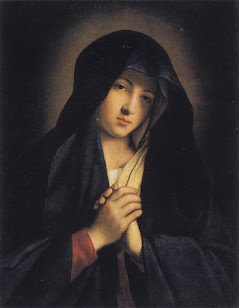
Each time the Blessed Virgin has appeared-- whether it be to Saint Bernadette Soubirous at Lourdes; to Lucia, Jacinta, and Francisco at Fatima; or to Mariette Beco at Banneux-- she has asserted the importance, saving grace, and power of praying the Holy Rosary on a daily basis. Based upon her words, the Rosary is penance and conversion for sinners, a pathway to peace, an end to war, and a powerful act of faith in Jesus Christ. Pope Paul VI presented the Rosary as a powerful means to reach Christ "not merely with Mary but indeed, insofar as this is possible to us, in the same way as Mary, who is certainly the one who thought about Him more than anyone else has ever done."

To show us how this is done, perhaps no one has been more eloquent than the great Cardinal Newman, who wrote: "The great power of the Rosary consists in the fact that it translates the Creed into Prayer. Of course, the Creed is already in a certain sense a prayer and a great act of homage towards God, but the Rosary brings us to meditate again on the great truth of His life and death, and brings this truth close to our hearts. Even Christians, although they know God, usually fear rather than love Him. The strength of the Rosary lies in the particular manner in which it considers these mysteries, since all our thinking about Christ is intertwined with the thought of His Mother, in the relations between Mother and Son; the Holy Family is presented to us, the home in which God lived His infinite love."


As Mary said at Fatima, "Jesus wants to use you to make Me known and loved. He wishes to establish the devotion to My Immaculate Heart throughout the world. I promise salvation to whoever embraces it; these souls will be dear to God, like flowers put by Me to adorn his throne."


Novena to Saint Cajetan, Prayers for the Unemployed

Posted by Jacob

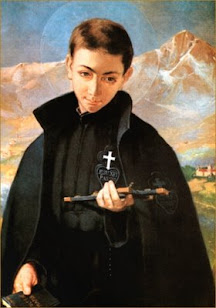
Today, August 7, we celebrate the feast of Saint Cajetan of Thiene (also known as Saint Gaetano, 1480-1547), zealous reformer of the clergy, founder of the Theatine Order, and patron saint of the unemployed. As many of the prayer requests that I receive involve prayers for those who are unemployed or seeking work, I will pray this novena to Saint Cajetan beginning today, for the next nine days—for all those who are seeking employment, both requested on this blog and maintained in the quiet of their hearts.


For those of you who wish to join me in this novena to Saint Cajetan, each day of the novena begins with the prayer for that day, followed by saying the Lord’s Prayer, Hail Mary, and Doxology (Glory Be) three times each. The intercession, “Saint Cajetan, pray for us” is prayed three times, followed by the daily prayer (below).


Saint Cajetan, pray for us. Intercede for us with Jesus Our Lord!


Daily Prayer (said each day)

O glorious St. Cajetan, you studied to be a lawyer, but when you felt that the Lord was calling you to his service, you abandoned everything and became a priest. You excelled in virtues, shunning all material rewards for your labor, helping the many unemployed people of your time. You provided loans without interest and you attracted a lot of benefactors who donated to your resources so that you could go on with your activities. Look on us with mercy. We wish to find employment that could help us and our families live with dignity. Listen to our petitions, dear saint; you who could easily give up the food on your table for the needy, bring our petitions to Jesus (here make your request). Amen.


First Day

You were a model of virtue among the priests of your time, O St. Cajetan. You sought not to receive payments from your ministry, and you taught people how to pray the rosary and develop devotions to saints. You were truly a spiritual shepherd, and your concern was always focused on the salvation of souls. But despite this, you were also aware that with hungry stomachs, the faithful would have difficulty in understanding God’s Word. You embarked to help them, not just by giving them bread but helping them gain their living by work. Look on us with pity, O glorious saint. We have many unemployed people in our midst and their families go hungry. We ask you to guide the fathers and mothers who are looking for work. Amen.
Second Day

Despite your busy schedule, dear saint, you spent eight hours a day in prayer. Your happiness consists in being united with Jesus, to savor his presence in the Eucharist. Guide us to be like you by giving priority to prayer in our life. Enable us to savor Jesus’ presence and help us become contemplatives like you. Inspire us to understand that prayer is not just asking Jesus for our needs, but being with him, delighting in his presence. We ask you, dear saint, to lead us in this direction that we may learn to delight in Jesus’ presence. Amen.


Third Day

Since your death, dear St. Cajetan, the unemployed people of the world had sought your intercession. Work is the key to a happy life. Look with pity on the millions of people in our country who wake up each morning without certainty of finding food because they don’t have work. These people become victims of desperation and some even resort to crimes to survive. Help our government leaders formulate policies that will bring about employment. You who established a bank for the needy inspire our leaders to extend loans for the poor so that they may provide for the needs of their families. Amen.


Fourth day

O glorious St. Cajetan, like the society where you lived, we are also beset by the same economic set up where the poor are becoming poorer and the rich, richer. You fasted so that the money you saved could be used to buy food for the poor, you did not accept any payment for your ministries because you wanted people to help the needy. You lived very frugally because you wanted to teach the rich about the need to share. Look with pity on our society where resources are wasted in buying useless goods, while the poor and the needy among us have not received the basic necessities. Inspire us to share that nobody among us would go hungry, and that everybody may live with dignity. Amen.


Fifth day

O glorious St. Cajetan, you spent long hours helping the sick and worked yourself to exhaustion in helping victims of plagues which were frequent in your time. You cared for the sick not just to heal them, but to guide them to a happy death. You wanted their souls, not their bodies. Help us to understand that we have to prepare ourselves to a happy death. May we likewise see that the most terrible sickness is our sinfulness, and we always have to examine ourselves for the sins we commit daily. Inspire us to have repentant hearts that we may always be prepared to meet the Lord. Amen.


Sixth Day

O humble St. Cajetan, you spoke with rulers and kings, but you never gave them much importance. You know that prestige, honor, and positions in society could only be good if they are use to help the needy and the poor. For this reason, you also confronted tyrants and stood against armies that looted, killed, and raped. Your humility did not prevent you from becoming a prophet. You only feared Jesus. Help us to remain humble and self-effacing, knowing that before God, we remain nothing. We can only be someone if we stand close to Jesus. Inspire us to follow your footsteps so that we, too, may fight for justice and help stop corruption in our government. Amen.

Seventh Day

O glorious St. Cajetan, your unceasing fasting and penance help people understand that God must be loved above all things and above all persons. You sacrificed anything or anyone that could block you from loving God with your whole soul, mind, heart and body. By eating little, you showed to others that man does not live on bread alone. You renewed the faith of many people, touched their hearts, and helped much in the reformation of the Church. Inspire us to fast and do penance for our sins. Instill on us the spirit of sacrifice that we, too, may love God intensely as you did. Amen.

Eighth Day

O glorious St. Cajetan, it pained you to see the Catholic Church divided into hostile groups. You always prayed for unity in the Church, asking laypersons, priests, and bishops to support the Pope through preaching, prayer, and sacrifices. You see the Church as the bride of Christ, the sacrament by which men and women can become holy. You worked hard for the return of the Protestants to the Catholic Church, and you preached against Protestant reformers who were attacking the heart of Catholic teachings. Teach us then to work for unity in our Church and at the same time, to defend her from sects and religious movements that attack her. Inspire us to follow your path. Amen.

Ninth day

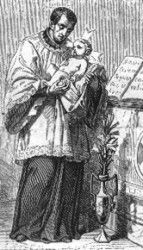
O glorious St. Cajetan, you received many special blessings from Jesus, visions and mystical experiences because of your union with him. While contemplating the mystery of incarnation, Mary appeared to you and put on your lap the baby Jesus. You held on to the baby and made your heart his dwelling place. Jesus truly loved you and his Mother trusted you. Listen then to our petitions on this last day of our novena and bring them to Jesus. Prove to us that now in heaven you are closer to Jesus and he listens to you. Amen.
January 4: Saints Joseph of Leonissa, Joan of Valois, and Theophilus the Penitent

Posted by Jacob

Each day of the year marks the feast day of numerous saints and religious figures. While I generally pick just one to write about, today, I will briefly discuss three. These men and women lived holy lives at very different points of time in the history of Church, and each of their lives is remarkable for different reasons. For one, foregoing personal comfort and safety to minister to others was his hallmark. For another, pious acceptance of the will of God, even in the most difficult of circumstances, marked her life. For the third, repentance, penance, and prayer for forgiveness to the Blessed Mother stands as a lesson for us. Taken together, these three saints put the Christian life on display: Repentance, Penance, Acceptance of God’s Plan, Courage, and Service.

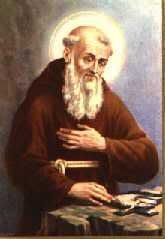
Saint Joseph of Leonissa (1556-1612) was born in Naples to a relatively poor family. From an early age, Joseph demonstrated a deep faith, erecting alters and praying to the Lord, rather than playing with siblings and peers. Oftentimes, he would encourage his young friends to pray with him, with great success. While a marriage had been arranged for him, following a serious illness during which he lost consciousness, Joseph joined the Franciscan Order. He was known for great abstinence. Referring to himself as “Brother Ass,” he is reported to have instructed his body, “there is no need to feed thee as a noble horse would be fed: thou must be content to be a poor ass.” Following fasting for an entire year, Saint Joseph traveled to Constantinople, to minister to the many Christian slaves being help in captivity there. Armed with only a Crucifix and his deep faith, he attracted many to Christianity by witness of his seemingly “comfortable poverty” and willingness to give up all he had for the Lord. Eventually, his daily preaching landed him in prison, where he sought audience with the sultan. Given permission to speak to the sultan, Saint Joseph pleaded for religious tolerance and freedom, and attempted to convert the leader. Instead, he was sentenced to death. Records indicate that he was hung by hooks through his right hand and right foot, over a smoky fire, in the center of town. Following three days of this torture, he was miraculously rescued by an angel, and returned to Italy to minister to the poor. There he resumed his vocation of wandering preacher to small villages throughout the country. With an eye of ministering to the poor, sick, and imprisoned, he helped establish hospitals, homeless shelters, and food banks. With his Crucifix in hand, he would wade into gang fights and brawls, praying, and preaching peace and good sense. Saint Joseph died on Februay 4, 1612.


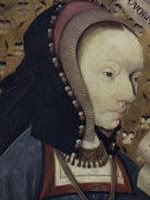
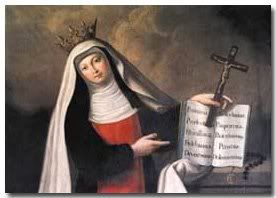
Saint Joan of Valois (1464-1505) was born into nobility in France. The second daughter of Louis XI, Joan was not blessed with the physical beauty and health of her royal family. Rather, she was blessed in other ways, including a deep piety and faith in the Lord and the Blessed Mother, and a conviction to follow the will of God. Joan, who by reports was hunchbacked, and subsequent to serious skin infections in her youth, quite pockmarked, was a difficult daughter for the king to marry off. Despite her daily suffering and disabilities, Joan remained cheerful and penitent, expressing her desire to join the Third Order of Saint Francis. Her father, however, forbade her to enter a religious community, having secured a husband for her. Joan was forced to marry the Duke of Orleans, who shortly thereafter became King Louis XII, and immediately divorced Joan, citing that he had been compelled, under fear of death, to marry her. Joan’s simple response was, “If so it is to be, praised be the Lord.”

Joan left the palace, and began a devout and solitary life of prayer, She formed a contemplative society for women—the Order of the Annonciades (Annunciation)—which she served as abottess of. Its members were to devote themselves to prayer and penance, and to cultivate in all ways the virtues of Our Lady. Joan, through her own acceptance of God’s will, drew parallels between the Annunciation of Mary (“I am the handmaid of the Lord. Let it be done to me according to Thy Word.”) and her own experience, instructing her charges with a firm hand. Throughout her difficult life, Joan maintained a gentle spirit of love and kindness, and above all else, the acceptance of the Will of God in her life. Joan of France was buried in the gray, scarlet and white habit of her order, but also with the royal crown. Many miracles, especially cures, are now attributed to her intercession at her tomb.


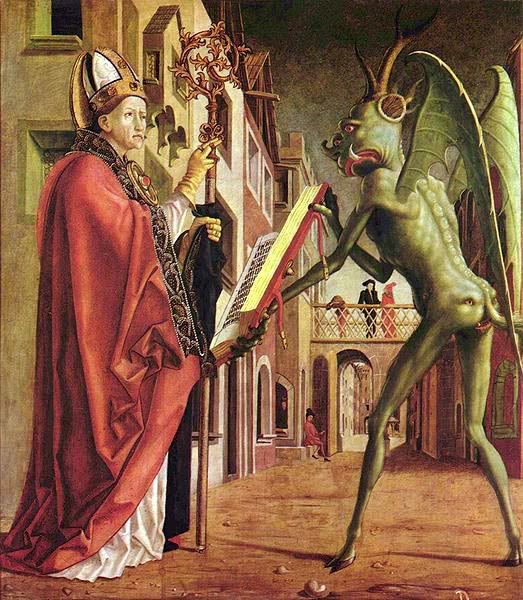
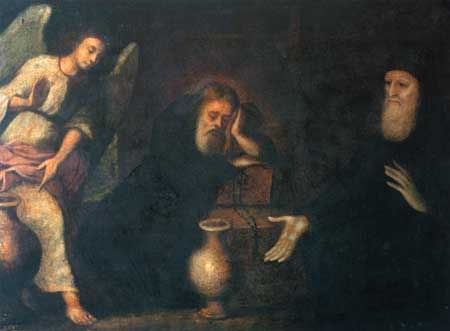
Saint Theophilus the Penitent (born unknown, died 538), also known as Saint Theophilus of Adana, was born in Turkey and eventually became an Orthodox cleric and archdeacon of Adana. Little is known about the events of his life, although legend remains regarding the role of repentance and penance in the lives of Christians. Legend recounts that Theophilus, then an archdeacon, was offered the position of bishop, but declined out of false humility. The bishop subsequently appointed deposed Theophilus’ archdeaconship. Filled with rage, pride, jealousy, and human ambition, Theophilus is said to have made a deal with the Devil to acquire the bishopric, as well as a great deal of wealth. However, upon awakening from sleep the next morning, Theophilus was filled with regret and fear for his soul. Having renounced Christ by signing a pact with the Devil, Theophilus began a rigorous fast, praying for forty days to the Blessed Virgin for forgiveness and assistance. Per legend, on the fortieth day, Mary, Mother of God, appeared to Theophilus, verbally chastising him, but granting assistance. Upon awaking again from sleep, the pact he had signed with the Devil, lay upon his chest. He took the contract to the bishop, confessing his sins. The bishop destroyed the contract with fire. Theophilus subsequently made a public confession, and spent the remainder of his life in penance and repentance, distributing his acquired wealth to the poor, and praying for salvation.

While the legend of Saint Theophilus is quite fantastical (as are many of the miracles associated with the early Saints of the Church), the lesson is quite clear, and when reflected upon, suggests why this legend persists in the faith even today. Theophilus was blinded by his anger, jealousy, and pride, and in doing so, turned away from the teachings of Christ. It isn’t until the intercession of the Blessed Mother that he realizes what has been lost, and begs for forgiveness with all his heart. Of course, our Lord, again proving His infinite love and mercy for us, welcomes him back without question.


Taken together, these three saints give us much to consider. How often are we dissatisfied with our lot in life? Whether, like Joan, it be due to our appearance or physical abilities, or like Theophilus, based upon our status, wealth, or position? How frequently do we turn from the life that the Lord wants us to live to pursue the peripheral and temporary rewards of the human world? How wonderful would it be to give up all we had, like Saint Joseph, and instead concentrate on that which lasts forever—our relationship with the Lord? How might we take steps in that direction? What can we do today to put the Lord first in our life?


Day 35 of 365
Prayer Intentions: Repentance, Penance, Courage, Acceptance of God’s Plans for us.
Requested Intentions: Priests and leaders of the Church (L); The rest and repose of a dearly departed friend (J); Reconciliation of struggling marriages (A); Reconciliation and healing in personal relationships (N).
Special Intentions: Novena to Our Lady of Prompt Succor, for those who are struggling in the face of personal trials and tribulations, unemployment and financial stress, natural disasters (including the poor of Haiti), poverty, war, and exploitation. May Our Lady of Prompt Succor hasten to help us!

Our Lady of Prompt Succor

Posted by Jacob

Many of the Marian interventions, apparitions, and miracles recorded throughout history, and approved by the Holy See, have occurred in Europe. Few have been attested to here in the United States. Two such miracles are those attributed to Our Lady of Prompt Succor, occurring in New Orleans, Louisiana. As such, Our Lady of Prompt Succor (Notre-Dame de Bon Secours) is the patroness of the city and Archdiocese of New Orleans and the state of Louisiana. Her feast day is celebrated each year on January 8th.

In 1727, Ursuline nuns founded a monastery in New Orleans, Louisiana, creating an active religious community, schools, and churches. When Louisiana became a Spanish territory in 1763, many sisters arrived from Spain to continue building the growing community of faith. However, these sisters fled in 1800 when New Orleans again became a French territory, and persecution of Catholics (under the reign of Napoleon) again began. Despite this anti-Catholic sentiment, the monastery survived, although the number of sisters quickly dwindled. Mother Saint Andre Madier wrote to a cousin in France, Mother Saint Michel, requesting assistance from her French sisters.

French religious were suffering similar anti-Catholic sentiment, and had found themselves to be short-handed in attending to their communities. Bishop Fournier, who Mother Saint Michel brought her cousin’s request to, denied it, stating that only the Pope could authorize such a request. It should be noted, at that time, Pope Pius VII was imprisoned by Napoleon, and unable to be communicated with. Bishop Fournier’s statement was, therefore, tantamount to absolute refusal. Nonetheless, Mother Saint Michel wrote the Pope, submitting her request to travel to New Orleans with a group of sisters, and aid in the re-invigoration of the new world faith community.

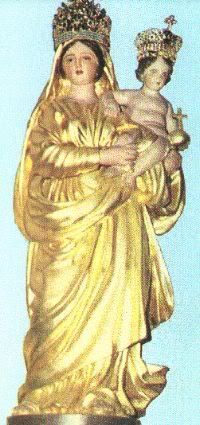
Before sending the letter, Mother Saint Michel prayed: O most Holy Virgin Mary, if you obtain for me a prompt and favorable answer to this letter, I promise to have you honored at New Orleans under the title of Our Lady of Prompt Succor. Her letter was sent on March 19, 1809. Despite the odds, she promptly received a response on April 29, 1809, granting her request. Mother Saint Michel, commissioned a golden statue of Our Lady of Prompt Succor holding the Infant Jesus. Both the Blessed Mother and the infant Christ were sculpted with golden crowns, Jesus holding a globe with a cross affixed to it, and the two Holy Family members looking in different directions as if they each had important tasks to focus on. The statue was blessed by Bishop Fournier, now convinced of the importance of the mission by the miraculous response, and Mother Saint Michel and several postulates departed for New Orleans.

The group arrived in New Orleans on December 31, 1810, and placed the golden statue of Our Lady of Prompt Succor in the monastery chapel. Devotion to the Blessed Mother grew, and within five years, two miracles were attributed to prayers offered before the statue.

In 1812, a terrible fire ravaged the city of New Orleans, destroying large tracts of homes and businesses. Driven by a raging wind, the flames of the great fire moved quickly toward the convent. With all certainly lost, the sisters of the convent were ordered to evacuate. One sister, however, Sister Anthony, placed a small statue of Our Lady of Prompt Succor on a window sill facing the advancing wall of flames, and Mother St. Michel prayed aloud: "Our Lady of Prompt Succor, we are lost, unless you hasten to our help." In an instant, the wind changed and the fire stopped its steady advance. The convent was saved and the flames extinguished. Witnesses claimed: "Our Lady of Prompt Succor has saved us!"

Again, in 1815, the convent, and indeed all of the city, was threatened, this time by British soldiers. On January 8, General Andrew Jackson and less than 1,000 soldiers (by some reports) were engaged in battle by an overwhelming force of British soldiers (more than 15,000). The citizens of New Orleans prayed to Our Lady for safety and success in battle. Along with the Ursuline sisters, the town gathered in the chapel of Our Lady of Prompt Succor, weeping and praying. Mass was offered at the altar on which the statue of Our Lady of Prompt Succor had been placed, and the Ursuline sisters made a vow to have a Mass of Thanksgiving sung annually should the American forces win. At the very moment of Holy Eucharist, word reached the chapel that the American forces had prevailed with miraculously few casualties. The entire battle took less than 25 minutes. Jackson acknowledged the intercession of the Blessed Mother in the victory and visited the chapel to thank the sisters. To this day, on January 8, a Mass of Thanksgiving continues to be offered.

Our Lady of Prompt Succor continues to watch over us, with numerous personal miracles and intercessions reported since the arrival of the statue in New Orleans. Moved from the old monastery in the city’s French Quarter, it now is displayed at the convent’s new chapel where citizens of the city continue to pray for intercession. The statue itself is regarded as the oldest image of the Blessed Mother and the Infant Christ in the United States.


Prayer for Intercession of Our Lady of Prompt Succor

Our Lady of Prompt Succor, ever Virgin Mother of Jesus Christ our Lord and God, you are most powerful against the enemy of our salvation. The divine promise of a Redeemer was announced right after the sin of our first parents; and you, through your Divine Son, crushed the serpent's head. Hasten, then, to our help and deliver us from the deceits of Satan. Intercede for us with Jesus that we may always accept God's graces and be found faithful to Him in our particular states of life. As you once saved the City of New Orleans from ravaging flames and our Country from an invading army, have pity on us and obtain for us protection from hurricanes and all other disasters. (Silent pause for individual petitions.) Assist us in the many trials which beset our path through life. Watch over the Church and the Pope as they uphold with total fidelity the purity of faith and morals against unremitting opposition. Be to us truly Our Lady of Prompt Succor now and especially at the hour of our death, that we may gain everlasting life through the merits of Jesus Christ Who lives and reigns with the Father and the Holy Spirit, one God, world without end. Amen.


Our Lady of Prompt Succor, hasten to help us.


Today, I begin a Novena to Our Lady of Prompt Succor, for those who are struggling in the face of personal trials and tribulations, unemployment and financial stress, natural disasters (including the poor of Haiti), poverty, war, and exploitation. May Our Lady of Prompt Succor hasten to help us!

The Baptism of the Lord

Posted by Jacob


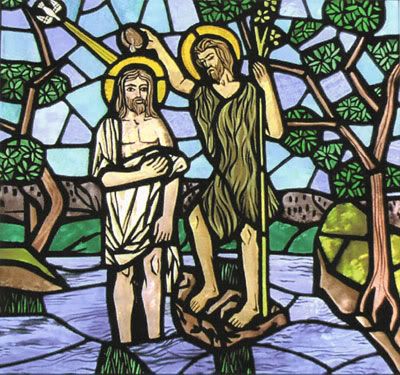
Today, we celebrate the Baptism of the Lord in the river Jordan by Saint John the Baptist. John the Baptist is my patron (Confirmation) saint, so this is a personally important feast day for me—one which reminds us of humility, of service, to others, and to the saving graces offered to us through rebirth in Christ.  The Baptism of the Lord is also the first of the five Luminous Mysteries of the Holy Rosary.


15 And as the people were in expectation, and all men mused in their hearts of John, whether he were the Christ, or not; 16 John answered, saying unto them all, I indeed baptize you with water; but one mightier than I cometh, the latchet of whose shoes I am not worthy to unloose: he shall baptize you with the Holy Ghost and with fire: 17 whose fan is in his hand, and he will thoroughly purge his floor, and will gather the wheat into his garner; but the chaff he will burn with fire unquenchable.


21 Now when all the people were baptized, it came to pass, that Jesus also being baptized, and praying, the heaven was opened, 22 and the Holy Ghost descended in a bodily shape like a dove upon him, and a voice came from heaven, which said, Thou art my beloved Son; in thee I am well pleased. (Luke 3: 15-17; 21-22).


John the Baptist reflected upon his own role in the cosmos, understanding the extraordinary dynamic of conversion preached by Jesus: to make way for the everything that God is, we who are nothing must lose ourselves, become little in order to be great, be the least in order to become the first in Heaven!


But why did Christ need to be baptized? If baptism serves to remove sin, and Christ was sinless, what was the point? In choosing to be baptized by John, Christ models for all Christians the importance of the sacrament, and John models the importance of service and humility. Christ’s baptism further transforms the elements of the world, as St. Maximus of Turn explained in an early homily: “Christ is baptized, not that he may be sanctified in the waters, but that he himself may sanctify the waters, and by his own purification may purify those streams which he touches. For the consecration of Christ is the greater consecration of another element. For when the Savior is washed, then already for our baptism all water is cleansed… Christ therefore takes the lead in baptism, so that Christian peoples may follow after him with confidence.”

The Gospel Liturgy of the “Baptism of the Lord” reminds us of the awesome revelation of the Holy Trinity to all of humanity. As our Lord Jesus Christ—the Son of God made flesh-- was baptized in the waters of the Jordan, the Father’s voice is heard and the Holy Spirit, in the form of a dove, descends. In Greek, baptism is translated as "to be immersed."  Through the saving grace and redemption of the Baptism of the Lord, our world is “immersed” in God and, indeed, transformed.  Our world, and our lives, will be freed from the snare of sin and reborn, like gold in the refiner's fire !


Today, we pray for those in service to others. We pray for humility and to never lose sight of the central place the Lord should take in our lives.

Of special note, today I will be starting a Novena to Our Lady of the Immaculate Conception. The specific intention for this Novena is for women and couples-- those who I know personally as well as those I do not—who are experiencing difficulties or challenges with conceiving or adopting children. Further, I pray for those who are pregnant or expecting children, new parents, and especially for those who have suffered pregnancy-related loss or complications. May Our Lady of Immaculate Conception look with kindness and blessing upon you, bring you peace and love, and intercede on your behalf with our Lord and Savior, Jesus Christ.


Day 10 of 365
Prayer Intentions: Those in service to others
Special Intentions: Those trying to conceive or adopt; Those who are pregnant or expecting children; New parents; Those who have experienced miscarriage or pregnancy complications