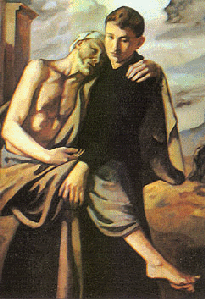
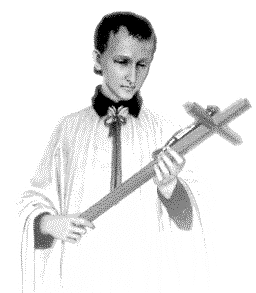
Why pray the Rosary every day for a year?


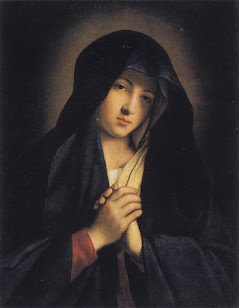
Each time the Blessed Virgin has appeared-- whether it be to Saint Bernadette Soubirous at Lourdes; to Lucia, Jacinta, and Francisco at Fatima; or to Mariette Beco at Banneux-- she has asserted the importance, saving grace, and power of praying the Holy Rosary on a daily basis. Based upon her words, the Rosary is penance and conversion for sinners, a pathway to peace, an end to war, and a powerful act of faith in Jesus Christ. Pope Paul VI presented the Rosary as a powerful means to reach Christ "not merely with Mary but indeed, insofar as this is possible to us, in the same way as Mary, who is certainly the one who thought about Him more than anyone else has ever done."

To show us how this is done, perhaps no one has been more eloquent than the great Cardinal Newman, who wrote: "The great power of the Rosary consists in the fact that it translates the Creed into Prayer. Of course, the Creed is already in a certain sense a prayer and a great act of homage towards God, but the Rosary brings us to meditate again on the great truth of His life and death, and brings this truth close to our hearts. Even Christians, although they know God, usually fear rather than love Him. The strength of the Rosary lies in the particular manner in which it considers these mysteries, since all our thinking about Christ is intertwined with the thought of His Mother, in the relations between Mother and Son; the Holy Family is presented to us, the home in which God lived His infinite love."


As Mary said at Fatima, "Jesus wants to use you to make Me known and loved. He wishes to establish the devotion to My Immaculate Heart throughout the world. I promise salvation to whoever embraces it; these souls will be dear to God, like flowers put by Me to adorn his throne."


January 8, 2013: Saint Severinus

Posted by Jacob


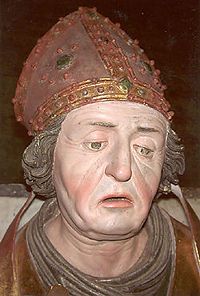
Today, we celebrate the feast day of Saint Severinus (died 482), monk, hermit, prophet, and founder of monasteries.  Saint Severinus labored diligently for the Lord, focusing his attention on the region of Noricum (modern day Austria).  Through his efforts, the faith was spread to those regions, where he practiced charity and provided refuge to all trying to escape war and poverty.  Saint Severinus lived the Gospel, demonstrating through his actions and words the love and redemption made possible through Christ.

Severinus left home at an early age, and took great pains to hide his family origins.  Given what we know of him, including his well-developed Latin abilities, he was likely a Roman of noble birth.  However, he gave up this life of wealth and privilege, and spent his early years in the deserts of the East.  There, he lived the life of a hermit, growing closer to God, listening attentively to His will, and following where He might lead.  While there, he served as spiritual director and father to Saint Anthony of Egpyt.


Eventually, Saint Severinus felt called to a life of evangelization, and left the desert.  He traveled to Noricum, where he spent the next 30 years of his life evangelizing and ministering to the peoples living along the banks of the Danube River, near modern-day Vienna.  He labored to establish several monasteries, but found that the local citizens were none too keen to embrace Christianity.  Given the gift of prophecy, Severinus predicted the arrival of the Huns and the destruction that would occur, and prepared by creating shelters and refuges (in advance!) for those who would need them.  Having laid in food and provisions, he assisted many in surviving the deadly attacks.

Following this, Severinus’ reputation for holiness spread quickly throughout the region, and many were converted.  The monasteries were soon full, and more were constructed.  He was sought out for assistance in times of famine, natural disaster, and other calamities.  Always quiet and steady, Saint Severinus would preach penance and conversion to the people, and each time, crises were averted.  He lived to spread the Word of God, and focused solely on this noble mission throughout the end years of his life.

Saint Severinus also practiced what he preached.  He ate only once each day, fasting almost completely during Lent.  He always traveled barefoot, and dressed in thin robes regardless of the weather.  He slept on sackcloth on the ground, and urged the monks in his monasteries to do the same.  All this, considered penance, he offered for those in need.

Generally surrounded by people, Severinus occasionally took refuge in a hermitage, where he harkened back to his days in the desert, communing internally with the Lord.  It was there that he died, on January 8, 482, in his cell, singing Psalm 150.  Of course, always a prophet, Severinus had predicted the date and time of his own death accurately.  He was laid to rest, but during subsequent invasion, his relics were moved and interred in Naples, Italy at the Benedictine monastery of San Severino.

Psalm 150

1 Praise the Lord.
Praise God in his sanctuary;
                    praise him in his mighty heavens.
2 Praise him for his acts of power;
                    praise him for his surpassing greatness.
Praise him with the sounding of the trumpet,
                    praise him with the harp and lyre,
4 praise him with timbrel and dancing,
                    praise him with the strings and pipe,
5 praise him with the clash of cymbals,
                    praise him with resounding cymbals.
Let everything that has breath praise the Lord.
Praise the Lord.

Paul the Deacon described the qualities of Saint Severinus in the 8th Century as: “In these territories of the Noricans at that time was the monastery of the blessed Severinus, who, endowed with the sanctity of every abstinence, was already renowned for his many virtues, and though he dwelt in these places up to the end of his life: now however, Neapolis keeps his remains.”

We pray today for the quiet determination and piety of Saint Severinus, and for all those who are in need, displaced by war or suffering from famine.  May the Lord bless each of us in our daily life, as He so blessed Saint Severinus.


December 24: Saints Emiliana and Tarsilla

Posted by Jacob

Happy soul! she shall discover

What joy, what bliss,
How many heavens at once it is,
To have a God become her Lover!

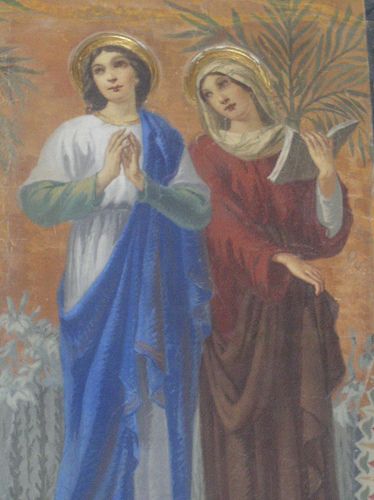
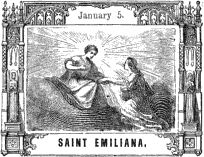
Today, December 24, we celebrate the feast day of Saints Emiliana and Tarsilla (died sixth century), Virgins of the Church, and aunts of Saint Gregory the Great. What we know of their lives was recorded by the holy pope, who was deeply moved by their model of Christian life and virtue.

Born in Rome, Emiliana and Tarsilla were the daughters of senator Gordian and Saint Silvia. Nieces of Pope Saint Felix III, the young women were destined for lives of holiness, and together, while quite young, renounced the world. As young women, they together consecrated themselves to the Lord, desiring to stay pure. Their house was as a convent, and the two spent so much time kneeling in prayer that their knees and elbows arthritically locked in the position of prayer. Living as hermits, they encouraged one another in the ways of the faith, drawing deeper and deeper into the spiritual life.

Tarsilla and Emiliana had a third sister, Gordiana, who had initially made the same vows and consecrated herself to the Lord. Gradually, however, she withdrew from her sisters, returning to the world. Their reproaches fell on deaf ears, and caused them significant sadness and grief.

Saint Tarsilla died prior to Saint Emiliana, but not before she received a vision of her uncle, Pope Saint Felix. In her vision, the pope appeared to her, showing her a place of great beauty. He said, “Come, I will receive you into this habitation of light.” Immediately, she fell ill with fever. Her sister ministered to her, but to no avail. By the following day, her illness had grown worse. Saint Tarsilla, in agonizing pain, called out to those around her; “Make way! Jesus is coming!” With her eyes fixed firmly on heaven, she died soon thereafter, and a heavenly fragrance filled the room, confirming her visions.

Saint Emiliana was deeply saddened, made more difficult by missing her sister on Christmas. Emiliana received consolation in the form of a vision of her sister, however. In this vision, Tarsilla encouraged, “My sister, come! I did not celebrate with you the birth of the Lord, but together we will celebrate the feast of the Epiphany.”

“If you call only me,” Emiliana replied, “what will become of our sister, Gordiana?”

“Come,” Tarsilla sadly answered. “Our sister has decided to remain with the world.”

Soon thereafter, Saint Emiliana fell ill, and promptly joined her sister in heaven. Their relics are kept at the Oratory of Saint Andrew on the Celian Hill in Rome.

Pope Saint Gregory the Great recounted the tale of his aunts throughout his lifetime. He used it to illustrate the point that we must work constantly to save our souls, repenting for our actions. To Saint Gregory, there is no point in beginning the work of salvation, if we do not plan to see it through to the end. As we prepare for the birth of Our Lord, we look to our own commitments. Are we ready to greet the infant Christ, come to redeem and save us?

Tonight, we echo the sentiment of Saint Tarsilla: "Make way!  Jesus is coming!"  How might we use this dark night—lit by the choirs of angels—to prepare for the coming of the Lord?


Year 2: Day 358 of 365
Prayer Intentions: Preparation to greet Our Lord.
Requested Intentions: Healing (M); Safety, security, and sanctity for a family (A); Healing (N); Successful relationship (N); Healing of a friend; growth in the Lord (M); To hear and answer the Lord’s call (M); Healing of a friend undergoing chemotherapy (L); For the peace, safety, and holiness of a sister (J); Financial security (C); Conversion of a newly married couple (M); Peace in a family (S); Peaceful repose of departed mother (J); Blessings on a relationship (J); Financial security, successful employment (J); Obedience to God’s will (A); Conversion of souls (A); Success of business venture; faith of daughter (S); Safe return home (J); Recovery of mother and son; repose of the souls of the dearly departed (A); Blessings upon a relationship (M); Sobriety and recovery for a son (M); Employment and successful marriage (A); Employment, healing, freedom from anxiety (T); Financial security (C); Conversion (T); Peace in difficult times at work (E); Financial security and blessings for mother and children (T); Financial security for a mother (M); Health, finances, successful marriage (A); Successful resolution of court case for son (K); Continued sobriety (N); Healing of a chronic health condition (B); Successful employment (A): Peace in a family, recovery of a niece from substance use (L); Blessings on a marriage, healing of a husband (P); For the health and recovery of sisters (B); For a daughter and granddaughter (D); Blessings on overseas employment (M); Healing of mother (L).


December 22: Blessed Jacopone daTodi

Posted by Jacob

"I weep because Love is not loved!"


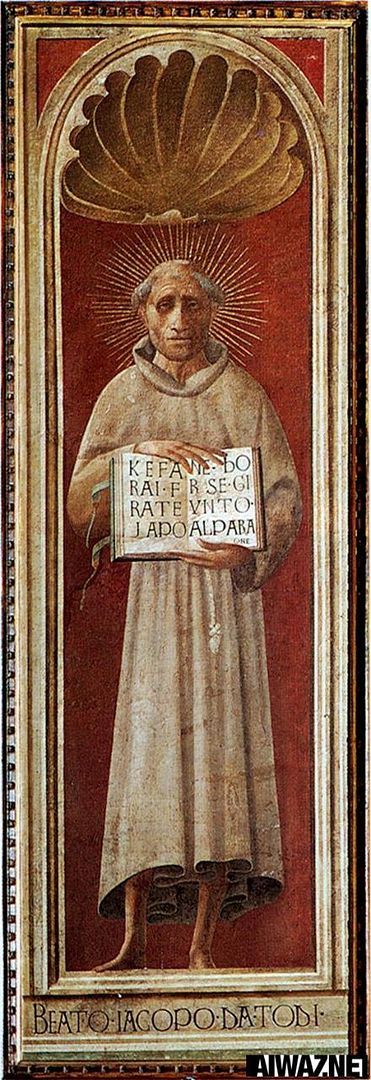
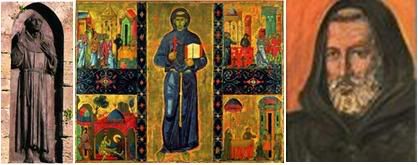
Today, December 22, we celebrate the feast day of Blessed Jacopone da Todi (1230-1306), Franciscan friar, poet and dramatist, and author of the Stabat Mater. Blessed Jacopone arrived at his spirituality later in life, reminding us that the Lord has a plan for each of us, and that it is never too late to repent and truly convert. Today’s holy man’s focus on love as that which underscores our every action—our every breath—even our every suffering—calls us to a quiet and contemplative place as we await our greatest joy, our greatest love—the Nativity of Our Lord and Savior.

Jacomo, or James, was born into a noble Italian family in the city of Todi. Possessing a keen mind, he studied law in Bologna, became a successful lawyer, and married a pious and generous woman. Unknown to Jacomo, his young wife took it upon herself to enact harsh penances for his sins, excesses, and worldly manner of living. She wore a rough girdle of coarse hair beneath her clothing to mortify her flesh, in atonement for his sins. It was not until her premature death, caused by an accident, that Jacomo realized the errors of his ways. He was forty years old, and undertook to radically convert his life.

Without hesitation, Jacomo liquidated his worldly possessions, dividing them amongst the poor. He entered the Third Order of the Franciscans, a secular order, and sought to live a life worthy of the Lord. His acquaintances, however, were none too kind to him. As he had given away his wealth, Jacomo dressed in penitential rags, and was mercilessly mocked by those he had considered friends. They called him “Jacopone,” which literally translated means, “Crazy Jim.” Over time, throughout ten years of humiliation, Jacopone maintained his penitential practices. He eventually grew to love the nickname, as a reminder of his former life, and his newfound humility.

After ten years, he petitioned to become a member of the Franciscan Order of Friars Minor (the First Order). He was, however, denied due to his reputation. Rather than give up, Jacopone composed the first of many beautiful poems, this one focusing on the vanities of the world. Following their reading of his work, the hearts of the Order were changed, and he was admitted at the age of 48. Not considering himself worthy of the priesthood, Jacopone declined ordination, instead living as a brother. He continued to embrace strict penances, and spent his days writing poems, lauds, and hymns of praise to the Lord. Jacopone was also one of the first to dramatize Biblical stories for performance.

At that time, division had grown within the Franciscan community, with two factions at opposition to each other. The first, which Jacopone joined, sought to renew the strict poverty and mysticism of Saint Francis. Opposed by Pope Boniface VIII, Jacopone was excommunicated and imprisoned following signing a covenant to have the pope deposed. Although he promptly acknowledged his error in judgment, Jacopone spent five years in prison, until released and absolved by Pope Benedict XI.

Never one to complain, Jacopone had accepted his imprisonment as a penance for his wrongdoing. He embraced Franciscan spiritual mysticism, writing poetry and praying all day, every day. More often than not he could be found weeping due to the lack of regard for the Love of the Lord in the world. During his imprisonment, he also wrote the Latin hymn, Stabat Mater, joining the love and suffering of Our Blessed Mother beneath the Cross.

His years in prison had taken their toll, and Blessed Jacopone died only three years following his release. His body is buried in the crypt of Saint Fortunate Church in Todi, Italy. Upon his tomb, it is written: “Here lie the bones of Blessed Jacopone dei Benedetti da Todi, Friar Minor, who, having gone mad with love of Christ, by a new artifice deceived the world and took Heaven by violence.”

When we think of saints and blessed, we don’t necessarily think of someone like Blessed Jacopone… but maybe we should. He did not live a blameless life. In fact, the first 40 years of his life were filled with transgressions and worldly passions—like most of our own lives. Even following his commitment to the Lord, Jacopone still found himself caught up in scandal and landed in prison. Throughout this ordeal, he turned to God, deepening his faith, finding love in suffering, and leaving a poetic legacy to inspire countless faithful. We are reminded that the Lord does not expect us to be perfect, nor does He expect us to never make mistakes. It is what we do after our mistakes--in penance and repentance—in love—that matters.


Year 2: Day 356 of 365
Prayer Intentions: Lives of pure, true Love.
Requested Intentions: Healing (M); Safety, security, and sanctity for a family (A); Healing (N); Successful relationship (N); Healing of a friend; growth in the Lord (M); To hear and answer the Lord’s call (M); Healing of a friend undergoing chemotherapy (L); For the peace, safety, and holiness of a sister (J); Financial security (C); Conversion of a newly married couple (M); Peace in a family (S); Peaceful repose of departed mother (J); Blessings on a relationship (J); Financial security, successful employment (J); Obedience to God’s will (A); Conversion of souls (A); Success of business venture; faith of daughter (S); Safe return home (J); Recovery of mother and son; repose of the souls of the dearly departed (A); Blessings upon a relationship (M); Sobriety and recovery for a son (M); Employment and successful marriage (A); Employment, healing, freedom from anxiety (T); Financial security (C); Conversion (T); Peace in difficult times at work (E); Financial security and blessings for mother and children (T); Financial security for a mother (M); Health, finances, successful marriage (A); Successful resolution of court case for son (K); Continued sobriety (N); Healing of a chronic health condition (B); Successful employment (A): Peace in a family, recovery of a niece from substance use (L); Blessings on a marriage, healing of a husband (P); For the health and recovery of sisters (B); For a daughter and granddaughter (D); Blessings on overseas employment (M); Healing of mother (L).

December 11: Saint Daniel the Stylite

Posted by Jacob

Today, December 11, we celebrate the feast day of Saint Daniel the Stylite (409-490), hermit, preacher, counselor to emperors, and pillar-dwelling saint consecrated to the Lord. Daniel spent his life living atop a narrow pillar, offering spiritual guidance and the Eucharist to those who came to him. His detachment from the world allowed him to read the hearts of man, observe the actions of all, and offer direct and effective sermon and counsel to all who would listen. While pillar-living never appealed to western Christian hermits, it was a popular method of dedication to the Lord in the middle east and eastern Church. There, those who observed this seemingly strange manner of life were deeply moved by its symbolism and it’s warning against worldliness. It was a life of austerity and public scrutiny, and Daniel embraced both as a model of discipline, obedience, and wisdom.


Daniel was born in Maratha, Syria. From an early age he voiced interested in becoming a monk, and demonstrated the piety, sacrifice, and holiness the calling would require. His parents dedicated him to the Lord, and he entered the monastery at Samosata on the Upper Euphrates at the age of 12, and lived in relative peace and discipline, earning the respect of his brothers. When time came to choose a new abbot, they selected Daniel, who, in humility, declined. Rather, he had intentions of living in hermitude. During this time, Daniel learned of Saint Simeon the Stylite, the most famous of the pillar-dwellers. Daniel visited Saint Simeon on two occasions, receiving counsel and a blessing from the great hermit. Saint Simeon also told Daniel that he would suffer greatly for Christ.

At the age of 42, Daniel decided to embrace the life of a stylite, and set off for the Holy Lands to dwell. However, he received a vision of Saint Simeon, and instead traveled to Constantinople—the city he would spend the remainder of his days. Taking his “first steps upward,” Daniel lived on a series of pillars constructed for him by Emperor Leo I for the remaining 33 days of his life. The pillars were open to the elements, and narrow enough that we has generally forced to stand all day, every day, until collapsing. The nights were sometimes well below freezing, but Daniel embraced this as the suffering foretold by Saint Simeon.

Daniel became somewhat of a local celebrity, attracting many to come and sit beneath his pillar. There, he preached, celebrated Mass, offered spiritual direction and counsel, and performed many miraculous cures of the sick and weak who were brought to him. He was ordained atop his pillar by Saint Gennadius, and lived to offer prudent counsel to Emperors Leo and Zeno, and the patriarch of Constantinople. In 465, for example, he warned the emperor that fire would strike the capital city unless the people said public prayers twice a week to avert it. The warning was ignored, and Constantinople was in large part destroyed by fire. The fact that Saint Daniel had predicted this made him still more highly regarded by the people who had earlier paid no attention to his warnings. In 33 years, Daniel came down from his pillar only once, to combat heresy through advising Emperor Baliscus. Following that meeting, he returned to his pillar spirituality.

At that age of 84, Daniel knew his life was drawing to a close. Weak and atrophied from a lifetime of little movement, he celebrated a midnight Mass and died quietly thereafter atop his pillar. Saint Daniel was buried at the foot of the pillar he had dwelt on, dedicating himself through asceticism, prayer, and penance to the Lord. The life of Saint Daniel the Stylite reminds us that there are many ways to live a spiritual life. All of us have our own way to be close to God every day. Our task is to find the way our own personal manner in which to love and serve the Lord.


Thou becamest a pillar of patience and didst emulate the Forefathers, O righteous one: Job in his sufferings, Joseph in temptations, and the life of the bodiless while in the body, O Daniel, our righteous Father, intercede with Christ God that our souls be saved.


With longing and zeal for things on high, O righteous one, thou leftest behind all things that are found here below, when thou builtest thy pillar as another Heaven whence thou didst flash with the light of wonders and signs. Do thou ever pray Christ that our souls be saved. Amen.


Year 2: Day 345 of 365
Prayer Intentions: Courage to live our faith visibly.
Requested Intentions: Financial security, successful employment (J); Obedience to God’s will (A); Conversion of souls (A); Success of business venture; faith of daughter (S);  Safe return home (J); Recovery of mother and son; repose of the souls of the dearly departed (A); Blessings upon a relationship (M); Sobriety and recovery for a son (M); Employment and successful marriage (A); Employment, healing, freedom from anxiety (T); Financial security (C); Conversion (T); Peace in difficult times at work (E); Financial security and blessings for mother and children (T); Financial security for a mother (M); Health, finances, successful marriage (A); Successful resolution of court case for son (K); Continued sobriety (N); Healing of a chronic health condition (B); Successful employment (A): Peace in a family, recovery of a niece from substance use (L); Blessings on a marriage, healing of a husband (P); For the health and recovery of sisters (B); For a daughter and granddaughter (D); Blessings on overseas employment (M); Healing of mother (L).

October 8: Feast of Two Saint Pelagias

Posted by Jacob

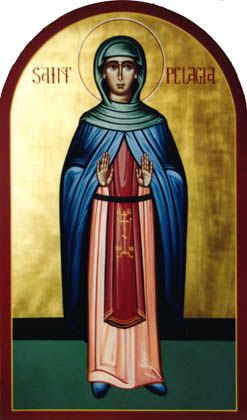
Today, October 8, we celebrate the feast day of two Saint Pelagias: Pelagia the Virgin Martyr of Antioch and Pelagia the Penitent. Over the years, the lives of these Pelagias have become entwined and confused by oral tradition. There were at least two Pelagias, both from Antioch, Syria. Today, we take lessons from both their lives.


The first Pelagia was a young virgin martyr in the fourth century. Committed to maintaining her virginity for Christ, Saint Pelagia was prepared for the Diocletian persecution when it reached Antioch. At fifteen years of age, soldiers came in search of her, in order to force her to publicly offer a sacrifice to the pagan gods. She was alone in the house, and unable to defend herself. She politely asked the soldiers what was to become of her, and upon hearing that she was sentenced to execution, begged permission to return inside her home to put on more modest clothing. Overcome by her resolute courage, the solders allowed her the privilege.

Knowing what lie ahead of her, including her defilement at the hands of the soldiers, the holy virgin was not willing to expose herself to danger of being dishonored. Instead, she therefore went up to the roof of the house and threw herself into the sea. Thus she died, as Saint John Chrysostom says, a virgin and a martyr, and was honored as such by the Church of Antioch. Of Pelagia, the Virgin Martyr, Saint John Chrysostom delivered the following sermon:

"Even women now poke fun at death and girls mock passing away and quite young, unmarried virgins skip into the very stings of Hades and suffer no ill effects. All of these blessings we experience because of Christ, born of a virgin. For after those blessed contraction pains and utterly awe-inspiring birth the sinews of death were unstrung, the devil's power was disabled and from then on became contemptible to not just men but also women, and not just women, but also girls....


"It's for this reason that blessed Pelagia too ran to meet death with such great delight that she didn't wait for the executioners' hands nor did she go to court, but escaped their cruelty through the excess of her own enthusiasm. For while she was prepared for tortures and punishments and every kind of penalty, even so she was afraid that she would destroy the crown of her virginity. Indeed, that you might learn that she was afraid of the sexual predation of the unholy men, she got in first and snatched herself away in advance from the shameful violence. None of the [Christian] men ever attempted any such act at all. Instead they all filed into court and displayed their courage there. Yet women, by nature vulnerable to harm, conceived for themselves this manner of death. My point is that, were it possible both to preserve one's virginity and attain martyrdom's crown, she wouldn't have refused to go to court. But since it was utterly inevitable that one of the two would be lost, she thought it a sign of extreme stupidity, when it was possible for her to attain each victory, to depart half crowned. For this reason she wasn't willing to go to court or to become a spectacle for lecherous eyes, or to give opportunity for predatory eyes to revel in the sight of her own appearance and crudely insult that holy body. Instead she went from her chamber and the women's quarters to a second chamber - heaven....


"Don't simply pass over what happened, but consider how it's likely that she was raised as a gentle girl, knowing nothing beyond her chamber, while soldiers were posted against her en masse, standing in front of the door, summoning her to court, dragging her into the marketplace on weighty sorts of grounds. There was no father inside, no mother present, no nurse, no female attendant, no neighbor, no female friend. Instead, she was left alone in the midst of those executioners. I mean, how isn't it right that we be astonished and amazed that she had the strength to come out and answer those executioner soldiers, to open her mouth and utter a sound, just to look, stand, and breathe? Those actions weren't attributable to human nature. For God's influence introduced the majority. Most assuredly, at the time she didn't just idly stand around, but displayed all her personal qualities - her enthusiasm, her resolve, her nobility, her willingness, her purpose, her eagerness, her bustling energy. But it was as a result of God's help and heavenly good goodwill that all these qualities reached maturity....


"In addition to what's been said, I marvel as well at how the soldiers granted her the favor, how the woman deceived the men, how they didn't work out the deception. After all, one can't say that no one effected anything of the sort. For many women, it seems, gave themselves up to a cliff or hurled themselves into the sea or drove a sword through their breast or fastened a noose. That time was full of numerous dramas of that kind. But God blinded the soldier's hearts so that they wouldn't openly see the deception. That's why she flew up out of the middle of their nets....


"Lot's of people who've tumbled from a high roof haven’t suffered any ill effect. Others, in turn, despite suffering permanent disability to some part of their body, have lived for a long time after the fall. But in the case of that blessed virgin God didn't allow any of these options to happen. Instead, he ordered the body to release the soul immediately and received it on the grounds that it had struggled sufficiently and completed everything. For death wasn't caused by the nature of the fall, but by God's command. From that point the body wasn't lying on a bed, but on the pavement. yet it wasn't without honor as it lay on the pavement...For this reason, then, that virginal body purer than any gold lay on the pavement, on the street."


The second Pelagia, known as Pelagia (also sometimes known as Margaret of Antioch) the Penitent, lived about a century later. This Pelagia was a dancer and “immoral actress” in Antioch. Very beautiful, she is reported to have had many lovers, desired expensive jewels, and was renowned for her dissolute and decadent lifestyle. She would, however, undergo radical conversion and come to live for the Lord alone.

At the height of her popularity, she and some friends were passing by the Basilica of Saint Julian in Antioch where Bishop Nonnus was preaching. Pelagia was reclining in a litter and was provocatively dressed; her head and shoulders were uncovered at a time when women were to be veiled in public. The group of bishops who were gathered outside were shocked by the sight of her and turned away, except for Bishop Nonnus who looked at her for a long time. Bishop Nonnus then turned to the other bishops and asked, "Did not the sight of her great beauty delight you?"

When Bishop Nonnus spoke in the basilica the next day, Pelagia was there. The people were surprised to see her because she was not a catechumen. Apparently the bishop's words had stirred Pelagia to reconsider how she was living her life. She met with the bishop soon after and asked to be baptized, saying: "Holy father, be merciful to me, a sinner; baptize me, and teach me repentance. I am a sea of iniquity, an abyss of destruction, a net and weapon of the devil." Upon questioning, Pelagia explained that her father and mother named her Pelagia, but that the people of Antioch called her Margarita, (which means pearl) for she was the “devil's jewel.”

Bishop Nonnus found a woman to act as her godmother and then exorcised and baptized her. A few days later Pelagia arranged to give all her wealth and possessions to the bishop. He handed all the wealth over to the treasurer of the church in Antioch, telling him to use it for widows and orphans, not for the church, because it was tainted money.

Soon after Pelagia's conversion and baptism she left Antioch, never to return. She withdrew to a cave in Jerusalem near the Mount of Olives where she dressed in men's clothing and lived an austere life as a hermit, praying, fasting, and engaging in penance for her earlier sins. She became known as Pelagius, "the beardless monk.” Bishop Nonnus kept in touch with Pelagia, sending emissaries to bring “Brother Pelagius” messages of encouragement from time to time. One such emissary, James the Deacon, found her dead during one visit. It was not until the anointing of her body that they discovered that she was a woman. By repentance and striving, the former sinner received the mercy of God, the forgiveness of her sins and sanctification, and her purified and sanctified soul was made worthy of the Kingdom of God.

The lives of the two Saint Pelagias remind us of the different paths our own lives can take. Few of us are sin-free, engaging in “extreme” measures to avoid defilement like Saint Pelagia the virgin martyr. It is far more likely that we are better able to identify with Saint Pelagia the Penitent, living sinful lives, but called to the repent by the Lord. Both women—from very different backgrounds—found their salvation in the Gospel, and washed clean, joined their Creator in Heaven. We are inspired to true conversion, full repentance, and lives of sanctity by their stories.


Year 2: Day 281 of 365
Prayer Intentions: Lives of true conversion and repentance.

Requested Intentions: Healing of a chronic illness (P); Safety of a family during storms (A); Successful home ownership (P); Healing of a marriage (M); Employment for a husband, blessings for a marriage (E); Successful examinations for a daughter, healing of a relationships (V); Blessing for a family (V); Healing of baby girl M and all children suffering (M); Special intentions (R); Business success, peace, health (E); Conversion and deliverance of those who suffer, increase in vocations (M); Financial security and safe housing (M); For a daughter (K); Conversion of a family, deliverance of the souls in Purgatory (S); Successful marriage (A); Health, safety, grace, success of a building project (A); Successful treatment and recovery from cancer (D); Clear speech for a child (C); Conversion of a family (A); Successful employment (S); For the healing of impaired vision (F); For a couple experiencing difficulties (L); Successful employment after finishing college (M); Mother’s health (A); Financial security, freedom from anxiety (S); For a son and cousins (L); Peace and civility (B); Successful examination results (D); Safety of family, strength, courage, wisdom (C); For the souls of a departed father and brother, finding of a suitable marriage partner (R); Successful pilgrimage, deepening of prayer life (R); Restoration of health (J); Restoration of health (S); Freedom from pride (A); For children and marriage (M); For the birth of a healthy baby (Y); For personal family intentions, for the sick, poor, hungry, and homeless (G).

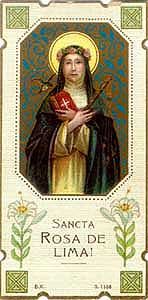
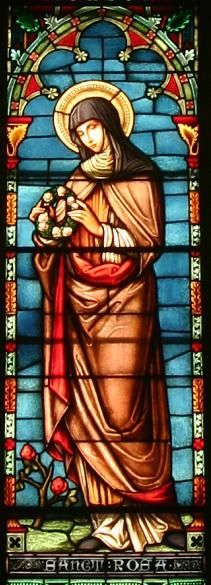
August 23: Saint Rose of Lima

Posted by Jacob

Apart from the cross there is no other ladder by which we may get to heaven.”


Today, August 23, we celebrate the feast of the first canonized saint of the Americas, Saint Rose of Lima (1586-1617). A beautiful flower of the saints of the Church, Satin Rose is remembered for her inexhaustible love for the Lord, her devotion to the Blessed Sacrament and Our Blessed Mother, and her life of harsh penances and mortifications. Once having said, “Lord, increase my sufferings, and with them increase Your love in my heart,” Saint Rose lived a life of difficulty and suffering on the earth, receiving the crown of sainthood in heaven.

Born Isabella de Flores, Saint Rose was the daughter of a Spanish immigrant father and a Peruvian mother. She was personally confirmed by the Archbishop of Lima, Saint Turibius de Mongrovejo, and took the name Rose. Her family and friends had been calling her “Rosa,” as when she was still an infant, one of the family’s servants had seen her face miraculously transform into the vision of a mystical Rose.

Her childhood was spent in spiritual pursuits, having demonstrated great piety and love for the Lord at a young age. She emulated Saint Catherine of Siena, whom she had read about, and began fasting three times a week. Rose also implemented severe, but secret, penances, so as not to upset her parents. Her mother, quite proud of her beautiful daughter, would frequently adorn her with garlands of flowers. Rose, however, did not want to be admired by others, as she did not want to contribute to the sinfulness of the world. Afraid that she would become beautiful, which would lead to the sins of others, Rose cut off her hair and purposefully disfigured her face by rubbing pepper and lye against her skin. Her daily fasting evolved into perpetual abstinence from meat.

Saint Rose spent the majority of her days undertaking acts of charity and industry, directed especially toward the indigenous people of Peru who were horribly mistreated by the conquering Spaniards. Along with Saint Turibius, and Saint Martin de Porres, Rose helped the sick and hungry of Lima. Not content to leave them suffering in the squalid slums of the city, Rose would bring the poor, orphans, elderly, and sick to her home, personally taking care of them—the beginning of social services in Peru. She worked tirelessly day and night, hand crafting exquisite lace and needlework, and growing beautiful flowers—both of which she took to market to sell, supporting not only her family, but the poor as well.

Saint Rose spent every night in prayer, in a small grotto that she had built. She spent many hours contemplating the Blessed Sacrament, which she received daily. She determined to take a vow of virginity in opposition to her parents, who wished her to marry. Humble, she obeyed them (and supported them) in every command, except the command to marry. Her love of Jesus was so great that when she talked about Him, her face glowed and her eyes sparkled, and she could not turn from her perpetual pledge to Him.

At age 20, Rose was so attracted to the Dominican Order, and through her good works had attracted their attention as well, that she was permitted to enter a Third Order Dominican convent in 1602 without payment of the usual dowry. In her twentieth year she donned the habit and took a vow of perpetual virginity. Following her taking of the veil, she increased her mortification. She wore coarse clothing, and a garland of silver (hidden by flowers) which had sharp spikes that penetrated her scalp. She would fast so long and hard that she would find it impossible to stand, upon which she would lay down on shards of broken glass and pottery. More than once, when she shuddered at the prospect of a night of torture, a voice said, "My Cross was yet more painful," giving her the spiritual strength to go on.

As a result of her exterior mortification, she had interior mystical experiences and ecstasies, as well as long periods of darkness and desolation. For fifteen years, she was tormented by the Devil, and the feelings that the Lord had abandoned her, or was too far away to reach. In response to this "dark night of the soul" she continued her prayer and penance, and was forcefully cheerful to those she encountered lest they be troubled by her sadness.

For eleven years, Saint Rose continued to serve the community, and devote herself to penance and the Blessed Sacrament. Her harsh self-martyrdom continued without relaxation, but not without consolation. Our Lord revealed Himself to her frequently, flooding her soul with such inexpressible peace and joy as to leave her in ecstasy for hours. At these times she offered to Him all her mortifications and penances in expiation for offences against Him, for idolatry, for the conversion of sinners, and for the souls in Purgatory. She was graced with visions of her guardian angel, Our Blessed Mother, and the Infant Jesus. Both her mortifications and ecstasies continued until she died at the young age of 31, having prophesied the date of her death exactly. Her funeral was attended by all the public authorities of Lima, who took turns carrying her coffin through the streets of the city for public veneration. The archbishop pronounced her eulogy in the cathedral.

Saint Rose of Lima is the first Catholic in the Americas to be declared a saint. Her shrine is located inside the convent of Saint Dominic in Lima, and many miracles have been attributed to her intercession—both while she was alive and after her death.

Saint Rose of Lima lived a life of extreme penances. What might be considered eccentric or odd by others was transformed by the love of the Lord from the inside out. Her penance and mortification was surpassed by only one thing—her consuming love of God, a love so strong and so beautiful it withstood mockery, suffering, lengthy sickness, and temptations from the Devil. We pray today for the strength of a similar love for the Lord—a love which will enable us to create change in the world, starting with ourselves!


God our Father,
for love of you
Saint Rose gave up everything
to devote herself to a life of penance.
By the help of her prayers
may we imitate her selfless way of life on earth
and enjoy the fullness of your blessings in heaven.
Grant this through our Lord Jesus Christ, your Son,
who lives and reigns with you and the Holy Spirit,
one God, for ever and ever. Amen.


For an excerpt from her writings, entitled, “The Beauty of Divine Grace,” click here.


Year 2: Day 235of 365
Prayer Intentions: Charity, Service to others, Social Justice.
Requested Intentions: Restoration of health (J); Restoration of health (S); Freedom from pride (A); For children and marriage (M); For the birth of a healthy baby (Y); For personal family intentions, for the sick, poor, hungry, and homeless (G); Financial security and peace (J); Grace, peace, and obedience to the will of God in a marriage (H); Successful and blessed marriage for sin, freedom from anxiety for husband, spiritual contentedness for family (N); Employment and health for a husband (B); Recovery and health of a mother (J); For a family to grow closer to the Church, salvation for all children (D); Successful employment (L); Successful employment (S); Renewal of faith life (A); Support for an intended marriage, health for friend and aunt (J); Mental health assistance for son (G); Freedom from illness (S); Successful employment (C); Financial assistance and employment (B); For a family’s intentions (T); Successful examination results (B); Healing of a friend with cancer, for all those who help others (B); Healing and love (L); Grace and healing (V); Healing of a heart, consecration of a marriage (M); Health of a family, intentions of apostolate (H); For repentance (J); For a family in trouble (R); Healing, successful relationships for son, financial success (J); Success of a company (L); For a religious society (J); Healing of a husband, strength as a faithful caregiver (D); Healing of a son (T); Financial security, Healing and guidance (M); Healing of a heart and relationship (V); Employment for daughter (J); For a marriage that glorifies the Lord (K); Resolution of family situation, parents’ health (A); Positive results (C); For a son’s employment, faith, and relationships (S).

June 25: Saint William of Vercelli

Posted by Jacob

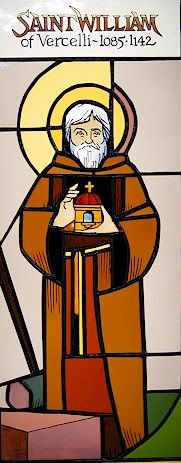
Today, June 25, we celebrate the feast day of Saint William of Vercelli (1085-1142), founder of the Order of Monte Vergine, also known as the “Williamites.” Saint William lived a quiet life of solitude and contemplation, listening intently for the voice of God, and following the directions he received. Through his obedience, William was taken far from home, worked many miracles, and established a thriving religious community—all because he was quiet, and paused to discern the Will of the Lord.

Born to nobility in Vercelli, Italy, William was orphaned at a young age when both his parents were killed. Subsequently raised by a pious family member, William matured into a contemplative young man with only one desire—to devote his life to the Lord. At the young age of 15, William left home, setting out on pilgrimage to Santiago de Compostela, Spain. As the journey was not difficult enough for him, he encircled his legs with tight iron bands, causing pain and making walking difficult, his suffering bringing him closer to God. Upon arrival, he worked some miracles including the healing of a blind man through prayer, and subsequently felt called to journey to the Holy Land. However, soon after departing, he was set upon by thieves, and following that encounter, felt the Will of God calling him to Italy.

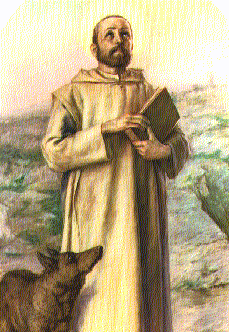
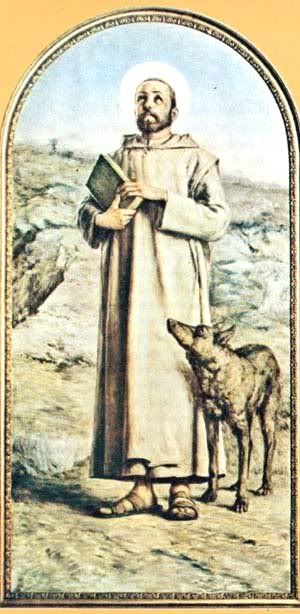
Saint William retired to Monte Vergiliano (today known as Monte Vergine, named for Our Blessed Mother), and became a hermit. There, he spent his days in prayer, fasting, and contemplation of the Lord. Especially devoted to the Blessed Virgin Mary, he began construction of a church in her honor, mining the rocks from the mountain by hand with the assistance of a lone donkey. As holy legend tells us, one evening, the donkey was killed and eaten by a wolf. Saint William called the wolf to him, ordering it to take the donkey’s place. The wolf, bowing in respect, and realizing that it had interrupted the work of God, immediately took up the task of dragging rocks from the quarry. The faithful who continue to travel on pilgrimage to Monte Vergine report that the wolf is still spotted today, visible to those who call upon the name of the Blessed Virgin.

Eventually, due to his working of more miraculous cures (none of which he sought credit for), the faithful began seeking William out on his mountain. His reputation for holiness attracted many disciples, both men and women, and he founded the Order of Mount Vergine—a religious community with strict rules of austerity. William and the nuns and monks of his order lived in peace and contemplation for some time, until the members of the order began complaining that William’s rules of poverty, fasting, and penance were too extreme.

There is evidence of heavenly support for the austerities of William’s rule. For example, William did not permit the order to eat meat, eggs, milk, or cheese. If someone tried to violate this regulation, storm clouds would appear in the sky and the lightning would destroy the illicit foodstuff that had been brought into the monastery.

With the members of the Order growing more disgruntled, William humbly removed himself from the situation to remove controversy, and ensure the future of the order. He traveled to Naples, where he served as advisor to the King Roger I, and established several more monasteries.

Saint William died of natural causes at the Guglielmo monastery near Nusco, Italy, where he was buried. Church tradition holds that William predicted the date and time of his death, and went to meet his Maker with peace and joy. At the time of his death, he had not yet written a Rule for his religious to govern their affairs. His successor, fearing the dissolution of a community without constitutions, placed them under the Rule of Saint Benedict. The community, which continues to exist today, now belongs to the Benedictine congregation of Subiaco, and has a much venerated picture of our Lady of Constantinople, to which pilgrimages are frequently made by the faithful. While Benedictine monks generally wear black robes, the monks who reside at Monte Vergine today continue to wear the white robes of the Williamites in honor of this holy man.

Saint William had complete trust in the Lord and in His Divine Providence. Ever faithful and contemplative, William was willing to leave his home as a youth, and subsequently leave the community he had built with his own hands in service to God. Patient, humble, and obedient, Saint William of Vercelli put the Lord’s work above his own desires at every moment of his life. We could do well by observing Saint William’s confidence in the Lord, and striving to imitate him by creating quiet moments in our own lives for prayer, reflection, and contemplation. It is in those moments that the Divine Plan for our own lives quietly unfolds… if we listen.


O God, Who hast set for us in Thy saints an example and a help to our weakness, to assist us to tread the path of salvation, grant us so to venerate the virtues of the blessed abbot William, that we may share in his prayers and follow in his footsteps. Through our Lord Jesus Christ, Thy Son, Who liveth and reigneth with Thee in the unity of the Holy Ghost, one God forever and ever. Amen.


Year 2: Day 176 of 365
Prayer Intentions: Quiet moments of contemplation; Open hearts to the Will of God.
Requested Intentions: For a mother’s mental health and for kindness and forgiveness, for housing problems, for dental health (T); For the soul of a departed friend (X); Restoration of health (D); Successful employment for couple (N); For employment for children (K); For health of friend, for successful relationships for children, for safe pregnancy for daughter (C); For the health of a mother (J); Virtue for daughter (V); Successful acceptance to college for nephew (M); For the health of a cousin (T); Freedom from legal difficulties for husband (S); Husband’s freedom from illness (L); Personal intentions (S); Successful passing of dental board examination (P); Blessings on a family (Z); Successful permanent employment (C); Healing of a son with autism (J).

June 21: Saint Aloysius Gonzaga

Posted by Jacob

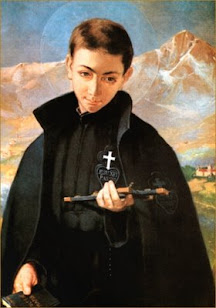
Today, June 21, we celebrate the feast day of Saint Aloysius Gonzaga (also known as Luigi de Gonzaga, 1568-1591), patron saint of Catholic youth, charity workers, and AIDS caregivers and victims. Saint Aloysius demonstrated, through his brief life, a deep commitment to charitable service to the poor and ill—a service which eventually led to his premature death at age 23. Bed-ridden for part of his life due to kidney disease, Saint Aloysius never complained, instead rejoicing in the “extra time” his illness allowed him to spend in prayer. His selfless works reminds us today of all those in need of assistance, and our call to reach out to those in our communities who suffer.

Aloysius was born into a powerful and wealthy Italian family, in Lombary. His father, the Marquis of Castiglione, looked to his elder son to carry on the family legacy of political power and military excellence. As a child, Aloysius was dressed in a tiny suit of armor—hand-crafted at the request of the Marquis—and taken to review the troops under his father’s command.

Whereas his father was committed to Aloysius’ attainment of earthly status and power, his mother was quietly devout and pious, committing him to the Blessed Virgin during a difficult childbirth. Aloysius’ mother was meticulous in teaching Aloysius bis prayers and bis Faith. From Aloysius' infancy to his adulthood she always referred to him as her "little angel." He fit the title perfectly, for even as a baby he was seldom known to fuss and cry or show any signs of ill temper. All who met or cared for him remarked on his sweet disposition. The first words he spoke was that of the Holy Name of Jesus, and from a young age, he developed a deep devotion to Our Blessed Mother, eventually penning a praying of self-commendation to her care:
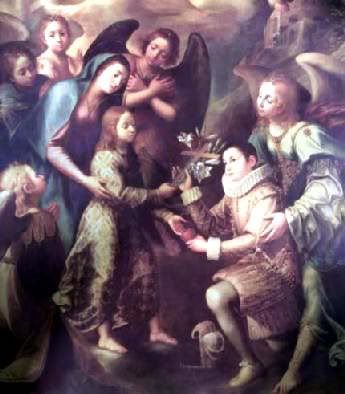
O Holy Mary, my Lady, into your blessed trust and safe keeping and into the depths of your mercy, I commend my soul and body this day, every day of my life, and at the hour of my death. To you I entrust all my hopes and consolations, all my trials and miseries, my life and the end of my life. By your most holy intercession and by your merits, may all my actions be directed and disposed according to your will and the Will of your divine Son. Amen.

By age seven, Aloysius had realized that politics and military exploits were not his calling, but in deference to his father, permitted himself to be sent to the court of the Grand Duke Francesco de Medici of Tuscany, where the two were to gain the polish and training needed to succeed in court. However, rather than engaging in the activities of the court, Aloysius secluded himself in his room, spending greater and greater amounts of time in prayer and reflection. At age ten, he committed himself completely to the Lord, vowing to remain a virgin, and to avoid all earthly sins.

As Aloysius' holiness grew, he became a source of terror for evil. On one occasion, a Franciscan who was known for his miracles and ability to cast out demons was visiting a church in a village not far from where Aloysius was sataying. The people flocked to see him, among them Aloysius and his brother, begging for prayers and miracles. While in the church, one of the possessed persons, on seeing Aloysius, pointed toward him and, in a fit of torturous rage, exclaimed in a demonic voice, "Do you see him? He will be in Heaven one day and great in glory!" Those around him began to recognize the faith and piety growing within him, unlike that of a boy his age.

Relocated again by his father, due to his failure to learn the ways of the court, Aloysius spent the next two years of his life in Mantua, where he lived with relatives. To Aloysius’ delight, the house in which he stayed contained a fine private chapel, where he spent time reading the lives of the saints and meditating on the Psalms. So great was his sorrow during bis prayers that the spot where he would kneel was soaked with the torrent of tears that flowed from his eyes. Here, at the young age of twelve, he felt first called to the priesthood. He further began a rigorous life of self-denial and mortification, fasting and depriving himself of all worldly things he desired. While remaining exceptionally polite, he never again looked a woman in the face, due to fear that he may be tempted to renounce his pledge of perpetual sinlessness. He further began to subject his body to torment, engaging in self-flagellation in reparation for his sins.

His father, greatly displeased with his son’s progress, brought him home where he continued his pious studies. It was there that he made his First Holy Communion, further deepening his intimate relationship with the Lord through the Blessed Sacrament. He received Holy Communion as often as he could, and spent hours each day praying the Holy Rosary. His virtues grew, and he became known by others as a humble, kind, and faith-filled young man. He forewent the fine attire of a noble, instead dressing in simple clothes. He dismissed his servants, preferring to do his own chores in humility.
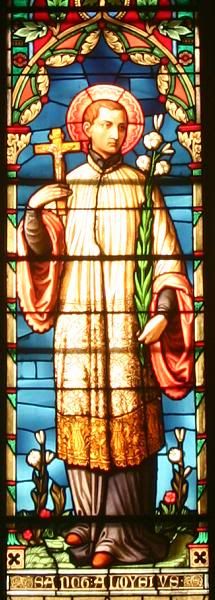
In 1581, still intent on passing on his title of Aloysius, the marquis decided that the family would travel with Maria of Austria, of the Spanish royal house, on her return to Spain. Aloysius became a page attending the Spanish heir apparent and was also made a Knight of the Order of Saint James while living in Madrid. He also found a Jesuit confessor, and resolved to become a Jesuit. Prior to acceptance, however, he needed his father’s permission, which didn’t come easily. After threatening to have him flogged, the marquis and his young son engaged in a 3 year long battle of wills, which eventually Aloysius won.

Aloysius, full of love for his father, and full of the Grace of God, said to him, "I am in your power, father, and you can do with me what you please. But know this, that God calls me to the Society of Jesus, and you're resisting His Will by opposing my vocation." His father’s only reaction was to turn to the wall and burst into tears. After a few days of his sorrow he called for his son saying, "My son, what a cruel wound you have inflicted on my heart! I have always loved and still love you, because you deserve my love and I had set all my hopes on you. And now you tell me that God calls you elsewhere, I will not keep you back any longer; go where you will, and may God grant you happiness!"


Following receipt of his father’s permission to become a Jesuit at age 17, Aloysius renounced his considerable inheritance and left for Rome. He carried a letter from his father to the Jesuit superior general, which read, “I merely say that I am giving into your Reverence’s hands the most precious thing I possess in all the world.”

Aloysius, who had been practicing strict religious observances since youth, found the Jesuit noviaiate disarmingly easy, and much less rigorous than those restrictions he had undertaken at home. His superiors encouraged him to eat more regularly, pray less, relax more, and reduce his penances. Obediently, Aloysius accepted these curbs. In 1587, at that age of 19, Aloysius pronounced vows of poverty, chastity, and obedience, and the next year he received minor orders and began theology studies. He was certain of his need for continous penance, asserting that without mortification, he would revert to a sinful state. Aloysius is remembered for saying, “I am a crooked piece of iron, and have come into religion to be made straight by the hammer of mortification and penance.”

Following his studies, Aloysius found himself in the midst of the plague which struck Rome in 1591. Committed to serving those in need, Aloysius carried the dying from the streets of Rome to the Jesuit hospital, washing and feeding them, and preparing them to receive the sacraments. He sat with the ill, reading to them, guiding their devotions, and bringing them to the heart of Christ. While he worked tirelessly and without a sign of complaint, he privately confessed to his confessor that he fought every moment not to express his repulsion at the sights and sounds of the grueling work. Nevertheless, he carried on diligently, offering kindness, dignity, and love to those that society had forgotten about.

As more and more succumbed to the disease—including many young Jesuits—Aloysius was forbidden to continue his work with the ill. Accustomed to his requests being refused, Aloysius asked permission to return to the hospital, and was eventually allowed to again care for the sick. The hospital he was reassigned to did not allow patients with contagious diseases, and therefore his superiors considered their eager charge quite safe. While there, came a man so diseased that no one would go near him. Aloysius immediately thought to himself: “here is Jesus.” Aloysius lifted the man out of his sick bed, tended to him, and brought him back to his bed. The man, despite the prohibition at the hospital, was infected with the plague, and Aloysius became quickly ill and bedridden himself.

Like most, Aloysius quickly succumbed to the disease. In the weeks of his infirmity, he still rose every night to pray before a crucifix, until forbidden by his superiors. His body became so covered with sores that he was in constant pain, but never once complained, only likening his pain to that of Jesus. On June 21, as he sensed his death was imminent, his Jesuit brothers brought him Communion. He cried out, “I am going, gladly,” and with his eyes fixed on a crucifix, Aloysius proclaimed, “Father, into your hands I command my spirit.” He then struggled to pronounce the name of Jesus repeatedly until he died at the young age of 23.

Saint Aloysius was buried in the Church of the Annunciation, belonging to the Jesuits of the Roman college. Soon after his death, a well-adorned chapel was built in that church under his name, by the Marquis Scipio Lancelotti, and his relics were translated into it. Since that time, numerous miracles have been reported through his intercession.

Prior to his death, Saint Aloysius sent his mother a letter, detailing his devotion and faith. His words convey the purity, obedience, humility, and love of this holy man, who through selfless service, helped so many:

"May the comfort and grace of the Holy Spirit be yours for ever, most honored lady. Your letter found me lingering still in this region of the dead, but now I must rouse myself to make my way on to heaven at last and to praise God for ever in the land of the living; indeed I had hoped that before this time my journey there would have been over. If charity, as Saint Paul says, means to weep with those who weep and rejoice with those who are glad, then, dearest mother, you shall rejoice exceedingly that God in his grace and his love for you is showing me the path to true happiness, and assuring me that I shall never lose him.


The divine goodness, most honored lady, is a fathomless and shoreless ocean, and I confess that when I plunge my mind into thought of this it is carried away by the immensity and feels quite lost and bewildered there. In return for my short and feeble labours, God is calling me to eternal rest; his voice from heaven invites me to the infinite bliss I have sought so languidly, and promises me this reward for the tears I have so seldom shed.


Take care above all things, most honoured lady, not to insult God’s boundless loving kindness; you would certainly do this if you mourned as dead one living face to face with God, one whose prayers can bring you in your troubles more powerful aid than they ever could on earth. And our parting will not be for long; we shall see each other again in heaven; we shall be united with our Saviour; there we shall praise him with heart and soul, sing of his mercies for ever, and enjoy eternal happiness. When he takes away what he once lent us, his purpose is to store our treasure elsewhere more safely and bestow on us those very blessings that we ourselves would most choose to have.

I write all this with the one desire that you and all my family may consider my departure a joy and favor and that you especially may speed with a mother’s blessing my passage across the waters till I reach the shore to which all hopes belong. I write the more willingly because I have no clearer way of expressing the love and respect I owe you as your son."


Saint Aloysius found Christ everywhere, especially in the ill, the helpless, the forgotten, and the dying. Despite his physical repulsion, he ministered to those in need, offering them love and dignity in their last moments. Pure throughout his life, Saint Aloysius offers us a model of selflessness and charitable love—virtues we are all called to live out each day in our own communities. How easy it would have been for Aloysius to turn from God, embrace his noble privileged life, and life with wealth and power. Instead, he forsake all he had, turning to face the Lord, bathed in His grace, and became an instrument of good in the world. How often can we say the same for ourselves?


Father of love,
giver of all good things,
in Saint Aloysius you combined remarkable innocence with the spirit of penance.
By the help of his prayers may we who have not followed his innocence follow his example of penance.
Grant this through our Lord Jesus Christ, Your Son,
who lives and reigns with You and the Holy Spirit, one God, for ever and ever. Amen.