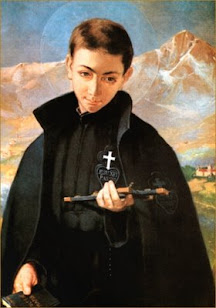
Why pray the Rosary every day for a year?


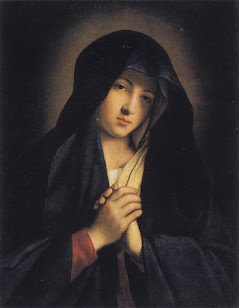
Each time the Blessed Virgin has appeared-- whether it be to Saint Bernadette Soubirous at Lourdes; to Lucia, Jacinta, and Francisco at Fatima; or to Mariette Beco at Banneux-- she has asserted the importance, saving grace, and power of praying the Holy Rosary on a daily basis. Based upon her words, the Rosary is penance and conversion for sinners, a pathway to peace, an end to war, and a powerful act of faith in Jesus Christ. Pope Paul VI presented the Rosary as a powerful means to reach Christ "not merely with Mary but indeed, insofar as this is possible to us, in the same way as Mary, who is certainly the one who thought about Him more than anyone else has ever done."

To show us how this is done, perhaps no one has been more eloquent than the great Cardinal Newman, who wrote: "The great power of the Rosary consists in the fact that it translates the Creed into Prayer. Of course, the Creed is already in a certain sense a prayer and a great act of homage towards God, but the Rosary brings us to meditate again on the great truth of His life and death, and brings this truth close to our hearts. Even Christians, although they know God, usually fear rather than love Him. The strength of the Rosary lies in the particular manner in which it considers these mysteries, since all our thinking about Christ is intertwined with the thought of His Mother, in the relations between Mother and Son; the Holy Family is presented to us, the home in which God lived His infinite love."


As Mary said at Fatima, "Jesus wants to use you to make Me known and loved. He wishes to establish the devotion to My Immaculate Heart throughout the world. I promise salvation to whoever embraces it; these souls will be dear to God, like flowers put by Me to adorn his throne."


April 22: Blessed Maria Gabriella Sagheddu, Model of Christian Unity

Posted by Jacob


In simplicity of heart I gladly offer everything, O Lord.
The Lord put me on this path, he will remember to sustain me in battle.
To His mercy I entrust my frailty.
I saw in front of me a big cross..., I thought that my sacrifice was nothing in comparison to His.
I offered myself entirely and I do not withdraw the given word.
God's will whatever it may be, this is my joy, my happiness, my peace.
I will never be able to thank enough.
I cannot say but these words:" My God, your Glory."

(Blessed Maria Gabriella )

Today we celebrate the feast day of Blessed Maria Gabriella Sagheddu (1914-1939), a Trappestine nun who gave her life in service of Christian unity.  From the Trappist webiste:But who is Blessed Maria Gabriella? She is a young girl from Sardinia, in Italy, who died in 1939 at the Trappist monastery of Grottaferrata on the outskirts of Rome, at the age of 25. Like many another young man or woman she had accepted the gentle but compelling call of God to give her youth and life to Him. She entered a poor and hidden monastery and after three and a half years of prayer and penance died of the tuberculosis which had sapped her strong constitution. The only thing she had at her command was her life and this she offered as a holocaust to heal divisions and make all Christians visibly "one" in Christ. Her brief but total gift of herself was lived without any self-pity or regret. Outwardly, her life was insignificant, but through a series of events hard to explain in human terms, God used her to make known the beginning of the ecumenical movement in Italy and then, in the late 30's, the universal call to Christian Unity. In his encyclical "Ut unum sint" John Paul II pointed to her as an outstanding example of spiritual ecumenism.”

Blessed Maria was born in Sardinia, to a family of shepherds.  She was an obstinate and critical child, finding fault in most everything, and protesting and rebelling against her parents.  With their gentle persuasion, she grew into a loyal and obedient young woman, and at the age of 18 became involved in the local Catholic youth movement, “Azione Cattolic.”    She later reported this involvement to lead to a personal encounter with the Lord, but refused to speak more specifically about the event.  Rather, she dedicated herself to Him, wishing a life of deep prayer and charity, and entering the Trappestine monastery at Grottaferrata (near Rome).  There her life appears to have been dominated by three elements: gratitude, desire to respond to the grace of her calling with strength, and Christian Unity—to which she dedicated her life.  Upon acceptance into the order, she gave herself over completely to the Lord, saying, “Now do what You will.”

The overwhelming devotion to Christian unity espoused by Blessed Maria appears to have stemmed from the encouragement of the leader of her religious community, Father Paul Couturier.  He encouraged the community to pray for ecumenical unity during the Prayer for Unity Octave, and from that moment, she demonstrated a single-mindedness in offering both her prayers and her life to this cause.  Maria sought to reduce the separation and disagreement between Christian branches, uniting them in service to Christ.
At age 23, following her offering of her life to the Lord for this cause, Maria was struck ill with tuberculosis.  Until that day, she had enjoyed perfect health.  For 15 months, Maria spent her days in agony, offering her suffering and life for unity.  On April 23rd. 1939, her long agony ended in total abandonment to the will of God.  Her body, found intact on the occasion of the recognition in 1957, now rests in a chapel adjoining the monastery of Vitorchiano, where her community of Grottaferrata transferred.


Pope John Paul II proclaimed:

Praying for unity is not a matter reserved only to those who actually experience the lack of unity among Christians. In the deep personal dialogue which each of us must carry on with the Lord in prayer, concern for unity cannot be absent. Only in this way, in fact, will that concern fully become part of the reality of our life and of commitments we have taken on in the Church. It was in order to reaffirm this duty that I set before the faithful of the Catholic Church a model which I consider exemplary, the model of a Trappestine Sister, Blessed Maria Gabriella of Unity, whom I beatified on 25 January 1983. Sister Maria Gabriella, called by her vocation to be apart from the world, devoted her life to meditation and prayer centered on Chapter 17 of Saint John's Gospel and offered her life for Christian Unity. This is truly the cornerstone of all prayer: the total and unconditional offering of one’s life to the Father; through the Son, in the Holy Spirit. The example of Sister Mara Gabriella is instructive; it helps us to understand that there are no special times, situations, or places of prayer for unity. Christ's prayer to the Father is offered as a model for everyone, always and everywhere."
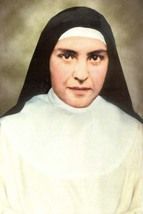

Today, we join the prayers of Blessed Maria Gabriella, in praying for Christian unity both within our congregations and between the braches of the Churches of Christ.


0 God, eternal Shepherd, who inspired Blessed
Maria Gabriella, virgin, to offer her life for the
unity of all Christians, grant that through her
intercession, the day may be hastened in which
all believers in Christ, gathered around the table
of your Word and of your Bread, may praise you
with one heart and one voice. Through Christ
our Lord.


Prayer for Christian Unity
Lord God, eternal Shepherd, You inspired the blessed virgin, Maria Gabriella, generously to offer up her life for the sake of Christian unity. At her intercession, hasten, we pray, the coming of the day when, gathered around the table of Your word and of Your Bread from heaven, all who believe in Christ may sing Your praises with a single heart, a single voice.

November 12: Saint Josaphat, Martyr of Unity

Posted by Jacob

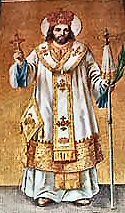
Today, November 12, we celebrate the feast day of Saint Josaphat Kuncevyc (1580-1623), bishop of the Eastern Rite, and martyr to Church unity as he died working to bring the Orthodox Church into union with Rome.

Born Joseph Kuncevyc in Vladimir, a city of ancient Poland, today’s future saint was raised in a family of honorable Christians of the Greco-Slavic rite. Under the direction of his mother, he matured in the presence of the Lord, and his heart was drawn to service of his Creator. From early age, he distanced himself from the frivolous pursuits of childhood, avoiding games and play, and instead spending his time in quiet contemplation and prayer. He memorized the Divine Office while still in primary school, reciting large portions of it from memory each day. Joseph also excelled at his studies, earning the respect of peers and teachers for his mastery of the sacred and divine

At that time, the religious situation in Poland was quite divided. Two opposed sects had developed—those who longed for unity and those who perpetuated schism in the Church. Few were faithful to the Holy See. Realizing that Rome was the true protector of orthodoxy and doctrine, Joseph studied theology and philosophy with the Jesuits, and at age 20, entered the Convent of the Trinity at Vilna, a community of Basilian religious submissive to the Holy See. He received his habit and was professed at age 24. To do this, he turned down the offer of inheritance of a successful commercial business, and several opportunities to marry.

Joseph was ordained a priest, and took the name Josaphat, and began preaching about unification with great success. After several years, he was sent to found new houses in Rome. Josaphat immediately put into practice his early plans of reform. Because his plans tended to reflect his own extremely austere ascetic tendencies, he was not always met with joy. One community threatened to throw him into the river until his general compassion and his convincing words won them over to a few changes.

Recognized for his faith and ability to lead his people, Josaphat was elevated to the first bishopric of Vitebsk, and then later Polotsk when he was just 37 years old. There, he found a church in ruins, both physically and spiritually. Josaphat rebuilt the decrepit Church buildings, restoring them to their former glory. With the clergy, who were in great need of reform, he instituted rules of conduct and published a catechism to be used universally. His most compelling argument was himself. He modeled the virtuous life of a Christ, spending his days preaching, instructing others in the faith, visiting the needy of the towns.

Despite his good works, the schism between the unionists and the separists had increased, and had become to grow bloody. Riots were occurring, with the King of Poland declaring Josaphat the legitimate archbishop (as another had been named by the separists). Josaphat’s former diocese of Vitebsk turned against him, incited by rumors spread by the Lithuanian chancellor, and in peace, Josaphat decided to return to that city to calm the bloodshed and violence. Aware of the danger he might encounter, Josaphat calmly said, "If I am counted worthy of martyrdom, then I am not afraid to die."

The separatists saw their chance to get rid of Josaphat and discredit him if they could only stir the unionist party to attack firs, giving them a reason to fight back. Their threats were so public that Josaphat preached on the gospel verse John 16:2, "Indeed, an hour is coming when those who kill you will think that by doing so they are offering worship to God."

In one of his most famous speeches, Josaphat said to the people, "You people want to kill me. You wait in ambush for me in the streets, on the bridges, on the highways, in the marketplace, everywhere. Here I am; I came to you as a shepherd. You know I would be happy to give my life for you. I am ready to die for union of the Church under Saint Peter and his successor the Pope."

But aside from words, Josaphat insisted that the unionists not react in any way that did not show patience and forbearance. When the separatists saw that they were not getting the violent response they had hoped for they decided on a more direct attack. A priest was sent to the house where everyone was staying and shouted insults and threats to everyone he saw, especially Josaphat and the Church of Rome. Josaphat knew of the plot against him and spent his day in prayer. In the evening he had a long conversation with a beggar he had invited in off the streets.

The following morning, the priest returned, and while Josaphat was reciting the Divine Office, the house servants locked the priest in a room until Josaphat’s return. He promptly freed him, the damage had been done. Learning of the priest’s imprisonment, the separatist mob waiting outside descended on the house. Josaphat came out in the courtyard to see the mob beating and trampling his friends and servants. He cried out, "My children what are you doing with my servants? If you have anything against me, here I am, but leave them alone!"

With shouts of "Kill the papist" Josaphat was hit with a stick, then an axe, and finally shot through the head. His bloody body was dragged to the river and thrown in, along with the body of a dog who had tried to protect him.

The servants and friends of Josaphat were rescued from the mob by some Jewish residents of Vitebsk, uninvolved in the Christian fight. With great courage, they rushed into the fray, protecting the innocent and bringing them to safety. Later, these same courageous individuals were the only ones to publicly accuse the killers and mourn the death of Josaphat.

The death of Archbishop Josaphat galvanized those who were unsure of the importance of alignment with the Holy See. Public opinion moved toward unity, and eventually, all were reconciled with Rome. In 1867 Josaphat became the first saint of the Eastern church to be formally canonized by Rome as a Saint.

Saint Josaphat’s body, recovered form the river, was buried in Biala, Poland, and after five years, was found to be completely intact and incorrupt. A silver reliquary was made for it, with a life-sized image of the reclining saint surrounding it. More than one hundred years later, the body was again examined, and found to be intact. The relics were translated to the Basilica of Saint Peter in Rome, where they are venerated today.

Today, we continue to experience schisms and disagreements within the Church, and between the Christian faith traditions. These disagreements only serve to divide the Body of Christ, and prevent unified works of charity and reform in the world. We pray for Saint Josaphat’s intercession, for unification and communion.


Lord,
fill your Church with the Spirit
that gave Saint Josaphat courage
to lay down his life for his people.
By his prayers
may your Spirit make us strong
and willing to offer our lives
for our brothers and sisters.
We ask this through our Lord Jesus Christ, your Son,
who lives and reigns with you and the Holy Spirit,
One God, for ever and ever. Amen.


Year 2: Day 316 of 365
Prayer Intentions: Church unity.
Requested Intentions: Blessings on overseas employment (M); Healing of mother (L); Successful employment for husband (G); Successful employment, personal fulfillment (C); Health and recovery of ill sister (A);  Resolution of legal issues; Grace and protection (E); Successful and meaningful employment (S); Restoration of a marriage (A); Peace and tolerance in a family, support for those with Parkinson’s Disease (M); For the restoration of a daughter’s marriage, end to debt (S); Employment and continued strength (K); Successful examinations for a son (J); Employment and blessings of a child (S); Employment and financial security (F); Successful work placement, continued health (A); Grace and healing for a family (P); Healing of a father (M); Academic success for son, employment for husband and brother (B); Freedom from anxiety and panic attacks (R); Health and healing in preparation for surgery (C); Healing of a chronic illness (P); Safety of a family during storms (A); Successful home ownership (P); Healing of a marriage (M); Employment for a husband, blessings for a marriage (E); Successful examinations for a daughter, healing of a relationships (V).

November 10: Pope Saint Leo the Great

Posted by Jacob

“Virtue is nothing without the trial of temptation, for there is no conflict without an enemy, no victory without strife.”

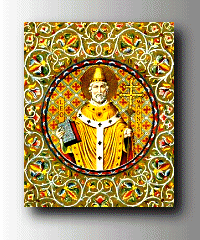
Today, November 10, we also celebrate the feast day of Pope Saint Leo the Great (400-461). Pope Saint Leo is referred to by many names, including “Doctor of Doctrine” and “Doctor of Unity of the Church.” He is the first pope to be referred to by the title “Great,” and the first born pope made Doctor of the Church. His greatness is evident from his roles as peacemaker amidst terror, unifier amidst controversy, and pastoral concern amidst war, diseases, and famine. Despite near constant attack, Pope Saint Leo led the Church for nearly two decades, believing and trusting in the Lord, through the intercession of Saint Peter. His writings, unifying doctrine, and peacemaking (at a time when peace was hard to come by!) continue to inspire and instruct us today in the ways of the faith.

Leo was born in Tuscany, into a noble Italian family, but little is known about his early childhood and life. His biographers suggest that he was an especially strong student, especially in scripture and theology. He was ordained a priest, and later became a Deacon of the Roman See. As deacon, he was dispatched to Gaul as a mediator by Emperor Valentinian III. He was unanimously elected to the Chair of Peter, becoming pope in 440, and serving the Church until his death in 461. During that time, he persuaded Emperor Valentinian to recognize the primacy of the Bishop of Rome in an edict in 445. In effect, this decree centralized the spiritual authority of the pope within the Church, re-establishing papal authority over that of some de-centralized authorities assumed by local diocesan bishops. The decree of Emperor Valentinian recognized the primacy of the bishop of Rome based on the merits of Saint Peter, the dignity of the city, and the Nicene Creed. It further ordered that any opposition to the decrees of the pope, which were to have the force of ecclesiastical law, should be treated as treason. Pope Saint Leo held firmly that everything he did and said as pope for the administration of the Church represented Christ, the head of the Mystical Body, and Saint Peter, in whose place Leo acted—his beliefs were doctrinally based, but were greatly assisted by the emperor’s decree!

Pope Saint Leo is called “great,” as he is recognized as one of the best administrative popes of the ancient Church. His two-decade papacy focused on four main areas. The first of these focused on the eradication of heresies, and he worked actively throughout his tenure to control the heresies of Pelagianism, Manichaeism, Nestorianism, Monophysitism, Priscillianism, and others, forgiving apostasy, and securing the faithful to the true beliefs of the Church. To fight against the many heresies of his day, he called the Council of Chalcedon, following up with countless doctrinally sound and stern letters to the faithful.

Due to the wars, terrorists and immense problems that Leo faced he strongly advocated the below works of mercy toward others to show true Christianity:

CORPORAL WORKS OF MERCY: To feed the hungry; Give drink to the thirsty; Clothe the naked; Shelter the homeless; Visit the sick; Visit the imprisoned; Bury the dead.

SPIRITUAL WORKS OF MERCY: To counsel the doubtful; Instruct the ignorant; Admonish sinners; Comfort the afflicted; Forgive offenses; Bear wrongs patiently; Pray for the living and the dead.

Secondly, Pope Saint Leo focused on the doctrinal controversies surrounding the nature of Christ, the Incarnation (formed by him in a letter to the Patriarch of Constantinople), and others. His letters documenting these doctrinal teachings remain extant, instructing us today. Pope Saint Leo insisted on the importance of the mysteries of Christ and the Church, and in the supernatural charisms of the spiritual life given to humanity in Christ and in his Body, the Church. He was an eloquent writer and homilist, and despite his great responsibilities, never gave up his role as pastor to his people, nourishing them in the faith, and encouraging a closer relationship with the Lord.

This commitment and approach to pastoral care is the third—and possibly the most important—area of focus during Pope Saint Leo’s papacy. He is remembered for his spiritually profound sermons—delivered in a language that anyone could understand. The preaching and writing of this great man, based upon his comprehensive knowledge of Scripture, led many to Christ.

Lastly, and most interesting to secular scholars, Pope Saint led the defense of Rome against barbarian attack, taking the role of peacemaker, against the formidable Attila the Hun, the “Scourge of Europe.” His encounter with Attila the Hun, at the very gates of Rome, in which he persuaded the invaders to turn back without attack, remains a historical memorial to his great eloquence.

This great historical event, as quoted by DoctorsoftheCatholicChurch.com:

"Pope Leo the Great mounted the throne of Saint Peter at a time of terrible danger, both for the Church and the Empire. The fierce barbarian tribes, one after the other, had been on the march for the whole of the century, plundering, ravaging and threatening the entire Empire. The dreaded Attila ¬ the self-designated "Scourge of God," who left in the wake of his savage army burned churches, murdered priests, devastated countrysides, people ravished and maimed, impoverished and homeless, was on his way into Italy.


In the year 452, Attila the Hun, having with remorseless cruelty sieged, burned, sacked and destroyed Aquileia -¬ the city in northeastern Italy at the head of the Adriatic Sea ¬- was as close as Mantua, on his march to Rome. He was boasting, as he advanced, that the total conquest of Italy was to be his crowning work of destruction. Rome was the dowry which he planned to present to his bride, Honoria, the granddaughter of the great Theodosius!


All Rome awaited the coming of the Mongol King in hopeless terror. They had no defense left against him. And then, in the darkest hour ¬- as would often be the case through the centuries ahead ¬- the Eternal City was saved, not by its legions, its tribunes, its senators, or its suffering citizens. Rome was saved by its Bishop, the Holy Roman Pontiff.


Practically alone, Pope Leo went out to meet the wanton murderer who was the terror of the world. He climbed steadily northward, this holy and august Vicar of Christ, and over the mountains, an arduous journey indeed in those days. He found the Mongolian chief below Mantua, at the point where the Mincio River, flowing down from its Alpine source ¬- the beautiful Lago Garda ¬- emptied itself in the Po. Attila's troops, hardened veterans seasoned in plunder and sack and rape, were ready and waiting to cross the Po when Saint Leo, in his papal robes, entered the disordered camp and stood before the King of the Huns.


The glorious Pope threatened Attila with the power which was his from Peter, the Prince of the Apostles, if he did not turn back and leave Italy unmolested. And it is one of the most dramatic, of all the dramatic facts with which the story of the Church is so enchantingly full, that Attila, the Hun, yielded before Leo, the Pope. The "Scourge of God" agreed to turn back. He gave up Rome. And Leo, absorbed in thanksgiving, returned to his See.


Attila's servants, so the story is told, asked him why he had reversed his custom and capitulated so easily to the Bishop of Rome. The brigand chief answered that all the while the Pope was speaking, he, Attila, the generator of terror in others, was himself consumed in fear, for there had appeared in the air above the Pope's head a figure in the dress of a priest, holding in his hand a drawn sword with which he made as if to kill him unless he consented to do as Leo asked. The figure was that of Peter!"

After these and other similar admirable acts, and after writing much that was replete with piety and eloquence, Pope Saint Leo died peacefully. His relics were originally buried in his own monument, but were (at some point) placed into the tomb comtaining the relics of the first four Pope Leos. Later, they were again translated to Saint Peter’s Basilica, where Pope Saint Leo the Great was given his own chapel.

Selected Writings of Pope Saint Leo the Great:

“Although the universal Church of God is constituted of distinct orders of members, still, in spite of the many parts of its holy body, the Church subsists as an integral whole, just as the Apostle says: “We are all one in Christ,” nor is anyone separated from the office of another in such a way that a lower group has no connection with the head. In the unity of faith and baptism, our community is then undivided. There is a common dignity as the apostle Peter says in these words: “And you are built up as living stones into spiritual houses, a holy priesthood, offering spiritual sacrifices which are acceptable to God through Jesus Christ.” And again: “But you are a chosen people, a royal priesthood, a holy nation, a people of election.” For all, regenerated in Christ, as made kings by the sign of the cross. They are consecrated priests by the oil of the Holy Spirit, so that beyond the special service of our ministry as priests, all spiritual and mature Christians know that they are a royal race and are sharers in the office of the priesthood. For what is more king-like than to find yourself ruler over your body after having surrendered your soul to God? And what is more priestly than to promise the Lord a pure conscience and to offer him in love unblemished victims on the altar of one’s heart?”

“God decreed that all nations should be saved in Christ. Dear friends, now that we have received instruction in this revelation of God’s grace, let us celebrate with spiritual joy the day of our first harvesting, of the first calling of the Gentiles. Let us give thanks to the merciful God, “who has made us worthy,” in the words of the Apostle, “to share the position of the saints in light; who has rescued us from the power of darkness, and brought us into the kingdom of this beloved Son.” This came to be fulfilled, as we know, from the time when the star beckoned the three wise men out of their distant country and led them to recognize and adore the King of heaven and earth. The obedience of the star calls us to imitate its humble service: to be servants, as best we can, of the grace that invites all men to find Christ.”

"Short and fleeting are the joys of this world's pleasures which endeavors to turn aside from the path of life those who are called to eternity. The faithful and religious spirit, therefore, must desire the things which are heavenly, and being eager for the Divine promises, lift itself to the love of the incorruptible Good and the hope of the true Light."

“Being therefore, dearly-beloved, fully instructed by these admonitions of ours, which we have often repeated in your ears in protest against abominable error, enter upon the holy days of Lent with Godly devoutness, and prepare yourselves to win God’s mercy by your own works of mercy. Quench your anger, wipe out enmities, cherish unity, and vie with one another in the offices of true humility. Rule your slaves and those who are put under you with fairness, let none of them be tortured by imprisonment or chains. Forego vengeance, forgive offences: exchange severity for gentleness, indignation for meekness, discord for peace. Let all men find us self-restrained, peaceable, kind: that our fastings may be acceptable to God. For in a word to Him we offer the sacrifice of true abstinence and true Godliness, when we keep ourselves from all evil: the Almighty God helping us through all, to Whom with the Son and Holy Spirit belongs one Godhead and one Majesty, for ever and ever. Amen.”


O Holy Pope Leo! Thou didst triumph over barbarian invaders: Attila acknowledged the power of thy sanctity and eloquence, by withdrawing his troops from the Christian land they infested. Oh, help us by thy powerful intercession, for our danger is very great. Many are seduced and have fallen into apostasy. Pray that the light that is left within us may never be extinguished, but ever increase unto light eternal. Amen.

Year 2: Day 314 of 365
Prayer Intentions: Steadfast belief in the true faith; Unification of the Church.
Requested Intentions: Restoration of a marriage (A); Peace and tolerance in a family, support for those with Parkinson’s Disease (M); For the restoration of a daughter’s marriage, end to debt (S); Employment and continued strength (K); Successful examinations for a son (J); Employment and blessings of a child (S); Employment and financial security (F); Successful work placement, continued health (A); Grace and healing for a family (P); Healing of a father (M); Academic success for son, employment for husband and brother (B); Freedom from anxiety and panic attacks (R); Health and healing in preparation for surgery (C); Healing of a chronic illness (P); Safety of a family during storms (A); Successful home ownership (P); Healing of a marriage (M); Employment for a husband, blessings for a marriage (E); Successful examinations for a daughter, healing of a relationships (V); Blessing for a family (V); Healing of baby girl M and all children suffering (M); Special intentions (R); Business success, peace, health (E); Conversion and deliverance of those who suffer, increase in vocations (M); Financial security and safe housing (M); For a daughter (K).


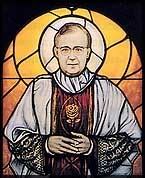
June 26: Saint Josemaría Escrivá de Balaguer

Posted by Jacob

Today, June 26, we commemorate the feast day of Saint Josemaría Escrivá de Balaguer (1902-1975), priest, modern-day saint, and founder of Opus Dei, a Catholic institution dedicated to “helping people turn their work and daily activities into occasions for growing closer to God, for serving others, and for improving society.” Pope John Paul II said of this holy man, “Saint Josemaría was chosen by the Lord to proclaim the universal call to holiness and to indicate that everyday life, its customary activities, are a path towards holiness. It could be said that he was the saint of the ordinary."


Josemaría Escrivá was born in Barbastro, Spain, the son of pious parents. He received a deep Christian education in the home, and the family turned to God during times of need, especially following the deaths of three of his five siblings in infancy and childhood. When Josemaria was a teenager, the family moved to Logrono, as his father needed employment, and it was there that he first sensed his calling to vocation. Moved by the sight of footprints left in the snow by a barefoot friar, he sensed that God was asking something of him, though he did not know exactly what it was. He began to prepare for the priesthood, first in Logrono and later in Saragossa.

Josemaria was ordained in 1925, serving in rural parish, as well as Saragossa for a few years. In 1927, having received permission from his bishop, he traveled to Madrid to earn his doctorate in law. It was while studying in Madrid that Josemaria received from the Lord the purpose of his life: to found Opus Dei-- a way of sanctification in daily work and in the fulfillment of the Christian's ordinary duties. Not limited to religious, this inspired society would be comprised of laity and religious, and would provide a template for bringing the Lord into the daily lives of its members. From that moment on, Josemaria’s life changed. He worked continuously toward his new goal, all the while continuing his studies, ministering to his congregation, and spending time in service to the poor and the ill.

The Spanish Civil War created a challenge to the saint’s mission. When the war broke out in Madrid, religious persecution forced Josemaría to go into hiding, ministering to his flock in secret. Eventually, he left Madrid, and after a harrowing escape across the Pyrenees, took up residence in Burgos. In the years after the civil war, he was able to return to Madrid and complete his doctorate in Law, all the while giving many retreats to laity, priests, and religious.

Saint Josemaria moved to Rome, obtaining a doctorate in Theology, and establishing Opus Dei as an institution. In 1950, it was officially approved by the Holy See. He was appointed by Pope Pius XII as a consultor to two Vatican Congregations, as an honorary member of the Pontifical Academy of Theology, and as an honorary prelate. He was also elevated to the position of Monsignor. In his later y ears, Josemaria traveled the world, preaching, and spreading the message of Opus Dei, bringing large numbers to holiness. By the time of his death in 1975, Opus Dei had begun in dozens of countries and had touched countless lives. After his death thousands of people, including more than a third of the world's bishops, sent letters to Rome asking the Pope to open his cause of beatification and canonization.

Josemaria is remembered for saying, "The ordinary life of a Christian who has faith, when he works or rests, when he prays or sleeps, at all times, is a life in which God is always present.” Through his work in Opus Dei, we are further reminded, "We find the invisible God in the most visible and material things." Today, Opus Dei has around 87,000 members, both men and women, of which 98% are laypersons. The mission of Opus Dei is as follows: “It is in the midst of the most material things of the earth that we must sanctify ourselves, serving God and all mankind. The family, marriage, work – all of our activities – are opportunities for dealing with and imitating Jesus Christ, trying to practice charity, patience, humility, diligence, integrity, cheerfulness and all the other human and Christian virtues.” Members are called to lives of sanctifying work, prayer and sacrifice, charity, and unity of life—the blending of our interior personal relationship with the Lord with our exterior professional and personal lives.

In his 2002 address, in praise of Saint Josemaría Escrivá de Balaguer, founder of Opus Dei, Pope John Paul II proclaimed:

“In the Founder of Opus Dei, there is an extraordinary love for the will of God. There exists a sure criterion of holiness: fidelity in accomplishing the divine will down to the last consequences. For each one of us the Lord has a plan, to each he entrusts a mission on earth. The saint could not even conceive of himself outside of God's plan. He lived only to achieve it.

Saint Josemaría was chosen by the Lord to announce the universal call to holiness and to point out that daily life and ordinary activities are a path to holiness. One could say that he was the saint of ordinary life. In fact, he was convinced that for those who live with a perspective of faith, everything is an opportunity to meet God, everything can be an incentive for prayer. Seen in this light, daily life reveals an unexpected greatness. Holiness is truly within everyone's reach.


Escrivá de Balaguer was a very human saint. All those who met him, whatever their culture or social status, felt he was a father, totally devoted to serving others, for he was convinced that every soul is a marvelous treasure; indeed, every person is worth all of Christ's Blood. This attitude of service is obvious in his dedication to his priestly ministry and in the magnanimity with which he launched so many works of evangelization and human advancement for the poorest persons.


The Lord gave him a profound understanding of the gift of our divine sonship. He taught him to contemplate the tender face of a Father in the God who speaks to us through the most varied events of life. A Father who loves us, who follows us step by step, who protects us, understands us and awaits from each of us a response of love. The consideration of this fatherly presence which accompanies the Christian everywhere gives him steadfast confidence; he must trust in the heavenly Father at every moment. He should never feel lonely or frightened. When the Cross is present, he should not see it as a punishment, but a mission entrusted by the Lord himself. The Christian is necessarily optimistic, because he knows he is a son of God in Christ.”


The life of Saint Josemaría Escrivá de Balaguer calls us to examine our own lives, and the extent to which we lead “double lives”—one life as a hidden Christian, and another as a member of our families, jobs, and communities. We are reminded, through his ongoing legacy of Opus Dei, that “Work, family life, and other ordinary activities are occasions for spiritual union with Jesus Christ.” How might we better unite our deep interior lives of faith with our daily actions? How might we better bring Christ into the world, into our jobs, into our families?


O God, through the mediation of Mary our Mother, you granted your priest St. Josemaría countless graces, choosing him as a most faithful instrument to found Opus Dei, a way of sanctification in daily work and in the fulfillment of the Christian's ordinary duties. Grant that I too may learn to turn all the circumstances and events of my life into occasions of loving You and serving the Church, the Pope and all souls with joy and simplicity, lighting up the pathways of this earth with faith and love. Amen.


Year 2: Day 177 of 365
Prayer Intentions: Union with Christ in our daily lives.
Requested Intentions: For a mother’s mental health and for kindness and forgiveness, for housing problems, for dental health (T); For the soul of a departed friend (X); Restoration of health (D); Successful employment for couple (N); For employment for children (K); For health of friend, for successful relationships for children, for safe pregnancy for daughter (C); For the health of a mother (J); Virtue for daughter (V); Successful acceptance to college for nephew (M); For the health of a cousin (T); Freedom from legal difficulties for husband (S); Husband’s freedom from illness (L); Personal intentions (S); Successful passing of dental board examination (P); Blessings on a family (Z); Successful permanent employment (C); Healing of a son with autism (J).

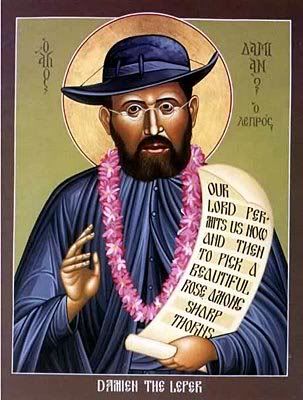
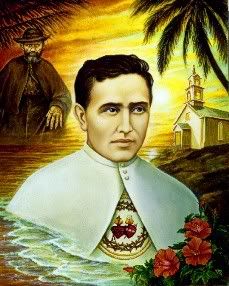
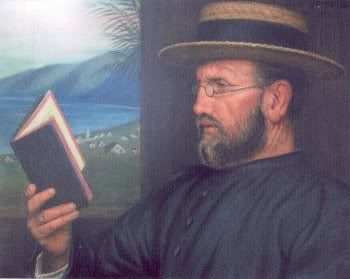
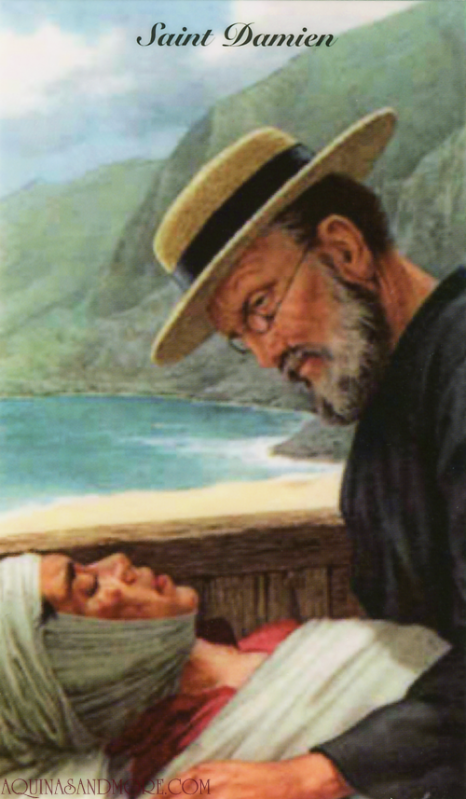
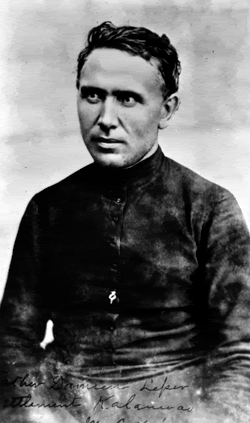
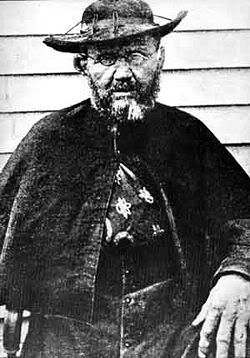
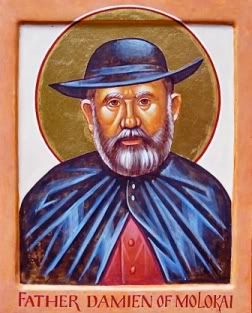
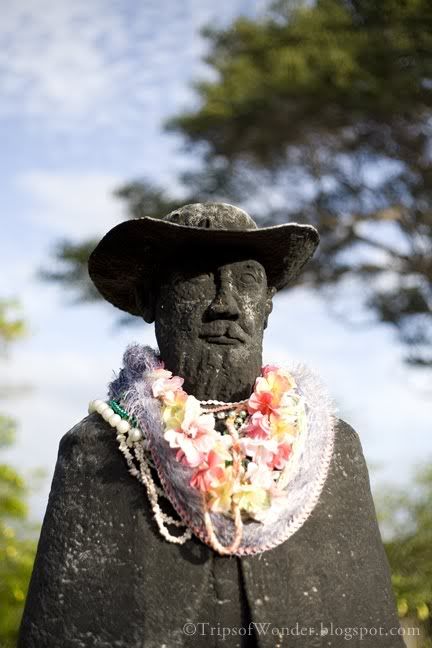
May 10: Saint Damien of Molokai

Posted by Jacob

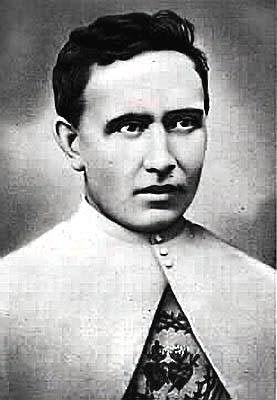
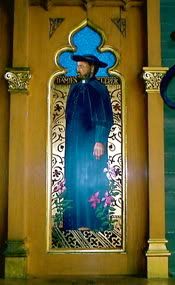
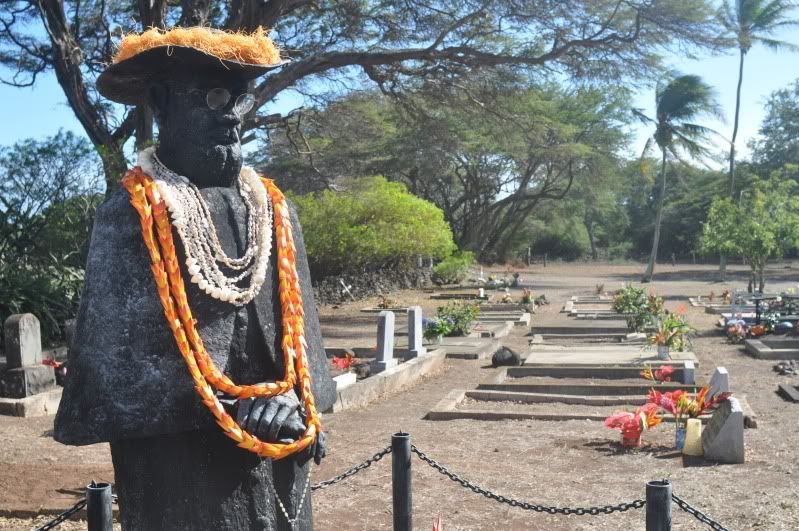
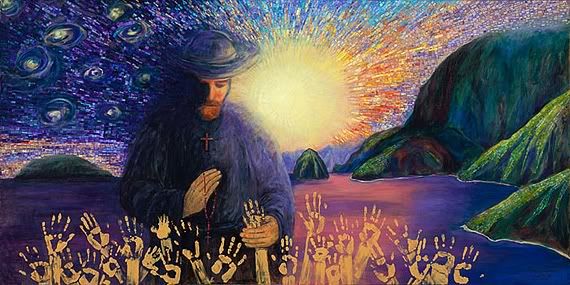
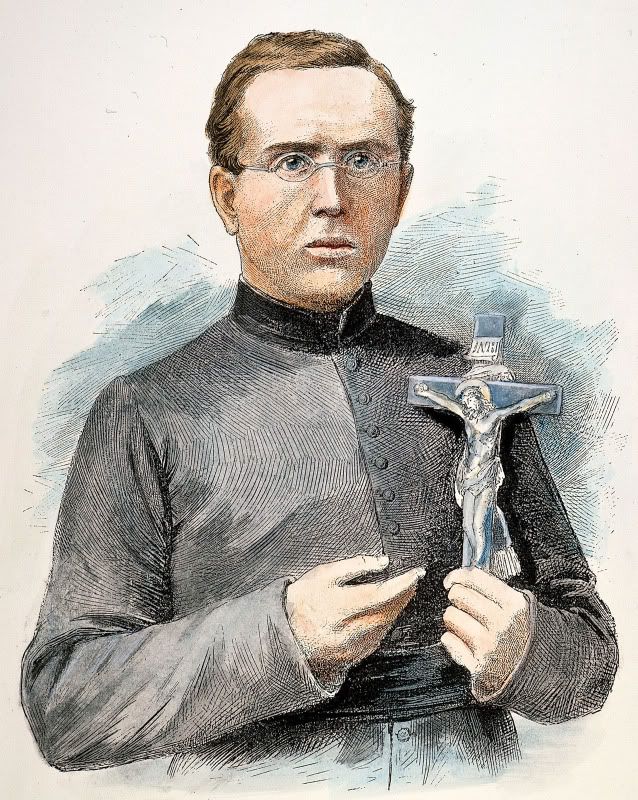
Today, May 10, we celebrate the feast day of Saint Damien of Molokai, the "leper priest," humble servant of the Lord, minister to the sick, and patron saint of Hawai’i. Saint Damien’s life is remarkable and heroic, committed to service of a marginalized and forgotten people, at great risk to his personal health. His obedience to the call of the Lord, and the love which he demonstrated to others, make him a shining example of the holiness on earth. During his beatification homily, Pope John Paul II said: "Holiness is not perfection according to human criteria; it is not reserved for a small number of exceptional persons. It is for everyone; it is the Lord who brings us to holiness, when we are willing to collaborate in the salvation of the world for the glory of God, despite our sin and our sometimes rebellious temperament."

Born Joseph De Veuster in Tremelo, Belgium to a large farming family, Joseph felt called to the religious life despite his father’s plans for him to inherit the family business. After his older brother joined the Congregation of the Sacred Hearts of Jesus and Mary, a missionary religious order, Joseph followed suit, taking the name of Damien in honor of the fourth century physician and martyr. It was his brother who was originally assigned to travel on mission to Hawai’i, and when he proved too ill to make the trip, Damien eagerly volunteered to take his place. He arrived in Honolulu in May 1864, and was ordained shortly thereafter. Facing the difficult life of a “country missionary,” Father Damien devoted every fiber of his being to the task.

At that time, the local government had enacted the policy of quarantine to prevent the spread of leprosy (Hansen’s Disease), isolating those thought to be infected by deporting them to the small remote island of Molokai. Individuals deported to Molokai faced harsh conditions, without proper food, shelter, or infrastructure in place to help them survive. Due to fear of contamination, the ships that took the infected to Molokai would not dock, instead, tossing the sick into the ocean, forcing them to swim to shore, should their strength allow it. Members of the mission, and especially Father Damien, were concerned and moved by the harsh treatment the ill received and spoke with their bishop about it. The bishop was reluctant to order any member of the mission staff to serve the “abandoned” lepers, fearing that the obedience of the mission priests would lead to their infection and eventual death. Nonetheless, four priests volunteered to take 3 month shifts on Molokai, comforting the afflicted. Among them was Father Damien, who after arriving and seeing the condition of the colony, asked permission to remain on Molokai permanently in service to those in need. "I am bent on devoting my life to the lepers," he said. The bishop granted him permission, and his lifelong mission of love, service, and comfort began.

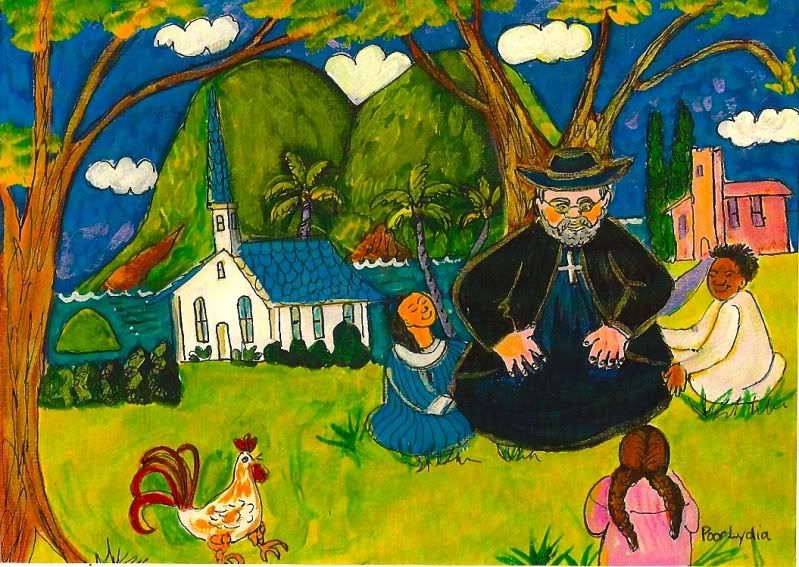
Father Damien brought a ray of God’s hope to the despairing, forgotten residents of the leper colony of Kalaupapa. He became a source of consolation and encouragement, serving as their pastor, the doctor of their souls and of their bodies, and their friend. He ministered to all, without any distinction of race or religion. He gave a voice to those who no one else would speak for, he built a community where the joy of being together and openness to the love of God gave people new reasons for living. Drawing his strength from the daily Eucharist, Father Damien worked tirelessly for God’s people, making him "the happiest missionary in the world", a servant of God, and a servant of humanity.

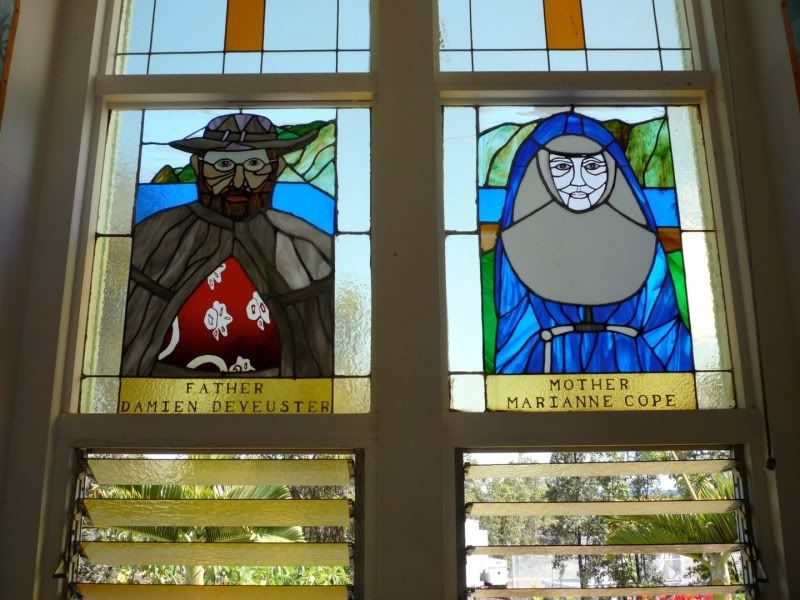
Over time, Father Damien became a strong advocate for the support of the community, securing government assistance, building schools, churches, an orphanage, and medical facilities. He enlisted the help of the Franciscan Sisters of Syracuse, and with the assistance of Blessed Sister Marianne Cope, created a thriving faith community. For the first time, the residents of Molokai had proper medical care, religious instruction, and hope.

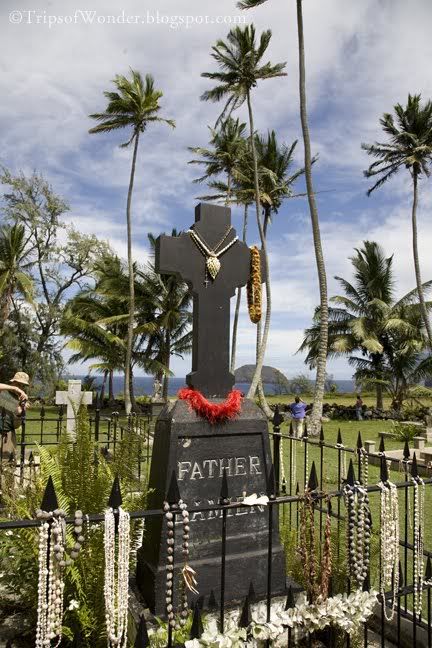
Sadly, Father Damien contracted leprosy following his years of working closely with those who were infected. To his brother he wrote, “I make myself a leper with the lepers to gain all to Jesus Christ.” Despite being ill himself, he treated and counseled his fellow residents until the day before he died. "My face and my hands are already decomposing, but the good Lord is calling me to keep Easter with Himself," he wrote. Father Damien died at peace after a life of service and a struggle against the disease he had so long ministered against. His body, as requested, was buried in Kalaupapa, where some of his relics remain (others were returned to Belgium).

Following his death, the Presbyterian and Congregational churches of Hawai’i adamantly opposed any state-sanctioned recognition of the saint, writing letters, and generally speaking ill of him. The most well-known treatise against Father Damien was written by a Honolulu Presbyterian, Reverend C. M. Hyde. In his letter, Hyde referred to Father Damien as “a coarse, dirty man” whose leprosy should be attributed to his “carelessness.” Robert Lewis Stevenson, also a Presbyterian, who had the privilege of meeting Father Damien during a visit to Hawai’i, defended the life and work of this great saint in a letter to Reverend Hyde which later became well-known. In his letter, he wrote: “But, sir, when we have failed, and another has succeeded; when we have stood by, and another has stepped in; when we sit and grow bulky in our charming mansions, and a plain, uncouth peasant steps into the battle, under the eyes of God, and succors the afflicted, and consoles the dying, and is himself afflicted in his turn, and dies upon the field of honor - the battle cannot be retrieved as your unhappy irritation has suggested. It is a lost battle, and lost for ever. One thing remained to you in your defeat - some rags of common honor; and these you have made haste to cast away… If that world at all remember you, on the day when Damien of Molokai shall be named a Saint, it will be in virtue of one work: your letter...”

Not only has the Church recognized the commitment to social justice and service that Father Damien demonstrated, many world leaders have as well. Mahatma Gandhi said of him, “The political and journalistic world can boast of very few heroes who compare with Father Damien of Molokai. ... It is worthwhile to look for the source of such heroism." Recently, President Obama declared, “Father Damien challenged the stigmatizing effects of the disease, giving voice to the voiceless and ultimately sacrificing his own life to bring dignity to so many. In our own time as millions around the world suffer from disease, especially the pandemic of HIV / AIDS, we should draw on the example of Father Damien's resolve in answering the urgent call to heal and care for the sick."

The life of Saint Damien of Molokai is inspirational at a time when we are quick to divide ourselves along religious, political, social, sexual, health, and many other distinctions. His willingness to treat all, regardless of difference, reminds us that we are all equal in the eyes of the Lord. No one is less important, and none should be beyond our love, our charity, our service. "Not without fear and loathing," Pope Benedict said of the saint, "Father Damian made the choice to go on the island of Molokai in the service of lepers who were there, abandoned by all. So he exposed himself to the disease of which they suffered. With them he felt at home. The servant of the Word became a suffering servant, leper with the lepers, during the last four years of his life. To follow Christ, Father Damian not only left his homeland, but has also staked his health so he, as the word of Jesus announced in today's Gospel tells us, received eternal life." The figure of Father Damian, Pope Benedict XVI finished, "teaches us to choose the good fight not those that lead to division, but those that gather us together in unity."
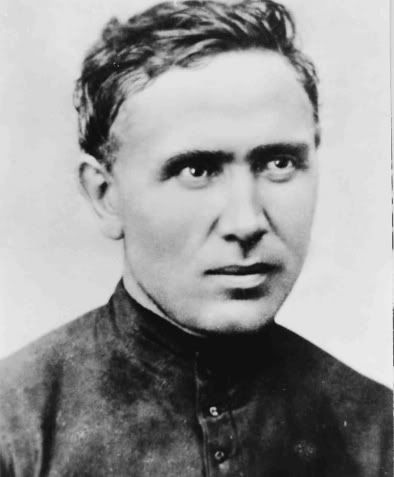


Selected writings of Father Damien of Molokai:
“The Blessed Sacrament is indeed the stimulus for us all, for me as it should be for you, to forsake all worldly ambitions. Without the constant presence of our Divine Master upon the altar in my poor chapels, I never could have persevered casting my lot with the afflicted of Molokai; the foreseen consequence of which begins not to appear on my skin, and is felt throughout the body. Holy Communion being the daily bread of a priest, I feel myself happy, well pleased, and resigned in the rather exceptional circumstances in which it has pleased Divine Providence to put me.”
“I find my consolation in the one and only companions who will never leave me, that is, our Divine Savior in the Holy Eucharist… It is at the foot of the altar that we find the strength necessary in this isolation of ours. Without the Blessed Sacrament a position like mine would be unbearable. But, having Our Lord at my side, I continue always to be happy and content. . . . Jesus in the Blessed Sacrament is the most tender of friends with souls who seek to please Him. His goodness knows how to proportion itself to the smallest of His creatures as to the greatest of them. Be not afraid then in your solitary conversations, to tell Him of your miseries, your fears, your worries, of those who are dear to you, of your projects, and of your hopes. Do so with confidence and with an open heart.”
“Were it not for the constant presence of our Divine Master in our humble chapel, I would not have found it possible to persevere in sharing the lot of the afflicted of Molokai… The Eucharist is the bread that gives strength… It is at once the most eloquent proof of His love and the most powerful means of fostering His love in us. He gives Himself every day so that our hearts as burning coals may set afire the hears of the faithful.”


Saint Damien Prayer

Saint Damien, brother on the journey,
Happy and generous missionary,
who loved the Gospel more than your life,
who for love of Jesus left your family,
your homeland, your security, your dreams,


Teach us to give our lives
with a joy like yours,
to be in solidarity with the outcasts of the world,
to celebrate and contemplate the Eucharist
as the source of our commitment.


Help us to love to the very end
and, in the strength of the Spirit,
to persevere in compassion
for the poor and forgotten
so that we might be
good disciples of Jesus and Mary.
Amen.


Year 2: Day 130 of 365
Prayer Intentions: Love for all, including those who are different from us; Unity in Christ; Hearts of service; For all the sick.
Requested Intentions: Successful resolution to legal proceedings (N); Freedom from worry and successful employment (M); For successful sale of home and freedom from debt (J); Freedom from pain and illness (E); For successful living arrangements, travels, health, and studies (F); Healing, successful studies, financial success (F); For husband’s successful employment (Y); For children’s faith journey; Recovery of a friend suffering from addiction (M); Successful employment (P); Obedience to the will of the Lord (J); Financial recovery (S); Freedom from evil influence (I); Recovery from illness (J); Freedom from addiction (J); Successful transplant surgery (K); Healing for a daughter (T); Acceptance into school (V); Successful immigration; for a sister’s career and marriage (F); Financial recovery; Successful ministry (A); Financial ability to send children to school (S); Safe return of a runaway (J); Healing of a family (J).