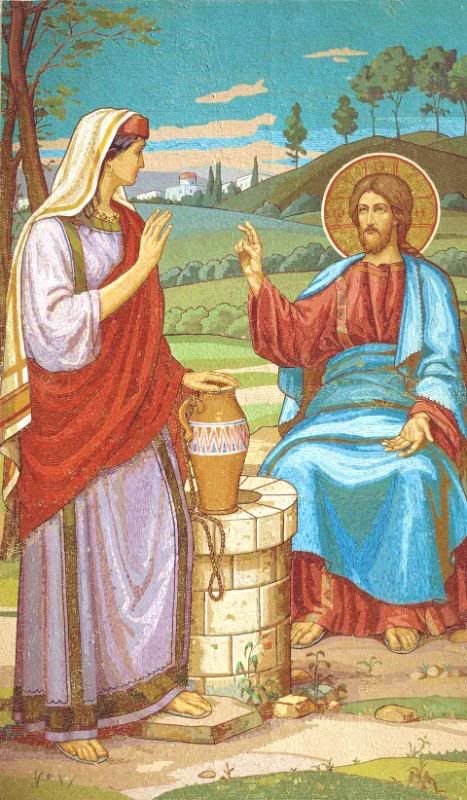
Why pray the Rosary every day for a year?


Each time the Blessed Virgin has appeared-- whether it be to Saint Bernadette Soubirous at Lourdes; to Lucia, Jacinta, and Francisco at Fatima; or to Mariette Beco at Banneux-- she has asserted the importance, saving grace, and power of praying the Holy Rosary on a daily basis. Based upon her words, the Rosary is penance and conversion for sinners, a pathway to peace, an end to war, and a powerful act of faith in Jesus Christ. Pope Paul VI presented the Rosary as a powerful means to reach Christ "not merely with Mary but indeed, insofar as this is possible to us, in the same way as Mary, who is certainly the one who thought about Him more than anyone else has ever done."

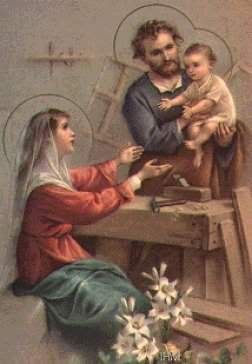
To show us how this is done, perhaps no one has been more eloquent than the great Cardinal Newman, who wrote: "The great power of the Rosary consists in the fact that it translates the Creed into Prayer. Of course, the Creed is already in a certain sense a prayer and a great act of homage towards God, but the Rosary brings us to meditate again on the great truth of His life and death, and brings this truth close to our hearts. Even Christians, although they know God, usually fear rather than love Him. The strength of the Rosary lies in the particular manner in which it considers these mysteries, since all our thinking about Christ is intertwined with the thought of His Mother, in the relations between Mother and Son; the Holy Family is presented to us, the home in which God lived His infinite love."


As Mary said at Fatima, "Jesus wants to use you to make Me known and loved. He wishes to establish the devotion to My Immaculate Heart throughout the world. I promise salvation to whoever embraces it; these souls will be dear to God, like flowers put by Me to adorn his throne."


March 23: Saint Turibius of Mogrovejo

Posted by Jacob

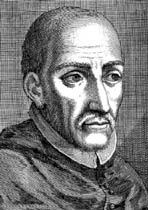
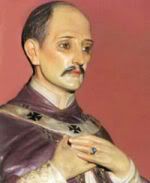
Today, March 23, we celebrate the feast day of Saint Toribio Alfonso de Mogrovejo (Turibius, 1538-1606). Saint Turibius was a reluctant minister of the Lord, but obedient to the call. Born in Mayorga, Spain to a noble and wealthy family, Turibius was well educated and achieved a number of successful secular honors and positions within Spanish society. While devout as a youth, Turibius had no intention of becoming a priest. Instead, having done well as a student, and gained the notice of his professors, he was appointed professor of law at the University of Salamanca. There, too, Turibius attracted the attention of his superiors through his patience, virtue, and intellect, and in February 1571, although he was a layman, King Philip II appointed him the chief judge of the ecclesiastical court of the Inquisition at Granada.


In 1580, the Church authorities in Peru sent word to Spain, requesting the appointment of a bishop to oversee the region, plagued by local difficulties, injustices and vice, and secular interference. Although Turibius was not ordained, he was selected for the position based upon his honesty and virtue, much to his surprise and discomfort. He unsuccessfully argued that his appointment was against Canon law, but eventually obediently accepted the post. Over four Sundays, Turibius participated in minor rites, and was ordained thereafter. He set sail for Peru without delay.

Upon arrival in Lima, Turibius found the reports of difficulties had not been exaggerated. The diocese was well over 18000 square miles along the coast, including 3 major cities and many smaller towns and villages. Turibius set off on foot for his first visit and survey of the land, a trip that would take him the length of the territory, and require seven years of his time. During that trip, he came to see the injustices being visited upon the native Peruvians at the hands of the Spanish, which he would not tolerate. Turibius defended the rights of the Quechuan Indians, learning their language, and confronting the secular authorities regarding their treatment. He offered homilies and confessions in the language native to the people of Peru, asserting that everyone had a right to worship in their own language. He re-baptized many who had been baptized in ignorance, explaining the faith, and evangelizing successfully. Unlike his predecessors, he also respected those who chose not to be baptized, continuing to offer assistance and charity to those in need. His charity, however, was often given anonymously, in respect for the pride and sensitivity of those he was helping. Through his ministry, it is estimated that nearly one million came to Christ, personally baptized by Turibius, including Saint Rose of Lima and Saint Martin de Porres.

The journeys through Peru were dangerous at that time, with few roads, and dense jungle. Turibius traveled alone, risking encounters with wild animals, unfriendly tribes, disease, heat, and danger. Over the course of his ministry in Peru, he would travel the length of his territory—always on foot—three times. During that time, he succeeded in eradicating the worst abuses occurring there, and successfully championed the rights of all peoples. He built roads, founded many churches, school houses, convents and hospitals, and the first seminary in the Americas, which allowed both Native Qechuans and those of European descent to enter, being educated together.

Saint Turibius worked tirelessly, continuing his mission despite contracting a fatal illness. Wracked with fever, he continued preaching until the very end. His favorite topic was that our lives belong not to ourselves, but to our Maker, saying, “Time is not our own and we must give a strict accounting of it." Saint Turibius predicted his own death to the hour, years before he died in the Sanctuary of the Church at Sana. Upon his death, all that he had was bequeathed to the poor.

Saint Turibius was reluctant to accept his post in Peru, fearing he would not possess the abilities to carry such a heavy burden for God. He prayed and wept until his humility was rewarded by the Holy Spirit, at which time he obediently responded. Ever humble, Turibius recognized that our time on earth is not our own, and that we are responsible to the Lord to use it to serve Him through serving each other. A champion of social justice, Turibius created change through respect and love, a lesson we could all learn from. We are called to love each other, treat each other with dignity, and offer the respect due to all humanity to everyone we encounter—especially those who we disagree with, are different from, or don’t understand. During this Lenten season, we examine our lives to discover what social injustices we contribute to—either through our active participation and beliefs, or through our inaction and avoidance. We ask, how can we work for social justice in our own cities? How can we incorporate the lessons from the life of Saint Turibius into our own lives for the betterment of all people?

Lord,
through the apostolic work of Saint Turibius
and his unwavering love of truth,
you helped your Church to grow.
May your chosen people continue to grow in faith and holiness.
Grant this through our Lord Jesus Christ, your Son,
who lives and reigns with you and the Holy Spirit,
one God, forever and ever. Amen.


Day 82 of 365
Prayer Intentions: Social justice in our communities; For those who are discriminated against, treated unfairly, or suffer injustices; For those who tirelessly champion the rights of the downtrodden.
Requested Intentions: For Healing (A); The blessing of children (S); Safety of travelers (J); Improved family relationship with the Lord, using gifts for His glory (L); For a restorative, faith-deepening Lent for all those who are struggling (L).
Special Intentions (Day 41 of 45-day Novena to Our Blessed Lady of Lourdes): The intentions of all those who read this blog, whether submitted or retained in the quiet of their hearts; Penance, Penance, Penance for sinners; For all those who are suffering.

March 22: Saint Nicholas Owen

Posted by Jacob

Saint Nicholas Owen (born, unknown; died 1606) is the saint and martyr we remember on March 22. Born into a poor, but devout Catholic family in England in the late 16th century, Nicholas worked tirelessly throughout his life as a skilled carpenter, building hiding places throughout the region to protect priests and religious from persecution. Despite the active persecution of the Church under the reign of Queen Elizabeth I, two of Nicholas’ brothers became Catholic priests, one printed and distributed Catholic literature. Nicholas, drawing upon his skills, aiding the survival of the faith in another way.


While little is known about his life, other than his works, it is clear that Nicholas never took formal vows. However, during his work for first Saint Edmund Campion, and later Fathers Garnet and Gerard, Nicholas was schooled in the Jesuit traditions. He was made a lay brother of the order in 1577, and served both priests throughout his life.

Saint Nicholas first drew the attention of the authorities following the martyrdom of Saint Edmund. He spoke out adamantly about the treatment that Edmund had received, as well as the atrocity his death. As a result, he was imprisoned, but released shortly afterwards. Prior to his death, Saint Edmund had initiated the work that would occupy Nicholas through most of his life. By day, he would build, repair, and undertake “legitimate” construction on the large homes that housed the religious, and by night would craft secret rooms and hiding places, finding and reinforcing subterranean passages, small spaces between walls, impenetrable recesses. He always worked alone, and no records were kept of his constructions. So intricate and creative were the designs, it is likely that some have never been discovered to this day. His gift of design and construction was such that he even assisted in the escape of two Jesuit priests, Fathers Garnet and Gerard, from the Tower of London, assumed to be impenetrable.
Father Garnet, who himself had employed Nicholas in building hiding places, described him in 1596 as “a carpenter of singular faithfulness and skill who has traveled through almost the entire kingdom and, without charge, has made for Catholic priests hiding places where they might shelter the fury of heretical searchers. If money is offered him by way of payment he gives it to his two brothers; one of them is a priest, the other a layman in prison for his faith.”

At some point, although it is unclear when, the anti-Catholic authorities discovered one of his secret hiding places, but did not know who had constructed them. Nicholas was arrested on more than one occasion, but always let go, as he refused to give up the names of his Catholic brethren, and his simple and humble demeanor suggested he couldn’t be the “mastermind” responsible. Eventually, however, Nicholas himself was taken to the Tower of London, and mercilessly tortured for days. With chains around his wrists, heavy weights were attached to his feet, and he was hoisted off the ground. A man of short stature, who had a pre-existing hernia due to the heavy work he undertook each day, Nicholas’ stomach split open after many days of hanging, his intestines spilling to the floor. He died after several more hours of excruciating pain, without ever having given up the names of those he protected.

Father Gerard wrote of him, "I verily think no man can be said to have done more good of all those who labored in the English vineyard. He was the immediate occasion of saving the lives of many hundreds of persons, both ecclesiastical and secular."

Saint Nicholas Owen was a brave and humble man. He recognized that the Lord gives us each a special gift. For Nicholas’ brothers, it was preaching, writing, and printing. But Nicholas embarked on a different path, looking to his hands graced by God, and courageously utilizing them to safeguard His Church. We are reminded by Nicholas Owen that we all possess different abilities, that these abilities all come from the same God, and He is pleased when we use them to honor Him. What are your gifts from God? How often do we recognize these gifts, offer praise and thanksgiving for them, and consciously lift our actions in prayer to the Lord who made us? During this Lenten season, we might pause for reflection, acknowledging our human frailty, and thanking God for all the many blessings He has bestowed upon us.


Day 81 of 365
Prayer Intentions: Hearts of thankfulness for our God-given gifts; For those who risk their lives in service of the Lord.
Requested Intentions: For Healing (A); The blessing of children (S); Safety of travelers (J); Improved family relationship with the Lord, using gifts for His glory (L); For a restorative, faith-deepening Lent for all those who are struggling (L).
Special Intentions (Day 40 of 45-day Novena to Our Blessed Lady of Lourdes): The intentions of all those who read this blog, whether submitted or retained in the quiet of their hearts; Penance, Penance, Penance for sinners; For all those who are suffering.

Marian Mondays: Hope

Posted by Jacob

Marian Mondays is a weekly post focusing on Our Blessed Mother, Mary, Queen of Heaven and Earth. In this post, we explore her life, her special mission, her sanctity, and the Biblical bases for the beliefs of the Church.


We pray with Mary. We experience her practically, emotionally, and rationally. We feel confident in the truth of her existence. We realize that she is unique, chosen for a special purpose by the Lord. We recognize the importance of her name. But what of her Christian virtues? We hold Mary, the Mother of God, up as the first disciple of Christ, as in her agreeing to serve as the vessel of the Incarnation, she became the first Christian. She believed in her Son. And as we will see, she lived His teachings, even before He taught them, such was her connection to the Lord. She exhibited fully the three theological virtues of faith, hope, and charity.

Last week, we briefly looked at the great faith of Our Blessed Mother, Mary. As we continue our preliminary exploration of the virtues of the Mother of God, we turn to hope, the consummated will of the Lord.

For we are saved by hope. But hope that is seen is not hope. For what a man seeth, why doth he hope for? But if we hope for that which we see not, we wait for it with patience (Romans, 8:24-25).

Hope and faith are intrinsically connected-- Faith being the belief in the power and presence of God, and hope being the confidence that the Lord can accomplish all things. We can have faith, but lose hope. And similarly, we can hope without great belief or faith. The world tempts us to both of these options, and this is likely the case for Mary, as well. Throughout the New Testament, we see numerous opportunities for doubt on the part of Mary, as well as opportunities for her to lose hope in the promise of God that she was called to. In each of these moments we sense her human suffering, her confusions, and her lack of complete understanding of the words of her Son:


Upon finding the child Jesus in the temple:
48When his parents saw him, they were astonished. His mother said to him, "Son, why have you treated us like this? Your father and I have been anxiously searching for you."
49"Why were you searching for me?" he asked. "Didn't you know I had to be in my Father's house?" 50But they did not understand what he was saying to them. (Luke 2:48-50)

At the Wedding in Cana:
"Woman, why do you involve me?" Jesus replied, "My time has not yet come." (John 2:4)

During His ministry:
31Then Jesus' mother and brothers arrived. Standing outside, they sent someone in to call him. 32A crowd was sitting around him, and they told him, "Your mother and brothers are outside looking for you."
33"Who are my mother and my brothers?" he asked.
34Then he looked at those seated in a circle around him and said, "Here are my mother and my brothers! 35Whoever does God's will is my brother and sister and mother." (Mark 3:33)

and

27As Jesus was saying these things, a woman in the crowd called out, "Blessed is the mother who gave you birth and nursed you."
28He replied, "Blessed rather are those who hear the word of God and obey it." (Luke 11:28)


These words directed from Son to mother, given a cursory glance, must seem harsh and even hurtful to Mary. We can imagine how we might respond if a family member of friend spoke to us in the same manner. And in those moments, that is when we look to Mary, as a model of virtue. Despite her human confusion at these events, at the words of Jesus, at the course her life had taken—Despite all of this, she never loses hope in the Lord. She comes back time and time again, placing her life, her meaning, and her purpose in the Lord, and doing so with confidence. Her hope never wanes—not during the childhood of Jesus, the start of His ministry, the Passion and crucifixion of Our Lord, not during the days He laid in the tomb. Mary’s continued journey with Jesus to His cross reveals a profound hope in the Resurrection, in the rebirth of all people through Jesus.

Common Ground

Posted by Jacob

Today, we continue our Lenten reflections on the grace and forgiveness of God, our sinful natures, and our call to repentance (see the parables of The Fig Tree and The Prodigal Son). We read about a woman, caught by the Pharisees in the act of adultery, and brought to Jesus for condemnation and judgment—two acts He refuses to engage in. The story of the woman reminds us of our acceptance by God, but more importantly are commonality and community with each other in the Church.


1But Jesus went to the Mount of Olives. 2At dawn he appeared again in the temple courts, where all the people gathered around him, and he sat down to teach them. 3The teachers of the law and the Pharisees brought in a woman caught in adultery. They made her stand before the group 4and said to Jesus, "Teacher, this woman was caught in the act of adultery. 5In the Law Moses commanded us to stone such women. Now what do you say?" 6They were using this question as a trap, in order to have a basis for accusing him.
But Jesus bent down and started to write on the ground with his finger. 7When they kept on questioning him, he straightened up and said to them, "If any one of you is without sin, let him be the first to throw a stone at her." 8Again he stooped down and wrote on the ground.
9At this, those who heard began to go away one at a time, the older ones first, until only Jesus was left, with the woman still standing there. 10Jesus straightened up and asked her, "Woman, where are they? Has no one condemned you?"
11"No one, sir," she said.
"Then neither do I condemn you," Jesus declared. "Go now and leave your life of sin." (John 8:1-11)

Setting aside the brutality of stoning, the misogyny of the times (if the woman was “caught in the act,” so to speak, why isn’t her partner brought with her?), and the motivation of the Pharisees (trying to discredit Jesus to increase their own power and authority), the Pharisees come to Jesus having pre-judged the woman. In judging her, they have neatly separated themselves from her, viewing her as sinful, different, less than themselves. In their judgment, they have equated themselves with God, who alone can determine sinfulness and offer the grace of forgiveness. In their judgment, they have discarded the commonality of humanity, replacing it with the divide of false divinity and superiority.

Jesus doesn’t do that. A crowd has gathered, and the Pharisees are yelling questions at Him, pressing Him for answers. I can imagine this scene being quite a spectacle—loud and crowded, the woman frightened, the Pharisees arrogant, the onlookers curious. But when we read the text, Jesus remains calm, and peaceful. He bends down, and runs his fingers through the dirt, writing what some Biblical scholars suggest are the broken commandments of the Pharisees, one written with the finger of God on the tables to Moses. In doing so, he halts the debate, the argument. He centers the crowd on himself, on the space he creates in the midst of the noise and anxiety, he draws their eyes to the earth—the common ground on which we all stand in our humanity.

And then, with a single comment, he forces the crowd—the Pharisees, the woman, the onlookers—to confront their own sinfulness, their commonality, their community, and their acceptance in the eyes of the Lord despite their transgressions. It is unclear if the Pharisees had their hearts changed that day, or if they left the argument bested, hoping to return for retribution. It is unclear whether the woman changed her life, leaving that place, and turning from sin. And the individual change in those figures may not be the important message we are receiving from the Lord in this moment form His life.

The message we receive is that of acceptance. Jesus doesn’t say, “I forgive you,” to any of them. He acknowledges sinfulness, but doesn’t condemn. The Lord continues to love us, despite our sinfulness. But Jesus doesn’t stop there. He urges her to repent, as he has in the parables of the Fig Tree and the Prodigal Son. His words inspire us to look beyond our judgments and differences, to look beyond those things that separate us from each other, and to instead come together as the Body of Christ, the Church on earth—loving each other, supporting each other, encouraging each other, and yes, pointing out to each other when we might be morally stumbling—not with an eye of judgment, but with a heart of acceptance, as Christ has accepted us.


Day 80 of 365

Prayer Intentions: Acceptance, rather than judgment; The strength to turn from sin; Those who have been wrongfully judged, ostracized, or treated poorly.
Requested Intentions: For Healing (A); The blessing of children (S); Safety of travelers (J); Improved family relationship with the Lord, using gifts for His glory (L); For a restorative, faith-deepening Lent for all those who are struggling (L).
Special Intentions (Day 39 of 45-day Novena to Our Blessed Lady of Lourdes): The intentions of all those who read this blog, whether submitted or retained in the quiet of their hearts; Penance, Penance, Penance for sinners; For all those who are suffering.

Saint Photina: The Woman at the Well

Posted by Jacob

On March 20, we commemorate the feast day of Saint Photina (also known as Svetlana, born unknown, died 66), holy martyr of the Church, better known as the Samarian woman Jesus encounters at Jacob’s Well:


5So he came to a town in Samaria called Sychar, near the plot of ground Jacob had given to his son Joseph. 6Jacob's well was there, and Jesus, tired as he was from the journey, sat down by the well. It was about the sixth hour.
7When a Samaritan woman came to draw water, Jesus said to her, "Will you give me a drink?" 8(His disciples had gone into the town to buy food.)
9The Samaritan woman said to him, "You are a Jew and I am a Samaritan woman. How can you ask me for a drink?" (For Jews do not associate with Samaritans.)
10Jesus answered her, "If you knew the gift of God and who it is that asks you for a drink, you would have asked him and he would have given you living water."
11"Sir," the woman said, "you have nothing to draw with and the well is deep. Where can you get this living water? 12Are you greater than our father Jacob, who gave us the well and drank from it himself, as did also his sons and his flocks and herds?"
13Jesus answered, "Everyone who drinks this water will be thirsty again, 14but whoever drinks the water I give him will never thirst. Indeed, the water I give him will become in him a spring of water welling up to eternal life."
15The woman said to him, "Sir, give me this water so that I won't get thirsty and have to keep coming here to draw water."
16He told her, "Go, call your husband and come back."
17"I have no husband," she replied.
Jesus said to her, "You are right when you say you have no husband. 18The fact is, you have had five husbands, and the man you now have is not your husband. What you have just said is quite true."
19"Sir," the woman said, "I can see that you are a prophet. 20Our fathers worshiped on this mountain, but you Jews claim that the place where we must worship is in Jerusalem."
21Jesus declared, "Believe me, woman, a time is coming when you will worship the Father neither on this mountain nor in Jerusalem. 22You Samaritans worship what you do not know; we worship what we do know, for salvation is from the Jews. 23Yet a time is coming and has now come when the true worshipers will worship the Father in spirit and truth, for they are the kind of worshipers the Father seeks. 24God is spirit, and his worshipers must worship in spirit and in truth."
25The woman said, "I know that Messiah" (called Christ) "is coming. When he comes, he will explain everything to us."
26Then Jesus declared, "I who speak to you am he." (Luke 4: 5-26)


Following these events, we know that Photina returned to her village, and many came to believe in Jesus through her testimony. The life of Photina following her encounter with the Lord is one of great love for Him, constant preaching despite fear of persecution, and eventual horrible torture and death. She is highly venerated in the Eastern and Orthodox traditions, and recognized in the Roman Catholic martyrology.

Following her encounter with the living Christ, Photina and her son apparently lived in Carthage, where they preached the Gospel to all who would listen. Her eldest son, Saint Victor, a soldier, had demonstrated his bravery in battle, and was therefore rewarded with a prominent station in the city of Attalia. Following a conversation with the city’s administrator, during which Victor was encouraged to renounce his faith and warn his mother and sisters not to preach the Gospel, the city administrator was struck dumb and blind for three days. Upon recovering his senses, and seeing Victor still with him, the administrator converted to Christianity, along with his servants. News of this miraculous conversion eventually reached Emperor Nero, an active and sadistic persecutor of Christians, who ordered the m brought to Rome for trial.
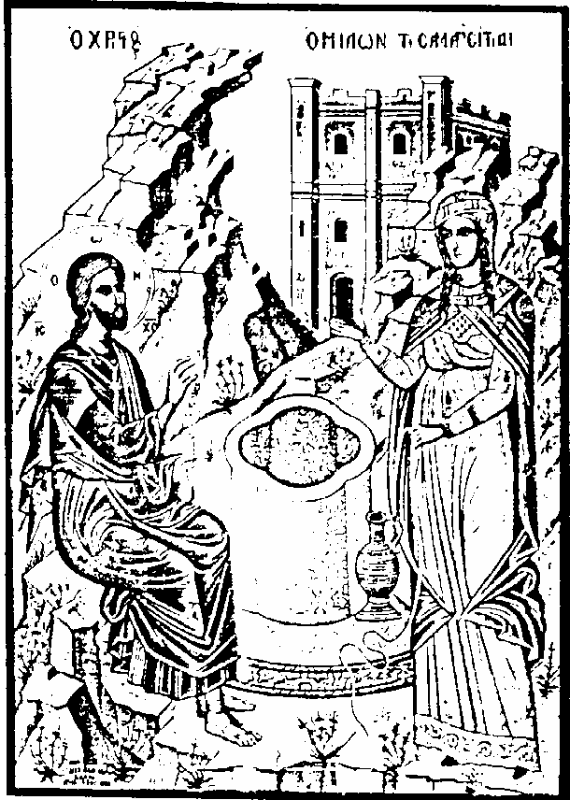
Hearing of the trial, Saint Photina, her sisters, and several other believers, traveled to Rome to join the confessors in their time of trial. The trial was short, and torture began almost immediately upon the accused refusing to renounce their belief in Christ. Each of the martyrs had their wrists crushed in an anvil, but reported feeling no pain. Photina’s wrist, however, was miraculously unable to be crushed. The men were thrown into prison, where they continued to preach to all who would listen, the prison itself transforming into a place that was glowing with light and sweet in odor. The women were confined to the service of the Emperor’s daughter, who promptly converted to the faith through their witness, as did her servants.

Incensed with rage, Nero ordered the martyrs executed. The men were crucified upside down and beaten for three days, still refusing to die. They then had their legs severed below the knees, their limbs thrown to dogs, and were beaten until the expired. The women were mutilated, tied to two bent trees, and upon their release were split in half. Saint Photina was thrown down a well, fittingly, the place she had first encountered the Lord. After 20 days of freezing water, no food, or sleep, she was called before the emperor. Again, she was asked to renounce her faith, but replied, “Most impious, blind, lost mad man! Can you possibly think me so stupid that I would agree to renounce my Lord Christ and offer sacrifice to idols as blind as you?!” Without hesitation, Nero had her thrown back into the well, where she died at peace with the Lord.

We read throughout the New Testament about the life of Jesus, and the individuals he encounters during his ministry—the blind man who has his sight restored, countless individuals cured of leprosy, possession, and illness, those He dines with, those He teaches, those He challenges. Like the woman at the well, these are the first Christians, those who risked life and limb in the propagation (and promulgation!) of the early faith. Yet, we rarely pause to consider what their lives were like, following their encounters with Christ, recorded in the Gospels.  Photina's martyrdom, recorded in history, offers us a glimpse into the lives of these early Christians.

Photina, so moved by the Lord, so thirsty for the water of life, gave all she had to spread the Gospel to others. So loving and charitable was she, she chose to give her life so that others might hear the words of Christ and come to believe. It is certainly a challenge in our lives to live our faith openly, witnessing to those we encounter—not because of threat of death in most cases, but because of the judgment and hostility exhibited by many in the world. The question is, should we let that stop us? The love of Christ compels us to call others to Him, so that they too may be saved. How, through our lives, words, and behaviors, are we serving as witnesses to the glory and redemption of Jesus Christ? We pray that we may courageously live our faith, so that all may see and believe!


By the well of Jacob, O holy one,

thou didst find the Water of eternal and blessed life;
and having partaken thereof, O wise Photina,
thou went forth proclaiming Christ, the Anointed One.
Help us to follow your example,
and through our lives bring glory to the Lord and believers to the Church. 
Amen.