Why pray the Rosary every day for a year?


Each time the Blessed Virgin has appeared-- whether it be to Saint Bernadette Soubirous at Lourdes; to Lucia, Jacinta, and Francisco at Fatima; or to Mariette Beco at Banneux-- she has asserted the importance, saving grace, and power of praying the Holy Rosary on a daily basis. Based upon her words, the Rosary is penance and conversion for sinners, a pathway to peace, an end to war, and a powerful act of faith in Jesus Christ. Pope Paul VI presented the Rosary as a powerful means to reach Christ "not merely with Mary but indeed, insofar as this is possible to us, in the same way as Mary, who is certainly the one who thought about Him more than anyone else has ever done."

To show us how this is done, perhaps no one has been more eloquent than the great Cardinal Newman, who wrote: "The great power of the Rosary consists in the fact that it translates the Creed into Prayer. Of course, the Creed is already in a certain sense a prayer and a great act of homage towards God, but the Rosary brings us to meditate again on the great truth of His life and death, and brings this truth close to our hearts. Even Christians, although they know God, usually fear rather than love Him. The strength of the Rosary lies in the particular manner in which it considers these mysteries, since all our thinking about Christ is intertwined with the thought of His Mother, in the relations between Mother and Son; the Holy Family is presented to us, the home in which God lived His infinite love."


As Mary said at Fatima, "Jesus wants to use you to make Me known and loved. He wishes to establish the devotion to My Immaculate Heart throughout the world. I promise salvation to whoever embraces it; these souls will be dear to God, like flowers put by Me to adorn his throne."


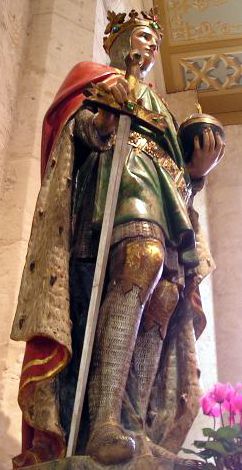
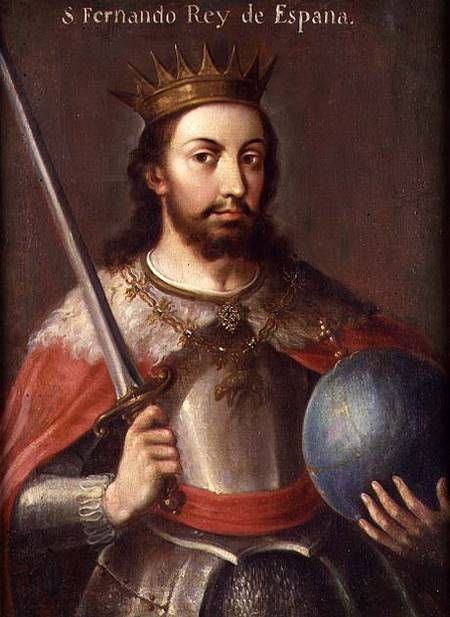
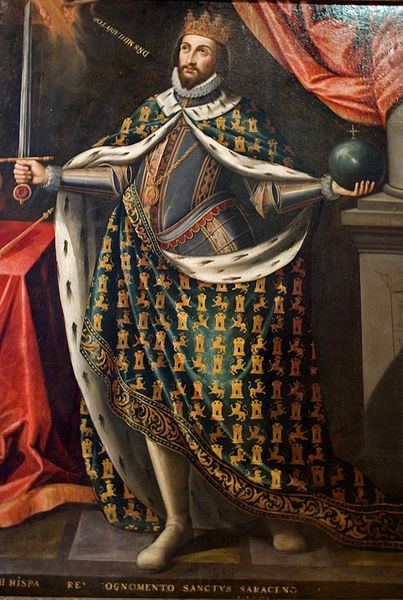
May 30: Saint Ferdinand III, King of Castille and Leon

Posted by Jacob

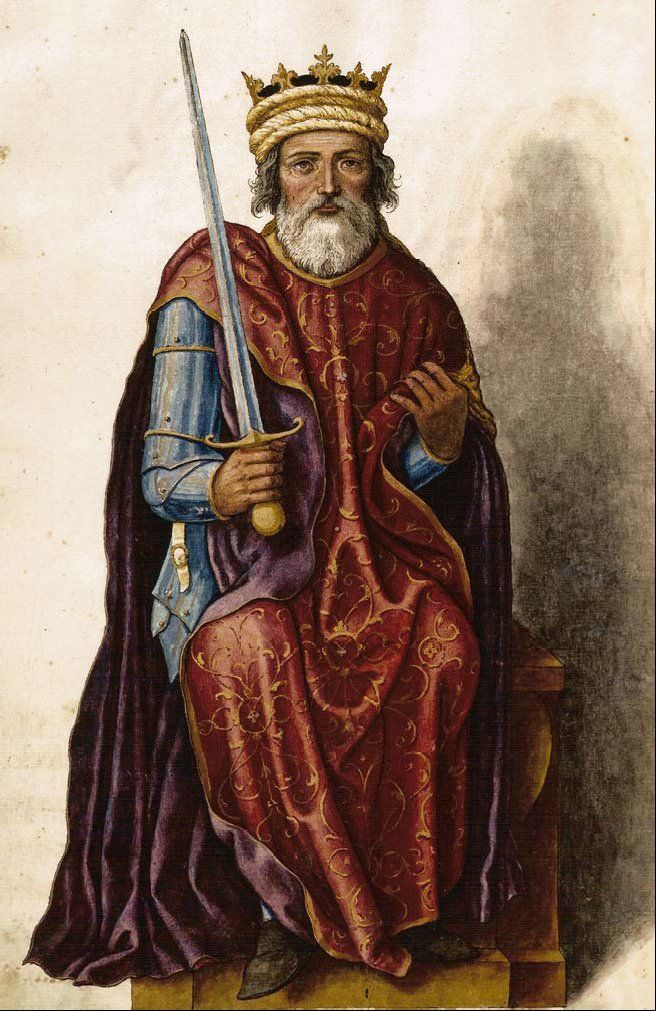
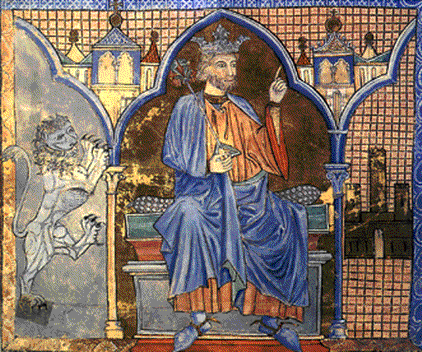
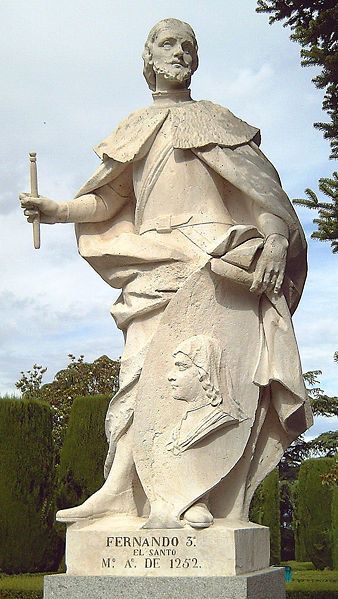
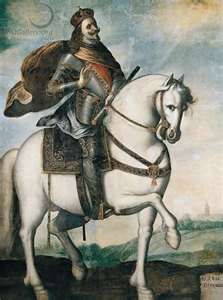
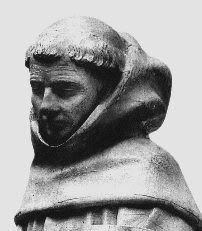
Today, May 30, we celebrate the feast of Saint Ferdinand III, King of Castille and Leon (also know as Fernando, 1198-1252), confessor. Saint Ferdinand was a virtuous and kind ruler, extending the faith of Catholicism throughout Spain and Moorish-occupied territories, and taking care of the poor and needy. He was especially devoted to Our Blessed Mother, from whom he drew the strength, wisdom, grace, and guidance necessary to rule with a just hand, to the betterment of his subjects. Saint Ferdinand is considered the patron saint of engineers, authorities (including magistrates, governors, tertiaries, and rulers), large families, parenthood, and the poor and imprisoned.


Ferdinand III of Castile was born in the monastery of Valparaiso, near Salamanca, Spain. He entered the world as a noble, the son of Alfonso IX, King of Leon, and Berengaria, daughter of Alfonso III, King of Castile. When he reached his eighteenth birthday, he was declared king of Palencia, Valladolid, and Burgos. He wished for nothing more than to form “the Catholic kingdom,” and demonstrated great prudence, patience, wisdom, and courage, despite his age. As he was so young, his mother became his closest advisor and Regent during his early reign, and assisted in the arrangement of a marriage to Princess Beatrice, daughter of Philip of Suabia, King of Germany. Together, they produced seven sons and three daughters. Although one daughter and one son died while quite young, the couple was blessed and the relationship was filled with grace and virtuous love.

Ferdinand ruled with severity in the administration of justice, especially against those who violated the laws of God. Although his justice was swift against those who rebelled, his granting of amnesty and personal forgiveness was equally as swift. He appointed wise and prudent governors and magistrates, reformed the court system, and enacted a new set of laws based upon fairness and equality—laws still utilized today.

Ferdinand vowed to never raise an army against any force, unless they were enemies of the Christian faith. He found his adversary in the Moors, who in 1225, were sweeping across Spain. Courageously, Ferdinand led an army against them, retaking approximately 20 strongholds. This he did, not out of personal ambition, but in order to rescue Christians who were enslaved. He was known to have prayed “Thou, O Lord, who searches the heart of man: Thus knowest that I desire Thy glory and the increase of Thy Faith and holy religion.”

While leading his men, Ferdinand set an absolute example of piety and devotion, fasting, praying, and spending his evenings in spiritual exercises and contemplation before the lord. He enacted severe austerities, including fasting and the continual wearing of a hair shirt. He watched over his men and their conduct, counseling them on virtue and providing a model of Christian love. Despite the horrors of war, and the chaos of an army encampment, he lived as if in religious cloister. His example was not lost on his soldiers, who fought for the Lord and the love of His Blessed Mother.

Saint Ferdinand’s devotion to Mary was deep, referring to her as, “My Lady.” In return, Our Blessed Mother led him to victory in his battles, and wiped the lands free from famine and pestilence during his entire reign, which, as his contemporary chroniclers observed, was an evident miracle, considering the circumstances of that period. A large picture of Our Lady was carried before him into battle, while a small picture of Our Lady was attached to his saddle.

Between 1234 and 1236, Ferdinand lay siege to the city of Cordova, long held by the Moors for over 500 years. He entered the city in triumph on the feast of Saints Peter and Paul. The Alhambra and the central mosque were converted to the center of Catholicism and worship in the city, dedicated to the Blessed Virgin. The bells of Saint James of Campostella, which had been taken by the Moors, were returned to their original place, and rang out once again throughout the city.
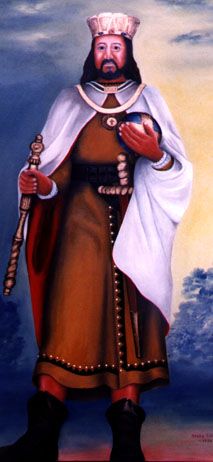
While Ferdinand completed the siege of Cordova, his wife died. After some time, he remarried Joan, Countess of Ponthieu, and together produced four sons and one daughter. Not long afterwards, Ferdinand laid siege to Seville, and after 16 months, drove the Moors out despite strong fortifications and a sizable army. The Moorish general who had commanded the city, wept and said to his officers, “None but a Saint could, with such a small force, have made himself master of so strong and well-manned a place.” In thanksgiving for his victory, which at last drove the Moors from Spain, Ferdinand rebuilt the Cathedral of Seville to its original glory and splendor, and dedicating it to Our Lady.
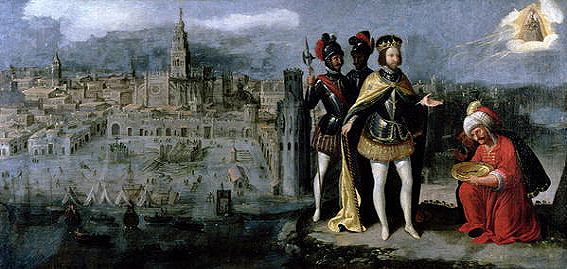
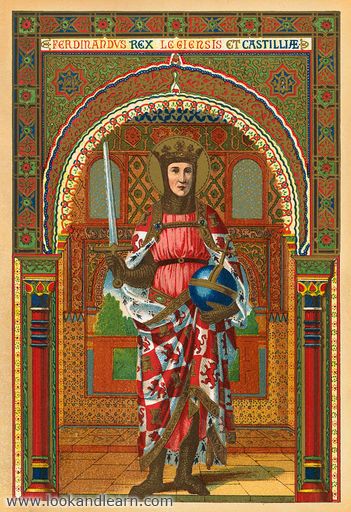
Saint Ferdinand looked to strengthen and expand the faith wherever he went. He founded the Cathedral of Burgos, the Cathedral of Toledo, and the University of Salamanca. He established bishoprics throughout the country, re-instituted Catholic worship, built churches, founded monasteries, and endowed hospitals. Rather than keeping the spoils of war for himself, he distributed them amongst the peoples who had long been oppressed, and used the riches to glorify the Lord through the construction of grand cathedrals.

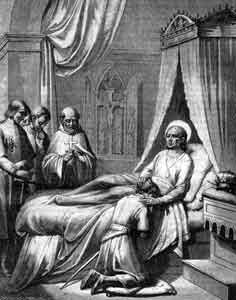
During the final years of his life, Ferdinand remained in Seville, ruling his people with equity, and fighting his final battle with a prolonged illness. At the age of 54, realizing his death was imminent, he made his final confession, and received the Last Sacraments. Following his reception of the Eucharist, Ferdinand was favored with an apparition from heaven, for which he was especially thankful. He cried out, “Thou, O Lord, hast given me the kingdom, which I should not otherwise have had; Thou hast given me more honor and power than I deserved; receive my thanks! I give Thee back this kingdom, which I have increased as far as I was able; I also commend my soul into Thy hands!”

Taking a candle and raising it up towards Heaven, Saint Ferdinand continued: “Lord Jesus Christ, my Redeemer! Receive my soul, and through the merits of Thy Most Holy Passion, deign to admit it among those of Thy servants!” He peacefully died while the bishops at his bedside sang the Te Deum.

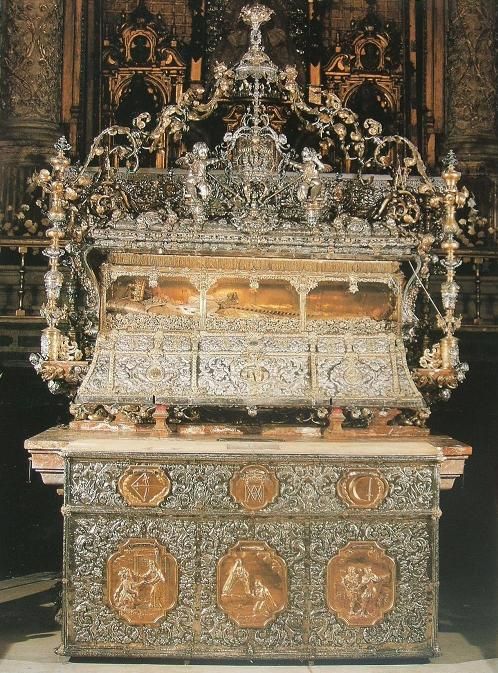
Ferdinand was buried in the Cathedral of Seville, his tomb placed beneath the image of the Blessed Virgin. As he had requested, he was clothed simply in the habit of the Third Order of Saint Francis, having been a member of that Order for a number of years. His incorrupt body is venerated today, and numerous miracles have been reported via his intercession.


Year 2: Day 150 of 365
Prayer Intentions: Devotion to Our Lord and His Blessed Mother; Desire to serve the Lord and His people rather than ourselves.
Requested Intentions: For health of friend, for successful relationships for children, for safe pregnancy for daughter (C); For the health of a mother (J); Virtue for daughter (V); Successful acceptance to college for nephew (M); For the health of a cousin (T); Freedom from legal difficulties for husband (S); Husband’s freedom from illness (L); Personal intentions (S); Successful passing of dental board examination (P); Blessings on a family (Z); Successful permanent employment (C); Healing of a son with autism (J); Son’s successful employment (L); For the intentions of family and relatives, for the Carthusian community (T); For personal intentions (A); Restoration of lost hearing (C); Resolution of relational and financial challenges (S); Comfort following loss of husband, security for family, assistance with housing (B); Healing and return of brother (O); Successful hermitage foundation (S); Support from family, permission to marry (H); Recovery of wife following surgery, freedom from depression (W); Protection and recovery of mentally ill daughter (J); Successful resolution to legal proceedings (N); Freedom from worry and successful employment (M); For successful sale of home and freedom from debt (J); Freedom from pain and illness (E).

May 29: Martrys of Toulouse & Saint Theodosia of Constantinople and Companions

Posted by Jacob

May 29 marks the feast day of two groups of martyrs for the Catholic faith: Saint William Arnaud and the Martyrs of Toulouse and Saint Theodosia of Constantinople and companions. Both groups, at very different times, in very different places, died aggressively defending their faith, proclaiming the Good News of Christ.


Saint William Arnaud (died 1242) and eleven companions dies in Avignonet, France, and are known as the “Martyrs of Toulouse.” William, a Dominican friar, was sent with his companions by Pope Gregory IX, appointed inquisitors, to the regions of France to combat heresy which was spreading under the guise of Albigensianism (a theory of dualism which considered the body evil, thereby preventing resurrection. Christ was thought to have not been man, given that he would have succumbed to evil, had he been. This theory removed the Sacraments of the Church, replacing them with pagan rituals for purification).


Along with William, were Bernard of Roquefort and Garcia d’Aure of Comminges, both Dominicans. Two Franciscan friars accompanied them, Stephen Saint-Thibery and Raymond Cortisan. A Benedictine friar, Raymond Cortison, referred to as “the Writer” originally from Toulouse, joined them, as did Bernard from the cathedral of Toulouse. Pietro d’Arnaud, notary of the Inquisitors, and Fortanerio and Adhemar, clerics of the Inquisitors, completed the group of martyrs.


This group of brave men found most every door to them closed in Toulouse, under penalty of punishment from the ruling count at the time. They set up a small farmhouse outside the city gates, preaching throughout the countryside with great success. Many were converted, and many miracles of healing were performed. Eventually, their presence became threatening to the local government, who lured the holy men to an ambush by spreading word that the ruling Count—an acquaintance of Saint William—was ready to reject his heretical beliefs and return to the Church.


On the eve of the Ascension of Our Lord, the martyrs, having received a heavenly vision of their imminent martyrdom, traveled as a group to the castle of Count Raymond III of Toulouse, where his soldiers fell upon them in the great hall, slaughtering 7 of the 11. The remaining four—including William—escaped to a local Church, where they were found by the soldiers singing the Te Deum. It was here, in the church, that they were murdered—an act unforgivable in Medieval times due to the principle of sanctuary. Particularly angered by the singing, the soldiers first cut out Saint William’s tongue, prior to killing him. The bodies of the martyrs were thrown down a ravine and large boulders were rolled on top of them. As evening fell, however, bright, heavenly lights streamed from their bodies, leading the faithful to them to collect their relics. They were interred in the Church of San Romano at the monastery in Toulouse.


The church of Avignonet where they were murdered was placed under interdict, the doors closed and locked, because of the sacrilege, and for 40 years no Mass was celebrated there. When the interdict was lifted, the bells rang of themselves, according to legend, to let people know that Avignonet was once more a member of the living Church.


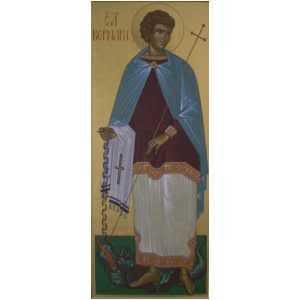
Saint Theodosia (died 729) and her companions were nuns in Constantinople who were martyred for their defense of the Church. Born into a noble family in Turkey, she was orphaned at an early age and was raised and educated at the monastery of Saint Anastasia. During her lifetime, Saint Theodosia committed herself to prayer and service to those in need.


During this time, the Church was divided over the bodily depictions of Christ in the form of icons. Emperor Leo III the Isaurian ordered the iconoclast persecutions—that is, the removal and destruction of such artistic renderings. Countless icons were destroyed during this period and those who defended them oftentimes became martyrs for their faith. The position of the icon defenders was one of love for the Lord, and pure worship, captured by Saint John of Damascus: “In former times God, who is without form or body, could never be depicted. But now when God is seen in the flesh conversing with men, I make an image of the God whom I see. I do not worship matter; I worship the creator of matter who became matter for my sake . . .”


One such martyr in defense of this historical iconic record of the Church in depicting Our Living God was Saint Theodosia. When the soldiers of Emperor Leo III were ordered to remove the image of Christ which stood over the Chalke Gate of the Imperial Palace, Saint Theodosia and 12 companion nuns attempted to prevent the destruction, crying out, and preaching the faith. Saint Theodosia herself is said to have shook the ladder so violently that the soldier climbing to destroy the icon was knocked from it, and eventually died. She, and her companions, were arrested and tortured for their interference with the emperor’s orders. While her companions were decapitated, Saint Theodosia was designated the leader and sentenced to a more painful and slow death. She was eventually killed by having a ram’s horn plunged deep into her neck, slowing exsanguinating.


Following the restoration of the icons, eighty years after her death, Theodosia’s remains were placed in a Constantinople convent, where they are venerated by procession. Numerous healings have been recorded via her intercession.


Both the Martyrs of Toulouse and the Martyrs of Constantinople died defending their faith. Out of obedience to the Lord, they willingly went to their deaths, when through passivity they could have most certainly been avoided. We are reminded of the fire burning within each of us—the flames of the Holy Spirit descended at Pentecost—and are inspired of the good we can do in the world should we let out lives become mirrors of Christ!


Year 2: Day 149 of 365

Prayer Intentions: Courageous living of our faith!
Requested Intentions: For health of friend, for successful relationships for children, for safe pregnancy for daughter (C); For the health of a mother (J); Virtue for daughter (V); Successful acceptance to college for nephew (M); For the health of a cousin (T); Freedom from legal difficulties for husband (S); Husband’s freedom from illness (L); Personal intentions (S); Successful passing of dental board examination (P); Blessings on a family (Z); Successful permanent employment (C); Healing of a son with autism (J); Son’s successful employment (L); For the intentions of family and relatives, for the Carthusian community (T); For personal intentions (A); Restoration of lost hearing (C); Resolution of relational and financial challenges (S); Comfort following loss of husband, security for family, assistance with housing (B); Healing and return of brother (O); Successful hermitage foundation (S); Support from family, permission to marry (H); Recovery of wife following surgery, freedom from depression (W); Protection and recovery of mentally ill daughter (J); Successful resolution to legal proceedings (N); Freedom from worry and successful employment (M); For successful sale of home and freedom from debt (J); Freedom from pain and illness (E).
May 28: Saint Bernard of Montjoux

Posted by Jacob

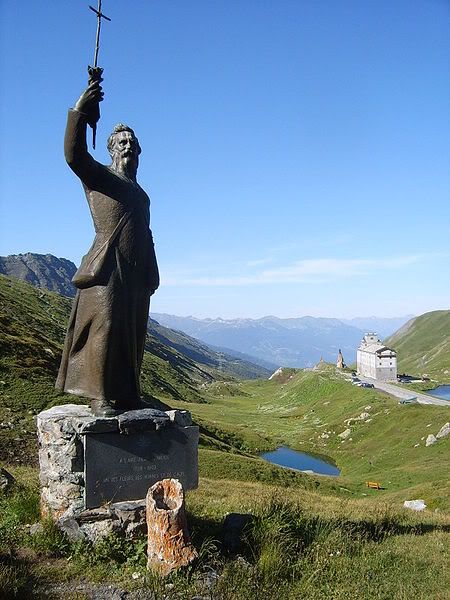
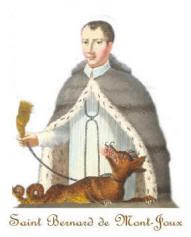
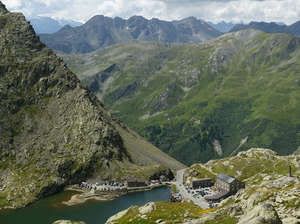
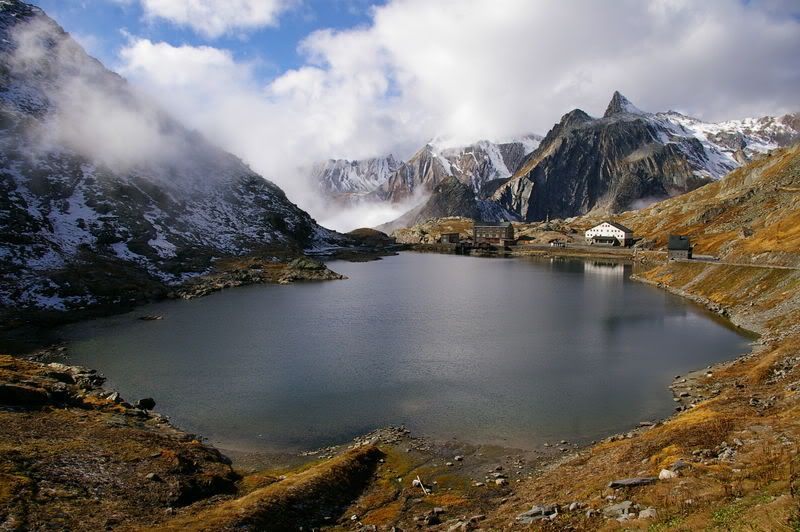
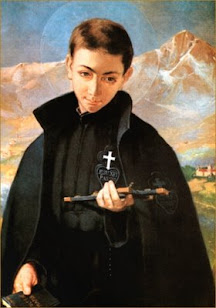
Today, May 28, we celebrate the feast day of Saint Bernard of Montjoux (923-1008), the patron saint of skiers, alpinists, hikers, and travelers in the mountains, and minister to Alpine travelers for over 40 years. He is remembered for his devotion to the Lord, and tireless preaching of His word to travelers, living and working in the most inhospitable of places, and through warmth and comfort offered to travelers, converting many.


The early life of Saint Bernard is lost to Holy Legend. Sources suggest that Bernard was born of nobility, likely in Italy or France, and left home to study in Paris. Upon the arrangement of an honorable marriage by his parents, Bernard returned home to profess his preference to devote himself to the Lord, entering the religious life. Some scholars suggest that his parents, pagans perhaps, were not pleased with this and locked him in the tower of their chateau. Saint Bernard is said to have thrown himself from the tower, only to be carried by angels the forty feet to the ground and set gently upon it. He is said to have fled to the monastery.

Church scholars agree that Saint Bernard found his way to the Benedictine Order, entering the monastery at Aosta, Italy, and eventually becoming ordained a priest. Recognized for his patience and obedience, as well as his knowledge and virtue, Saint Bernard was made archbishop of the Alpine Diocese, a most inhospitable route through the mountains between Italy and Switzerland. This was a common path of pilgrimage for those journeying to Rome, and was also quite dangerous due to weather and thieves.

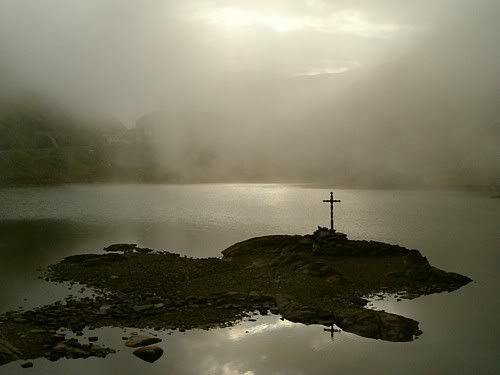
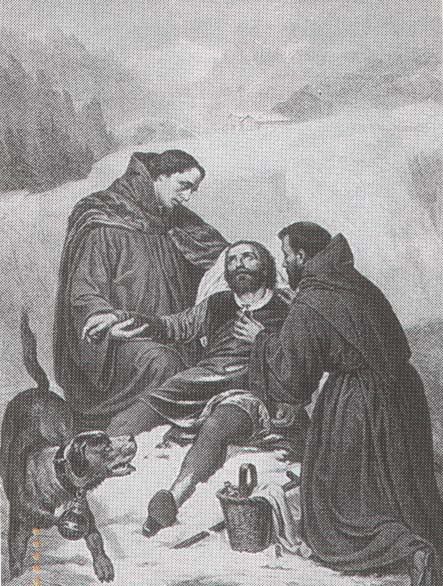
Saint Bernard undertook his charge with vigor, establishing two hospices in the pass that would eventually be named for him—one at the highest point (8,000 feet) and one at the second highest point (7,076 feet)—both perpetually covered with approximately 8 feet of snow. He further built and dedicated a church to Saint Nicholas there. He filled the buildings with warmth and love, catering to travelers and strangers, always finding time to speak with them about the love of God. Bernard organized roving patrols throughout the mountain pass, driving out the thieves and brigands. Having obtained permission from Rome, he invited members of the Augustine Order to help him minister to travelers. With their help, he patrolled the mountains searching for lost travelers, oftentimes with dogs carrying water around their necks—the same dogs that would eventually be named for him. The Order offered food, clothing, and shelter to the travelers and took care of the unfortunate who perished during the journey. They depended solely on gifts and collections for sustenance.


Saint Bernard’s life was one of simple service in a difficult environment. His hospitality was legendary, and his works survive today in the form of the hospices he established. His community—the Houses and Congregations of Saints Nicholas and Bernard—remains active today, maintaining the Alpine hospices as well as one in the Himalayas. Upon his death, he was interred at the cloisters of Saint Lawrence. Numerous miracles were reported at the site of his burial, as well as in Saint Bernard’s pass. We are inspired by the love of Saint Bernard to extend ourselves to those in need, never missing an opportunity to show God’s love. Saint Bernard reminds us of the epistle of Saint Peter (1 Peter 4: 7-11):

7The end of all things is near. Therefore be clear minded and self-controlled so that you can pray. 8Above all, love each other deeply, because love covers over a multitude of sins. 9Offer hospitality to one another without grumbling. 10Each one should use whatever gift he has received to serve others, faithfully administering God's grace in its various forms. 11If anyone speaks, he should do it as one speaking the very words of God. If anyone serves, he should do it with the strength God provides, so that in all things God may be praised through Jesus Christ. To him be the glory and the power for ever and ever. Amen.


Year 2: Day 148 of 365

Prayer Intentions: Hearts of Hospitality
Requested Intentions: Husband’s freedom from illness (L); Personal intentions (S); Successful passing of dental board examination (P); Blessings on a family (Z); Successful permanent employment (C); Healing of a son with autism (J); Son’s successful employment (L); For the intentions of family and relatives, for the Carthusian community (T); For personal intentions (A); Restoration of lost hearing (C); Resolution of relational and financial challenges (S); Comfort following loss of husband, security for family, assistance with housing (B); Healing and return of brother (O); Successful hermitage foundation (S); Support from family, permission to marry (H); Recovery of wife following surgery, freedom from depression (W); Protection and recovery of mentally ill daughter (J); Successful resolution to legal proceedings (N); Freedom from worry and successful employment (M); For successful sale of home and freedom from debt (J); Freedom from pain and illness (E).

May 2: Saint Mariana de Jesús y Flores de Paredes, "Lily of Quito"

Posted by Jacob

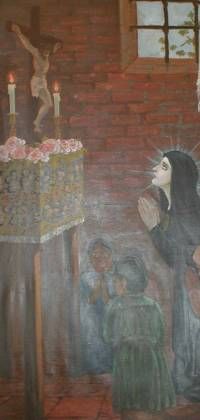
Today, May 28, we celebrate the feast of Saint Mariana de Jesús y Flores de Paredes (1618-1645), the “Lily of Quito, Ecuador.” Mariana’s life was one of complete devotion to both Our Lord and Our Blessed Mother, and embraced the sacrifices of a virtuous Christian lifestyle. After living a brief life of incredible mortification and austerity, she offered herself to the Lord in reparation for the sins of the people of Ecuador, and was taken to heaven.

Mariana was born in Quito, Ecuador of noble Spanish parents. At her birth, those attending to her mother noted a strange phenomenon in the sky, when the stars in the heavens appeared to dance. Orphaned as a young girl, she was raised by her elder sister and her husband. From an early age, Mariana demonstrated great virtue and attraction to a religious life, becoming a solitary in her sister’s home under the direction of a Jesuit confessor. She exhibited a great love of Jesus and Mary, and at the age of ten, took vows of poverty, chastity, and obedience, hoping to enter one of the many religious communities in Quito. She demonstrated an extraordinary desire for prayer and physical mortification—often at the expense of her health—and desired nothing more than to be a shining witness of the love of God on earth.

Mariana was obedient to the Will of God, even when it was disappointing to her. When it became apparent that she would not enter a convent, she remained a recluse in her sister’s home. She practiced the greatest of austerities as penance for both herself and others. Most days, she ate nothing, nibbling on a morsel of bread every 8 to 10 days. Instead, her body miraculously subsisted on the Holy Eucharist, which she received daily. Most nights she slept little, approximately 2 hours, instead spending her time in prayer. One of her many penances was to drag about a heavy wooden cross in imitation of her beloved Jesus on the way to His crucifixion, and on certain days of the week, she would lash herself to transfixed beams that were affixed to the wall of her room and hang there for three hours, all to bring herself closer to the crucified Savior.

Mariana was graced with many spiritual blessings, including the ability to read hearts and minds of those who sought her out. She also performed miracles of healing as well as prediction of the future and recounting of past events as if she was present.

Mariana lived a quiet life of devotion, leaving her sister’s home only for Mass or to offer charitable services to those in need. However, she was drawn into a more public display of devotion in 1646. At that time, Quito was being ravaged by earthquakes, plagues, and natural disasters, sure signs of the sinfulness of the residents. More than 14,000 people had perished, and when the locally dormant volcano of Pinchincha erupted, the people were very much afraid.

A local Jesuit priest, Father Alonso de Rojas, offered himself publicly to the Lord, as a victim, that he might die to save the people from punishment. After his sermon, Mariana, who had been listening, slowly rose from her pew, declaring that she would take the place of Father Rojas. In her words, he was a good priest and much more important to the people of Quito than she was. She then asked the Lord to accept her offering “in defense of her country, her compatriots, and her kindred” and that she “might be chastised for everything in the city which deserved chastisement.”

Mariana returned home and was almost immediately overcome with illness—an illness which would prove to be fatal. All of Quito prayed for Mariana’s recovery, realizing what a great sacrifice she had made for them, but she was not to recover. She bravely continued her prayer for reparation for almost two months, at which time she perished. As she died, the earthquakes stopped, the volcano quieted, and those stricken with the plague recovered. When she breathed her last, her body fell over on the dirt floor, and a white lily miraculously sprang forth from the earth, watered by her blood. This is why she is known as the Lily of Quito.

Pope Pius XII spoke of Saint Mariana:

“At times when especially impelled by love for God and fellowmen, she afflicted herself severely to expiate the sins of others. Oblivious then to the world around her and wrapped in ecstasy, she had a foretaste of eternal happiness. Thus transformed and enriched by God's grace, she was filled with zeal to care not only for her own salvation, but also for that of others to the utmost of her ability. She generously relieved the miseries of the poor and soothed the pains of the sick. And when severe public disasters such as earthquakes and plagues terrified and afflicted her fellow citizens, she strove by prayer, expiation and the offering of her own life to obtain from the Father of mercies what she could not accomplish by human effort"
We pray today for the willingness to sacrifice and repent, not only for ourselves, but for all, taking Saint Mariana as a shining example of the joy of self-sacrifice and suffering.


Holy virgin, Mariana, chosen from amongst us by Our Lord, Jesus Christ, at a tender age like a delicate lily to be transplanted into the celestial garden of Paradise; cultivated by His Divine hands and watered by gentle streams of His grace: we prostrate ourselves at your feet, imploring mercy so that, by your great merits of virginal innocence, and angelical virtues with which your Divine Spouse adorned you, obtain for us the grace we need to spend our life in innocence , keeping us out of mortal sin, cleansing our souls of our faults and defects in the beneficial fountains of penance, and obeying the holy laws of Our Lord and the obligations of our state, so that at the end of our life we will be found to be pruned into flowers most pleasing to Our Lord and worthy to be placed in the Eternal Gardens of Heaven. Amen.

May 27: Saint Augustine of Canterbury

Posted by Jacob

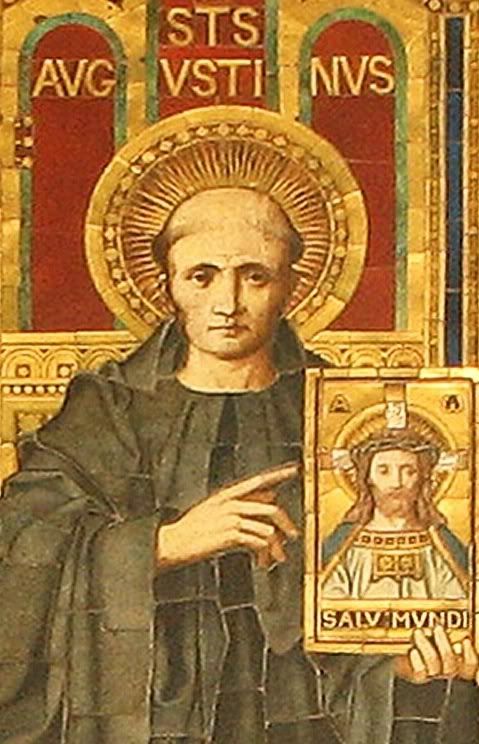
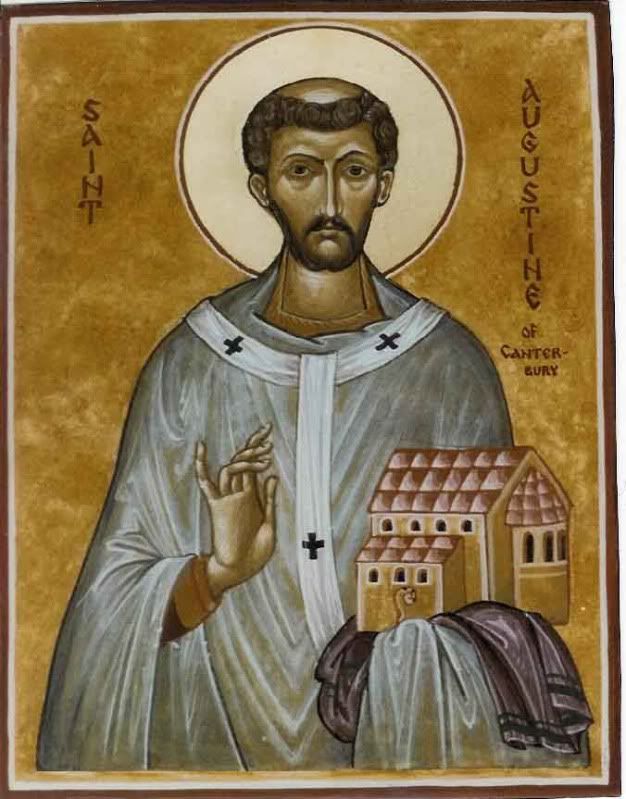
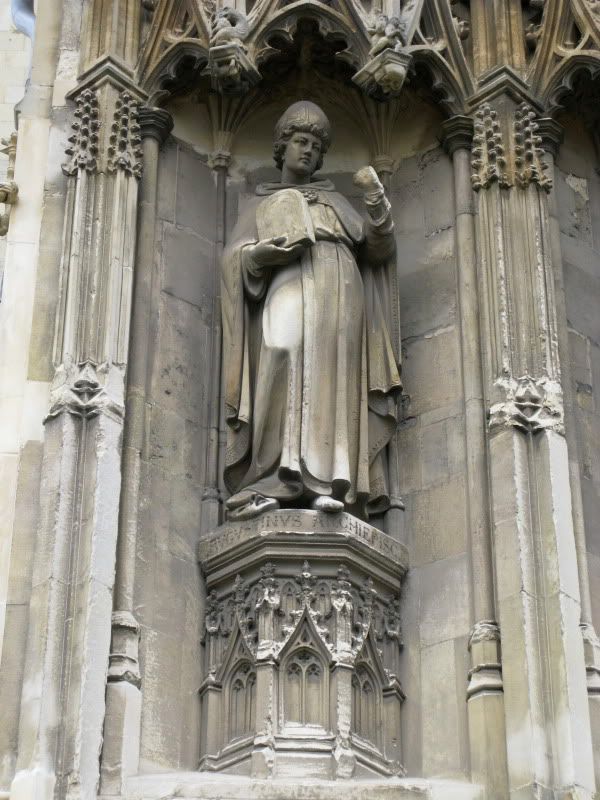
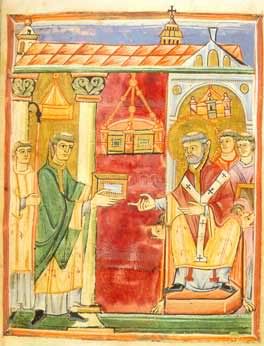
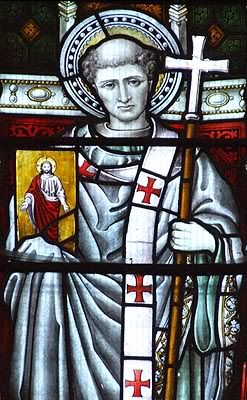
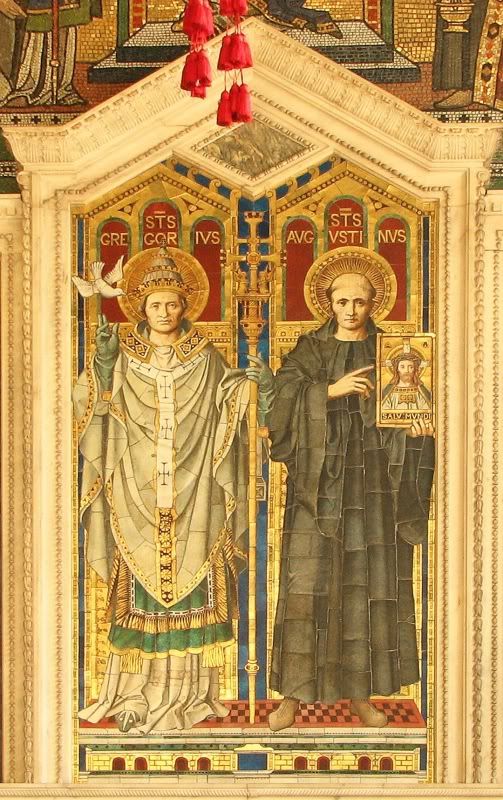
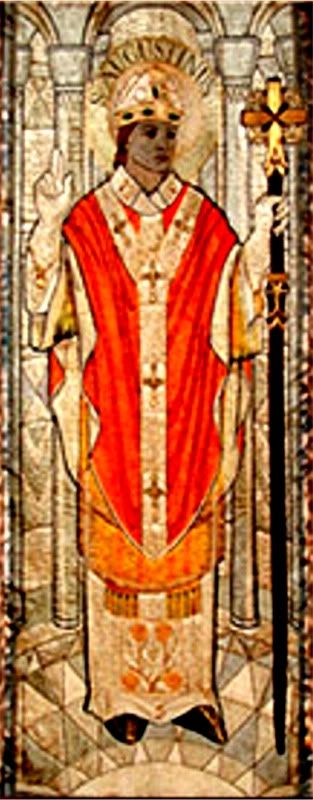
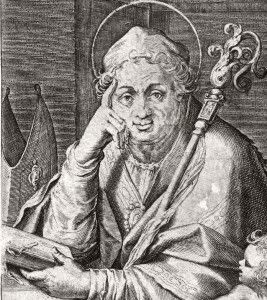
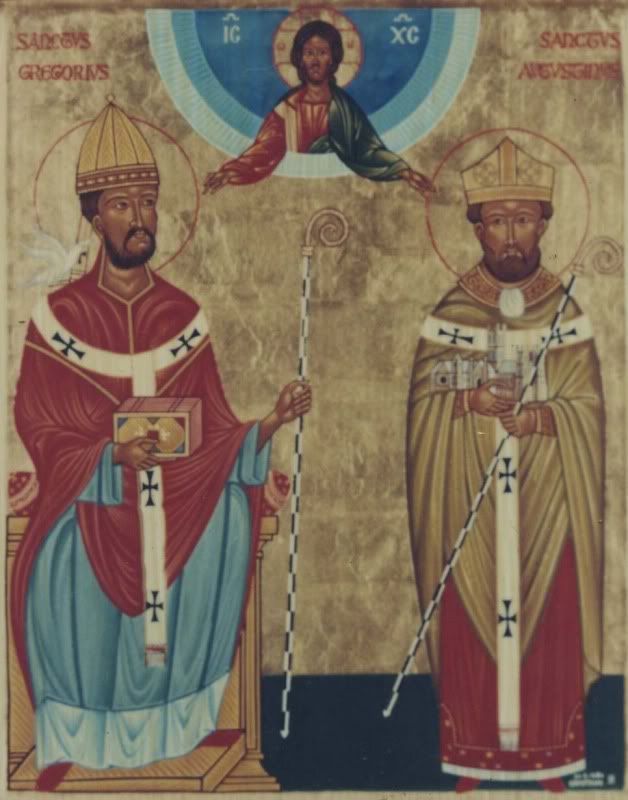
Today, May 27, we celebrate the feast of Saint Augustine of Canterbury (sometimes referred to as “Saint Augustine the Lesser,” died 605), called the “Apostle of England,” and the eventual first Archbishop of Canterbury. Not to be confused with his namesake, Saint Augustine of Hippo, the work of Saint Augustine of Canterbury is widely regarded as the birth of conversion in England, beginning the slow process of conversion of Celtic tradition and reconciliation with Rome. Much of what is known of Saint Augustine of Canterbury is taken from letters written by Pope Saint Gregory the Great, and through the written ecclesiastical history of England written by Saint Bede.

Little is known about Augustine’s early life. We join his story as he serves as Prior of a Benedictine monastery of monks in Rome, during the papacy of Pope Saint Gregory the Great. In 596, when historians suggest that Saint Augustine was already past middle age, he was sent by the pope, with a delegation of approximately 40 monks, to England to preach the Gospel. News of the ferocity of the Anglo-Saxons, and their treatment of Catholics, was widespread, but with encouragement—and out of obedience—Augustine undertook this difficult and potentially dangerous mission… but not before returning to the Pope and seeking reassurance. Pope Gregory provided encouragement, stating, “Go on, in God’s name! The greater your hardships, the greater your crown. May the grace of Almighty God protect you, and permit me to see the fruit of your labor in the heavenly country! If I cannot share your toil, I shall yet share the harvest, for God knows that it is not good-will which is wanting.”

Upon reaching England, following a difficult crossing of the channel, Saint Augustine announced their arrival to King Ethelbert of Kent, telling him they brought the message of eternal life. King Ethelbert was a pagan, although he had married a Christian, his wife, Bertha. On her request, he promised to receive the monks and consider their message. Saint Augustine led the monks in procession to the king, carrying a silver cross and singing litanies to God for the salvation of this people. King Ethelbert allowed them to sit and share the Good News with him, which was unexpected.

When Augustine was finished, King Ethelbert said: “Your words and promises are very beautiful. But because they are new and uncertain, I cannot approve them and leave everything that I along with all my people have followed for so long a time. However, since you have traveled from afar and made a long journey in order to share with us what you deem to be truer and better, I will not place obstacles in your way, but will receive you well and offer what is necessary for your subsistence. Nor will I impede you from bringing to your religion all those whom you are able to persuade.” He allowed them to remain on the isle, providing them a place to live and land on which to build (in what would later become Canterbury), and the opportunity to preach as they wished. Eventually, impressed with the community under the direction of Saint Augustine, King Ethelbert converted and was baptized. Despite the fact that the king did not force his subjects to become Christian, and instead instituted a policy of religious choice, many of his subjects converted to Catholicism (sources place the number at “10,000” subjects). In the midst of this mild success, Pope Gregory cautioned him against pride, writing “fear lest, amidst the wonders that are done, the weak mind be puffed up by self-esteem.”

Augustine, following his initial success in England, traveled to France, where he was consecrated as a bishop, and subsequently returned to Canterbury to establish a vigorous community of religious life. With him he brought a priceless collection of illuminated manuscripts, still present and preserved today. He reconsecrated and rebuilt a church at Canterbury, and founded the monastery of Saint Peter and Saint Paul Outside the Walls (now sometimes known as Saint Augustine’s). He is further credited with founding the King’s School at Canterbury, the world’s oldest school. The remains of some of these early buildings remain near the now famous cathedral, built in later years at Canterbury.

Despite the spread of Christianity throughout England, progress was slow, and Augustine met with considerable failure along the way, reminding us that the lives of the saints are not always easy or joyous. He was met with much opposition and disappointment, and frequently turned to Pope Saint Gregory for encouragement and inspiration. Pope Gregory wisely suggested that Augustine work within the customs of the English people (much like Saint Patrick did in Ireland), purifying rather than destroying pagan temples and customs, transforming pagan rites and festivals into Christian feasts, and retaining local customs whenever possible and appropriate. Pope Gregory wrote:

“The temples of the idols among that people should on no account be destroyed... it is a good idea to detach them from the service of the devil, and dedicate them to the service of the true God. And since they have a custom of sacrificing many oxen to demons, let some other solemnity be substituted ... so that they may learn to slay their cattle in honor of God and for their own feasting . . . If they are allowed some worldly pleasures in this way, they are more likely to find their way to the true inner joys. For it is doubtless impossible to eradicate all errors at one stroke . . . just as the man who sets out to climb a high mountain does not advance by leaps and bounds, but goes upward step by step and pace by pace. It is in this way that the Lord revealed himself to the Israelite people.”

Augustine followed this directive, encouraging his monks to do the same. Even so, by the time of Saint Augustine’s death in 605, the work of evangelization of England had only just begun. It is believed, however, that he lay the groundwork for the eventual spread of Christianity throughout the kingdom.

Augustine was obedient and steadfast, despite meeting many obstacles. He lived the Benedictine doctrine of “presence, not confrontation” in preaching the Gospel. His perseverance, in the face of opposition and difficulty, is inspiring even today. He was a man of humility, who doubted his ability to make small decisions, seeking counsel and writing to Pope Gregory for reassurance and advice. He truly followed the advice of his counselor, who wrote: "He who would climb to a lofty height must go by steps, not leaps." Augustine died after just 8 long years, toiling in England. He was buried in Canterbury, at the monastery he founded.

Throughout his life, Saint Augustine of Canterbury realized that he was but one man, who reported to a higher authority. He sought guidance from Pope Saint Gregory during his times of great difficulty, turning to God whenever he met obstacles (which were all too frequent!). The great pope sent many letters of support and spiritual counsel, including the one excerpted here:
Glory to God in the highest and peace to his people on earth, because the grain of wheat has fallen into the earth and has died. Christ has died in order to reign in heaven. Not only that: by his death we live; by his weakness we are strengthened; by his passion we are freed from suffering; impelled by his love, we are seeking in Britain brothers whom we do not know; through his help we have found those for whom we were searching, although we were not acquainted with them.


Who, dear brother, is capable of describing the great joy of believers when they have learned what the grace of Almighty God and your own cooperation achieved among the Angles? They abandoned the errors of darkness and were bathed with the light of holy faith. With full awareness they trampled on the idols which they had previously adored with savage fear. They are now committed to Almighty God. The guidelines given them for their preaching restrain them from falling into evil ways. In their minds they are submissive to the divine precepts and consequently feel uplifted. They bow down to the ground in prayer lest their minds cling too closely to earthly things. Whose achievement is this? It is the achievement of him who said: My Father is at work until now and I am at work as well.


God chose illiterate preachers and sent them into the world in order to show the world that conversion is brought about not by men's wisdom but rather by his own power. So in like manner God worked through weak instruments and wrought great things among the Angles. Dear brother, in this heavenly gift there is something which should inspire us with great fear and great joy.


For I know through your love for that people, specially chosen for you, that Almighty God has performed great miracles. But it is necessary that the same heavenly gift should cause you to rejoice with fear and to fear with gladness. You should be glad because by means of external miracles the soul of the Angles (English) have been led to interior grace. But you should tremble lest, on account of these signs, the preacher's own weak soul be puffed up with presumption; lest, while seeming externally raised aloft in honor, it fall internally as a result of vainglory.


We should remember that when the disciples on their joyous return from their preaching mission said to their heavenly master: Lord, in your name even devils were subjected to us, he immediately retorted: Do not rejoice about this but rather that your names are written in heaven.

The life of Saint Augustine of Canterbury reminds us that we all need the support of those around us, and more importantly, the grace of God to persevere in our daily lives. We are confronted each day with obstacles—many quite small—but some which seem insurmountable. We have ample opportunities to turn from our faith, to give up, to give in. Saint Augustine’s obedience and zeal for his work, accompanied by the patient counsel and encouragement of Pope Saint Gregory, remind us that the Lord provides the support we need to accomplish great things—both in heaven and on earth. We may not always seek that support. We may not even be aware that it exists. Or it may come from the most unlikely of places (like a pagan king intrigued by the Gospel!). When we are lost and confused, we are reminded that we are not alone, and have the Lord to assist us in taking our steps (not leaps) toward the achievement of His lofty goals for each of us!


God, Our Father,
by the preaching of Saint Augustine of Canterbury,
you led the people of England to the Gospel.
May the fruits of his work continue in your Church.
Grant that through his intercession,
the hearts of those who err may return to the unity of your truth
and that we may be of one mind in doing your will.


Saint Augustine,
Help us to work in a spirit of trust and love,
as well as a spirit of prudence and understanding,
so that we may grow as God’s faithful.
May harmony reign ever among us.
Because of your example in living the Gospel,
we dedicate ourselves,through your intercession, to live that same Gospel.


Implore on our behalf the favor of an ever-deepening
trust in God’s goodness and love.
Obtain God’s grace for us
that we may grow in faith, hope, love and all virtues.
Grant that by imitating you
we may imitate our Lord and Master, Jesus Christ.
Watch over us and help us to reach that place
where you live with all the saints for ever and ever. Amen.


Year 2: Day 147 of 365

Prayer Intentions: Courage and Steadfastness
Requested Intentions: Husband’s freedom from illness (L); Personal intentions (S); Successful passing of dental board examination (P); Blessings on a family (Z); Successful permanent employment (C); Healing of a son with autism (J); Son’s successful employment (L); For the intentions of family and relatives, for the Carthusian community (T); For personal intentions (A); Restoration of lost hearing (C); Resolution of relational and financial challenges (S); Comfort following loss of husband, security for family, assistance with housing (B); Healing and return of brother (O); Successful hermitage foundation (S); Support from family, permission to marry (H); Recovery of wife following surgery, freedom from depression (W); Protection and recovery of mentally ill daughter (J); Successful resolution to legal proceedings (N); Freedom from worry and successful employment (M); For successful sale of home and freedom from debt (J); Freedom from pain and illness (E).