Why pray the Rosary every day for a year?


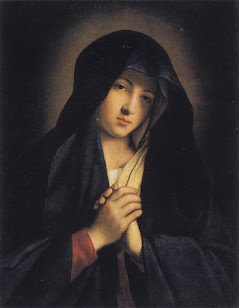
Each time the Blessed Virgin has appeared-- whether it be to Saint Bernadette Soubirous at Lourdes; to Lucia, Jacinta, and Francisco at Fatima; or to Mariette Beco at Banneux-- she has asserted the importance, saving grace, and power of praying the Holy Rosary on a daily basis. Based upon her words, the Rosary is penance and conversion for sinners, a pathway to peace, an end to war, and a powerful act of faith in Jesus Christ. Pope Paul VI presented the Rosary as a powerful means to reach Christ "not merely with Mary but indeed, insofar as this is possible to us, in the same way as Mary, who is certainly the one who thought about Him more than anyone else has ever done."

To show us how this is done, perhaps no one has been more eloquent than the great Cardinal Newman, who wrote: "The great power of the Rosary consists in the fact that it translates the Creed into Prayer. Of course, the Creed is already in a certain sense a prayer and a great act of homage towards God, but the Rosary brings us to meditate again on the great truth of His life and death, and brings this truth close to our hearts. Even Christians, although they know God, usually fear rather than love Him. The strength of the Rosary lies in the particular manner in which it considers these mysteries, since all our thinking about Christ is intertwined with the thought of His Mother, in the relations between Mother and Son; the Holy Family is presented to us, the home in which God lived His infinite love."


As Mary said at Fatima, "Jesus wants to use you to make Me known and loved. He wishes to establish the devotion to My Immaculate Heart throughout the world. I promise salvation to whoever embraces it; these souls will be dear to God, like flowers put by Me to adorn his throne."


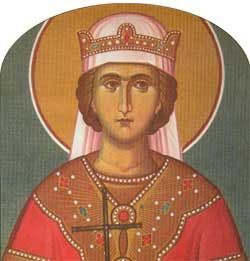
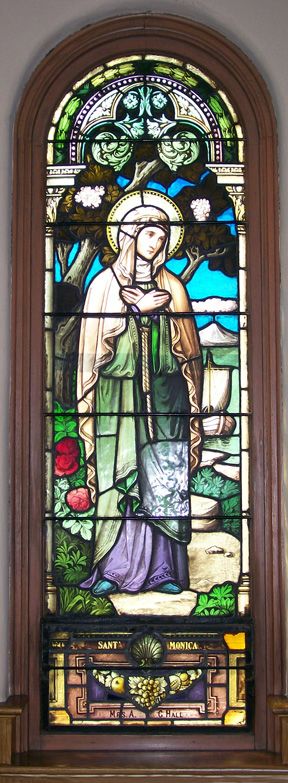
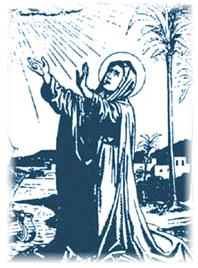
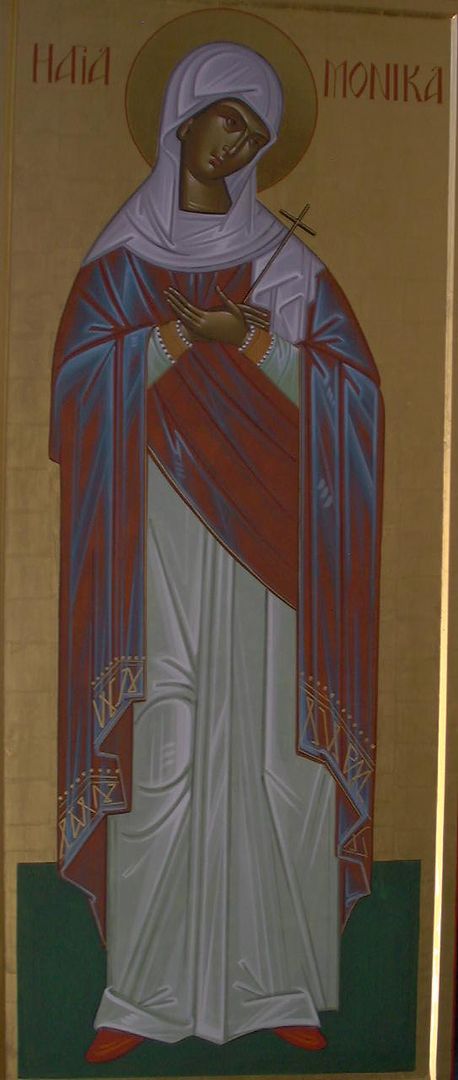
August 27: Saint Monica, Patron Saint of Mothers

Posted by Jacob

“Nothing is far from God.”


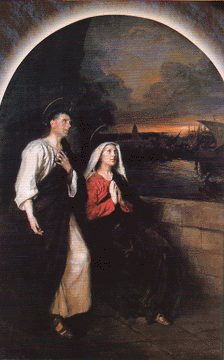
Today, August 27, we celebrate the feast day of Saint Monica (322-387), Model of Christian Motherhood, mother to Saint Augustine (whose feast we celebrate tomorrow), and patron saint of mothers. Her life is a perfect example of Christian patience, endurance, charity, prayer, and conversion, and her tireless prayers on behalf of her son are inspiration for all Christians.

Saint Monica was born in Tagaste, North Africa, to pious Christian parents. She was married young by her parents to a local government official, Patricius, who was not a Christian. Patricius, who was much older than she, was generous and generally well-intentioned. However, he also was adulterous, prone to excessive alcohol consumption, and possessed a violent temper, which Monica occasionally was on the receiving end of. Throughout her difficulties—including an extremely difficult mother-in-law who resided with the couple-- Monica bore her burdens patiently. Together, they raised three children: Augustine, Navigius, and a daughter, Perpetua.

Saint Monica spent her days in prayer, demonstrating the virtues of Christianity to her children. Through her patience and constant prayers, she accomplished the conversion of her husband (and his mother), shortly before his death. Her two youngest children, Perpetua and Navigius, entered religious orders, for which Monica gave great thanks to the Lord.

Her eldest son, Augustine, was a very different story. Despite being recognized as a brilliant scholar, Augustine was, in his own words, “a lazy and dissolute youth whose bad behavior caused his mother much grief.” Having fully embraced the ways of the world, Augustine left his mother to attend school at Madaura and Carthage. Throughout his youth, he recklessly pursued pleasures, joining a heretical cult at age 19. Augustine seemed a hopeless cause to most, but Monica was not to be deterred She intensified her prayers for her son, and continued these prayers tirelessly for 17 years. Whenever possible, she attempted to enlist the assistance of priests (many of whom began to avoid her due to what they viewed as an impossible task!).

In the Confessions, Saint Augustine’s “memoir,” he recounts a dream that Saint Monica had regarding his conversion—a dream which consoled and encouraged her:

"In her dream she saw herself standing on a sort of wooden rule, and saw a bright youth approaching her, joyous and smiling at her, while she was grieving and bowed down with sorrow. But when he inquired of her the cause of her sorrow and daily weeping (not to learn from her, but to teach her, as is customary in visions), and when she answered that it was my soul's doom she was lamenting, he bade her rest content and told her to look and see that where she was there I was also. And when she looked she saw me standing near her on the same rule."

Monica’s concern for her son caused her daily anguish, sleeplessness, and anxiety—yet she never turned from prayer. During this time, she consulted with a bishop who had himself been a member of the same cult Augustine had joined. The bishop declined to intervene with Augustine, whom, he correctly observed, was not open to hearing the truth. She persisted tearfully, but he refused to intervene. Nevertheless, the bishop consoled Monica that "the child of those tears shall never perish,” which she took as a sign from God. Though he continued in his heresies for nine more years, Monica never gave up. When he deceived his mother and left for Rome without her, she followed him alone—a difficult task for a woman to travel alone at that time! Upon arrival in Rome, she learned that he had departed for Milan, and again she followed, praying constantly in an effort to rescue him from his errors. In Milan she met Saint Ambrose, who helped lead Augustine into the true faith.

Saint Augustine was baptized in Rome by Saint Ambrose. Shortly thereafter, he decided to return to Africa, and Monica accompanied him. In Ostia, the port city of Rome, Monica became ill, and is was soon certain that she would die. In the Confessions, Augustine wrote:

“On the ninth day then of her sickness, and the fifty-sixth year of her age, and the three-and-thirtieth of mine, was that religious and holy soul freed from the body. . . . For we thought it not fitting to solemnize that funeral with tearful lament, and groanings; for thereby do they for the most part express grief for the departed, as though unhappy, or altogether dead; whereas she was neither unhappy in her death, nor altogether dead. Of this we were assured on good grounds, the testimony of her good conversation and her faith unfeigned.”

In an earlier conversation, while waiting for their ship, Saint Monica had told her son: “There was one reason, and one alone, why I wished to remain a little longer in this life, and that was to see you a Catholic Christian before I died. God has granted my wish and more besides, for I now see you as his servant, spurning such happiness as the world can give.” With her earthly work finished—the protection of her children’s souls complete—Monica was ready to return home to her Lord. Prior to her death, she encouraged Augustine, her last words being: “It does not matter where you bury my body. All I ask of you, is that wherever you may be, you should remember me at the altar of the Lord.”

Monica suffered severely with fever for nine days, all of which she endured with patience. She died in prayer, with Augustine at her side. He was so deeply moved by his mother's death that he was inspired to write his Confessions, "So be fulfilled what my mother desired of me--more richly in the prayers of so many gained for her through these confessions of mine than by my prayers alone."

Saint Monica’s relics were buried in Ostia. Later, in 1162, some of her relics were translated to an abbey of Augustinian Canons in Arrouaise in the north of France. Then in 1430, other relics were translated from Ostia to the high alter of the church of San Agostino in Rome, where they are venerated today.

Augustine, in the Confessions, wrote of his mother, Monica:

"I will not speak of her gifts, but of thy gift in her; for she neither made herself nor trained herself. Thou didst create her, and neither her father nor her mother knew what kind of being was to come forth from them. And it was the rod of thy Christ, the discipline of thy only Son, that trained her in thy fear, in the house of one of thy faithful ones who was a sound member of thy Church.”


The life of Saint Monica inspires us today—it was not an easy life, but rather one filled with struggles and challenges. Through her life, Monica chose not to focus on the negative circumstances she sometimes found herself in, or the negative behaviors of those in her life, but rather focused on the conversion and salvation of souls. Patiently and without losing hope, Saint Monica prayed for the conversion of her abusive husband and mother-in-law, and then spent 17 years praying for her son—a man who became one of the greatest writers in the history of the Church! As we contemplate the selfless life of this great saint, how might we incorporate her lessons of prayer, patience, charity, and endurance into our own lives?


God of mercy, comfort of those in sorrow, the tears of St. Monica moved you to convert her son St. Augustine to the faith of Christ.
By their prayers, help us to turn from our sins and to find your loving forgiveness.
Grant this through our Lord Jesus Christ, your Son, who lives and reigns with you and the Holy Spirit, one God, for ever and ever.  Amen.


Prayer to Saint Monica


Exemplary Mother of the Great Augustine,
You perseveringly pursued your wayward son
Not with wild threats but with prayerful cries to heaven.
Intercede for all mothers in our day
So that they may learn to draw their children to God.
Teach them how to remain close to their children,
Even the prodigal sons and daughters who have sadly gone astray.


Dear Saint Monica, troubled wife and mother,
Many sorrows pierced your heart during your lifetime.
Yet you never despaired or lost faith.
With confidence, persistence and profound faith,
You prayed daily for the conversion of your beloved husband, Patricius,
And your beloved son, Augustine.
Grant me that same fortitude, patience and trust in the Lord.


Intercede for me, dear Saint Monica,
That God may favorably hear my plea for (mention your petition here)
And grant me the grace to accept His will in all things.
Through Jesus Christ, our Lord, in the unity of the Holy Spirit,
One God forever and ever. Amen.


Year 2: Day 239 of 365
Prayer Intentions: For all mothers; For true conversion of ourselves and those we love; Patience and enduranace.
Requested Intentions: Successful examination results (D); Safety of family, strength, courage, wisdom (C); For the souls of a departed father and brother, finding of a suitable marriage partner (R); Successful pilgrimage, deepening of prayer life (R); Restoration of health (J); Restoration of health (S); Freedom from pride (A); For children and marriage (M); For the birth of a healthy baby (Y); For personal family intentions, for the sick, poor, hungry, and homeless (G); Financial security and peace (J); Grace, peace, and obedience to the will of God in a marriage (H); Successful and blessed marriage for sin, freedom from anxiety for husband, spiritual contentedness for family (N); Employment and health for a husband (B); Recovery and health of a mother (J); For a family to grow closer to the Church, salvation for all children (D); Successful employment (L); Successful employment (S); Renewal of faith life (A); Support for an intended marriage, health for friend and aunt (J); Mental health assistance for son (G); Freedom from illness (S); Successful employment (C); Financial assistance and employment (B); For a family’s intentions (T); Successful examination results (B); Healing of a friend with cancer, for all those who help others (B); Healing and love (L); Grace and healing (V); Healing of a heart, consecration of a marriage (M); Health of a family, intentions of apostolate (H); For repentance (J); For a family in trouble (R); Healing, successful relationships for son, financial success (J); Success of a company (L); For a religious society (J); Healing of a husband, strength as a faithful caregiver (D); Healing of a son (T).

August 26: Saint Jeanne Elizabeth des Bichier des Anges & Saint Teresa de Jesus Jornet Ibars

Posted by Jacob

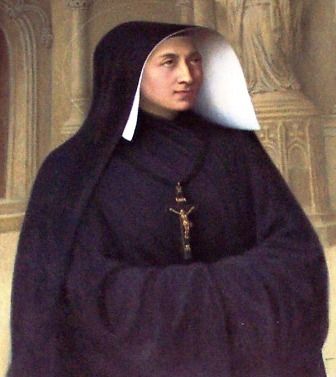
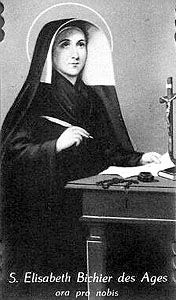
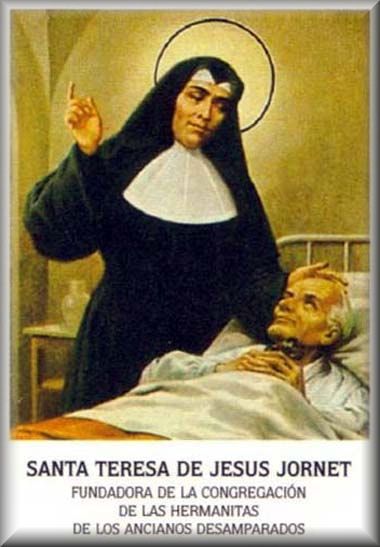
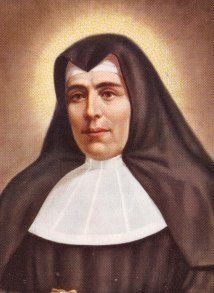
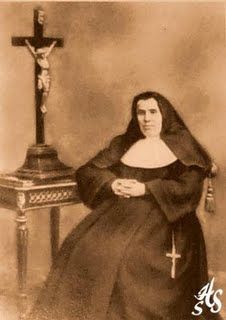
Today, August 26, we celebrate the feast day of two holy women, Saint Jeanne Elizabeth des Bichier des Anges (1773-1838) and Saint Teresa de Jesus Jornet Ibars (1843-1897). While these women lived in different places, at different times, their lives are similarly marked by the call of the Lord and their immediate response—the formation of religious orders to spread the Gospel and assist those in need. In their respective countries, these pious saints are looked upon as models of faithfulness, charity, service to others, hard work, and openness to the will of God.


Saint Jeanne Elizabeth des Bichier des Anges was born in the Chateau des Anges near LeBlanc, France, Her father, the lord of Anges, sent her to the convent at Poiters to be educated, at approximately age 10. She did not return home until the death of her father (to prevent the family’s property from being confiscated by the state), when she was nineteen years old. On his deathbed, she met Saint Andrew Fournet, who would play an important role in her future.

Following her father’s death, Jeanne Elizabeth found herself embroiled in a court battle to save her family’s property and possessions. Having studied law, she argued the case in court, and won. Expected to marry and make the property her home, Jeanne Elizabeth had no intention of marriage, instead looking to the Lord. On the back of a picture of Our Lady, she had written: "I dedicate and consecrate myself to Jesus and Mary forever."

With her mother, she moved to La Guimetiere, a town still suffering greatly from the after-effects of the French Revolution. With no priest living there, the town had little in the way of religious guidance or celebration. Jeanne Elizabeth took matters into her own hands, gathering the faithful into one place, studying the Scriptures in a group, and singing hymns to the Lord. Over time, the number of participants grew prolifically.

Jeanne Elizabeth began to feel called to the religious life, and after her mother’s death, lived for some time in a Carmelite community to experience the rigors and benefits of committing to the Lord. Certain of her call, together with Saint Andrew Fournet (who had begun a similar group of laity in a nearby city), she founded the Daughters of the Cross of Saint Andrew—an order to care for the sick and the poor. Among their other goals was the education of the poor rural citizens of France.
Known for her honesty and charity, she was well respected in the community. Following the death of a poor, sick man she had taken in to help, the police appeared at the convent to question her. They informed her that the man was an escaped criminal, and she had harbored a fugitive. But Jeanne Elizabeth was unafraid, replying calmly to the officer: "I only did what you yourself would have done, sir," she said. "I found this poor sick man, and took care of him until he died. I am ready to tell the judge just what happened."

Appointed the first superior of the Order, Jeanne Elizabeth worked tirelessly to spread the Gospel and establish new houses—by 1830, shortly before her death—she had personally established over 60 houses throughout France. In Igon, in the Basque country, she met Father. Michael Garicoits, who served as spiritual adviser of the house there. With her encouragement, he founded a men’s congregation of the order, named the Priests of the Sacred Heart of Betharram.


Saint Teresa de Jesus Jornet Ibars was born in Catalonia, Spain. She was raised by pious, Christian parents, but due to financial reasons was sent to live with her aunt on the family farm. There, she was expected to work her daily chores—many of them quite strenuous and exhausting—which she did without complaint. From this early age, Teresa demonstrated great charity, but did so discreetly so as not to attract praise or attention herself. Despite her grueling chore schedule, she managed to attend school, becoming a teacher in Lleida.

Despite her successful education, Teresa felt drawn to religious life. She attempted to enter a number of convents—both the Poor Clares and the Carmelite Order-- failing entry at each due to laws established in Spain at the time. Not to be dissuaded, on the advice of her spiritual director, Teresa decided to form her own congregation—an order that would care for the elderly who lacked both financial resources and family. In 1872, in Barbastro, Spain, she organized the Little Sisters of the Poor (originally called the Little Sisters of the Abandoned Aged).

At that time, she took the name Teresa de Jesus, and served as the order’s first superior. She established additional houses in Valencia and then in Zaragoza, and through her considerable zeal for the work of God, nearly 60 more houses for her congregation prior to her death. Mother Teresa of Jesus taught her Sisters to sacrifice their own personal comforts for that of the men and women for whom they cared, to the point of denying themselves even coats in the winter, which could be given to them. In addition to her intense commitment, she was noted for a strong air of serenity all her life, all of which drew many young women to join in her work.

The Order flourished under her direction, and spread across the whole of Spain (and later elsewhere, including America). Saint Teresa is known for saying "The more poor people, the more benefactors.” With every house, she traveled further to find those who would support the work of the Lord through financial contributions and vocations. It was exhausting work, but she never expressed anxiety, proud and confident in the Lord’s providence.

The lives of both Saint Jeanne Elizabeth and Saint Teresa de Jesus demonstrate to us that there is much we can each accomplish in the world—serving the Lord through service to one another. Saint Jeanne Elizabeth saw poor uneducated rural communities in need of spiritual guidance. Saint Teresa de Jesus witnessed the elderly, abandoned and unable to provide for themselves. Through the grace of God, and the courage of these great women, both created the change that was needed. How often to do see what needs to be done, and chose not to do it? How often do we ignore the call of the Lord to help those in need, those in our own communities? How might we better the lives of our fellow man in service to Christ?


Year 2: Day 238 of 365
Prayer Intentions: Charity, Service to others, Social Justice.
Requested Intentions: Successful examination results (D); Safety of family, strength, courage, wisdom (C); For the souls of a departed father and brother, finding of a suitable marriage partner (R); Successful pilgrimage, deepening of prayer life (R); Restoration of health (J); Restoration of health (S); Freedom from pride (A); For children and marriage (M); For the birth of a healthy baby (Y); For personal family intentions, for the sick, poor, hungry, and homeless (G); Financial security and peace (J); Grace, peace, and obedience to the will of God in a marriage (H); Successful and blessed marriage for sin, freedom from anxiety for husband, spiritual contentedness for family (N); Employment and health for a husband (B); Recovery and health of a mother (J); For a family to grow closer to the Church, salvation for all children (D); Successful employment (L); Successful employment (S); Renewal of faith life (A); Support for an intended marriage, health for friend and aunt (J); Mental health assistance for son (G); Freedom from illness (S); Successful employment (C); Financial assistance and employment (B); For a family’s intentions (T); Successful examination results (B); Healing of a friend with cancer, for all those who help others (B); Healing and love (L); Grace and healing (V); Healing of a heart, consecration of a marriage (M); Health of a family, intentions of apostolate (H); For repentance (J); For a family in trouble (R); Healing, successful relationships for son, financial success (J); Success of a company (L); For a religious society (J); Healing of a husband, strength as a faithful caregiver (D); Healing of a son (T).

August 25: Saint Genesius, Patron Saint of Actors

Posted by Jacob

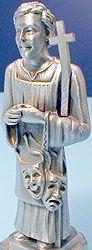
Today, August 25, we celebrate the feast day of Saint Genesius of Rome (died 303), patron saint of actors. Genesius set out to mock and persecute Christians, and in the process, was brought to the light of Christ through baptism. So filled with joy, he proclaimed the Good News, and promptly received the crown of martyrdom. His life, conversion, and death remind us that our intentions are secondary to the plan that the Lord has in store for us.


According to the Acts, which chronicle the lives of the saints, Genesius was a gifted actor and comedian in Rome during the reign of Emperor Diocletian (late third century, early fourth century) who was actively persecuting Christians. As the leader of a local acting troupe, he had earned some local fame as an actor. However, actors were not considered to be respectable members of society at that time, given that the craft had declined into mime and comedy, and few classic works were performed. Not held in great regard, the only manner in which an actor could achieve respect was to be appointed to the imperial court of the emperor. Genesius, but all accounts, was ambitious, and had decided to attract the attention of the emperor to achieve such an appointment.

Emperor Diocletian hated Rome, and rarely visited there, preferring to reside in Nicodemia. However, in 303, he planned one summer trip to Rome, and Genesius seized upon this opportunity to impress him. As the leader of the acting troupe, it was his responsibility to create a comedic play that would entertain the powerful ruler. Given Diocletian’s hatred of Christians, Genesius decided to mock Christians, specifically the Rite of Baptism. It was sure to entertain!

To learn more about the Christian beliefs, Genesius befriended a group of covert Christians, entering the Catechumenate and “preparing for baptism” under the guidance of his instructor. There, he developed a keen interest in the faith, engaging in many long conversations with the Christians he encountered… but his heart was not moved. As soon as he had gathered enough information to organize his new play, he left the group.

The opening night of the play was a great success with Diocletian and much of his imperial court in attendance. The first act opened with Genesius playing a sick man confined to bed with his friends gathered around him. He said, “Oh my friends, I feel a great weight and would like to be enlightened.” This line would lead to many cruel and ribald remarks on the part of the other actors. One responded by saying, “If you want to be lighter, I can use my pruning knife!” At this point, Genesius was graced by visions of angels hovering around him, unseen to others, and he was touched by the Holy Spirit. Overcome with the teachings he had learned during his research, he could no longer resist the call of the Lord. No longer acting, but speaking from his heart, he said, “You fools, I am resolved to die a Christian that God may receive me as one who seeks His salvation by turning away from idolatry & superstition.” When the other actors asked him why, he said, “All my life I have been a fugitive, and only today have I found God.”

Everyone, especially the Emperor laughed as Genesius spoke, assuming his words to be comedic mockery.

Two actors then entered, one playing a priest and the other an exorcist. The actor-priest asked, “My child, why did you send for me?” Again, he repeated his heart’s true desire for baptism. He said, “I wish to receive the grace of Christ. I long to be reborn and set free from all the sin that lies around me.” The actor priest then baptized Genesius, and when the water flowed upon him, he was graced with new life in Christ.

The Emperor Diocletian could not stop laughing, and began to send small gifts of gold, food and wine up to the players. Genesius had earned the attention and admiration of the powerful leader, but he was no longer interested. His heart now belonged to Christ, and his ambitions of the world were distant memories.

For Act III, Genesius was dressed in white and led before an actor playing a Roman judge. As other actors played soldiers, Genesius was interrogated, mimicking an actual Roman trial of Christians. No longer acting, Genesius began to preach to the audience:

“Oh Emperor and his soldiers. Listen also people of Rome, especially if you have a mind of your own and know how to use it. Before today, whenever I heard the name Christian, it would make me sick and angry. I would make fun of them and encourage others to abuse them. Over and over I insulted them and encouraged others to be violent towards them. I so hated Christians, that I deserted my own family as a child when I realized that there were Christians among them. So much did I hate them, that I went secretly among them to learn their secrets.


O great Diocletian, I started this play as a way to deride the Christian mysteries in which I did not believe. Yet lying on that make believe sick bed and having an actor-priest, pour water over me, I found that the words I was speaking were true. I wrote this play, these are my words. But now they are the words of my heart. I believe and when I said these words today, I saw the very angels of God surround me. The angels told me that my sins were really forgiven and that water that washed over me, washed away all the evil I have done.

I came here today to please an earthly Emperor but what I have done is to please a heavenly King. I came here to give you laughter, but what I have done is to give joy to God and his angels. From this moment on, believe me, I will never mock these great mysteries again. I now know that the Lord Jesus Christ is the true God, the Light, the Truth and the Mercy of all who have received his gift of baptism. O great Emperor, believe in these mysteries! I will teach you, and you will know the Lord Jesus Christ is the true God.”

At the conclusion of his witness, the emperor was enraged. He stopped the play and had the troupe arrested. He ordered that they all be beaten. Genesius’ fellow actors cursed the name of Jesus and cried out that Genesius was the only Christian among them and that he was a mad man! Genesius was condemned to be tortured until he sacrificed to the gods. Upon the rack he was torn with iron hooks and burned with torches to force him to recant his Christian faith and sacrifice to the Roman gods. He refused, holding steadfastly to his faith, and crying out: "There is no other Lord beside Him whom I have seen. Him I worship. To Him I will cling should I suffer 1000 deaths. No torments will remove Jesus Christ from my mouth & my heart. Bitterly I regret the ridicule I performed while detesting His holy name.” Genesius earned the crown of martyrdom that same day by beheading.

Saint Genesius was buried in the cemetery of Saint Hippolytus on the Via Tiburtina in Rome. His relics are said to be divided between San Giovanni della Pigna, San Susanna di Termini, and the chapel of Saint Lawrence. He was venerated at Rome in the fourth century and a church was built in there in his honor.

The life of Saint Genesius is not one of flashy miracles and incredible works. Rather, it is a simple legend of the grace of the Lord overcoming a sinful man, purifying him, and prompting him to center his life around Christ—even to the point of death. Genesius, when confronted with the Holy Spirit, opened himself to the truth of the Gospel, and in doing so, changed his perspective, his ambitions, and his life. Through the Holy Spirit he was saved. Like us, all he had to do was accept the grace poured out upon him. We might pause today to remember our own baptismal vows. How faithful are we to our profession of faith? How might our lives be different with a new perspective, centered on Christ?


Dear Genesius, according to a very ancient story, when you were still a pagan, you once ridiculed Christ while acting on the stage. But, like Saul on the road to Damascus, you were floored by Christ's powerful grace. You rose bearing witness to Jesus and died a great martyr's death. Intercede for your fellow actors before God that they may faithfully and honestly perform their roles and so help others to understand their role in life and thus enabling them to attain their end in heaven. Amen.


Prayer to Saint Genesius for Actors
Holy Saint Genesius,
martyr for Christ,
by the grace of the Holy Spirit
through your acting
you came to discover
the truth of the Christian faith.

In your first profession of that faith
you were baptized through the shedding
of your blood,
offering your life for the praise and glory
of our Lord Jesus Christ.


Pray for those who dedicate their lives
to the theatrical and cinematic arts.
Like you may they find the presence
of the Lord in their work
and generously open their hearts
to his teaching,
living it in the midst of the challenges
and demands of their calling.


Eternal Father, in your love you call all men and women to come to know you and to share in your divine life. Through the intercession of your martyr, Genesius, who responded so generously to the grace of conversion, grant that the same grace may be given to those who as yet do not know you, and may be renewed in those who do. We ask this through Christ our Lord. Amen.

August 25: Saint Maria Micaela Desmaisières López de Dicastillo, "Madre Sacramento"

Posted by Jacob

Today, August 25, we celebrate the feast day of Saint Maria Micaela Desmaisières López de Dicastillo of the Blessed Sacrament (1809-1865), Spanish aristocrat and foundress of the Institute of Religious Adorer-Slaves of the Most Blessed Sacrament and of Charity. She is often referred to as “Madre Sacramento” due to her undying devotion to the Blessed Sacrament, and her tireless work to bring this devotion to others through her community.


Micaela Lopez Desmaissières and Dicastillo was born in Madrid, Spain, daughter of noble parents. Her mother died while she was quite young, and her father arranged for her to receive a thorough secular and religious education. She attended school with the Ursuline sisters in the city of Pau, France, between the ages of 9 and 12. At thirteen, her father—a general in the royal army—died, and she lived with her brother, an ambassador, for some time. During these years, she felt continually drawn to the religious life, but also enjoyed the privileges of nobility, including festivals, holidays, and frequent travel.

At 35, her eyes were opened during a trip to Madrid, where she visited the Hospital of Saint John of God. There, she observed first-hand the dire plight of young girls in the city, forced into dissolute lives, and living without their basic needs met. Uneducated and untrained in an employable skill, these girls were in need of both spiritual and practical direction. Micaela established a school, and personally undertook direction of their education.

Drawn into service through her mission, she committed herself to live fully for the Lord, and began daily devotion to the Blessed Sacrament. The grace and ardent love of God grew within her, and over time, this influenced the direction and instruction of the school. Within a decade, she had formed an apostolate for the young women of Madrid, naming her school the Institute of Religious Adorer-Slaves of the Most Blessed Sacrament and of Charity. Upon founding her order, she took the name Maria.

Under the direction of Saint Anthony Mary Claret, and Micaela’s dedicated and pious leadership, the foundations multiplied. Her Institute of the Blessed Sacrament was definitively approved by the Holy See in 1866, a year after her death. She had perished from cholera, having contracted the illness while tending to poor and suffering victims of a nearby outbreak.

Madre Sacramento, as she was known, consecrated herself to the love of the Lord. She is known to have said: “I saw Him large, benevolent, loving and merciful, and I decided to serve no one but Him, who has everything necessary to fill my heart.” She modeled poverty, chastity, and obedience with near-perfection, joining her suffering to that of Our Risen Lord. Throughout her life, she lived simply, but heroically in the adoration of the Eucharist, and the reflection of the charity and love of God on earth.


Year 2: Day 236 of 365
Prayer Intentions: Heroic love and charity; giving of ourselves to others for the Lord
Requested Intentions: Successful examination results (D); Safety of family, strength, courage, wisdom (C); For the souls of a departed father and brother, finding of a suitable marriage partner (R); Successful pilgrimage, deepening of prayer life (R); Restoration of health (J); Restoration of health (S); Freedom from pride (A); For children and marriage (M); For the birth of a healthy baby (Y); For personal family intentions, for the sick, poor, hungry, and homeless (G); Financial security and peace (J); Grace, peace, and obedience to the will of God in a marriage (H); Successful and blessed marriage for sin, freedom from anxiety for husband, spiritual contentedness for family (N); Employment and health for a husband (B); Recovery and health of a mother (J); For a family to grow closer to the Church, salvation for all children (D); Successful employment (L); Successful employment (S); Renewal of faith life (A); Support for an intended marriage, health for friend and aunt (J); Mental health assistance for son (G); Freedom from illness (S); Successful employment (C); Financial assistance and employment (B); For a family’s intentions (T); Successful examination results (B); Healing of a friend with cancer, for all those who help others (B); Healing and love (L); Grace and healing (V); Healing of a heart, consecration of a marriage (M); Health of a family, intentions of apostolate (H); For repentance (J); For a family in trouble (R); Healing, successful relationships for son, financial success (J); Success of a company (L); For a religious society (J); Healing of a husband, strength as a faithful caregiver (D); Healing of a son (T).

August 24: Saint Bartholomew (Nathanael), Disciple of Christ

Posted by Jacob

Today, August 24, we celebrate the feast day of Saint Bartholomew (also known as Saint Nathanael, first century), Martyr of the Church and Apostle of Christ. In the Gospel of John, Bartholomew (Nathanael) is introduced as a friend of Philip. Initially skeptical of anything good coming out of Nazareth—let alone the Messiah—Nathanael becomes a faithful disciple of Christ. Jesus, for His part, immediately recognizes the truth in Bartholomew, and his readiness to answer the call. From his dialogue with Jesus, we recognize the character of Saint Bartholomew—one of a good Jew, honest and innocent, a just man, who devoted much time to quiet reflection and prayer - "under the fig tree." Bartholomew was awaiting the Messiah, the Holy One of God, and upon meeting Jesus, his heart leaps and he exclaims, “You are the Son of God! You are the King of Israel!”

45Philip found Nathanael and told him, "We have found the one Moses wrote about in the Law, and about whom the prophets also wrote—Jesus of Nazareth, the son of Joseph."


46"Nazareth! Can anything good come from there?" Nathanael asked.


"Come and see," said Philip.


47When Jesus saw Nathanael approaching, he said of him, "Here is a true Israelite, in whom there is nothing false."


48"How do you know me?" Nathanael asked.


Jesus answered, "I saw you while you were still under the fig tree before Philip called you."


49Then Nathanael declared, "Rabbi, you are the Son of God; you are the King of Israel."


50Jesus said, "You believe because I told you I saw you under the fig tree. You shall see greater things than that." 51He then added, "I tell you the truth, you shall see heaven open, and the angels of God ascending and descending on the Son of Man." (John 1: 45-51)


Indeed, Bartholomew is with the disciples throughout the ministry of Jesus, and is among those He appears to on the Sea of Galilee after the Resurrection.

12One of those days Jesus went out to a mountainside to pray, and spent the night praying to God. 13When morning came, he called his disciples to him and chose twelve of them, whom he also designated apostles: 14Simon (whom he named Peter), his brother Andrew, James, John, Philip, Bartholomew, 15Matthew, Thomas, James son of Alphaeus, Simon who was called the Zealot, 16Judas son of James, and Judas Iscariot, who became a traitor.

17He went down with them and stood on a level place. A large crowd of his disciples was there and a great number of people from all over Judea, from Jerusalem, and from the coast of Tyre and Sidon, 18who had come to hear him and to be healed of their diseases. Those troubled by evil[a] spirits were cured, 19and the people all tried to touch him, because power was coming from him and healing them all. (Luke 6: 12-19)

Little is known for sure about the life of Bartholomew after the Ascension of Jesus. But tradition has it that he preached with great apostolic zeal throughout the East, traveling to India, Ethiopia, Mesopotamia, Persia, Egypt, and Armenia—where a monastery remains on the site of his martyrdom. Relics of his ministry, including a hand-written copy of the Gospel of Matthew, were found in Ethiopia by Saint Pantaenus, and recounted by Saint Eusebius.

Saint Bartholomew died a martyr’s death in Armenia by the elder brother of King Astayages of Bablyon, who had him flayed alive (the removal of the skin) and subsequently beheaded. According to tradition, Bartholomew converted the king by casting out a demon from the chief idol in the temple and then destroying all of the remaining idols. In a rage, the king's older brother ordered Bartholomew executed. Due to the gruesome nature of his death, Saint Bartholomew is often depicted in art wearing or holding his own skin.

According to tradition, the relics of Saint Bartholomew made their way from Armenia to the Isle of Lipari (near Sicily) in the seventh century. From there, they were moved to Benevento, in Campania, northeast of Naples, in 809, and finally came to rest in 983 in the Church of Saint Bartholomew-in-the-Island, on the Isle of Tiber in Rome.

Saint Ambrose on Saint Bartholomew (Nathanael): “Because there is now a union of love, the bridegroom caresses her and says, "Under the apple tree I raised you up. There your mother brought you forth, there she brought you forth who bore you." (Cant. 8.5 LXX) Good is the soul that rests under the tree that is fruitful and especially the tree of a good fragrance. For if good Nathanael, in whom there was not any guile, was seen under a fig tree, surely the soul is good that was raised up by her bridegroom under an apple tree. It is a greater thing to be raised up than to be seen, and greater still to be raised up by the bridegroom. For although Nathanael was seen under a tree, still his soul was not a bride, for he came to Christ secretly because he was afraid of the Jews. She was not beautiful as the moon, choice as the sun, (cf. Cant. 6.10) for she was in the shadow, whereas the bride is married in the day and declares it openly. And so the one was under an apple tree, the other under a fig tree, because the one spread the fragrance of her profession of belief over a wider area, the other possessed the sweetness of purity and blamelessness but did not possess fragrance of spirit.”
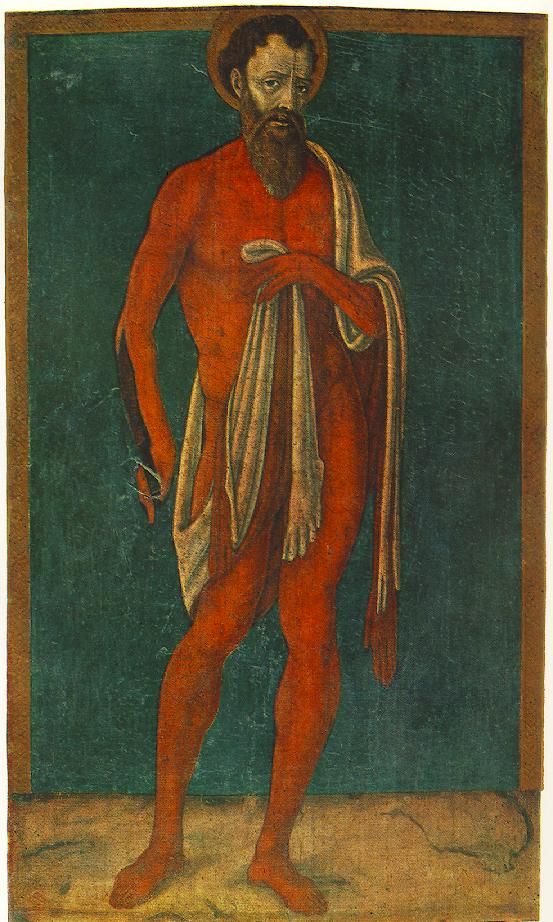
The life of Saint Bartholomew reminds us of how little we know of the twelve apostles of Christ. We get small glimpses of their personalities here and there, but after His Death, Resuurection, and Ascension into Heaven, we often lose track of their lives. What we do know of the lives of the apostles is centered on Christ, just as their lives were. Their individual personalities, missions, and works become less important than their focus on Our Lord, their apostolic zeal for spreading His Gospel, and their unequivocal sacrifice to earn the martyr’s crown. We might be inspired today, as we contemplate Saint Bartholomew, to take stock of our own lives—what are we centered on? What will we be remembered for after our deaths?


Lord,
sustain within us the faith
which made Saint Bartholomew ever loyal to Christ.
Let your Church be the sign of salvation
for all the nations of the world.
We ask this through our Lord Jesus Christ, your Son,
who lives and reigns with you and the Holy Spirit,
one God, for ever and ever. Amen.


The Life of Saint Bartholomew, from the Golden Legend:

Saint Bartholomew, the apostle, went into India, which is in the end of the world. And therein he entered into a temple where an idol was which was named Astaroth, and he, as a pilgrim, abode there. In that idol dwelt a fiend that said that he could heal all manner sicknesses, but he lied, for he could not make them whole, but might better them but for a while. And the temple was full of sick people, and could have no answer of that idol, wherefore they went in to another city whereas another idol was worshipped named Berith, and they demanded him wherefore Astaroth gave to them no answer. And Berith said: Your god is bound with chains of fire that he neither dare draw breath ne speak after that Bartholomew, the apostle of God, entered into the temple. And they said to him: Who is that Bartholomew? And the devil said: He is the friend of God Almighty, and he is come into this province for to avoid all the gods of India. And then they said: Tell us some tokens and signs that we may know him and find him. And the devil said to them: He hath his hairs black and crisp, his skin white, eyes great, his nostrils even and straipht, his beard long and hoar a little, and of a straight and seemly stature. He is clad in a white coat, and a white mantle, which in every corner hath gems of purple and precious stones therein. And it is sith twenty-six years that his clothes never waxed old ne foul. He prayeth and worshippeth God on his knees a hundred times a day, and a hundred times by night. The angels go with him, which never suffer him to be weary ne to be an hungered, he is always of like semblant, glad and joyous. He seeth all things tofore, he knoweth all things, he speaketh all manner languages, and understandeth them, and he knoweth well what I say to you. And when ye seek him, if he will he may show himself to you, and if him list not, not shall ye find him. And I pray you, when ye find him, that ye pray him that he come not hither, that his angels do not to me as they have done to my fellow. Then they went and sought him diligently and busily two days, and found him not.


On a day, one that was beset with a devil cried, and said: Apostle of God, Bartholomew, thy prayers burn me. And the apostle said: Hold thou thy peace and come thence. And anon he was delivered. And when Polemius, king of that region, heard this thing, which had a daughter lunatic, he sent to the apostle, praying that he would come to him and heal his daughter. And when the apostle was come to him and saw that she was bound with chains, and bit all them that went to her, he commanded to unbind her. And the ministers durst not go to her. And he said: I hold the devil fast bound that was in her, and therefore be not afeard; and then anon she was unbound and delivered. And then would have presented to the apostle camels charged with gold and silver and precious stones, but he could not be found in no manner. And on the morrow following, the apostle appeared to the king, alone in his chamber, and said to him: Wherefore soughtest thou me yesterday with gold and silver and precious stones? Those things be necessary to them that covet things worldly, but I desire no things terrien ne carnal. Then Saint Bartholomew began to say many things, and inform the king of our redemption, and among other things how Jesu Christ vanquished the devil by marvellous and convenable puissance, justice, and wisdom. For it was convenable that he that overcame the son made of the earth, that was Adam, while he was yet a virgin, should be overcome of the son of the virgin. He overcame him then mightily, when he threw him puissantly out of his lordship which had thrown out by force our forefather. And thus, as he that overcometh some tyrant, sendeth his fellows tofore for to set up his sign over all, and to cast out tyrants, in like wise Jesu Christ sent his messengers over all for to take away the honour and the worshipping of the devil righteously. For it is right that he that vanquished man by eating, and held him, that he should be overcome by a man fasting, and hold man no longer. For it is rightful that he which by the art of the devil was despised, that by the art of Jesu Christ he should be vanquished. And like as the falcon taketh the bird, right so took he Jesu Christ in desert because he fasted, and would assay if he had hunger; and if he had hunger, that he might have deceived him by meat, and if he had no hunger, then knew he well without doubt that he was God. But he might not know him, for he had hunger, and consented nothing to him ne to his temptations.


And when he had preached the sacraments of the faith, he said to the king that, if he would receive baptism, he would show him his god bounden with chains. And the day following, when the bishops sacrificed within the palace of the king, the devils began to cry and say: Cease, ye cursed wretches, to do sacrifice to us, lest ye suffer worse than I that am bounden with chains of fire by the angels of Jesu Christ, whom the Jews crucified and supposed to have brought to death. Which death, that is our queen, he hath imprisoned, and hath bound our prince in chains of fire. And anon then they set cords on the image for to pull down and overthrow the idol, but they might not. The apostle then commanded the devil that he should issue and go out and break the idol all to pieces, and he issued out and destroyed and brake all the idols of the temple. And anon the apostle made his prayer, saying: O God of Abraham, God of Isaac, and God of Jacob, which hast given to us such power that we enlumine the blind, and cleanse the lepers, I desire and require that this multitude might be healed, and they all answered, Amen. And forthwith all the sick people were cured and healed. And then the apostle did do hallow and dedicate that temple, and commanded the devil to go in to the desert. Then the angel of our Lord appeared there, and flew round about the temple, and ensigned and graved with his finger the sign of the cross in four corners of the temple, saying: Our Lord saith this: Like as I have you cured and made you clean of all your sickness, so let this temple be made clean of all filth and ordure. but I shall show him of all filth and ordure. But I shall show him to you that dwelleth therein tofore, to whom the apostle hath commanded to go in to desert. And doubt ye not to see him, but make in your forehead such a sign as I have graven in these stones. And then he showed to them an Ethiopian more black than thunder, the face sharp, the beard long, his hairs hanging unto his feet, his eyes flaming as hot fire, and cast out sparkles of fire, and casting out of his mouth flames of sulphur, and his hands bound with chains of fire behind his back. And then the angel said to him: Because that thou hast heard that the apostle hath commanded, and hast broken all the idols of the temple, I shall unbind thee; go in to such a place whereas dwelleth no man, and be thou there unto the day of judgment. And when he was unbound he went his way with a great braying and howling, and the angel of our Lord mounted up to heaven in the sight of them all. And then was the king baptized, with his wife and his children and all his people, and left his realm and was made disciple of the apostle.

Then all the bishops of the idols assembled them together and went to Astrages the king, and brother to Polemius, and complained of the loss of their gods and of the destruction of their temples, and of the conversion of his brother made by art magic. Astrages was wroth and sent a thousand men armed to take the apostle, and when he was brought tofore him, the king said to him: Art thou not he that hast perverted my brother? And the apostle answered to him: I have not perverted him, but I have converted him; and the king said to him: Like as thou hast made my brother forsake his god and believe in thy God, so shall I make thee forsake thy God, and thou shalt sacrifice to my god. And the apostle said : I have bound the god that thy brother adored, and showed him bound, and constrained him to break his false image, and if thou mayst do so to my God, thou mayst well draw me to thine idol, and if not, I shall all to-break thy gods, and then believe thou in my God. And as he said these words, it was told the king that his god Baldach was overthrown and all to-broken, and when the king heard that, he brake and all to-rent his purple in which he was clad, and commanded that the apostle should be beaten with staves, and that he should be flayed quick, and so it was done. Then the christians took away the body and buried it honourably. Then the king Astrages and the bishops of the temples were ravished with fiends and died, and the king Polemius was ordained bishop, and accomplished the oflfice of a bishop twenty-two years much louably, and after that rested in peace full of virtues.


There be divers opinions of the manner of his passion. For the blessed Dorotheus saith that he was crucified, and saith also: Bartholomew preached to men of India, and delivered to them the gospel after Matthew in their proper tongue. He died in Alban, a city of great Armenia, crucified the head downward. Saint Theoderus saith that he was flayed, and it is read in many books that he was beheaded only. And this contrariety may be assoiled in this manner, that some say that he was crucified and was taken down ere he died, and for to have greater torment he was flayed and at the last beheaded.


Year 2: Day 236 of 365
Prayer Intentions: Lives centered in Christ.
Requested Intentions: Restoration of health (J); Restoration of health (S); Freedom from pride (A); For children and marriage (M); For the birth of a healthy baby (Y); For personal family intentions, for the sick, poor, hungry, and homeless (G); Financial security and peace (J); Grace, peace, and obedience to the will of God in a marriage (H); Successful and blessed marriage for sin, freedom from anxiety for husband, spiritual contentedness for family (N); Employment and health for a husband (B); Recovery and health of a mother (J); For a family to grow closer to the Church, salvation for all children (D); Successful employment (L); Successful employment (S); Renewal of faith life (A); Support for an intended marriage, health for friend and aunt (J); Mental health assistance for son (G); Freedom from illness (S); Successful employment (C); Financial assistance and employment (B); For a family’s intentions (T); Successful examination results (B); Healing of a friend with cancer, for all those who help others (B); Healing and love (L); Grace and healing (V); Healing of a heart, consecration of a marriage (M); Health of a family, intentions of apostolate (H); For repentance (J); For a family in trouble (R); Healing, successful relationships for son, financial success (J); Success of a company (L); For a religious society (J); Healing of a husband, strength as a faithful caregiver (D); Healing of a son (T); Financial security, Healing and guidance (M); Healing of a heart and relationship (V); Employment for daughter (J); For a marriage that glorifies the Lord (K); Resolution of family situation, parents’ health (A); Positive results (C); For a son’s employment, faith, and relationships (S).