Why pray the Rosary every day for a year?


Each time the Blessed Virgin has appeared-- whether it be to Saint Bernadette Soubirous at Lourdes; to Lucia, Jacinta, and Francisco at Fatima; or to Mariette Beco at Banneux-- she has asserted the importance, saving grace, and power of praying the Holy Rosary on a daily basis. Based upon her words, the Rosary is penance and conversion for sinners, a pathway to peace, an end to war, and a powerful act of faith in Jesus Christ. Pope Paul VI presented the Rosary as a powerful means to reach Christ "not merely with Mary but indeed, insofar as this is possible to us, in the same way as Mary, who is certainly the one who thought about Him more than anyone else has ever done."

To show us how this is done, perhaps no one has been more eloquent than the great Cardinal Newman, who wrote: "The great power of the Rosary consists in the fact that it translates the Creed into Prayer. Of course, the Creed is already in a certain sense a prayer and a great act of homage towards God, but the Rosary brings us to meditate again on the great truth of His life and death, and brings this truth close to our hearts. Even Christians, although they know God, usually fear rather than love Him. The strength of the Rosary lies in the particular manner in which it considers these mysteries, since all our thinking about Christ is intertwined with the thought of His Mother, in the relations between Mother and Son; the Holy Family is presented to us, the home in which God lived His infinite love."


As Mary said at Fatima, "Jesus wants to use you to make Me known and loved. He wishes to establish the devotion to My Immaculate Heart throughout the world. I promise salvation to whoever embraces it; these souls will be dear to God, like flowers put by Me to adorn his throne."


November 25: Saint Catherine Labouré

Posted by Jacob

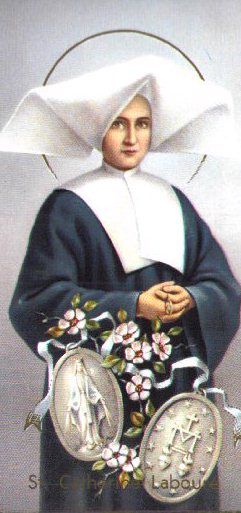
Today, November 25, we celebrate the feast day of Saint Catherine Laboure (1806-1876), member of the Daughters of Charity, striker of the Miraculous Medal, and visionary. Saint Catherine lived her life simply, in service to those who lived with, never revealing until late in life that she was the recipient of heavenly visions and missions from Our Blessed Mother. Saint Catherine’s faith and humility led to the universal devotion to the Miraculous Medal, and continues to inspire us today.


Zoé Labouré was born in Fain-les Moutiers, a small village of France. The daughter of a wealthy and pious farmer, Zoé was raised devoutly in the faith. Her father, who had at one time in his life desired to become a priest, married a devout woman— Zoé’s mother—who raised her daughter strong in the faith during her early life. However, Zoé lost her mother when she was just nine years old. Her father, unable to support his eleven children (Zoé was the ninth), was forced to send his daughter and her younger sister to live with an aunt. For two years, Zoé abandoned her education, and lived with her devout aunt, until she was recalled to take charge of her father’s household upon the departure of her elder siblings.

Zoé’s older sister had entered the convent of the Daughters of Charity, the community of Saint Vincent de Paul. Zoé yearned to follow her, but had never selected a community to enter. From a young age, she had made a vow of virginity, and desired nothing more than to imitate Our Blessed Mother, whom she had devoted herself to upon the death of her mother. Ardent longing to see the Blessed Virgin filled her, and prayed simply for the grace of that meeting. When her work and household duties allowed her, she spent all her free time in the Chapel of the Blessed Virgin in a nearby village.

Still torn and undecided regarding which religious community to enter the novitiate in, Zoé had a dream one night in which she saw a venerable priest in a dream, saying Mass in her little village church. In her dream, the priest—who she later learned to be Saint Vincent de Paul-- turned to her and gestured for her to come to speak with him. However, she retreated, and he said to her: “Now you flee me, but later you will be happy to come to me; God has plans for you.” Eventually, Zoé saw a picture of Saint Vincent, and realized the dream was calling her to enter the Daughters of Charity. When her younger sister was old enough to take over the household duties, she received permission from her father, and entered the novitiate at the Daughters of Charity convent, as her sister had done, taking the name Catherine. As a postulant, Catherine assisted in the translation of Saint Vincent de Paul’s relics to a church in Paris.

As a member of the religious community, Saint Catherine was graced by the Lord with frequent visions of Christ. She frequently saw Jesus in the Blessed Sacrament, oftentimes appointed as Christ the King. Soon thereafter, in July of 1830 when Catherine was just 24 years old, Our Blessed Mother appeared to her as she had always wished. For the next 46 years, Saint Catherine would be blessed to commune with the Blessed Virgin, receiving messages and the mission of the Miraculous Medal. The Feast of the Miraculous Medal occurs on November 27—in just two days—and I will write more about this devotion then.

The medal, which Our Blessed Mother instructed to be struck, was the first task given to Catherine. She obeyed without hesitation, and with the assistance of her confessor. On one side it has the image of Our Lady, and the words, “O Mary, conceived without sin, pray for us who have recourse to thee.” On the other are the hearts of Jesus and Mary. Our Lady told Catherine that wearers of the medal would receive great graces, it has become known as the Miraculous Medal, and its wearing and devotion has spread worldwide.

Saint Catherine, at the request of Mary, prayed incessantly for peace for 46 years. She also took a vow of silence, sharing only the instructions of the Blessed Mother with her confessor. He at first did not believe her, and she spent her days suffering that she could not complete her tasks. Eventually, her confessor (and then the bishop of Paris) were convinced, the medals struck, and miracles began occurring through their power. However, no one else was told who the recipient of the visions was. Even the Mother Superior at Saint Catherine’s convent did not know that the miraculous visions were occurring within her own convent walls.

Saint Catherine’s days were spent in prayer, contemplation, and devotion to Our Blessed Mother through prayer of the Rosary. As no one knew of her special relationship with Mary, she received no special treatment. Catherine worked obediently in the most menial kitchen and farming jobs, and cared for the elderly at a hospice near the convent. She further wrote about her visions of Our Blessed Mother, in one entry saying:

"Oh, how beautiful it will be to hear it said: Mary is Queen of the universe. That will be a time of peace, joy and happiness which will be long... She will be borne like a banner and will make a tour of the world.” The Virgin foretold that this time would come only after “the entire world will be in sadness... Afterwards, peace.”

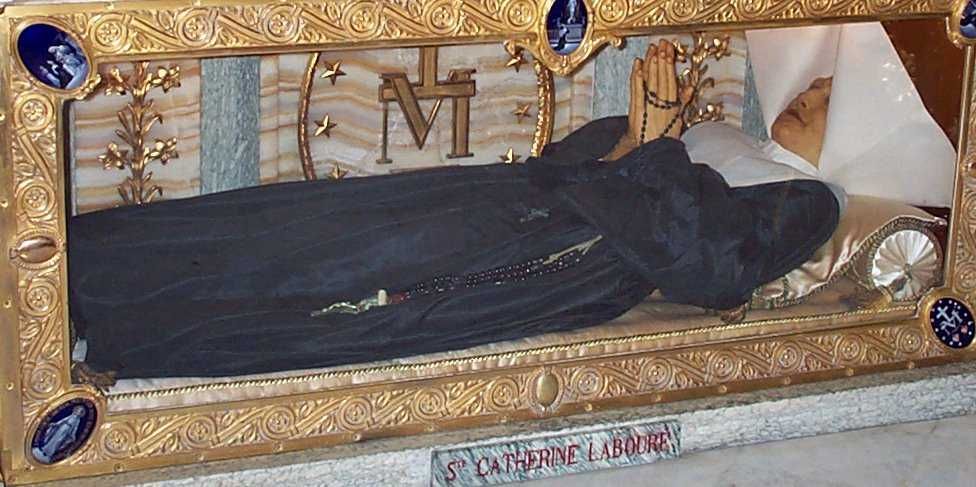
Catherine suffered much during this time, and eventually died at the age of 70. Many miracles have been reported at her tomb. When her body was exhumed over fifty years later, in 1933, it was found completely fresh and supple, her blue eyes bright and clear. Saint Catherine’s incorrupt body is now encased in glass beneath the side altar at 140 Rue du Bac, Paris, beneath one of the spots where our Lady appeared to her.


Prayer of Saint Catherine Labouré

Whenever I go to the chapel,
I put myself in the presence of our good Lord, and I say to him
"Lord, I am here.
Tell me what you would have me do."
If he gives me some task,
I am content and I thank him.
If he gives me nothing,
I still thank him
since I do not deserve to receive anything more than that.
And then, I tell God
everything that is in my heart.
I tell him about my pains and my joys,
and then I listen.
If you listen, God will also speak to you,
for with the good Lord, you have to both speak and listen.
God always speaks to you
when you approach him plainly and simply.


Year 2: Day 328 of 365
Prayer Intentions: Faith. Humility. The grace of Our Blessed Mother.
Requested Intentions: Blessings on overseas employment (M); Healing of mother (L); Successful employment for husband (G); Successful employment, personal fulfillment (C); Health and recovery of ill sister (A);  Resolution of legal issues; Grace and protection (E); Successful and meaningful employment (S); Restoration of a marriage (A); Peace and tolerance in a family, support for those with Parkinson’s Disease (M); For the restoration of a daughter’s marriage, end to debt (S); Employment and continued strength (K); Successful examinations for a son (J); Employment and blessings of a child (S); Employment and financial security (F); Successful work placement, continued health (A); Grace and healing for a family (P); Healing of a father (M); Academic success for son, employment for husband and brother (B); Freedom from anxiety and panic attacks (R); Health and healing in preparation for surgery (C); Healing of a chronic illness (P); Safety of a family during storms (A); Successful home ownership (P); Healing of a marriage (M); Employment for a husband, blessings for a marriage (E); Successful examinations for a daughter, healing of a relationships (V).

November 24: Saints Flora and Mary of Cordoba

Posted by Jacob

Today, November 24, we celebrate the feast day of Saints Flora and Mary of Cordoba (died 851),Virgin Martyrs of the Church. Both Flora and Mary lived at a time when Christians were actively persecuted in Muslim lands. Despite this danger, both young women held firm to their Christianity, led courageous lives, and ultimately were beheaded for their faith.


Saint Flora was the product of a religiously mixed marriage, which was rather uncommon at that time. Her mother, a Christian from the village of Ausianos (west of Cordoba), married a Muslim from Seville. Her father died while Flora was quite young, and therefore, her mother raised her in pious Christianity. The laws at that time, however, prohibited children of mixed marriages to be raised anything but Muslim, and Flora and her mother prayed and maintained their faith in secret. Such were the times that they even were forced to keep Flora’s Christian faith a secret from her older brother!

The strain and tension in the family home of maintaining such a secret grew too great for Flora. More and more she was called to live her faith visibly, and in service to the Lord, both preach and minister to the poor. She eventually decided to run away from home to protect herself from her brother, accompanied by her sister. Her brother, however, by then an influential member of the Cordoba Muslim community, sought her return home, and began putting pressure (via persecution) on the fledgling Christian community. Obediently, Flora returned home, but refused to recant her faith. His pleading and threats fell on deaf ears, and she maintained her ardent love for Christ. Unsuccessful, her brother turned her over to the authorities.

Flora was charged with apostasy—that is, recanting the Muslim faith and converting o Christianity. Despite her defense that she had been a Christian from birth and was therefore innocent of the charges, Flora was sentenced to a severe whipping, beaten on the head till in some parts her scull was bare, and placed on probation in her brother's custody. As soon as she regained her strength, however, she fled again, this time taking refuge at the Christian household of Saint Mary, before leaving town together.

Saint Mary was born into a mixed marriage as well. Her father was a Christian landowner, and her mother, a Muslim woman who had converted to the Christian faith. Because of her mother’s apostasy, the family had been forced to flee their home, and came to live in a village near Cordoba. The strain of the move led to her mother’s death, and her father decided to live a life of solitude and penitence. Saint Mary’s brother, named Walabonsus, was sent to study at the local monastery of Saint Felix, and she was sent to the convent in Cuteclara. Upon ordination, Mary’s brother was appointed one of the convent’s priests, and the pair was reunited in the joy of Christ. However, not long afterwards, Walabonsus was martyred for refusing to practice Islam and recant his Christian beliefs.

Mary was deeply moved by her brother’s faith and subsequent martyrdom, and yearned to follow in his footsteps. She began actively preaching and practicing her faith, traveling to the church of Saint Acisclus each day to pray for guidance. It was in that church that she met Saint Flora.

After the events of Flora’s life forced her to flee, the two lived in exile for a brief period. However, the witness of Mary’s brother was a constant reminder to them, and the two returned to Cordoba to state their faith and suffer whatever consequences might follow. They were immediately imprisoned by the Muslim magistrate. While in prison, they had communion with Saint Eulogius, already imprisoned, who later wrote a remarkable record of the Christian martyrs of those times (before his own martyrdom). Shortly before the two were removed from prison, Saint Eulogius wrote:

“Flora seemed to me an angel. A heavenly light surrounded her; her face lightened with happiness; she seemed already to be tasting the joys of the heavenly home… strengthened by her speech, I returned less sad to my somber cell.”

Saints Flora and Mary were placed in a brothel, but refused to participate in the licentious activities that took place, maintaining their purity in the eyes of the Lord, praying, and witnessing to those present. Eventually, they were sentenced to execution by beheading, but a few days later, through their intercession, the other Christians who were still in prison in Cordova were released.

Like yesterday's martyr, Blessed Miguel Augustin Pro, Saints Flora and Mary of Cordoba demonstrated unwavering faith, courage, and sacrifice for our Lord. We are reminded that throughout the history of the Church, the faith has been spread and strengthened through the blood and pain of our holy Catholic martyrs. We pray today for the strength and courage to live our lives in faith—visible for all.

Prayer for Courage

Dear God, give me courage,
for perhaps I lack it more than anything else.


I need courage before men against their threats
and against their seductions.


I need courage to bear unkindness,
mockery, contradiction.


I need courage to fight against the devil,
against terrors and troubles, temptations,
attractions, darkness and false lights,
against tears, depression, and above all fear.

I need Your help, dear God.


Strengthen me with Your love and Your grace.


Console me with Your blessed Presence
and grant me the courage to persevere
until I am with You forever in heaven.
Amen.


Year 2: Day 327 of 365
Prayer Intentions: Courage of our convictions; Lives built on strong faith.
Requested Intentions: Blessings on overseas employment (M); Healing of mother (L); Successful employment for husband (G); Successful employment, personal fulfillment (C); Health and recovery of ill sister (A);  Resolution of legal issues; Grace and protection (E); Successful and meaningful employment (S); Restoration of a marriage (A); Peace and tolerance in a family, support for those with Parkinson’s Disease (M); For the restoration of a daughter’s marriage, end to debt (S); Employment and continued strength (K); Successful examinations for a son (J); Employment and blessings of a child (S); Employment and financial security (F); Successful work placement, continued health (A); Grace and healing for a family (P); Healing of a father (M); Academic success for son, employment for husband and brother (B); Freedom from anxiety and panic attacks (R); Health and healing in preparation for surgery (C); Healing of a chronic illness (P); Safety of a family during storms (A); Successful home ownership (P); Healing of a marriage (M); Employment for a husband, blessings for a marriage (E); Successful examinations for a daughter, healing of a relationships (V).

November 23: Blessed Miguel Augustin Pro

Posted by Jacob

“Does our life become from day to day more painful, more oppressive, more replete with afflictions? Blessed be He a thousand times who desires it so. If life be harder, love makes it also stronger, and only this love, grounded on suffering, can carry the Cross of my Lord Jesus Christ. Love without egotism, without relying on self, but enkindling in the depth of the heart an ardent thirst to love and suffer for all those around us: a thirst that neither misfortune nor contempt can extinguish... I believe, O Lord; but strengthen my faith... Heart of Jesus, I love Thee; but increase my love. Heart of Jesus, I trust in Thee; but give greater vigor to my confidence. Heart of Jesus, I give my heart to Thee; but so enclose it in Thee that it may never be separated from Thee. Heart of Jesus, I am all Thine; but take care of my promise so that I may be able to put it in practice even unto the complete sacrifice of my life.”


Today, November 23, we celebrate the feast day of Blessed Miguel Augustin Pro (1891-1927), modern-day martyr of Mexico. Father Pro was executed by firing squad on November 23, 1927, for defending the faith and serving his community at a time when Catholicism was forbidden in Mexico. Devoted to the Lord until his final breath, Father Pro’s last words were “Viva Cristo Rey!” (Long live Christ the King!).

Miguel was born into a prosperous and devout mining family in the Guadalupe de Zacatecas region of Mexico. From birth, he was known for being a cheerful, spirited youth who embraced his family’s faith and demonstrated considerable concern for the poor and working classes. Frequently sick throughout his childhood, and well into adulthood, Miguel learned to accept suffering, offering it as penance to the Lord. He is remembered as being adventurous, mischievous, fearless (to the point of countless accidents), and quite the practical jokester.

Miguel was especially close to his older sister, who had entered a cloistered convent. Upon seeing her faith journey, Miguel gave up his many business and romantic prospects, and dedicated himself to Christ. He entered the Jesuit novitiate at El Llano, Michoacan in 1911. Eventually, he was sent from Mexico (at the onset of the Mexican Revolution, and the persecution of Catholicism), continuing his studies in Granada, Spain. At age 36, Miguel was ordained in Belgium. Wanting nothing more than to bring the light of Christ back to his people, Miguel immediately returned to Mexico despite the danger of doing so.

Having been gone so long in study, Miguel was no longer recognized, which allowed him to serve freely. While the Church was “underground,” with Church buildings seized and closed, priests in hiding, and actively persecution of the faithful, Miguel celebrated Mass and the Eucharist secretly, in family homes and gathering places. He ministered to the people—hungry for the Lord—and offered the sacraments to small groups, hearing confessions, anointing the sick, and delivering the Holy Eucharist. Oftentimes Father Pro resorted to disguises and fake personas to avoid detection and arrest. He would come in the middle of the night dressed as a beggar to baptize infants, bless marriages and celebrate Mass. He would appear in jail dressed as a police officer to bring Holy Viaticum to condemned Catholics. When going to fashionable neighborhoods to procure for the poor, he would show up at the doorstep dressed as a fashionable businessman with a fresh flower on his lapel. It was exhausting and dangerous work, and Miguel’s stomach ailments returned. However, he persevered in his ministry without ceasing.

In a letter from that time period, he gave this faith-filled account:

“We carry on like slaves. Jesus help me! There isn’t time to breathe, and I am up to my eyebrows in this business of feeding those who have nothing. And they are many—those with nothing. I assure you that I spin like a top from here to there with such luck as is the exclusive privilege of petty thieves. It doesn’t even faze me to receive such messages as: “The X Family reports that they are twelve members and their pantry is empty. Their clothing is falling off them in pieces, three are sick in bed and there isn’t even water.” As a rule my purse is as dry as Calles’s soul, but it isn’t worth worrying since the Procurator of Heaven is generous.


People give me valuable objects to raffle off, something worth ten pesos that I can sell for forty. Once I was walking along with a woman’s purse that was quite cute (the purse not the woman) when I met a wealthy woman all dolled up.


“What do you have there?”


“A lady’s purse worth twenty-five pesos. You can have it for fifty pesos which I beg you to send to such-and-such a family.”


I see God’s hand so palpably in everything that almost—almost I fear they won’t kill me in these adventures. That will be a fiasco for me who sighs to go to heaven and start tossing off arpeggios on the guitar with my guardian angel.”

Father Pro got his wish. Eventually the authorities learned of his activities, and actively set to capture him. For some time, however, Father Pro managed to avoid capture. Along with his two brothers, he was then falsely accused of attempting to assassinate the president of Mexico via a failed bombing attempt. A wanted man, Miguel was turned over to the police, and sentenced to death without trial. His younger brother was spared at his pleading, but his second brother received the same sentence.

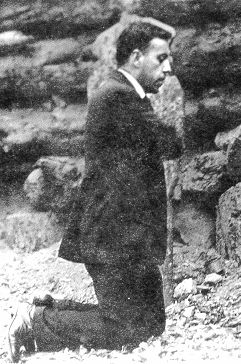
The day of Miguel’s martyrdom was well documented in photographs, as President Calles had news photographers present, expecting the Pros to die in a cowardly fashion. From the pictures we know that his last request was to be allowed to kneel and pray, which the executioners allowed him to do. As he was about to be shot, he forgave his executioners, refused a blindfold, and fell to the ground, shouting “Long live Christ the King!” The initial shots, however, did not kill him, and he was spared with a point-blank shot to the temple.


Following his death, there was great public outcry. His funeral became a rallying public demonstration of the Catholic faith, despite government prohibition. Tens of thousands of the faithful lined the streets to honor his body as it passed.


Blessed Miguel Augustin Pro was beatified in 1988 by Pope John Paul II. During his homily at the beatification Mass, Pope John Paul II said that Father Pro “is a new glory for the beloved Mexican nation, as well as for the Society of Jesus. His life of sacrificing and intrepid apostolate was always inspired by a tireless evangelizing effort. Neither suffering nor serious illness, neither the exhausting ministerial activity, frequently carried out in difficult and dangerous circumstances, could stifle the radiating and contagious joy which he brought to his life for Christ and which nothing could take away (see John 16:22). Indeed, the deepest root of self-sacrificing surrender for the lowly was his passionate love for Jesus Christ and his ardent desire to be conformed to him, even unto death.”


Selected Quotations of Blessed Miguel:

“We ought to speak, shout out against injustices, with confidence and without fear. We proclaim the principles of the Church, the reign of love, without forgetting that it is also a reign of justice.”

“Does our life become from day to day more painful, more oppressive, more replete with sufferings? Blessed be He a thousand times who desires it so. If life be harder, love makes it also stronger, and only this love, grounded on suffering, can carry the Cross of my Lord, Jesus Christ.”

“I believe, O Lord, but strengthen my faith…
Heart of Jesus, I love Thee; but increase my love.
Heart of Jesus, I trust in Thee; but give greater vigor to my confidence.
Heart of Jesus, I give my heart to Thee; but so enclose it in Thee that it may never be separated from Thee.
Heart of Jesus, I am all Thine; but take care of my promise so that I may be able to put it in practice even unto the complete sacrifice of my life.”


God our Father,
you gave your servant Miguel Agustin
the grace to seek ardently your greater glory
and the salvation of your people.
Grant that through his intercession
and following his example
we may serve you and glorify you
by performing our daily duties with fidelity and joy
and effectively helping our neighbor.
We ask this through our Lord Jesus Christ, your Son,
who lives and reigns with you and the Holy Spirit,
One God, for ever and ever. Amen.


Year 2: Day 327 of 365
Prayer Intentions: Courage of our convictions; Lives built on strong faith.
Requested Intentions: Blessings on overseas employment (M); Healing of mother (L); Successful employment for husband (G); Successful employment, personal fulfillment (C); Health and recovery of ill sister (A);  Resolution of legal issues; Grace and protection (E); Successful and meaningful employment (S); Restoration of a marriage (A); Peace and tolerance in a family, support for those with Parkinson’s Disease (M); For the restoration of a daughter’s marriage, end to debt (S); Employment and continued strength (K); Successful examinations for a son (J); Employment and blessings of a child (S); Employment and financial security (F); Successful work placement, continued health (A); Grace and healing for a family (P); Healing of a father (M); Academic success for son, employment for husband and brother (B); Freedom from anxiety and panic attacks (R); Health and healing in preparation for surgery (C); Healing of a chronic illness (P); Safety of a family during storms (A); Successful home ownership (P); Healing of a marriage (M); Employment for a husband, blessings for a marriage (E); Successful examinations for a daughter, healing of a relationships (V).

November 22: Saint Cecilia

Posted by Jacob

Glorious saint, who chose to die

Instead of denying your King.
We pray you please to help us
As His fair praise we sing!

We lift our hearts in joyous song
To honor Him this way,
And while we sing, remembering,
To sing is to doubly pray.

At once in our hearts and in our tongues
We offer double prayer
Sent heavenward on winged notes
To praise God dwelling there.

While in our hearts and tongues we try
With song to praise God twice,
We ask dear saint, to help us be
United closed to Christ!


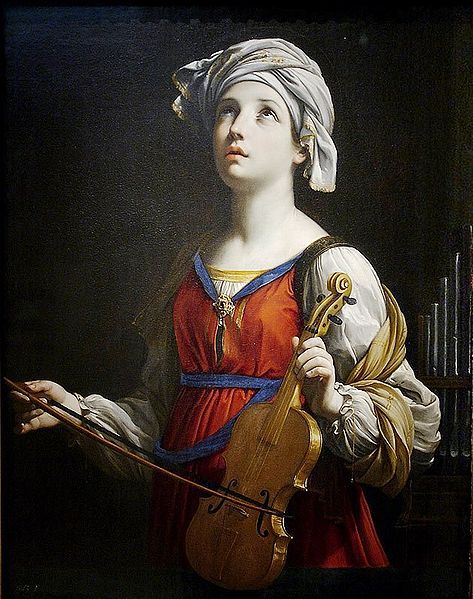
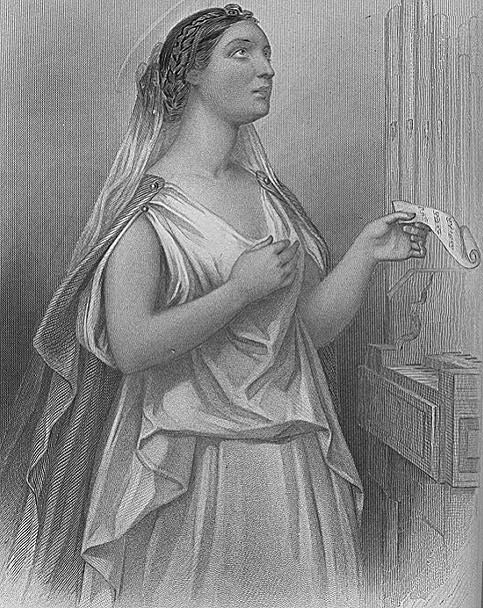
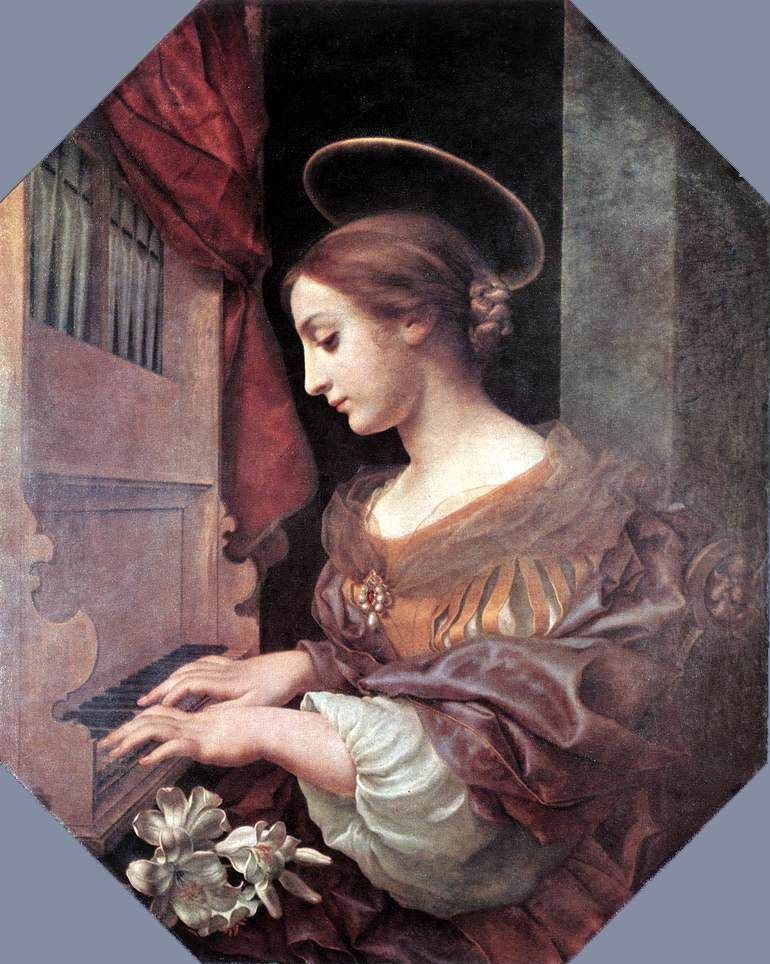
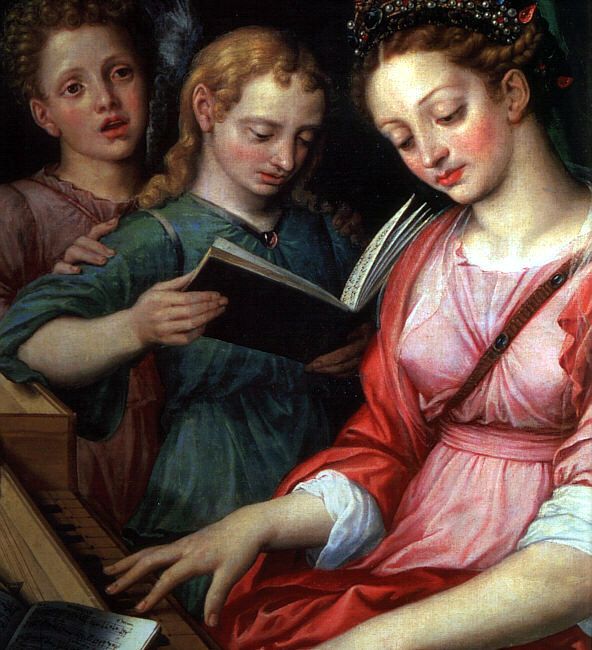
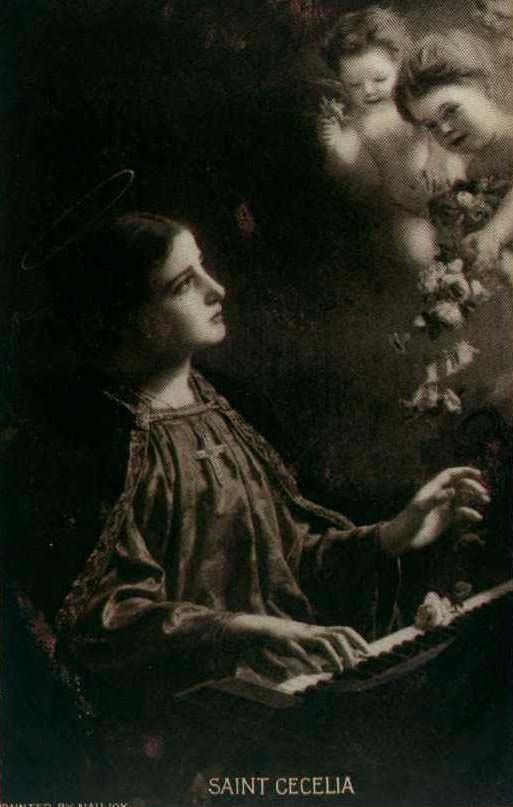
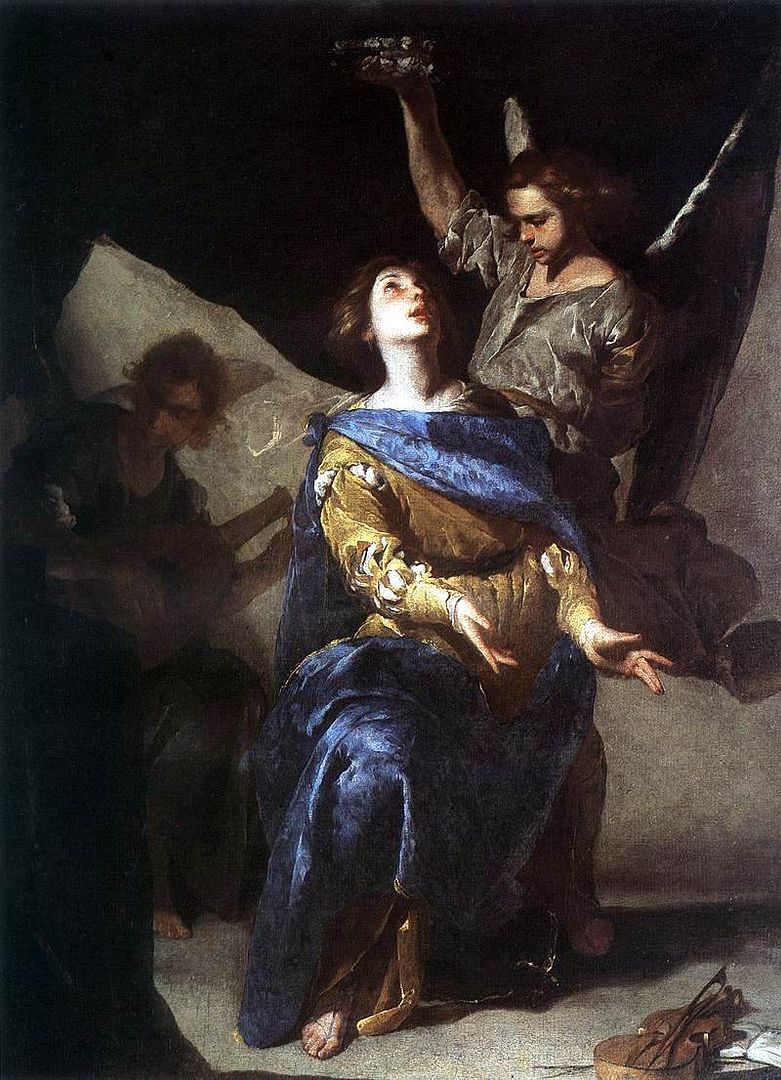
Today, November 22, we celebrate the feast day of Saint Cecilia (died 117), Virgin and Martyr of the Church. Saint Cecilia is one of the most famous of the Roman martyrs, but the facts of her life have been mostly lost to history. Instead, the Holy Legend of Saint Cecilia has been celebrated since the late fourth century. Saint Cecilia further has the distinction of being the patron saint of music—especially the music used during the celebration of Mass—and the patron saint of musicians, composers, instrument makers, and poets. This association grew from her constant song of Christian love in her heart, present throughout her life. From her Acta: “While the profane music of her wedding was heard, Cecilia was singing in her heart a hymn of love for Jesus, her true spouse.”
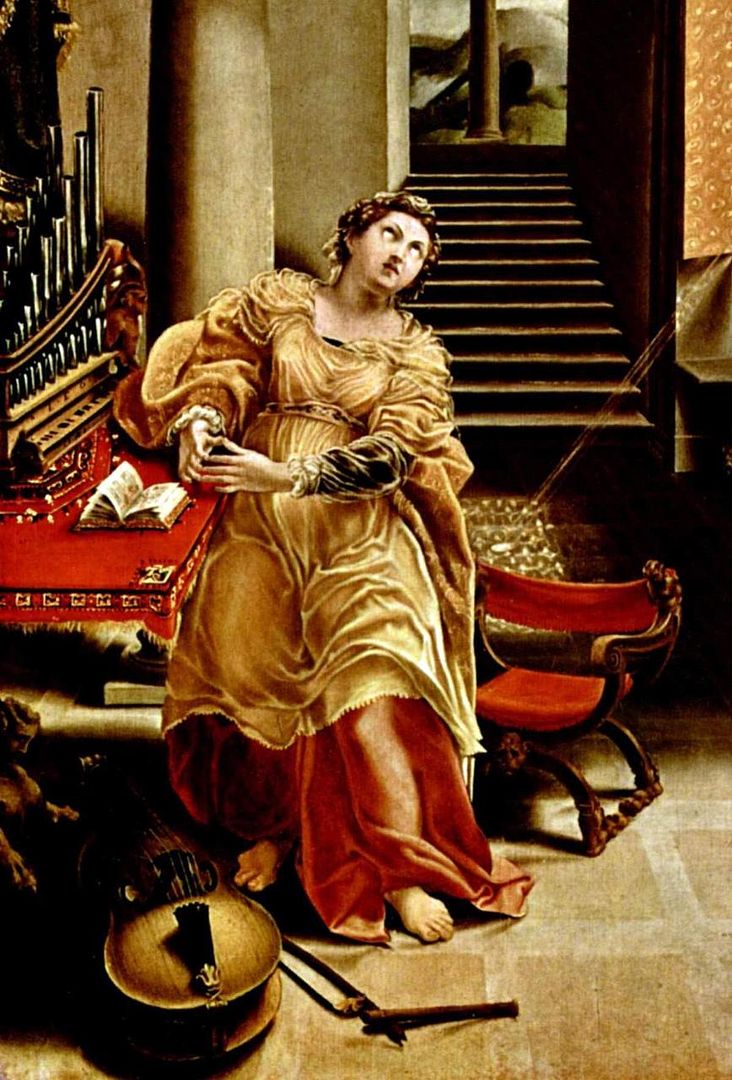
Cecilia was born in the early part of the third century, in Rome. Born to wealthy, pagan parents, she was likely instructed in the Catholic faith by kind relatives or a nurse. As a noble family—known for their bravery and intelligence—her parents were likely to have accepted (although possibly not approved) of her Catholic faith. By all reports, even as a child, Cecilia loved music, and she would spend her days singing the praises of God, accompanying herself on various instruments.
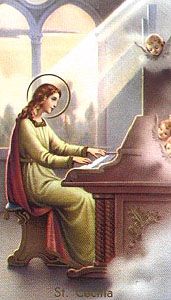
Cecilia embraced the faith from childhood. Drawn to the Lord, she attended Mass daily, desiring nothing more than to embody the virtues of Christ: faith, hope, charity, humility, and purity. As a child, she consecrated herself a bride of Christ, pledging her perpetual virginity to the Lord. As there were no religious orders for women at that time in history (not for at least 200 more years!), Cecilia was limited in her options. She fasted, prayed, and work sackcloth each day. While she spent her days in charitable works, caring for the poor and needy, her parents were searching for a husband for her to marry. They found an upright and honest man, Valerian, who was pagan like themselves.
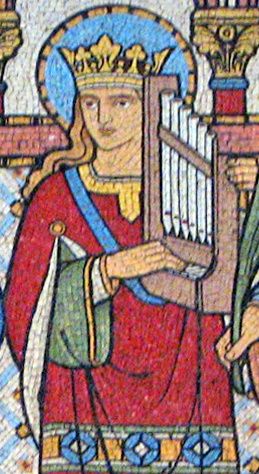
Cecilia was torn. Obediently, she wish to do as her parents bade her, but she had made a vow of virginity for the Lord. She spent her days and nights in prayer, offering herself to Jesus, fasting, and enacting harsh penances. As her wedding day approached she did little but pray… until the Lord sent comfort. The Lord promised to send an angel to Saint Cecilia, to guard her, and to assist her in keeping her vow. Cecilia was married in a lavish ceremony, internally, in her soul, becoming the bride of Christ.

After the ceremony, Cecilia said to her new earthly husband: “Dear friend, I have a secret to confide to you, but will you promise me to keep it?”

He promised her solemnly that nothing would ever make him reveal it, and she continued,

“An Angel of God watches over me, for I belong to God. If he sees that you would approach me under the influence of a sensual love, his anger will be inflamed, and you will succumb to the blows of his vengeance. But if you love me with a perfect love and conserve my virginity inviolable, he will love you as he loves me, and will lavish on you, too, his favors.”

Upon hearing this, Valerian was at first surprised, and then slightly irritated (as one might expect!). "I am very surprised at what you are telling me and I wish to see this angel!"

"You shall see him," Cecilia gently answered, "when you are purified."

"How shall I become so?" asked Valerian.

"Go to Pope Urban," she instructed him. "When you tell the poor that you are Cecilia's friend, they will take you to see the Pope. He will explain to you the mysteries of the Catholic Faith. May God bless you and my angel protect you."

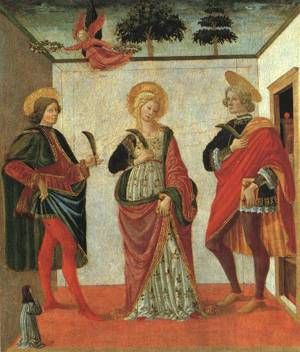
Valerian, for his part, was moved by the grace of the Lord, and traveled to see Pope Urban that very evening. He was converted to Catholicism and baptized into the faith. Wearing his baptismal gown, he returned to his new bride, finding her accompanied by the angel she had promised. The angel, as emissary from the Lord, bestowed upon them both the golden crowns of heaven. Together, they lived in celibacy, and grew in love for the Lord, eventually converting Valerian’s brother, Tiburtius, a man of some importance in Rome—who upon seeing their heavenly crowns was moved to accept Jesus Christ.

Together the brothers made it their mission to find and provide a decent burial to the Christian martyrs being executed throughout Rome. It was not long, however, until word spread of their endeavor. The Governor of Rome, learning of their Christianity through Tiburtius, summoned the brothers before him. When questioned, they refused to recant their faith, stating:

"We are Christians and we believe in Jesus Christ, the One and only true God!"

Upon hearing this, the Governor ordered them martyred. Saint Cecilia, assisted by her angel, recovered and buried the bodies. But soon, she was called before the Governor as well. Courageously, she, too, declared her faith: "I too am a Christian and I believe in Jesus Christ, the One and only true God!"

The Governor was not furious. He sentenced her to death, stating: "Cecilia! You are condemned to die for loving the poor and for adoring Christ crucified!"

But Cecilia was not to be harmed. The soldiers tried to scald and suffocated her in the steam bath in her own home, but rather than suffer, she could be heard singing to the Lord, seemingly accompanied by the choir of angels. After 36 hours, in which she should not have been able to survive, she was released. The Governor then ordered her head cut off, but the guard who attempted sliced her neck three times with a sword, but was unable to sever it. Scared, he ran away, leaving her wounded and in great pain.
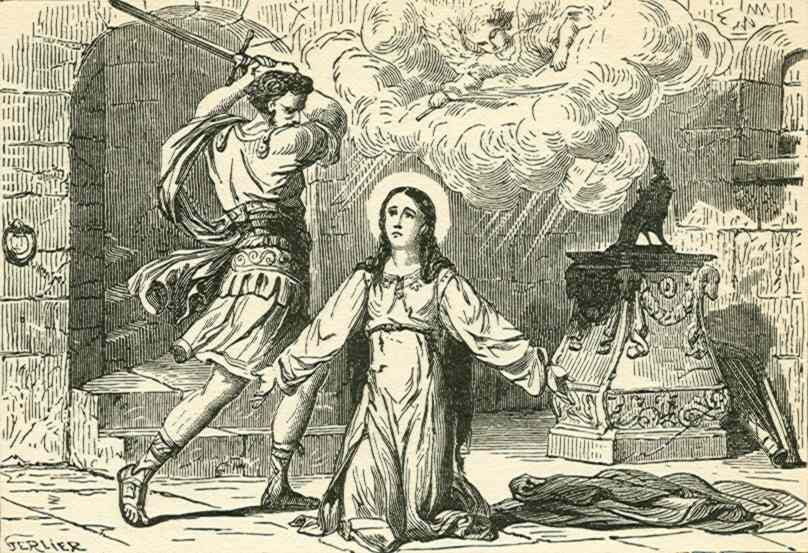
Cecilia survived for three days, bleeding and injured, but cared for by her angel and the Christians in the small community that had developed. During that time, she preached, converting many, gave away all that she had to the poor, and prayed incessantly. Many came to visit her, soaking up her blood with cloths and sponges, reporting miracles at her intercession later. On the last day of her life, Pope Urban traveled to her home, bestowing upon her the Last Rites, and seeing her to Heaven. On her wishes, Pope Urban ordered Cecilia's house converted into a church, with the steam bath—the site of the start of her martyrdom—the chapel. To this day, one can still see the pipes where the hot steam poured in, and the stone floor where Cecilia was struck with the sword.
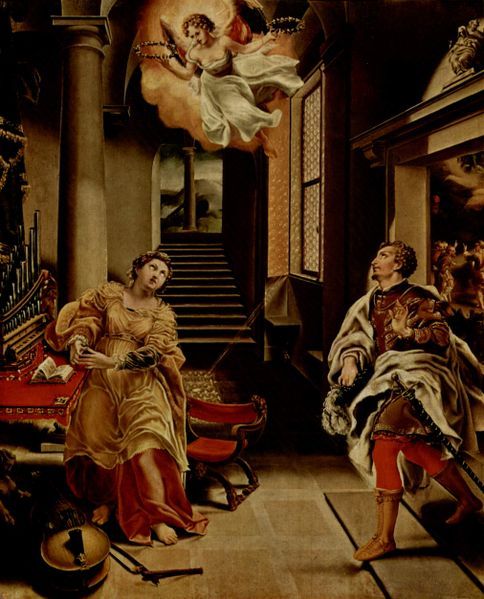
The mysteries of Saint Cecilia’s life did not end in death, but continued. After some years, a grand church was built in Rome to honor her. Pope Pascal I, who undertook to rebuild the church many years later, was troubled that the saints holy body had never been recovered. One Sunday, while praying in Saint Peter’s Basilica, Saint Cecilia appeared to him, consoling him, and declaring that he would find her body. Inspired by her words, a search was begun, and Saint Cecilia’s body was discovered, buried in a cemetery now named after her. Gold cloth wrapped the incorrupt body, and the blood-soaked linens that had bound her neck wound were preserved within the tomb. Nearby, the body of her husband, Saint Valerian, was also discovered. The relics of these saints were moved to Saint Cecilia’s Church in 821.

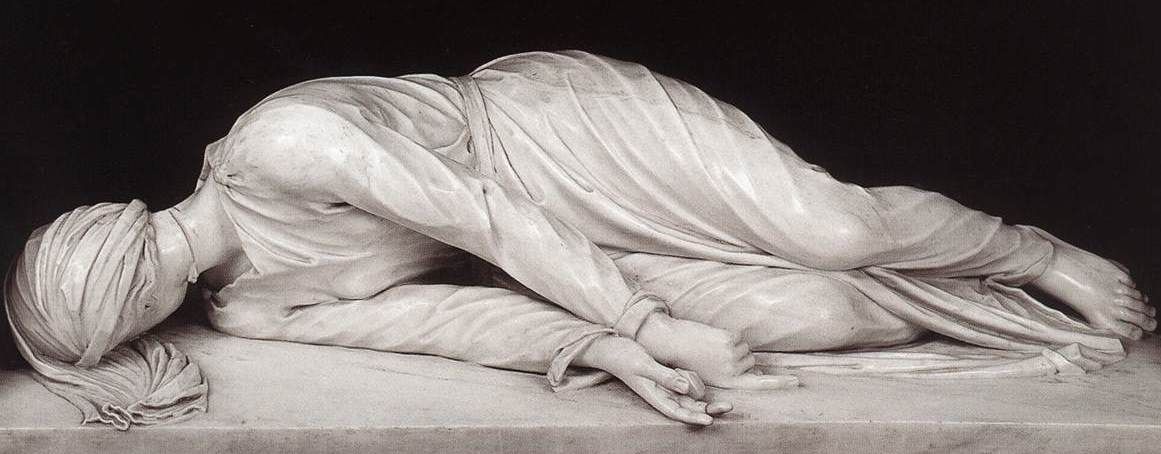
Nearly 800 years later, in 1599, the tomb of Saint Cecilia was opened, and her body was found to be perfectly persevered and incorrupt. At that time, a sculptor was called in to examine and sculpt the body prior to resealing the tomb. A likeness was made with the following carved into the floor at the alter at the base of the statue:

“Behold the body of the most holy virgin Cecilia,
whom I myself saw lying incorrupt in the tomb.
I have in this marble expressed for you the same saint
in the very same posture.”


The life of Saint Cecilia is one of great mystery, as we are left uncertain of the actual events of her marriage and martyrdom. What we do know, from Holy Legend, is that Cecilia was called by the Lord to devote herself to Him—in service to others, in practice of virtues, and in praise and music—all of which she did gladly and with abandon. Despite many obstacles, Saint Cecilia remained pure in the eyes of the Lord, a heavenly instrument of His love on earth!


Lord of mercy,
be close to those who call upon you.
With St. Cecilia to help us
hear and answer our prayers.
Grant this through our Lord Jesus Christ, your Son,
who lives and reigns with you and the Holy Spirit,
one God, for ever and ever. Amen.


Year 2: Day 326 of 365
Prayer Intentions: Longing for the Lord; Emptying of Ourselves to Invite the Lord In!
Requested Intentions: Blessings on overseas employment (M); Healing of mother (L); Successful employment for husband (G); Successful employment, personal fulfillment (C); Health and recovery of ill sister (A);  Resolution of legal issues; Grace and protection (E); Successful and meaningful employment (S); Restoration of a marriage (A); Peace and tolerance in a family, support for those with Parkinson’s Disease (M); For the restoration of a daughter’s marriage, end to debt (S); Employment and continued strength (K); Successful examinations for a son (J); Employment and blessings of a child (S); Employment and financial security (F); Successful work placement, continued health (A); Grace and healing for a family (P); Healing of a father (M); Academic success for son, employment for husband and brother (B); Freedom from anxiety and panic attacks (R); Health and healing in preparation for surgery (C); Healing of a chronic illness (P); Safety of a family during storms (A); Successful home ownership (P); Healing of a marriage (M); Employment for a husband, blessings for a marriage (E); Successful examinations for a daughter, healing of a relationships (V).

November 21: The Presentation of the Blessed Virgin Mary

Posted by Jacob

To understand what she was like then,
you have to imagine yourself in a place
in which columns affect you;
where you can retrace stairs
where arches full of danger
bridge the chasm of a space
that remained within you,
because it had been made, towering,
of such pieces that you can no longer
remove them from yourself lest you demolished yourself.
If you have reached that state, if everything within you
is stone, wall, ramp, view, curve, then try
to remove the big curtain in front of you with both hands:
it sparkles of very noble things
and surpasses your breath and touch.
Up, down, palace built upon palace,
Railings stream wider from within railings,
and surface above surface on such edges
that vertigo, as you can see, grasps you.
Clouds of incense diffuse what is close,
but still the most distant aims right
inside of you with its straight rays -
and now, when the glow from clear bowls
of flame plays on slowly approaching robes:
how can you bear it?


She, however, came and raised her eyes to view all this.
(A child, a little girl among women)
Then she ascended silently, filled with confidence,
towards the spoiled luxury which made way for her:
For that is how much everything that men built had
already been exceeded by the praise within her heart;
by the desire to give herself to the signs within her:
The parents wanted to lift her up,
the looming figure with the bejeweled chest
seemed to receive her:
But she passed through everyone,
small as she ways, slipped from every hand
into her destiny, which, higher than the hall,
was ready, and heavier than the temple.

Composed by Rainer Maria Rilke (translated by Gerald Augustinus)


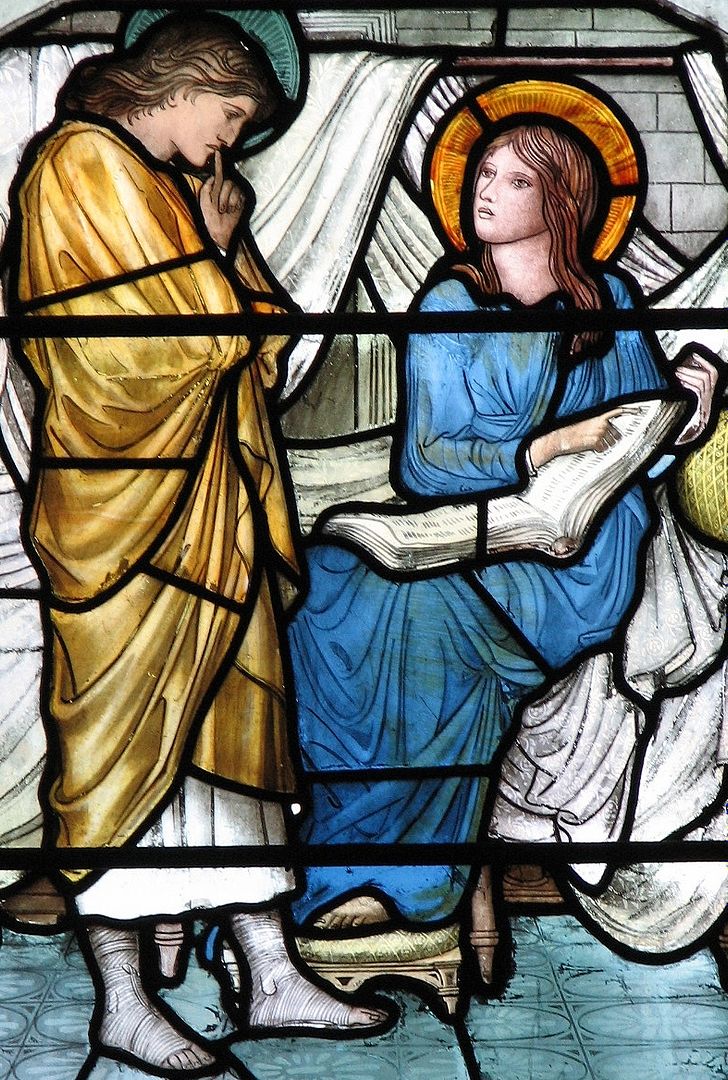
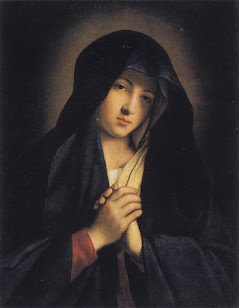
Today, November 21, we celebrate the feast of the Presentation of the Blessed Virgin Mary—the moment in which her parents, Saints Anna and Joaquim, committed Our Blessed Mother to the Lord. From that day on, when she was approximately three years old, Mary lived in the temple, working, praying, and contemplating the awesome love of God, and every day growing closer to Him. As Mary emptied herself of her worldly ties, she was filled with the grace of God, and was prepared for her unique and perfect role in the salvation of mankind through the birth of her Son.

The feast of the Presentation of the Blessed Virgin is the third feast in the Marian cycle of feast days that correspond to three events in the life of her Son, Our Lord, Jesus Christ. These three feasts are the Nativity of Our Lady (September 8), the feast of the Most Holy Name of Mary (September 12), and today’s feast, the Presentation of the Blessed Virgin at the Temple. These three feasts correspond to the first three feasts in the cycle of feasts of our Lord: the Nativity of Our Lord (December 25), the feast of the Most Holy Name of Jesus (January 3), and His Presentation in the Temple (February 2). In this way, we see that the life of Our Blessed Mother, from the very beginning, was pre-destined to mirror that of Her Son. Her example both foretells and echoes the journey of Christ on earth, as only a mother could do. It further reminds us that the holiness conferred on Mary from the very beginning of her existence—the Immaculate Conception—continued throughout her early childhood into her life as a young woman.
From The Church's Year of Grace by Pius Parsch: "Sacred Scripture contains no text concerning the event commemorated in today's liturgy. For something of a historical background one may consult the apocryphal works, particularly the Protoevangel of St. James (ch. 4:1ff). After an angel had revealed her pregnancy, Anna is said to have vowed her future child Mary to the Lord. Soon after birth the infant was brought to the sacred precincts at which only the best of Israel's daughters were admitted. At the age of three she was transferred to the temple proper (7:2). According to legend, here she was reared like a dove and received her nourishment from the hand of an angel (8:1).”

From the Protoevangelium of James:

The Birth of Mary the Holy Mother of God, and Very Glorious Mother of Jesus Christ.

7. And her months were added to the child. And the child was two years old, and Joachim said: Let us take her up to the temple of the Lord, that we may pay the vow that we have vowed, lest perchance the Lord send to us, and our offering be not received. And Anna said: Let us wait for the third year, in order that the child may not seek for father or mother. And Joachim said: So let us wait. And the child was three years old, and Joachim said: Invite the daughters of the Hebrews that are undefiled, and let them take each a lamp, and let them stand with the lamps burning, that the child may not turn back, and her heart be captivated from the temple of the Lord. And they did so until they went up into the temple of the Lord. And the priest received her, and kissed her, and blessed her, saying: The Lord has magnified your name in all generations. In you, on the last of the days, the Lord will manifest His redemption to the sons of Israel. And he set her down upon the third step of the altar, and the Lord God sent grace upon her; and she danced with her feet, and all the house of Israel loved her.


8. And her parents went down marveling, and praising the Lord God, because the child had not turned back. And Mary was in the temple of the Lord as if she were a dove that dwelt there, and she received food from the hand of an angel.


And so we see that Our Lady was chosen by the Lord, long before the Annunciation of the Archangel Gabriel to her. In the divine plan, Our Blessed Mother was conceived, untouched by sin, and then remained in that manner, having been given to the Lord by her parents. In the temple, where she remained until Gabriel appeared to her, she filled herself with love for the Lord, becoming both mother to, and disciple of, her blessed Son, Our Lord.

We don’t know exactly how these twelve years of preparation went for Mary. Saint Jerome, in his writings, however, provides us a glimpse of what her days may have been like. Our Blessed Mother, along with the other virgins committed to the temple, would arise at dawn and pray until nine o’clock. From 9:00 until 3:00, she would engage in manual work, most likely weaving. At 3:00, she would return to prayer. As Saint Jerome recorded, Our Blessed Mother was “always the first to undertake night watches, the One most applied to study, the most fervent in the chanting of Psalms, the most zealous in works of charity, the purest among the virgins, Her companions, the most perfect in the practice of every virtue. On this day She appears as the standard-bearer for Christian virginity: after Her will come countless legions of virgins consecrated to the Lord, both in the shadow of the altars or engaged in the charitable occupations of the Church in the world.” She took only one meal per day, giving her remaining food to the poor. Angels were recorded as visiting her regularly. She was described as beautiful and cheerful, never angry, and full of grace in her conversations. Mostly, Our Blessed Mother spent her time praying before the Holy of Holies.

Saint Germanus spoke of Our Blessed Mother, on the feast of her Presentation: "Hail, holy throne of God, divine sanctuary, house of glory, jewel most fair, chosen treasure house, and mercy seat for the whole world, heaven showing forth the glory of God. Purest Virgin, worthy of all praise, sanctuary dedicated to God and raised above all human condition, virgin soil, unplowed field, flourishing vine, fountain pouring out waters, virgin bearing a child, mother without knowing man, hidden treasure of innocence, ornament of sanctity, by your most acceptable prayers, strong with the authority of motherhood, to our Lord and God, Creator of all, your Son who was born of you without a father, steer the ship of the Church and bring it to a quiet harbor.”

In the end, we don’t have many specifics, with the exception of those written by James. However, what we do know makes a very clear point: Mary, even from her earliest childhood, belonged utterly and completely to the Lord. Even before she could consciously realize, her soul and body were devoted to His plan and longed to serve Him. Her role in the Nativity of Christ, the Incarnation at the Annunciation, her sorrow in His suffering and death were begun at her Immaculate Conception, but made clear on earth at her Presentation. Our Blessed Mother was redeemed in the temple through her faith and the working of the grace of the Lord, and today, we look to her as a model of Christian humanity, joined to her Son, longing for Him, as we should.

Year 2: Day 325 of 365
Prayer Intentions: Longing for the Lord; Emptying of Ourselves to Invite the Lord In!
Requested Intentions: Blessings on overseas employment (M); Healing of mother (L); Successful employment for husband (G); Successful employment, personal fulfillment (C); Health and recovery of ill sister (A);  Resolution of legal issues; Grace and protection (E); Successful and meaningful employment (S); Restoration of a marriage (A); Peace and tolerance in a family, support for those with Parkinson’s Disease (M); For the restoration of a daughter’s marriage, end to debt (S); Employment and continued strength (K); Successful examinations for a son (J); Employment and blessings of a child (S); Employment and financial security (F); Successful work placement, continued health (A); Grace and healing for a family (P); Healing of a father (M); Academic success for son, employment for husband and brother (B); Freedom from anxiety and panic attacks (R); Health and healing in preparation for surgery (C); Healing of a chronic illness (P); Safety of a family during storms (A); Successful home ownership (P); Healing of a marriage (M); Employment for a husband, blessings for a marriage (E); Successful examinations for a daughter, healing of a relationships (V).